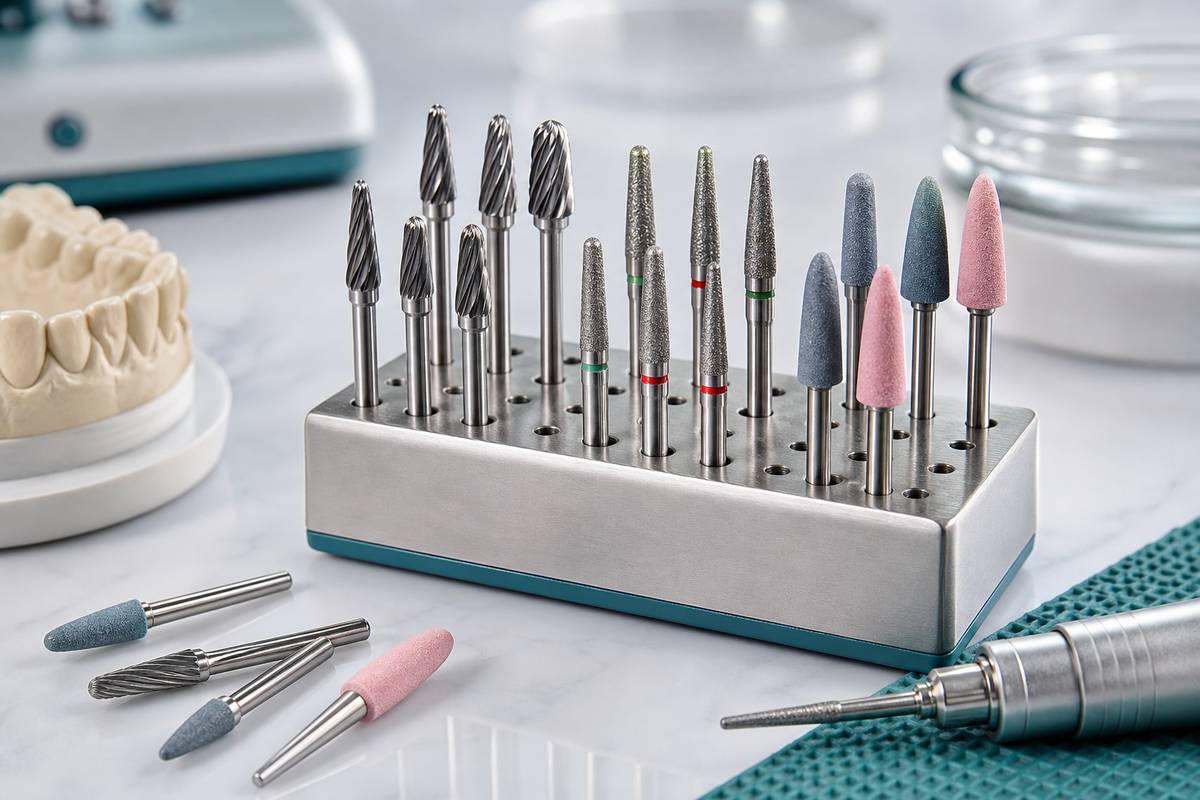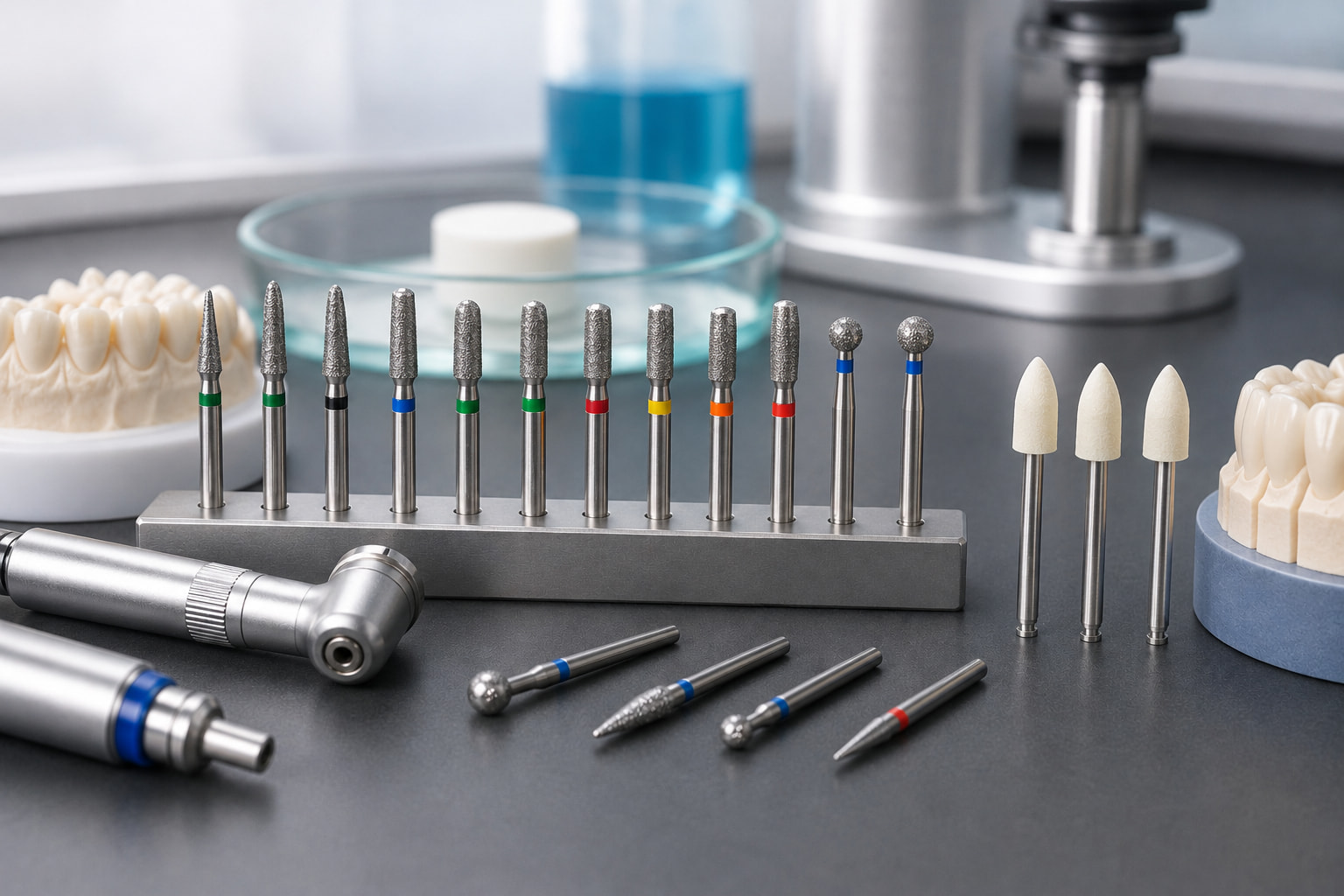
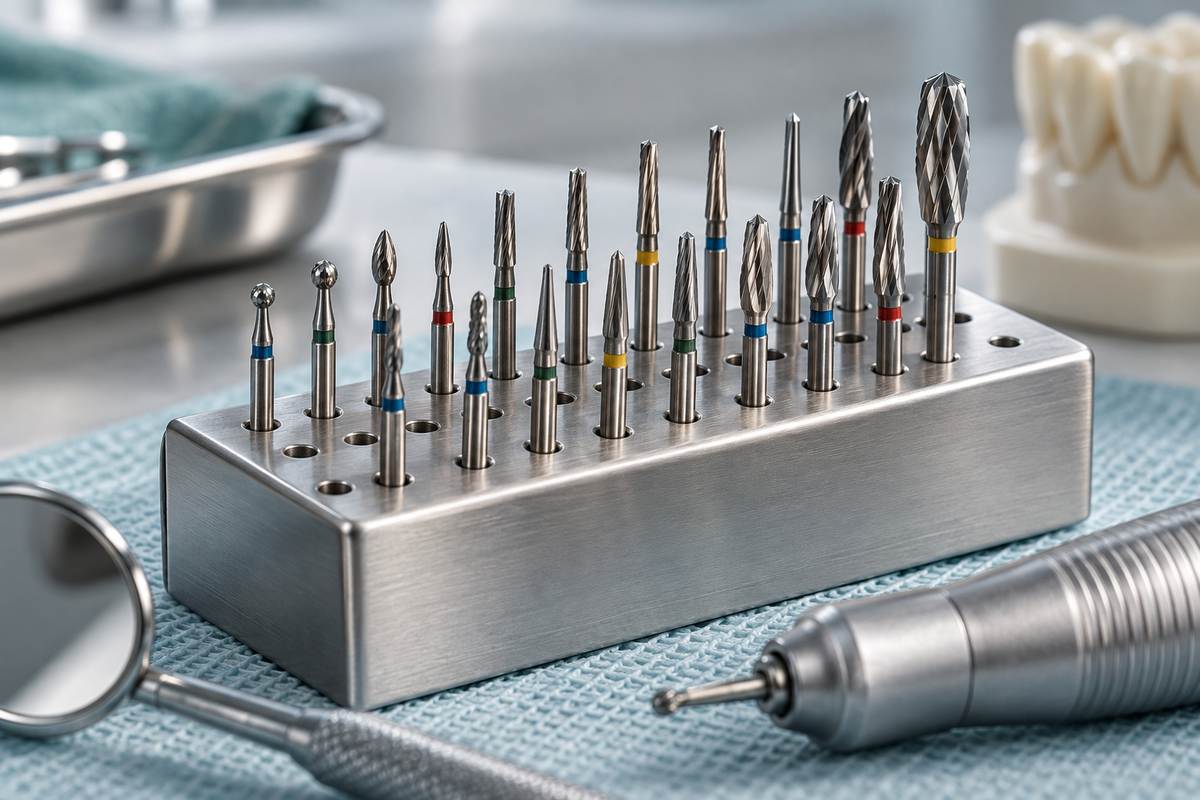
Standardizing rotary instruments around clinical procedures reduces operatory changeover time, eliminates disorganized bur drawers, and lowers overhead costs for dental practices. A dedicated carbide FG bur kit organizes friction grip burs into predictable, procedural sequences for operative dentistry, crown removal, and restorative finishing. Instead of stocking random assortments that leave unused shapes in every operatory, purchasing managers and clinic directors configure tailored sets that match specific practitioner workflows.
Friction grip tungsten carbide burs deliver aggressive cutting efficiency and smooth surface preparation across natural tooth structure, amalgam, and composite resin. Sourcing these instruments directly from the manufacturer allows dental clinics and laboratory supply distributors to create customized kits in autoclavable bur blocks, cutting unit costs while maintaining strict clinical standards.
Core Carbide FG Bur Shapes by Clinical Procedure
A functional carbide FG bur kit groups instruments according to specific treatment steps. Rather than combining unrelated shapes into a single oversized tray, clinical teams organize burs into three focused setups: operative preparation, crown removal, and restorative finishing.
Operative and Cavity Preparation Setup
The operative setup handles enamel access, caries excavation, and internal cavity preparation. A balanced operative block includes:
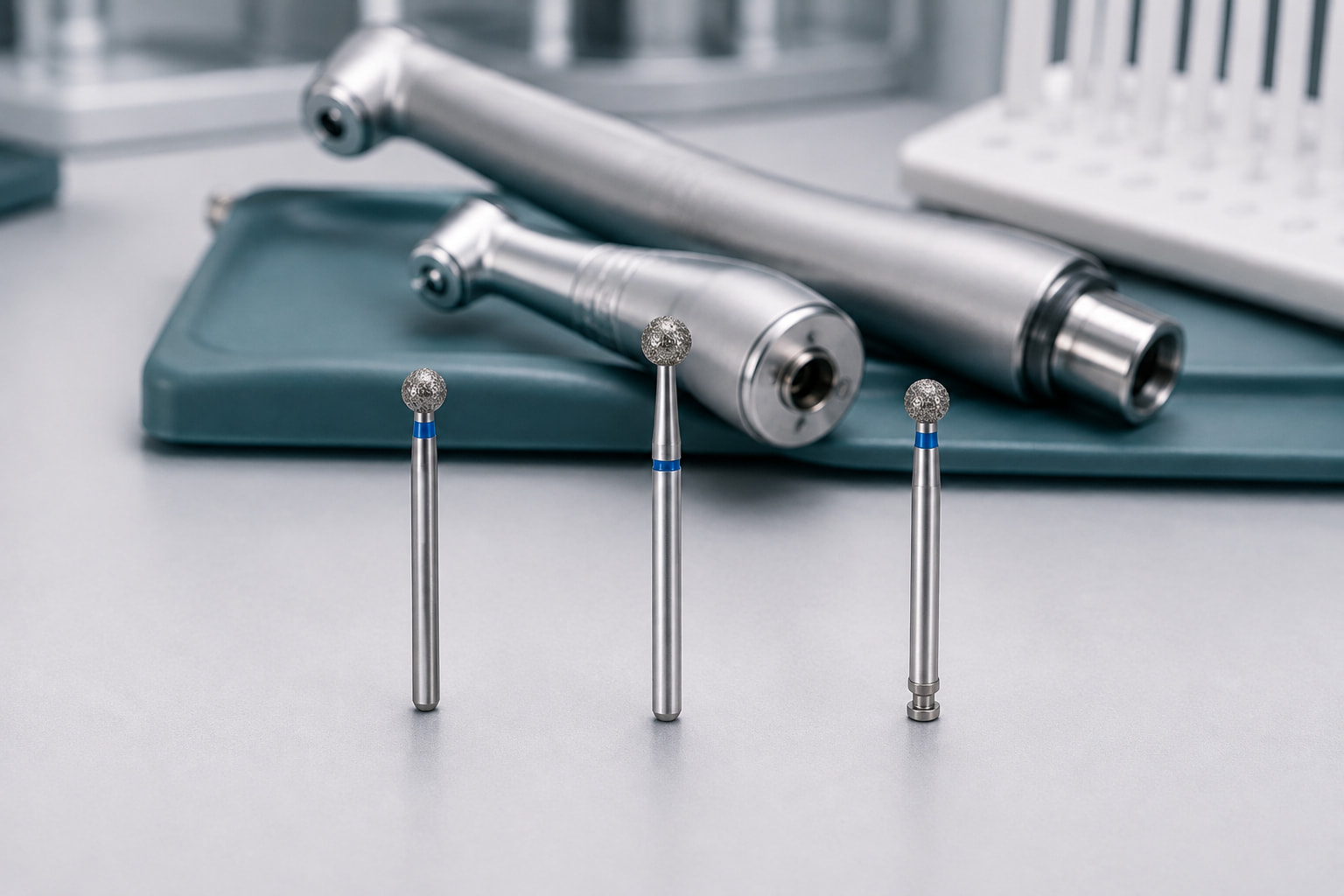
- Round burs: Small round burs (#2, #4) remove deep carious dentin without cutting healthy adjacent structures. Larger round burs (#6, #8) handle gross caries removal in large molar preparations.
- Pear-shaped burs: Shapes like #330 and #245 feature rounded corners that prevent sharp internal line angles. This reduces stress concentrations under direct restorations and preserves tooth structure during conservative Class I and Class II preparations.
- Inverted cone burs: Used for creating mechanical undercuts and flattening pulpal floors in amalgam or direct composite preps.
- Straight and tapered fissure burs: Standard fissure burs (#56, #57, #170) provide straight, parallel axial walls, while cross-cut versions (#557, #701) offer fast bulk tooth reduction in deeper access openings.
Stocking these shapes in dedicated 8-hole or 10-hole bur blocks ensures that every operatory has identical configurations ready for chairside use.
Crown Removal and Metal Sectioning Setup
Sectioning porcelain-fused-to-metal (PFM) crowns, full-cast metal restorations, and old amalgam cores requires rigid burs with aggressive flute angles. Standard preparation burs dull rapidly and generate excessive friction heat when cutting metal copings.
A dedicated metal-cutting and crown-removal setup relies on heavy-duty Tungsten Carbide Burs with specialized geometry:
- Cross-cut cylinder burs: Aggressive transverse flutes break chips efficiently, preventing instrument clogging when sectioning thick metal margins.
- End-cutting carbide burs: Flat end-cutting faces allow precise troughing along the axial walls of a crown without damaging underlying dentin or the crown preparation margin.
- Tapered metal cutters: Deep-fluted tapered carbides slice through precious and non-precious alloys with minimal vibration, reducing strain on the high-speed handpiece turbine.
Trimming and Finishing Setup
After placing composite resin or glass ionomer restorations, clinicians switch from aggressive 6-blade cutting burs to multi-fluted finishing instruments. A dedicated finishing kit organizes Trimming & Finishing Carbide Burs by flute density:
- 12-Blade finishing burs: Used for primary contouring, adjusting occlusal anatomy, and shaping margin contours on direct restorations. Shapes such as football (7404), flame (7901), and needle (7902) conform to natural tooth curves.
- 30-Blade finishing burs: Used for secondary pre-polishing. The dense blade pattern produces an ultra-smooth surface with minimal microscopic striations, preparing composite restorations for final rubber point or brush polishing.
Recommended Setups for a Procedure-Based Carbide FG Bur Kit
The table below outlines recommended kit configurations based on clinical procedure, bur geometry, and bur block capacity.
| Procedure Type | Primary Bur Shapes | Blade Count & Function | Recommended Block Size |
|---|---|---|---|
| Operative Cavity Prep | Round (#2, #4, #6), Pear (#330, #245), Fissure (#557) | 6-Blade / Enamel access, caries removal, cavity outline | 8 to 10 holes (BB201) |
| Crown Removal & Sectioning | Cross-Cut Fissure (#557, #702), End-Cutting (#1557) | 6-Blade cross-cut / Rapid metal coping and amalgam sectioning | 5 to 8 holes (BB202) |
| Restorative Finishing | Flame (7901), Football (7404), Needle (7902), Round (7006) | 12-Blade & 30-Blade / Occlusal adjustment and margin smoothing | 10 to 12 holes (BB212) |
| Multi-Operatory Clinic Kit | Assorted prep, sectioning, and 12-blade finishing burs | Mixed 6-blade cutting and 12-blade finishing | 12 to 18 holes (Clinic Kit 4104) |
Organizing and Reprocessing FG Carbide Kits
Maintaining procedural efficiency requires a systematic approach to bur handling, sterilization, and storage. Disorganized kits lead to missing instruments during procedures and increase the risk of cross-contamination.
- Standardize bur block layouts: Position burs in the same order across every operatory block. For instance, arrange operative blocks from left to right starting with round burs, moving to pear shapes, and ending with fissure burs. This consistency allows dental assistants and clinicians to select instruments instantly.
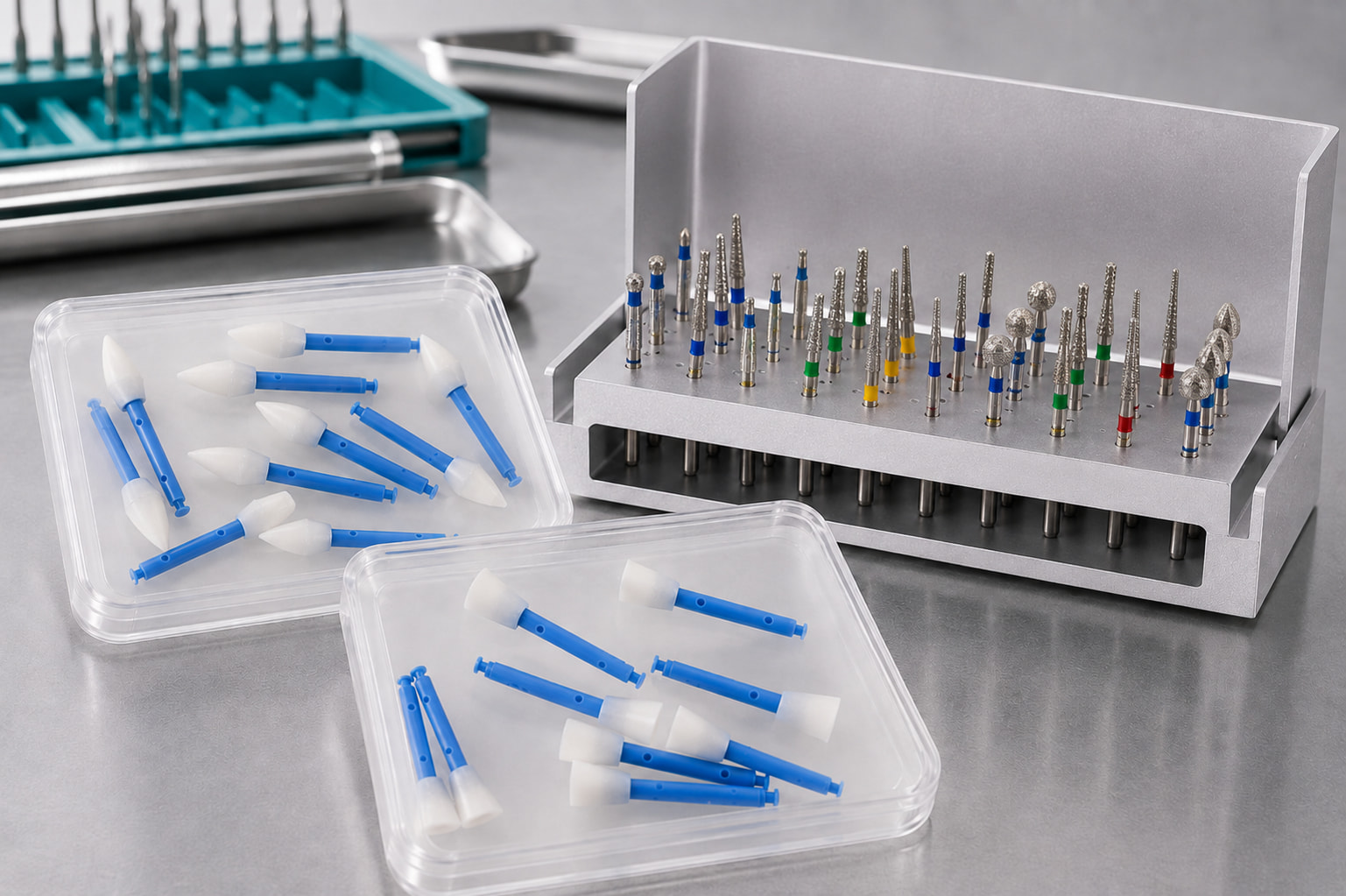
- Use anodized aluminum or autoclavable plastic blocks: High-grade aluminum blocks, such as SKU BB201 and BB202, withstand repeated steam autoclave cycles without degrading or discoloring. Drainage holes prevent standing water, ensuring complete drying during the sterilization cycle.
- Prevent blade contact during ultrasonic cleaning: Direct contact between carbide blades in ultrasonic baths causes micro-chipping along cutting edges. Reprocessing burs directly inside slotted bur blocks protects the delicate flutes from bumping together.
- Integrate pre-assembled clinic packages: Practices seeking immediate standardization often select factory-assembled Clinic Kits like SKU 4103, 4104, or 4105. These pre-packaged configurations combine essential cutting and finishing instruments in sterilizable holders.
Sourcing Carbide FG Bur Kits Factory-Direct
Purchasing carbide FG bur kits directly from an established manufacturer gives dental clinics, dental support organizations (DSOs), and medical distributors distinct operational advantages:
- Custom kit bundling: Build kits with specific SKU combinations, custom bur block hole counts, and laser-marked clinic branding.
- Strict quality standards: Sintered tungsten carbide heads welded to precision stainless steel shanks deliver concentric rotation with low runout, minimizing handpiece vibration.
- Regulatory compliance: Products are manufactured in an ISO 13485 factory with CE marked certification, meeting international regulatory standards for clinical safety.
- Established manufacturing experience: BurDental was founded in 2008 and produces rotary cutting tools for practices and dental supply dealers globally.
- Direct wholesale terms: Low minimum order quantities allow clinics to order exact quantities without carrying excess inventory. Free shipping over $300 applies to bulk orders.
- Direct contact: For custom kit configurations, private label packaging, or sample inquiries, contact the factory sales team on WhatsApp at +86 186 8057 1046.
Frequently asked questions
What is included in a standard operative carbide FG bur kit?
A standard operative carbide FG bur kit includes round burs (#2, #4) for caries removal, pear-shaped burs (#330, #245) for conservative cavity access, and straight or cross-cut fissure burs (#557) for bulk reduction and axial wall shaping. These burs are housed in a compact sterilizable bur block for direct operatory access.
Can carbide FG burs be sterilized in an autoclave?
Yes, tungsten carbide FG burs are fully autoclavable and withstand standard steam sterilization cycles. To prevent corrosion and dulling, clean burs thoroughly in an enzymatic ultrasonic bath, dry them completely, and reprocess them in an autoclavable bur block with adequate drainage.
What is the difference between 12-blade and 30-blade finishing burs in a kit?
A 12-blade finishing bur removes excess composite material, shapes anatomical grooves, and trims restoration margins rapidly. A 30-blade finishing bur features tightly spaced cutting flutes designed for fine surface smoothing and pre-polishing, leaving a satin finish before final abrasive paste polishing.
How do dental practices order custom-configured carbide FG bur kits?
Clinics and distributors can specify exact bur shapes, shank types, and bur block configurations directly with the factory sales team. Contact BurDental via WhatsApp at +86 186 8057 1046 to request custom kit layouts, OEM private labeling, and wholesale pricing.