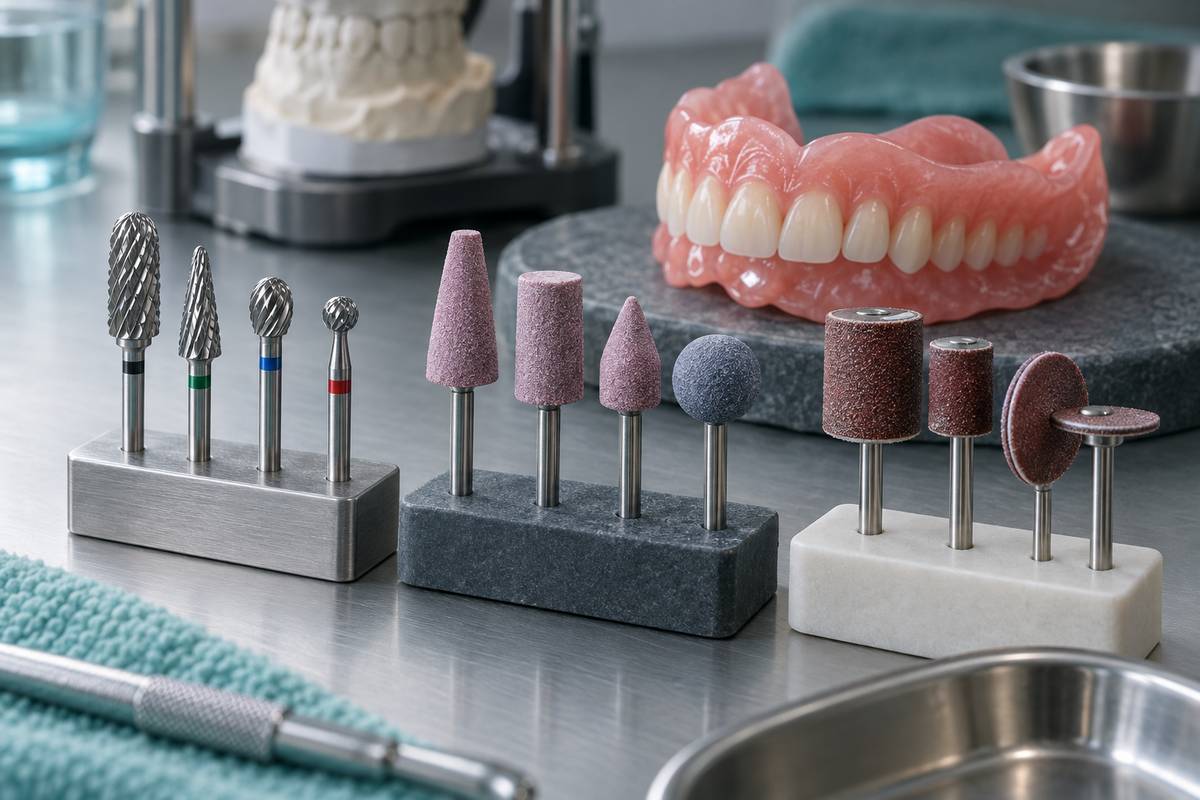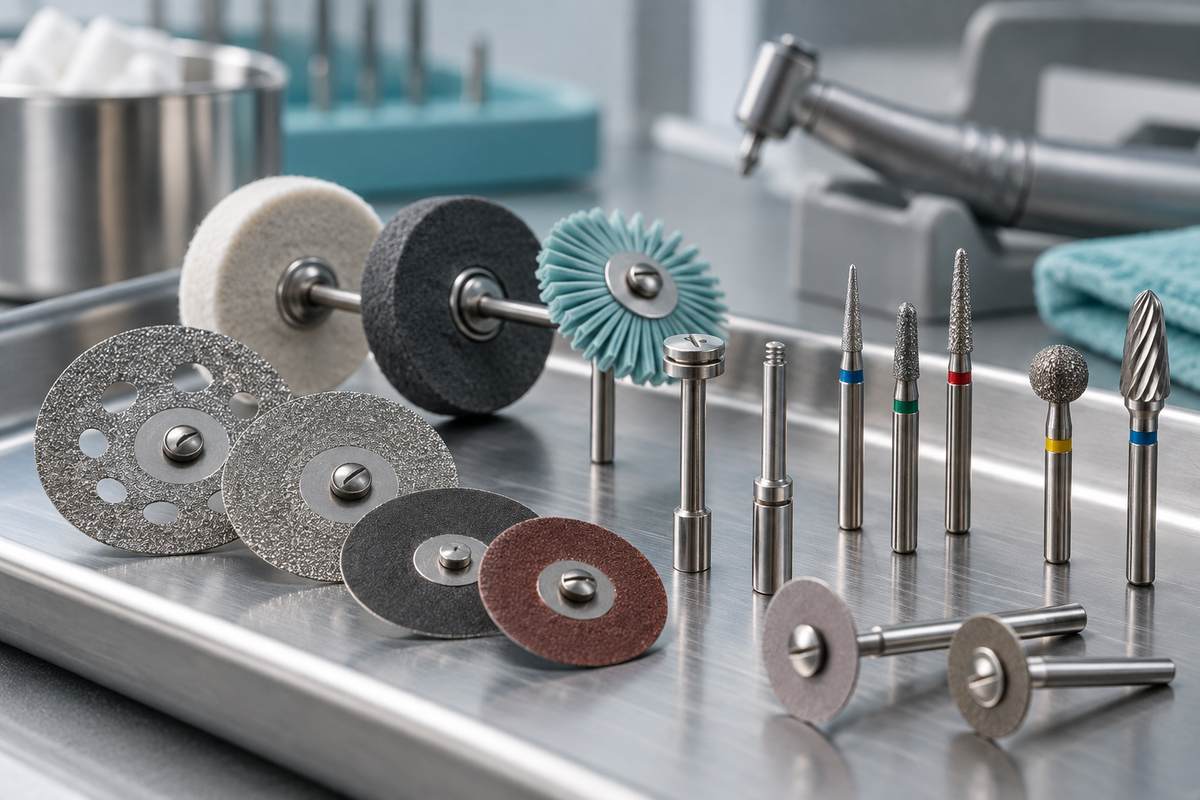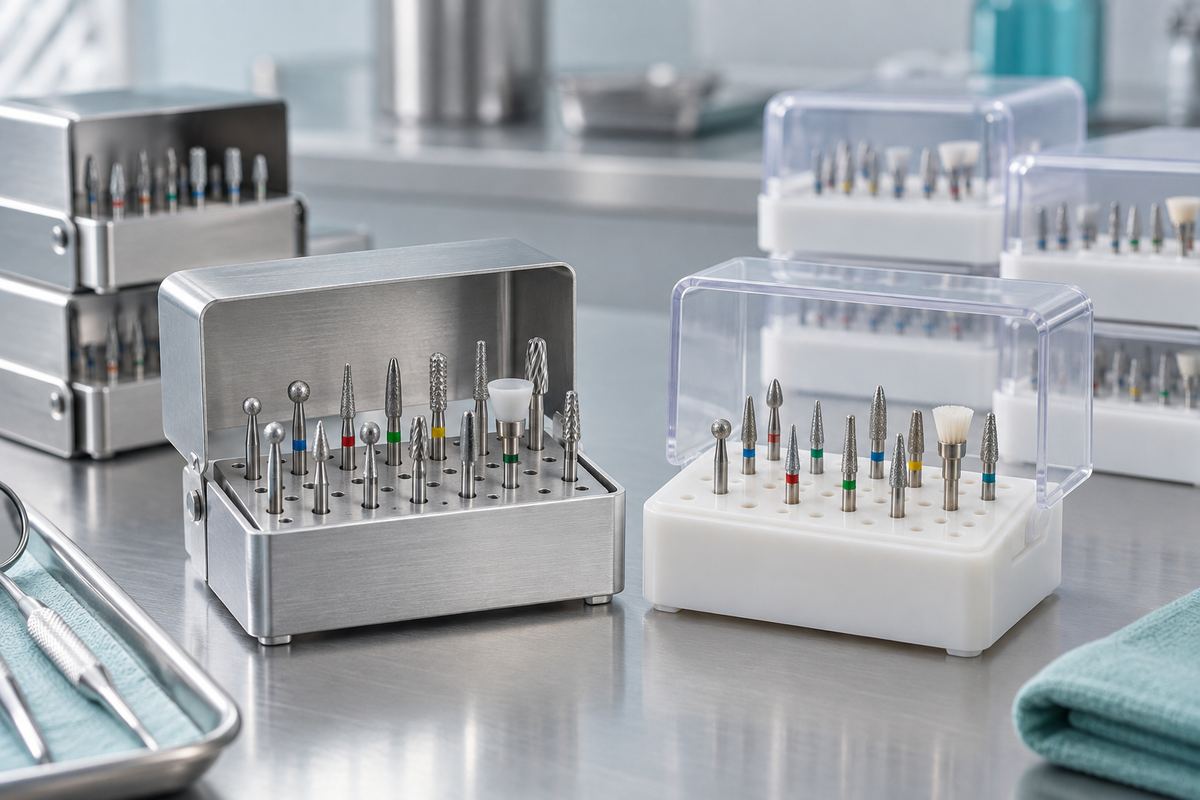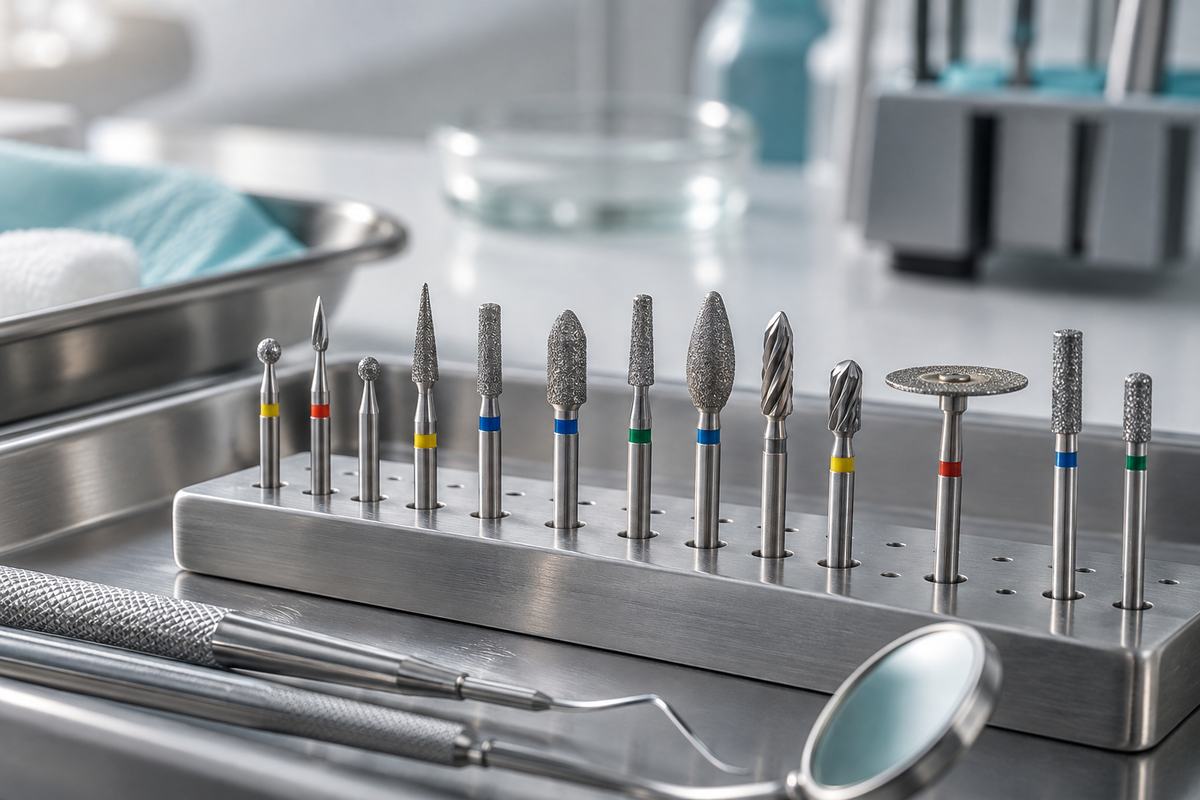
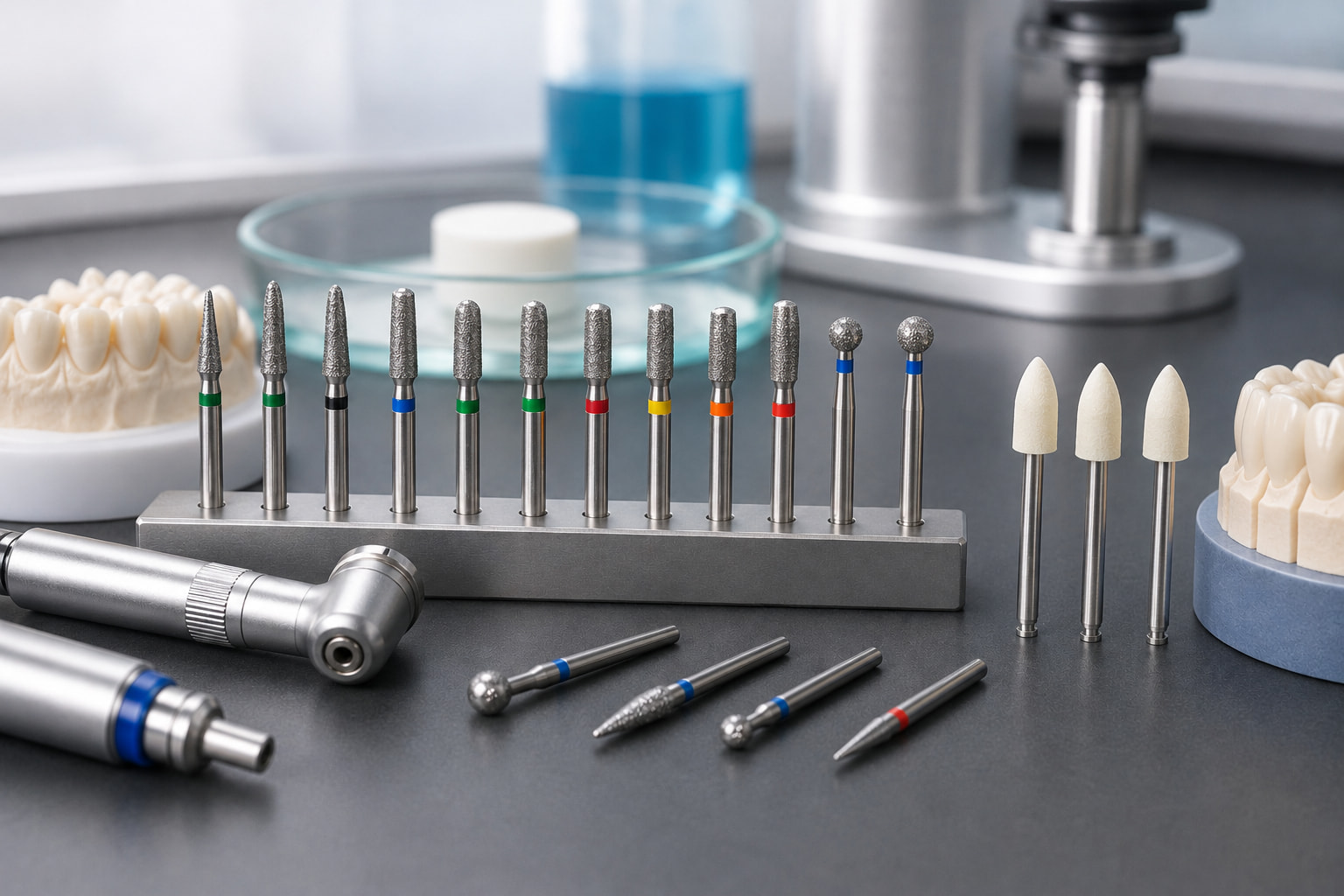
Diamond bur grit determines how aggressively a bur removes material and what surface quality it leaves behind. Selecting the wrong grit for a procedure wastes chair time — too coarse on a finishing step means extra polishing, too fine during bulk preparation means slow cutting and overheated tissue.
This guide organizes grit selection around clinical procedures rather than color bands. If you stock diamond burs for a multi-operatory practice or supply them to a dealer network, matching grit to procedure helps you build assortments that sell through instead of sitting on shelves.
How grit size affects cutting behavior
Diamond burs use industrial diamond particles bonded to a metal shank. The size of those particles controls two things: material removal rate and surface roughness.
Coarser grits (larger particles) strip away tooth structure or restorative material quickly but leave a rough surface. Finer grits remove less material per pass but produce smoother finishes that need less polishing afterward.
Manufacturers mark grit level with a color-coded band on the bur shank. From most aggressive to smoothest, the standard sequence is super coarse, coarse, medium, fine, super fine, and ultra fine. Each level corresponds to a range of diamond particle sizes, but the practical difference is what matters at chairside: how fast the bur cuts, and how much work remains before the surface is ready for the patient.
A two-grit sequence — one bur for shaping, a finer one for finishing — is the minimum for most restorative procedures. Skipping the finishing grit leaves scratches that compromise marginal seal and shorten restoration life.
Choosing grit by procedure
The table below matches common procedures to the grit levels that give the best balance of speed and surface quality.
| Procedure | Starting Grit | Finishing Grit | Notes |
|---|---|---|---|
| Crown preparation | Coarse | Fine | Coarse for bulk reduction, fine for margin cleanup |
| Veneer preparation | Medium | Fine | Medium preserves enamel while maintaining control |
| Cavity preparation (Class I/II) | Medium | Fine | Medium round or pear for access and shaping |
| Composite finishing | Fine | Super fine | Step down through grits, then follow with a polisher |
| Ceramic adjustment (chairside) | Medium | Super fine | Match grit to ceramic type, see material section below |
| Porcelain margin refinement | Fine | Ultra fine | Light pressure to avoid micro-fractures |
| Old restoration removal | Coarse | — | Coarse cuts through aged composite and amalgam |
| Endodontic access | Coarse | Medium | Coarse round bur to penetrate, medium to refine |
For everyday clinical use, medium-grit burs in standard shapes (round, pear, tapered flat-end) handle the largest share of procedures. Fine-grit versions of the same shapes cover the finishing steps. A practice that stocks these two grits across its most-used shapes can manage the majority of restorative work without reaching for specialty items.
Matching grit to restorative material
Not every material responds the same way to a given grit. A coarse diamond bur that works well on dentin will chip the margin of a lithium disilicate crown if applied with the same pressure and speed.
Zirconia. Full-contour zirconia is hard enough to resist coarse grits effectively, but aggressive cutting generates heat that can trigger phase transformation in the material. Use medium-grit diamond burs designed for zirconia for initial adjustment, then step down to fine and super fine. Follow with diamond stones or diamond rubber polishers to restore surface gloss after adjustment.
Lithium disilicate and glass ceramics. Fine-grit burs are the safest starting point for chairside adjustments. Coarse grits create subsurface cracks that weaken the restoration. Finish with super fine diamond burs, then polish with a diamond rubber polisher sequence to bring back the glaze layer.
Composite resin. Medium-grit burs shape composite efficiently after placement. Finish with fine and super fine grits in sequence, then move to silicone or rubber polishers for the final gloss. The multi-grit approach matters more with composite than with ceramics because composite is soft enough to show every scratch left by a coarser step.
Amalgam and metal alloys. Coarse and medium grits handle amalgam contouring and gross metal adjustment. Carbide finishing burs often replace diamond burs for the final steps on metal, since carbide flutes produce a smoother result on ductile metals than diamond abrasive does.
Stocking grit assortments for wholesale buyers
Practices and labs that order from BurDental typically build their diamond bur inventory around a core set of shapes in two or three grits each. A practical wholesale order covers:
- Medium grit in all primary shapes for everyday preparations
- Fine grit in the same shapes for finishing and margin refinement
- Coarse grit in round and tapered cylinder shapes for crown prep and old restoration removal
- Super fine grit in flame and egg shapes for polishing composites and ceramics
This four-grit framework covers every procedure in the table above without overstocking specialty items that collect dust. For clinics running a high volume of zirconia adjustments, add a dedicated set of medium and fine zirconia diamond burs — standard diamond burs wear faster against sintered zirconia.
BurDental ships factory-direct and supplies burs to clinics, labs, and distributors worldwide. CE marked and produced in an ISO 13485 factory, every grit level goes through the same quality control process. Contact us for a quote on custom grit assortments tailored to your practice volume.
Frequently asked questions
What diamond bur grit is best for crown preparation?
Start with coarse grit for bulk tooth reduction, then switch to fine grit for margin refinement and smoothing. This two-step approach gives you speed during the preparation phase and precision at the margin where fit matters most.
Can I use one grit for an entire procedure?
Medium grit can handle both preparation and basic finishing in some situations, but the surface quality will be lower than a two-grit sequence. For restorations where marginal seal and esthetics matter — anterior composites, ceramic veneers — stepping down through at least two grits produces better clinical results.
How do I know when a diamond bur needs replacing?
A worn diamond bur requires more pressure to cut, generates excess heat, and leaves a rougher surface than a fresh bur of the same grit. If you notice any of these signs, the bur has lost enough diamond coating to affect performance. Single-use burs should be discarded after one patient. Reusable burs should be inspected under magnification between uses.
Does the same grit perform differently on different materials?
Yes. A medium-grit bur cuts dentin faster than it cuts zirconia because dentin is softer. The effective surface finish also varies — medium grit on composite leaves a rougher surface than medium grit on glass ceramic. Always match your grit and polishing sequence to the specific material you are working on.
Where can I order diamond burs in bulk by grit level?
BurDental offers diamond burs in all standard grit levels with low minimums and factory-direct pricing. Reach out via WhatsApp at +86 186 8057 1046 for a quote on custom grit assortments.