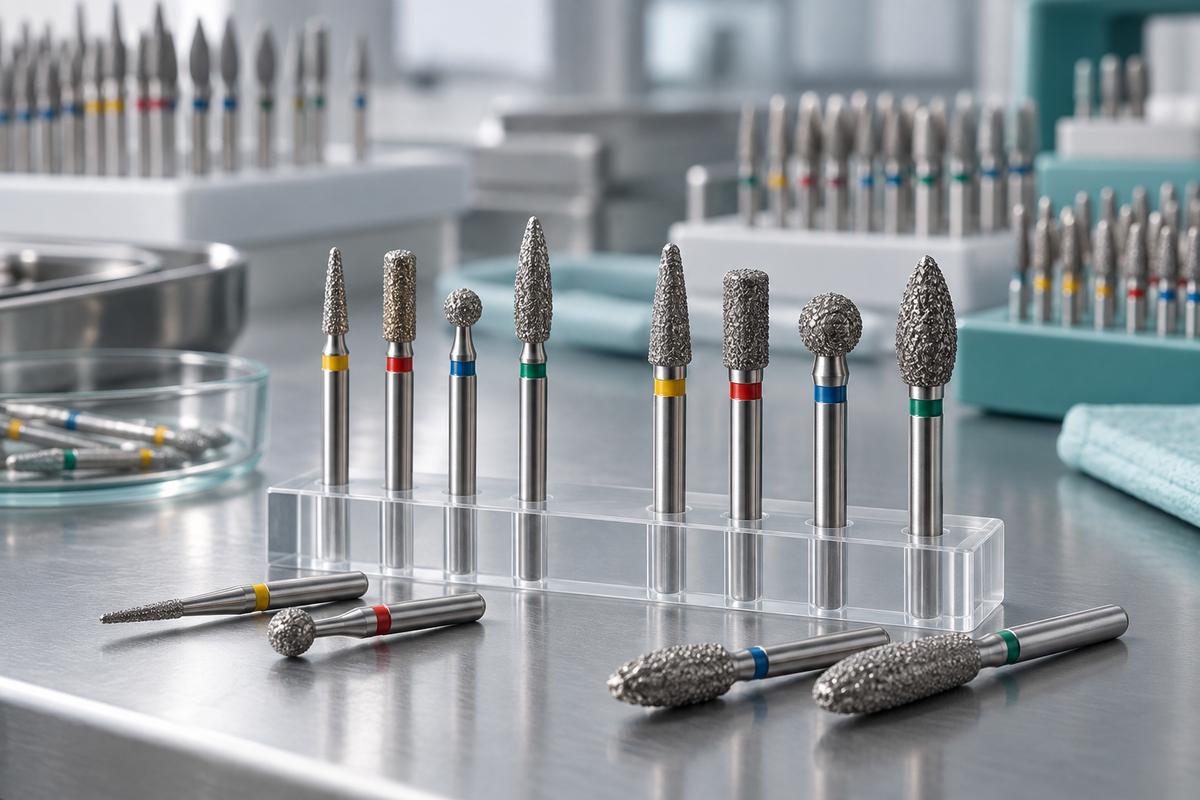
Procuring diamond burs wholesale requires a clear understanding of manufacturing methods, grit distributions, and clinic usage patterns. Dental distributors, group purchasing organizations, and large dental clinics face the challenge of balancing cutting efficiency with unit cost. Sourcing directly from an ISO 13485 certified factory ensures consistent diamond grit bonding, precise concentricity, and predictable clinical performance across every batch.
BurDental has manufactured rotary instruments since 2008, supplying CE marked cutting tools to dental practices and dental laboratories worldwide. When planning bulk inventory, purchasing managers must decide between electroplated diamond burs and fully sintered diamond burs, determine optimal grit assortments, and assemble procedure-specific sets that minimize clinical downtime and control overhead costs.
Electroplated vs sintered diamond burs for bulk orders
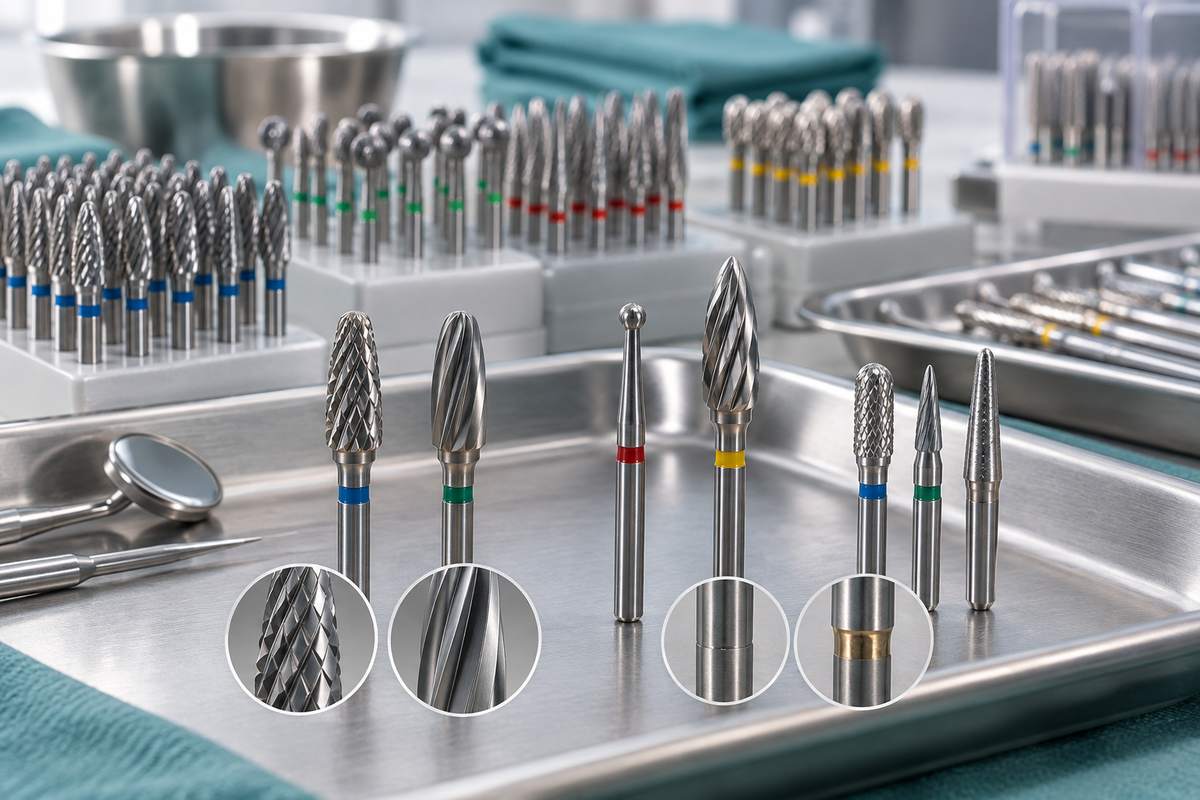
The primary distinction in diamond bur procurement lies in how diamond particles are bonded to the working end. Electroplated burs feature diamond particles bonded onto a stainless steel blank via a nickel matrix. In contrast, sintered diamond burs consist of diamond particles mixed uniformly throughout a metal matrix from the surface to the core.
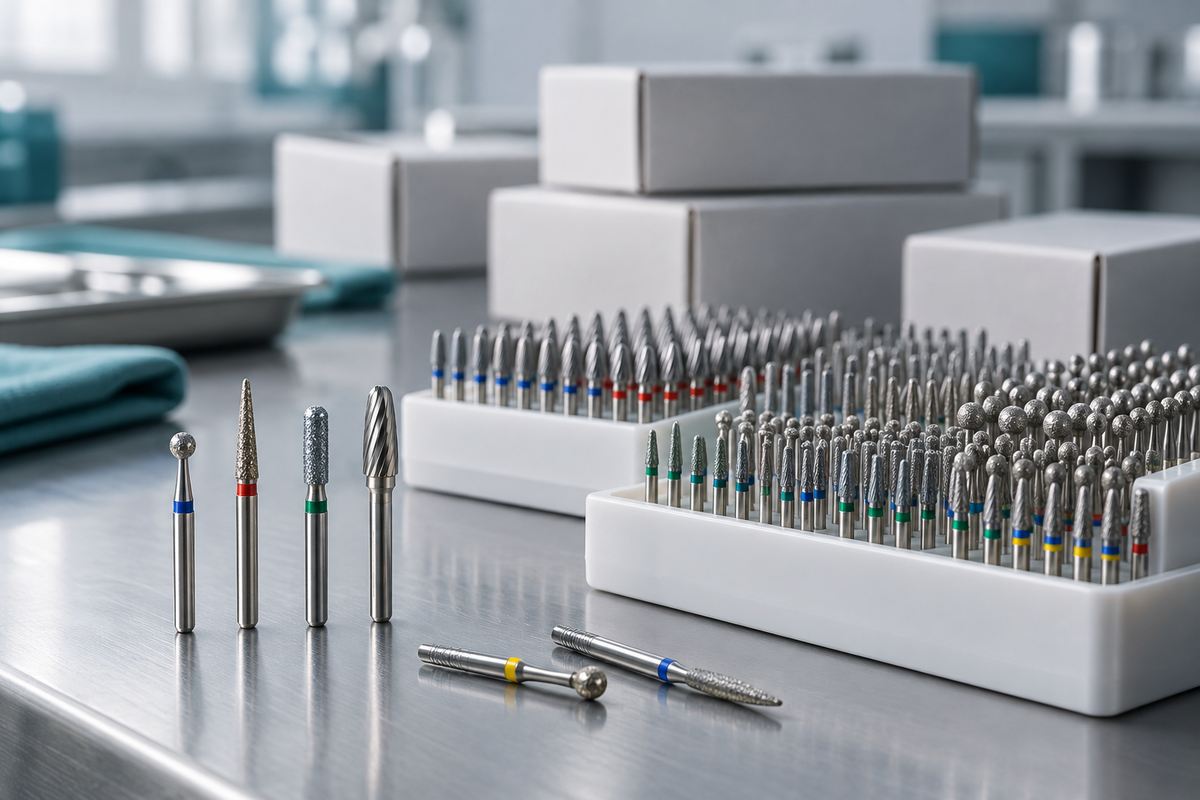
Electroplated diamond burs are the standard choice for chairside operative dentistry, including friction grip shanks for high-speed handpieces. They offer sharp initial cutting action and low unit costs, making them ideal for high-volume cavity preparation, crown preps, and restorative adjustments. Because the diamond layer is concentrated on the outer surface, electroplated burs provide fast material reduction at competitive wholesale price points. Dealers typically stock electroplated burs as fast-moving inventory for general practices.
Sintered burs, such as sintered diamond burs, are designed primarily for dental laboratories and heavy grinding applications on ceramics and hard alloys. As the outer layer of a sintered bur wears down, fresh diamond particles are exposed from within the matrix. This self-sharpening property gives sintered burs an extended working life compared to electroplated alternatives. Although sintered burs carry a higher unit manufacturing cost, their extended lifespan provides lower cost-per-unit-processed in dental laboratory production environments.
Grit selection and inventory ratios for dental clinics
Wholesale buyers must stock an appropriate balance of grit sizes to satisfy diverse clinical specialties without tying up capital in slow-moving stock. Diamond bur grits range from super coarse for bulk reduction to extra fine for composite and ceramic finishing.
A standard clinic inventory distribution follows practical clinical demand:
- Medium grit: Medium grit burs represent the core volume of any dental practice. Clinicians use medium grit burs for general tooth preparation, caries excavation, and universal reduction. In bulk orders, medium grit burs, such as SKU 001-010M and SKU 001-012M, typically account for forty to fifty percent of total inventory volume.
- Coarse and Super Coarse grit: Coarse burs are essential for rapid enamel reduction and gross crown preparation. Fast cutting reduces chair time during extensive prosthetic preps. Coarse grit burs, including SKU 001-008S, generally represent twenty to twenty-five percent of wholesale orders.
- Fine and Extra Fine grit: Fine grit burs prepare margins, refine finish lines, and smooth prepared surfaces before final impressions or digital scans. They account for twenty to twenty-five percent of purchasing volume.
- Ultra Fine finishing: Ultra fine burs are ordered in smaller quantities, roughly five to ten percent of stock, primarily for pre-polishing composite margins and ceramic restorations.
Distributors stocking for multidisciplinary practices should maintain a standard ratio weighted heavily toward medium and coarse grits for operative speed, supplemented by fine grits for margin refinement.
Stocking diamond burs by clinical procedure
Organizing wholesale procurement by procedure simplifies purchasing for clinic networks and ensures that practitioners always have the correct profiles available. Standardizing bur kits across operatories also streamlines sterilization cycles and inventory audits.
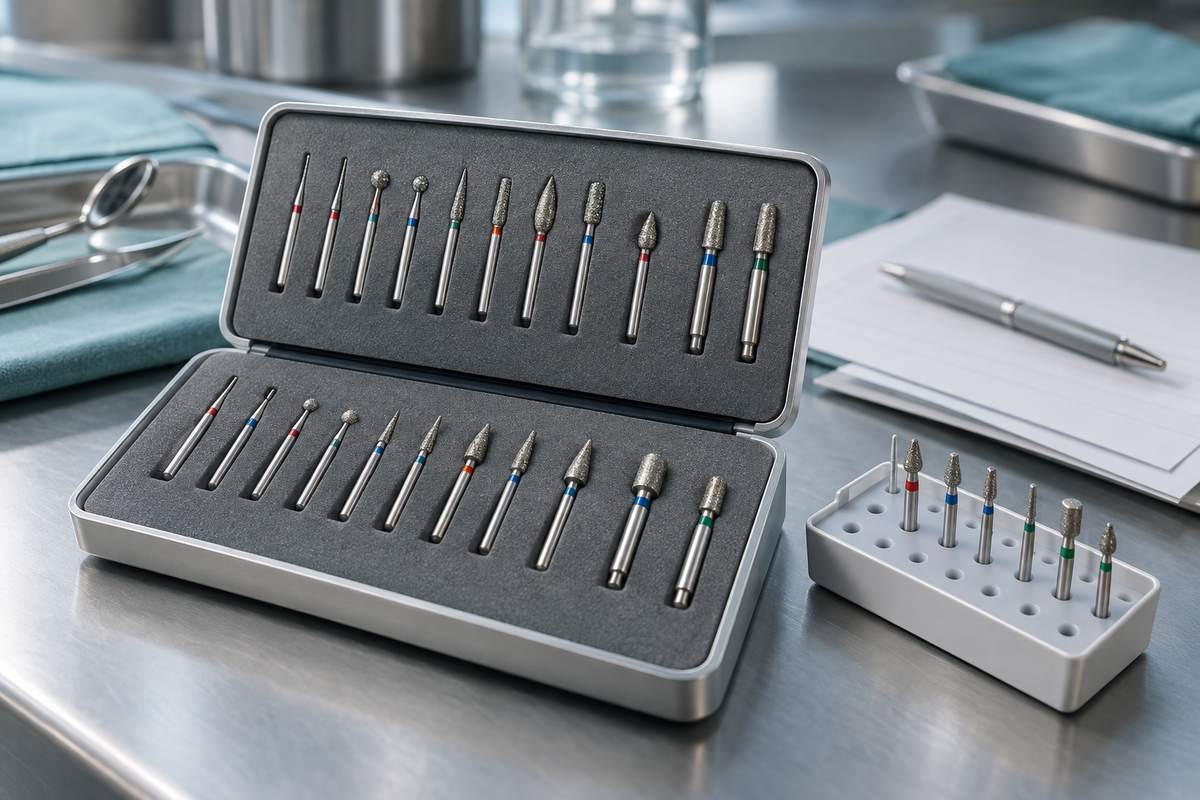
For crown and bridge preparation, clinics require round-end tapers, flat-end cylinders, and flame-shaped burs. Bulk purchasing programs should bundle these profiles with matching bur block organizers like SKU BB201 or SKU BB202 to keep operative stations structured and compliant with infection control standards.
For operative and restorative dentistry, round burs and pear-shaped burs are the primary consumables. Clinics consume high volumes of small round profiles for initial access and conservative cavity preparation. Pairing restorative diamond burs with dedicated clinic kits like SKU 4104, SKU 4105, or SKU 4103 allows supply managers to issue complete sets to operatories rather than managing loose individual burs.
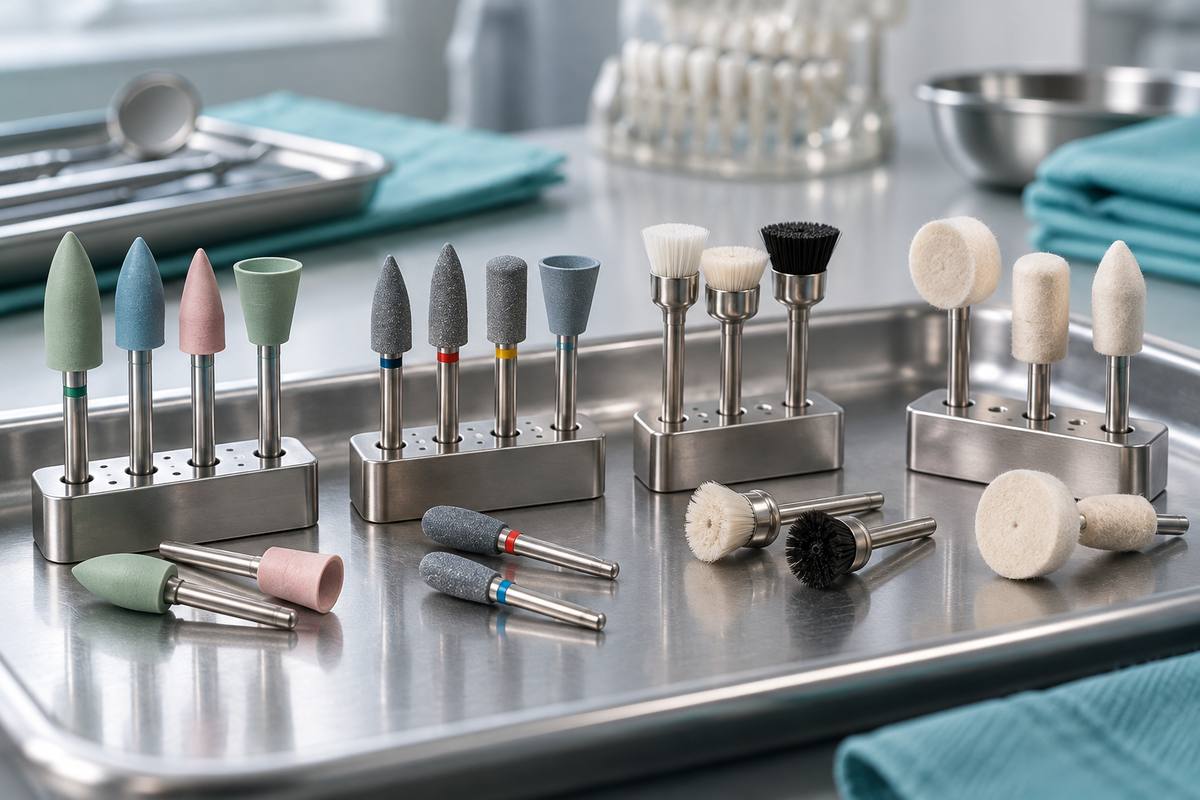
For prosthetic adjustment and polishing, clinics pair fine diamond burs with flexible polishers like diamond rubber polishers such as SKU SR101M, SKU SR103M, and SKU SR105M. Supplying complete procedural pathways from bulk reduction to final polish improves clinical workflow and reduces re-order frequency.
Comparison of wholesale diamond bur options
The table below outlines common diamond bur configurations, shank types, and primary applications available for factory-direct bulk ordering.
| Product Category | SKU Example | Working End Type | Shank Type | Primary Application |
|---|---|---|---|---|
| Diamond Burs | 001-008S | Electroplated Super Coarse | FG Friction Grip | Rapid enamel reduction and crown prep |
| Diamond Burs | 001-010M | Electroplated Medium | FG Friction Grip | Universal cavity prep and tooth reduction |
| Diamond Burs | 001-012M | Electroplated Medium | FG Friction Grip | General operative and restorative preps |
| Bur Block | BB201 | Aluminum Sterilizable | Storage Organizer | Operatory bur setup and autoclave cycles |
| Clinic Kits | 4104 | Multi-Grit Assortment | FG Friction Grip | Chairside procedural bur set |
| Clinic Kits | 4105 | Crown Prep Selection | FG Friction Grip | Prosthodontic preparation bundle |
| Diamond Rubber Polishers | SR101M | Diamond Impregnated Rubber | RA Latch / HP | Ceramic and composite surface smoothing |
| Diamond Rubber Polishers | SR103M | Diamond Impregnated Rubber | RA Latch / HP | Occlusal anatomy polishing |
Factory-direct ordering and private label options
Purchasing diamond burs directly from the manufacturer eliminates intermediary markups and gives buyers direct control over product specifications, packaging, and branding. BurDental supports dental supply companies, dental service organizations, and distributors with flexible OEM and private label programs.
Custom packaging options include blister packs, multi-bur cards, individual pouches, and custom-etched sterilizable aluminum bur blocks. Private label clients can specify custom grit color-coding bands, laser-marked shanks, and branded box packaging tailored to local regulatory requirements.
To initiate a bulk order or request custom OEM production, contact BurDental directly via WhatsApp at +86 186 8057 1046. Our sales team provides customized shipping quotes based on order volume, destination, and delivery timeline requirements.
Frequently asked questions
What is the minimum order quantity for wholesale diamond burs?
BurDental offers low minimum order quantities for standard catalog items and flexible order tiers for custom OEM packaging. Contact our sales department to receive an itemized wholesale quote based on your target SKU assortment.
Are BurDental diamond burs compatible with standard dental handpieces?
Yes, all BurDental diamond burs are manufactured with precision shanks conforming to international ISO standards. Friction grip shanks fit standard high-speed handpieces, while latch-type and handpiece shanks fit low-speed contra-angles and laboratory handpieces.
How does BurDental ensure diamond grit retention during clinical use?
BurDental uses advanced multi-layer electroplating and sintering processes in an ISO 13485 certified facility. Uniform diamond grit distribution and controlled bonding matrices prevent premature particle shedding and maintain consistent cutting rates across multiple sterilization cycles.
How are shipping costs calculated for international wholesale orders?
International shipping costs are calculated based on shipment weight, package volume, and destination country. Buyers should contact our sales team with their order details to obtain an accurate shipping quote prior to order confirmation.