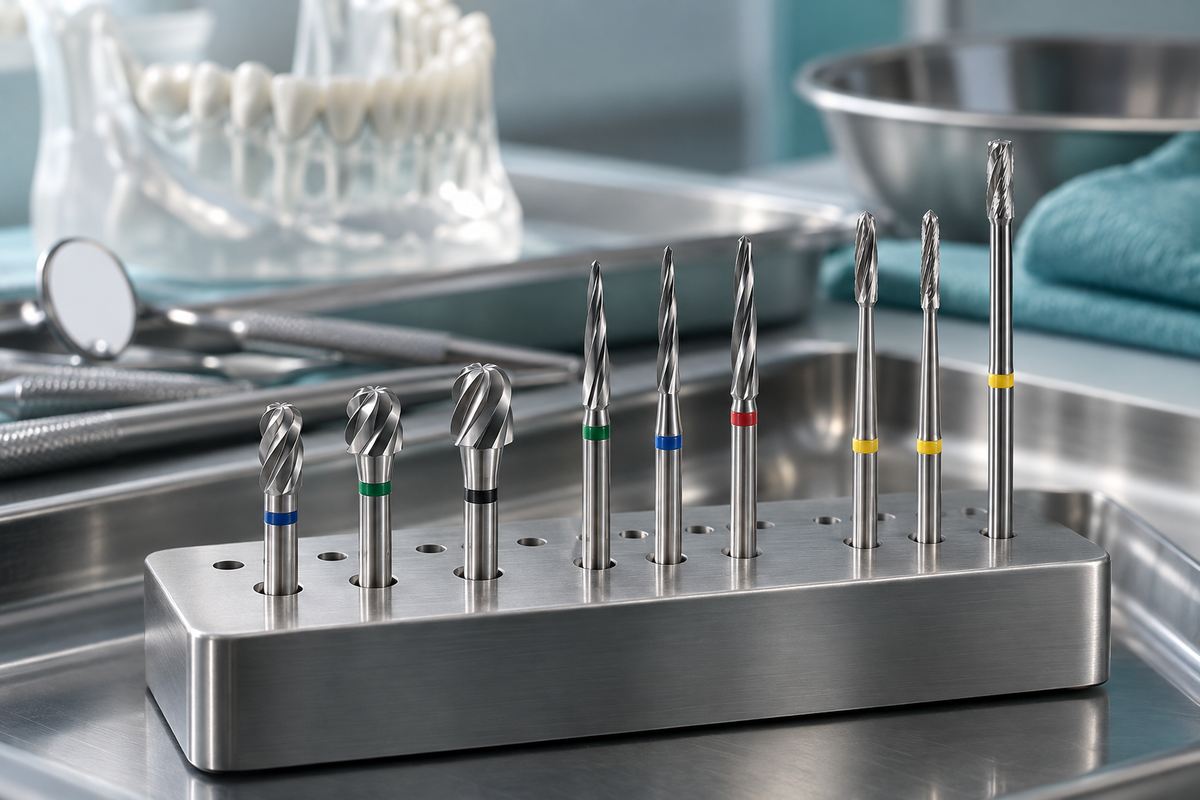
Oral surgery procedures require rotary instruments engineered specifically for bone resection, root sectioning, and third molar extractions. Standard operative burs lack the reach, flute depth, and structural rigidity needed to cut dense cortical bone without clogging or excessive heat generation. Equipping surgical operatories with purpose-built surgical burs ensures clean cuts, rapid debris evacuation, and predictable procedure times during complex extractions.
BurDental produces factory-direct wholesale dental burs and surgical rotary tools for clinics, oral surgery centers, and dental supply distributors. Operating from an ISO 13485 certified facility founded in 2008 with CE marked product lines, BurDental manufactures high-precision Tungsten Carbide Burs For Extraction designed for clinical durability and steady cutting control.
Core Types of Surgical Burs in Oral Surgery
Oral surgeons and general dentists performing surgical extractions rely on three main configurations of rotary instruments: bone cutters, Lindemann burs, and fissure extraction burs. Each bur type addresses a specific stage of surgical tooth removal and osteotomy.
Round Bone Cutters
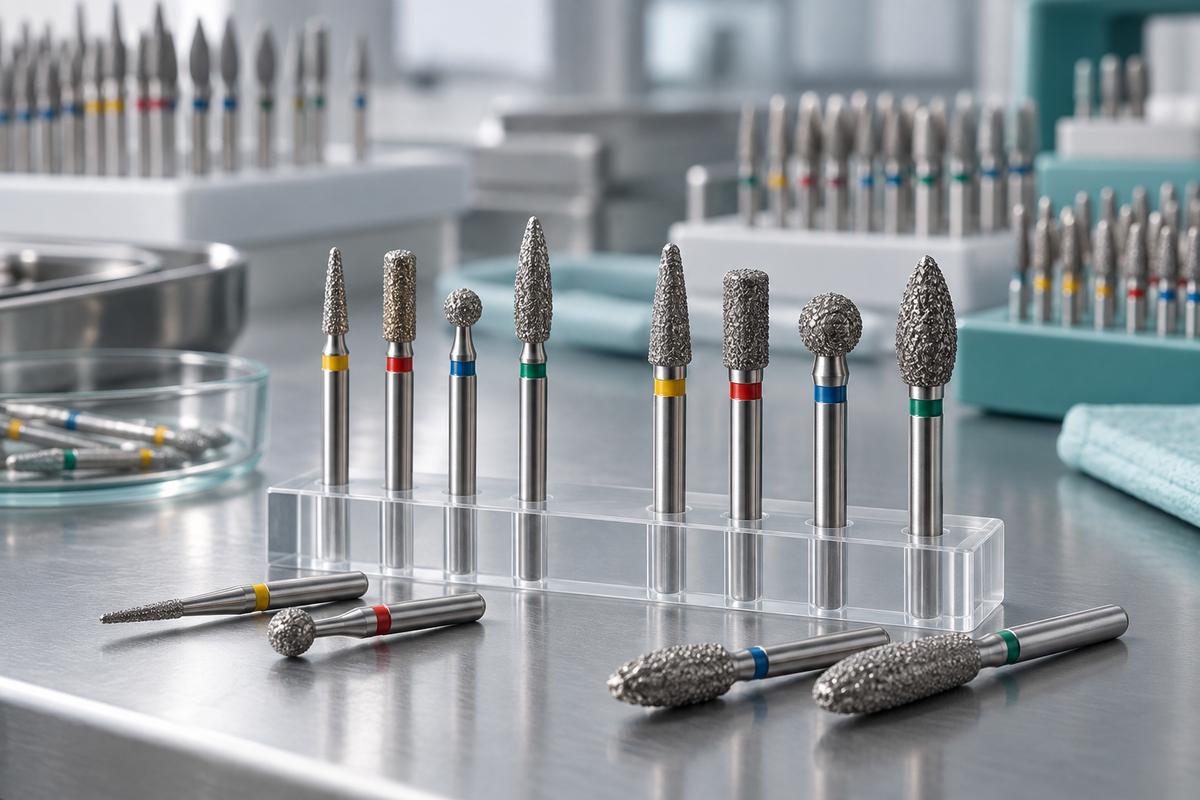
Round surgical carbide burs are used primarily for initial bone removal, unroofing impacted teeth, and creating initial purchase points in cortical bone. The spherical head provides multi-directional cutting, allowing the clinician to trough bone around the crown of an impacted tooth without creating sharp line angles. Standard round surgical head sizes allow controlled bone removal while preserving adjacent anatomical structures. In addition to carbide options, coarse diamond burs are sometimes utilized for surface bone smoothing and alveoloplasty.
Lindemann Burs
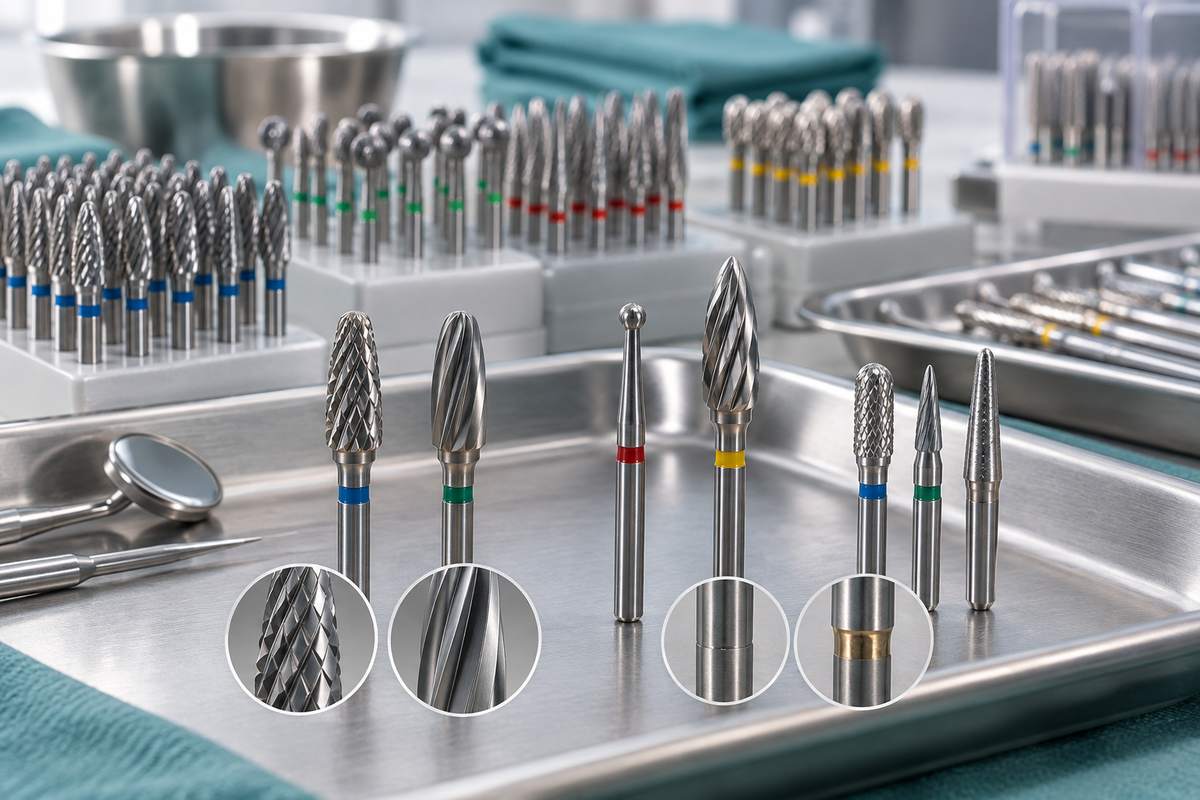
Lindemann burs feature specialized helical flutes with cross-cuts that facilitate aggressive bone cutting while clearing debris rapidly from the osteotomy site. The sharp side-cutting flutes allow the clinician to slice through cortical bone with minimal down-force, reducing heat buildup and chatter. Lindemann burs are standard tools for hemisection, ramus osteotomies, and deep root troughing where lateral cutting efficiency is required.
Tapered and Straight Fissure Extraction Burs
Fissure extraction burs, including cross-cut tapered fissure designs, are the primary tools used for sectioning multi-rooted molars and separating crowns from roots. The cross-cut serrations break chips into fine particles, preventing the bur flutes from binding inside deep tooth cuts. These burs maintain straight, narrow cut channels, preserving surrounding bone while separating stubborn roots for individual elevation.
Shank Lengths and Handpiece Compatibility
Surgical access demands rotary instruments that reach beyond the standard operative bur length. Standard operative FG (Friction Grip) burs typically measure 19 mm in total length, which is insufficient for working deep in the posterior mandible or through a surgical flap. Surgical burs solve access limitations through extended shank formats.
Surgical FG Long Shanks
Surgical FG burs, often designated as surgical length or extra-long shank burs, feature overall lengths extending from 25 mm to 31 mm. These burs fit standard high-speed surgical handpieces that feature 45-degree angled heads and rear exhaust ports. The extended shank allows the handpiece head to remain outside the direct visual path of the operator, improving line-of-sight into the extraction socket and ensuring cooling irrigation reaches the cutting head directly.
Surgical RA and Latch-Type Shanks
Right-Angle (RA) surgical burs are engineered for slow-speed, high-torque surgical contra-angle handpieces. These instruments operate at lower rotational speeds with high torque, making them ideal for precise osteotomy preparation, bone harvesting, and apical surgery where thermal control is paramount. The latch grip mechanism ensures positive retention under heavy lateral loads.
Straight Handpiece (HP) Shanks
Straight handpiece surgical burs feature long, smooth shanks designed for straight surgical handpieces and lab motors. HP burs are commonly selected for extraoral bone trimming, graft shaping, and hospital-based maxillofacial surgical workflows. The rigid shank construction minimizes deflection during heavy bone recontouring.
Flute Geometry and Debris Clearance
The mechanical efficiency of a surgical bur depends on its flute design, cross-cut density, and raw material quality. Bone and dentin generate different chip types during cutting, and surgical instruments must handle both materials without packing the flutes.
Cross-Cut Architecture
Cross-cut flutes feature horizontal notches ground across the longitudinal blades. These notches divide the cutting edge into smaller contact zones. When sectioning a dense molar or cutting through cortical bone, cross-cuts break down continuous shavings into smaller fragments. This prevents chip packing, lowers cutting resistance, and allows sterile saline irrigation to penetrate the cutting zone.
Helical Flute Angles
Helical flutes spiral around the bur axis to guide debris upward and away from the surgical cutting tip. In deep socket preparations, this auger effect keeps the cutting interface clear of bone slurry. The continuous clearance reduces frictional heat and maintains clean visual inspection of the cutting path.
Solid Tungsten Carbide Construction
BurDental manufactures extraction and surgical burs using fine-grain tungsten carbide heads brazed to high-tensile stainless steel shanks or produced as one-piece solid carbide tools. Solid carbide construction eliminates the joint interface, offering maximum resistance to breakage under lateral bending moments common during tooth sectioning.
Surgical Bur Comparison
Selecting the correct bur configuration depends on the anatomical challenge, bone density, and the surgical handpiece in use. The following table compares common surgical rotary tools:
| Bur Configuration | Primary Application | Compatible Shanks | Cutting Action | Chip Clearance Capacity |
|---|---|---|---|---|
| Round Bone Cutter | Cortical bone removal and purchase points | FG Surgical, RA, HP | End and side cutting | Moderate |
| Lindemann Bur | Osteotomy and lateral bone troughing | FG Surgical, HP | Side-cutting helical | High |
| Cross-Cut Tapered Fissure | Multi-root sectioning and crown separation | FG Surgical, RA | End and side cross-cut | High |
| Straight Fissure Bur | Axial groove creation and tooth division | FG Surgical, HP | Linear side cutting | Moderate |
| Coarse Diamond Surgical | Alveoloplasty and ridge smoothing | FG Surgical, HP | Multi-directional abrasive | Low to Moderate |
Sterilization Protocols and Bur Care in Surgical Settings
Surgical instruments require strict infection control workflows to protect patient safety and maintain cutting performance across multiple autoclaving cycles.
- Pre-Cleaning and Decontamination: Immediately after surgery, place burs in an enzymatic bath or ultrasonic cleaner to dissolve blood, bone debris, and protein deposits. Never allow surgical debris to dry inside bur flutes.
- Visual Inspection: Inspect bur heads under magnification for chipped blades, dull edges, or bent shanks. Discard worn burs promptly, as dull blades increase cutting pressure and generate excessive heat in bone tissue.
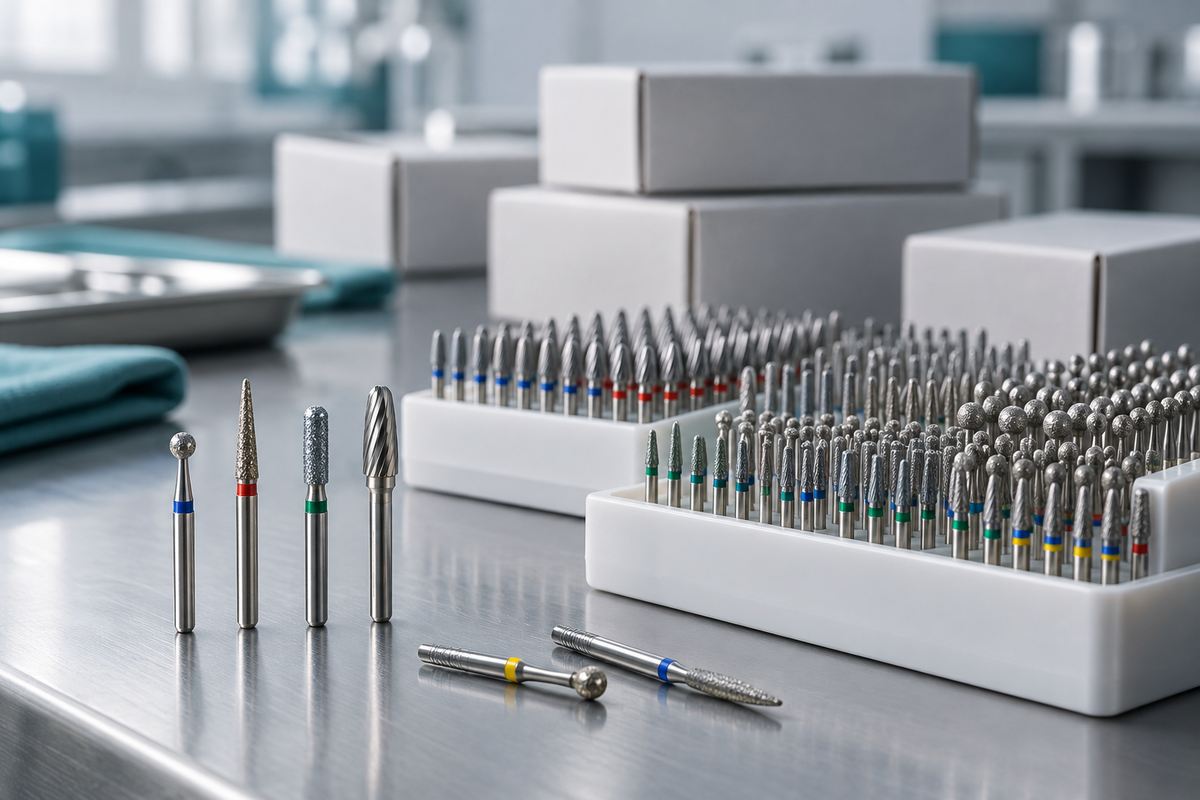
- Organized Autoclaving: Place cleaned burs into autoclavable bur blocks that isolate each bur head. Steam autoclave according to standard clinic sterilization parameters. Dedicated bur blocks prevent instrument heads from striking each other during cleaning and handling cycles.
Sourcing Surgical Burs Factory-Direct for Clinics and Dealers
Procuring surgical burs directly from the manufacturer gives dental groups, hospital supply chains, and dental distributors significant commercial advantages over buying through multi-tier distribution channels.
Factory-Direct Pricing and Stable Supply
Purchasing directly from BurDental eliminates middleman markups while providing direct access to technical production support. Clinics and hospital networks can standardize their extraction kits with consistent bur geometries, reducing per-procedure rotary tool costs.
OEM and Private Label Programs
For dental brands and regional distributors, BurDental provides comprehensive private label services. OEM partners can specify custom head shapes, laser markings, unique shank lengths, and branded blister or box packaging. Every batch is manufactured under ISO 13485 quality management systems to meet international regulatory standards.
Sample Orders and Quotes
BurDental supports commercial clients with low minimum order quantities on standard catalog items, allowing buyers to verify cutting performance before committing to large inventory orders. To review catalog options, request product samples, or receive a landed shipping quote, contact the BurDental sales team or message our factory representative directly on WhatsApp at +86 186 8057 1046.
Frequently asked questions
What makes a surgical bur different from a standard operative bur?
Surgical burs feature extended shank lengths for deeper access in surgical sites and specialized flute geometries designed to cut cortical bone and section roots without clogging. They provide higher structural rigidity to withstand lateral forces during difficult extractions.
Can surgical carbide burs be sterilized and reused?
Yes, surgical tungsten carbide burs can undergo standard autoclave sterilization cycles when cleaned thoroughly in an ultrasonic bath prior to autoclaving. Practices should store and sterilize them in dedicated autoclavable bur blocks to protect cutting edges from contact damage.
What shank types are available for BurDental surgical burs?
BurDental produces surgical burs in friction grip surgical long lengths, right-angle latch, and straight handpiece shanks to match all standard oral surgery and implant handpieces. Custom shank configurations and private label packaging are available through our factory OEM program.
How do clinics and distributors order surgical burs in bulk?
Buyers can submit wholesale inquiries or request a custom quotation directly through our sales team or via WhatsApp at +86 186 8057 1046. BurDental provides low minimums and factory-direct pricing for clinics, surgical groups, and dental dealers worldwide.