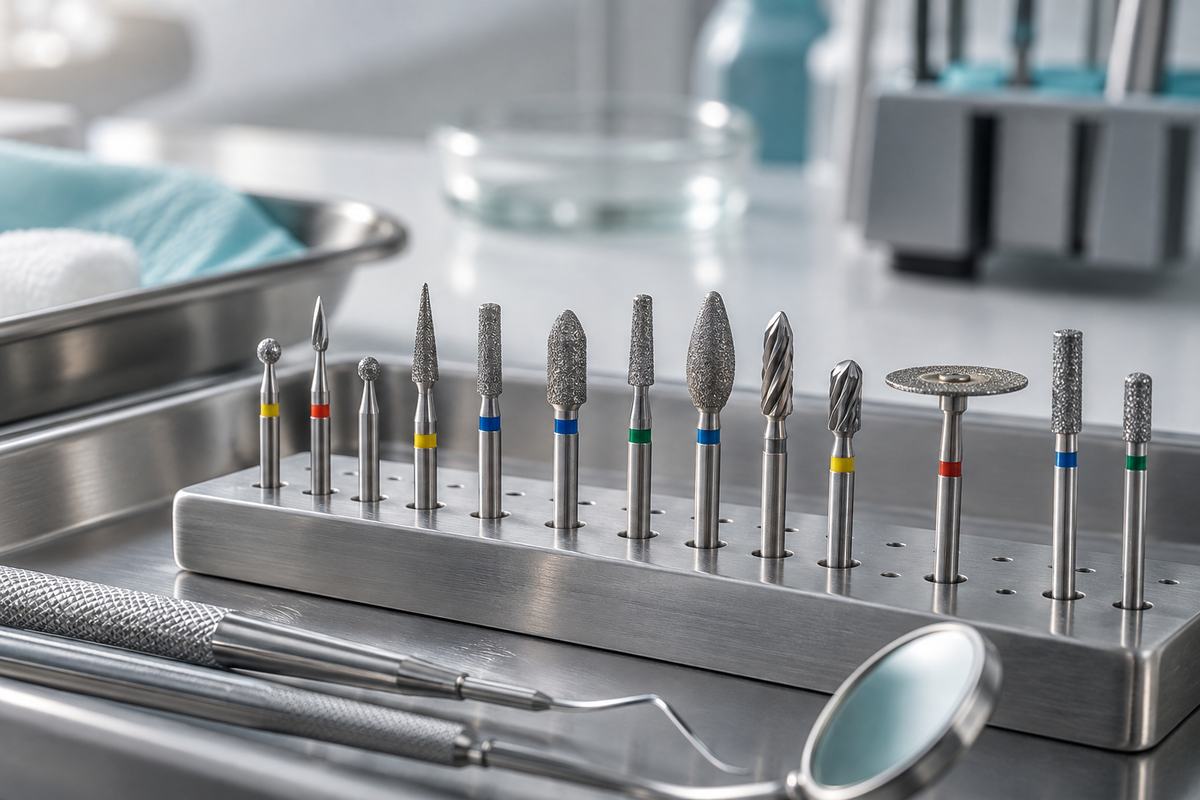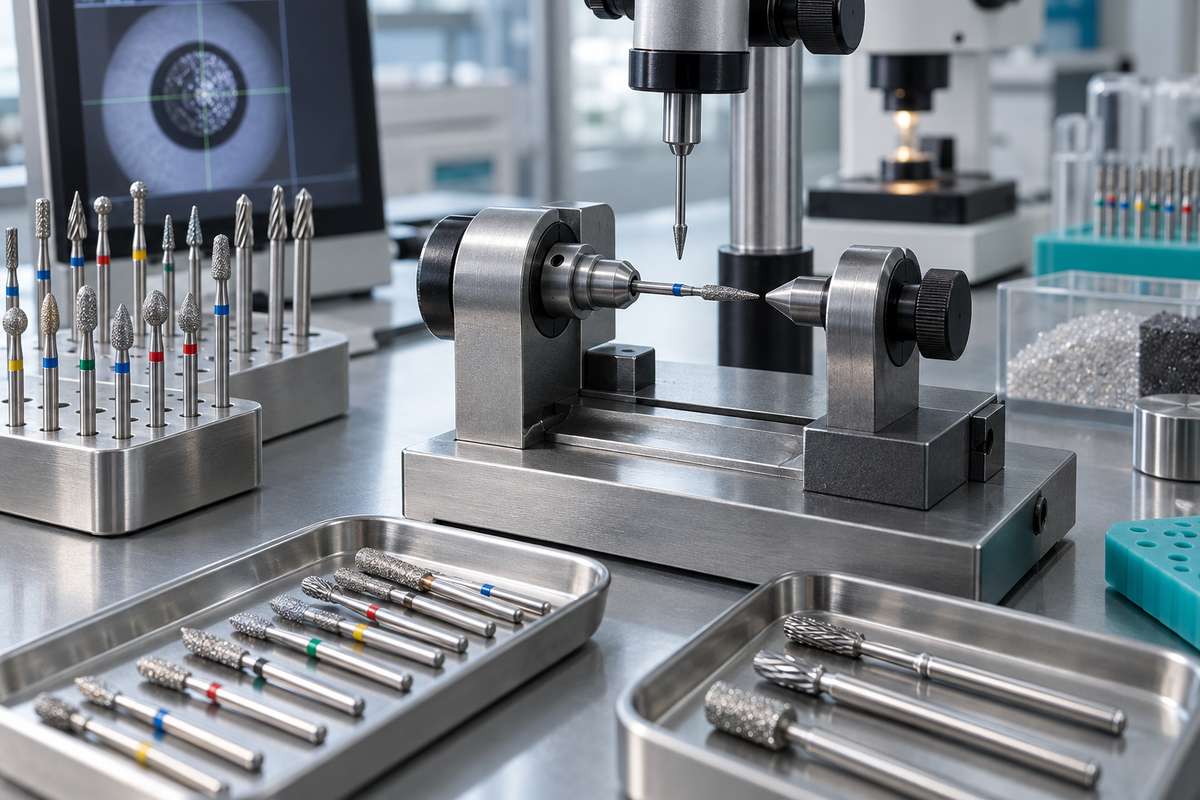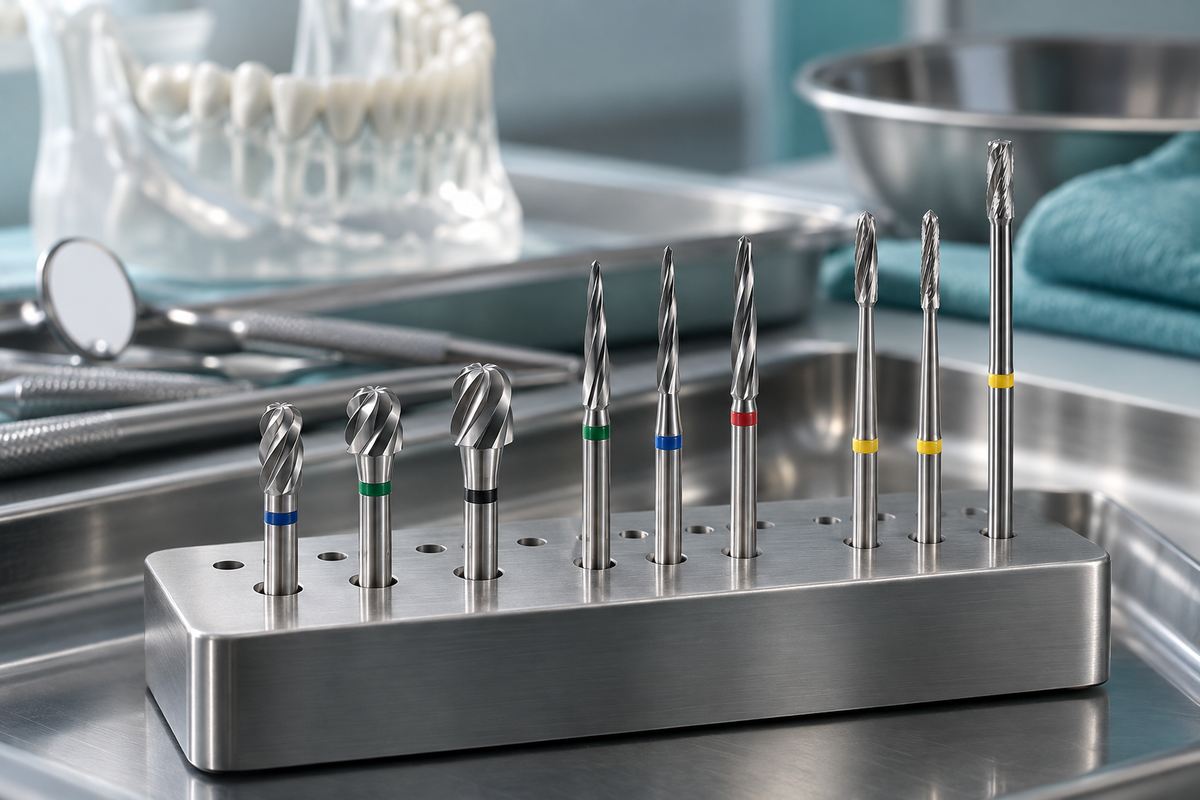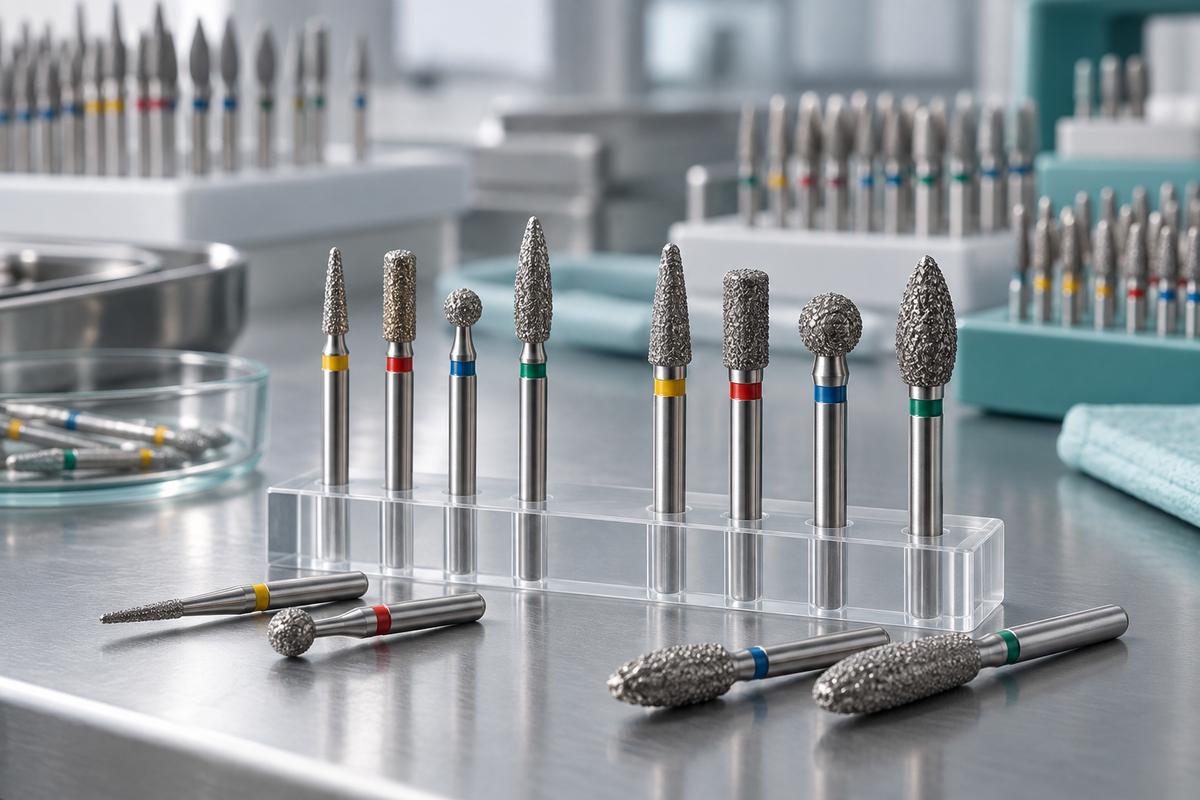
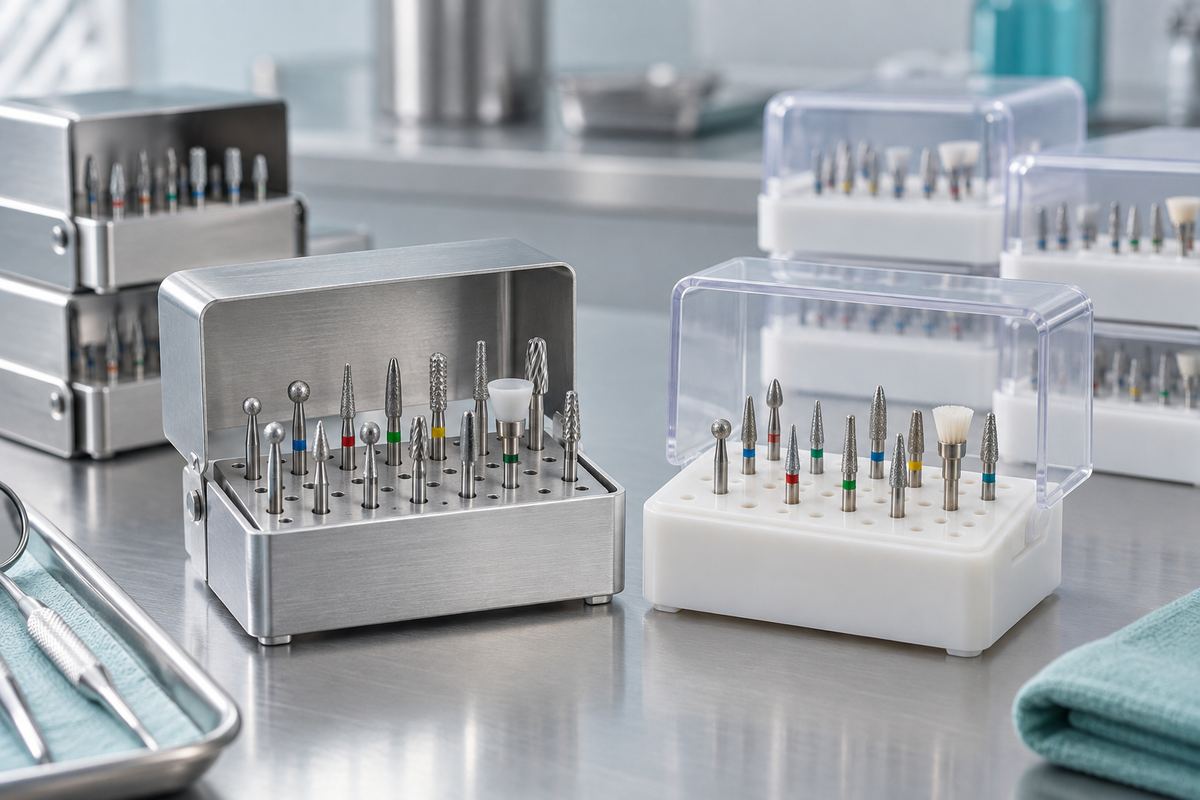
Managing chairside rotary instruments requires a systematic approach from initial operatory preparation through cleaning, ultrasonic treatment, autoclave sterilization, and storage. A dedicated dental bur block holds burs in fixed positions, preventing cutting edges and diamond grit from colliding during reprocessing cycles. Without structured storage, loose burs contact each other inside ultrasonic baths and sterilization pouches, causing premature blade chipping on carbide burs and abrasive loss on electroplated diamond instruments.
For dental supply distributors, clinic procurement officers, and dental laboratory managers, bur storage and sterilization organizers represent an essential companion category to rotary cutting instruments. When sourcing dental burs in bulk, ordering matched storage hardware—such as sterilizable aluminum blocks, autoclavable polymer organizers, sample display folders, and aluminum storage cartridges—improves operational efficiency across clinical operatories. Sourcing directly from an established factory ensures consistent dimensional tolerances, reliable anodizing, and long-term material resistance against repetitive heat and steam cycles.
Workflow benefits of structured bur organization in dental clinics
Reprocessing rotary instruments through daily decontamination protocols places significant mechanical and chemical stress on cutting heads and shanks. Organizing burs in dedicated blocks streamlines each phase of the reprocessing cycle while protecting instrument geometry.
In busy dental clinics, operatory turnover time depends on how fast staff can clean, repackage, and sterilize instrument trays. When burs sit loose in general wash baskets, assistants spend extra minutes sorting mixed shank types, separating friction grip shanks from right-angle latch attachments. Standardizing on dedicated dental bur blocks allows clinical teams to assemble preset procedure blocks for specific clinical workflows, such as crown preparation, cavity restoration, endodontic access, or prosthetic finishing.
Standardized procedure blocks also support infection control protocols. Dental assistants can visually confirm that every bur required for a specific treatment is present before sealing the block in a sterilization pouch. After the autoclave cycle completes, the sealed block transfers directly to the operatory setup tray without requiring staff to handle sharp instruments individually, reducing the risk of accidental needle or bur sticks.
Sterilizable aluminum versus autoclavable plastic bur blocks
Wholesale buyers selecting bur organizers for clinics and distribution networks generally choose between two primary materials: anodized aluminum and medical-grade autoclavable polymers. Each material offers distinct physical properties suited to different practice environments and reprocessing preferences.
Anodized aluminum blocks provide superior durability and thermal conductivity. During steam autoclave sterilization, aluminum transfers heat rapidly across the entire structure, aiding uniform temperature distribution and efficient drying. High-grade surface anodization creates a protective oxide layer that resists surface corrosion from moisture and routine autoclaving. Models such as the BB201 and BB202 feature precision-machined holes that grip shanks securely, preventing burs from dislodging when trays move between cleaning stations. Aluminum organizers withstand years of daily autoclave cycles without warping, cracking, or degrading under high pressure.
Autoclavable polymer blocks, such as model BB212, provide a lightweight, corrosion-proof alternative. Medical-grade plastics resist chemical exposure during ultrasonic cleaning pre-soaks and cold chemical disinfection procedures. Many polymer designs feature translucent or transparent covers that allow clinicians and assistants to inspect bur inventory and identify head shapes without opening the lid. This visual access reduces contamination risk in clean storage cabinets. However, polymer blocks require medical-grade resin formulations to resist brittleness and surface discoloration after repeated steam sterilization cycles.
The following table summarizes the specifications and intended clinical applications of standard bur block models available for wholesale procurement:
| Organizer Model / SKU | Material Type | Reprocessing Method | Primary Clinical Application |
|---|---|---|---|
| BB201 | Anodized Aluminum | Steam Autoclave | Crown and bridge multi-bur chairside setup |
| BB202 | Anodized Aluminum | Steam Autoclave | Operatory cavity preparation rotary organizer |
| BB212 | Autoclavable Polymer | Steam Autoclave and Chemical Soak | General clinic bur storage and chairside organization |
Companion storage systems: aluminum cartridges and presentation folders
A complete rotary instrument storage strategy extends beyond chairside bur blocks to include bulk storage hardware and sales presentation tools. Distributors and institutional buyers frequently combine multiple organizer formats within single container shipments to serve different functional requirements.
An Empty Aluminum Cartridge serves as a heavy-duty container for bulk bur storage, bur transport, and sensitive dental lab tools. Machined from solid aluminum with threaded or friction-fit closures, these cylindrical cartridges protect extra-long laboratory burs, precision mandrels, and specialty cutters from physical impacts during transit between dental clinics and processing centers. In institutional dental hospitals and large multi-chair practices, aluminum cartridges provide secure, dust-free bulk storage inside central supply dispensaries.
For dental dealers, distributors, and field sales teams, sample display folders provide an organized format for presenting rotary product lines directly to dentists and lab technicians. Sourcing specialized Burs Folder units—such as models 170B5, 1701D, and 1702T—allows distributors to showcase diverse bur head geometries, grit color bands, and shank options in a compact binder format. These display collections help clinical purchasers compare diamond burs, carbide cutters, and finishing polishers side by side before finalizing bulk procurement contracts.
Wholesale procurement and bundling strategies for dental suppliers
Dental rotary instruments and organizer hardware share a natural purchasing synergy. Sourcing bur blocks alongside high-volume consumables like diamond burs (such as SKUs 001-008S, 001-010M, and 001-012M) enables distributors to offer turn-key procedural kits to new dental clinics, educational institutions, and expanding hospital networks.
Bundling factory-direct rotary tools with custom-branded bur blocks creates higher perceived value for private-label distributors. BurDental supports OEM manufacturing programs, allowing distributors to apply custom laser engraving, clinic branding, or color-coded anodizing directly onto aluminum block surfaces. Laser-etched bur positions, size markings, and clinic logos remain legible through repeated reprocessing cycles, reinforcing distributor branding inside dental operatories.
When evaluating manufacturing partners for bur storage hardware, international buyers must verify factory credentials and quality control systems. BurDental operates an ISO 13485 certified manufacturing facility founded in 2008, producing CE marked dental rotary instruments and accessories. Factory-direct procurement eliminates intermediary markups, guarantees strict dimensional consistency across bur socket diameters, and provides stable supply continuity for recurring wholesale contracts. For detailed container freight estimates and custom packaging options, buyers can request a tailored shipping quote from the factory export team.
Frequently asked questions
What material is recommended for high-volume dental autoclave cycles?
Anodized aluminum bur blocks deliver exceptional heat transfer and structural stability throughout repeated steam autoclave cycles. Medical-grade polymer blocks provide a lightweight, corrosion-proof alternative with transparent covers for rapid visual bur identification.
How can dental distributors order custom private label bur blocks?
BurDental offers comprehensive OEM services, including custom laser engraving of distributor logos, bur position markings, and specialized anodized finishes on aluminum blocks. Contact our sales department via WhatsApp +86 186 8057 1046 to review design mockups and private label packaging requirements.
What is the minimum order quantity for wholesale dental bur blocks?
We offer flexible low minimum order requirements on standard catalog models, including BB201, BB202, and BB212. Sourcing managers can request a custom wholesale quote covering specific quantities and companion bur selections.
Can presentation folders be configured with custom bur selections for dealer sales teams?
Yes, sample folders such as models 170B5, 1701D, and 1702T can be assembled with custom assortments of diamond burs, carbide cutters, and polishers to match regional catalog offerings.