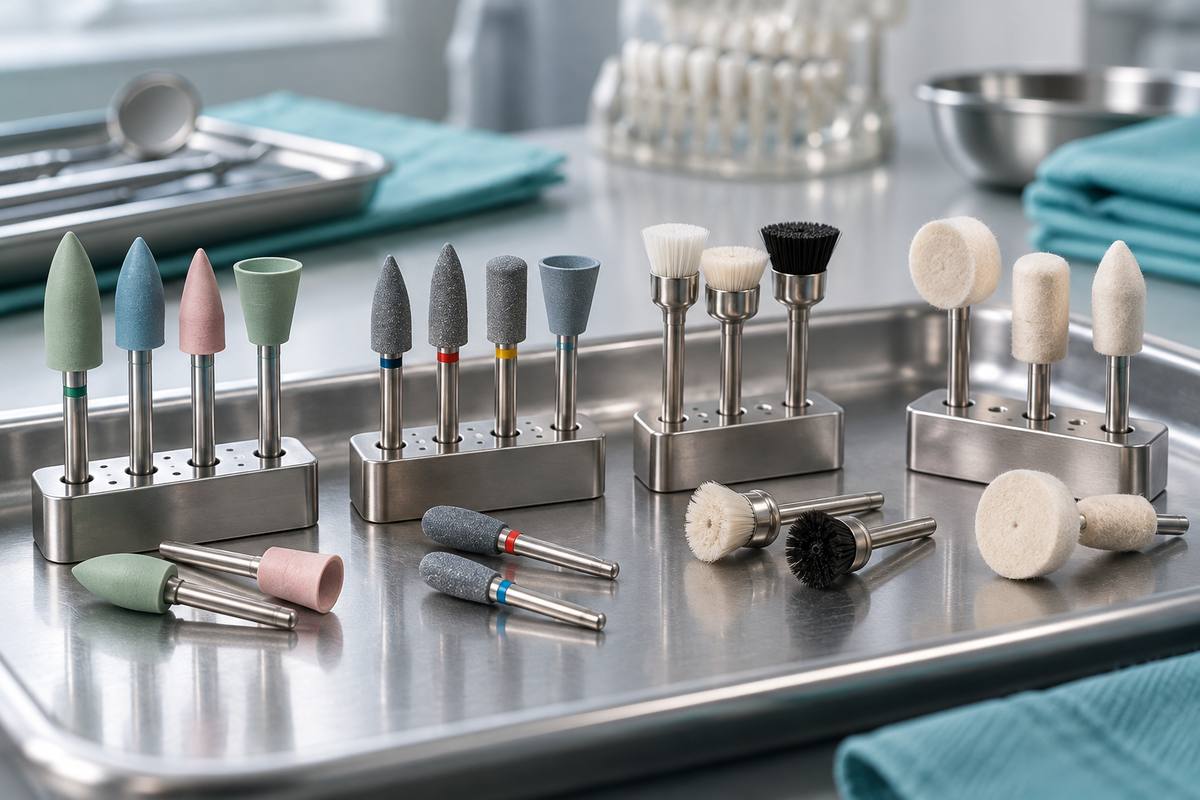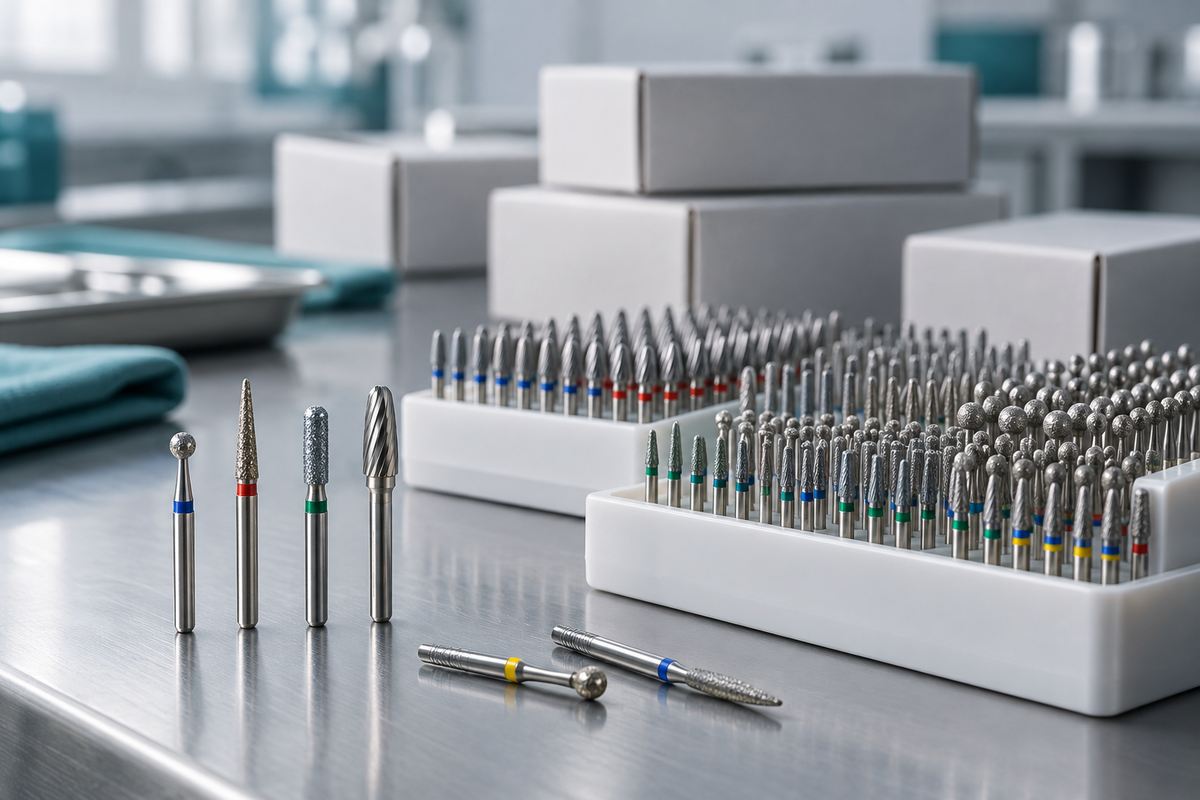
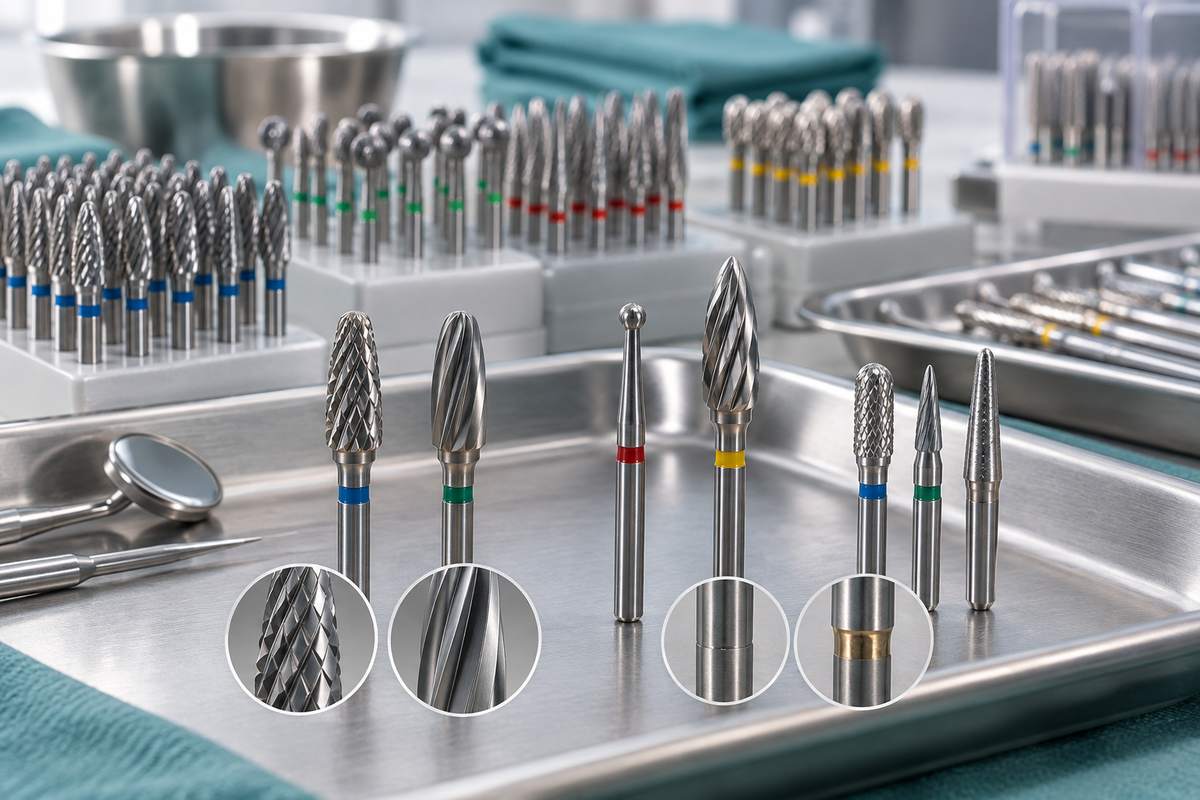
Wholesale procurement of dental rotary instruments requires balancing cutting efficiency, clinical durability, and unit cost across high-volume clinic networks and distribution channels. Among restorative consumables, tungsten carbide burs represent one of the highest inventory turnover categories in commercial dental supply. Clinics rely on carbide burs for primary cavity preparation, old restoration removal, crown sectioning, and fine restorative finishing. Because these instruments undergo high rotational stress and repetitive autoclave cycles, selecting the right manufacturing specifications directly influences clinical chair time and product return rates.
BurDental operates an ISO 13485 certified manufacturing facility founded in 2008, supplying factory-direct tungsten carbide burs and rotary accessories to dental dealers, hospital procurement teams, and group dental practices globally. Understanding the structural differences between blade cut geometries, shank construction methods, and procedure-based department requirements allows purchasing managers to optimize inventory costs while maintaining consistent cutting performance.
Blade Geometry: Cross-Cut vs Plain Cut Carbide Burs
The arrangement and spacing of cutting flutes determine how a tungsten carbide bur interacts with tooth structure, restorative composites, and dental casting alloys. In commercial wholesale orders, the two primary cutting patterns requested by clinical teams are plain cut and cross-cut configurations.
Plain cut burs feature continuous, helical or straight blades along the working head. This geometry delivers a continuous shaving action across dentin and enamel surfaces. Because the blade edge maintains consistent contact without interruptions, plain cut burs produce smooth axial walls and clean cavosurface margins. They are the standard selection for operative cavity preparations where smooth internal line angles and uniform restorative bonding surfaces are required. Plain cut burs operate with minimal chatter on natural tooth structure when run at recommended high-speed turbine velocities with adequate water cooling.
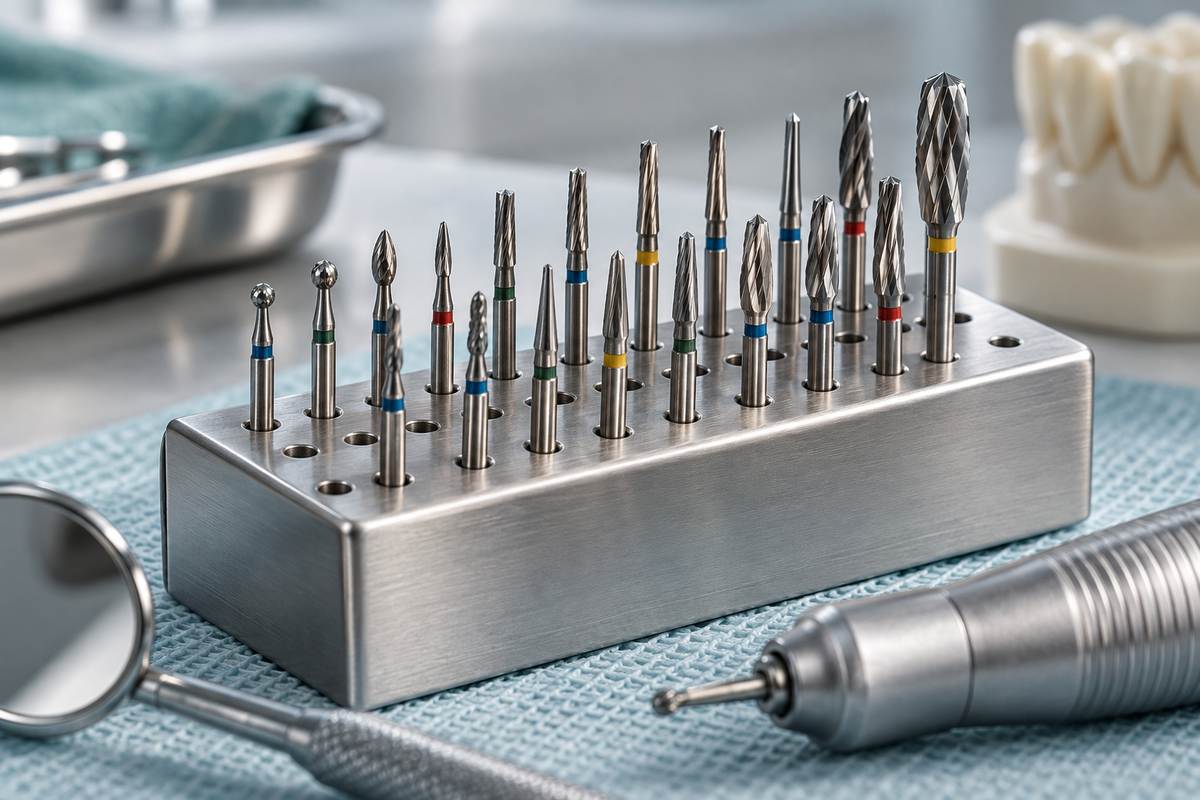
Cross-cut burs introduce horizontal notches or transverse grooves across the primary helical blades. These cutouts break the continuous cutting edge into multiple smaller chisel points. When rotating at high speeds, each notch divides tooth debris into tiny chips rather than long shavings. This chip-clearing mechanism reduces friction, prevents debris clogging between flutes, and lowers heat accumulation at the preparation site. Cross-cut geometry is engineered for rapid bulk reduction, sectioning existing metal or amalgam crowns, and cutting through tough restorative materials with minimal axial pressure from the handpiece.
For restorative finishing, multi-flute Trimming & Finishing Carbide Burs utilize twelve to thirty shallow blades. Twelve-flute patterns remove excess composite flash without ditching adjacent natural enamel, while thirty-flute patterns refine surface texture to prepare restorations for final rubber polishing.
Shank Construction: Solid Carbide vs Brazed Stainless Steel
When evaluating wholesale carbide bur suppliers, procurement teams must distinguish between one-piece solid carbide construction and two-piece brazed joint designs. Both manufacturing approaches serve specific commercial and clinical use cases.
Solid carbide burs are ground from a single rod of structural micrograin tungsten carbide from the tip of the working head down to the base of the friction grip or handpiece shank. Because there is no welded seam or joint line, solid carbide instruments exhibit superior concentricity with near-zero rotational runout. This uniform rigidity minimizes vibrational chatter, extends the operational life of dental handpiece bearings, and prevents head detachment under extreme rotational velocities. Solid construction is especially standard in laboratory HP cutters and high-torque surgical burs where lateral bending forces are substantial.
Brazed shank burs combine a tungsten carbide cutting head joined to a stainless steel shank via high-temperature silver or induction brazing. Stainless steel provides slight ductility and elastic flexibility along the shank shaft, dampening excessive shock before it transmits into the handpiece chuck. This two-piece design optimizes manufacturing costs for everyday operative FG burs while delivering durable cutting hardness at the active working tip. Factory quality control during the brazing process is vital; BurDental applies automated pull-testing and concentricity inspections on every production lot to ensure joint integrity under high lateral pressure.
Department Stocking Ratios for Clinics and Distributors
Multi-chair dental clinics and supply distributors benefit from standardizing purchase orders around clinical department consumption profiles rather than buying arbitrary mixed assortments. Based on commercial purchasing data across dental hospital networks, carbide bur consumption breaks down into four functional categories:
- Operative and General Dentistry: Accounts for roughly half of all carbide bur order volume. Core stocking units include round burs for caries excavation, inverted cones for mechanical retention locks, and pear-shaped or straight fissure burs for initial occlusal cavity preparations.
- Crown, Bridge, and Removal: Represents approximately one-quarter of total volume. Inventory focuses on cross-cut fissure burs and metal-cutting profiles designed to slice through semi-precious alloys, non-precious crowns, and bonded restorative cores.
- Trimming and Restorative Finishing: Represents about fifteen percent of regular clinic reorders. Stocking profiles prioritize twelve-flute flame, egg, and needle shapes alongside thirty-flute ultra-fine finishers for aesthetic composite contouring.
- Oral Surgery and Extraction: Accounts for ten percent of clinical demand. Sourcing concentrates on Tungsten Carbide Burs For Extraction featuring extended friction grip and HP shanks for alveolar bone recontouring, root separation, and wisdom tooth extraction procedures.
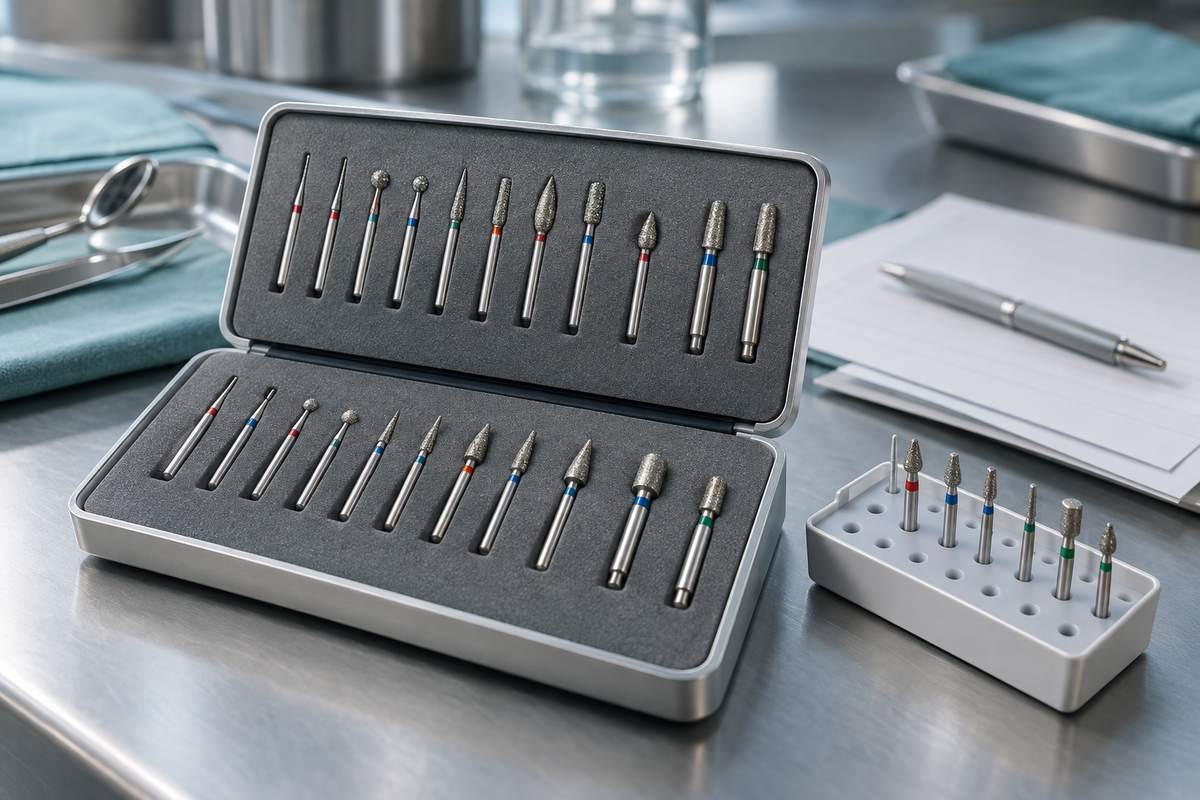
Organizing bulk stock into pre-arranged clinic assortments and storing them in sterilizable bur blocks streamlines operatory turnover and prevents stockout delays during peak treatment schedules.
Cut Patterns and Technical Specifications Comparison
Selecting appropriate flute configurations and shank standards ensures compatibility across high-speed air turbines, slow-speed contra-angles, and dental laboratory handpieces.
| Cut Pattern | Blade Configuration | Handpiece Shank | Primary Application | Recommended Material |
|---|---|---|---|---|
| Plain Straight Fissure | Continuous helical flutes | Friction Grip FG / Right Angle RA | Primary cavity access and internal wall preparation | Natural enamel and dentin |
| Cross-Cut Tapered Fissure | Notched transverse blades | Friction Grip FG / Handpiece HP | Rapid bulk excavation and crown sectioning | Metal crowns, amalgam, and composite |
| Multi-Flute Finishing | Twelve shallow blades | Friction Grip FG (Gold Coated) | Restorative margin refining and flash removal | Composite resin and glass ionomer |
| Ultra-Fine Finishing | Thirty micro-flutes | Friction Grip FG (Gold Coated) | Pre-polish enamel smoothing and margin blending | Hybrid composite and enamel margins |
| Heavy Laboratory Cutter | Coarse cross-cut teeth | Laboratory HP (Straight Shank) | Model reduction and acrylic plate contouring | Acrylic denture base and plaster |
Factory-Direct Wholesale Sourcing with BurDental
Sourcing rotary cutting instruments directly from the manufacturing source eliminates multiple distributor markups and ensures consistent metallurgical quality across high-volume production batches. Our dental burs wholesale hub provides access to full catalog lines spanning operative carbides, surgical cutters, diamond rotary tools, and finishing instruments.
BurDental supports dental supply businesses, hospital buying groups, and regional distributors with flexible commercial purchasing options:
- Quality Compliance: Manufactured under strict ISO 13485 quality control standards with CE marked certification for global clinical compliance.
- Packaging Configurations: Available in retail blister packaging, multi-unit clinic boxes, bulk workshop packs, and custom OEM private label branding with client logo printing.
- Low Order Minimums: Flexible wholesale order tiers allow new distributors to evaluate sample batches before scaling to full container shipments; contact our sales team for custom volume price quotes.
- Fast Fulfillment: Factory dispatch with free shipping on wholesale orders over $300 to major international destinations.
- Direct Technical Support: Wholesale procurement inquiries and custom OEM requests can be submitted directly to our export team via WhatsApp +86 186 8057 1046.
Frequently asked questions
What is the difference between cross-cut and plain cut carbide burs?
Plain cut carbide burs have continuous blades that shave tooth structure smoothly for clean cavity margins. Cross-cut carbide burs feature horizontal notches across the blades to break debris into smaller chips, allowing faster cutting through amalgam and metal crowns with less heat.
Why do some clinics prefer solid carbide over brazed shank burs?
Solid carbide burs are ground from a single piece of tungsten carbide, eliminating joint seams for maximum concentricity and minimal handpiece bearing wear. Brazed burs combine a carbide head with a stainless steel shank, providing slight flexibility and cost-effective pricing for high-volume general cavity preparation.
What are the minimum order quantities and packaging options for wholesale orders?
BurDental offers low minimums on factory-direct orders, allowing distributors and clinics to request small trial batches before committing to bulk purchases; contact us for a quote. Available packaging options include individual blister packs, autoclavable clinic multi-packs, and custom OEM private label boxing.
Are BurDental tungsten carbide burs compatible with standard autoclaves?
Yes, all BurDental tungsten carbide burs are fully autoclavable and withstand standard steam sterilization cycles without blade delamination. Proper drying after sterilization cycles maintains blade sharpness and prevents chemical oxidation on stainless steel shanks.