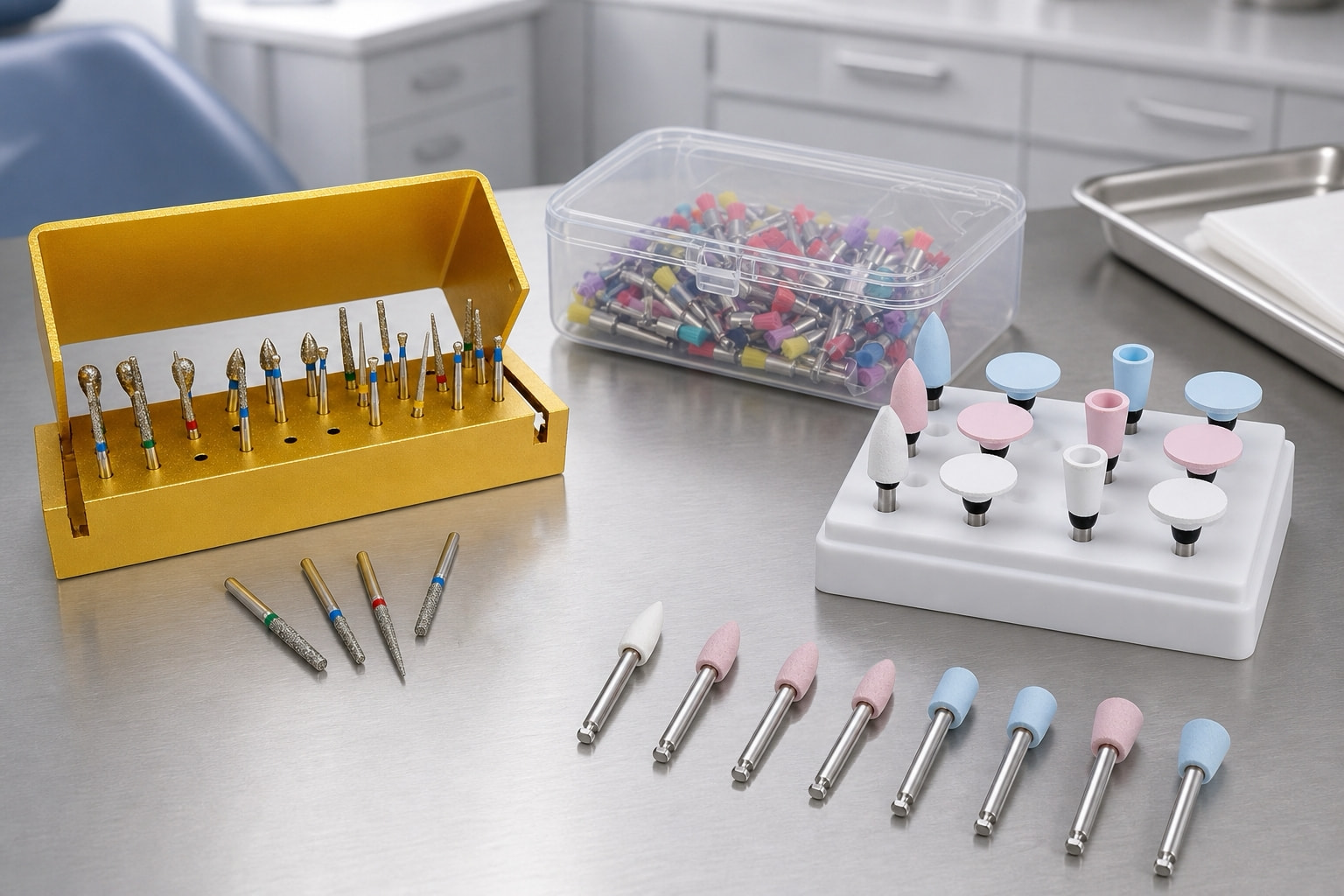
Hygienists rarely say prophy burs at the chair. They ask for a cup, a brush, or a polisher. Purchasers use the term anyway, because it is the nearest thing to a single label for the rotary instruments a hygiene room goes through fastest: RA polishing brushes, silicone polishers, diamond rubber polishers, and the paste-carrying cups beside them.
This guide sorts those instruments by the job they do, the handpiece they fit, and how they hold up after repeated sterilization, then covers what changes when you buy them by the carton instead of the pack.
What buyers mean by prophy burs
A prophy bur is a polishing instrument, not a cutting one. It runs in a slow-speed contra-angle, carries or contains its own abrasive, and leaves enamel or a restoration smoother than it found it. Cutting instruments take away tooth structure. Polishing instruments take away deposit, stain, and the scratch pattern left by the step before.
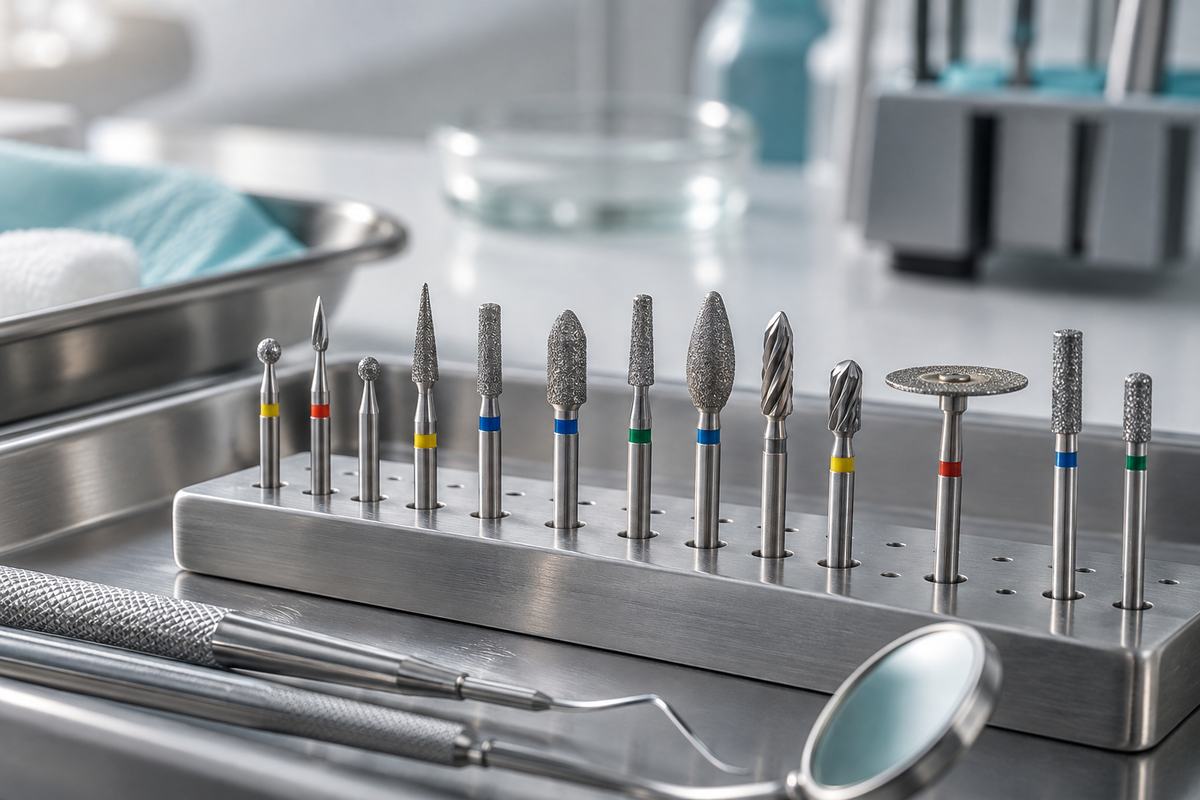
The distinction matters on a purchase order. A box of diamond burs with SKUs such as 001-008S, 001-010M, or 001-012M belongs on the restorative tray. The hygiene room needs the polishing family: brushes, silicone cups and points, and abrasive-impregnated rubber polishers. Put them on one line item and someone ends up polishing with a cutting bur.
The instruments in a hygiene tray
Three families cover most prophylaxis appointments.
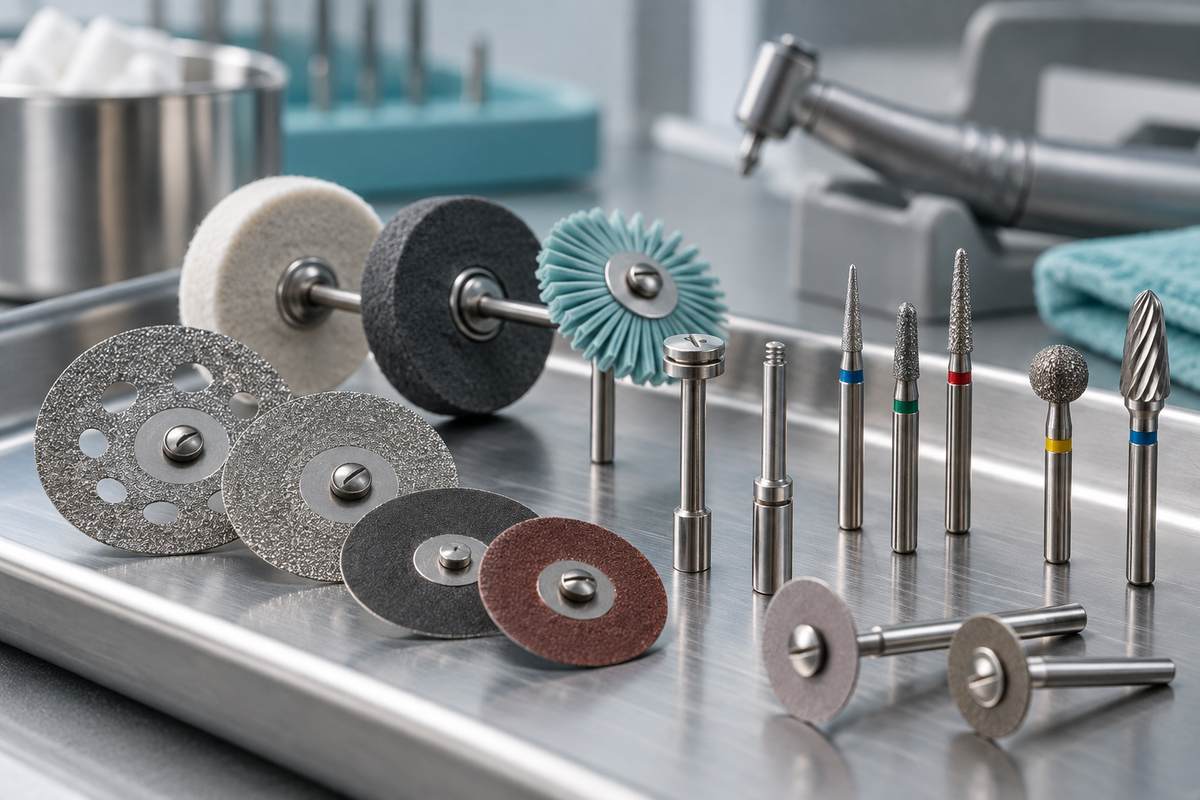
RA polishing brushes hold paste in their bristles and reach into occlusal grooves and pits, where a cup rides over the top. Bristle stiffness decides how much stain they lift and how fast the brush splays, and once the bristles splay the brush is finished. The Polishing Brushes RA range is the standard RA-shank option for this step.
Silicone polishers carry abrasive through the body of the rubber rather than on its surface, so fresh abrasive keeps arriving as the polisher wears down. This is the instrument for smoothing enamel after an adjustment or bringing a composite margin back to a shine. The Silicone Polisher FG/RA range covers both shank types, which matters when a room runs high-speed and slow-speed handpieces side by side.
Diamond rubber polishers pair a rubber body with diamond abrasive and handle the last pass, where a plain silicone point stops short of a gloss. Shapes in the Diamond Rubber Polishers range such as SR101M, SR103M, and SR105M differ mainly in head profile, so most trays hold more than one.
| Instrument | Shank | Main job | Example |
|---|---|---|---|
| Polishing brush | RA | Paste into grooves, pits, and fissures | Polishing Brushes RA range |
| Silicone polisher | FG or RA | Smoothing enamel and composite after adjustment | Silicone Polisher FG/RA range |
| Diamond rubber polisher | Listed per SKU | Final gloss on composite and ceramic | SR101M, SR103M, SR105M |
Where each instrument fits in the appointment
Polishing follows scaling; it does not replace it. Once the deposits are off, the order is stain first, surface second, gloss last.
- Brush with paste for stained grooves and fissures. Light, intermittent contact does the work, and extra pressure only splays the bristles faster.
- Cup or silicone polisher on the smooth buccal and lingual surfaces, at slow speed, with the head kept moving so heat does not build in one spot.
- Fine polisher on restorations. Composite and ceramic show every scratch left behind, so the last instrument to touch the surface should be the finest one on the tray.
Most complaints about polishing instruments trace back to speed and pressure rather than the instrument. Let the head follow the anatomy instead of flattening it.
Sterilization, storage, and replacement
Silicone and rubber polishers are generally made to be cleaned and sterilized between patients, while brushes with splayed bristles are consumables and should be discarded. Follow the reprocessing instructions supplied with each item rather than a blanket practice rule, since bristles and rubber bodies behave differently in an autoclave.
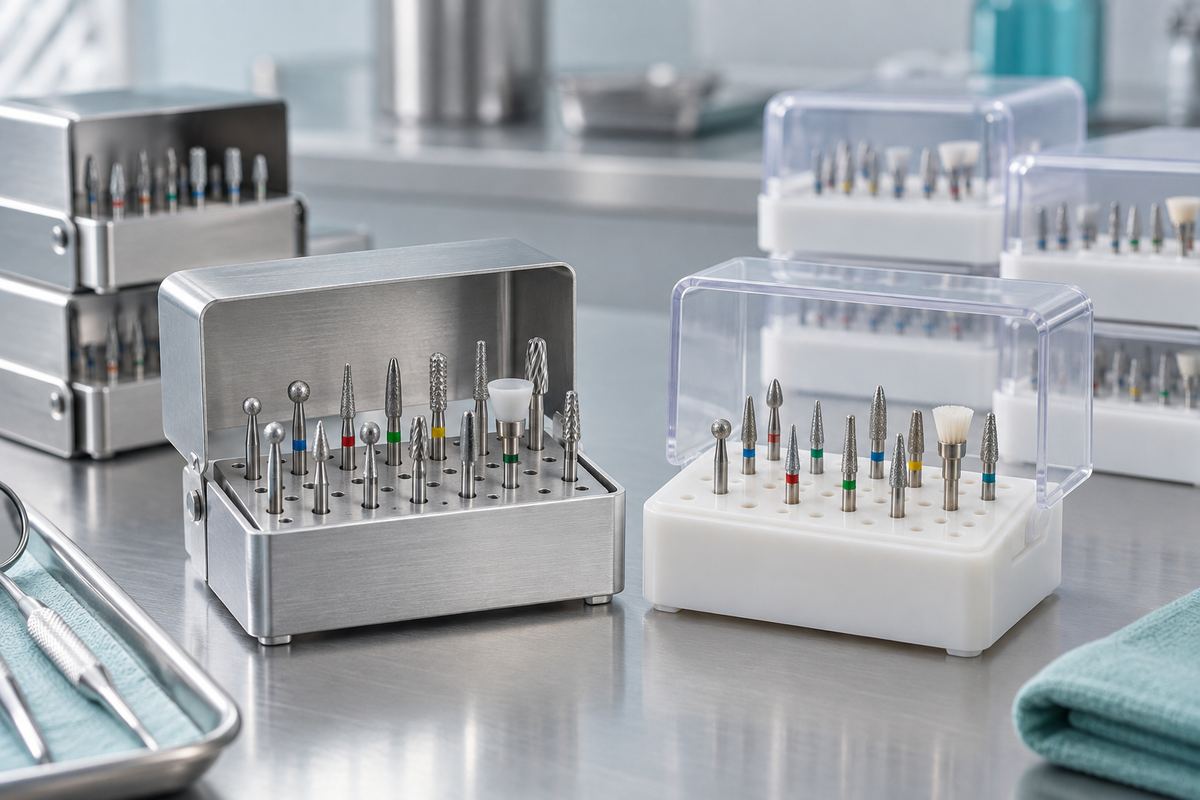
Storage decides how long the rest of the set lasts. Loose polishers in a drawer collect debris and knock against each other. Sterilisable bur blocks such as BB201, BB202, or BB212 keep every instrument in its own hole through cleaning, autoclaving, and tray setup, and they show at a glance when a shape is running low.
Buying prophy burs wholesale
Hygiene consumables turn over faster than any other rotary instrument in a practice, so unit price and restock time both matter. BurDental has manufactured rotary dental instruments since 2008 and ships from a CE marked, ISO 13485 factory, selling direct to clinics, laboratories, and dealers instead of through a distributor layer.
Points worth settling before a first order:
- Test shapes before committing to carton quantities. A sample folder (170B5, 1701D, 1702T) or a clinic kit such as 4103, 4104, or 4105 shows which heads the hygienists actually reach for.
- Match shanks to the handpieces already in the rooms, not to the catalogue photo.
- Keep categories on one order rather than splitting across suppliers. The full range sits under the dental burs wholesale hub.
- For OEM or private-label work, send artwork and expected volumes and ask for a quote. Minimums are low and terms are set per project.
Questions on stock or specification go to WhatsApp +86 186 8057 1046.
Frequently asked questions
Are prophy burs and prophy cups the same thing?
No. A prophy cup is the flexible rubber cup that carries paste on smooth surfaces, while prophy burs is the broader term buyers use for the RA polishing brushes and the silicone or diamond rubber polishers that mount in the same slow-speed handpiece.
Which shank should I order for a hygiene room?
RA in most cases, because prophylaxis polishing runs in a slow-speed contra-angle. Silicone polishers are supplied in FG and RA, so confirm which handpiece the operator uses before committing to a carton.
Can silicone polishers be sterilized and reused?
Many are built for repeat sterilization cycles, but follow the reprocessing instructions supplied with the specific item. Retire any polisher that has lost its shape, torn at the edge, or stopped cutting.
What is the minimum order for wholesale prophy burs?
Minimums are low and quoted per item. Send the SKU list and quantities you want and we will price it; mixed orders across categories are normal.
Do you produce prophy burs under our own brand?
Yes. Send the artwork, packaging format, and the volumes you expect, and we will come back with a production quote and a timeline.