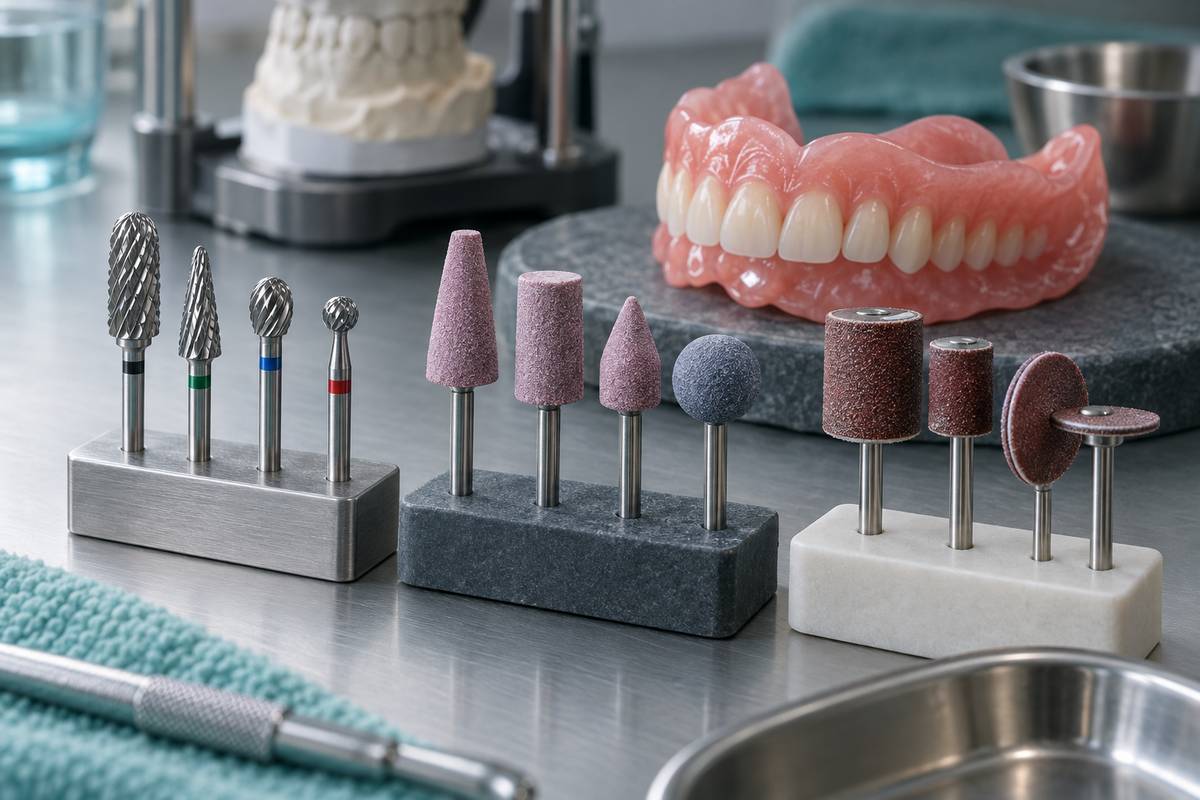
Processing acrylic dentures and dental appliances requires dedicated rotary instruments designed specifically for resin reduction and surface refinement. Dental laboratories handle cold-cure, heat-cure, and light-cured polymethyl methacrylate (PMMA) bases after deflasking, requiring rapid bulk reduction without generating excessive heat that could warp the appliance or gum up the cutting blades. Choosing the right acrylic trimming burs for each stage of prosthetic finishing ensures clean margins, preserves delicate anatomical contours, and reduces labor time per unit.
Denture adjustment workflows rely on a clear division of labor among three primary rotary tool types: tungsten carbide cutters, mounted abrasive stones, and mounted sandpaper rolls. Each instrument category addresses a specific material removal rate and surface roughness profile. Understanding the mechanical differences between fluted cutters and bonded abrasives helps lab managers optimize their tooling inventory and maintain consistent bench productivity.
Tungsten carbide cutters for bulk acrylic reduction
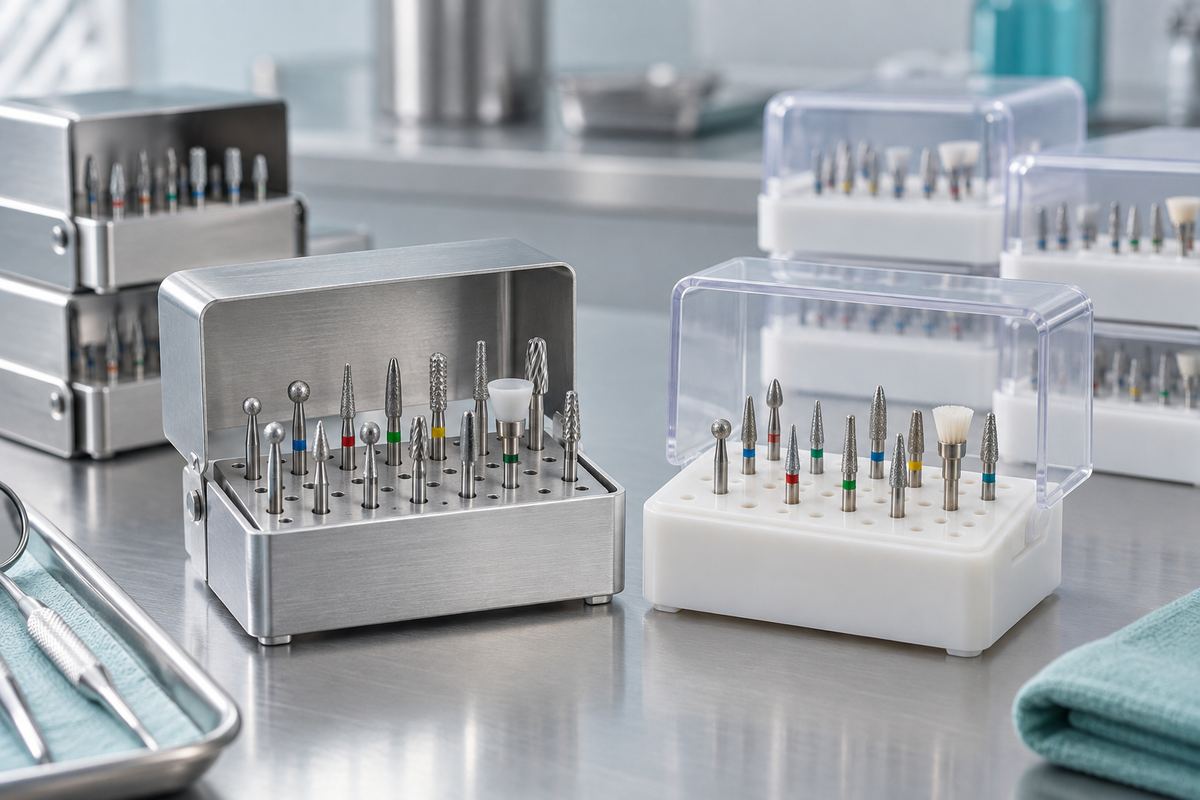
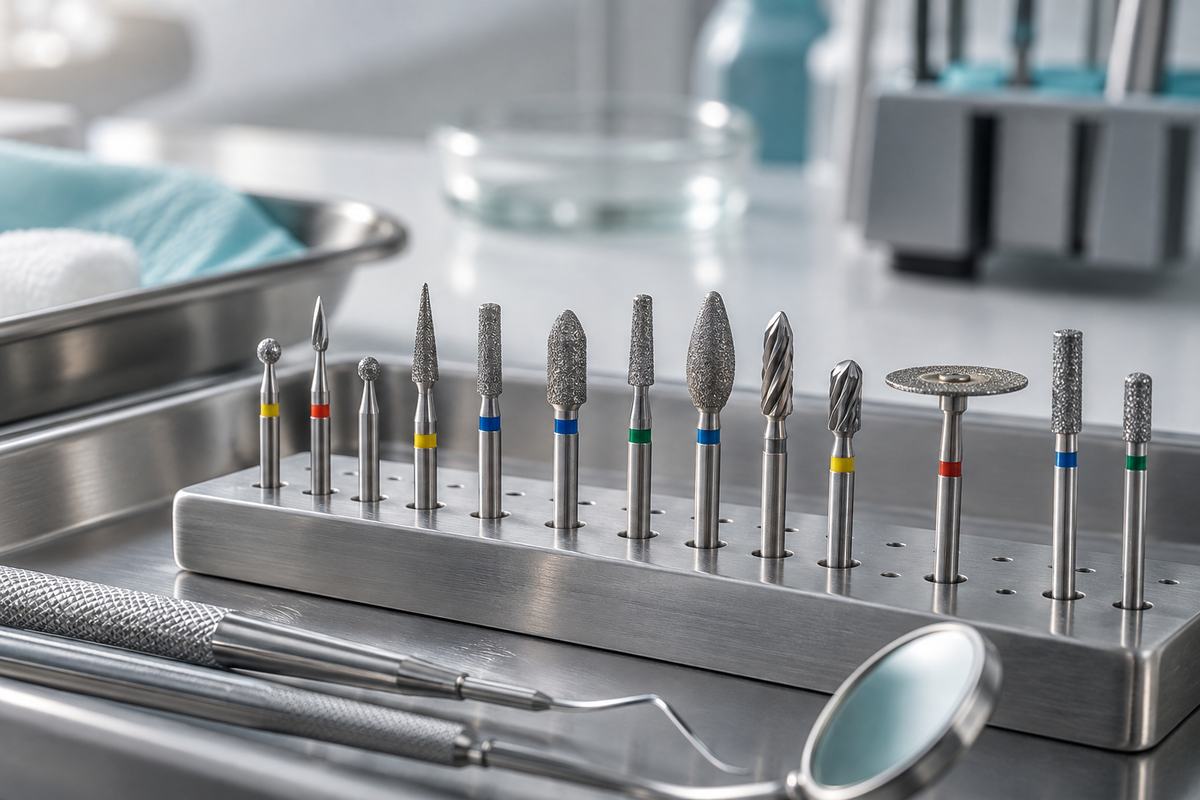
Tungsten carbide cutters serve as the primary workhorse during the initial trim of processed denture bases. After pressing and curing, technicians must remove flash, heavy plaster remnants, and excess resin around the periphery and palate. Fluted carbide cutters feature sharp blade geometries—including cross-cut and coarse spiral teeth—that shear acrylic chips cleanly away from the workpiece rather than abrading them.
This shearing action produces large, coarse shavings while minimizing friction against the resin. Heat generation remains the primary risk during acrylic trimming, as excessive localized temperatures can soften PMMA, cause surface discoloration, or induce internal stress that leads to denture warpage. Sourcing high-grade Tungsten Carbide Cutter tools manufactured from solid tungsten carbide blanks ensures long edge retention and minimal chatter during aggressive gross reduction. Lab technicians run these HP shanks in high-torque lab handpieces across broad areas such as the buccal flanges, lingual borders, and palate plates before proceeding to fine contouring.
Carbide cutters also maintain consistent dimensional stability across hundreds of trimming cycles. Unlike bonded abrasive wheels that shed grain and change diameter with each pass, a carbide cutter retains its profile until the cutting edges dull. This predictability allows technicians to establish standardized hand movements for bulk removal without frequently compensating for tool wear.
Mounted stones for contouring and border refinement
Once gross reduction removes excess bulk, technicians switch to bonded abrasive stones to refine anatomy and adjust border thickness. While carbide cutters excel at rapid stock removal, their aggressive flutes can create gouges or chatter marks along thin peripheral edges and frenum relief areas if applied with too much pressure.
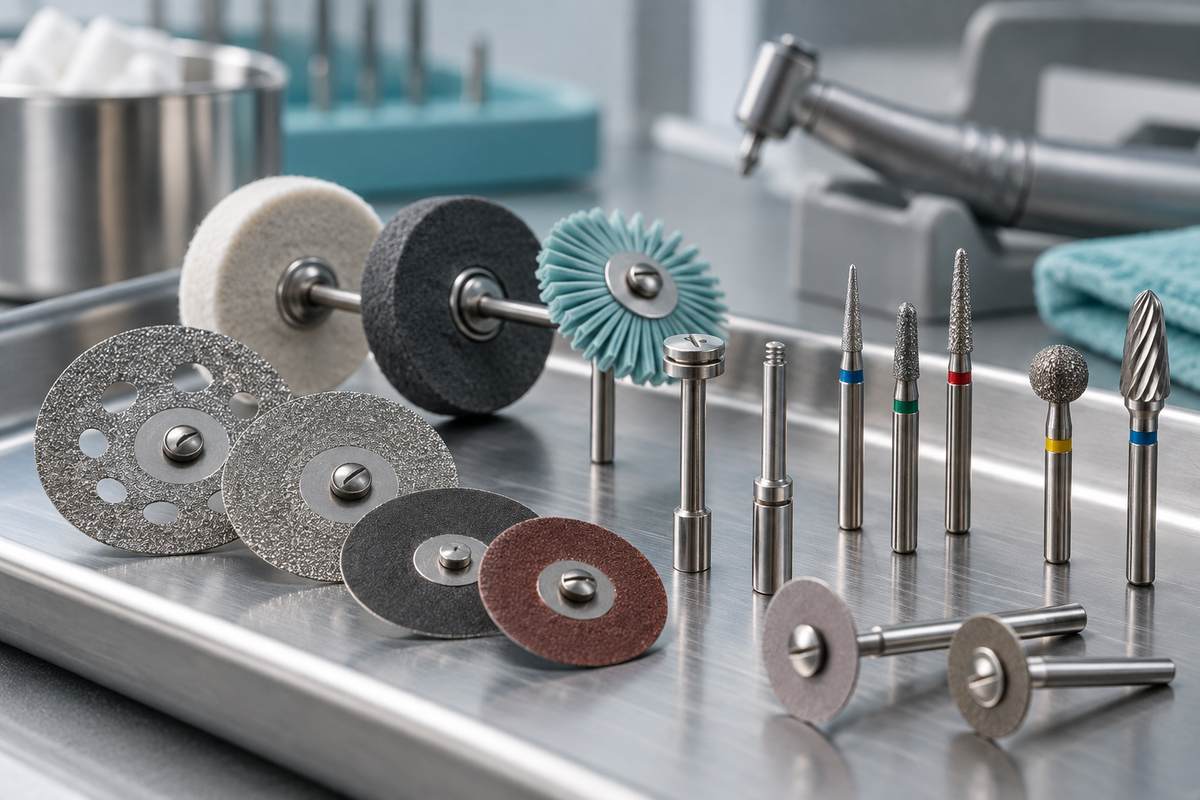
Using a Mounted Stone provides controlled, uniform material removal across contoured surfaces. Bonded aluminum oxide and silicon carbide grains gently grind the acrylic matrix, flattening ridges left by coarse carbide blades and creating smooth transitions along festooning and gingival margins. Stones also offer superior stability when trimming around acrylic teeth to define the cervical margins without chipping porcelain or polymer dentition. Sourcing lab stones from an established factory guarantees concentric rotary shafts, preventing handpiece chuck wear and vibration during prolonged trimming sessions.
Technicians typically select bullet, flame, or tapered stone profiles to match specific anatomical regions. A tapered stone maneuvers easily into interdental spaces and gingival papillae, while a rounded cylinder smooths broader buccal sulcus curves without digging deep grooves into the denture base.
Abrasive sandpaper for intermediate surface smoothing
Abrasive sandpaper rolls and caps bridge the mechanical gap between stone contouring and final pumice polishing. Trimming acrylic with rotary stones leaves fine micro-scratches that pumice paste cannot erase quickly on its own. Using mounted sandpaper discs and rolls levels these abrasive marks efficiently, reducing overall bench time at the polishing lathe.
Technicians typically progress through standardized grit steps to prepare the acrylic surface for final high-luster buffing. A typical laboratory progression utilizes Abrasive Sandpaper rolls across three distinct grit grades:
- Coarse grit SP-240 for knocking down stone texture and smoothing broad palatal vaults
- Medium grit SP-400 for refining sulcus areas, border rolls, and interdental embrasures
- Fine grit SP-600 for pre-polishing acrylic surfaces before moving to rag wheels and pumice
Mounted sandpaper mandrels allow fast replacement of worn abrasive sleeves, keeping consumable costs low while delivering consistent scratch patterns across full and partial denture setups.
Tool selection and workflow comparison
Matching the correct rotary tool to each stage of denture processing prevents tool clogging, reduces handpiece strain, and accelerates production throughput. The table below outlines the operational comparison of the primary rotary instruments used across dental laboratory acrylic workflows.
| Rotary Tool Category | Primary Lab Application | Material Interaction | Recommended Stage | Sample Tool / SKU |
|---|---|---|---|---|
| Tungsten Carbide Cutters | Bulk reduction and flash removal | Shearing flutes cut coarse resin chips | Initial deflasking and gross trim | HP Cross-Cut Carbide |
| Mounted Abrasive Stones | Border contouring and festooning | Bonded abrasive grain grinding | Anatomical shaping and margin refining | Pink/Green Lab Stone |
| Abrasive Sandpaper SP-240 | Leveling stone marks on wide surfaces | Coarse coated aluminum oxide abrasion | Intermediate surface preparation | SP-240 |
| Abrasive Sandpaper SP-400 | Smoothing peripheral borders and contours | Medium coated abrasive abrasion | Pre-polishing surface refinement | SP-400 |
| Abrasive Sandpaper SP-600 | Fine pre-buffing scratch elimination | Fine coated abrasive polishing | Final bench prep before lathe buffing | SP-600 |
Sourcing acrylic trimming burs factory direct for dental labs
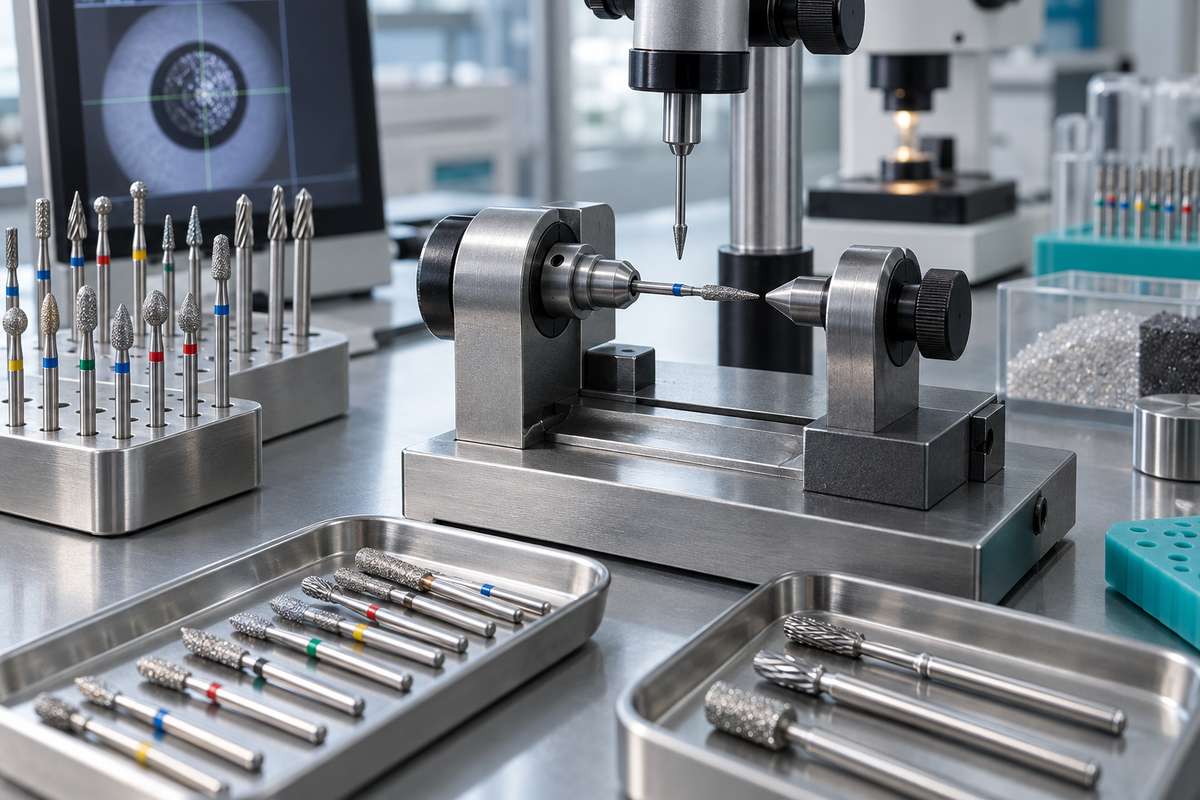
Dental laboratories and supply dealers consume rotary trimming tools in high volume as ongoing shop consumables. Sourcing directly from an established manufacturing partner eliminates trading intermediary markups and guarantees strict batch-to-batch concentricity.
BurDental operates as an ISO 13485 certified factory manufacturing dental rotary instruments since founded in 2008. All rotary cutters, stones, and abrasive tools are CE marked to ensure international regulatory compliance and reliable bench safety. Purchasing managers can explore our complete Dental Burs Wholesale hub catalog to order standard configurations or request customized packaging and private labeling. For sample requests, factory direct quotation, or custom grit assortments, reach our sales engineering team directly on WhatsApp +86 186 8057 1046 or contact us online for a landed shipping quote.
Frequently asked questions
Why do tungsten carbide cutters clog when trimming acrylic denture bases?
Carbide cutters clog when excessive rotational friction melts the resin rather than cutting it cleanly. Using cross-cut flutes with wide chip clearance and reducing handpiece contact pressure allows the blades to eject acrylic shavings without melting the polymer.
What is the advantage of using mounted stones instead of coarse carbide burs for denture borders?
Mounted stones provide smoother tactile feedback and uniform abrasive action, preventing sudden gouging along delicate border rolls and frenal notches. They allow technicians to blend contours gradually without leaving deep chatter marks that require heavy pumicing.
How does abrasive sandpaper reduce denture polishing time at the lathe?
Abrasive sandpaper progressively eliminates grinding ridges through standardized grit steps from SP-240 to SP-600. Smoothing the resin at the bench minimizes the time required on rag wheels with pumice and high-shine compounds.
Can dental laboratories order custom assortments and private label acrylic trimming burs?
Yes, BurDental provides private label packaging and custom tool assortments for dental dealers and large laboratory networks. We offer low minimums and flexible OEM packaging; contact our factory team for a personalized product catalog and shipping quote.