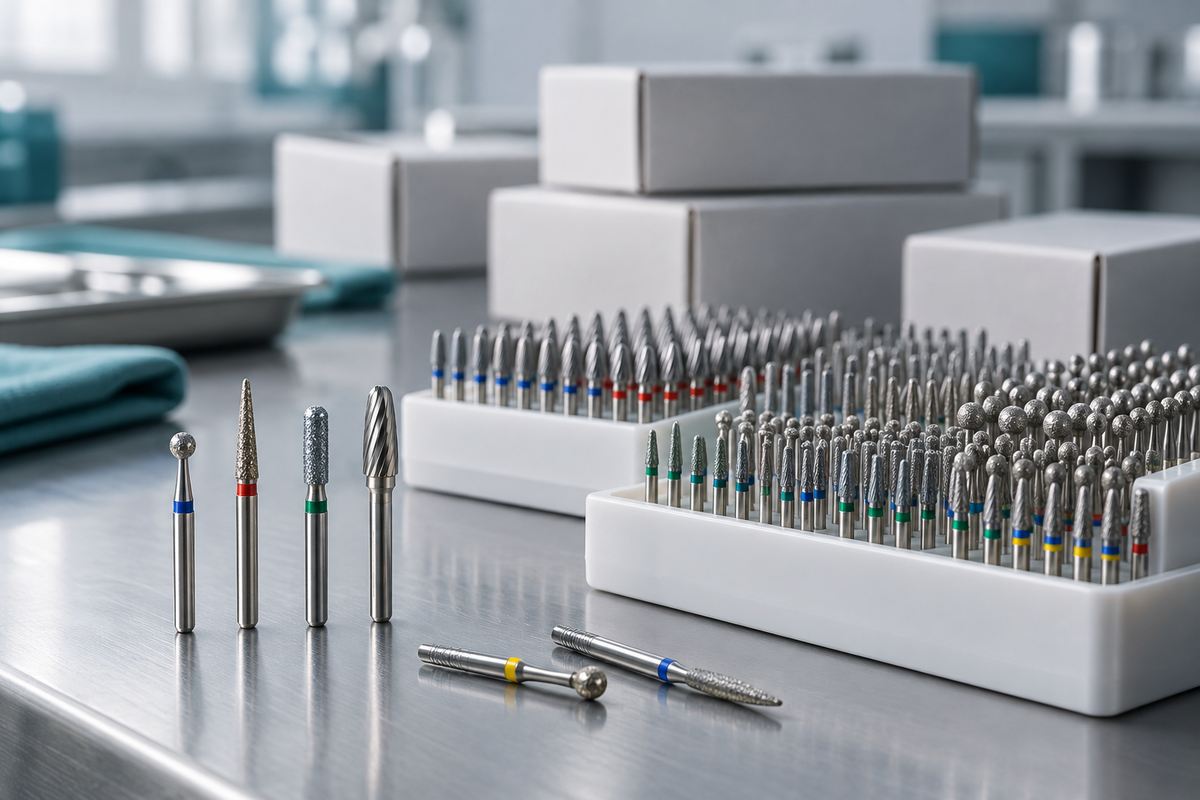
Buying dental burs in bulk from a factory supplier cuts per-unit cost and gives you control over specifications, packaging, and delivery schedules. But the process differs from ordering through a distributor catalog. You need to understand how minimum order quantities work, what drives production and shipping timelines, and how to calculate the true landed cost of an international order.
This guide walks through each stage of a bulk dental bur purchase, from initial inquiry to delivery, so you can negotiate better terms and avoid surprises on your first factory-direct order.
Why buy dental burs direct from a factory
Distributors and dealers add margin at every step between the factory floor and your operatory. When you buy dental burs directly from the manufacturer, you remove those layers. The savings per unit add up fast on consumable instruments that your clinic or lab replaces regularly.
Factory-direct purchasing also opens doors that distributors cannot. You can request custom grit specifications on diamond burs, private-label packaging with your own branding, or mixed assortments tailored to your clinical workflow. An ISO 13485 certified factory like BurDental handles these requests as part of standard production — no special broker required.
The trade-off is that factory orders require more planning than next-day distributor shipments. You are buying ahead, not restocking on demand. The sections below explain what to expect at each step.
Understanding minimum order quantities
Every factory sets a minimum order quantity (MOQ) for production runs. MOQs exist because tooling setup, quality inspection, and packaging have fixed costs that need to be spread across enough units to keep pricing competitive.
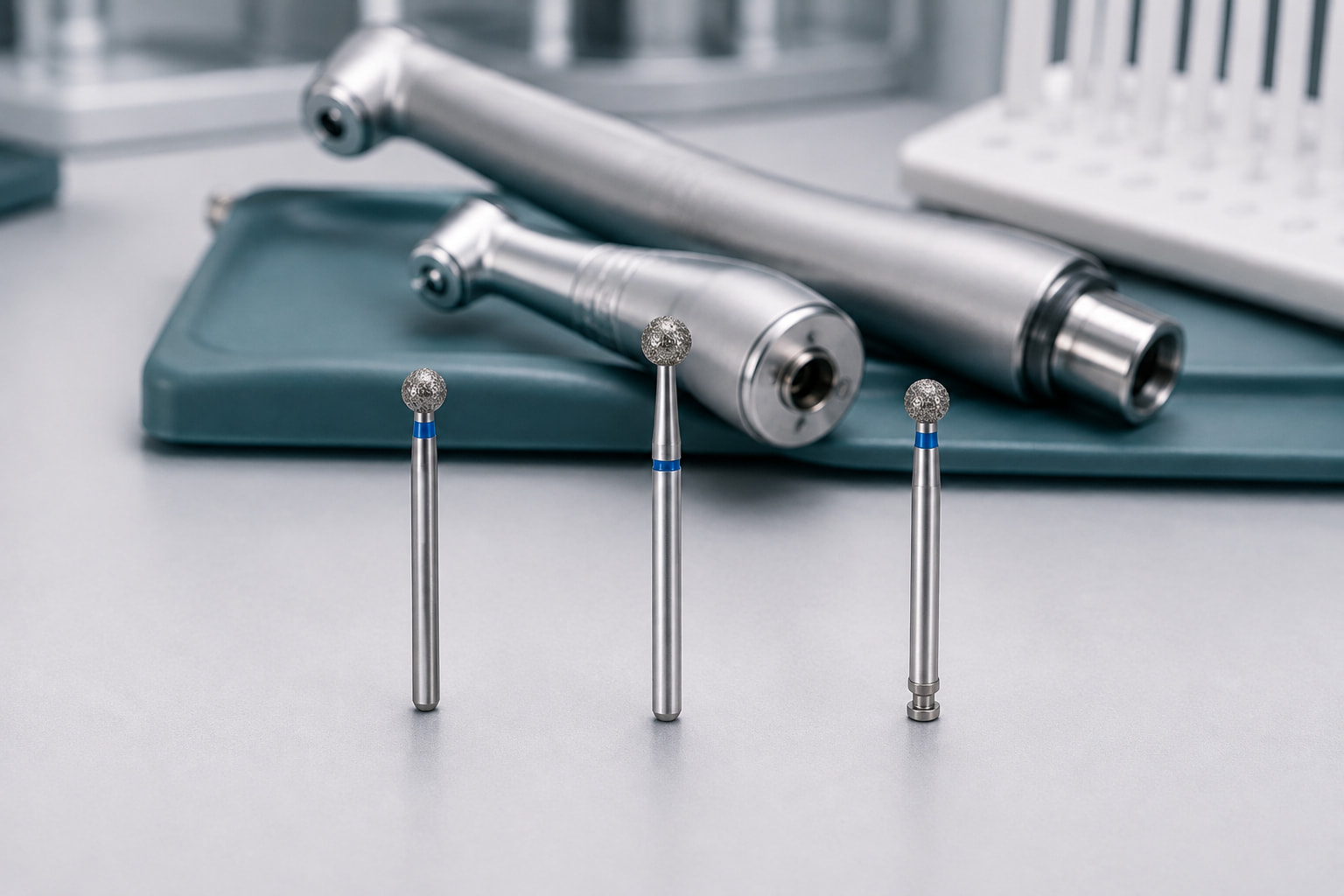
MOQs vary by product type. Standard catalog items — round diamond burs in common ISO sizes, for example — typically carry lower minimums because the factory runs them frequently. Custom orders, such as a carbide bur with a non-standard flute pattern or a private-label kit, require dedicated setup and usually come with higher minimums.
How to negotiate MOQ:
- Start with the factory's standard catalog shapes and sizes. These ship from existing production batches, and the MOQ is often lower than you expect.
- Combine multiple SKUs in a single order. Most factories calculate MOQ at the order level, not per SKU, so ordering a mix of shapes and grits in one shipment can meet the threshold while giving you product variety.
- Ask about sample orders. Reputable manufacturers offer sample quantities at a higher per-unit price so you can test quality before committing to a full production run. BurDental provides sample orders for evaluation — contact the sales team for current terms.
- Build a relationship. Repeat buyers with consistent order history often receive flexible MOQ terms as the factory gains confidence in the account.
What determines lead time
Lead time is the gap between placing your order and receiving it at your door. It breaks into two phases: production time and shipping time.
Production time depends on:
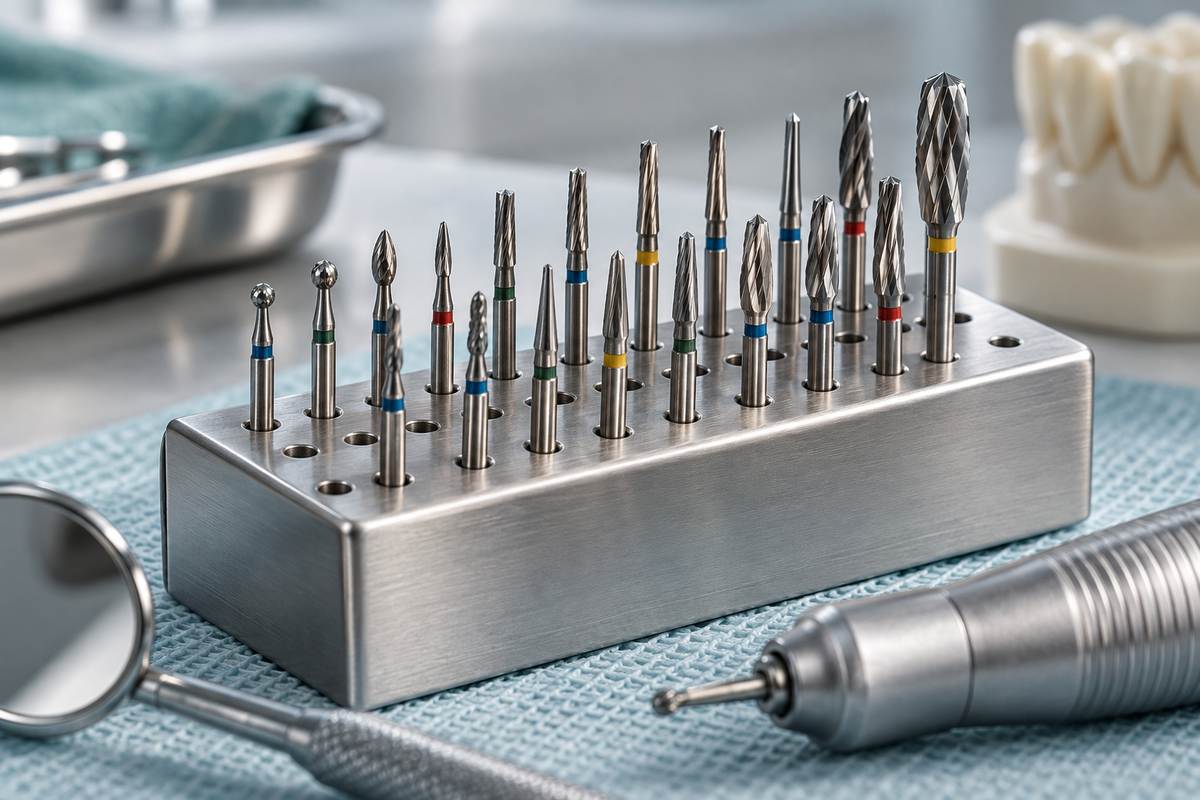
- Order complexity — Standard shapes in stock grits process faster than custom specifications. A straightforward order of CAD/CAM milling burs in catalog sizes moves through production faster than a custom-designed bur with unique geometry.
- Order size — Larger orders naturally take longer to manufacture and inspect. Quality control at an ISO 13485 factory includes individual inspection steps that scale with volume.
- Production queue — Factories schedule production runs in sequence. Orders placed during peak seasons or immediately after trade shows may queue behind existing commitments.
Shipping time depends on:
- Method — Air freight is faster but costs more per kilogram. Sea freight is economical for large, heavy shipments but adds transit time. Express courier services (DHL, FedEx, UPS) offer door-to-door tracking and work well for smaller bulk orders.
- Destination — Shipping to major port cities is straightforward. Inland destinations may require additional domestic transit after customs clearance.
- Customs clearance — Import documentation, duties assessment, and inspection can add time, especially for first-time importers who have not yet established a smooth clearance process with their broker.
The best approach is to ask the factory for an estimated timeline during the quoting stage and build a buffer into your inventory planning.
Landed cost breakdown: what you actually pay
The price per bur quoted by the factory is only one component of your total cost. Landed cost is the true per-unit cost after every expense between the factory and your shelf. Here is what goes into it:
| Cost component | What it covers | How it varies |
|---|---|---|
| Unit price (FOB) | Manufacturing, factory QC, basic packaging | Drops with volume; varies by product complexity |
| Shipping / freight | Transport from factory to your location | Method (air vs. sea vs. courier), weight, destination |
| Import duties / tariffs | Government tax on imported goods | HS code classification, country of import, trade agreements |
| Customs brokerage | Broker fees for handling import paperwork | Flat fee or percentage; lower for experienced importers |
| Packaging / labeling | Custom boxes, private-label printing, inserts | Standard packaging usually included; custom adds cost |
| Insurance | Coverage for loss or damage in transit | Small percentage of declared value |
Tips to reduce landed cost:
- Consolidate orders to ship fewer, larger packages rather than many small ones.
- BurDental offers free shipping on orders over $300, which can offset a significant portion of freight cost on mid-size orders.
- Ask the factory about packaging options — switching from individual blister packs to bulk packs can cut both material cost and shipping weight.
- Work with a customs broker who specializes in dental or medical device imports. They know the correct HS codes and can often secure favorable duty classifications.
- Request CE marked products. BurDental burs carry CE certification, which simplifies import clearance in many markets and avoids costly re-testing requirements.
How to place your first bulk order
If you have not ordered factory-direct before, this sequence keeps the process straightforward:
- Send an inquiry with specifics. List the bur types, shapes, shank types (FG, RA, or HP), grit or flute specifications, and estimated quantities. The more detail you provide upfront, the faster and more accurate the quote.
- Review the quote. The factory will respond with unit pricing, MOQ, estimated production time, and shipping options. Compare the total landed cost against your current distributor pricing.
- Order samples. Before committing to a large order, request a sample set to evaluate cutting performance, consistency, and packaging quality in your own workflow.
- Confirm the order. Once samples meet your standards, place the production order. Confirm payment terms, shipping method, and delivery address.
- Track and inspect. The factory should provide tracking information. When the shipment arrives, inspect a random sample against your approved samples before distributing to operatories or shelves.
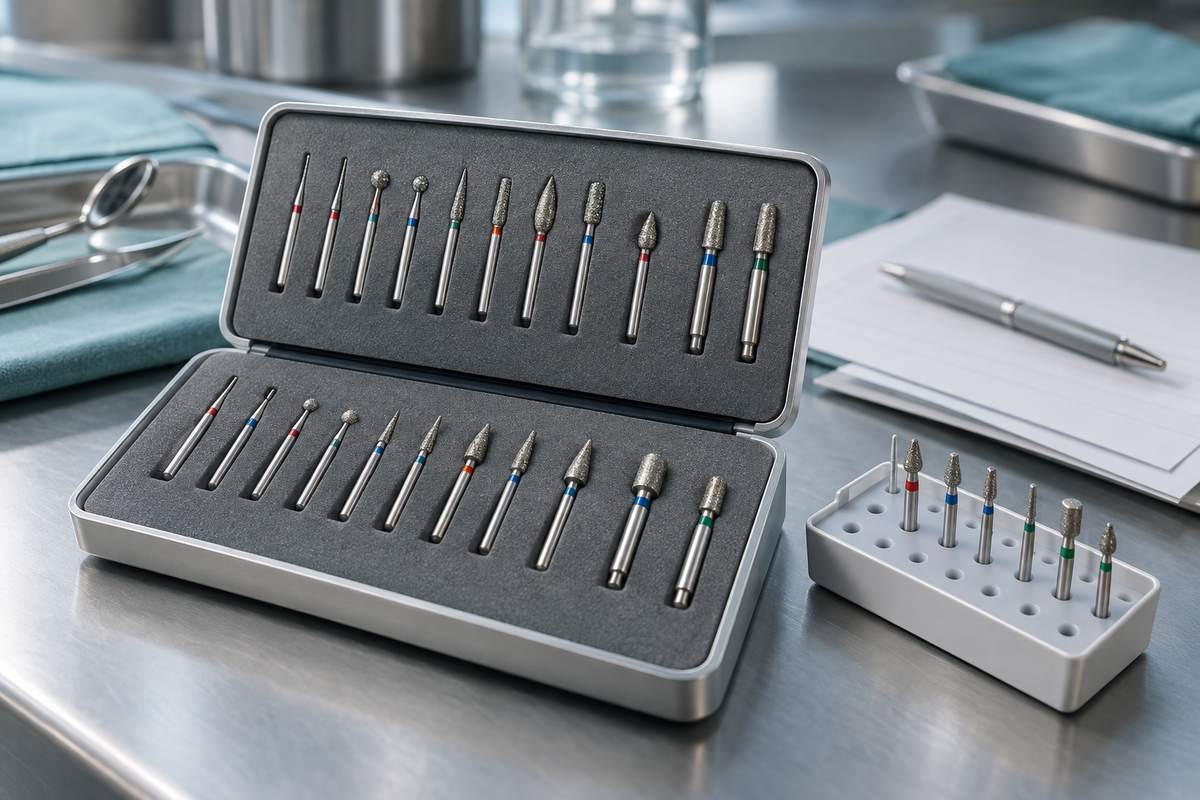
For clinics building a standardized bur inventory, consider starting with clinic kits — pre-assembled sets that cover common procedures. These are a practical way to test a factory relationship with a single, well-defined order.
Frequently asked questions
Can I mix different bur types in one bulk order?
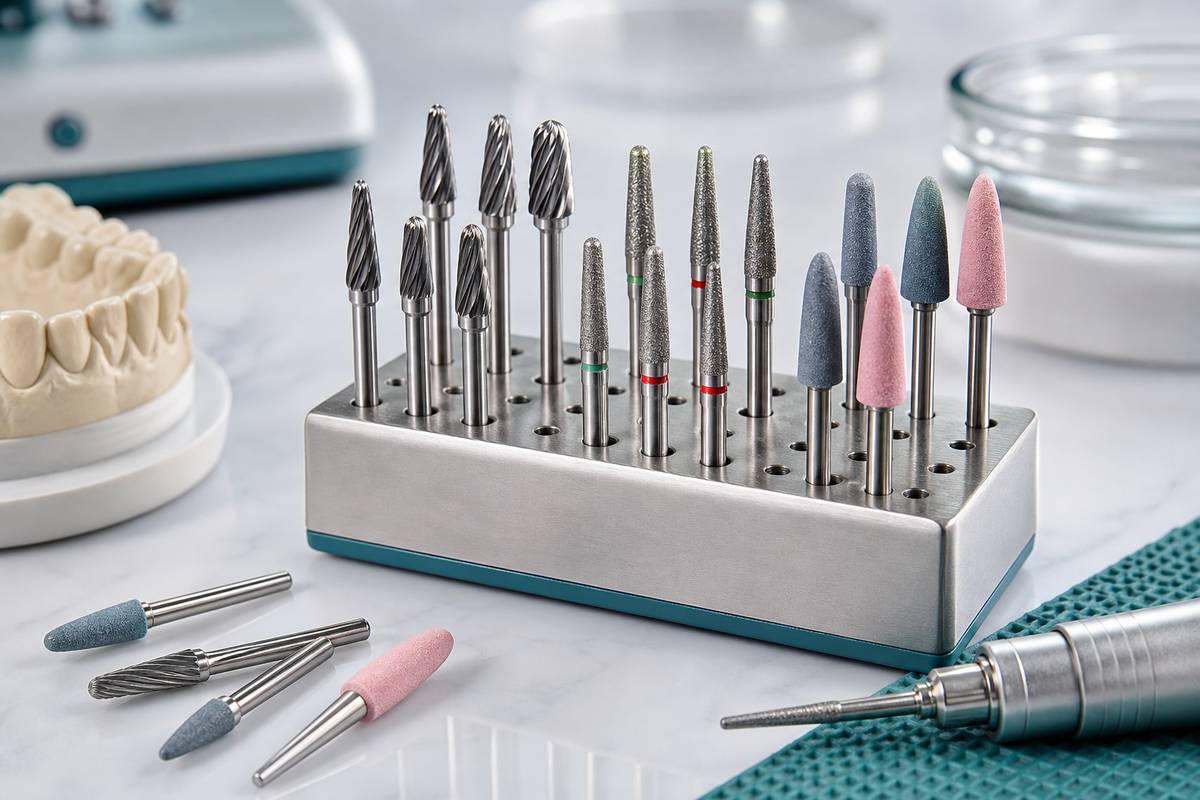
Yes. Most factory suppliers allow mixed orders that combine diamond burs, carbide burs, polishers, and accessories in a single shipment. Mixing SKUs is a practical way to meet MOQ thresholds while stocking a variety of instruments. Confirm with the factory that combined orders qualify for volume pricing.
Do I need an import license to buy dental burs from overseas?
Requirements vary by country. In many markets, dental burs classified as non-powered hand instruments do not require a special import license, but they may need to meet local regulatory standards such as CE marking. Check with your national dental regulatory authority or a customs broker before placing your first order.
What payment methods do factory suppliers typically accept?
Common payment methods for international orders include bank wire transfer (T/T), PayPal, and credit card for smaller orders. First orders typically require partial or full prepayment. Established accounts may negotiate post-delivery payment terms as the relationship develops.
How do I verify a factory's quality before committing to a large order?
Request the factory's ISO 13485 certificate and CE documentation. Ask for references from existing wholesale customers. Order samples and test them under real clinical conditions. A trustworthy manufacturer welcomes this process — BurDental provides samples, factory certifications, and direct WhatsApp support at +86 186 8057 1046 for pre-purchase questions.