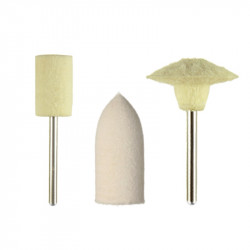
Felt bobs are compact wool-based polishing accessories that mount onto rotary tools. They are widely used in dental laboratories, jewelry workshops, metalworking, and mold finishing. Unlike abrasive polishers that remove material, felt bobs work with polishing compounds to deliver a mirror-like finish on metals, ceramics, and glass.
This guide covers felt bob materials, shapes, selection criteria, typical applications, and care instructions so you can choose and use the right one for your project.
What Are Felt Bobs Made Of?
Felt bobs are manufactured from compressed wool fibers. The density and firmness of the wool determine how the bob performs during polishing. There are two main categories:
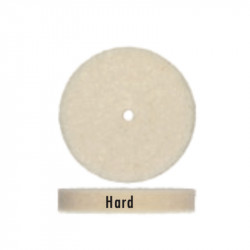
Hard Wool Felt Bobs
Hard felt bobs use tightly compressed wool fibers. They hold their shape under pressure and are best suited for:
- Flat and contoured surfaces that require consistent contact
- Applications where you need to shape or contour the bob to match a part profile
- Heavier polishing compound loads for faster material removal
- Mold and die finishing where precision matters
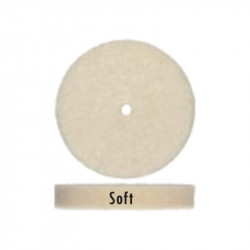
Soft Wool Felt Bobs
Soft felt bobs are less densely packed and flex more easily. They work well for:
- Curved and irregular surfaces where the bob needs to conform
- Final polishing stages where minimal pressure is required
- Delicate workpieces that could be damaged by stiffer materials
- Achieving a high-gloss finish on precious metals
| Feature | Hard Wool | Soft Wool |
|---|---|---|
| Fiber density | High | Low |
| Best surface type | Flat, contoured | Curved, irregular |
| Pressure tolerance | Higher | Lower |
| Typical use stage | Intermediate polishing | Final polishing |
| Compound compatibility | All types | Fine compounds |
Felt Bob Shapes and When to Use Each
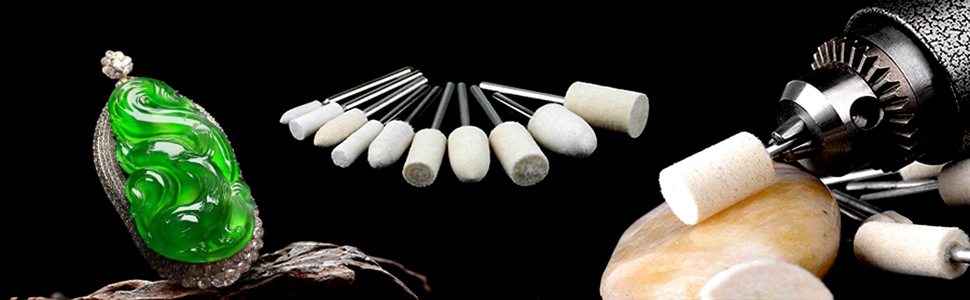
Felt bobs come in several standard head shapes. Each shape is designed to reach different surface geometries effectively.
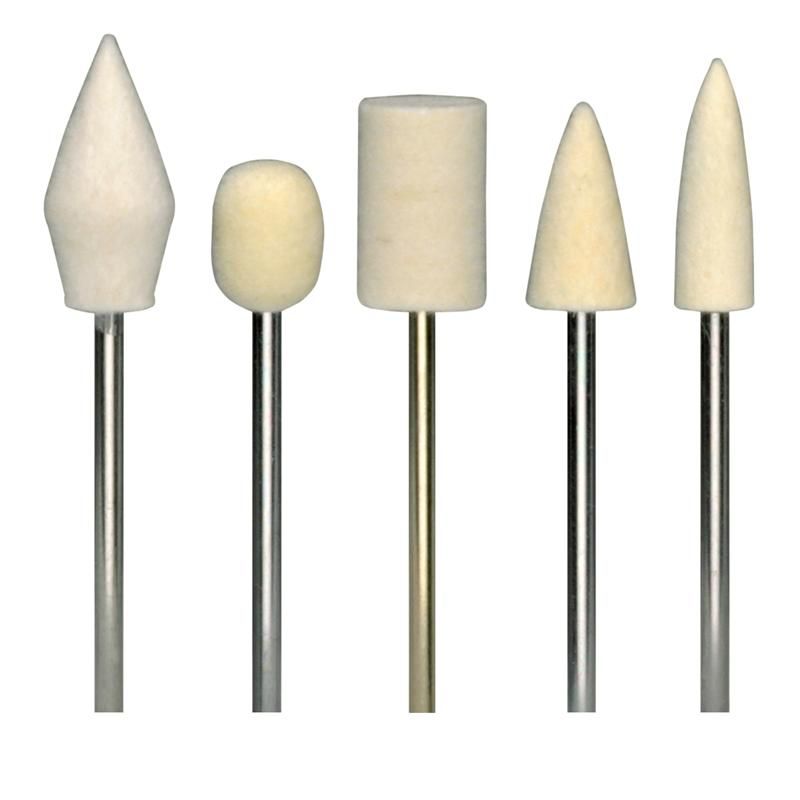
| Shape | Best For |
|---|---|
| Cylinder | Flat surfaces, straight edges, inside channels |
| Bullet (pointed) | Grooves, recesses, hard-to-reach spots |
| Cone | Tapered areas, angled surfaces, internal corners |
| Ball (sphere) | Concave surfaces, bowl-shaped areas |
| Wheel (disc) | Broad flat areas, outside edges, rapid coverage |
Select the shape that matches the geometry of your workpiece. For complex parts with multiple surface types, keep a set of different shapes on hand so you can switch as needed.
Common Applications for Felt Bobs
Dental Laboratory Polishing
In dental labs, felt bobs are used to polish metal frameworks, crowns, and prosthetic components. After rough finishing with diamond rubber polishers or silicone polishers, felt bobs loaded with fine diamond paste bring metal restorations to a smooth, high-gloss finish. The wool fibers conform to the contours of dental work without scratching the surface.
Jewelry Finishing
Jewelers rely on felt bobs for the final polish on gold, silver, platinum, and palladium pieces. Small-diameter felts mounted on a 2.35 mm (3/32") shank fit into precision handpieces and reach the fine details of rings, settings, and clasps. Felt bobs paired with rouge or diamond compound produce the mirror finish that customers expect.
Mold and Die Polishing
Plastic injection molds and stamping dies require extremely smooth cavity surfaces. Any imperfection transfers directly to the finished part. Felt bobs with diamond lapping compound are the standard method for achieving SPI-A1 and SPI-A2 surface finishes on mold cavities. Hard wool felts work particularly well here because they maintain shape under the repeated passes needed for mold work.
General Metalworking
Felt bobs also handle polishing tasks on stainless steel, aluminum, brass, and copper alloy surfaces. Medical instrument manufacturers, for example, use them to achieve the bright finish required on surgical tools and implant components. Machine shops use felt wheels on deburring stations to clean up cut edges and give finished parts a professional appearance.
Glass and Ceramic Finishing
While less common, felt bobs can polish glass edges and ceramic surfaces when paired with cerium oxide or aluminum oxide compounds. Soft wool felts at low speed are the right choice here, as glass is brittle and responds poorly to aggressive pressure. Felt bobs are sometimes used to polish the edges of optical lenses and decorative glass panels where a smooth, chip-free edge is needed.
Automotive and Watchmaking
In automotive restoration, small felt bobs polish chrome trim, valve bodies, and carburetor housings in areas where larger buffing wheels cannot reach. Watchmakers use miniature felt points on 2.35 mm shanks to polish watch cases, bezels, and movement components to exacting standards. The ability to work in tight spaces makes felt bobs indispensable for detail-oriented finishing work.
Compatible Rotary Tools
Felt bobs fit a wide range of rotary equipment. The shank diameter determines which tool they mount into:
- 2.35 mm (3/32") shank: Dental handpieces, micro motors, Dremel rotary tools, flexible shaft machines. For a detailed walkthrough on using felt bobs with a Dremel, see our guide to felt bobs for Dremel rotary tools.
- 3 mm (1/8") shank: Die grinders, pendant motors, bench grinders with collet attachments. Our die grinder guide covers setup and technique.
- 6 mm (1/4") shank: Larger die grinders, bench motors, industrial polishing machines
Always match the shank size to your tool's collet or chuck. Running a felt bob in an oversized collet causes runout, vibration, and uneven polishing.
Polishing Compounds for Felt Bobs
A felt bob without polishing compound is just spinning wool. The compound does the actual cutting and finishing. Here are the most common options:
- Diamond paste: Available in grits from 1 micron to 60 microns. The most versatile compound for felt bobs. Use coarser grades for initial polishing and fine grades (1-3 micron) for mirror finishes on hardened steel and carbide.
- Rouge (jeweler's rouge): An iron oxide compound traditionally used for gold and silver. Produces a warm, high-gloss finish. Apply sparingly as it loads into the felt quickly.
- Chromium oxide (green compound): A slightly more aggressive alternative to rouge. Works well on stainless steel and platinum. Leaves a bright, clean finish.
- Aluminum oxide: A general-purpose compound for softer metals like aluminum and brass. Available in bar and paste form.
- Cerium oxide: The standard compound for glass polishing. Mix with water to form a slurry and apply to the felt bob surface.
Dedicate separate felt bobs to each compound grade. Mixing a coarse compound into a felt bob previously used with fine compound ruins the finish quality. Many technicians mark their bobs with a color code or keep them in labeled compartments.
How to Use Felt Bobs Effectively
- Pre-polish the workpiece. Felt bobs are finishing tools, not material removers. Complete any shaping and rough polishing with abrasive burs or rubber polishers first.
- Apply polishing compound. Spread a thin layer of diamond paste, rouge, or polishing compound onto the felt bob. A small amount goes a long way.
- Set appropriate speed. Start at a moderate RPM (5,000-15,000 for most metals). Too much speed generates heat that can burn the wool or discolor the workpiece.
- Use light pressure. Let the compound do the cutting. Pressing hard flattens the felt fibers and reduces effectiveness.
- Keep the bob moving. Staying in one spot too long creates heat buildup and uneven polishing. Use smooth, overlapping strokes.
- Inspect frequently. Wipe the surface and check your progress under good light. Switch to a finer compound when the current stage is complete.
Cleaning and Storage
Proper care extends the life of your felt bobs and prevents cross-contamination between polishing stages:
- After use: Let the felt bob spin freely for 30-60 seconds. Centrifugal force throws off excess compound residue.
- Cleaning: For felt bobs loaded with compound, use a stiff brush to work out embedded residue. Avoid solvents that may break down the wool fibers.
- Drying: Allow felt bobs to air dry completely before storing. Storing damp felt promotes mold growth and fiber degradation.
- Storage: Keep felt bobs in a clean, dry container. Separate them by compound type (coarse, medium, fine) to avoid contamination. Label your containers so you always reach for the right one.
- Replacement: Discard felt bobs that have become glazed, permanently deformed, or worn down past half their original head size.
Choosing the Right Felt Bob: Quick Reference
| Application | Wool Type | Recommended Shape | Compound |
|---|---|---|---|
| Dental metal framework | Soft | Bullet, Cylinder | Fine diamond paste |
| Gold/silver jewelry | Soft | Ball, Cone | Rouge, fine diamond |
| Injection mold cavity | Hard | Cylinder, Cone | Diamond lapping compound |
| Stainless steel parts | Hard | Wheel, Cylinder | Medium diamond paste |
| Glass edges | Soft | Wheel | Cerium oxide |
Felt bobs are straightforward tools, but selecting the right combination of wool density, shape, and compound makes a measurable difference in your finished results. Stock a range of shapes and keep hard and soft varieties on hand so you are prepared for any polishing task that comes across your bench.