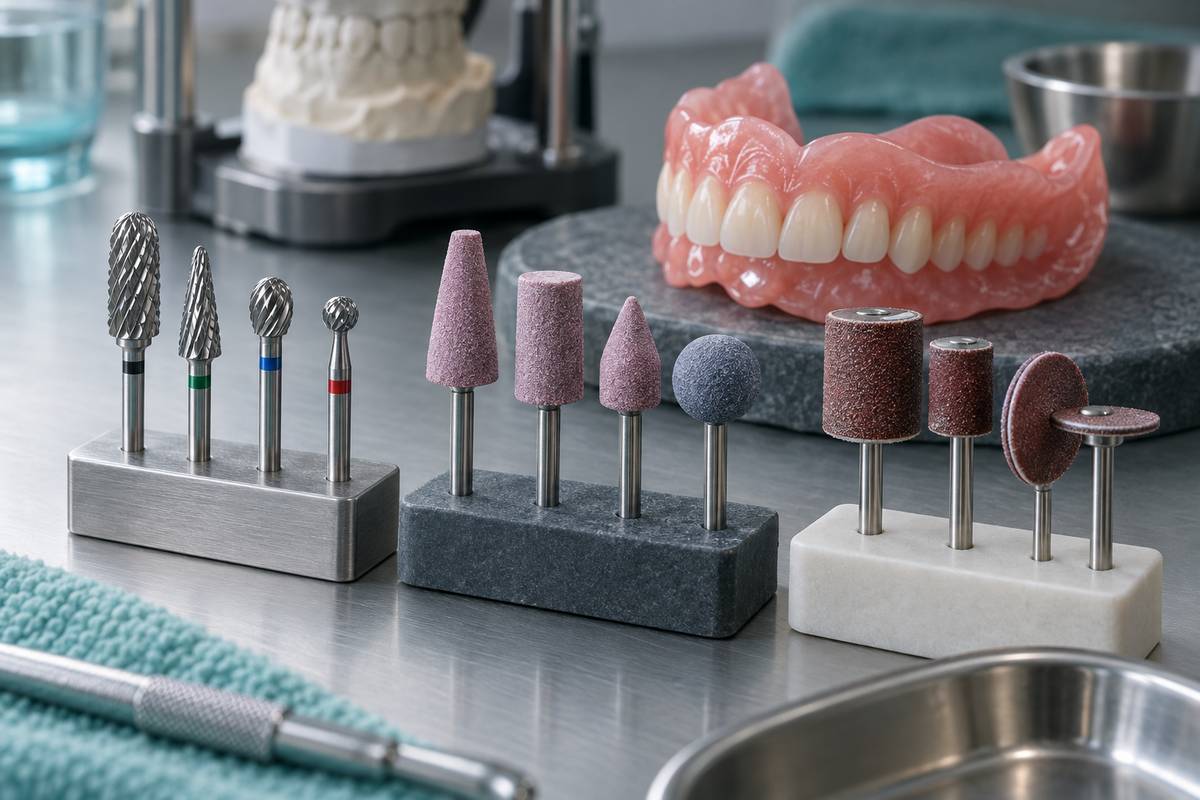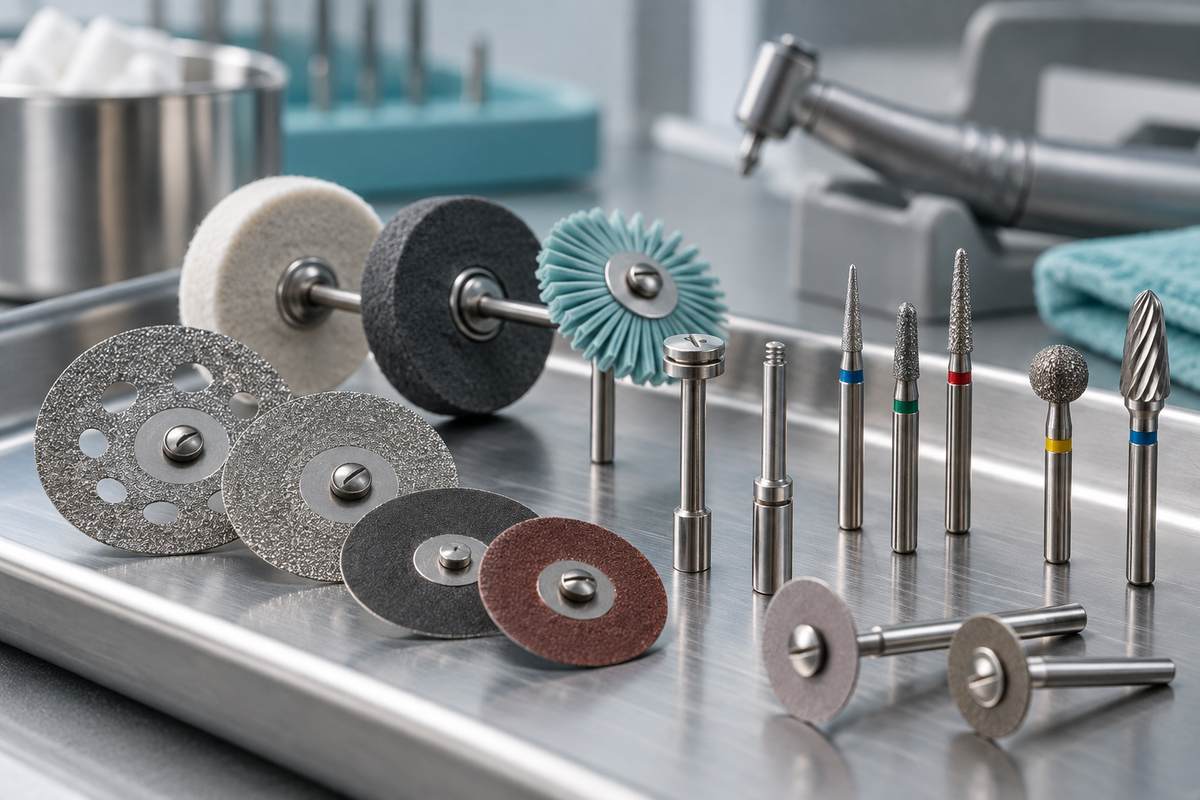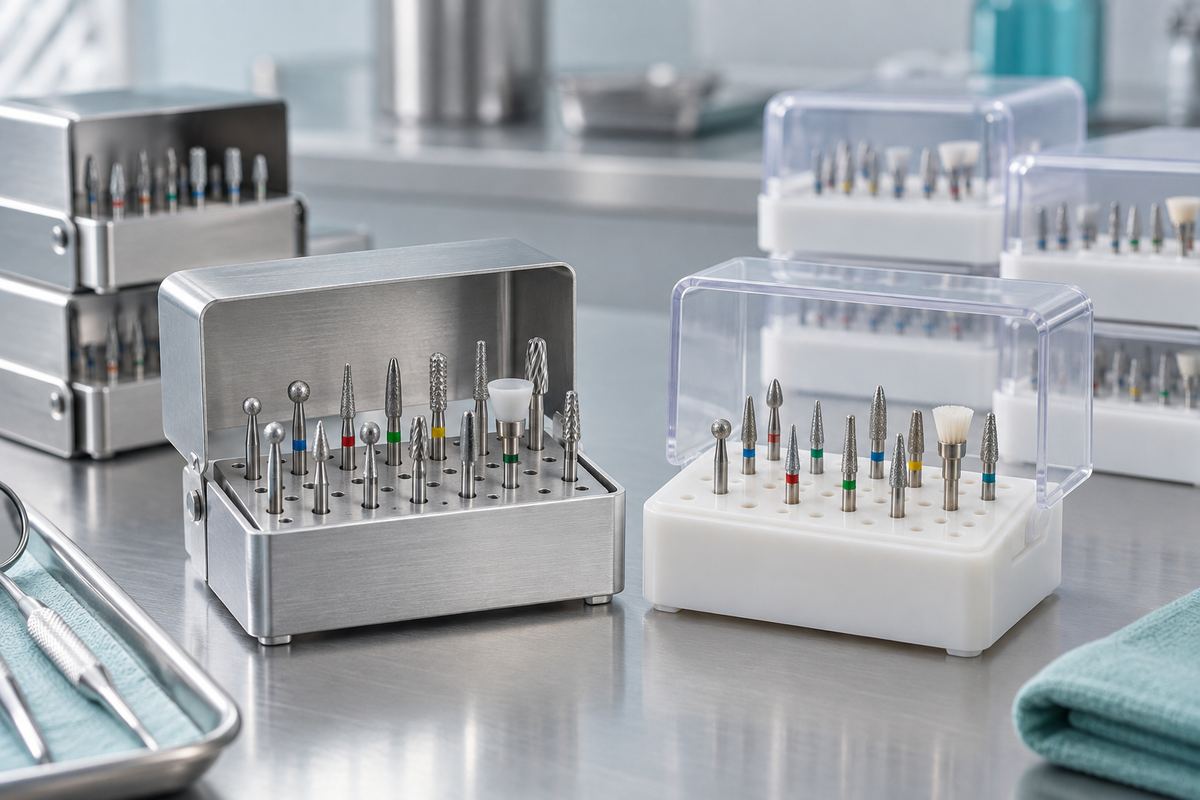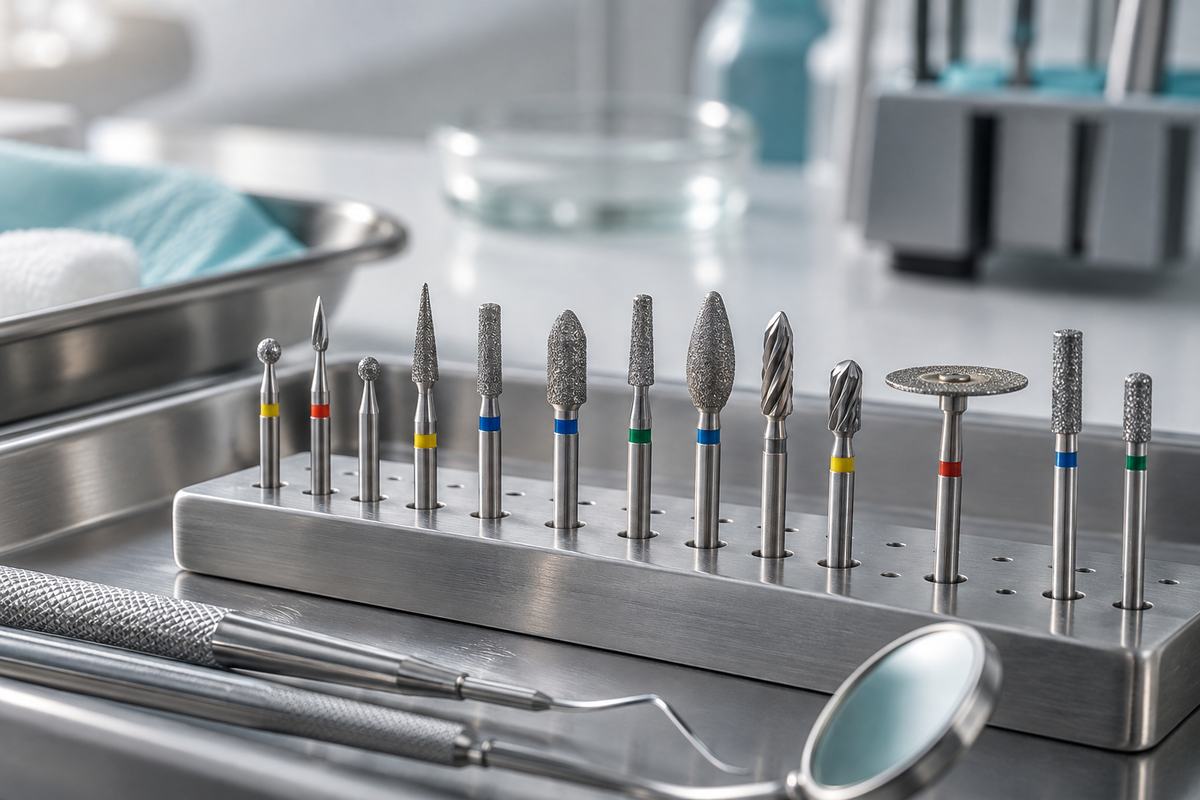
Private label and OEM programs let dental distributors, clinic chains, and dealers sell rotary instruments under their own brand without building a factory. The concept is straightforward: a manufacturer produces burs to specification, applies your branding, and ships finished goods ready for your shelves or catalogs. What varies from one factory to the next is how flexible the program is and how much control you get over product details.
BurDental has operated as a factory-direct dental bur manufacturer since 2008, producing diamond burs, carbide burs, CAD/CAM milling burs, polishers, and accessories for private label customers worldwide. This article explains how factory OEM programs work so you can evaluate whether private labeling is the right move for your business.
What private label means for dental burs
Private label means a manufacturer produces the product and a separate company sells it under its own brand name. In the dental bur industry, this typically covers:
- Custom laser engraving on bur shanks — your brand name, logo, or catalog number
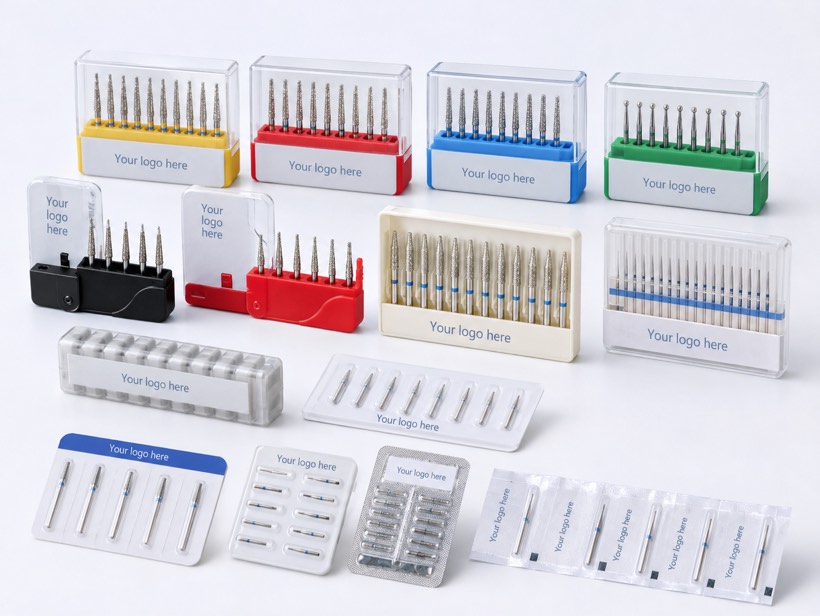
- Branded packaging — boxes, blister packs, or labeled vials carrying your company identity
- Custom assortments — kits and sets built around your customer base rather than the factory's standard groupings
- Product specification adjustments — grit levels, shank lengths, head shapes, or coatings tailored to your market
OEM (Original Equipment Manufacturer) programs go a step further. In a full OEM arrangement, the buyer may specify materials, tolerances, or design changes that result in a product distinct from the factory's standard catalog. In practice, most dental bur buyers use a hybrid approach: they select from proven product lines but customize branding, packaging, and kit composition.
How a typical OEM order works
The process from first contact to delivered goods follows a predictable sequence, though timelines vary by order complexity.
- Initial consultation. You share your target product range, branding requirements, and estimated volumes. The factory reviews feasibility and confirms which items can be produced or adapted.
- Sample production. The factory produces branded samples for your review. This step lets you verify product quality, check laser engraving accuracy, and confirm that packaging meets your standards. BurDental offers sample orders so buyers can test before committing to production runs.
- Specification lock. Both sides agree on final product specs — grit, shank type (FG, RA, or HP), head dimensions, coating, and packaging format. Any custom artwork files for boxes or labels are finalized at this stage.
- Production. Manufacturing runs on the agreed schedule. A CE-marked, ISO 13485-certified factory follows documented quality procedures at every step, from raw material inspection through final packaging.
- Quality inspection and shipping. Finished goods pass outgoing quality checks before dispatch.
OEM vs. private label vs. white label
These three terms overlap in everyday conversation, but they describe different levels of customization.
| Feature | White Label | Private Label | Full OEM |
|---|---|---|---|
| Product design | Factory standard | Factory standard or minor tweaks | Custom to buyer spec |
| Branding | Buyer logo on standard packaging | Fully custom packaging and engraving | Fully custom |
| Minimum order flexibility | Most flexible | Moderate | Highest per-SKU volume |
| Lead time | Shortest | Moderate | Longest |
| Cost per unit | Lowest | Moderate | Varies by complexity |
| Buyer controls specs | No | Partially | Yes |
White label is the simplest entry point: take an existing product, put your name on it. Private label adds packaging control and possibly minor product tweaks. Full OEM means you own the product specification and the factory builds to your drawing.
What to look for in a private label bur supplier
Not every factory can run a flexible OEM program. Before committing, evaluate these factors:
- Certifications. CE marking and ISO 13485 certification are non-negotiable for dental instruments sold in regulated markets. Ask for current certificates, not expired ones.
- Product range. A factory that produces diamond burs, tungsten carbide burs, polishers, milling burs, and accessories under one roof simplifies your supply chain. You deal with one vendor instead of three or four.
- Order flexibility. Some factories require large minimums that lock out smaller distributors. Look for suppliers with low minimums that let you test the market before scaling up.
- Sample policy. Any serious factory should provide samples before you place a production order. If a supplier refuses samples or charges unreasonable fees, move on.
- Communication speed. Dental distribution moves fast. A supplier that takes a week to reply to basic questions will cause problems once you have customers waiting on stock.
- In-house engraving and packaging. Verify that the factory handles laser engraving and custom packaging on-site rather than outsourcing to a third party, which adds time and cost.
Why distributors choose factory-direct private label
Buying private label dental burs direct from a factory rather than through trading companies or intermediaries offers concrete advantages:
- Lower unit cost. Removing the middleman reduces cost per bur, giving you more room on margins or more competitive retail pricing.
- Quality control access. When you work with the actual factory, you can request production photos, inspection reports, and arrange facility visits. A trading company cannot offer this level of transparency.
- Faster iteration. If a product needs adjustment — a different grit, a shorter head, a new kit composition — the factory can prototype and produce without relaying instructions through a third party.
- Brand building. Selling under your own label builds equity in your brand. Over time, your customers associate product quality with your name, not a generic manufacturer.
BurDental has served private label partners since 2008, with a CE-marked, ISO 13485-certified production facility covering the full range from diamond burs to polishing instruments. Contact us via WhatsApp at +86 186 8057 1046 to discuss your private label requirements.
Frequently asked questions
Can I private label dental burs with low order quantities?
Yes. Many factories, including BurDental, offer flexible minimums designed for distributors testing new markets or adding SKUs gradually. Contact the factory directly to discuss quantities that fit your business.
What certifications should a private label dental bur carry?
At minimum, CE marking for the EU market and ISO 13485 factory certification. These confirm that the manufacturing process meets international quality management standards for medical devices. Always request current certificates before placing an order.
How long does a private label order take from sample to delivery?
Timelines depend on order size, customization level, and shipping method. Sample production is typically the fastest step. Full production runs take longer, especially for custom packaging or new engraving setups. Ask your supplier for a specific timeline based on your order details.
What is the difference between OEM and private label dental burs?
Private label usually means applying your branding to existing products from the factory catalog. OEM goes further — you specify the product design, materials, and tolerances, and the factory manufactures to your exact requirements. Most buyers start with private label and move toward OEM as their volumes and product knowledge grow.
Can I mix product categories in a single private label order?
Most factories allow mixed orders covering multiple product types — for example, diamond burs, carbide burs, and polishers in one shipment. This simplifies logistics and can help meet minimum order thresholds across your full product range.