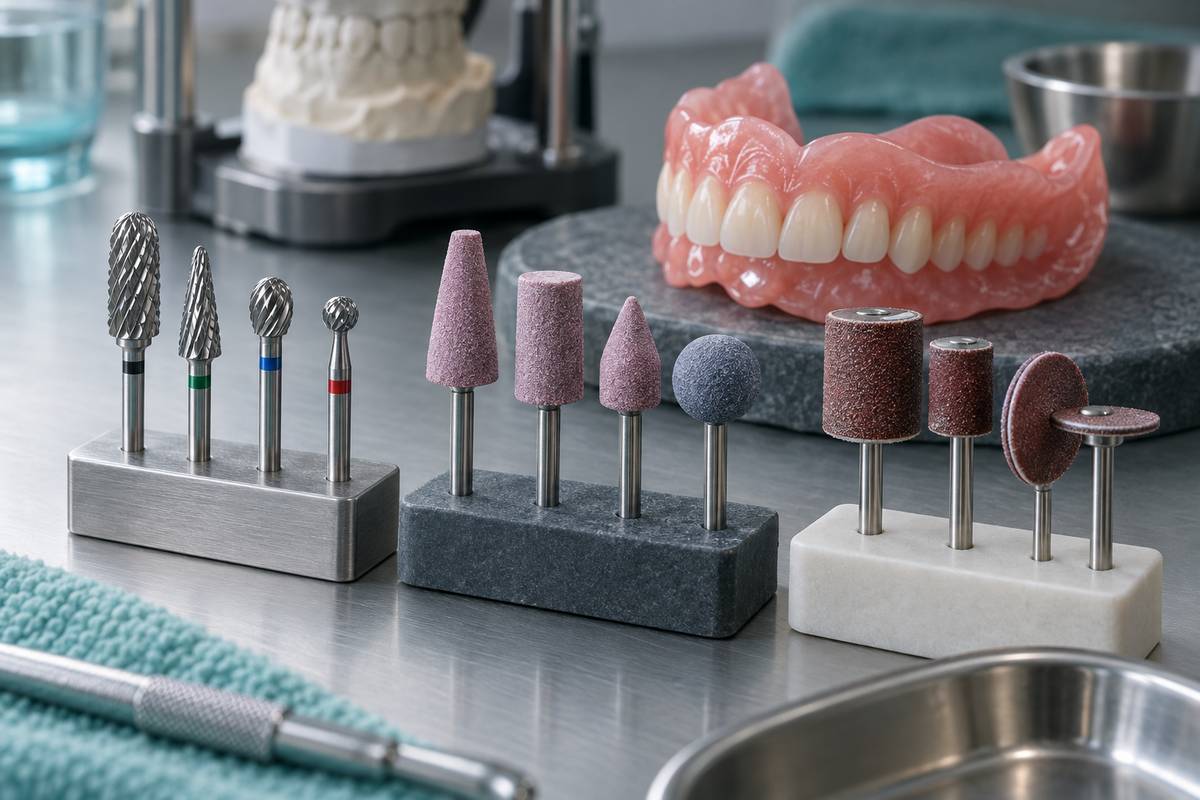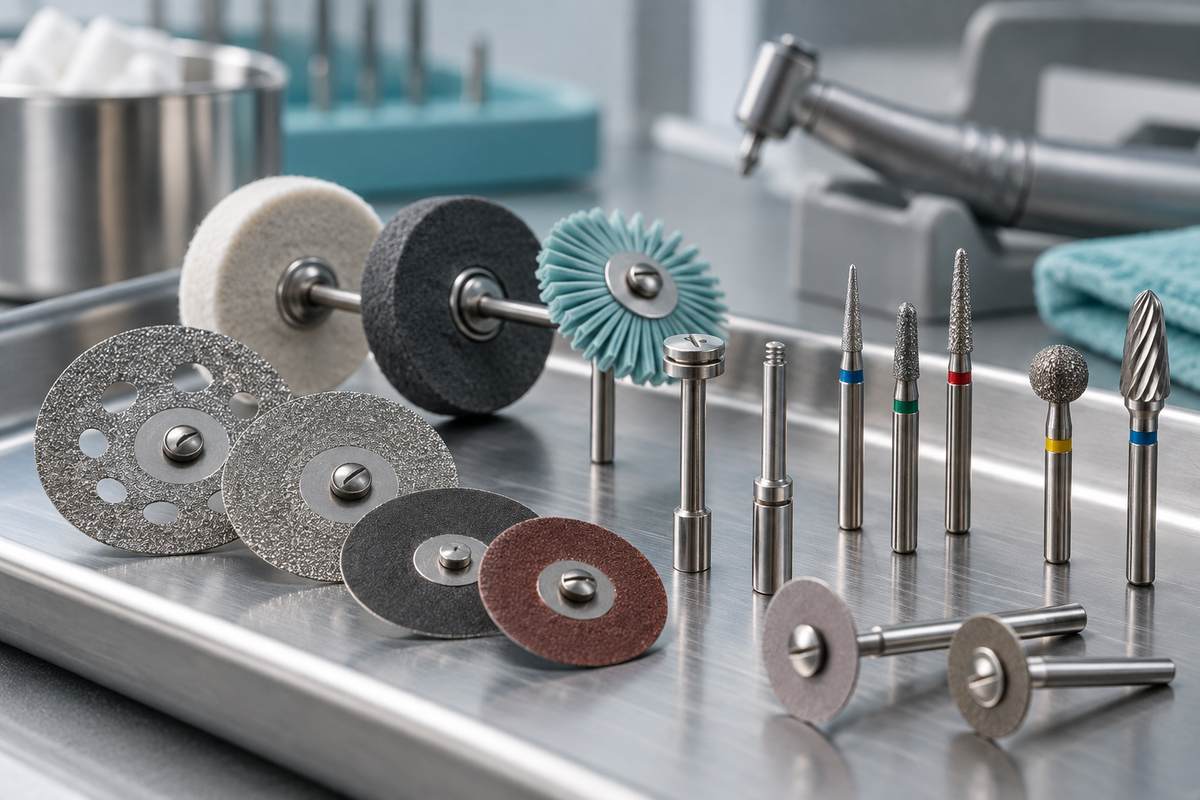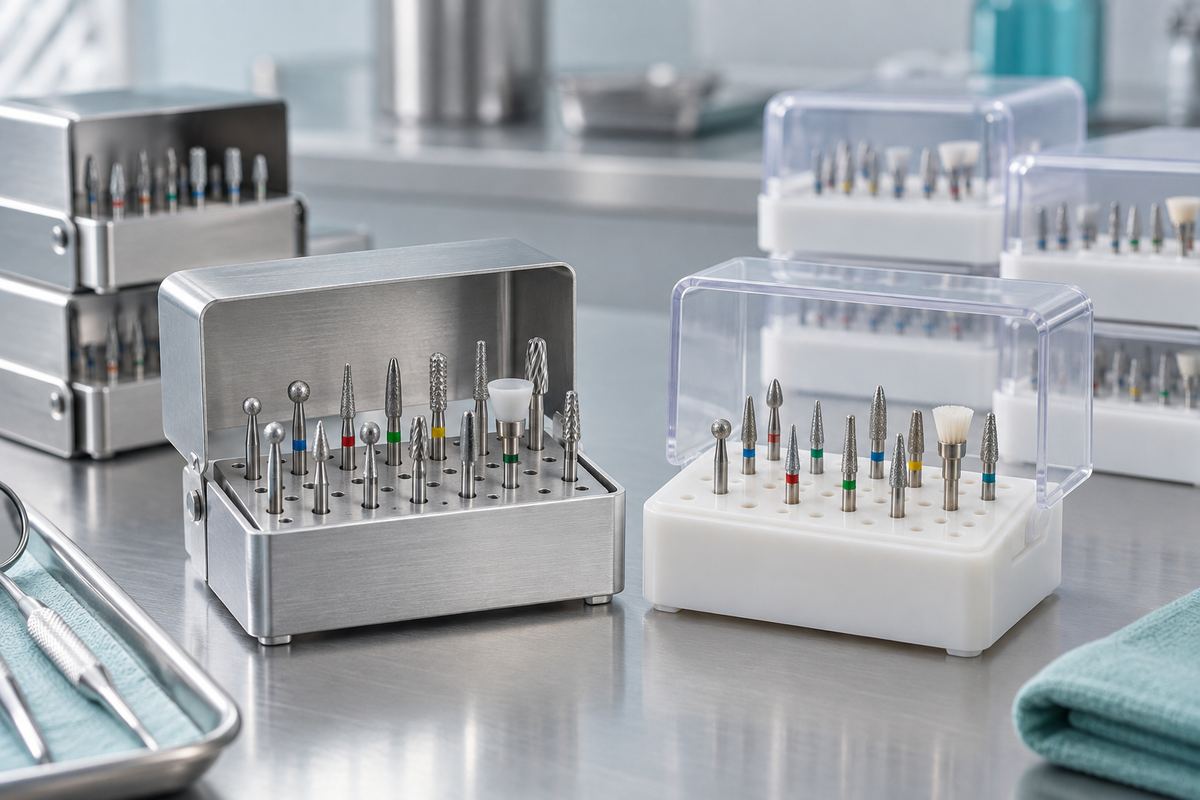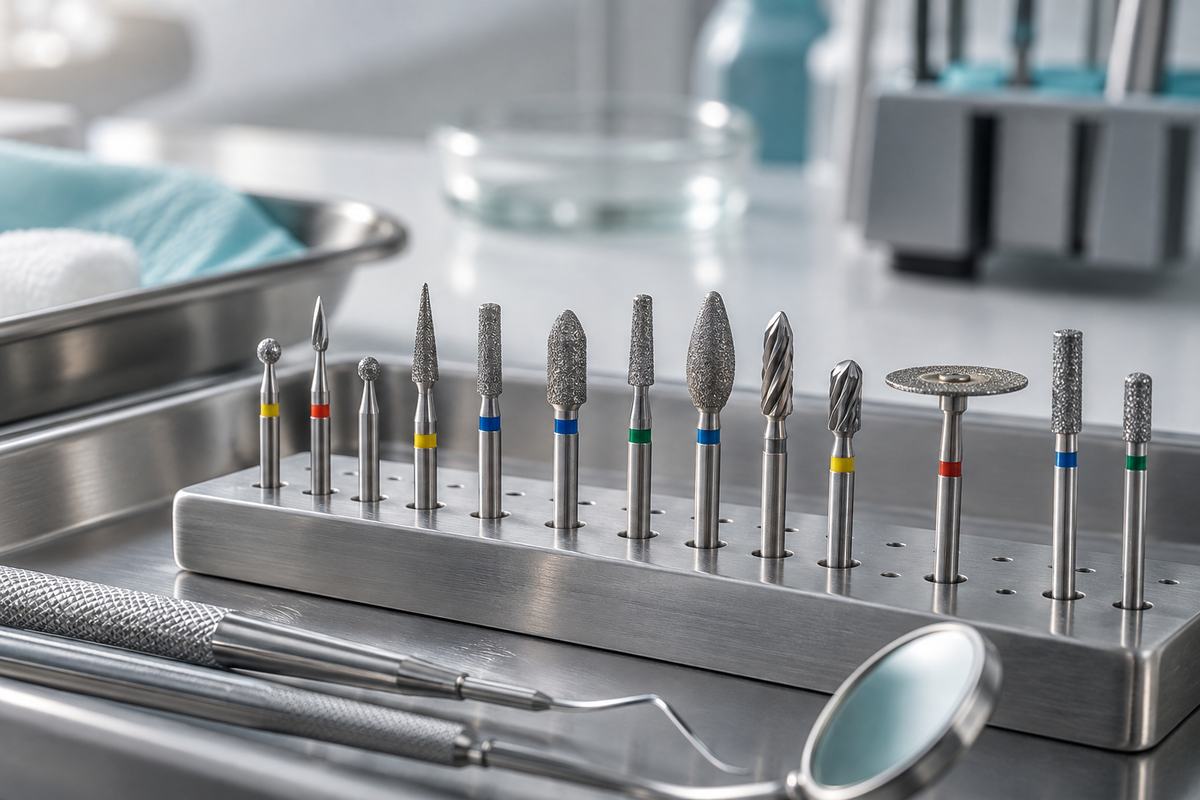
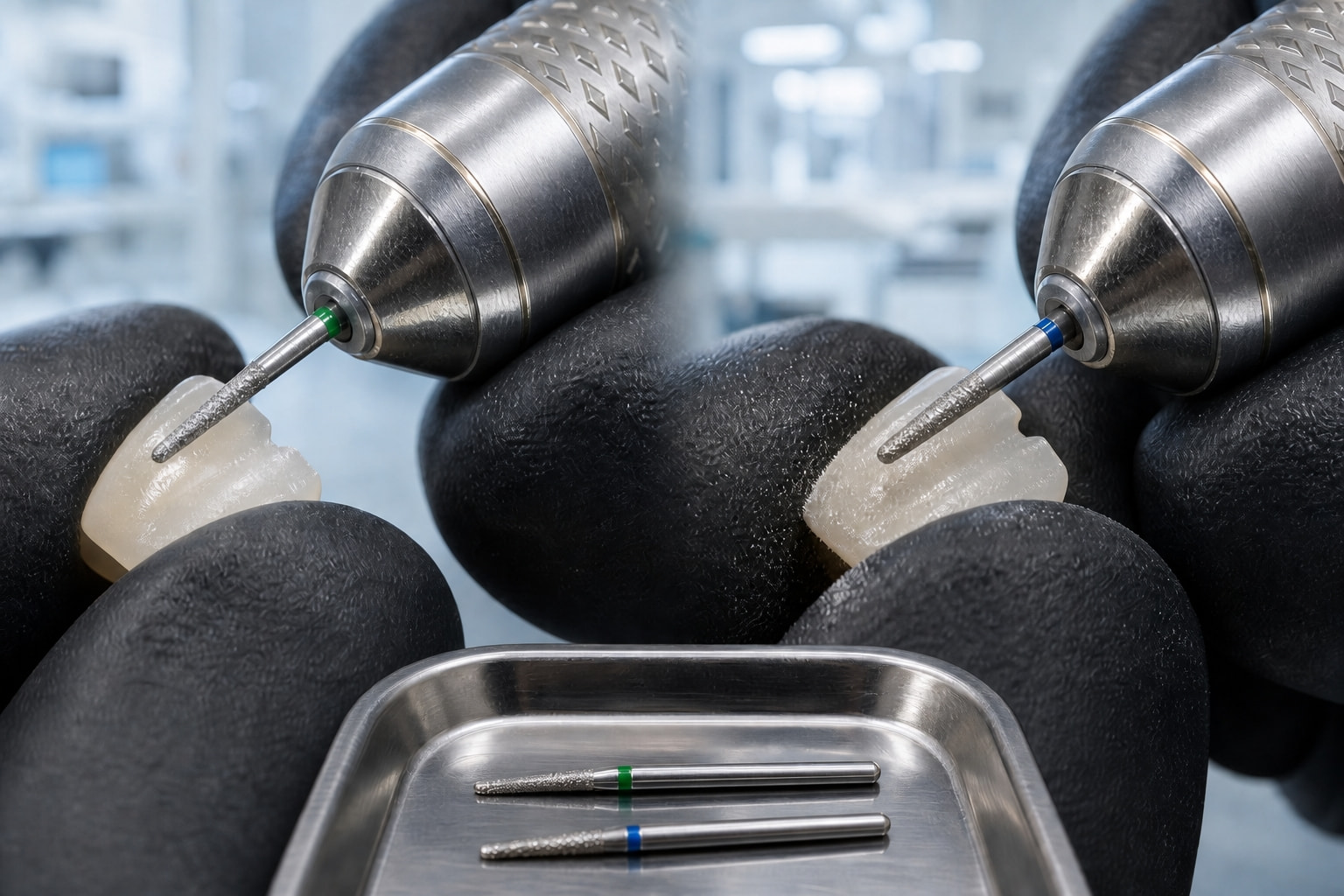
Every dental bur has a finite working life. Diamond coatings wear thin, carbide flutes dull, and milling bur geometries degrade with each cycle. The tricky part is that most burs do not fail all at once — they lose performance gradually, and by the time a clinician or technician notices, several restorations may already be compromised.
Knowing when to swap out a bur saves material, protects margins, and keeps chairside time predictable. This guide covers the visual, tactile, and performance-based signals that tell you a bur is past its useful life, organized by bur type so you can apply the right criteria to your inventory.
How diamond burs wear out
Diamond burs lose cutting ability in two stages. First, the exposed diamond particles at the surface fracture and flatten. The bur still cuts, but you need more pressure and more passes to achieve the same result. Second, the electroplated bond layer erodes enough that diamond particles detach entirely, leaving bald patches on the working head.
Visual check: Hold the bur under magnification — a 10x loupe or a USB microscope both work. A fresh diamond bur has a rough, glittering surface with evenly distributed grit. A worn bur shows smooth, shiny patches where the diamond has been stripped away. If more than a third of the head surface looks smooth, the bur is done.
Tactile check: Run a fingernail lightly across the head. A sharp bur catches immediately. A worn bur feels slick in places where grit is missing.
Clinical check: If you find yourself pressing harder into tooth structure or composite to get the same cut, the bur is dull. Increased pressure generates more heat, risks pulp damage on vital teeth, and produces rough, chipped margins on restorations. The extra force also accelerates handpiece bearing wear — a hidden cost that adds up over time.
Single-use FG diamond burs used chairside should be discarded after each patient, following current FDA guidance on diamond-coated devices. Reusable HP diamond burs in laboratory settings last longer because lab materials and conditions are more controlled, but they still need regular inspection between cases.
How carbide burs wear out
Tungsten carbide burs wear differently from diamond burs. Instead of losing surface grit, they dull at the flute edges. A sharp carbide bur shears material cleanly, producing defined chips or ribbons of removed material. A dull carbide bur smears material rather than cutting it, generates excess heat, and leaves a rough, torn surface that requires additional finishing.
Visual check: Examine the flute edges under magnification. Fresh flutes have crisp, defined cutting edges with clean valleys between them. Worn flutes show rounding at the tips, micro-chipping along the cutting edge, or built-up debris packed into the flute valleys that does not come out during cleaning.
Performance check: When a carbide finishing bur — whether 12-blade or 30-blade — stops producing a smooth surface on composite or acrylic, it has passed its useful life. Continuing to use it means adding extra polishing steps that eat into production time without improving the result.
Carbide burs can sometimes be resharpened on a fine diamond wheel, restoring a measure of cutting ability. But resharpening changes the original flute geometry, so resharpened burs are best reserved for rough reduction rather than precision finishing on crown margins or implant prosthetics.
How CAD/CAM milling burs wear out
CAD/CAM milling burs operate under repeatable CNC conditions, which makes wear monitoring more systematic than chairside instruments. Most milling machine software tracks bur usage by cycle count or total milling time. When the manufacturer-recommended limit is reached, the software alerts the operator.
But cycle counts are guidelines, not absolutes. The actual lifespan depends heavily on the block material. Milling a full-contour zirconia crown wears a diamond-coated bur far faster than milling a PMMA temporary, even though the software may count each as one cycle. Operators who mill mixed materials should track bur condition independently of the counter.
Signs a milling bur needs replacement:
- Marginal fit degrades: crowns no longer seat passively on the die or model, indicating the bur tip has worn and is producing inaccurate geometry.
- Surface finish roughens: the milled surface shows visible tool marks or chatter lines that were not present in earlier units from the same bur.
- Chipping increases: edges of milled restorations chip during removal from the block, suggesting the bur is tearing material rather than cutting it.
- Audible change: a worn milling bur produces a higher-pitched or irregular sound during the cutting cycle.
Replacing milling burs on schedule — before marginal fit or surface quality degrades — avoids scrapping expensive zirconia blocks and re-milling restorations from scratch.
Replacement indicators by bur type
The table below summarizes typical replacement triggers across the main bur families. Actual lifespan varies with material hardness, operator technique, and sterilization practice.
| Bur type | Relative lifespan | Primary wear indicator | Replacement trigger |
|---|---|---|---|
| Diamond bur FG (chairside) | Single-use per FDA guidance | Grit loss, smooth patches | Discard after each patient |
| Diamond bur HP (lab) | Moderate; inspect regularly | Bald spots visible on head | Magnification check between cases |
| Carbide finishing bur FG | Short to moderate | Rounded flute edges | Surface smearing instead of clean cuts |
| Carbide cutting bur HP (lab) | Moderate to long | Packed flute valleys, dull edges | Rough finish on acrylic or metal |
| CAD/CAM milling bur (diamond-coated) | Material-dependent | Marginal fit drift, chatter marks | Cycle count alert or fit check failure |
| CAD/CAM milling bur (carbide) | Longer on soft substrates | Surface roughness, edge chipping | Visual inspection or software alert |
The hidden cost of running dull burs
A dull bur does not just slow you down — it creates a chain of downstream waste. In a clinical setting, extra passes per restoration add up across a full schedule. A bur that needs twice the pressure doubles the thermal load on the tooth, raising the risk of post-operative sensitivity or irreversible pulp injury. In the lab, a worn milling bur can scrap a block that costs several times more than the replacement bur itself.
There is also an indirect quality cost. Margins finished with a dull bur are rougher than they should be, which means more time polishing or, worse, a restoration that collects plaque faster than it should. For labs, rough milled surfaces require extra hand-finishing that erodes the efficiency gains of CAD/CAM in the first place.
For practices and labs purchasing burs wholesale, the math is straightforward. Building a replacement schedule into your inventory system — whether by patient count, cycle count, or weekly visual inspection — prevents the slow drift from "still usable" to "costing money on every case." A reliable supply of fresh burs from a factory-direct source like BurDental keeps per-unit cost low enough that replacing on schedule is the obvious choice.
Frequently asked questions
How do I know if a diamond bur is dull?
Hold the bur under a 10x loupe or USB microscope and look for smooth, shiny patches where the diamond grit has worn away. If more than a third of the working head looks smooth, replace it. Clinically, needing noticeably more pressure to achieve the same cut is the most reliable chair-side indicator.
Can I resharpen carbide burs instead of replacing them?
Carbide burs can be dressed on a fine diamond wheel to restore the cutting edges. However, resharpening alters the original flute geometry, so resharpened burs work best for rough reduction — not precision finishing on margins or prosthetics where dimensional accuracy matters.
Does autoclaving shorten bur life?
The autoclave cycle itself does not significantly dull diamond or carbide cutting surfaces. The main risk is corrosion from moisture left on the bur after sterilization, which can weaken the bond holding diamond particles. Dry burs thoroughly after autoclaving and store them in a sterilizable bur block to protect the heads from contact damage.
What is the most cost-effective way to keep burs fresh?
Buy wholesale from a factory-direct supplier. BurDental ships CE-marked burs from an ISO 13485 factory. Lower per-unit cost makes it practical to replace burs on schedule rather than stretching each one past its useful life.
How often should I replace CAD/CAM milling burs?
Follow the milling machine manufacturer's recommended cycle count as a starting point, but inspect bur condition independently — especially when milling hard ceramics like zirconia, which wear burs faster than PMMA or wax. Replace immediately if marginal fit degrades or surface chatter appears, regardless of the cycle counter.