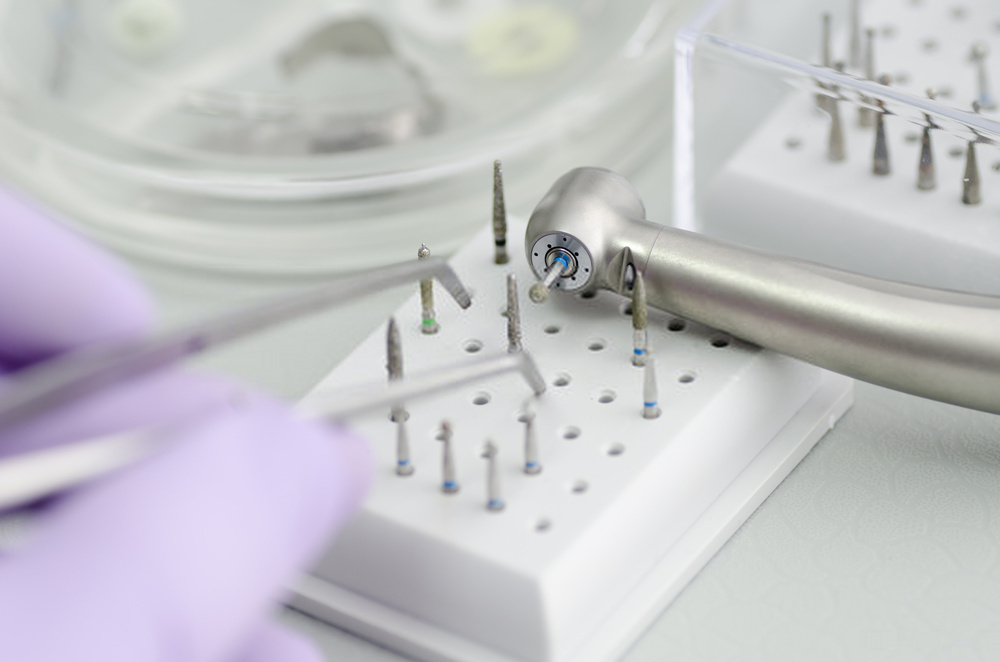
Dental Bur Sizes Explained: A Complete Shank Reference
Selecting the correct dental bur size is one of the most practical decisions a clinician or lab technician makes every day. The wrong shank type will not fit the handpiece, and the wrong head diameter can compromise the quality of your preparation. This guide breaks down every measurement you need to know about dental bur sizing, from shank dimensions to head diameters and overall length specifications.
Anatomy of a Dental Bur
Before discussing sizes, it helps to understand the three parts that make up every dental bur:
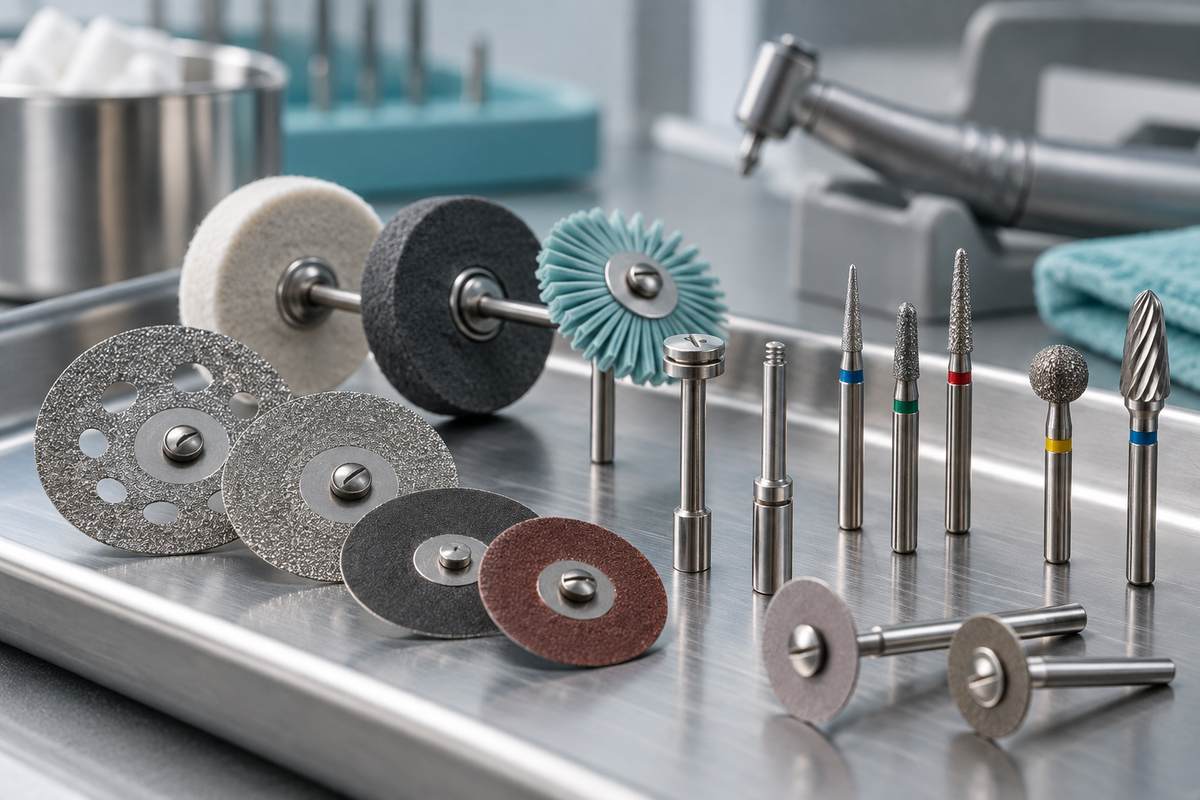
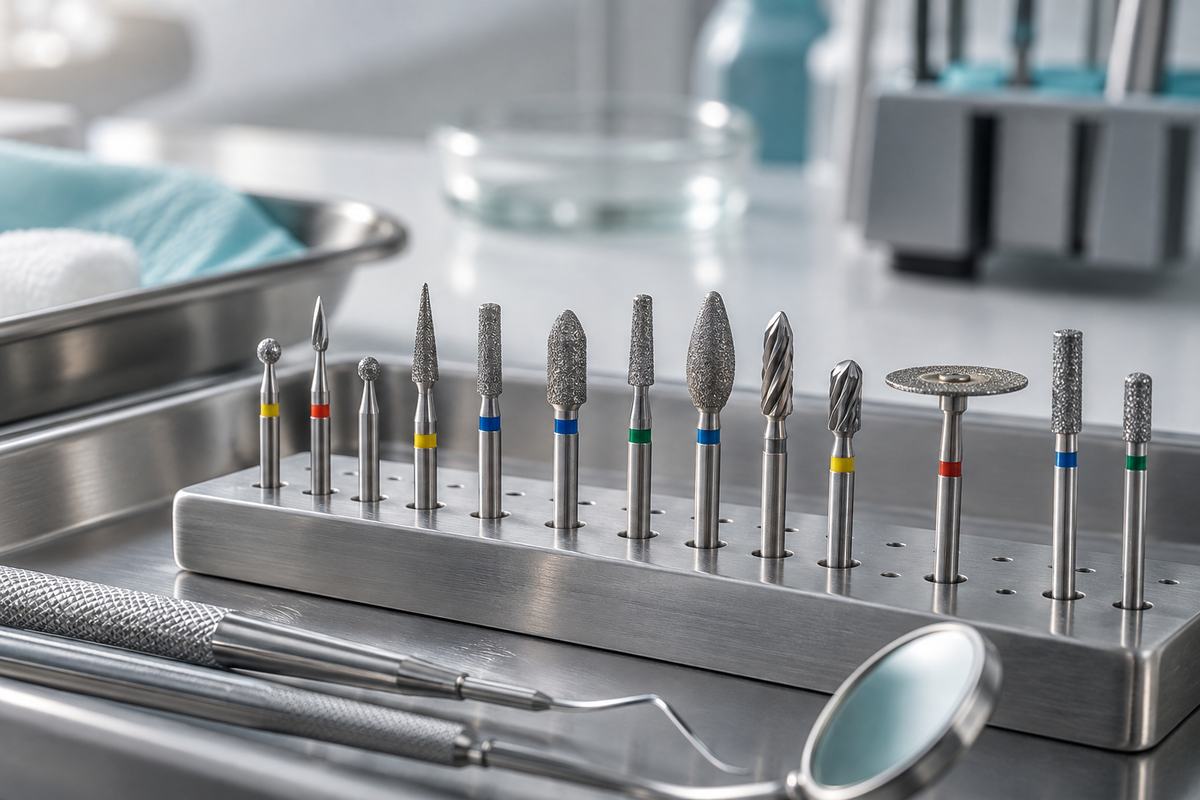
- Head (working end) - The cutting or grinding portion made from materials such as tungsten carbide, diamond grit, or stainless steel. Head diameter and shape determine what the bur can do.
- Neck - The tapered transition between the head and the shank. Neck length affects access to tight areas inside the oral cavity.
- Shank - The smooth, cylindrical portion that inserts into the handpiece. Shank type and diameter dictate handpiece compatibility.
Each of these sections has standardized measurements governed by ISO numbering conventions. Getting familiar with those numbers will help you order the right burs every time.
The Three Main Shank Types and Their Dimensions
Dental burs come in three primary shank configurations. Each one is designed for a specific category of handpiece, and they are not interchangeable.
FG (Friction Grip) Shank
The FG shank is the most widely used shank type in clinical dentistry. It fits into high-speed air turbine handpieces through a friction-based chuck mechanism. No latch or lock is required; the chuck grips the smooth shank tightly enough to hold it at speeds up to 400,000 RPM.
- Shank diameter: 1.6 mm (1/16 inch)
- Overall length: Approximately 19-21 mm (standard), though short-shank variants (16 mm) exist for pediatric and limited-access cases
- Handpiece compatibility: High-speed air turbine handpieces
- Common applications: Cavity preparation, crown reduction, enamel contouring, and finishing
FG burs are available in the widest variety of shapes, from round and pear to flame and tapered fissure. Both diamond dental burs and tungsten carbide burs are commonly manufactured in the FG shank format.
RA (Right Angle / Latch-Type) Shank
The RA shank, also called the latch-type or LA shank, is designed for contra-angle slow-speed handpieces. A small notch near the end of the shank engages a latch mechanism inside the handpiece head, locking the bur in place during rotation.
- Shank diameter: 2.35 mm (3/32 inch)
- Overall length: Approximately 22 mm
- Latch notch: Located about 1.6 mm from the end of the shank
- Handpiece compatibility: Contra-angle slow-speed handpieces
- Common applications: Caries removal, polishing, prophylaxis, and endodontic access
RA burs typically operate between 5,000 and 40,000 RPM. The latch mechanism prevents the bur from spinning out at these lower torque-heavy speeds. Many of the same head shapes found in FG burs are also available in RA format.
HP (Handpiece / Straight) Shank
The HP shank fits into straight low-speed handpieces and bench-mounted motors used primarily in dental laboratories. The shank is held by a tightening chuck or collet rather than a latch.
- Shank diameter: 2.35 mm (3/32 inch)
- Overall length: Approximately 44.5 mm (the longest of the three types)
- Handpiece compatibility: Straight low-speed handpieces, bench lathes, and lab motors
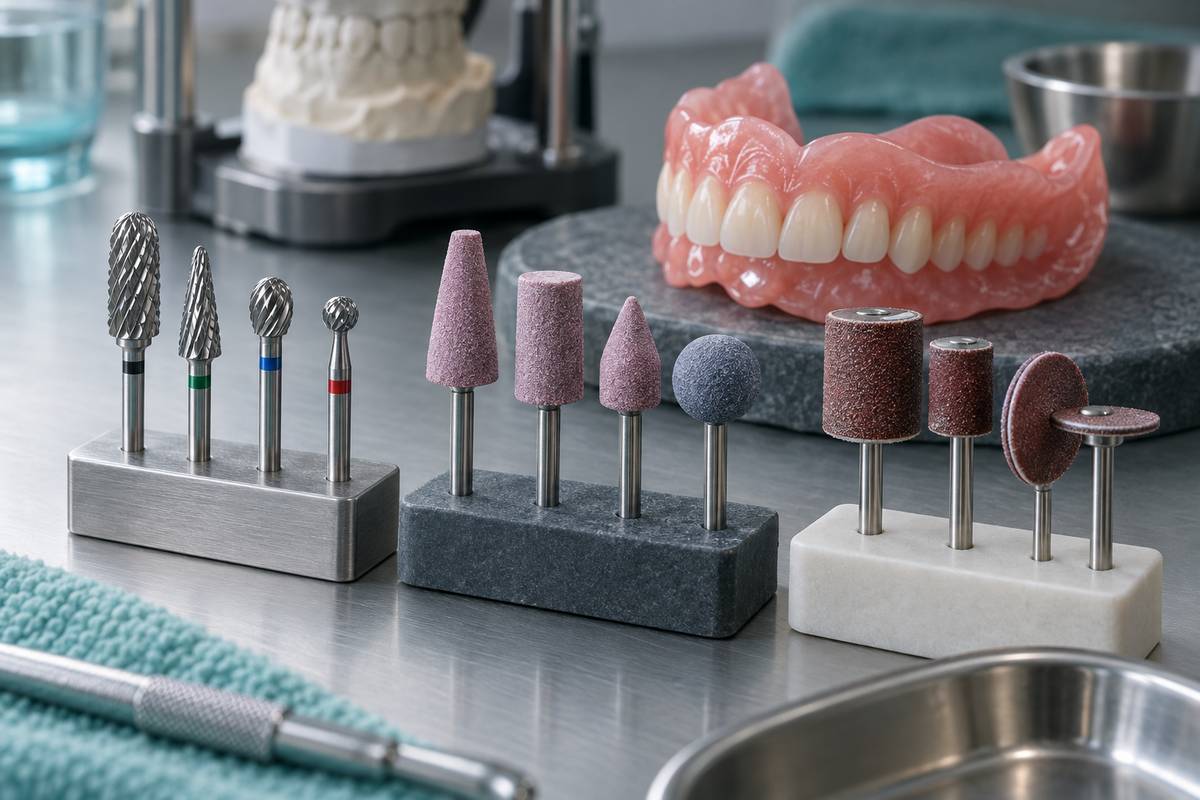
- Common applications: Trimming acrylic, adjusting prosthetics, laboratory finishing, and model work
Although the HP and RA shanks share the same 2.35 mm diameter, they are not interchangeable. The HP shank is roughly twice as long and lacks the latch notch. Attempting to use one in the wrong handpiece can damage the equipment or cause the bur to eject.
Quick-Reference Shank Size Comparison
| Specification | FG Shank | RA Shank | HP Shank |
|---|---|---|---|
| Diameter | 1.6 mm (1/16") | 2.35 mm (3/32") | 2.35 mm (3/32") |
| Overall length | 19-21 mm | ~22 mm | ~44.5 mm |
| Handpiece type | High-speed turbine | Contra-angle slow-speed | Straight slow-speed |
| Retention method | Friction chuck | Latch notch | Collet or chuck |
| Typical RPM range | 200,000-400,000 | 5,000-40,000 | 5,000-30,000 |
Understanding Dental Bur Head Sizes
Beyond the shank, the head diameter is the other measurement clinicians reference frequently. The ISO system encodes head diameter directly into the bur number. For example, an ISO code segment of "010" indicates a 1.0 mm head diameter, while "023" means 2.3 mm.
Common head diameter ranges include:
- 0.6 - 1.0 mm: Ultra-fine finishing work, fissure sealant preparation, minimal intervention procedures
- 1.0 - 1.6 mm: Standard cavity preparations, small crown adjustments
- 1.8 - 2.3 mm: Medium preparations, bulk material removal
- 2.5 - 5.0 mm: Large crown preparations, lab trimming, surgical bone work
Choosing the right head size depends on the procedure. For precise cavity preparations, a smaller head gives better control. For bulk reduction during crown prep, a larger diameter removes material more efficiently.
How Bur Length Affects Clinical Performance
Total bur length matters for access and visibility. Standard FG burs work well for most anterior and premolar preparations. However, certain clinical situations call for modified lengths:
- Short-shank FG burs (16 mm): Useful for pediatric patients and posterior teeth where mouth opening is limited.
- Surgical-length FG burs (25-28 mm): Designed for third molar surgery and other procedures requiring extended reach beyond the standard working range.
- Extended HP burs (up to 65 mm): Laboratory applications where the straight handpiece is mounted on a bench motor and extra reach is needed.
Always confirm that the overall bur length is compatible with your handpiece. An overly long bur can cause vibration and reduce cutting accuracy, while a bur that is too short may not seat properly in the chuck.
Matching Bur Size to Handpiece: Practical Tips
Here are some practical guidelines to avoid common sizing mistakes:
- Check the shank diameter first. A 2.35 mm bur will never fit a high-speed turbine designed for 1.6 mm FG shanks. This seems obvious, but mixed inventory bins cause this error regularly.
- Verify the retention method. RA and HP shanks are the same diameter but use different retention systems. An RA bur placed into an HP handpiece will spin freely and may fly out.
- Read the packaging codes. Most manufacturers print the shank type (FG, RA, HP) directly on the blister pack along with the ISO number. Learning to identify shank types quickly saves time during setup.
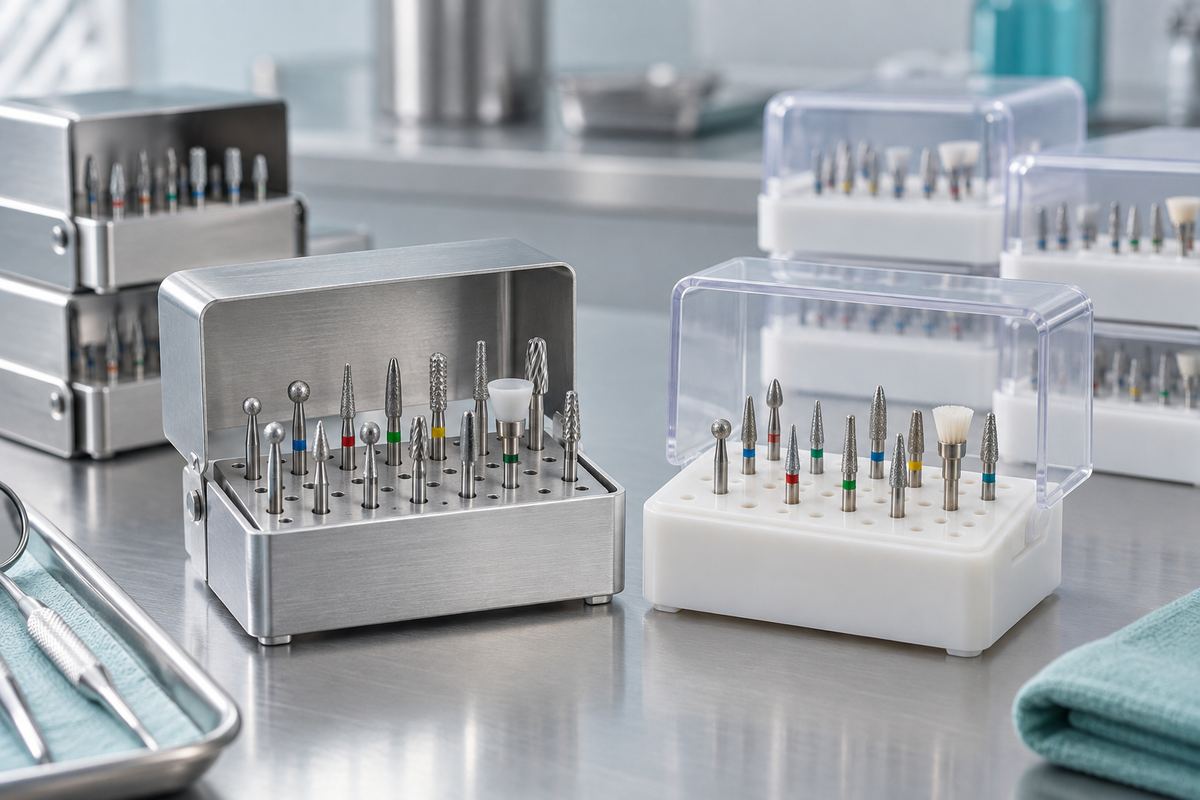
- Organize your bur block by shank type. Keep FG, RA, and HP burs in separate blocks or trays. Color-coded systems are an effective way to prevent mix-ups.
Specialty Sizes and Formats
Beyond the standard three shank types, a few specialty formats deserve mention:
- FG-L (Friction Grip Long): A longer version of the standard FG shank, typically 25 mm overall. Used in surgical procedures where additional reach is needed.
- RA-L (Right Angle Long): Extended RA burs for deep subgingival preparations.
- Miniature head burs: Standard FG shanks paired with heads as small as 0.3 mm for ultra-fine detail work in endodontics and micro-preparations.
Summary
Dental bur sizing revolves around two core measurements: shank dimensions and head diameter. The three main shank types (FG at 1.6 mm, RA and HP both at 2.35 mm) each fit a specific handpiece category. Head sizes range from under 1 mm for precision work to over 5 mm for bulk material removal. Understanding these measurements helps you order correctly, avoid equipment damage, and work more efficiently in both clinical and laboratory settings.
For a full breakdown of bur materials and when to use each type, see our guide on different types of dental burs.