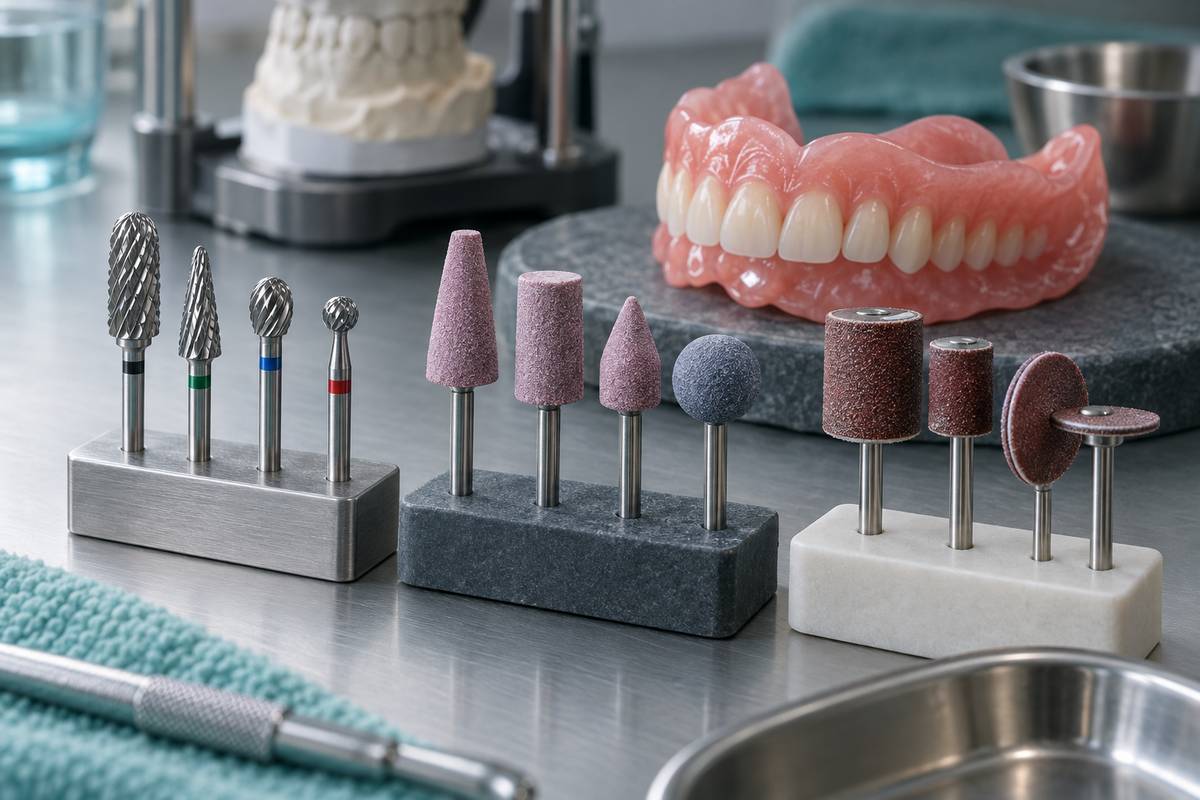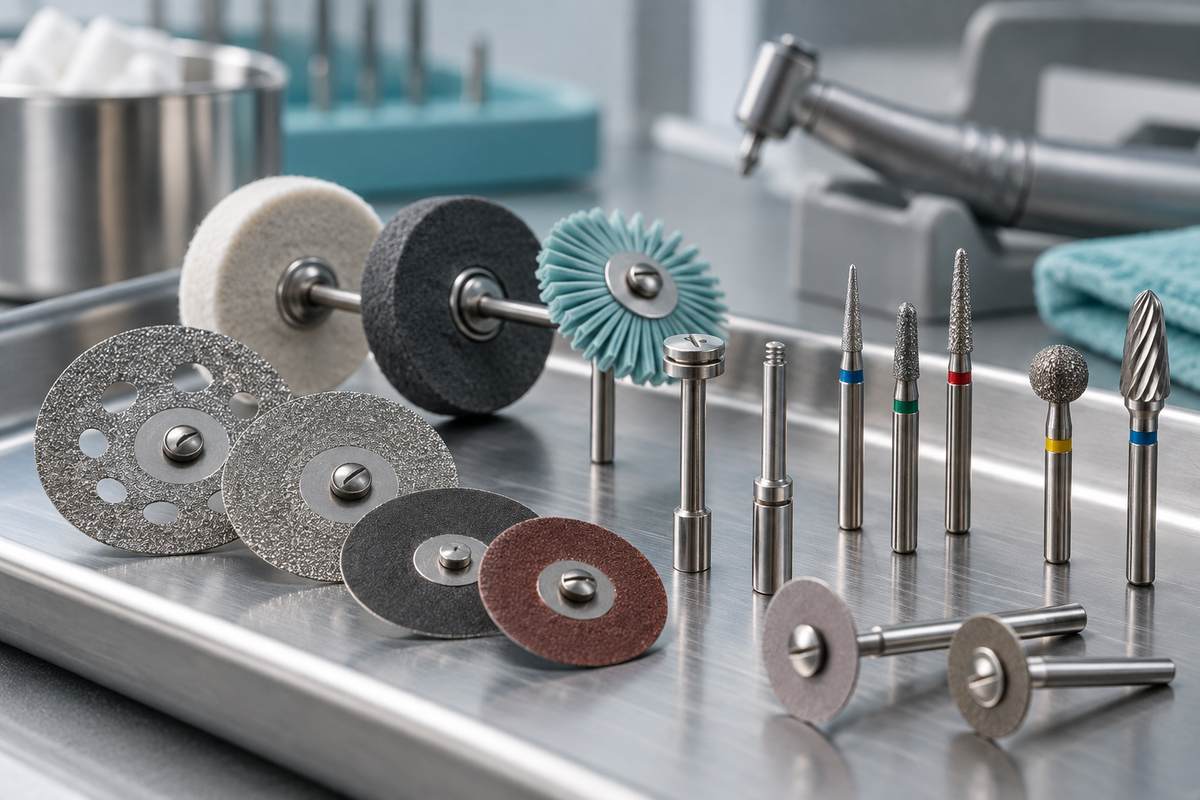
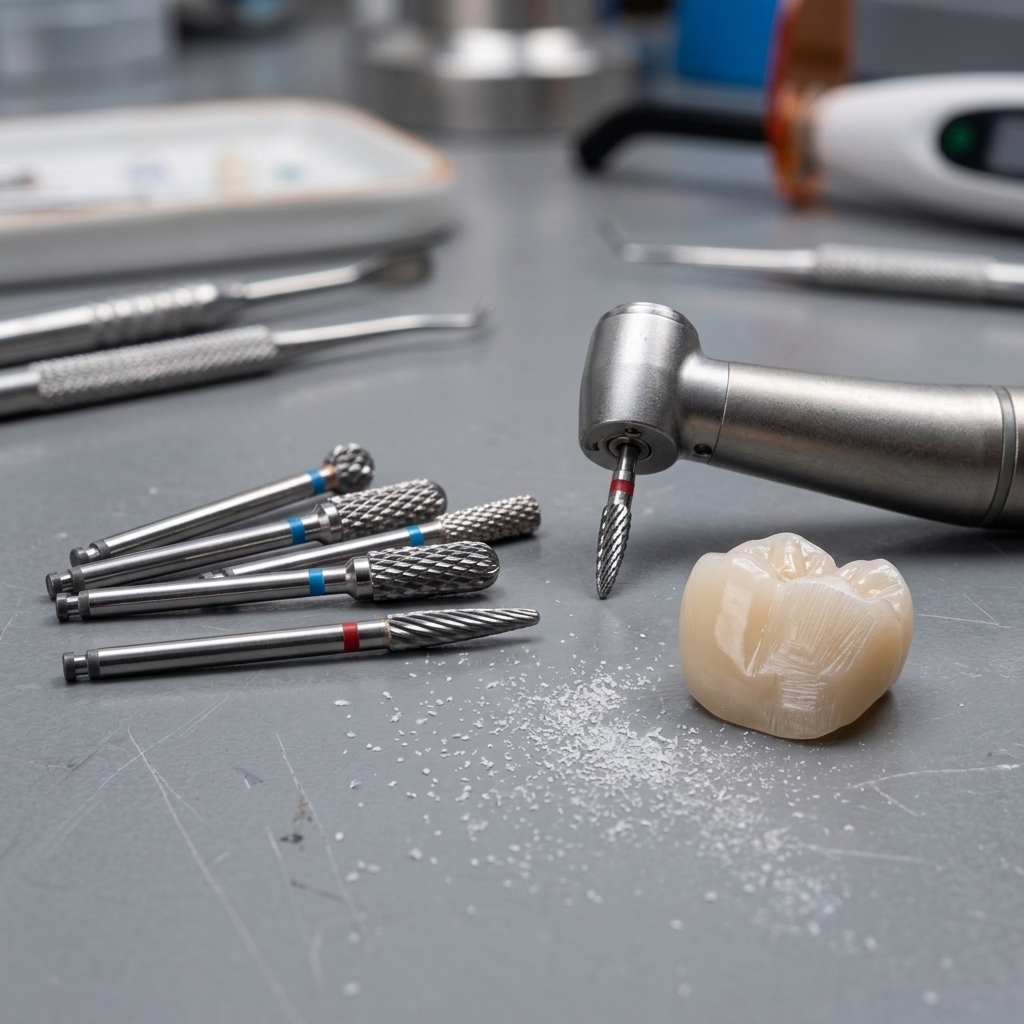
Most dental labs stock HP shank tungsten carbide cutters for straight handpiece work. They handle bulk acrylic reduction, model trimming, and heavy contouring without complaint. But the moment you need finer control — adjusting a denture flange, trimming a temporary bridge margin, or contouring acrylic around a clasp — the straight handpiece starts working against you. The instrument is too long, the speed too aggressive, and the access angle wrong for anything that requires a light touch.
That gap is why we added RA shank tungsten carbide cutters to the Burdental catalog. Same tungsten carbide cutting performance, but built for contra-angle handpieces with a 2.35mm latch-type shank.
Why RA Shank for Lab Trimming?
If you already work with HP shank tungsten carbide cutters, the material is identical — sintered tungsten carbide with cross-cut fluting. The difference is the handpiece it fits.
Contra-angle handpieces run at lower speeds than straight handpieces, typically 5,000–40,000 RPM versus 10,000–45,000 RPM for straight. The head-angle geometry puts the cutting tip closer to your fingers and gives a shorter lever arm. In practice, that translates to:
Better tactile feedback — you feel the material resistance through a shorter instrument, not through 7cm of straight shank vibrating in your fingers
Easier access to tight areas — lingual flanges, interproximal zones, palatal surfaces, and around clasps where a straight handpiece simply can't angle in
Less hand fatigue — the contra-angle grip distributes torque across your palm instead of concentrating it in a pencil grip
Controlled material removal — lower speed range means less risk of gouging thin acrylic sections or melting resin at the margin
None of this makes HP shank cutters obsolete. For bulk reduction on a fresh denture base or trimming a stone model down to size, HP is still faster and more efficient. RA shank cutters pick up where HP leaves off — the detail work that separates acceptable from precise.
Two Cross-Cut Options: Fine and Medium
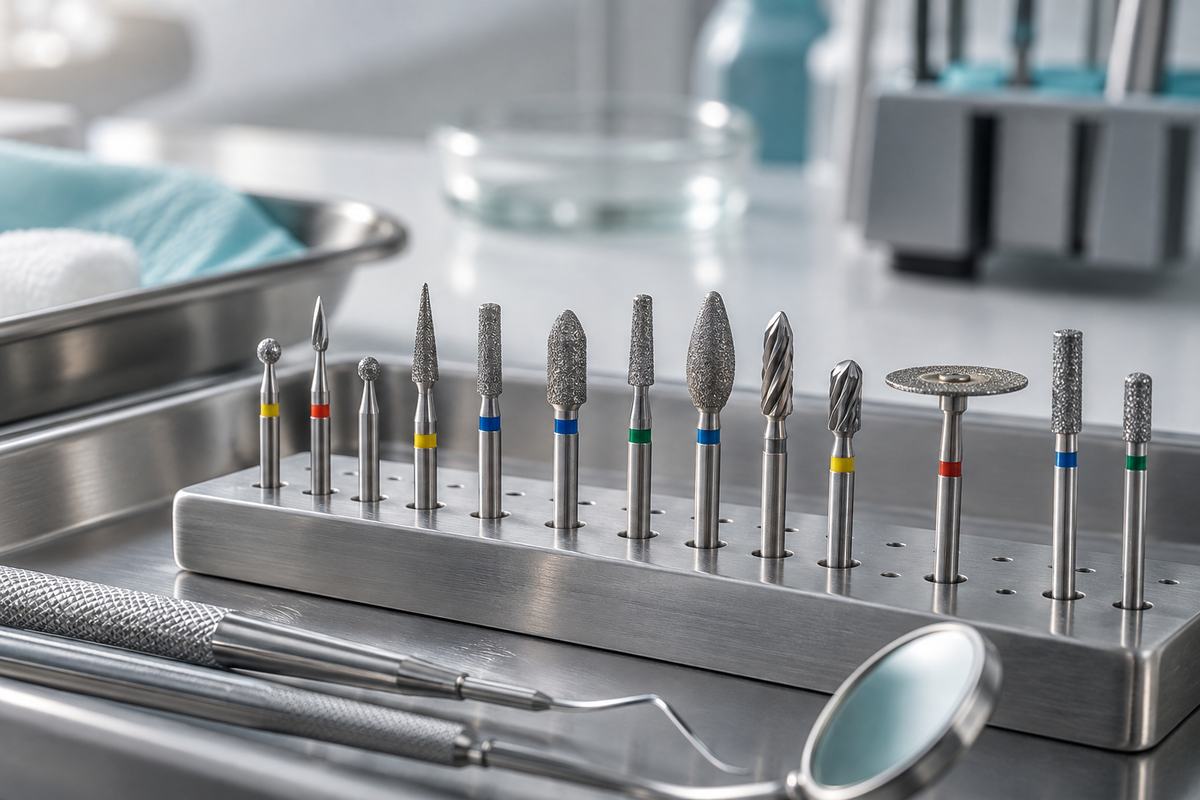
The RA cutters come in two blade configurations, each color-coded for quick identification:
Model | Cut Type | Color Code | Best For |
|---|---|---|---|
514 (FE) | Fine Cross Cut | Red | Finishing margins, smooth contouring, final shaping before polish |
524 (CE) | Medium Cross Cut | Blue | Initial shaping, moderate acrylic removal, denture adjustments |
Start with the medium cross-cut (blue) for initial shaping and switch to fine (red) for finishing. The cross-cut pattern on both models channels debris away from the cutting surface, which keeps the flutes from clogging — a common problem when trimming acrylic at lower speeds where chips don't clear as easily.
Head Shapes
Multiple head geometries are available across both cut types. Tapered shapes work well for flange contouring and margin refinement. Cylinder shapes handle flat surfaces and straight edges. Round-end variants smooth transitions without leaving sharp line angles in the acrylic. Flame shapes reach narrow interproximal areas and thin flanges.
Pick based on the geometry you need, not the cut type. Most labs keep two or three shapes in each cut grade — a taper, a cylinder, and a round-end cover the majority of trimming situations.
Where RA Cutters Fit in the Lab Workflow
Denture Trimming and Chairside Adjustments
Chairside denture adjustments are the clearest use case. The patient is in the chair, the dentist marks the pressure spots with articulating paper, and you need controlled removal with a contra-angle handpiece. An HP cutter in a straight handpiece is too aggressive for spot adjustments — one slip and you've thinned the base past repair. The RA cutter at 15,000–20,000 RPM removes marked areas cleanly without thinning the surrounding base material.
For new dentures coming off the flask, the workflow is straightforward: HP cutter for deflasking and gross trimming, then switch to RA for border refinement, post dam contouring, and tissue surface smoothing.
Temporary Restoration Finishing
Provisional crowns and bridges in acrylic or bis-acryl need margin refinement after removal from the mouth. The fine cross-cut RA cutter trims flash and adjusts contacts without deforming thin walls. Straight handpieces tend to grab and spin small provisionals out of your fingers — the contra-angle's lower torque and angled head give you a more controlled grip on the work.
Partial Denture Framework Finishing
Acrylic saddles on partial frameworks often need adjustment around metal clasps and rests. The contra-angle head reaches lingual and palatal surfaces that a straight handpiece struggles with physically. Use the medium cross-cut to remove bulk around the framework, then finish with fine cross-cut for a smooth transition between acrylic and metal components.
Model and Die Detailing
Die trimming and model preparation sometimes require more finesse than a straight handpiece offers. The RA cutter handles detail work on stone and plaster models — trimming around preparation margins, refining die spacing, smoothing poured bases, and cleaning up bubbles. The lower speed keeps stone from chipping at thin margins where a high-speed HP bur would fracture the edge.
RA vs HP Shank: Quick Comparison
Feature | RA Shank (2.35mm Latch) | HP Shank (2.35mm Straight) |
|---|---|---|
Handpiece | Contra-angle | Straight |
Speed Range | 5,000–40,000 RPM | 10,000–45,000 RPM |
Best For | Detail trimming, adjustments, tight access | Bulk reduction, model trimming, heavy shaping |
Control | Higher — shorter lever arm, angled head | Moderate — longer instrument, straight line |
Fatigue | Lower for extended detail work | Lower for large-area reduction |
For a deeper breakdown of shank types and their handpiece compatibility, check out our guide on FG vs RA vs HP dental bur shanks.
Tips for Getting the Most Out of RA Carbide Cutters
Match speed to material. Acrylic trims cleanly at 15,000–25,000 RPM. Push past 30,000 and you risk melting, not cutting — the acrylic smears onto the flutes and you end up polishing instead of removing. Stone and plaster tolerate higher speeds — 25,000–35,000 RPM works without heat buildup.
Light pressure, multiple passes. Let the cross-cut flutes do the work. Pressing hard clogs the blade pattern with acrylic debris, dulls the edges faster, and leaves a rougher surface that needs more polishing. Two light passes beat one heavy one every time.
Clean the flutes between cases. Acrylic residue builds up in cross-cut grooves faster than you'd expect. A brass wire brush clears packed material without damaging the carbide edges. Don't use steel brushes — they can chip the cutting edges. For a thorough guide on bur care, read our carbide bur types and maintenance article.
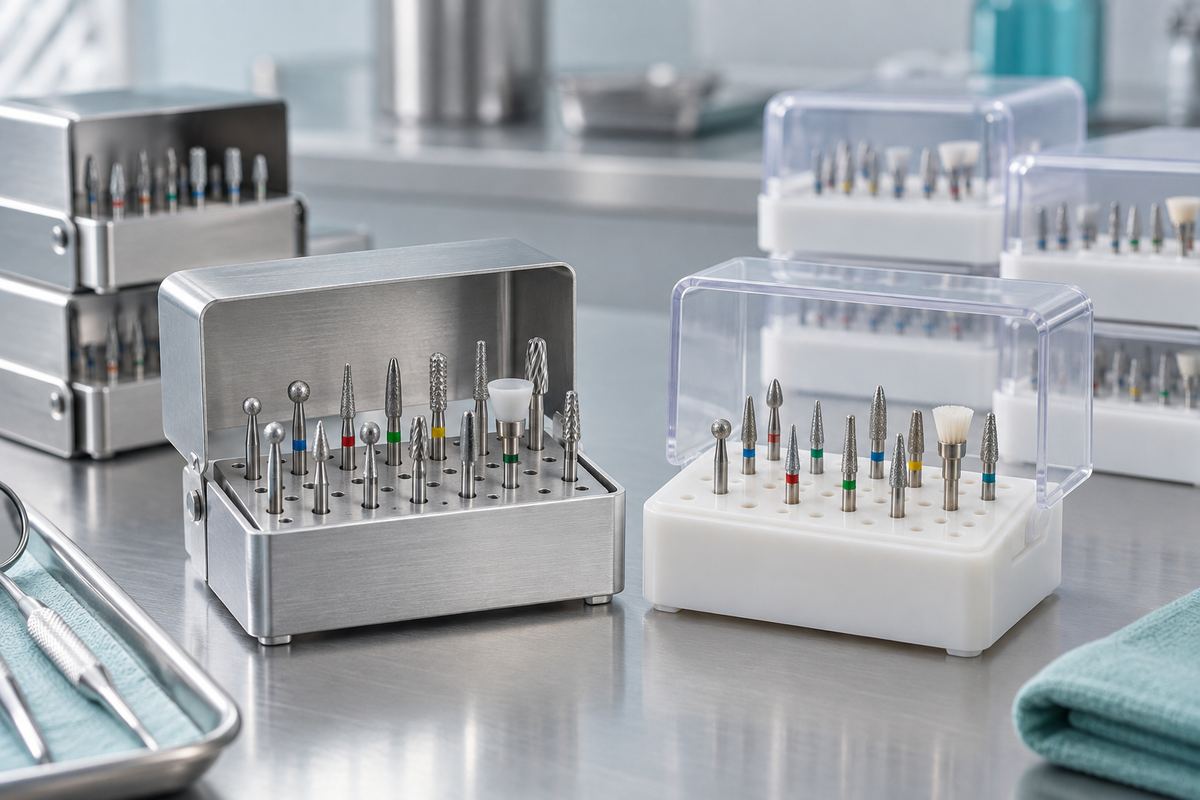
Store them in a bur block. Loose cutters in a drawer nick each other. Carbide is hard but brittle — one knocked cutting edge means uneven removal and visible scratch patterns in the acrylic. A bur block costs less than replacing one cutter.
Don't force a straight handpiece job onto the contra-angle. If you're removing 3mm of acrylic from an entire denture base, grab the HP cutter and straight handpiece. RA cutters are for refinement, not excavation. Trying to do bulk work with a contra-angle just burns through the cutter and your patience.
Frequently Asked Questions
Can I use RA shank cutters in a straight handpiece?
No. RA shanks have a latch notch designed for contra-angle handpiece chucks. They won't seat in a straight handpiece collet. Use HP shank cutters for straight handpieces.
What is the difference between fine cross-cut and medium cross-cut?
Medium cross-cut (blue, 524) has wider flute spacing for faster material removal. Fine cross-cut (red, 514) has tighter fluting that leaves a smoother surface. Start with medium for shaping, finish with fine for surface quality.
Are these cutters suitable for metal trimming?
They are designed for acrylic, resin, plaster, and stone. For cutting or trimming metal frameworks, use dedicated tungsten carbide lab burs rated for metal alloys at higher speeds.
How long do RA tungsten carbide cutters last?
With proper use and cleaning, expect several hundred acrylic trimming sessions before noticeable dulling. Cutting stone wears the edges about twice as fast. Replace when the cutter starts sliding over material instead of biting in.
The RA shank fills a real gap in the tungsten carbide cutter lineup. HP handles the heavy work. RA handles the precision. Stocking both means picking the right tool instead of making one shank type do everything — and your work shows the difference.