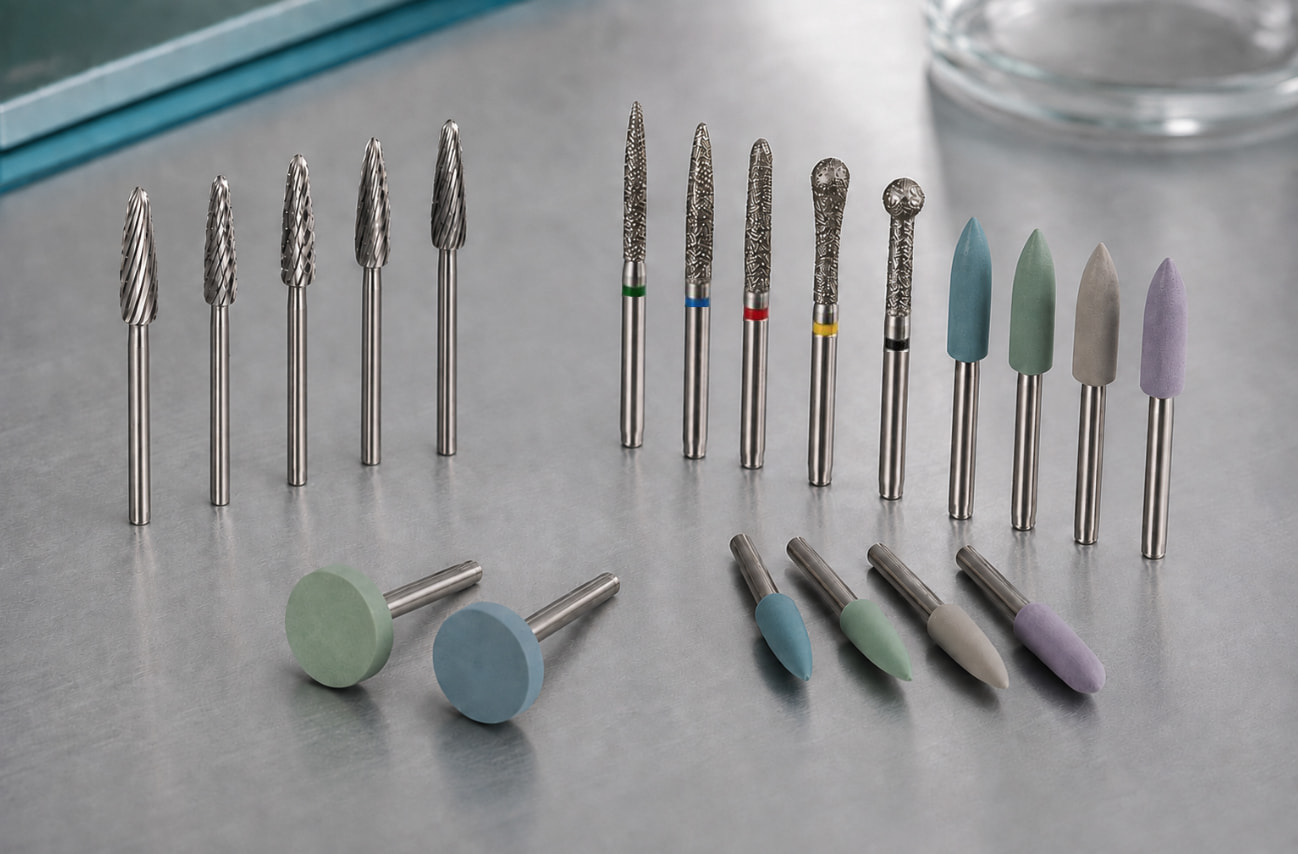
Composite restorations look their best when the surface is smooth, stain-resistant, and anatomically contoured. Achieving that finish requires more than a single instrument. Most clinicians and lab technicians use a sequence of composite finishing burs — starting with carbide or diamond for shaping and contouring, then moving to silicone or rubber polishers for final gloss.
Each tool type removes material differently and leaves a distinct surface texture. Using the wrong instrument at the wrong stage wastes time and can damage the restoration. This guide compares the three main categories of composite finishing burs, explains when to use each, and helps wholesale buyers stock the right mix for their practice or lab.
Carbide finishing burs for contouring
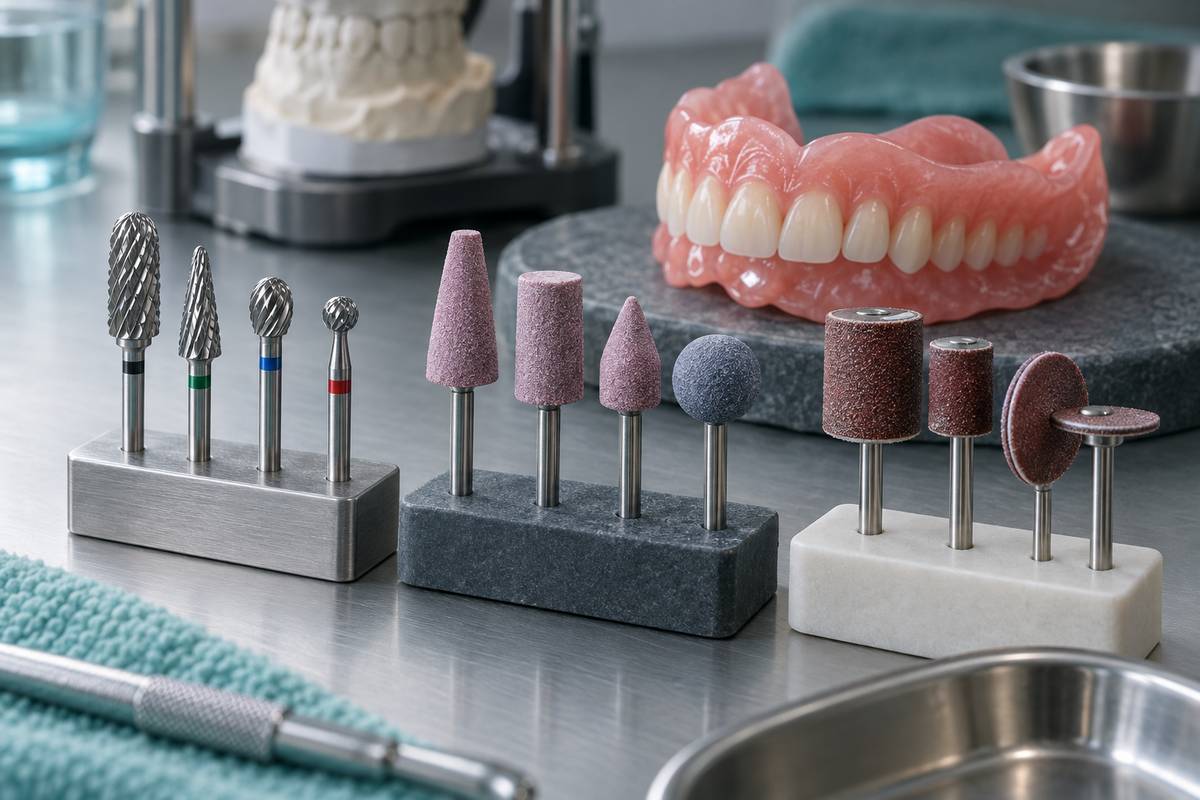
Carbide finishing burs use precisely ground flutes to shave thin layers of composite resin. Unlike standard cutting burs with deep, widely spaced flutes, finishing-grade carbide burs have 12 to 30 blades packed closely together. The higher the blade count, the finer the surface they leave behind.
A 12-flute carbide bur handles gross contouring — removing flash, adjusting occlusion, and refining margins after the composite has cured. A 30-flute bur follows to smooth the surface to near-polish quality. Both are available in FG shank for chairside use and RA shank for slow-speed contra-angles.
Carbide finishing burs excel on hybrid and microhybrid composites. The fluted cutting action produces less heat than diamond abrasion, which reduces the risk of surface microcracks. They also leave a more predictable surface roughness than diamonds at the same grit level, meaning fewer polishing steps downstream.
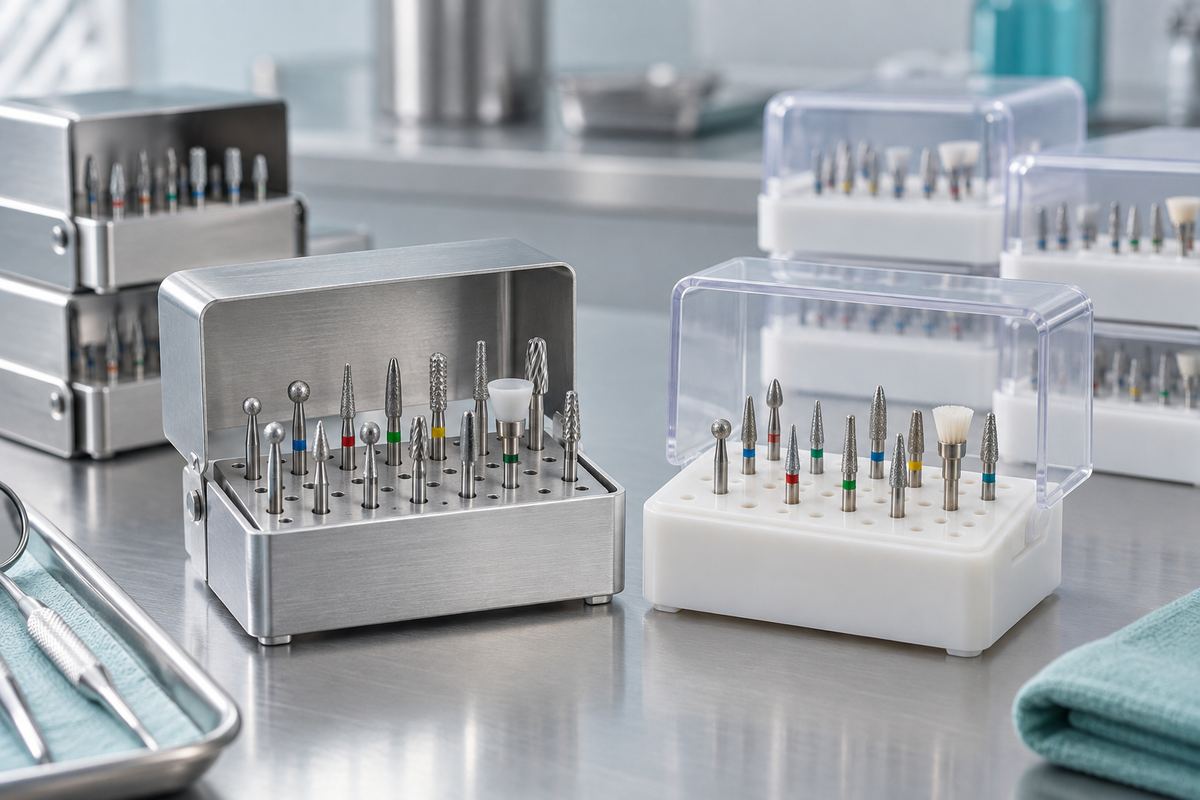
BurDental's trimming and finishing carbide burs come in egg, flame, round, and needle shapes — the most common profiles for composite work. Stocking a set of 12-flute and 30-flute versions in three or four shapes covers the majority of finishing situations.
Diamond finishing burs for smoothing
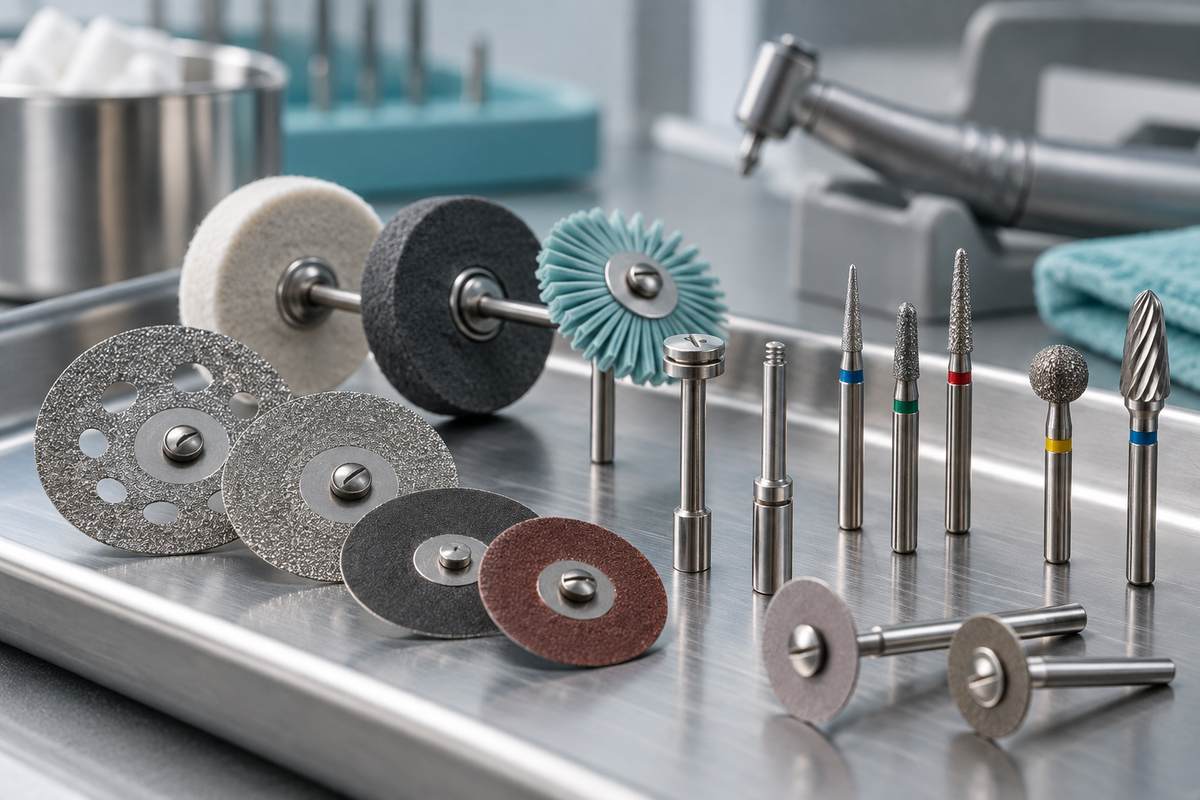
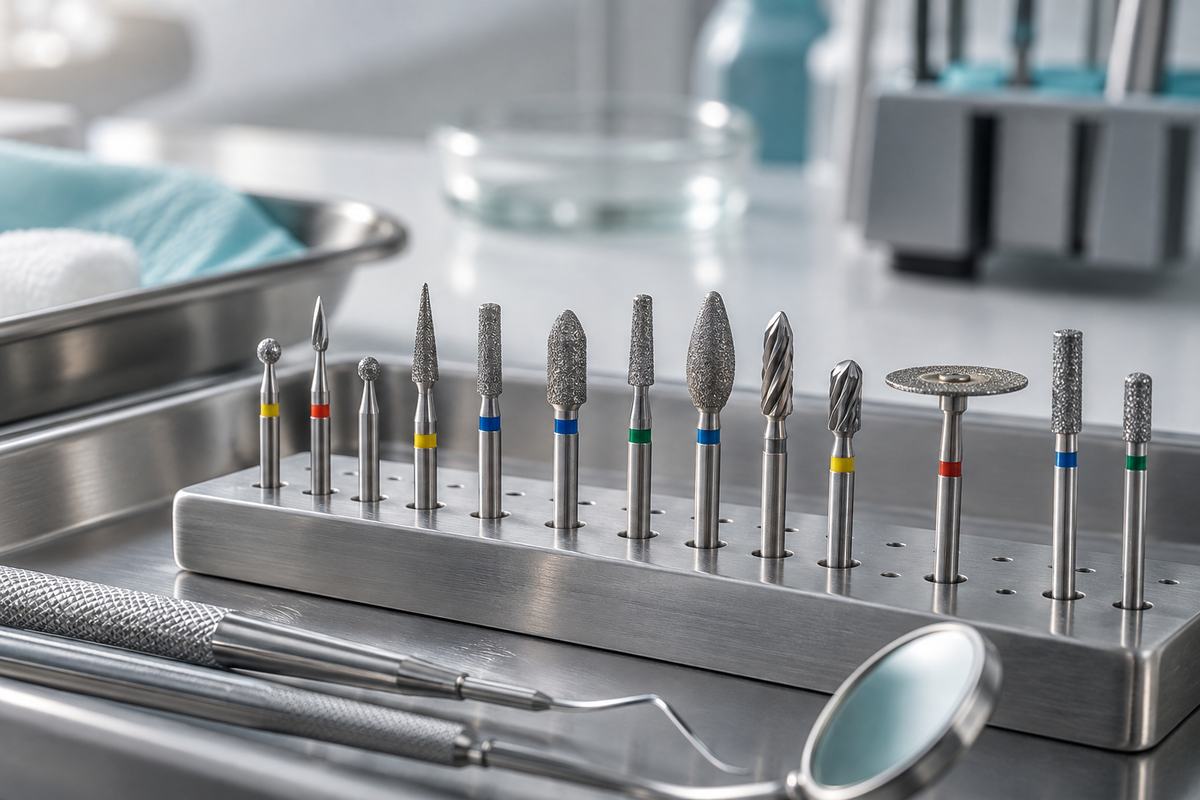
Diamond burs use abrasive particles bonded to the head rather than machined flutes. For composite finishing, fine-grit (red-band) and extra-fine-grit (yellow-band) diamond burs are the standard choices. Coarser grits are reserved for cutting and gross reduction, not finishing.
Fine-grit diamond burs work best as an intermediate step between gross shaping and silicone polishing. They smooth out the tool marks left by carbide burs and create a uniform surface texture that polishers can bring to full gloss in one or two passes. On nanofill and nanohybrid composites, a fine diamond followed by a two-step silicone polisher often produces a better result than carbide alone.
Diamond finishing burs also perform well on porcelain and glass-ceramic margins adjacent to composite, making them versatile instruments for cases that involve both materials.
The trade-off is heat generation. Diamond abrasion produces more friction than carbide fluting, so light pressure and water spray are necessary to avoid thermal damage to the composite or underlying tooth structure. Keep the bur moving across the surface rather than holding it in one spot.
Silicone polishers for final gloss
Silicone polishers bring the composite surface to its final luster. They contain abrasive particles — typically aluminum oxide or diamond powder — embedded in a flexible silicone matrix. As the outer layer wears, fresh abrasive is exposed, so the polisher maintains consistent performance throughout its life.
For composite finishing, two product lines stand out:
- Twin-Color polishers use a two-layer design with different abrasive concentrations in each layer. The outer layer handles pre-polishing while the inner core delivers the final high gloss. This eliminates the need to switch between separate coarse and fine polishers, cutting chairside time. BurDental offers Twin-Color polishers for composite in cup, point, and wheel shapes for FG handpieces.
- Silicon polishing burs are single-grit instruments available in multiple abrasive levels, color-coded for easy identification. A typical sequence uses a medium-grit polisher to remove diamond bur marks, followed by a fine-grit polisher for final shine. BurDental's silicon polishing burs for composites cover FG and RA shanks across all standard shapes.
Both types are autoclavable and reusable for multiple patients, which makes them cost-effective for high-volume practices buying at wholesale.
Comparing carbide, diamond, and silicone side by side
The table below summarizes how the three instrument types compare across the factors that matter most to wholesale buyers and clinicians.
| Factor | Carbide finishing bur | Diamond finishing bur | Silicone polisher |
|---|---|---|---|
| Cutting action | Fluted blades shave material | Bonded abrasive grinds surface | Embedded abrasive buffs surface |
| Best stage | Gross contouring and shaping | Intermediate smoothing | Final polishing and gloss |
| Heat generation | Low | Moderate to high | Low |
| Surface finish | Smooth (30-flute) to moderate (12-flute) | Uniform matte | High gloss |
| Reusability | Multiple uses after sterilization | Multiple uses after sterilization | Multiple uses with self-renewing abrasive |
| Ideal composites | Hybrid, microhybrid | Nanofill, nanohybrid | All composite types |
| Common shapes | Egg, flame, needle, round | Flame, football, tapered | Cup, point, wheel, disc |
Building a composite finishing sequence
A practical finishing workflow moves from coarse to fine in three or four steps:
- Contour with a 12-flute carbide bur to remove excess material and establish anatomy.
- Smooth with a 30-flute carbide bur or fine-grit diamond bur to eliminate tool marks.
- Pre-polish with a medium-grit silicone polisher (or the outer layer of a Twin-Color polisher) to create a uniform surface.
- Final polish with a fine-grit silicone polisher (or the inner core of a Twin-Color polisher) to achieve full gloss.
Skipping the intermediate step — jumping from carbide directly to fine polisher — usually leaves visible scratches under overhead lighting. Each step should remove the marks left by the previous one, not just overlay them.
For dental burs purchased at wholesale, stocking all three instrument types ensures technicians and clinicians have the right tool for every stage without improvising. When ordering from a factory-direct supplier like BurDental, buying the full sequence in bulk keeps per-unit costs low and avoids mid-case tool shortages.
Frequently asked questions
Can I skip carbide burs and finish composite with diamond burs only?
You can, but the results are often slower and less predictable. Carbide burs remove bulk material faster and with less heat than diamonds. Starting with carbide for gross contouring, then switching to diamond or silicone for smoothing, gives better surface quality in less chair time.
How many times can silicone polishers be reused?
Most silicone polishers withstand multiple autoclave cycles without significant performance loss. The self-renewing abrasive design means fresh cutting particles are exposed as the surface wears. Replace a polisher when it no longer produces visible improvement in surface gloss or when its shape has worn down enough to affect access.
What is the difference between Twin-Color polishers and standard silicon polishing burs?
Twin-Color polishers combine two abrasive layers in a single instrument — a coarser outer layer for pre-polishing and a finer inner core for final gloss. Standard silicon polishing burs are single-grit, so you need at least two instruments (medium and fine) to achieve the same result. Twin-Color saves time; single-grit gives more control over each step.
Do I need water spray when using silicone polishers on composite?
Dry polishing is acceptable and often preferred for the final polishing step, as water can interfere with the visual assessment of surface gloss. For the pre-polishing stage with medium-grit silicone, light water spray helps reduce heat buildup, especially on large restorations.
Which composite finishing burs should I stock first for a new practice?
Start with a 12-flute and 30-flute carbide set in flame and egg shapes, plus a two-step silicone polisher system. This covers anterior and posterior composites with the fewest instruments. Add fine-grit diamond burs later if you frequently work with nanofill composites or need to adjust adjacent ceramic margins.