
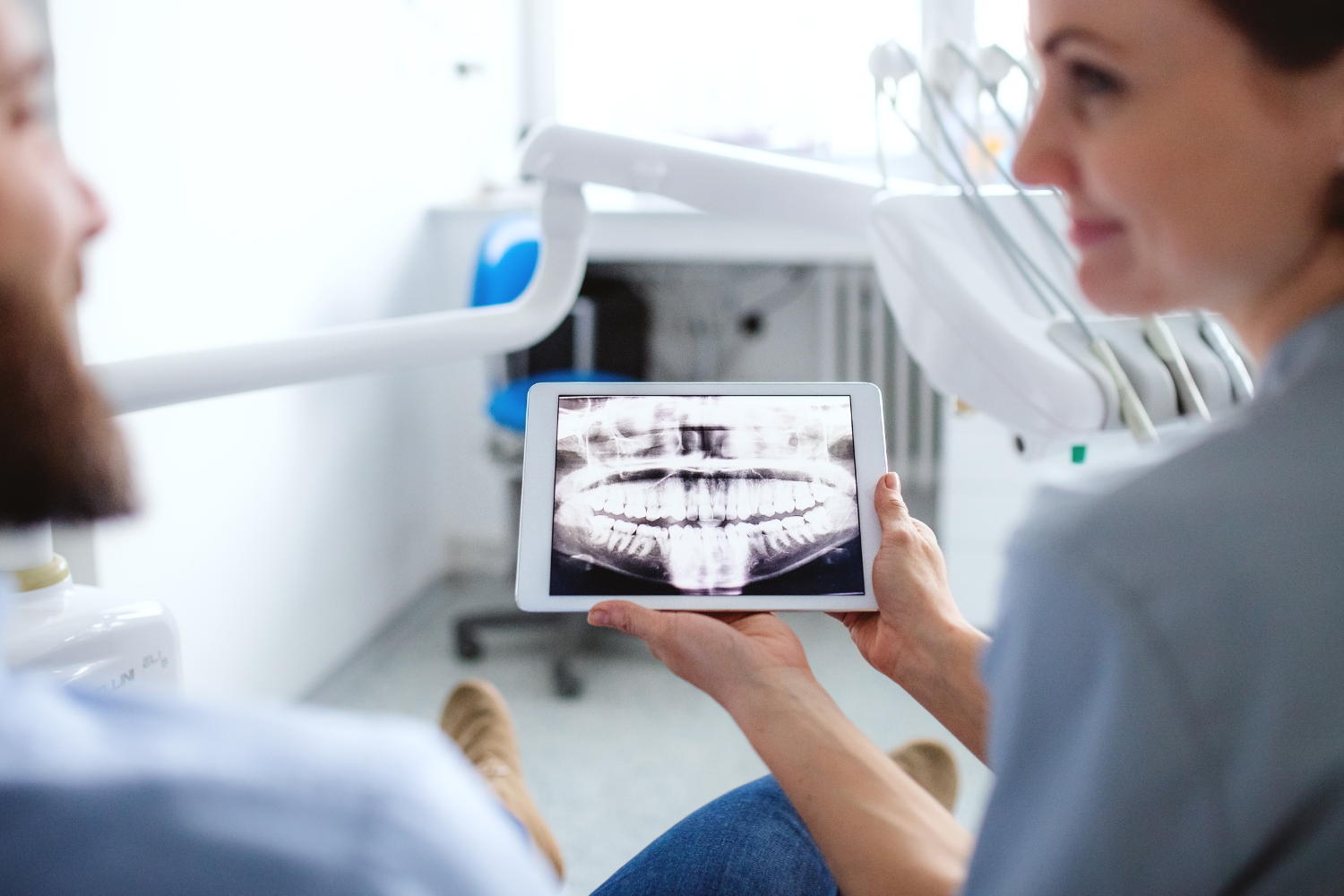
Dental X-ray machines are foundational to accurate diagnosis, treatment planning, and patient monitoring. As technology evolves, clinics now face a real choice between two categories of radiographic equipment: portable (handheld) units and traditional wall-mounted or floor-standing systems. Each type brings trade-offs in image quality, mobility, space requirements, and long-term cost. This article breaks down those differences so you can invest in the machine that fits your practice best.
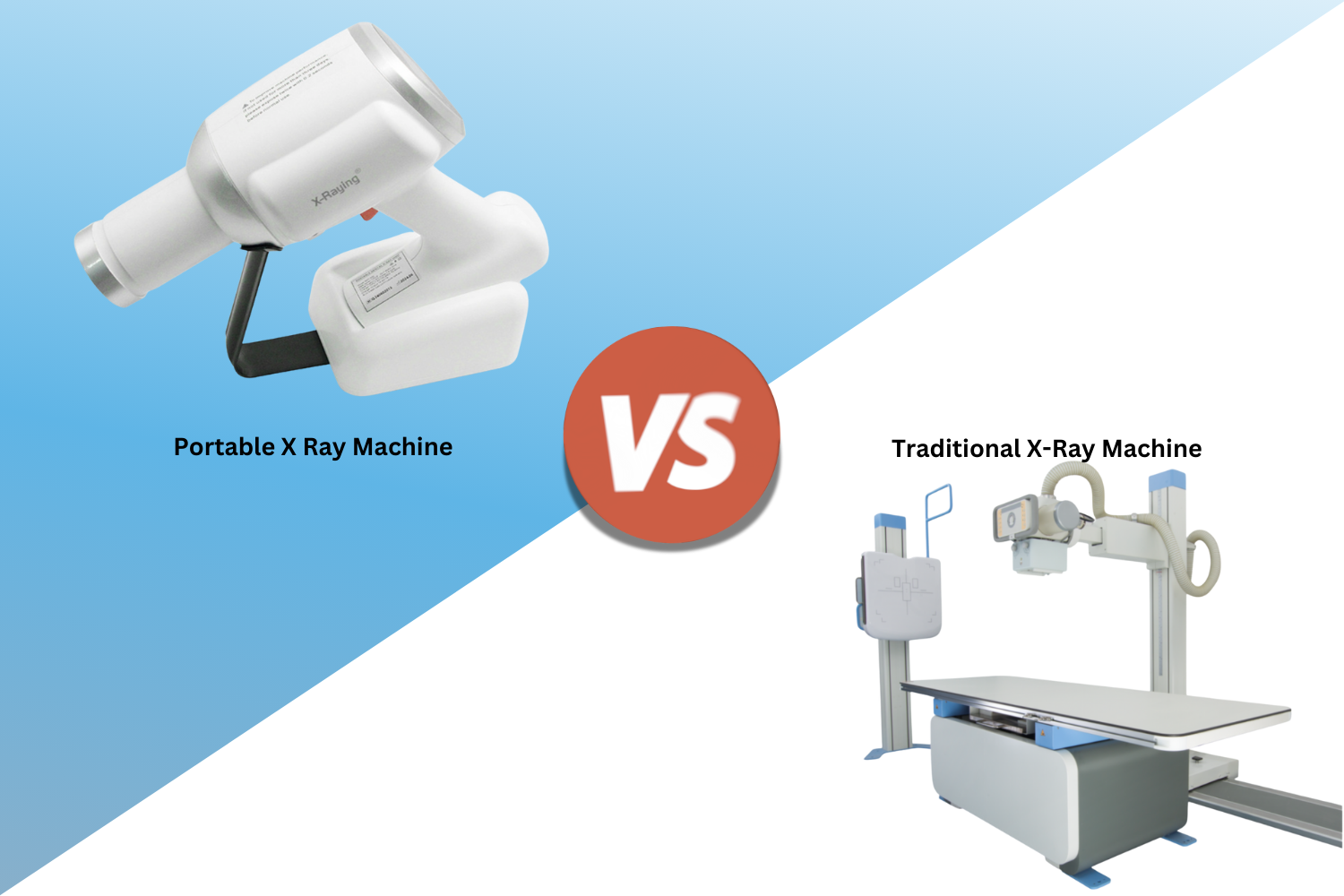
How Portable Dental X-Ray Machines Work
Portable dental X-ray units house the X-ray tube, battery, and shielding inside a single handheld or tripod-mounted device. The operator holds the unit near the patient, positions the sensor or film intraorally, and triggers the exposure with a button. Most modern portables weigh between 1.5 and 3 kg and run on rechargeable lithium-ion batteries capable of 100 to 300 exposures per charge.
Advantages of Portable Units
- Mobility: Carry the unit between operatories, to nursing homes, community health events, or emergency field settings without any installation work.
- Space savings: No wall arm, no dedicated room. A portable unit stores in a drawer or small case.
- Quick setup: Power on and shoot within seconds. No warm-up cycle required on most models.
- Lower upfront cost: Generally 40-60 percent less expensive than a comparable wall-mounted system.
- Patient comfort: The sensor can be positioned while the patient remains in the treatment chair, reducing movement and anxiety.
Limitations of Portable Units
- Image resolution may be slightly lower than high-end fixed systems, particularly for periapical detail in endodontic cases.
- Battery life limits continuous high-volume use; heavy-traffic clinics may need a second battery or a backup unit.
- Handheld operation requires proper technique to avoid motion blur and maintain consistent angulation.
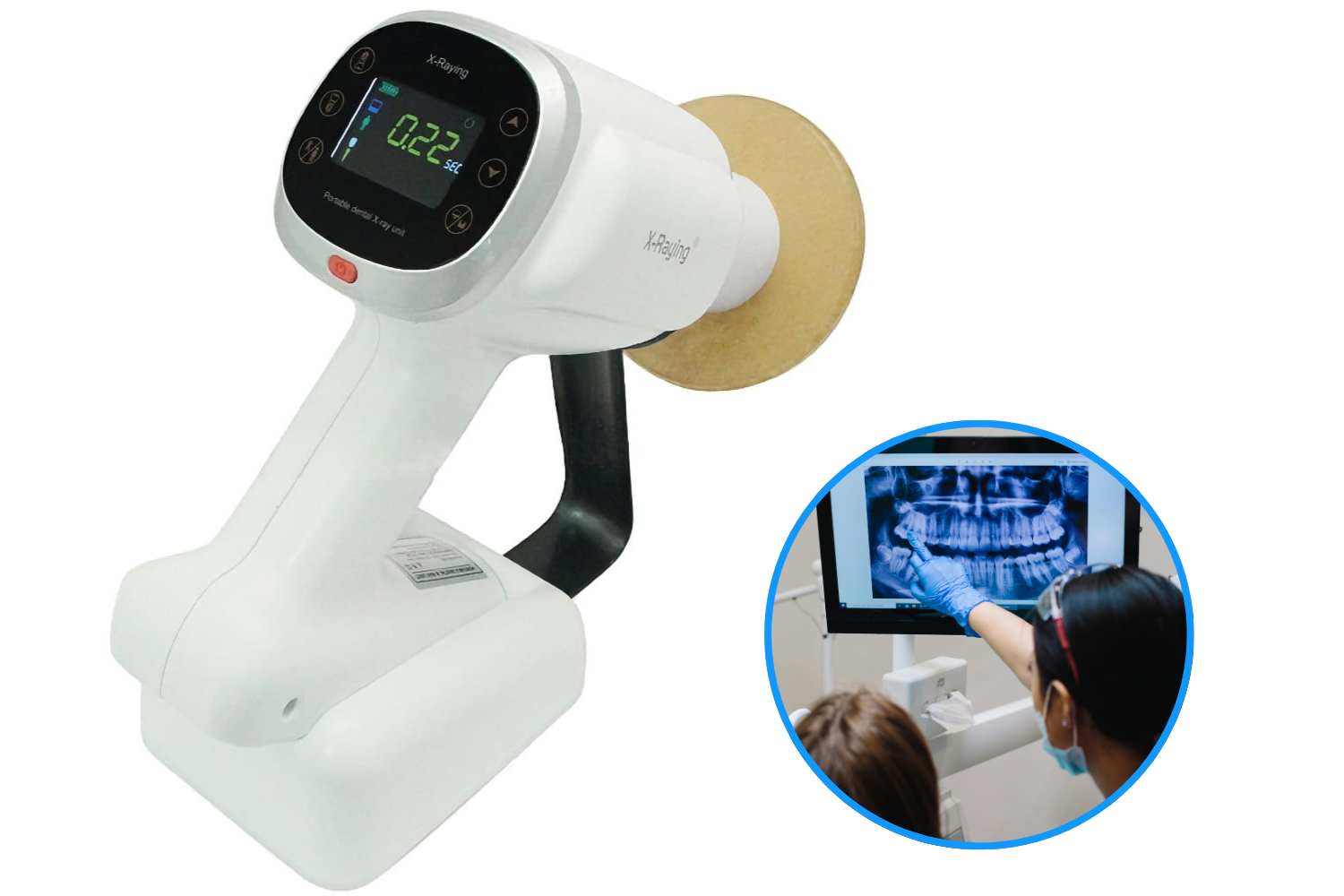
How Traditional Dental X-Ray Machines Work
Traditional X-ray systems feature a tube head mounted on an articulating wall arm or a mobile floor stand. Power comes from a direct electrical connection, and the operator steps behind a lead barrier or exits the room before triggering the exposure via a remote switch. These units have been the standard in dental radiography for decades.
Advantages of Traditional Units
- Superior image quality: Higher tube output and tighter collimation produce sharper detail, especially for complex endodontic and implant diagnostics.
- Unlimited power supply: Plugged into mains electricity, traditional units never run out of charge during a busy day.
- Reproducible positioning: The fixed arm and extension cone paralleling technique deliver consistent angulation from exposure to exposure.
- Proven track record: Decades of clinical validation and widespread familiarity among dental staff.
Limitations of Traditional Units
- Requires dedicated wall space and professional installation, which adds to setup cost.
- Cannot be moved between rooms without reinstallation.
- Higher purchase price, typically two to three times that of a portable unit.
- Maintenance contracts and periodic calibration add to ongoing expenses.
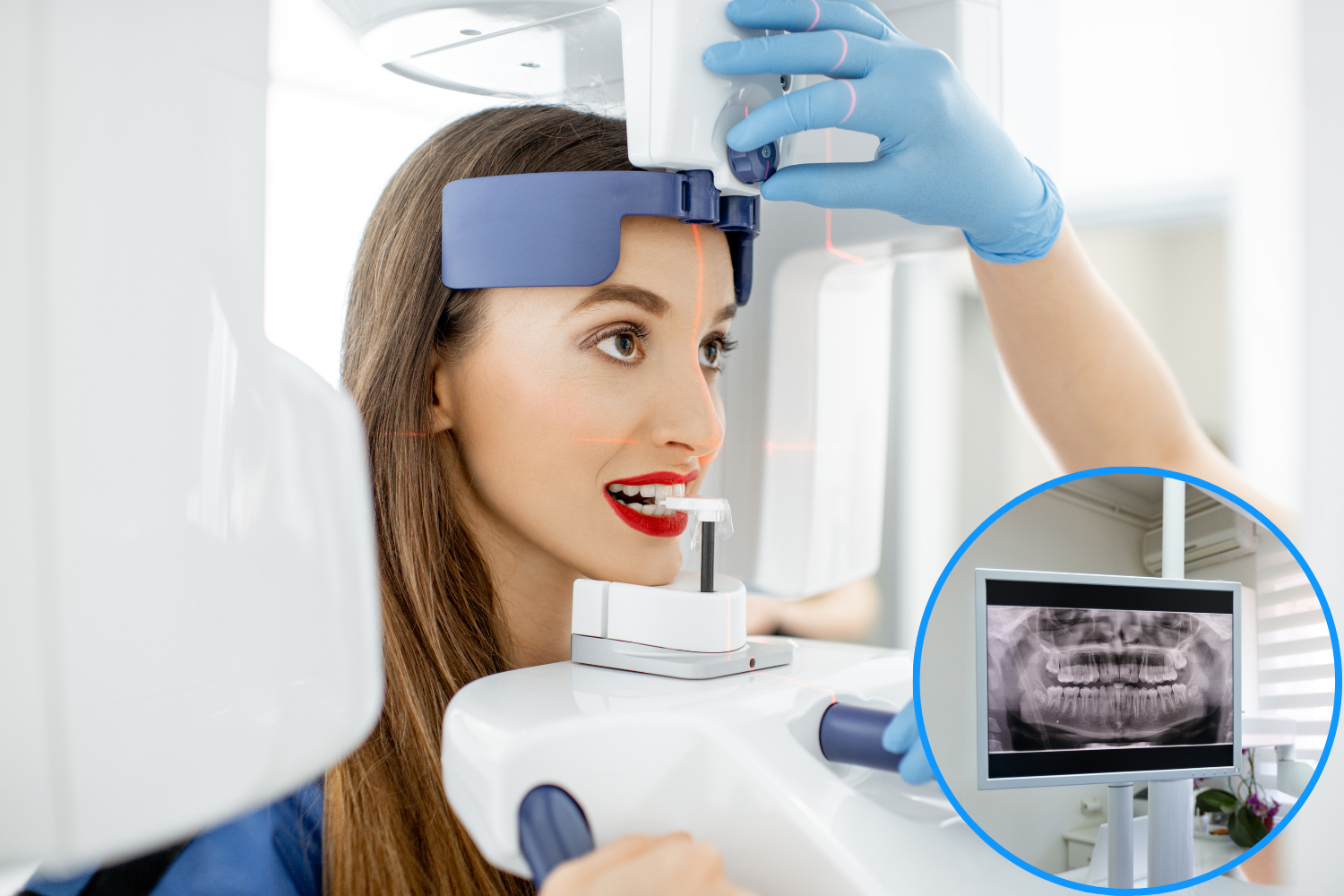
Feature-by-Feature Comparison
| Feature | Portable X-Ray | Traditional X-Ray |
|---|---|---|
| Weight | 1.5-3 kg | 15-30 kg (tube head only) |
| Image quality | Good for routine periapical and bitewing imaging | Excellent for all intraoral projections including endodontic working lengths |
| Installation | None required | Professional mounting and electrical work |
| Power source | Rechargeable battery | Mains electricity |
| Exposure time | 0.01-0.4 seconds | 0.01-0.5 seconds |
| Price range | Lower initial investment | Higher initial investment |
| Maintenance | Minimal; battery replacement every 2-3 years | Annual calibration and periodic arm servicing |
| Best for | Small clinics, mobile practices, multi-room coverage | High-volume clinics, specialty practices, endodontics |
Image Quality: How Big Is the Gap?
Five years ago, portable X-ray machines produced noticeably softer images. That gap has narrowed considerably. Current-generation portable units using DC high-frequency generators deliver exposure consistency within a few percentage points of wall-mounted systems. For standard bitewing and periapical radiographs used in caries detection, periodontal assessment, and routine endodontic evaluation, the image quality from a well-made portable unit is clinically acceptable.
Where traditional machines still hold an edge is in advanced diagnostics requiring maximum spatial resolution, such as detecting vertical root fractures, assessing complex canal anatomy, or measuring precise implant-to-nerve distances. If your practice handles a high volume of these cases, the fixed system pays for itself in diagnostic confidence.
Radiation Safety Considerations
Both machine types must comply with the same regulatory exposure limits. Portable units incorporate internal lead shielding and backscatter protection that keeps operator dose well within safe thresholds when used according to manufacturer instructions. Traditional units rely on room shielding and distance. Neither approach is inherently safer; both are safe when protocols are followed. Staff should wear dosimetry badges regardless of machine type, and every clinic should maintain a written radiation safety program. When purchasing any X-ray device, ask the manufacturer for a detailed radiation output specification sheet and verify that it meets your local regulatory requirements before committing to a purchase.
Cost Analysis for a Typical Dental Practice
Small or Startup Practice (1-2 Chairs)
A portable unit is often the smarter financial choice here. Lower purchase price, zero installation cost, and minimal maintenance keep overhead down during the critical first years. If you later expand, the portable unit transitions into a backup or secondary-room device rather than becoming obsolete.
Mid-Size General Practice (3-5 Chairs)
Consider a hybrid approach: one traditional wall-mounted unit in the primary diagnostic room and one portable unit for overflow operatories or off-site work. This setup balances image quality for complex cases with flexibility for routine imaging.
High-Volume or Specialty Practice (6+ Chairs)
Practices focused on endodontics, implantology, or oral surgery will benefit most from traditional units in every active operatory. The image quality consistency and unlimited power supply justify the higher investment when diagnostic precision directly affects treatment outcomes.
Choosing the Right Machine: A Decision Framework
| Practice Scenario | Recommended Type | Key Reason |
|---|---|---|
| Solo practitioner or startup | Portable | Low cost, no installation, immediate use |
| Multi-room general practice | Both (hybrid) | Fixed unit for primary room, portable for secondary rooms |
| Mobile or community clinic | Portable | Must travel between sites |
| Endodontic or implant specialty | Traditional | Maximum image detail for treatment planning |
| Large group practice | Traditional in every room | High patient throughput and consistent imaging |
Digital Integration and Future-Proofing
Both portable and traditional X-ray machines pair with digital sensors and imaging software. When evaluating any unit, confirm compatibility with your existing sensor brand and practice management system. Look for DICOM compliance if you share images with specialists or hospitals. Many portable manufacturers now offer wireless sensor pairing, which removes cable clutter and speeds up the workflow in tight operatories. Keeping your instruments and equipment well maintained is just as important as choosing them wisely. For tips on maintaining the rotary instruments you use alongside imaging, see our guide on common dental handpiece problems and how to fix them.
B&D Portable X-Ray Machine
B&D offers a portable dental X-ray unit designed for clinics that need reliable imaging without the overhead of a fixed installation. The unit uses digital high-frequency technology for consistent exposures and pairs with standard intraoral sensors. Its competitive pricing makes it accessible for practices at any stage of growth. View product details and pricing here.

Final Recommendations
There is no single best X-ray machine for every dental practice. Portable units win on flexibility, cost, and convenience. Traditional units win on image quality and throughput in high-volume settings. Evaluate your patient load, procedure mix, physical space, and budget before committing. Many practices find that owning one of each type gives them the broadest clinical capability at a reasonable total investment. Whichever machine you select, pair it with a reliable digital sensor and train every staff member on proper positioning technique. Proper equipment choices, from imaging systems down to the rotary burs in your handpiece, directly affect efficiency and patient outcomes.