Air-Driven Dental Burs: How They Work and When to Use Them
Air-driven dental burs remain one of the most widely used cutting instruments in clinical dentistry. Powered by compressed air turbines that spin at extremely high speeds, these burs handle everything from cavity preparation to crown reduction. Understanding how air-driven systems work, their strengths, and their limitations helps clinicians choose the right handpiece and bur combination for each procedure.
How Air Turbine Handpieces Work
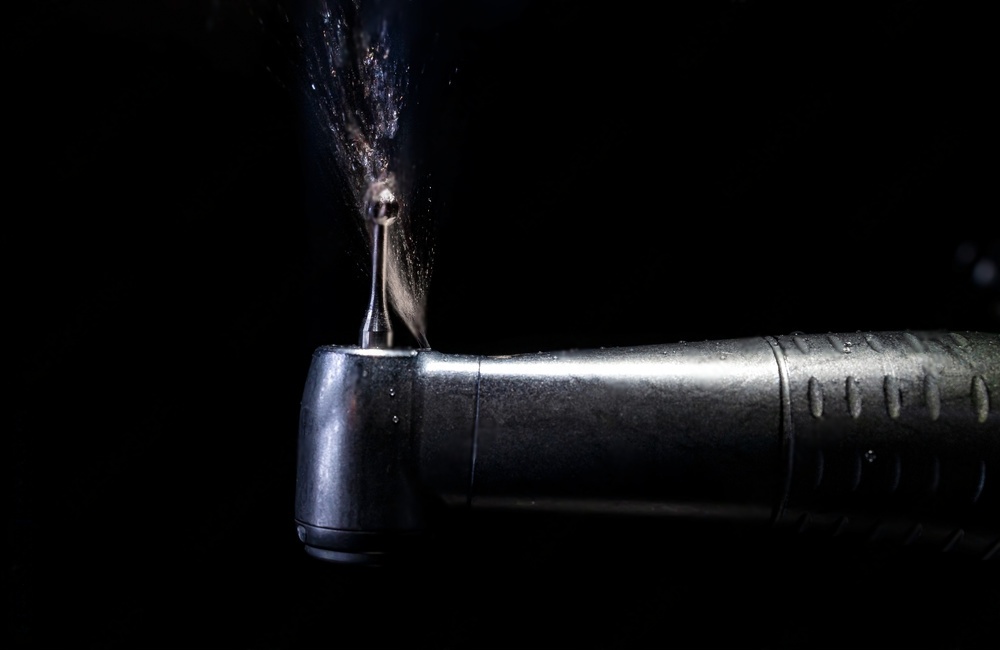
An air turbine handpiece converts compressed air into rotational energy. Compressed air from the dental unit enters the handpiece head and strikes a small impeller (rotor) fitted with the bur. As the air pushes against the impeller vanes, the rotor spins at speeds ranging from 300,000 to 450,000 RPM. Exhaust air exits through vents in the handpiece head. The bur, held in place by a push-button or friction-grip chuck, rotates at the same speed as the turbine rotor.
This simple mechanical design is part of the reason air-driven handpieces have remained popular for decades. They have fewer moving parts than electric handpiece motors, making them lighter in the hand and less expensive to purchase and maintain.
Speed Characteristics of Air-Driven Burs
The headline specification of any air turbine is its free-running speed, typically quoted between 350,000 and 420,000 RPM. However, free-running speed and actual cutting speed are very different numbers. When the bur contacts tooth structure, friction and resistance cause the turbine to slow down significantly. Under normal cutting load, actual operating speed often drops to 180,000 to 250,000 RPM, depending on the bur type, the material being cut, and the applied pressure.
This speed drop under load is one of the most important characteristics of air-driven systems. Because the turbine generates relatively low torque, it is sensitive to lateral pressure. Pressing too hard stalls the bur, reduces cutting efficiency, and generates heat. The correct technique with an air-driven bur is to let the speed do the work, using light, intermittent contact with the tooth surface.
Factors That Affect Cutting Speed
- Air pressure at the unit: Standard operating pressure is typically 32 to 40 PSI. Lower pressure reduces maximum speed; higher pressure can overstress the turbine bearings.
- Bur head size: Larger bur heads create more drag and reduce RPM under load. A small round bur will maintain higher cutting speed than a large tapered fissure bur.
- Material hardness: Cutting enamel slows the turbine more than cutting dentin or composite, because enamel is significantly harder.
- Coolant water spray: Water spray is needed to prevent thermal injury, but it also adds a small amount of drag to the spinning bur.
Air-Driven vs. Electric Handpieces
The choice between air-driven and electric handpiece systems is one of the most debated topics in clinical dentistry. Each system has clear strengths.
| Feature | Air-Driven | Electric |
|---|---|---|
| Free-running speed | 300,000 to 450,000 RPM | Up to 200,000 RPM (with 1:5 multiplier) |
| Torque under load | Low (speed drops significantly) | High (maintains speed under load) |
| Weight in hand | Lighter | Heavier |
| Purchase cost | Lower | Higher |
| Maintenance cost | Lower (turbine replacement is simple) | Higher (motor and attachment service) |
| Noise level | Higher-pitched whine | Quieter hum |
| Vibration | More at high speed | Less overall |
| Concentricity | Good | Superior (less bur wobble) |
Air-driven handpieces excel in procedures that require rapid enamel cutting and where light, intermittent contact is the norm: Class I and II cavity preparations, crown and veneer preparations, and gross reduction of tooth structure. Their light weight also reduces hand fatigue during long clinical days.
Electric handpieces have the advantage in procedures that demand sustained cutting power at controlled speeds: endodontic access through ceramic crowns, implant site preparation, and fine finishing work where consistent RPM matters. Many clinicians use both systems and select the handpiece based on the procedure.
Bur Selection for Air-Driven Handpieces
Not all burs perform equally well in air turbine handpieces. The low torque of air-driven systems means that bur design and grit matter more than they would in a high-torque electric handpiece.
Diamond Burs
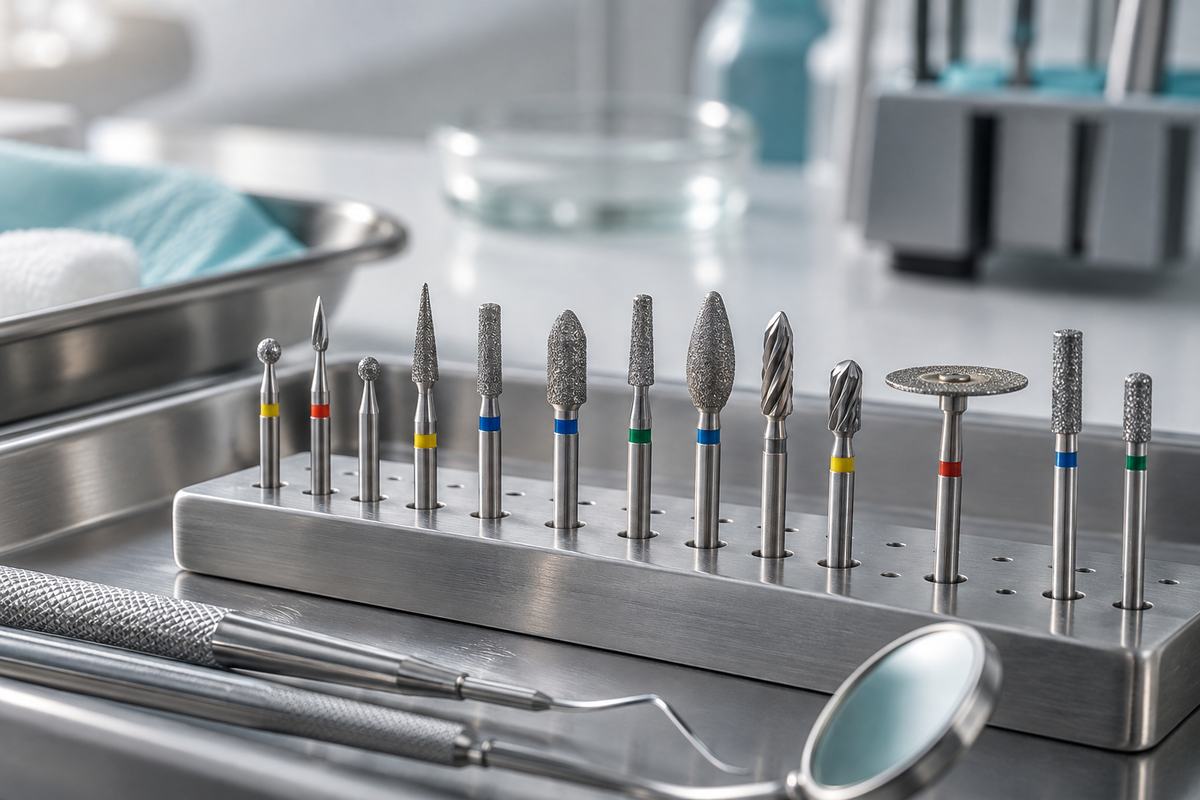
Coarse and medium-grit diamond dental burs are the standard choice for air-driven cavity preparation and crown reduction. Their abrasive surface cuts efficiently at high speed without requiring heavy lateral pressure. For initial tooth reduction, a coarse-grit tapered flat-end or round-end diamond gives the fastest material removal. Switch to medium or fine grit for finishing margins and refining preparation geometry.
Carbide Burs
Friction-grip tungsten carbide burs are available in both plain-cut and cross-cut patterns. In air-driven handpieces, carbide burs work best for caries excavation (round burs), creating undercuts, and finishing composite restorations. Cross-cut fissure burs are commonly used for sectioning crowns during removal. Because carbide burs have defined cutting edges rather than abrasive grit, they can be more sensitive to stalling if the operator applies excessive pressure in an air-driven system.
Finishing and Polishing Burs
Multi-fluted carbide finishing burs (12 to 30 flutes) produce smooth surfaces on composite and enamel when run at reduced speed. Fine and extra-fine diamond burs also serve as finishing instruments. For a complete polishing protocol, follow up with rubber polishing points or cups at lower speed in a slow-speed handpiece.
Maximizing Performance and Bur Longevity
Getting the most out of air-driven burs comes down to proper technique and maintenance habits.
Technique Tips
- Use a light touch: Let the bur speed do the cutting. Heavy pressure stalls the turbine, generates heat, and wears the bur faster.
- Work in short strokes: Intermittent cutting contact allows the bur and tooth to cool between passes, reducing thermal risk to the pulp.
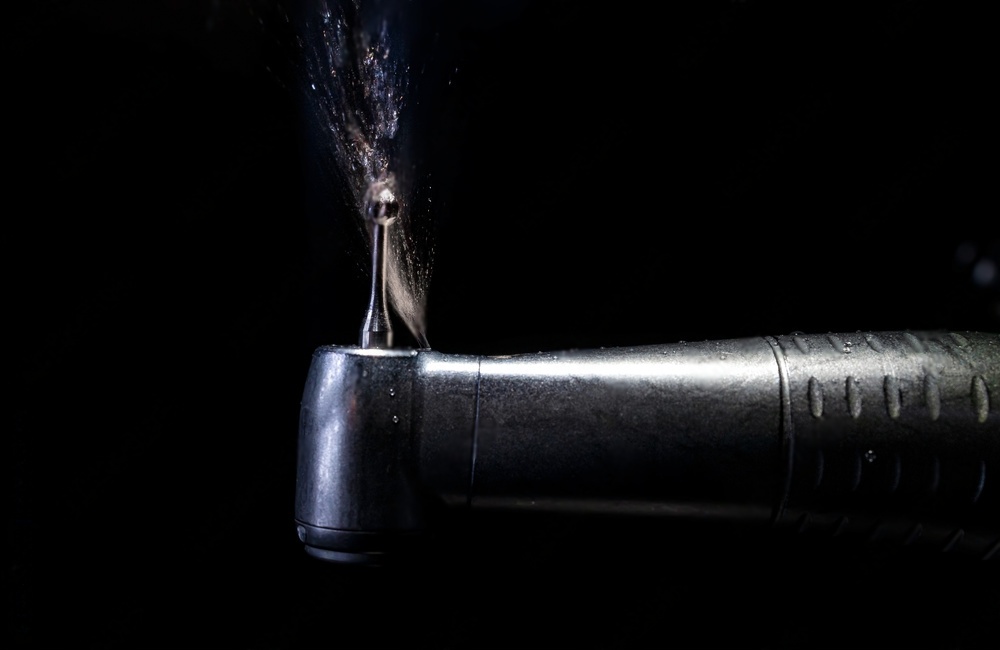
- Keep water spray active: The air-water spray from the handpiece must hit the bur head directly. Check the spray pattern regularly, as clogged ports misdirect the coolant stream.
- Replace dull burs: A diamond bur that has lost its grit coating requires more pressure to cut, negating the advantages of the air-driven system. Replace burs before they become noticeably dull.
Handpiece Maintenance
Air turbine handpieces need daily lubrication and periodic turbine cartridge replacement. Follow the manufacturer's lubrication schedule, typically a few drops of handpiece oil into the air intake before autoclaving. Listen for changes in the turbine pitch during operation, as a grinding or uneven sound often signals worn bearings. Replacing the turbine cartridge promptly restores full speed and prevents damage to the handpiece body. For detailed bur care instructions, see our guide on maintaining diamond dental burs for longer life.
Clinical Applications Where Air-Driven Burs Excel
While electric handpieces have gained market share in recent years, air-driven burs remain the preferred instrument for many routine procedures.
- Cavity preparation: Fast enamel cutting with diamond burs in Classes I through V preparations.
- Crown and bridge preparation: Rapid bulk reduction of tooth structure using coarse tapered diamonds.
- Orthodontic bracket removal cleanup: Removing residual adhesive after debonding using multi-fluted carbide burs at controlled speed. For more on this topic, read our guide to cleaning burs after debonding.
- Old restoration removal: Sectioning and removing amalgam, composite, or temporary restorations.
- Emergency access: Opening into the pulp chamber for endodontic access in general practice settings.
Key Takeaways
- Air-driven burs operate at 300,000 to 450,000 RPM free-running, but actual cutting speed drops significantly under load due to low torque.
- Light, intermittent pressure is the correct technique; heavy force stalls the turbine and generates heat.
- Diamond burs and carbide burs each have specific roles in air-driven handpieces, with diamonds preferred for gross reduction and carbides for caries removal and finishing.
- Air-driven systems are lighter, less expensive, and easier to maintain than electric alternatives, making them well suited for high-volume general practice.
- Proper handpiece lubrication and timely turbine cartridge replacement are essential for maintaining full cutting performance.