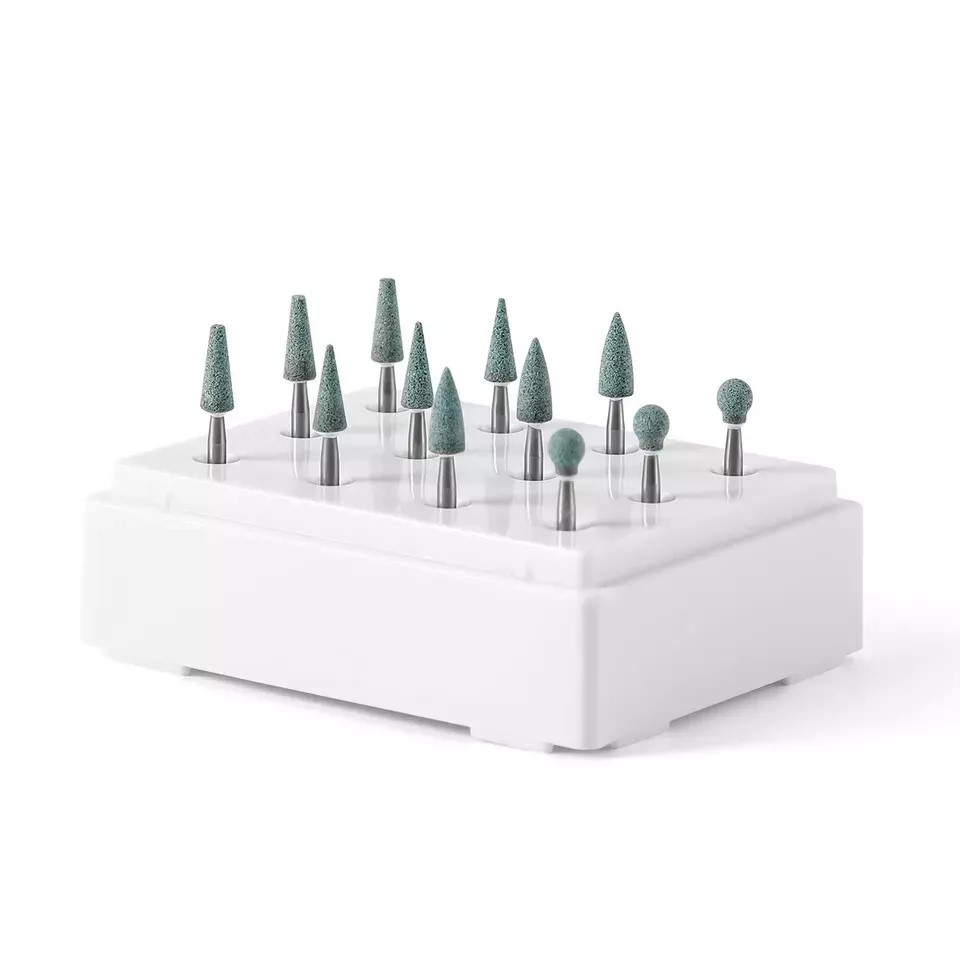
If you work with ceramic restorations or precious-metal castings, chances are a green stone bur is already part of your daily rotation. But what makes silicon carbide the right abrasive for these specific materials — rather than a diamond bur, a carbide bur, or a rubber polisher? The answer comes down to how the abrasive interacts with the substrate at the microstructural level.
This article explains the material science behind green stones, compares them to alternative instruments, and offers practical technique guidance for both chairside and laboratory work.
What Makes Green Stones Different
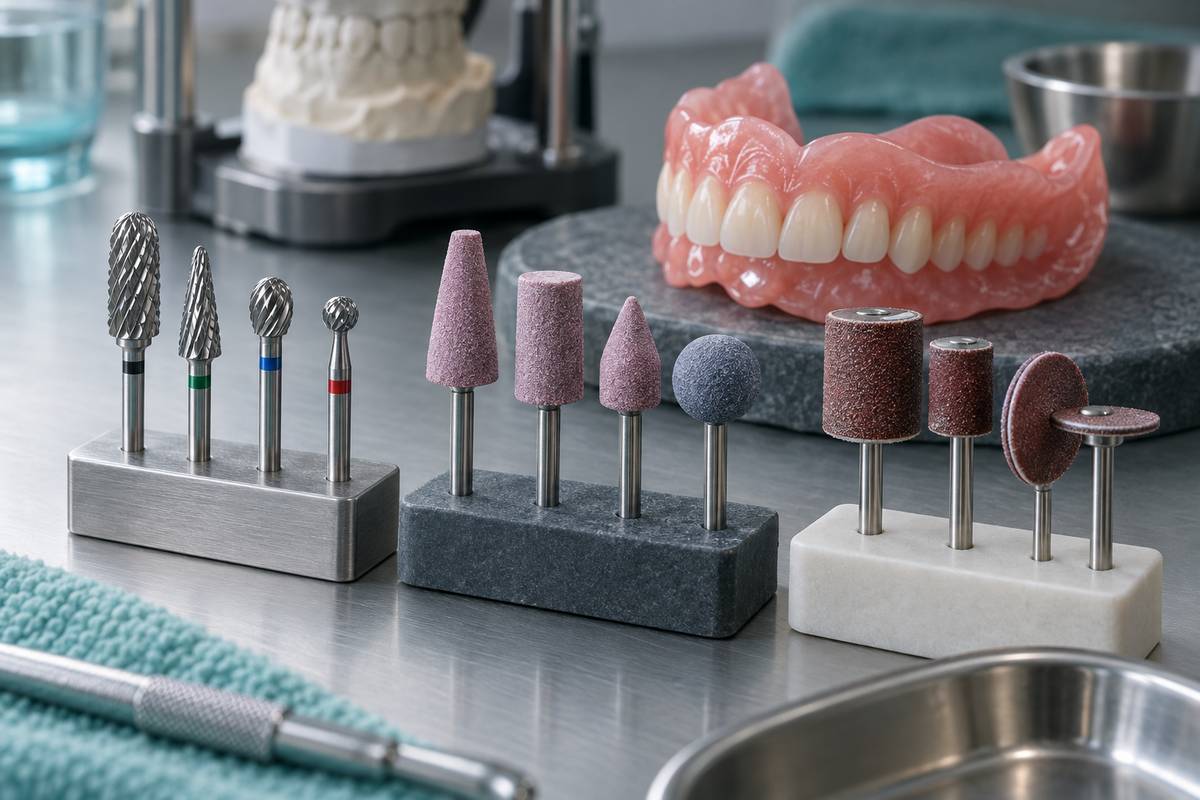
Green stone burs are bonded silicon carbide (SiC) abrasives mounted on FG, RA, or HP shanks. Silicon carbide sits at roughly 9.5 on the Mohs hardness scale — hard enough to abrade dental ceramics and gold alloys, but softer than diamond. That middle-ground hardness is the key to their usefulness.
Silicon Carbide vs Diamond on Ceramics
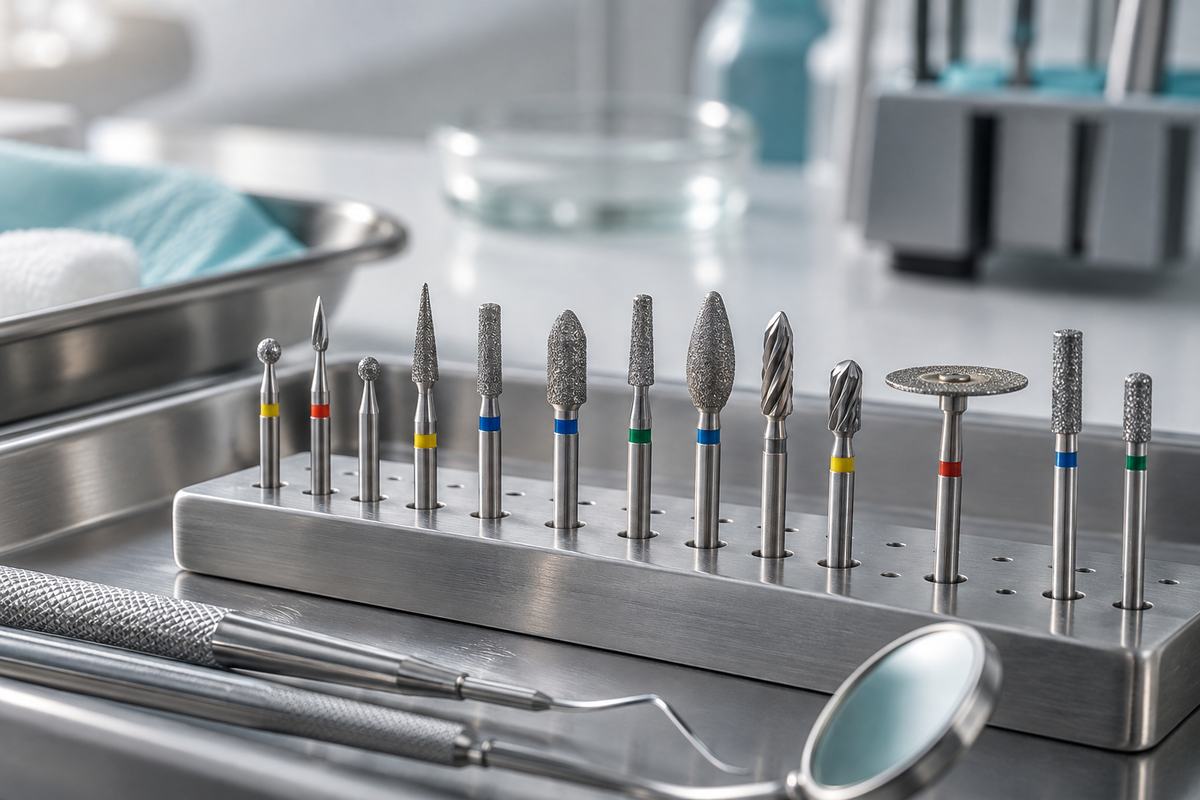
Diamond burs (Mohs 10) cut ceramics quickly, but they can introduce subsurface microcracks. Those cracks may not be visible immediately, yet they weaken the restoration and increase the risk of chipping months later. Silicon carbide removes material through gentle abrasion rather than aggressive fracture, producing a smoother surface with fewer defects.
This matters most on feldspathic porcelain, lithium disilicate (e.g., IPS e.max), and leucite-reinforced ceramics — materials where surface integrity directly affects long-term strength.
Silicon Carbide vs Carbide Burs on Metal
Tungsten carbide burs are designed primarily for cutting, not finishing. On precious-metal alloys (gold, palladium, platinum), carbide flutes can leave deep scratches and chatter marks that require extra polishing steps. A green stone's abrasive grain removes material more evenly, leaving a surface that is closer to the final polish you need — saving time downstream.
Comparative Performance Table
| Factor | Diamond Bur | Carbide Bur | Green Stone |
|---|---|---|---|
| Abrasive | Diamond particles | Tungsten carbide flutes | Silicon carbide grain |
| Hardness (Mohs) | 10 | ~9.0 | ~9.5 |
| Cutting Action | Abrasion + fracture | Shearing / cutting | Gentle abrasion |
| Surface Finish | Rougher; risk of microcracks | Moderate; chatter marks possible | Smooth; minimal subsurface damage |
| Best Stage | Gross reduction | Bulk cutting and trimming | Contouring and pre-polish finishing |
| Cost | Higher | Moderate | Lower |
| Durability | Excellent | Good | Moderate (consumable) |
For a broader comparison of diamond and carbide instruments, see our article on diamond burs vs carbide burs.
Practical Applications on Ceramics
Green stones are used at multiple stages of ceramic restoration work. Here are the most common scenarios.
Chairside Ceramic Adjustment
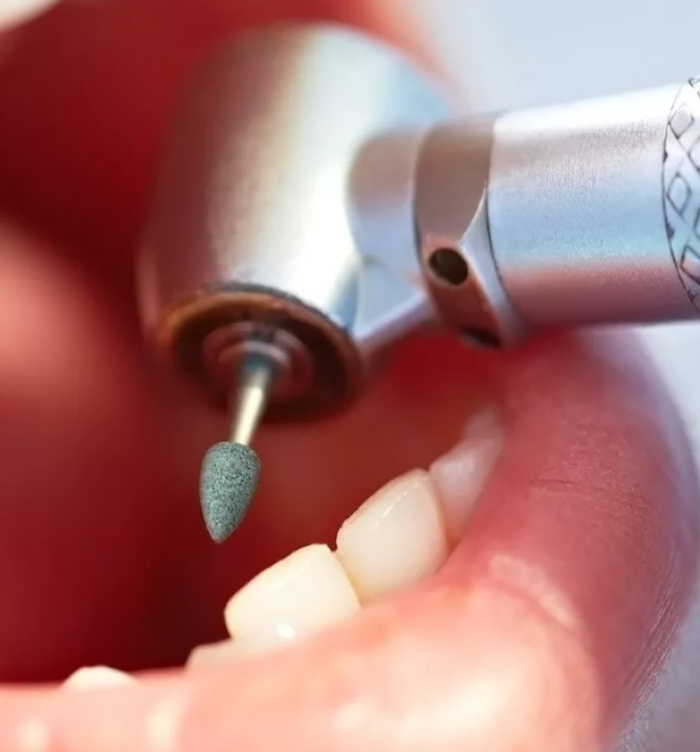
After seating an all-ceramic crown or inlay, occlusal high spots often need adjustment. A green stone in a high-speed FG handpiece allows controlled removal without overheating the ceramic. Use short, sweeping strokes and constant water spray. Avoid sustained contact in one spot — this concentrates heat and can cause thermal shock.
Lab Contouring of Porcelain
During the build-up and layering process, lab technicians use HP-shank green stones at 20,000–30,000 RPM to refine anatomy before glazing. The green stone's medium grit removes just enough material to correct contours without destroying the layered surface texture.
Surface Characterization
Before staining and glazing, some technicians use a green stone to add subtle surface texture — developmental lobes, perikymata lines, or slight concavities — that make the restoration look more natural under light.
Practical Applications on Precious Metals
Gold, palladium, and platinum alloys are softer than ceramics but still require careful finishing to achieve a smooth, polished result.
Removing Casting Sprues and Flash
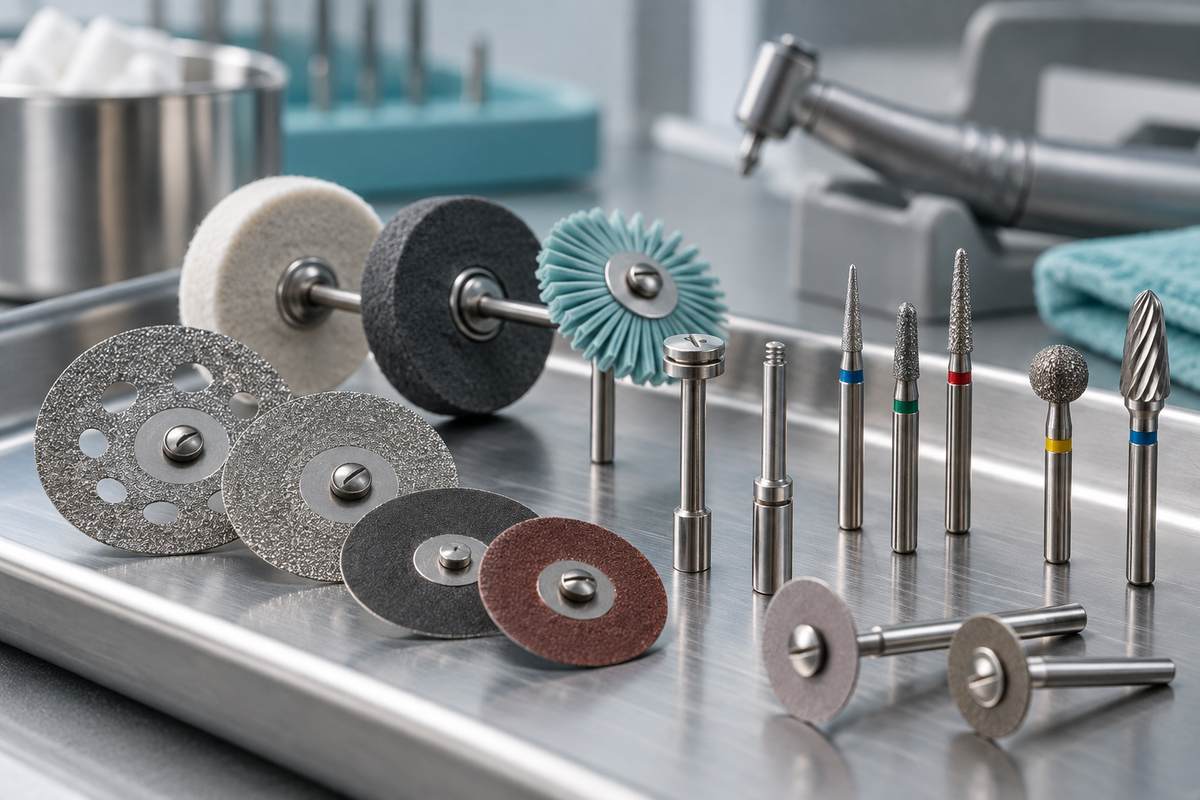
After divesting a cast framework, green stones quickly remove sprue attachments and investment flash. Their abrasive action is more controlled than a separating disc, reducing the risk of over-cutting thin margins.
Smoothing Internal Surfaces
The internal fit of a gold crown depends on smooth inner walls. A small flame-shaped or tapered-cone green stone can reach into the internal anatomy and smooth nodules left by the casting process.
Pre-Polish Finishing
Before moving to rubber wheels or polishing compounds, a pass with a fine green stone establishes the surface plane. This reduces the number of polishing steps needed and shortens total bench time. After the green stone stage, a silicone rubber polisher brings the surface to a high shine.
Green Stone Shapes and When to Use Them
Green stones come in several head geometries. Choosing the right shape for the task prevents accidental damage to adjacent surfaces.
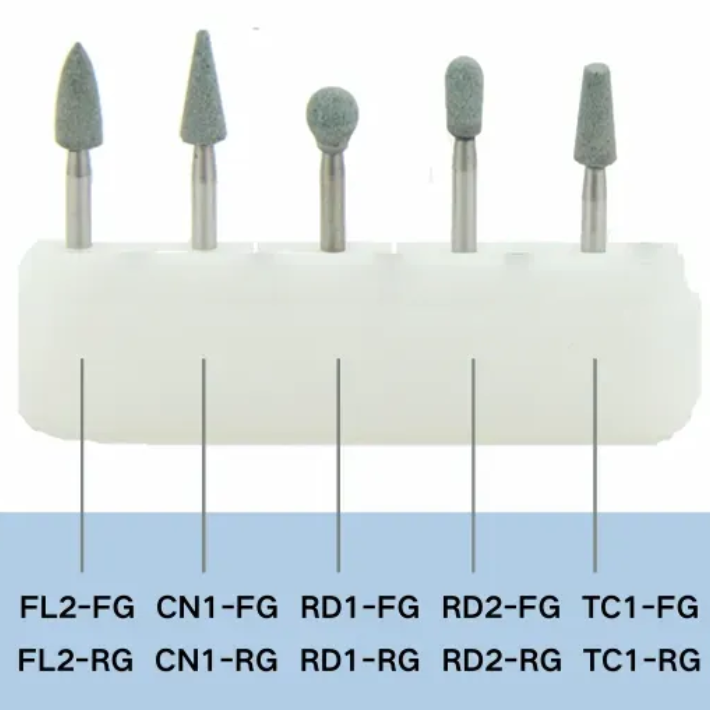
- Cylinder — flat surfaces, broad contours, and quick stock removal on facial or lingual walls
- Flame — interproximal areas, fine detail work, and subgingival margin refinement
- Ball / Round — concavities, fossa areas, and large-radius surface blending
- Tapered Cone — removing sharp line angles, transitional blending between surfaces
- Pointed Cone — tight grooves, developmental anatomy, and detailed carving
All shapes are available in FG, RA, and HP shanks. For guidance on choosing the right shank for your handpiece, read our article on shank types: FG, RA, and HP.
Speed and Technique Tips
Getting the best results from a green stone depends on matching speed and pressure to the material you are working on.
- Ceramics (chairside): FG shank, up to 150,000 RPM with water coolant. Light pressure, short strokes.
- Ceramics (lab): HP shank, 20,000–30,000 RPM. Moderate pressure acceptable with air cooling.
- Precious metals: HP shank, 15,000–25,000 RPM. Steady pressure, avoid dwelling in one spot.
- Custom profiles: Dress the stone with an abrasive dresser to create non-standard shapes for specific anatomy.
Always inspect the stone before use. A chipped or eccentric stone causes vibration that translates to an uneven surface. Discard any stone that wobbles visibly when spinning freely.
Material-Specific Considerations
Not all ceramics and metals respond identically to green stone abrasion. Understanding the specific properties of each substrate helps you dial in the right approach.
Feldspathic Porcelain
Feldspathic porcelain is the most fragile of the common dental ceramics. It chips easily under aggressive lateral force. Use a flame-shaped green stone at moderate speed with very light contact. The goal is to shave material gradually rather than grind through it. Follow immediately with a polishing step, because unpolished feldspathic surfaces lose translucency and collect stain.
Lithium Disilicate (e.max)
Lithium disilicate is tougher than feldspathic porcelain but still sensitive to surface damage. Green stones work well for minor occlusal adjustments after cementation. Keep the contact time short and use constant water irrigation. After adjustment, the restoration should be repolished or refired to restore the glaze — leaving an unfinished surface reduces the flexural strength of the material.
Zirconia
Monolithic zirconia is significantly harder than other ceramics, and green stones alone may not remove material fast enough for major adjustments. For gross reduction on zirconia, start with a coarse diamond bur, then switch to a green stone for final contouring and smoothing. The green stone removes the scratches left by the diamond and prepares the surface for polishing.
Gold and High-Noble Alloys
Gold alloys are soft and ductile. Green stones cut them efficiently without the tearing that carbide burs can cause. Use a cylinder or barrel shape for broad surfaces and a flame shape for margins. Keep speed moderate — excessive RPM on soft metal generates heat that can warp thin castings.
Base Metal Alloys (CoCr, NiCr)
Base metal alloys are harder than gold and require more pressure. Green stones still work, but they wear down faster on these substrates. Budget for higher stone consumption when working with cobalt-chromium or nickel-chromium frameworks. Pink stones (aluminum oxide, medium grit) are sometimes preferred for the initial pass on base metals, with green stones reserved for the finishing pass on ceramic-bonded areas.
Maintenance and Storage
Green stones are consumables, but proper care extends their useful life and keeps results predictable.
- Clean stones after every use with an ultrasonic bath or stiff brush. Metal and ceramic particles embed in the abrasive grain and reduce cutting efficiency if left in place.
- Sterilize per your standard autoclave protocol. Silicon carbide tolerates steam sterilization without degradation.
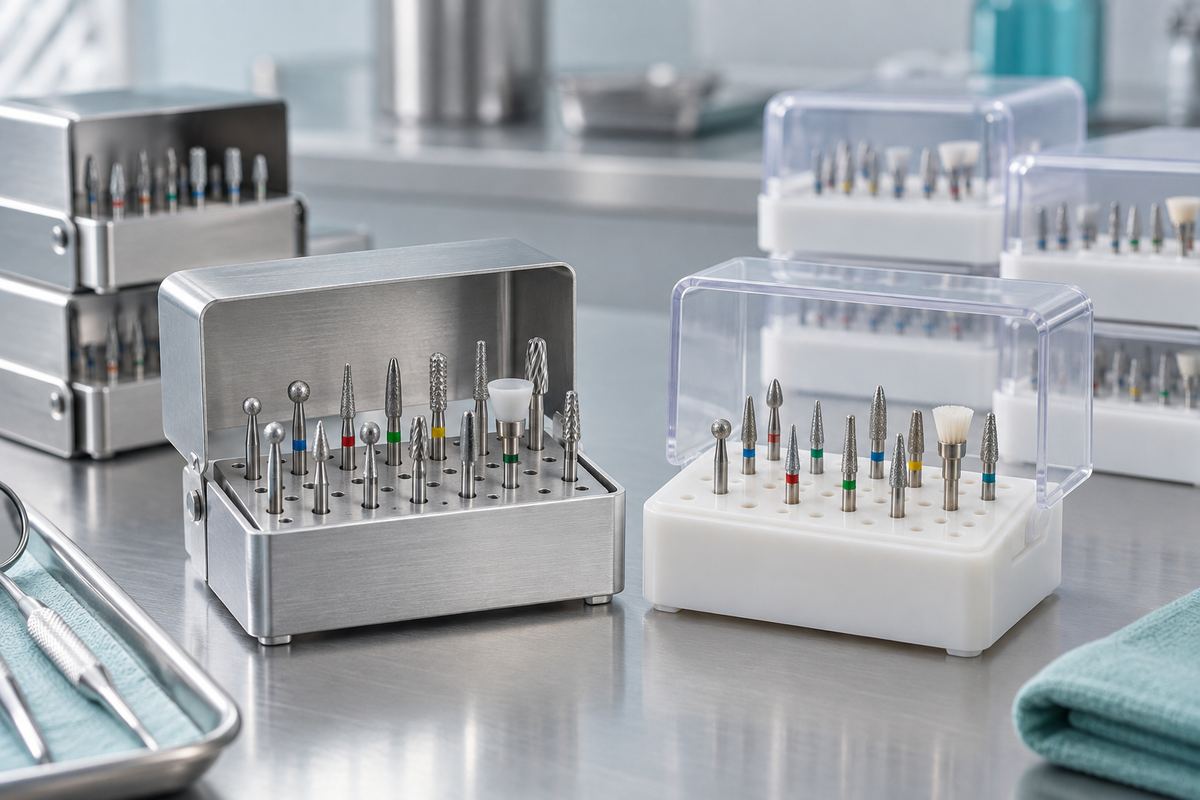
- Store in a dry, organized tray where stones cannot contact each other. Collisions during storage chip the abrasive head and create uneven surfaces.
- Discard any stone that has worn down to less than half its original head diameter, or any stone with a visible crack in the abrasive head.
Where Green Stones Fit in the Workflow
Green stones occupy the middle stage between gross reduction and final polish. A practical workflow for a ceramic crown adjustment looks like this:
- Mark high spots with articulating paper
- Reduce with a fine-grit diamond bur if significant reduction is needed
- Contour with a green stone to refine anatomy and smooth the surface
- Polish with a diamond rubber polisher or silicone wheel to restore gloss
Skipping the green stone step and going directly from diamond bur to polisher usually results in a longer polishing time and a less natural surface texture.
Sourcing and Bulk Ordering
Browse our full catalog of dental stones and polishers for both clinical and laboratory applications. Wholesale pricing is available for distributors, group practices, and dental labs, with OEM labeling offered at no additional cost on qualifying orders.