Common Mistakes When Using Mounted Stones for Polishing and Finishing
Mounted stones are indispensable tools for polishing and finishing in dental labs and clinical settings. Whether you are smoothing a zirconia crown, adjusting a metal framework, or refining a composite restoration, the quality of your final result depends heavily on how you use these abrasive instruments.
The problem is that mounted stones are deceptively simple. They look straightforward, and the temptation is to just press and go. But poor technique, wrong grit selection, or excessive pressure can ruin hours of careful work in seconds. This article covers the most common mistakes dental professionals make with mounted stones and how to avoid each one.
Mistake 1: Choosing the Wrong Grit
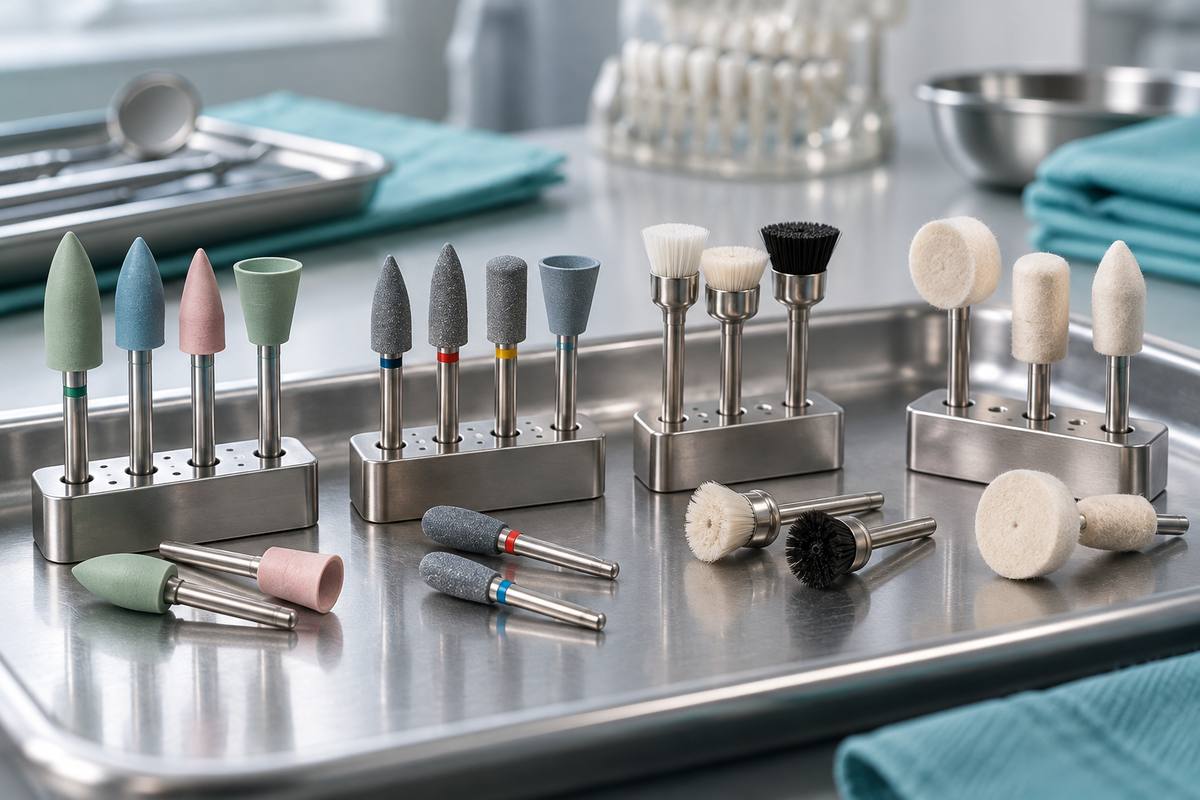
Mounted stones are available in coarse, medium, and fine grits, and each serves a distinct purpose in the finishing sequence. The most frequent error is reaching for the wrong grit at the wrong stage.
When This Goes Wrong
Using a coarse-grit stone for final polishing leaves visible scratches and a rough surface texture. The patient or dentist will immediately notice the dull, uneven finish. Conversely, using a fine-grit stone to remove bulk material wastes time and wears out the stone prematurely because it was never designed for heavy material removal.
How to Get It Right
Always follow a grit progression from coarse to fine. Start with a coarse stone to remove excess material and adjust contours. Move to a medium stone to smooth the surface and reduce scratch depth. Finish with a fine stone to bring the surface to a polished state.
| Grit Level | Purpose | Typical Color | Surface Result |
|---|---|---|---|
| Coarse | Bulk removal, contouring | Green | Rough with visible tool marks |
| Medium | Smoothing, scratch reduction | White or pink | Semi-smooth with fine scratches |
| Fine | Final polish, gloss | White or pink (fine grade) | Smooth with minimal visible scratches |
Skipping a grit level is another common version of this mistake. Jumping from coarse directly to fine means the fine stone must work much harder to remove the deep scratches left by the coarse stone. This takes longer, produces inconsistent results, and shortens the life of your fine-grit stone. For a deeper look at the differences between stone types, read our guide on white stones and green stones.
Mistake 2: Applying Too Much Pressure
This is the single most damaging habit in rotary polishing work. Excessive pressure causes a chain of problems that affect both the workpiece and the stone itself.
What Happens Under Heavy Pressure
- Uneven material removal: The stone digs into the surface at the point of contact, creating low spots and gouges instead of a uniform finish.
- Heat buildup: Friction increases dramatically under pressure. On zirconia and ceramic restorations, excess heat can cause micro-cracks that compromise the restoration's structural integrity.
- Accelerated stone wear: The abrasive particles in the stone break down faster under heavy loads, meaning you burn through stones at two to three times the normal rate.
- Loss of control: A mounted stone under pressure can grab and skip across the surface, leaving deep gouges that may not be repairable without reworking the entire area.
The Correct Approach
Let the abrasive do the work. The stone should contact the surface with just enough pressure to maintain consistent engagement. Think of it as guiding the stone across the surface rather than pushing it into the material. If you find yourself pressing hard to get results, the stone is either the wrong grit for the task or it is worn out and needs replacement.
A useful test: if the handpiece slows noticeably when you bring the stone to the workpiece, you are applying too much pressure. The handpiece should maintain a consistent sound and speed throughout the stroke.
Mistake 3: Using Poor Technique
Even with the correct grit and light pressure, sloppy technique produces disappointing results. The most common technique errors fall into three categories.
Inconsistent Angle
Changing the angle of the mounted stone during a stroke creates an uneven surface with ridges and valleys. Pick an angle that matches the contour you are polishing and hold it steady through each pass. For convex surfaces, rotate the workpiece rather than tilting the stone.
Erratic Stroke Pattern
Random, darting movements across the surface leave swirl marks and an inconsistent finish. Instead, work in organized, overlapping strokes. Move in one direction across a section, then shift slightly and make another pass. Think of it like mowing a lawn in neat rows rather than zigzagging randomly across the yard.
Working the Entire Surface at Once
Trying to polish a large area in a single pass almost always leads to uneven results. Divide the surface into small sections and finish each one before moving to the next. This approach gives you better control and allows you to see your progress clearly as each section reaches the desired finish.
Mistake 4: Ignoring Speed Settings
Many technicians set their handpiece to one speed and leave it there for every task. This is a mistake because different mounted stones and different materials require different rotational speeds for best results.
Speed Guidelines by Material
| Material | Recommended RPM | Notes |
|---|---|---|
| Zirconia | 8,000 - 15,000 | Higher speeds generate excess heat; use water cooling |
| Porcelain / Ceramic | 10,000 - 20,000 | Moderate speed with light touch prevents chipping |
| Metal alloys | 15,000 - 25,000 | Metals tolerate higher speeds; use appropriate stone type |
| Composite resin | 8,000 - 12,000 | Low speed prevents smearing and surface glazing |
| Acrylic | 5,000 - 10,000 | Very low speed to avoid melting |
Running a mounted stone too fast on soft materials like acrylic or composite can melt or smear the surface instead of polishing it. Running too slow on hard materials like metal means the stone cannot cut efficiently, leading to the temptation to apply more pressure, which brings us back to Mistake 2.
Mistake 5: Neglecting Stone Maintenance
Mounted stones are consumable tools, but that does not mean they require no maintenance between uses. A clogged or contaminated stone performs poorly regardless of your technique.
Signs a Stone Needs Attention
- The stone glazes over and stops cutting, even with proper pressure and speed.
- Material debris fills the pores of the stone, giving it a smooth, shiny appearance.
- The stone produces heat quickly without removing material.
- The shape has worn unevenly, creating a wobble during rotation.
How to Maintain Your Stones
After each use, clean mounted stones with a stiff brush or an ultrasonic cleaner to remove embedded debris. For stones clogged with metal particles, a dressing stone can restore the cutting surface. Replace stones that have worn out of round or lost their original profile, as an unbalanced stone creates vibration that damages both the workpiece and the handpiece bearings.
Mistake 6: Using Mounted Stones Without Cooling
Dry polishing is acceptable for brief touch-ups on some materials, but extended polishing without coolant causes thermal damage. On ceramic and zirconia restorations, overheating during polishing can induce phase transformation in the material, weakening it from the inside while the surface looks fine.
Use water spray or air-water mist whenever possible. If dry polishing is necessary, work in short bursts of two to three seconds with pauses between them to let the workpiece cool. Touching the restoration with your fingertip between passes gives you a rough sense of temperature. If it feels warm, it is already too hot for the material.
Putting It All Together: A Polishing Protocol
Here is a step-by-step approach that avoids all six mistakes listed above.
- Assess the surface: Determine how much material needs to be removed and select your starting grit accordingly.
- Set the correct speed: Match RPM to the material you are working on using the table above as a reference.
- Work in sections: Divide the surface into manageable areas. Complete one section before moving to the next.
- Use light, consistent pressure: Guide the stone across the surface without forcing it. Maintain a steady angle and use overlapping strokes.
- Progress through grits: Move from coarse to medium to fine without skipping steps. Inspect the surface between each grit change.
- Apply coolant: Use water spray for extended polishing. Allow rest periods during dry work.
- Inspect the final result: Check the surface under good lighting and magnification. Touch up any remaining imperfections with the fine-grit stone.
Quality silicone rubber polishers can follow mounted stones in the finishing sequence when an even higher gloss is desired. These flexible polishers conform to surface contours better than rigid stones and produce a mirror-like finish on most restorative materials.
Final Thoughts
Mounted stones are simple tools, but using them well requires attention to grit selection, pressure control, technique, speed settings, and maintenance. Each of these factors contributes to the final surface quality. By avoiding the mistakes outlined in this guide, you can produce consistent, professional polishing results that meet the standards your patients and referring dentists expect. The difference between adequate and excellent polishing often comes down to these small details, so take the time to get them right.