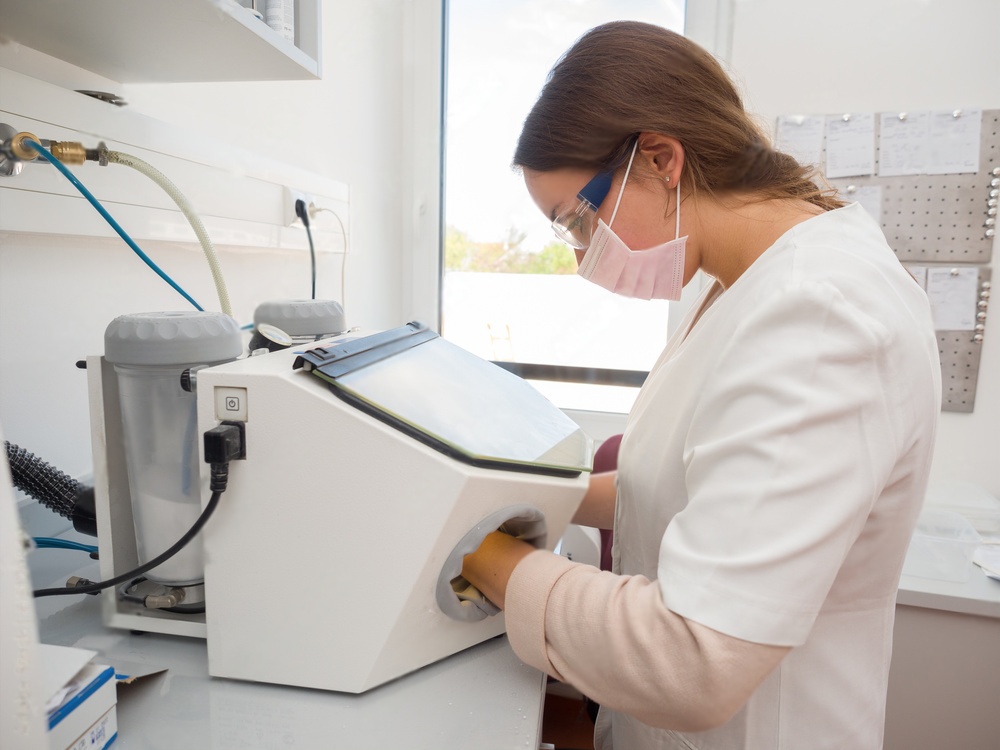
Dental sandblasting, clinically known as air abrasion, is a well-established technique used for stain removal, surface conditioning, and minimally invasive cavity preparation. Despite decades of clinical use and supporting research, persistent myths continue to create hesitation among both practitioners and patients. This article addresses seven of the most common misconceptions with evidence-based facts so you can make informed decisions about incorporating air abrasion into your clinical practice.
Myth 1: Sandblasting Damages Tooth Enamel
Fact: Modern air abrasion systems use precisely calibrated particle sizes and pressures that remove surface deposits without compromising enamel integrity.
This is the most widespread concern about dental sandblasting, and it traces back to early-generation equipment from the 1950s that lacked fine pressure control and used coarser abrasive media. Current systems deliver aluminum oxide particles (typically 27–50 µm) or sodium bicarbonate particles at pressures between 40–160 PSI through a focused nozzle with precise flow regulation. Multiple peer-reviewed studies have measured enamel surface roughness and microhardness before and after air abrasion treatment, finding no clinically significant reduction in either parameter when manufacturer guidelines are followed.
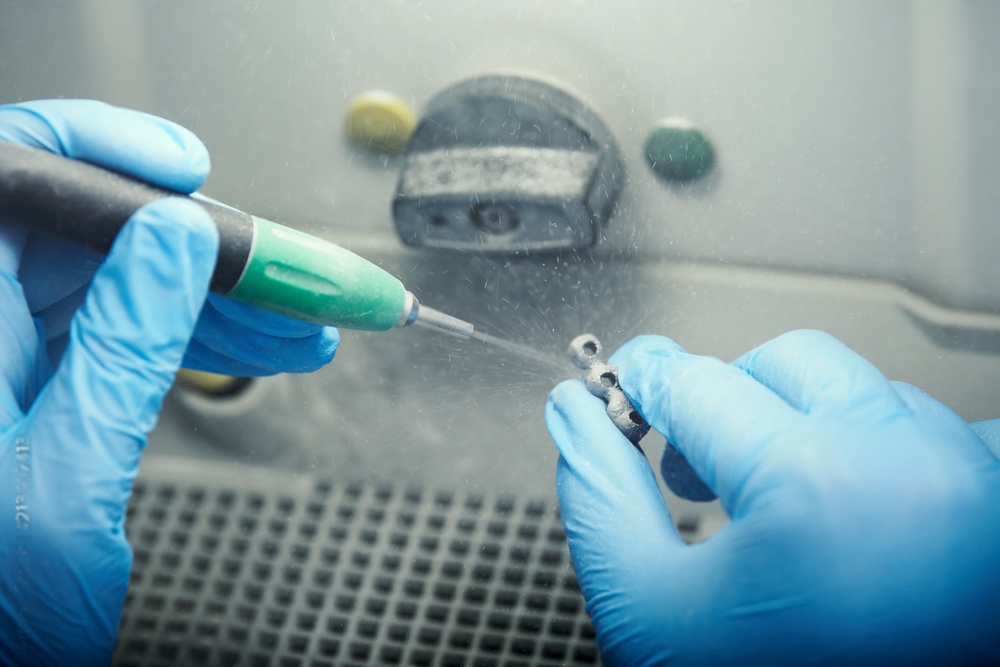
The key variables that protect enamel during air abrasion are:
- Particle size — Smaller particles (27 µm) are gentler and suitable for stain removal and biofilm disruption; larger particles (50 µm) provide more cutting power for cavity preparation.
- Air pressure — Lower pressures (40–80 PSI) for prophylaxis cleaning, higher pressures (80–160 PSI) for tooth structure removal. Proper calibration prevents over-abrasion of healthy enamel.
- Distance and angle — The nozzle should be held 1–2 mm from the target surface at a 45–80 degree angle. Increasing distance disperses the particle stream and reduces effectiveness without improving safety.
- Exposure time — Short, controlled bursts of 1–3 seconds are standard clinical technique. Prolonged continuous application on one spot is neither recommended nor necessary for any indication.
Myth 2: It Is Just Blasting Sand at Your Teeth
Fact: Dental air abrasion does not use sand. It uses medical-grade abrasive powders delivered through a precision-engineered handpiece with controlled flow dynamics.
The term "sandblasting" is colloquial and technically inaccurate. Industrial sandblasting uses silica sand particles, which are irregular in shape and associated with silicosis risk. Clinical dental air abrasion systems use one of two entirely different abrasive media, both specifically manufactured for medical use:
| Abrasive Medium | Particle Size | Primary Use |
|---|---|---|
| Aluminum oxide (Al₂O₃) | 27–50 µm | Cavity preparation, surface conditioning before bonding, cleaning cementation residue |
| Sodium bicarbonate | 40–65 µm | Stain removal, biofilm disruption, subgingival debridement, prophylaxis |
Both materials are biocompatible, non-toxic, and have been used in dental applications for over 50 years with extensive safety data. The delivery system focuses the particle stream onto a target area smaller than 1 mm in diameter through a precision nozzle, nothing like the broad-coverage industrial process the name suggests. Some newer systems also use glycine powder for even gentler subgingival biofilm management, further expanding the range of available media beyond what the term "sandblasting" implies.
Myth 3: The Procedure Is Noisy and Uncomfortable
Fact: Air abrasion is significantly quieter than a high-speed handpiece and typically requires no local anesthesia for small or superficial preparations.
One of the original clinical advantages of air abrasion was improved patient comfort compared to rotary instruments. The system produces a quiet hissing sound rather than the high-pitched whine of a dental handpiece and bur operating at 400,000 RPM. Patients commonly report feeling only a light tapping or mild tickling sensation during treatment. Because air abrasion removes tooth structure without the mechanical vibration and frictional heat of rotary instruments, it is especially well-suited for anxious patients, pediatric cases, and patients with dental phobia related to drill noise.
That said, air abrasion is not entirely sensation-free for all procedures. If the preparation approaches dentin or nears the pulp chamber, the exposed tubules can transmit sensation, and local anesthesia may still be warranted. The comfort advantage applies primarily to superficial work: stain removal, pit-and-fissure sealant preparation, and small Class I or Class V cavities confined to enamel. For deeper caries excavation, patient communication about potential sensitivity is important even with air abrasion.
Myth 4: It Damages Fillings, Crowns, and Other Restorations
Fact: Air abrasion at standard prophylaxis settings does not damage well-bonded restorations, though direct prolonged application on restoration margins should be avoided as a practical precaution.
Aluminum oxide particles at prophylaxis pressures (40–80 PSI) do not scratch or weaken porcelain, composite, or amalgam surfaces to any clinically measurable degree. Peer-reviewed studies confirm that brief air abrasion exposure at prophylaxis parameters has no measurable effect on the surface integrity, color stability, or bond strength of common restorative materials.
However, practical caution is still appropriate in certain clinical situations:
- Avoid sustained application directly on the margins of any restoration, where the bond interface between tooth structure and restorative material is most vulnerable to mechanical disruption.
- For patients with extensive ceramic restorations such as veneers or full-coverage crowns, lower the pressure setting to 40–60 PSI and consider using sodium bicarbonate instead of aluminum oxide for a gentler cleaning action.
- Use disclosing dye to identify stain and calculus deposits precisely so the abrasive stream is directed only where it is needed, minimizing unnecessary exposure of restoration surfaces.
- For patients with older or failing restorations showing marginal breakdown, discuss the condition of the restorations before beginning air abrasion and adjust technique accordingly.
Myth 5: Air Abrasion Can Replace the Dental Drill
Fact: Air abrasion is effective for specific applications but cannot replace diamond and carbide rotary burs for most restorative procedures.
Air abrasion works well for:
- Small pit-and-fissure caries removal where the lesion is confined to enamel
- Surface conditioning and roughening before sealant or bonding agent application
- Stain and biofilm removal during routine prophylaxis appointments
- Roughening composite or ceramic surfaces for intraoral repair bonding
- Cleaning around orthodontic brackets without damaging bracket adhesion
It is not suitable for:
- Large cavity preparations requiring controlled bulk dentin removal
- Crown and bridge preparation where precise depth and margin geometry are critical
- Removing old amalgam fillings or large composite restorations
- Any procedure requiring precise depth control, angulated access, or subgingival margin placement
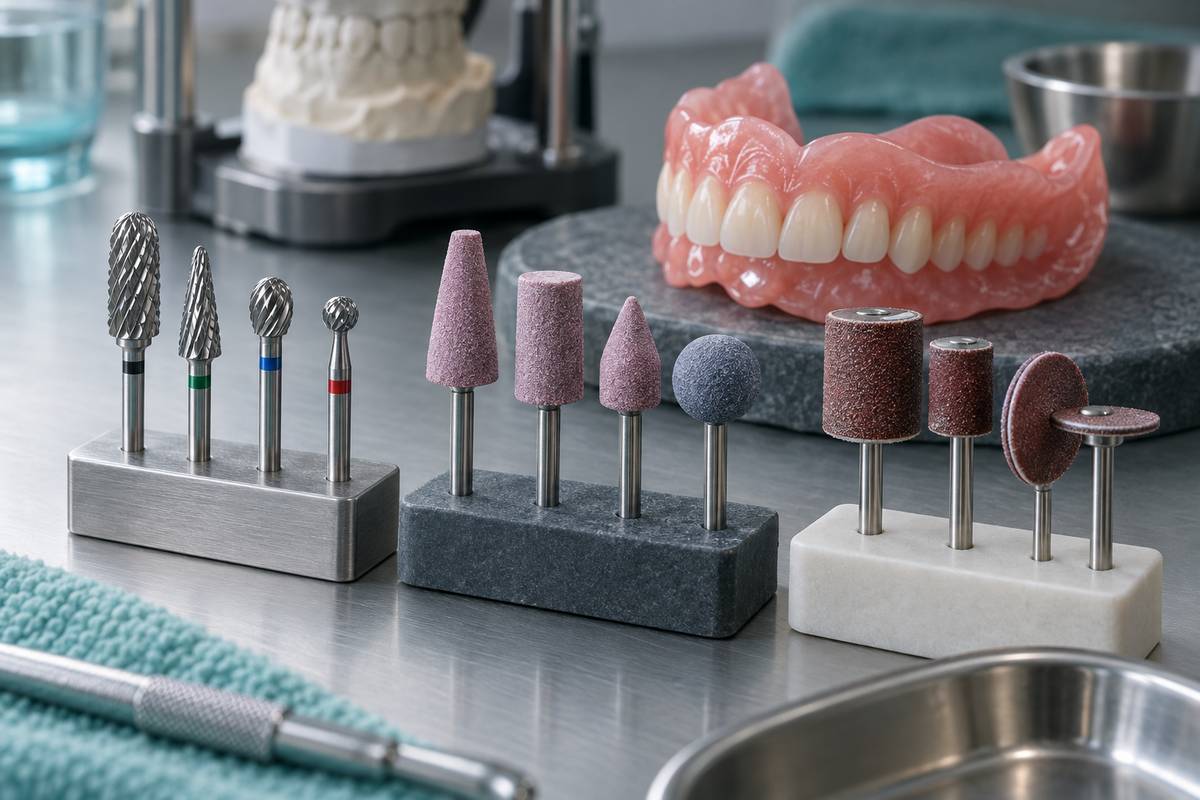
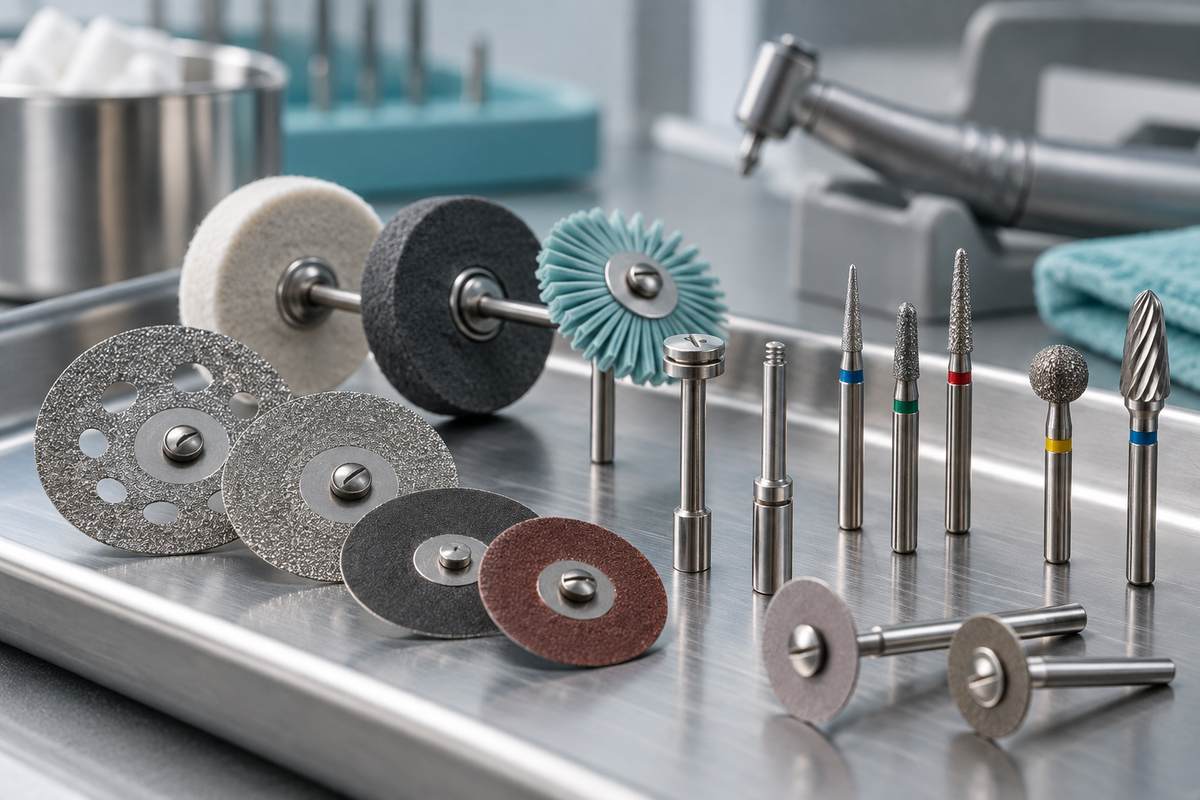
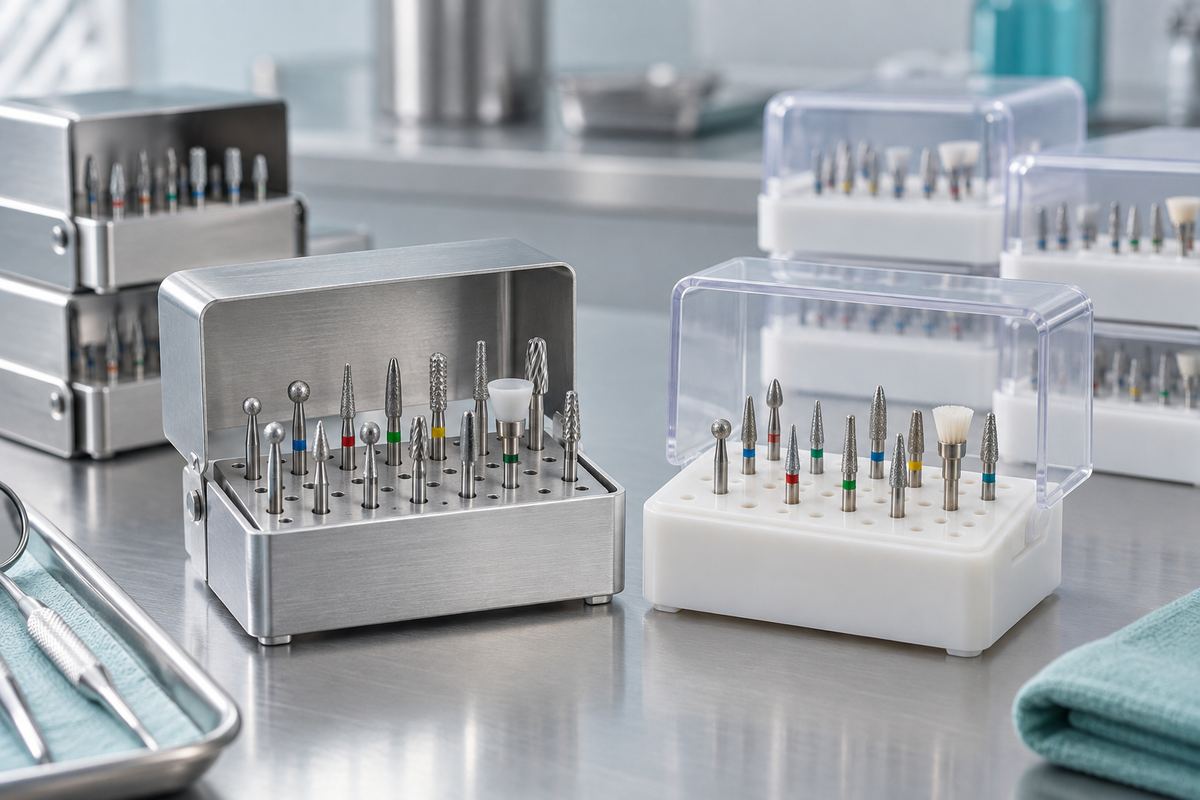
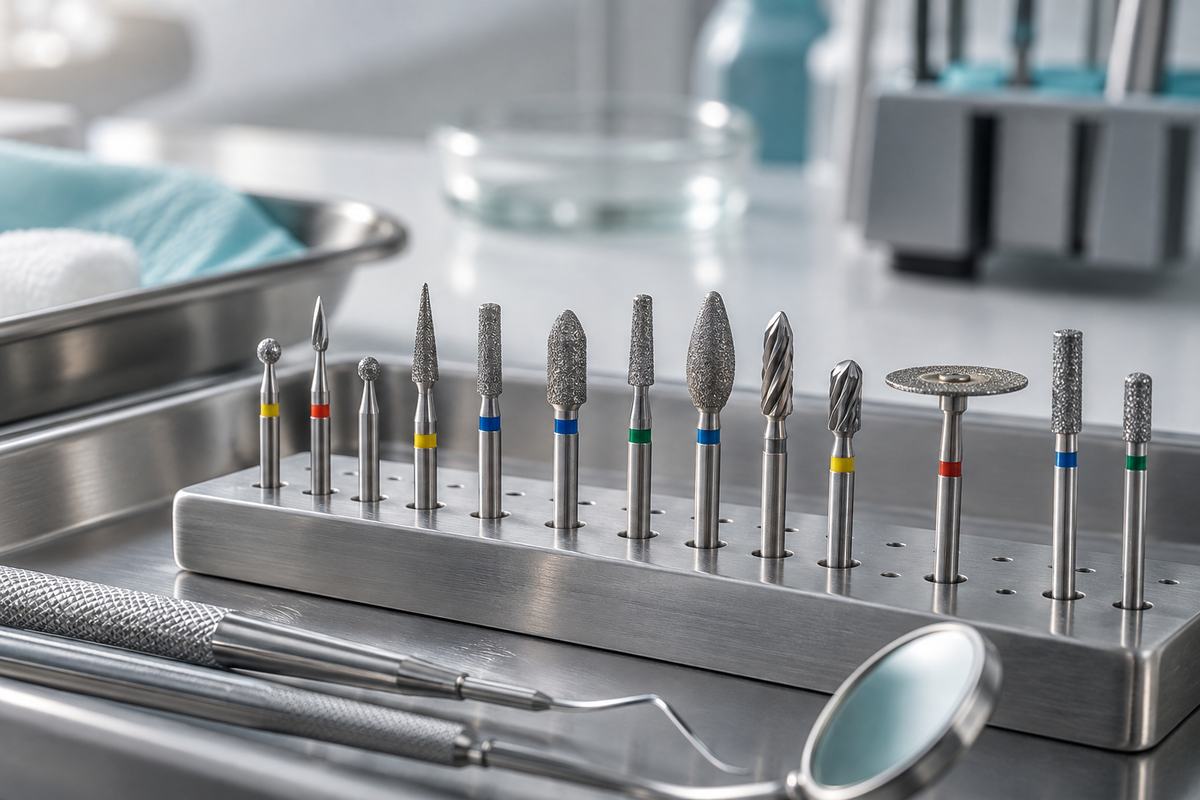
Positioning air abrasion as a complete drill replacement sets unrealistic expectations for both the clinician and the patient. It is a complementary tool that expands your treatment options, not a substitute for rotary instrumentation. For a full overview of rotary instrument options and their clinical applications, see our guide to dental bur types and techniques.
Myth 6: All Air Abrasion Units Perform the Same
Fact: Significant differences exist between manufacturers and models in terms of powder flow control, pressure regulation, nozzle design, and integrated safety features.
Not all air abrasion systems deliver equivalent clinical results. Key variables that differ between units and directly affect performance include:
- Powder flow rate consistency — Inconsistent flow causes uneven cutting, unpredictable surface roughness, and difficulty controlling preparation depth. Higher-quality units use gravity-fed or pressurized powder chambers with calibrated metering valves.
- Pressure regulation precision — Units with fine-increment pressure adjustment (1–2 PSI steps) allow better control across different clinical tasks compared to units with coarse adjustment ranges.
- Nozzle diameter and design — Smaller nozzles (0.4–0.5 mm) provide more focused streams for precise cavity preparation; larger nozzles (0.8–1.0 mm) cover more area efficiently for prophylaxis and stain removal.
- Integrated suction — Some advanced units include concentric suction around the nozzle tip to capture rebounding particles at the source, reducing both operatory mess and inhalation exposure for the dental team.
When evaluating new equipment, test prospective units on extracted teeth or typodont models before committing to a purchase. Operator technique matters significantly, but the equipment quality sets the ceiling for what that technique can achieve in terms of precision and consistency.
Myth 7: Sandblasting Particles Are Dangerous if Inhaled
Fact: With standard dental safety measures already in place for aerosol-generating procedures, inhalation risk from air abrasion is negligible.
Aluminum oxide and sodium bicarbonate particles used in dental air abrasion are classified as low-toxicity materials by occupational health authorities. Unlike industrial silica sand, they do not cause silicosis or other chronic respiratory conditions. However, any aerosolized particulate poses a theoretical inhalation risk during prolonged unprotected exposure, which is why standard precautions should always be maintained.
The following measures, most of which are already standard practice in dental operatories, effectively eliminate inhalation concerns:
- High-volume evacuation (HVE) positioned within 10 mm of the treatment site during air abrasion use
- Rubber dam isolation when performing cavity preparations to contain particle rebound
- Protective eyewear for both patient and operator to prevent ocular particle exposure
- N95 or equivalent filtration masks for the dental team during extended air abrasion procedures
These are the same infection control and aerosol management measures already required for aerosol-generating procedures with high-speed handpieces and ultrasonic scalers. Air abrasion does not require any additional protective equipment or infrastructure beyond what a properly equipped dental operatory already provides.
When Air Abrasion Makes Clinical Sense
Air abrasion delivers the most value when integrated into a broader clinical toolkit as a complement to rotary instrumentation, not used as a standalone replacement. The clinical situations where air abrasion consistently outperforms or supplements traditional methods include:
- Pediatric patients who are anxious about the sound and vibration of rotary instruments and may benefit from a quieter, vibration-free alternative
- Small, accessible carious lesions that do not extend into deep dentin, where minimally invasive preparation preserves maximum tooth structure
- Surface preparation before placing pit-and-fissure sealants, where air abrasion creates an ideal bonding surface
- Prophylaxis cases with heavy extrinsic staining from coffee, tea, or tobacco that respond poorly to rubber cup polishing alone
- Intraoral repair of chipped composite or ceramic restorations where controlled surface roughening improves the bond strength of the repair material
Summary
Dental sandblasting is a safe, well-documented clinical technique that suffers from a misleading common name and outdated assumptions rooted in early-generation equipment limitations. Modern air abrasion systems deliver controlled, biocompatible particles at calibrated pressures through precision nozzles, posing no meaningful risk to enamel, existing restorations, or patient comfort when used according to manufacturer guidelines and established clinical protocols. Like any clinical tool, its effectiveness depends on proper technique, appropriate case selection, quality equipment, and realistic expectations about what it can and cannot accomplish.