
Every dental practice relies on a core set of rotary instruments to handle procedures efficiently and predictably. While hundreds of bur shapes and sizes exist, most dentists find themselves reaching for the same trusted profiles day after day. Understanding which dental burs see the heaviest use helps new practitioners stock their operatories wisely and gives dental students a practical roadmap for clinical training.
This guide breaks down the most used dental burs by material type, head shape, and clinical application so you can match the right instrument to every procedure.
Two Main Categories: Diamond Burs vs. Tungsten Carbide Burs
Nearly every bur in a general dentist's tray falls into one of two material families. Each material removes tooth structure through a different mechanism, which determines when and why you would choose one over the other.
| Feature | Diamond Burs | Tungsten Carbide Burs |
|---|---|---|
| Cutting mechanism | Abrasive grit bonded to the head | Machined flutes that shear material |
| Best for | Enamel reduction, porcelain, crown prep | Dentin removal, cavity prep, finishing |
| Surface finish | Rougher (coarse grits) to smooth (fine grits) | Smooth, defined margins |
| Speed preference | High-speed handpiece | High-speed or slow-speed depending on shape |
| Durability | Grit wears over time; single-patient or limited use | Flutes stay sharp longer; multi-use common |
For a deeper comparison of these two materials, read our full guide on diamond burs vs. carbide burs.
Most Used Diamond Burs
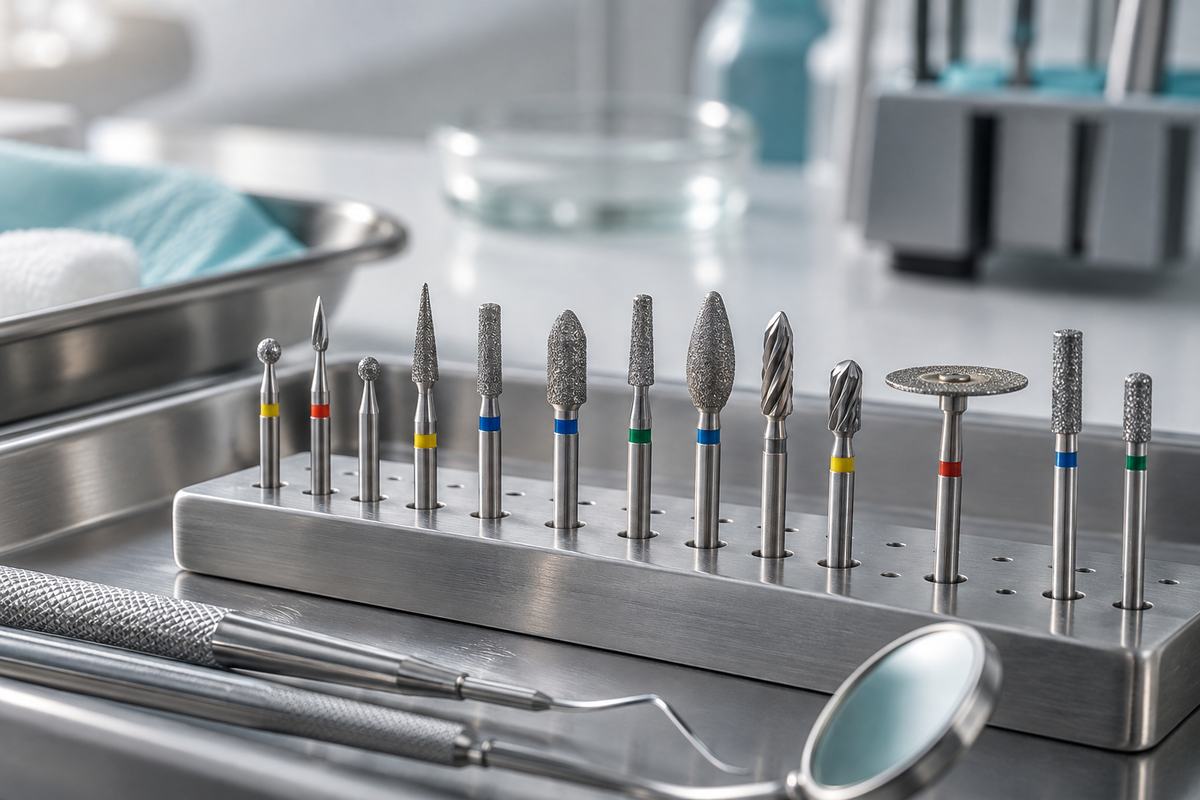
Diamond burs dominate any procedure that involves cutting through hard enamel or ceramic materials. Their abrasive surface grinds rather than cuts, making them especially effective on brittle structures. Below are the diamond bur profiles dentists use most often.
Round Diamond Burs (801 Series)
Round diamond burs are the go-to choice for initial tooth penetration. Dentists use them to open access into enamel before switching to other shapes for refinement. Small diameters (008–012) work well for conservative preparations, while larger heads (016–023) handle bulk enamel removal for full-coverage crowns.
Tapered Diamond Burs (850 / 856 Series)
The tapered or cone-shaped diamond bur is arguably the single most popular profile for crown and bridge preparation. Its angled sides naturally create the convergence angle needed for indirect restorations. Fine-grit versions of this shape double as finishing instruments to smooth preparation walls before impression-taking.
Flame Diamond Burs (862 Series)
Flame-shaped diamonds handle subgingival margin finishing, interproximal reduction, and delicate contouring where larger burs cannot reach. Their pointed tip allows precise access in tight areas without damaging adjacent teeth.
Browse the full range of diamond dental burs available for clinical use.
Most Used Tungsten Carbide Burs
Carbide burs produce cleaner cuts with less vibration than diamond instruments. That makes them the preferred choice for procedures where margin definition, smooth cavity floors, and controlled dentin removal matter most.
FG 330 – Pear-Shaped Carbide
The FG 330 is a small pear-shaped (egg-shaped) plain-cut bur with a 0.8 mm head. It is one of the most popular burs in all of restorative dentistry. Dentists rely on it for Class I and Class II cavity preparations, and it is the standard instrument for pediatric operative procedures. Its compact head gives excellent visibility and control in small cavities.
FG 245 – Pear-Shaped Carbide (Larger)
The FG 245 is the bigger sibling of the 330. With a slightly wider head, it handles medium to large cavity preparations in permanent teeth. Many clinicians keep both the 330 and 245 loaded in their handpiece block throughout the day because these two shapes cover the majority of direct restorative needs.
FG 557 – Straight Fissure Cross-Cut
The FG 557 is a straight cylinder cross-cut carbide bur with a 1 mm head. It excels at sectioning teeth during surgical extractions, removing old amalgam restorations, and creating flat cavity floors. The cross-cut fluting increases cutting efficiency while keeping heat generation manageable.
FG 701 / 702 – Taper Fissure Cross-Cut
Taper fissure burs in the 700 series are workhorses for crown preparation on the buccal and lingual walls. Their cross-cut design removes material aggressively, which reduces chair time during full-coverage restorations. You will find these in nearly every prosthodontic and general practice tray setup.
Explore the complete selection of tungsten carbide burs for your operatory.
Finishing and Polishing Burs
After the primary cutting is done, finishing burs refine margins and surface texture. A well-finished restoration resists plaque accumulation and gives patients a comfortable bite. The most commonly used finishing instruments include:
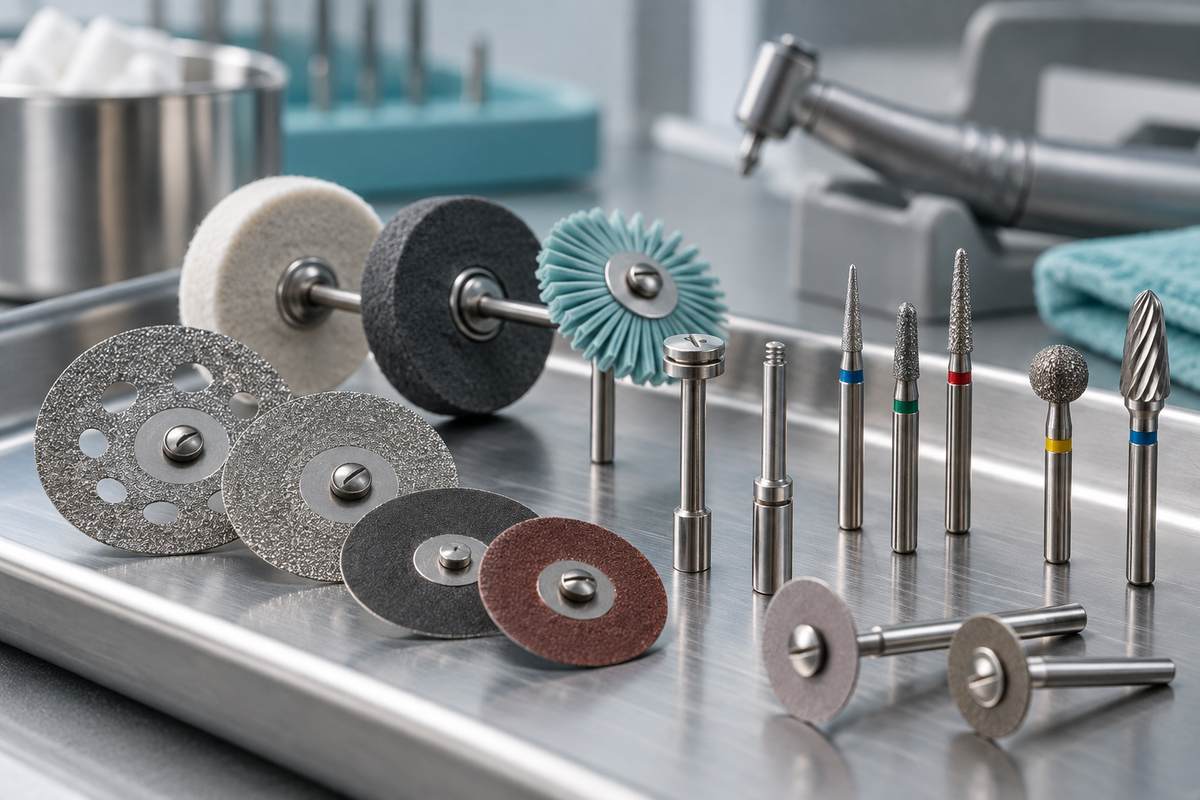
- Multi-fluted carbide finishing burs (12 and 30 blade) – Produce glass-smooth composite surfaces without generating excessive heat.
- Fine and extra-fine diamond burs – Ideal for smoothing porcelain and enamel after gross reduction.
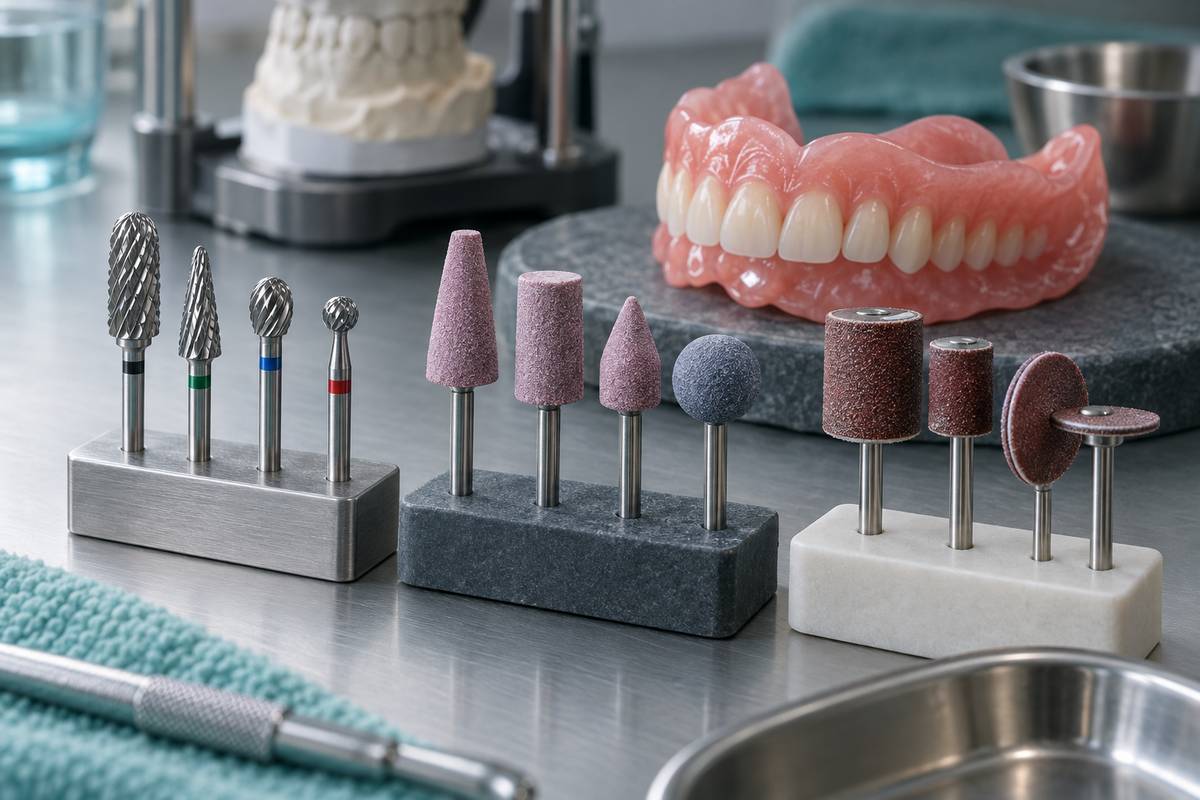
- White and green stones – Mounted abrasive points used for adjusting and pre-polishing ceramics and acrylics.
- Silicone rubber polishers – Flexible points and cups that bring composite and ceramic restorations to a high gloss.
For detailed guidance on the finishing stage, see our article on dental finishing burs.
Surgical and Specialty Burs
Oral surgeons and periodontists maintain a separate bur inventory for bone-related procedures. The most frequently used surgical burs include:
- Round surgical carbide burs (HP 6, HP 8) – Designed for slow-speed straight handpieces, these remove bone during extractions, implant site preparation, and apicoectomies.
- Lindemann side-cutting burs – Cut laterally through bone for trough creation and sectioning of impacted third molars.
- Surgical length FG burs – Extended-shank versions of standard FG shapes, giving extra reach for surgical access.
How to Choose the Right Bur for Each Procedure
Selecting the correct bur comes down to answering three questions about the task at hand:
- What material are you cutting? Enamel and porcelain favor diamond burs. Dentin and composite respond better to carbide burs.
- What stage of the procedure are you in? Initial gross reduction calls for coarse or cross-cut instruments. Finishing and margin refinement require fine-grit diamonds or multi-fluted carbides.
- What handpiece are you using? FG shanks fit high-speed air turbines. RA (right angle) shanks fit slow-speed contra-angles. HP shanks fit straight handpieces for lab and surgical work.
If you are unfamiliar with shank classifications, check the markings on your bur packaging—FG, RA, and HP are the three standards you will encounter most often.
Quick Reference: Most Used Dental Burs by Procedure
| Procedure | Primary Bur(s) | Material |
|---|---|---|
| Crown preparation | Tapered diamond (850/856), Taper fissure carbide (701/702) | Diamond + Carbide |
| Class I/II cavity prep | FG 330, FG 245 | Carbide |
| Tooth sectioning | FG 557 | Carbide |
| Enamel access / opening | Round diamond (801 series) | Diamond |
| Composite finishing | 12/30-blade finishing burs | Carbide |
| Porcelain adjustment | Fine diamond, green stones | Diamond / Abrasive |
| Bone removal / surgery | HP 6, HP 8, Lindemann | Carbide |
| Pediatric operative | FG 330 | Carbide |
Stocking Your Operatory Efficiently
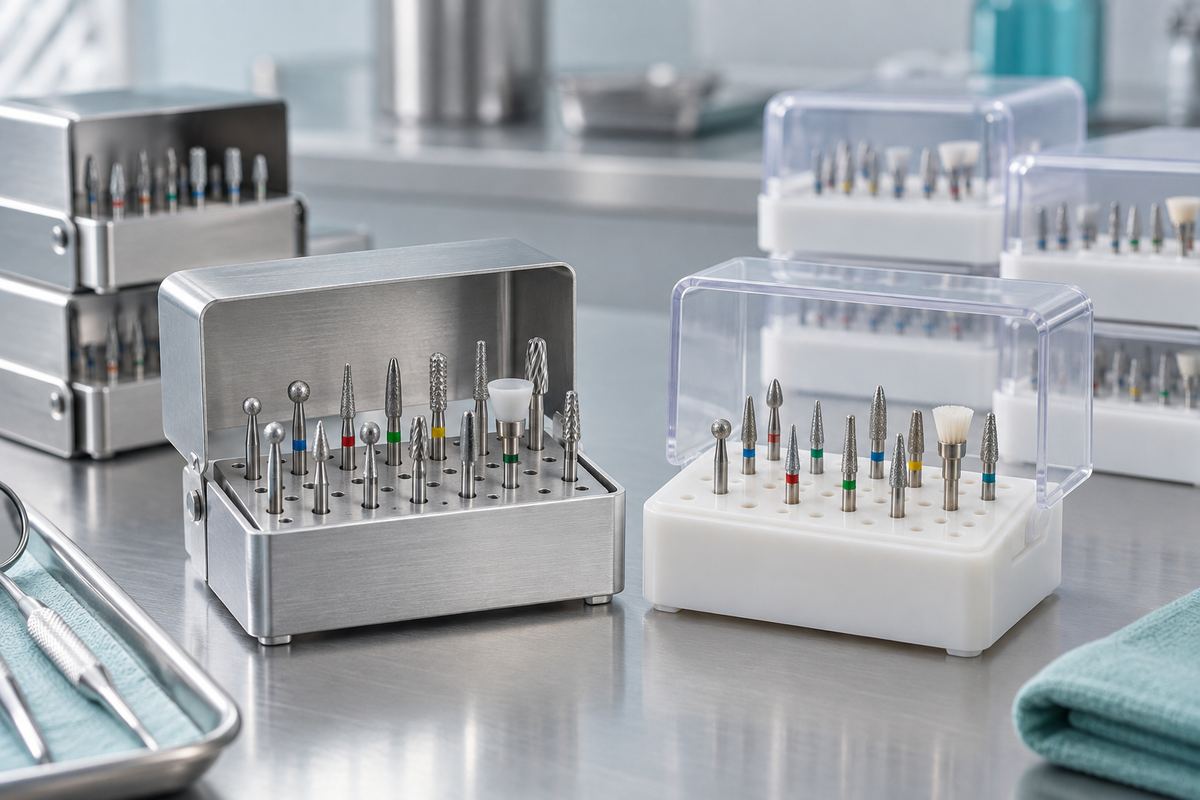
Rather than purchasing dozens of rarely used profiles, experienced dentists recommend building a lean tray setup around the burs listed above. A practical starter kit for general dentistry typically includes:
- 3–4 shapes of diamond burs in coarse and fine grits (round, tapered, flame)
- FG 330 and FG 245 pear-shaped carbides
- FG 557 straight fissure cross-cut carbide
- FG 701 taper fissure cross-cut carbide
- A set of 12-blade and 30-blade finishing burs
- Rubber polishing points for composite and ceramic
This focused inventory covers the vast majority of restorative, prosthetic, and minor surgical procedures you will encounter in daily practice. As your case mix evolves, you can add specialty shapes without overhauling your entire system.
By understanding what each bur does best and keeping a well-organized selection within reach, you will work faster, produce better margins, and reduce patient chair time across every procedure in your schedule.
Looking for more options? See our full catalog of best dental burs for clinic and lab work.