Why the Right Dental Sandblaster Matters
A dental sandblaster is one of those instruments that quietly handles multiple tasks across both the clinical operatory and the dental laboratory. From cleaning restorations before cementation to surface conditioning for bonding, the sandblaster you choose affects adhesion quality, procedure speed, and long-term restoration success.
With dozens of models on the market at price points ranging from a few hundred to several thousand dollars, selecting the right unit requires more than browsing a catalog. This guide walks through the features and specifications that matter most, so you can match a sandblaster to your actual workflow rather than paying for capabilities you will never use.
Understanding Abrasive Media Types
The abrasive powder you load into your sandblaster determines what the unit can do and how aggressively it works. The two most common media in dental applications are aluminum oxide and sodium bicarbonate, each suited to different tasks.
Aluminum Oxide
Aluminum oxide particles, typically available in 25, 50, 90, and 110 micron sizes, are the workhorse abrasive for dental sandblasting. They provide aggressive surface roughening for bonding preparation, cleaning of metal and zirconia frameworks, and removal of residual cement from restorations. The 50-micron size is the most commonly used in both clinical and laboratory settings.
Sodium Bicarbonate
Sodium bicarbonate is a softer abrasive primarily used for prophylaxis and stain removal on natural tooth surfaces. It is gentle enough to avoid enamel damage when used correctly, making it the preferred choice for cosmetic cleaning procedures. Some units accept both media types, which provides versatility if your practice handles both restorative preparation and hygiene applications.
Glass Beads and Specialty Media
Less common options include glass beads for gentle surface peening and ceramic-based media for specialty laboratory applications. If your work involves implant components or sensitive alloy surfaces, glass bead capability is worth considering.
Nozzle and Tip Design
The sandblaster nozzle is where precision happens. Nozzle diameter, shape, and material all affect the blast pattern, and the wrong configuration can turn a controlled procedure into an imprecise mess.
Diameter Selection
Smaller diameter nozzles, in the range of 0.4 to 0.8 millimeters, concentrate the particle stream for detail work on small restorations and intraoral applications. Larger diameters of 1.0 to 1.8 millimeters cover more surface area per pass, which speeds up laboratory tasks like cleaning full-arch frameworks or conditioning implant bars.
Material and Durability
Nozzle tips wear down over time due to the abrasive particles passing through them. Tungsten carbide and boron carbide tips last significantly longer than standard stainless steel versions. Budget for replacement tips as a recurring cost, and choose a unit with tips that are readily available from the manufacturer.
Interchangeability
The ability to swap nozzles quickly without tools is a practical advantage in busy labs where different tasks follow each other throughout the day. Some manufacturers offer color-coded tip systems to prevent accidental use of the wrong size, which reduces errors during fast-paced workflows.
Pressure Control and Adjustment
Air pressure is the single most important variable in sandblasting effectiveness and safety. Too little pressure yields weak cleaning action and poor surface conditioning. Too much pressure can damage tooth structure, scratch soft alloys, or create stress fractures in ceramic restorations.
Recommended Pressure Ranges
| Application | Pressure Range (bar) | Particle Size |
|---|---|---|
| Intraoral prophylaxis | 1.5 - 2.5 | Sodium bicarbonate |
| Bonding surface prep | 2.0 - 3.0 | 50 micron Al2O3 |
| Metal framework cleaning | 3.0 - 4.0 | 50 - 110 micron Al2O3 |
| Zirconia conditioning | 1.5 - 2.5 | 50 micron Al2O3 |
| Implant surface treatment | 1.0 - 2.0 | Glass beads |
Look for units with precise, stepless pressure adjustment rather than fixed presets. A quality regulator with a clear gauge allows you to fine-tune pressure for each specific task, which is especially important when working with zirconia and lithium disilicate where surface damage thresholds are narrow.
Suction and Filtration Systems
Effective particle collection separates a functional sandblaster from a dusty frustration. During intraoral use, loose abrasive particles create visibility problems and discomfort. In the laboratory, airborne aluminum oxide poses a respiratory hazard without proper containment.
Integrated vs. External Suction
Benchtop laboratory units typically include an enclosed blast chamber with built-in suction. Intraoral handpiece-style sandblasters rely on separate high-volume suction or integrated return lines that capture spent particles at the treatment site. Evaluate how well the suction keeps the working field clear during actual use, not just on spec sheets.
Filter Maintenance
HEPA-grade filters are recommended for laboratory sandblasters to prevent fine particle release into the workspace. Filters should be easily accessible for regular replacement or cleaning. A clogged filter reduces suction performance progressively, so units with filter condition indicators help maintain consistent operation. Keeping your equipment in good working order is a theme that extends to all rotary instruments; our article on maintaining burs and discs covers related ground.
Tank Capacity and Refill Design
The abrasive media reservoir determines how long you can work before stopping to refill. Laboratory sandblasters with larger tanks in the range of 250 to 500 grams of media capacity are suitable for high-volume workflows. Smaller intraoral units hold 50 to 100 grams, which is adequate for individual patient procedures.
Pay attention to the refill mechanism. Top-loading designs that allow media addition without disassembling the unit save time. Sealed tank systems that prevent moisture contamination of the abrasive powder maintain consistent performance, since clumped or damp media causes uneven particle flow and clogged nozzles.
Noise Level Considerations
Dental sandblasters generate notable noise, particularly in the higher pressure ranges. In a clinical setting, this noise adds to the auditory stress that patients already experience from handpieces and suction. Units that operate below 65 decibels at standard working pressure are preferred for chairside use.
Laboratory sandblasters with enclosed blast chambers naturally muffle operating noise. If your unit will be used in an open lab environment near other technicians, check the manufacturer's decibel rating and consider positioning the unit in a location that minimizes disruption.
Clinical vs. Laboratory Sandblasters
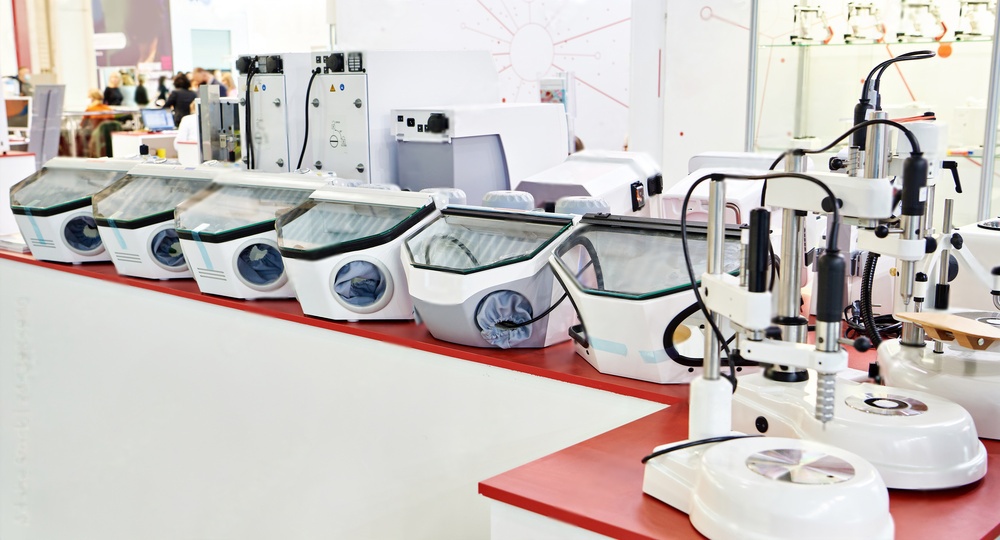
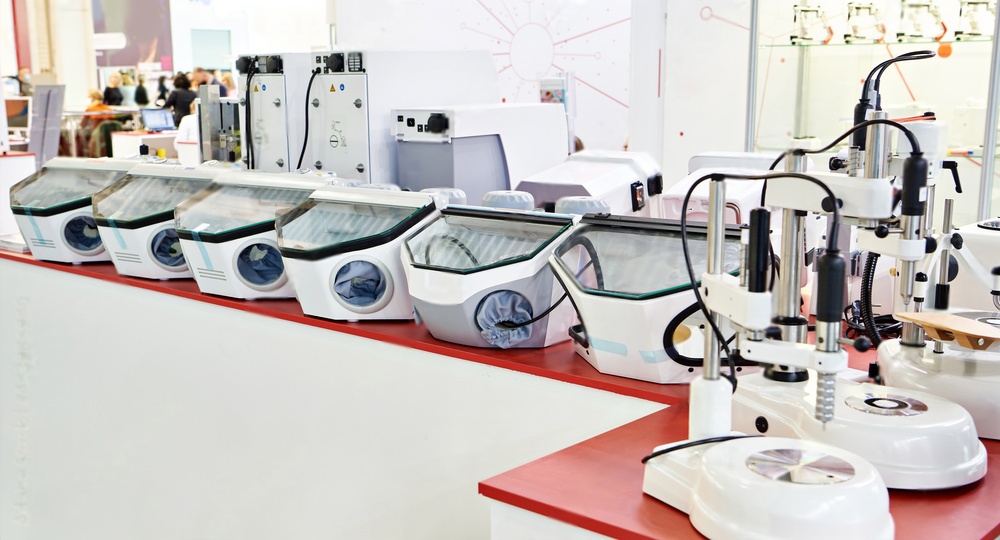
The distinction between chairside and laboratory sandblasters goes beyond cosmetic packaging differences. Understanding these distinctions prevents buying a unit that is poorly suited to your primary use case.
Clinical Units
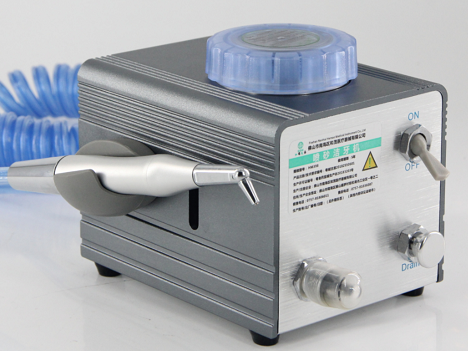
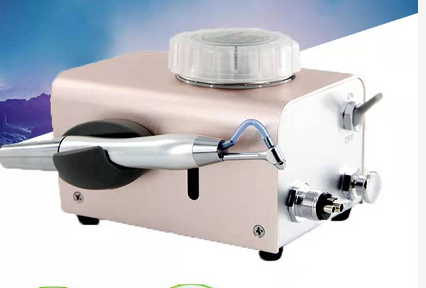
- Compact, handpiece-style designs for intraoral access
- Lower pressure ranges to protect enamel and soft tissue
- Integrated suction for particle recovery during treatment
- Autoclavable handpiece components for infection control
Laboratory Units
- Enclosed blast chambers with viewing windows
- Higher maximum pressure for aggressive surface conditioning
- Larger media tanks for extended operation
- Glove ports for operator hand protection
- Built-in lighting for visibility inside the chamber
Many practices benefit from having one of each type. The clinical unit handles chairside bonding preparation and prophylaxis, while the laboratory unit manages framework conditioning and implant component cleaning. If you are also using diamond dental burs for preparation work, a sandblaster adds a complementary surface conditioning step that improves bonding reliability.
Maintenance and Longevity
Sandblasters require regular maintenance to perform consistently. Neglecting upkeep leads to clogged nozzles, reduced pressure, and eventual component failure. Build these tasks into your maintenance schedule.
- Purge the air line and media pathways after each session to prevent blockages
- Replace nozzle tips at the manufacturer's recommended intervals or when the blast pattern becomes visibly irregular
- Inspect and replace filters monthly for high-use units, quarterly for lighter use
- Empty and clean the media tank periodically to remove fine dust and clumped particles
- Check the air compressor moisture trap, since water in the air supply degrades performance
Budget and Value Assessment
Entry-level dental sandblasters start around two hundred dollars for basic handheld units, while full-featured laboratory systems with enclosed chambers and digital pressure controls can exceed two thousand dollars. The right budget depends entirely on your intended use frequency and applications.
For a general practice performing occasional bonding preparation and prophylaxis, a mid-range clinical unit with adjustable pressure and interchangeable tips offers the best value. High-volume prosthetics labs that process dozens of frameworks daily should invest in a commercial-grade benchtop unit with large media capacity, precise pressure control, and durable tungsten carbide nozzles. Read more about air-driven dental burs for related equipment selection guidance.
Final Recommendations
Before committing to a purchase, request a hands-on demonstration with your preferred abrasive media. Evaluate the blast pattern uniformity, pressure consistency, noise level, and suction effectiveness under realistic conditions. Check that replacement nozzles, filters, and seals are stocked by your local dental supplier to avoid downtime waiting for parts.
A well-chosen sandblaster will serve your practice or lab for years with minimal fuss. The initial research and careful feature comparison pays off every time the unit performs exactly as expected during a time-sensitive procedure.