Diamond burs represent one of dentistry's most remarkable tools. These small instruments, often no larger than a grain of rice, possess the hardness needed to cut through enamel, the hardest substance in the human body. Understanding how they're made, how they work, and how to use them properly will help you select the right bur for each procedure and extend their working life.
The Science Behind Diamond Burs
Diamond burs earn their name from the industrial diamonds bonded to their surface. These aren't gemstones but synthetic diamonds manufactured specifically for cutting applications. Diamond ranks 10 on the Mohs hardness scale, making it the hardest naturally occurring material. This extreme hardness allows diamond burs to cut through dental hard tissues that would quickly dull other materials.
The cutting mechanism differs from carbide burs. While carbide burs use sharp blades to shave material away, diamond burs work through abrasion. Thousands of tiny diamond particles act like miniature chisels, grinding away material with each rotation. A single diamond bur may have tens of thousands of diamond particles bonded to its working surface. When the handpiece spins at 300,000 to 400,000 rpm, these particles make millions of contacts per second, efficiently removing tooth structure or restorative materials.
Manufacturing Process: From Powder to Precision Instrument
Creating diamond burs involves several precise steps. The process begins with the stainless steel blank, machined to the desired shape. Manufacturers produce hundreds of different geometries, from simple round shapes to complex flame or needle configurations.
Diamond particles come in carefully graded sizes. Manufacturers sieve synthetic diamond powder to separate particles into precise size ranges. The particles are then combined with a bonding matrix, typically nickel or other metal alloys.
Two main bonding methods exist: electroplating and sintering. Electroplated burs deposit a single layer of diamonds onto the steel blank through an electrochemical process. Sintered burs use heat and pressure to fuse multiple layers of diamonds and bonding material, creating a thicker, more durable coating. After bonding, quality control measures verify diamond distribution, adhesion strength, and dimensional accuracy.
Understanding Diamond Grit Classifications
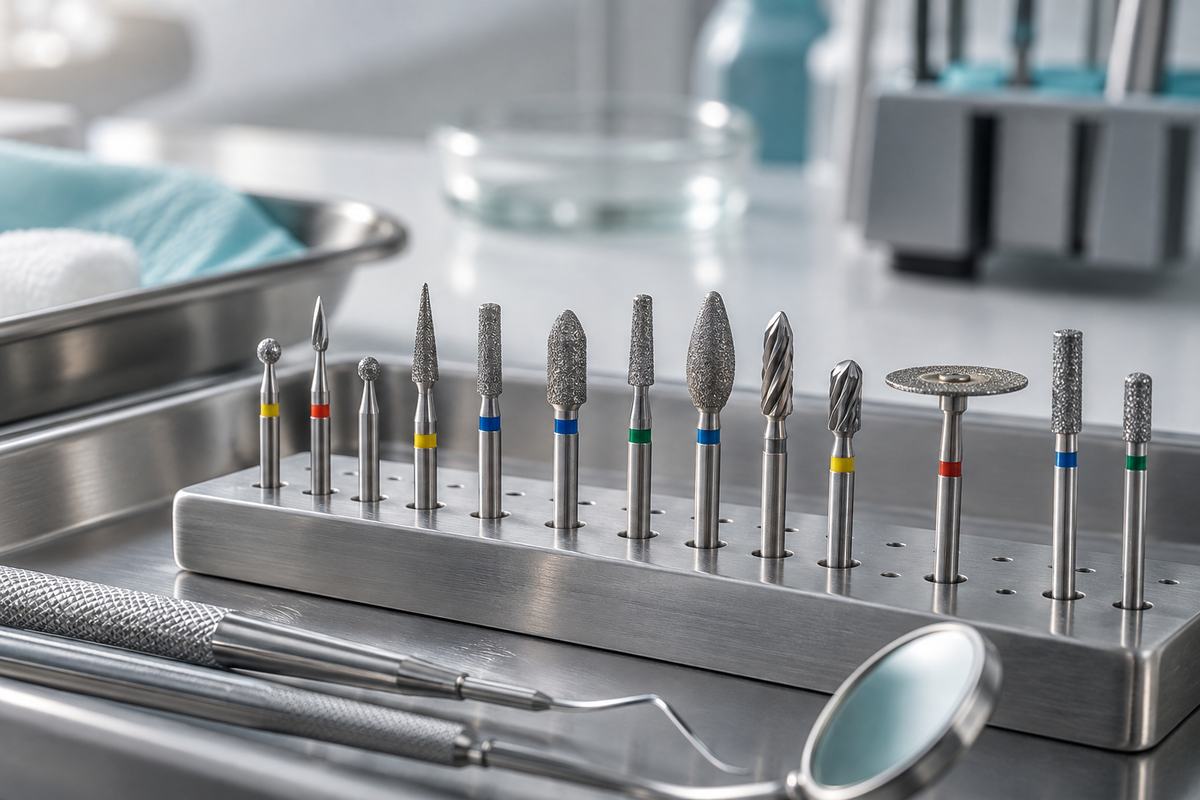
Diamond burs come in different grit sizes, typically indicated by color coding on the shank. Understanding these classifications helps you select the appropriate bur for each clinical situation:
| Grit Type | Color Code | Particle Size | Best Applications |
|---|---|---|---|
| Super Coarse | Green | 150-180 microns | Rapid reduction of tooth structure, crown preparation |
| Coarse | Blue | 125-150 microns | Bulk reduction, cavity preparation |
| Medium | Red | 106-125 microns | General preparation, refinement |
| Fine | Yellow | 54-78 microns | Finishing margins, smoothing preparations |
| Extra Fine | White | 25-40 microns | Final finish, polishing restorations |
Selecting the correct grit requires balancing efficiency with surface finish. Coarser grits remove material faster but leave rougher surfaces. Finer grits produce smoother finishes but require more time for bulk reduction. Most procedures benefit from a multi-step approach, starting with coarser grits for efficiency and finishing with finer grits for surface quality.
Common Diamond Bur Shapes and Their Applications
Diamond burs come in dozens of shapes, each designed for specific clinical tasks. Understanding the purpose of common shapes helps you select the most efficient tool:
Round (001-010): These spherical burs excel at cavity preparation, creating retention features, and opening access cavities in endodontics. Larger rounds efficiently remove carious dentin, while smaller sizes precisely shape internal cavity features.
Flame (862, 868): The flame shape works well for interproximal reduction during crown preparation. The tapered design allows access to tight contacts while the shoulder creates defined margins.
Tapered Cylinder (856, 878): These burs create parallel walls needed for crown preparations requiring retention and resistance form. The straight sides produce vertical walls, while the rounded end prevents sharp internal line angles.
Needle (859): The long, slender profile reaches into narrow spaces where other burs can't fit. Needle burs work well for refining proximal boxes and creating precise retention features.
Wheel (918): Thin wheel burs efficiently perform occlusal reduction and create depth cuts for inlays and onlays. The large cutting surface removes material quickly while maintaining a flat plane.
Football (856-016): The pointed oval shape works well for occlusal reduction in posterior teeth. Footballs efficiently reduce cusp height while preventing sharp corners or angles in the preparation.
Material Compatibility and Clinical Applications
Diamond burs cut virtually all dental materials, but efficiency varies based on material hardness:
Natural tooth structure: Diamond burs cut enamel and dentin efficiently. Use coarser grits for rapid reduction and finer grits for finishing margins. The abrasive action creates a slightly rougher surface than carbide burs, which some practitioners prefer for bonding procedures.
Porcelain and ceramics: Diamond burs are essential for adjusting ceramic restorations. Carbide burs quickly dull on these hard materials, but diamonds maintain cutting efficiency. Use water coolant generously when working with ceramics to prevent heat damage and extend bur life.
Zirconia: High-strength ceramics like zirconia require diamond burs for any adjustments. The extreme hardness of zirconia destroys carbide burs almost immediately. Use coarse to medium diamond grits for efficient material removal, followed by specialized diamond polishers to restore surface glaze.
Composite resins: While diamond burs cut composites, carbide finishing burs often work better for composite contouring. The abrasive action of diamonds can smear resin rather than cleanly cutting it.
Metal restorations: Diamond burs can cut through metal crowns and fillings but wear quickly on these tough materials. Reserve older, partially worn burs for metal removal rather than using new burs.
Proper Speed, Pressure, and Technique
Operating diamond burs at correct speeds and with appropriate pressure maximizes efficiency and lifespan. Most diamond burs perform optimally at high speeds between 300,000 and 400,000 rpm. This speed range keeps the cutting action smooth and efficient.
Pressure represents the most common technique error. Many practitioners apply too much pressure, thinking it will speed up cutting. Excessive pressure actually decreases efficiency by preventing individual diamond particles from engaging properly. Use a light, consistent touch and let the bur do the work. The optimal pressure feels like you're barely touching the tooth.
Maintain constant motion during cutting. Staying in one spot concentrates heat, potentially damaging the pulp or creating thermal cracks in ceramic restorations. Use overlapping strokes to create smooth, even surfaces.
Always use adequate water coolant. Water cools the tooth and bur, flushes away debris that could clog the diamond coating, and provides visibility by keeping the field clean. Insufficient water leads to overheating, reduced cutting efficiency, and shortened bur life.
Maintenance and Sterilization
Proper maintenance between uses significantly extends diamond bur working life. After each use, clean burs promptly to prevent debris from hardening in the diamond coating. Ultrasonic cleaning works well for removing blood, saliva, and tooth debris from between diamond particles.
Use enzymatic cleaners designed for dental instruments. These solutions break down organic debris without damaging the diamond coating or metal bonding matrix. Avoid harsh alkaline cleaners that can degrade the bonding material over time.
Sterilization methods suitable for diamond burs include autoclaving, chemiclave, and dry heat. Most modern burs tolerate repeated autoclave cycles without degradation. Follow the manufacturer's recommendations for maximum temperature and pressure.
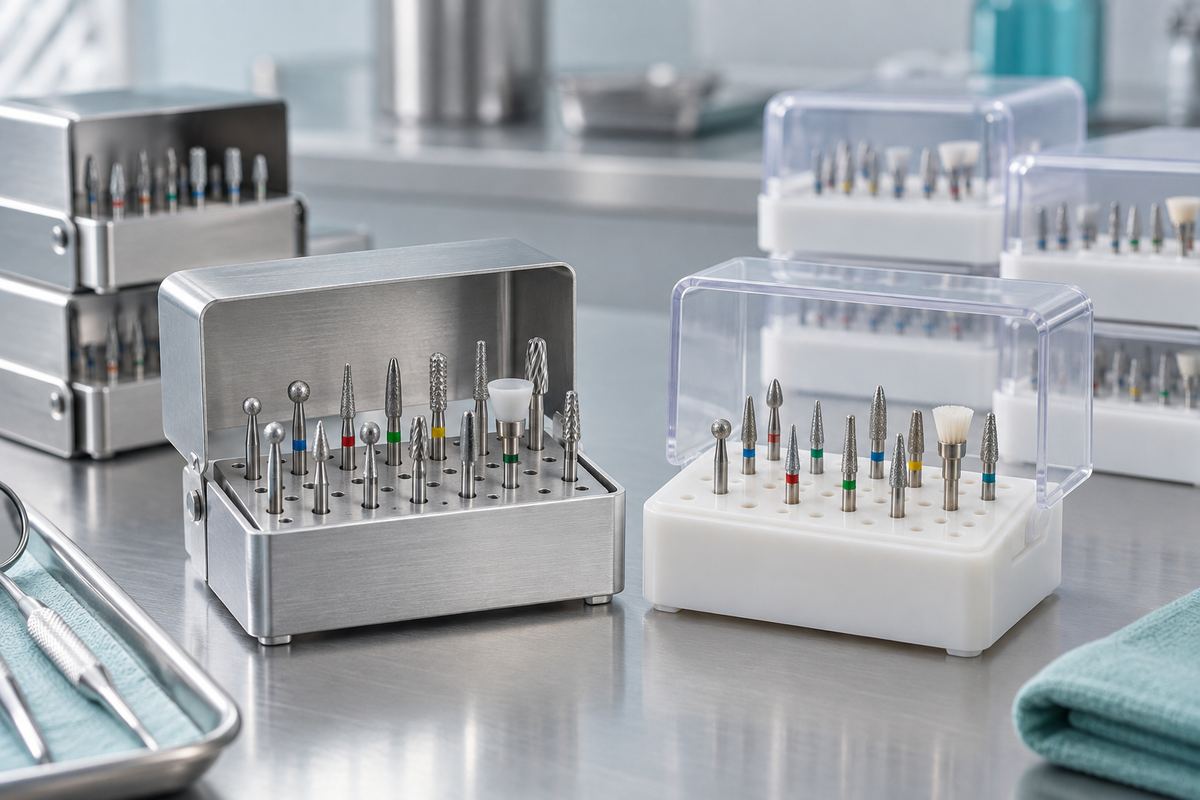
Store burs properly to prevent damage. Bur blocks protect the delicate diamond coating from impacts that could dislodge particles. Organize burs by shape and grit to quickly find what you need during procedures.
Recognizing When Replacement Is Needed
Even with proper care, diamond burs eventually wear out. Recognizing the signs of a worn bur prevents inefficient cutting and potential tooth damage:
- Reduced cutting efficiency: If you find yourself pressing harder to achieve the same cutting speed, the diamonds have likely worn smooth.
- Increased heat generation: Worn burs create more friction, producing excessive heat even with light pressure and adequate water.
- Shiny appearance: Fresh diamond burs look matte or frosted. When they develop a shiny, smooth appearance, the diamond particles have worn down to the bonding matrix.
- Visible steel substrate: If you can see silver steel showing through the coating, the diamond layer has worn through completely.
- Chattering or vibration: Uneven diamond wear can cause vibration during use, creating rough surfaces and uncomfortable tactile feedback.
Track bur usage to establish replacement schedules based on your practice patterns. Some high-volume practices replace burs after a set number of uses rather than waiting for obvious wear. Consider the cost-benefit analysis: using a worn bur for one more procedure might save a few dollars, but the extra time, increased pressure, and heat generation cost more in the long run.
Electroplated vs. Sintered Diamond Burs
Understanding the difference between electroplated and sintered burs helps you select the best option for specific applications:
Electroplated burs feature a single layer of diamonds bonded to the steel blank. They typically cost less and provide very aggressive initial cutting. However, once the single diamond layer wears away, the bur is finished. These work well for procedures where you need maximum aggression for a limited number of uses.
Sintered burs incorporate multiple layers of diamonds throughout a thicker bonding matrix. As the surface layer wears away, fresh diamonds continue to be exposed, maintaining cutting efficiency longer. Sintered burs cost more initially but provide extended working life, making them more economical for routine procedures. For more information on the advantages of each type, see our comparison guide on sintered versus electroplated burs.
Building Your Diamond Bur Inventory
Stocking the right selection of diamond dental burs ensures you're prepared for diverse clinical situations. Start with commonly used shapes in medium grit, then add coarse and fine versions of those same shapes. Round, flame, and tapered cylinder burs handle the majority of general dentistry procedures.
Add specialty shapes as your practice needs dictate. Endodontists need access cavity burs, prosthodontists require margin finishing burs, and cosmetic practitioners benefit from specialized veneer preparation burs. Build your inventory gradually based on actual usage patterns rather than buying complete sets that include rarely used sizes.
Consider maintaining separate inventories for natural teeth and restorative materials. Using the same burs on hard ceramics and soft dentin results in uneven wear and reduced efficiency. Reserve specific burs for porcelain adjustment to maximize their working life on this demanding material.
Making the Most of These Mighty Tools
Diamond burs may be small, but their impact on modern dentistry is enormous. These precision instruments make possible procedures that would have been extremely difficult or impossible with earlier technology. The ability to efficiently cut enamel, adjust ceramic restorations, and create precise preparation geometries has expanded treatment options and improved outcomes.
Success with diamond burs requires understanding their construction, selecting appropriate grits and shapes, using proper technique, and maintaining them correctly. Master these fundamentals, and you'll appreciate why these tiny tools truly possess superhuman strength. Their combination of hardness, precision, and versatility makes them indispensable in contemporary dental practice.