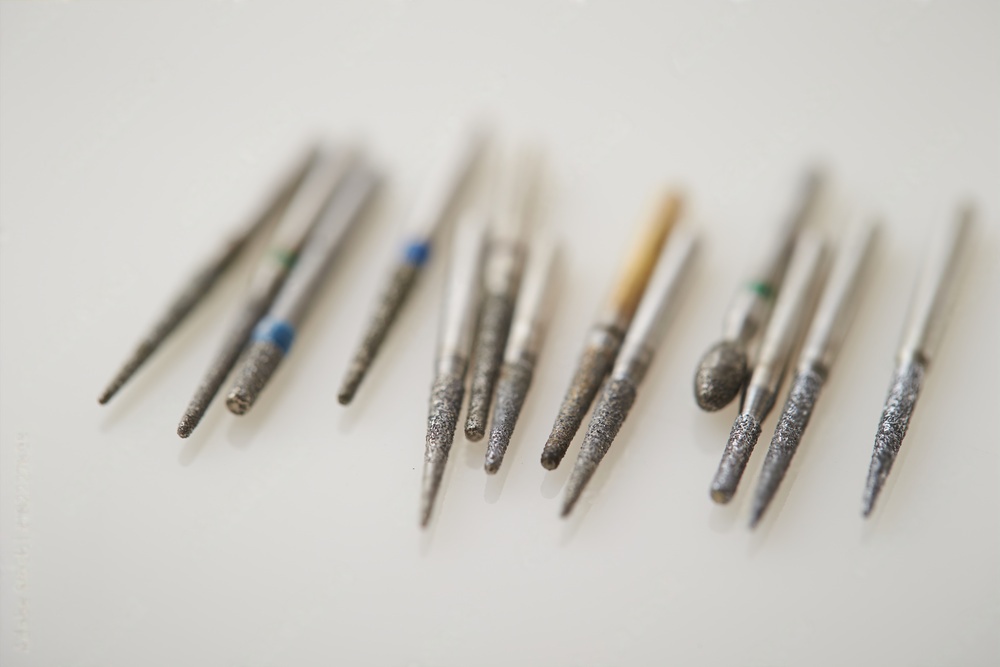
Diamond coated dental burs have become a preferred instrument in modern restorative and prosthetic dentistry. Their performance advantages over traditional carbide burs are well documented in both clinical research and day-to-day practice. This article examines seven specific benefits of diamond coated burs, explains the science behind each one, and offers practical guidance on selecting the right diamond bur for common procedures.
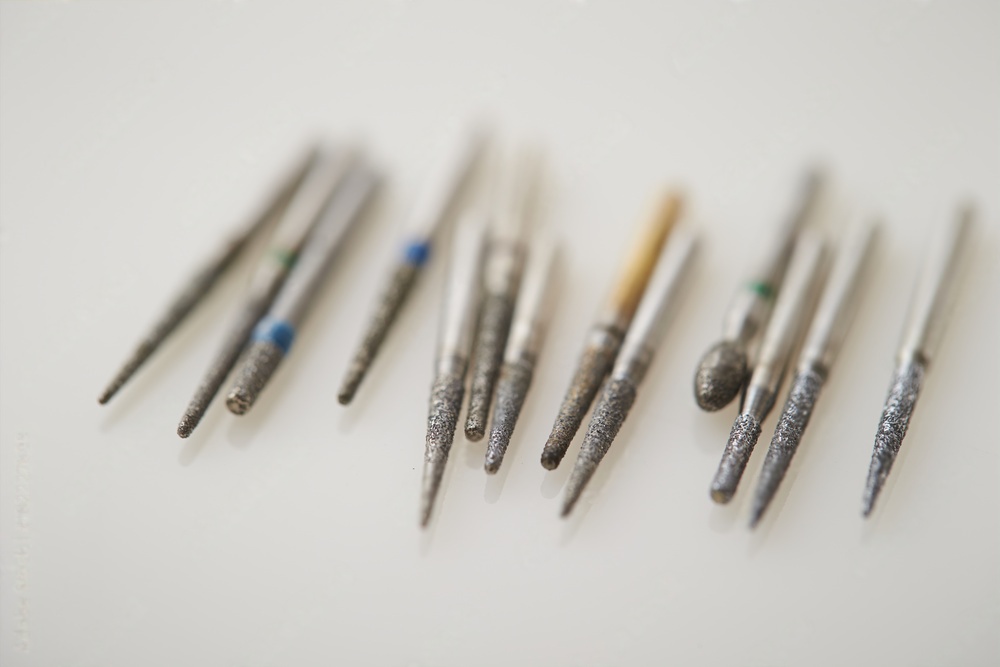
How Diamond Coated Burs Are Made
A diamond coated bur starts with a stainless-steel or nickel-alloy shank. Industrial diamond particles — graded by micron size — are bonded to the working head using one of two methods:
- Electroplated (single-layer) — Diamond grit is fixed to the shank with a nickel electroplate. This method produces aggressive initial cutting and is the most common type in clinical dentistry.
- Sintered (multi-layer) — Diamond particles are embedded throughout a metal matrix. As the surface layer wears, fresh diamond is exposed, giving the bur a longer total lifespan. Sintered burs are often used in laboratory work.
For a detailed comparison of these two manufacturing approaches, see our article on sintered vs. electroplated diamond burs.
Advantage 1 — Extended Lifespan
Diamond is the hardest natural material, rating 10 on the Mohs scale. When bonded to a bur head, diamond grit maintains its cutting edges far longer than tungsten carbide flutes. Independent laboratory testing shows diamond coated burs retain effective cutting ability five to ten times longer than comparable carbide burs under controlled conditions.
That extended lifespan means fewer mid-procedure bur changes, lower inventory costs, and more consistent cutting behavior from the first tooth to the last in a full-arch case.
Cost Per Procedure
Although diamond burs carry a higher unit price, the per-procedure cost is often lower because each bur serves more cases before replacement. Practices that track instrument costs per procedure frequently find the switch to diamond pays for itself within the first quarter.
Advantage 2 — Superior Cutting Precision
The microscopic diamond particles on the bur surface create thousands of tiny cutting points rather than the limited number of flutes on a carbide bur. This produces a finer, more predictable cut with less chatter. Published research has measured nearly 50 percent higher dimensional accuracy in preparations made with diamond burs compared to carbide burs of the same shape and grit.
That precision matters most in procedures where margin fit determines long-term success, including ceramic crown preparations, veneer preparations, and inlay or onlay seat refinements.
Advantage 3 — Efficient Removal of Hard Tissue
Enamel and dentin are tough substrates. Diamond coated burs cut through these materials with noticeably less operator effort than carbide alternatives. The abrasive nature of the diamond surface means the bur grinds rather than shears the tooth structure, which requires less applied pressure and reduces the risk of micro-fractures in the remaining tooth.
Working With Ceramics and Composites
Diamond burs are also the instrument of choice when adjusting porcelain crowns, lithium disilicate restorations, or zirconia frameworks chairside. The hardness of diamond ensures clean material removal without glazing or smearing the ceramic surface. Browse our range of diamond dental burs for options suited to both natural tooth and ceramic work.
Advantage 4 — Reduced Heat Generation
Heat during tooth preparation is a direct threat to pulp vitality. Diamond coated burs generate less frictional heat than carbide burs for two reasons:
- The abrasive cutting action requires less applied force, reducing contact pressure and therefore friction.
- The open structure of the diamond grit allows coolant water to reach the cutting interface more effectively.
Lower heat means a wider safety margin when preparing close to the pulp chamber, and less post-operative sensitivity for the patient.
Advantage 5 — Reduced Vibration
Vibration during cutting contributes to patient discomfort and can cause micro-cracks in brittle tooth structure or restorative materials. Because diamond burs grind with thousands of small contact points rather than a few large flutes, the vibration amplitude is significantly lower.
This characteristic is especially valuable when working on teeth with existing restorations, endodontically treated teeth, or teeth weakened by large carious lesions. Lower vibration also reduces operator hand fatigue during long procedures.
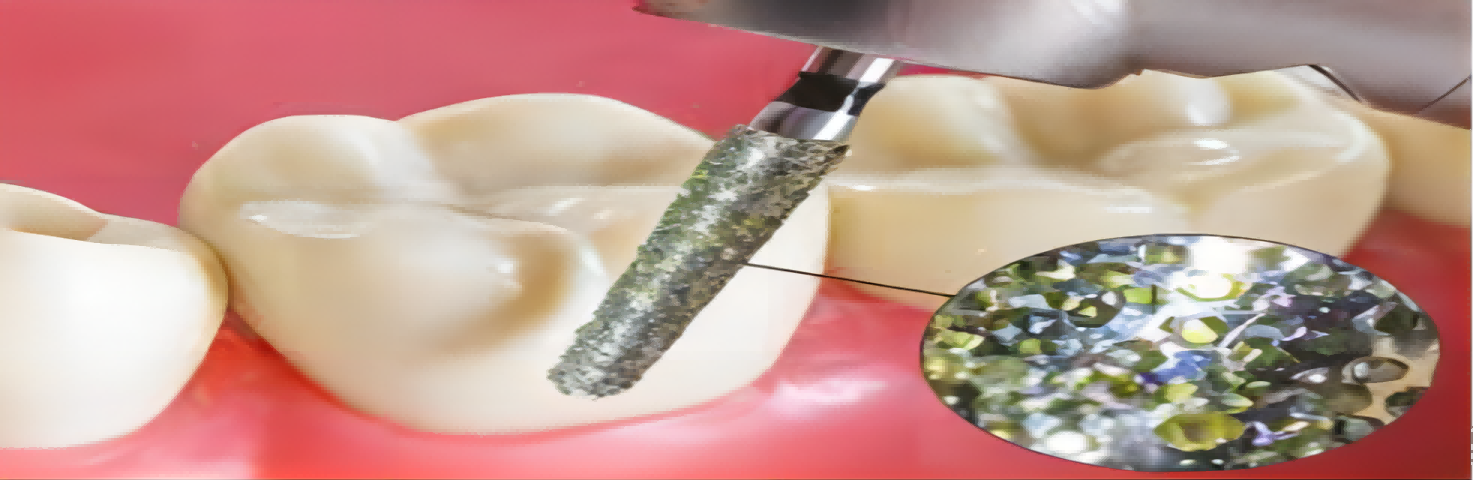
Advantage 6 — Versatile Grit Options
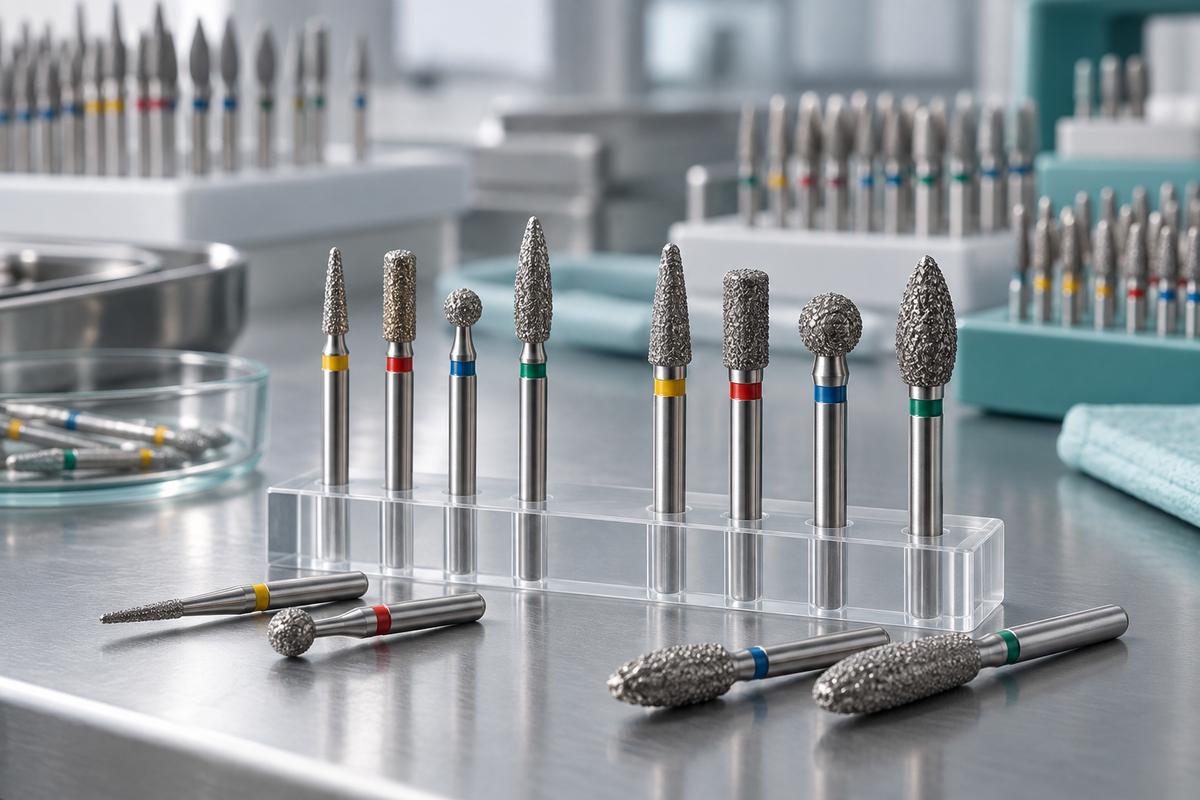
Diamond burs are manufactured in a range of grit sizes, each matched to a specific clinical task:
| Grit Grade | Color Band | Particle Size (microns) | Typical Use |
|---|---|---|---|
| Super coarse | Black | 150–180 | Bulk reduction, crown removal |
| Coarse | Green | 125–150 | Initial preparation |
| Medium | Blue (no band) | 100–120 | General-purpose cutting |
| Fine | Red | 45–50 | Margin finishing |
| Superfine | Yellow | 20–30 | Pre-polish smoothing |
Using progressively finer grits in sequence — a technique sometimes called staged preparation — produces margin quality that rivals hand finishing with discs or strips. For more on finishing workflows, read our guide to finishing burs and polishing techniques.
Advantage 7 — Improved Patient Experience
Patients notice the difference. The combination of less vibration, less noise, and shorter procedure times translates to reduced anxiety and better cooperation, particularly in pediatric and anxious adult patients. When patients associate your practice with comfortable treatment, recall compliance and referrals tend to increase.
Chairside Efficiency Gains
Beyond the patient perspective, diamond burs also improve the clinician's workflow. Fewer bur changes per procedure mean less interruption and faster case completion. When a single diamond bur can handle an entire crown preparation without losing cutting effectiveness, the time saved per case adds up across a full schedule. Over a typical eight-hour clinical day, that efficiency gain can free up enough time for one additional short appointment.
Choosing the Right Diamond Bur
Selecting the best diamond bur for a given procedure involves matching three variables:
- Head shape — Round for access, tapered for wall preparation, flame for margin refinement, wheel for shoulder finishing.
- Grit size — Coarser for bulk removal, finer for finishing. Most preparations use at least two grit stages.
- Shank type — FG (friction grip) for high-speed handpieces, RA (right angle) for slow-speed, HP (handpiece) for straight nose cones in the lab.
Explore our complete catalog of diamond dental burs organized by shape, grit, and shank type to find the right match for your clinical workflow.
Care and Maintenance
Diamond burs perform best when kept clean. After each use, remove debris with an ultrasonic cleaner or a dedicated cleaning solution designed for diamond instruments. Avoid using brass-wire brushes on diamond surfaces, as they can dislodge grit particles. Autoclave following the bur manufacturer's instructions, and retire any bur that shows visible diamond loss or reduced cutting efficiency.
Signs a Diamond Bur Needs Replacement
Even the longest-lasting bur eventually wears out. Watch for these indicators that a diamond bur has reached the end of its useful life:
- The bur requires noticeably more pressure to cut at the same speed.
- The preparation surface feels polished rather than textured after cutting.
- Visible bare metal patches appear on the working head where diamond grit has been lost.
- The bur produces more heat than usual, suggesting reduced cutting efficiency and increased friction.
Replacing worn burs promptly protects both preparation quality and patient comfort. Continuing to use a depleted diamond bur forces the clinician to apply extra pressure, which increases heat generation and raises the risk of pulp damage.
Diamond coated dental burs offer a measurable performance upgrade in longevity, precision, heat management, vibration control, and patient comfort. For dental professionals looking to improve preparation quality while reducing per-case costs, diamond burs are a practical and well-proven choice.