Dental lab mounted stones are among the most frequently used rotary instruments in any dental laboratory. Whether you are grinding metal frameworks, smoothing porcelain restorations, or polishing composites, the right mounted stone makes a measurable difference in efficiency and surface quality. This guide explains how to choose the correct mounted stone based on material composition, grit size, shape, and intended application.
What Are Dental Lab Mounted Stones?
Mounted stones — also called mounted grinding stones or mounted point stones — are small abrasive heads permanently bonded to a metal shank. They are manufactured using vitrified or resin-bonded abrasive grains pressed into a specific shape. The shank is typically an HP (handpiece) type designed for low-speed straight handpieces used in dental laboratories.
These instruments serve a range of purposes:
- Rough grinding of metal alloys, ceramics, and composites
- Contouring and shaping restorations
- Smoothing surfaces before final polishing
- Removing excess material from castings
- Fine finishing of porcelain and acrylic
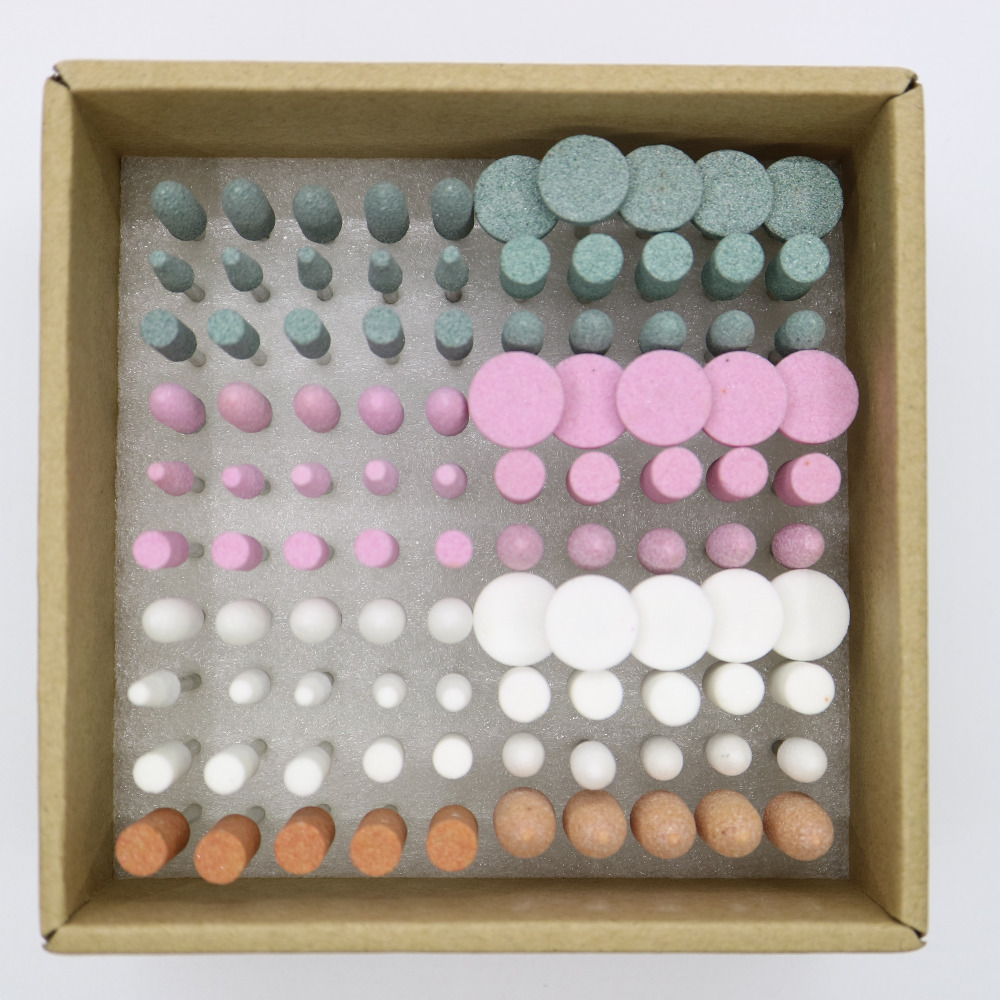
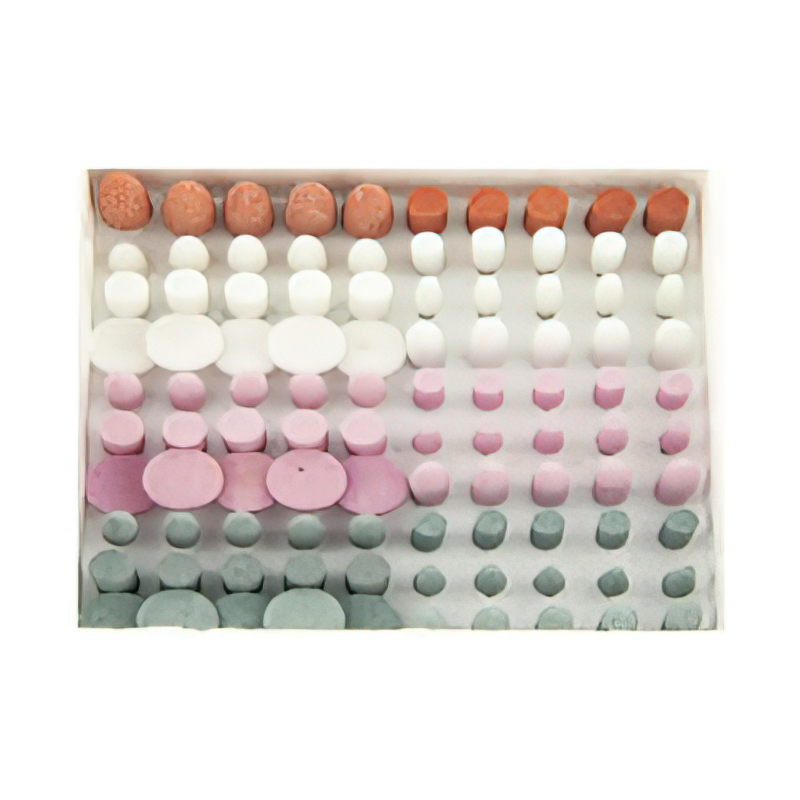
If you use mounted stones regularly, investing in a Mounted Stones Kit provides a cost-effective assortment of shapes and grits for daily lab work.
Key Factors for Choosing Mounted Stones
Selecting the best mounted stone for a given task comes down to three main factors: abrasive material, grit coarseness, and shape. Understanding how these interact will help you pick the right tool every time.
1. Abrasive Material
The two most common abrasive materials in dental lab mounted stones are aluminum oxide and silicon carbide. Each has distinct cutting characteristics:
| Property | Aluminum Oxide (Pink/White) | Silicon Carbide (Green) |
|---|---|---|
| Hardness | Moderate-high | Very high |
| Best for | Alloys, porcelain, precious metals | Ceramics, glass, non-metallic materials |
| Cutting action | Sharp, controlled | Fast, cool-cutting |
| Durability | Good form retention | Excellent wear resistance |
Aluminum oxide is available in different purities, which is why pink and white stones behave differently despite sharing the same base abrasive. Pink stones use a tougher, less pure form that holds its shape well under pressure, while white stones use a higher-purity, more friable form that breaks down more readily to expose fresh cutting edges and produce a finer finish.
2. Grit Size
Grit size determines how aggressively the stone removes material and what surface finish it leaves behind:
- Coarse grit — Rapid stock removal; use for initial shaping and heavy grinding
- Medium grit — Balanced removal and finish; suitable for contouring and moderate grinding
- Fine grit — Minimal removal; ideal for smoothing, pre-polishing, and finishing composites
As a general rule, start with a coarser grit for bulk material removal and step down to finer grits as you approach the final surface. This sequential approach saves time while still delivering a quality finish. Many technicians keep two or three grit levels of the same stone shape on hand so they can move through the sequence without changing instruments.
3. Shape Selection
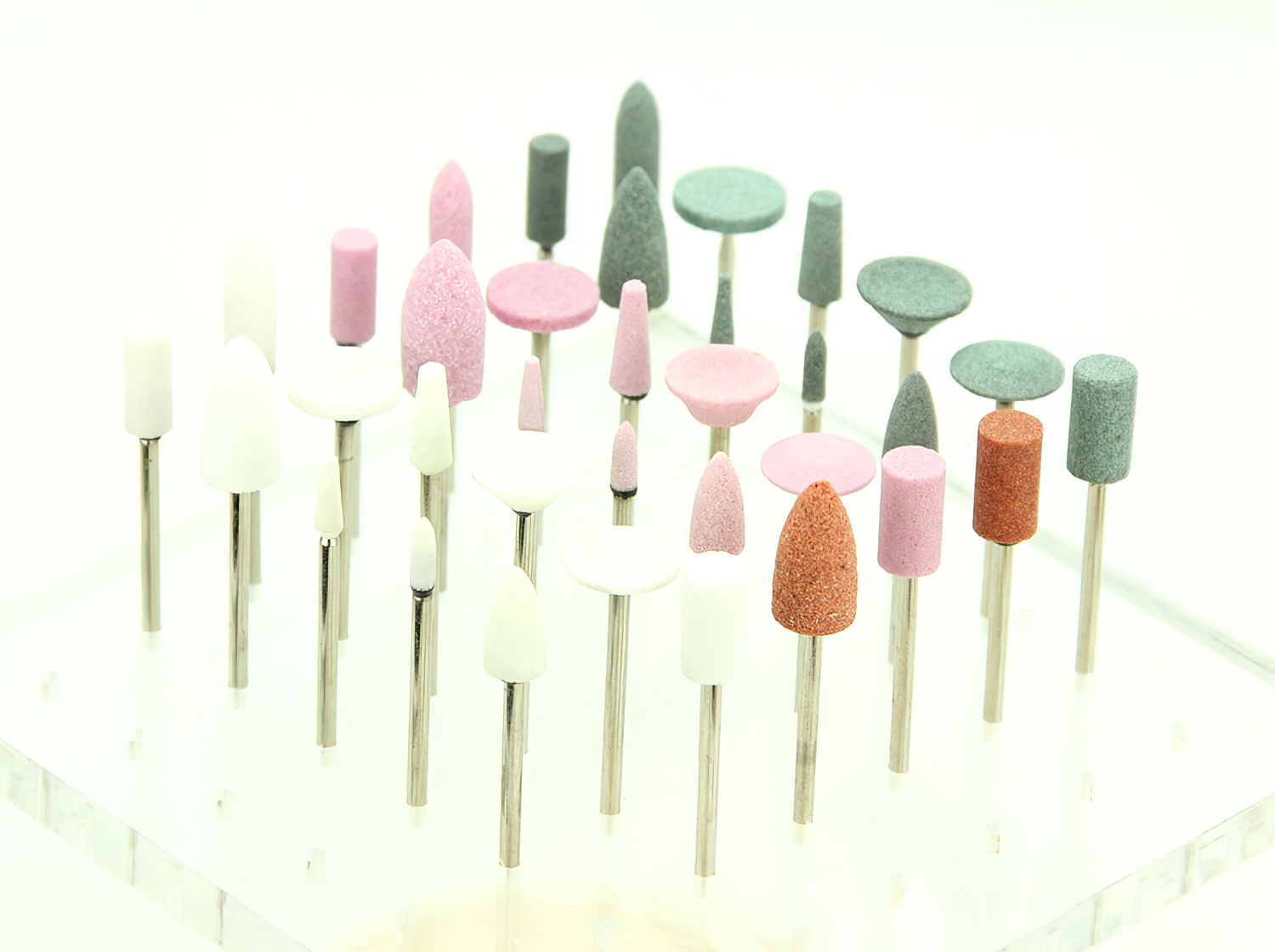
Mounted stones come in dozens of profiles. The most commonly used shapes in dental labs include:
- Cylinder — Flat surface grinding and creating parallel walls
- Taper / Cone — Reaching into angles, undercuts, and narrow spaces
- Flame — Finishing concave areas and refining contours
- Ball / Round — Hollowing, concavity work, and internal grinding
- Wheel — Groove cutting and flat surface preparation
- Inverted cone — Undercut preparation and creating mechanical retention
The shape you select should match the geometry of the area you need to work on. Trying to use a cylinder stone in a concave region, for instance, will produce flat spots and uneven surfaces. Taking a moment to select the right profile before starting will improve both the speed and quality of your results.
Mounted Stone Types by Color
In practice, dental technicians identify mounted stones by color. Each color corresponds to a specific abrasive composition and intended use case. All three types listed below are available in our mounted and diamond stones product range.
Pink Mounted Stones (Aluminum Oxide, Medium Grit)
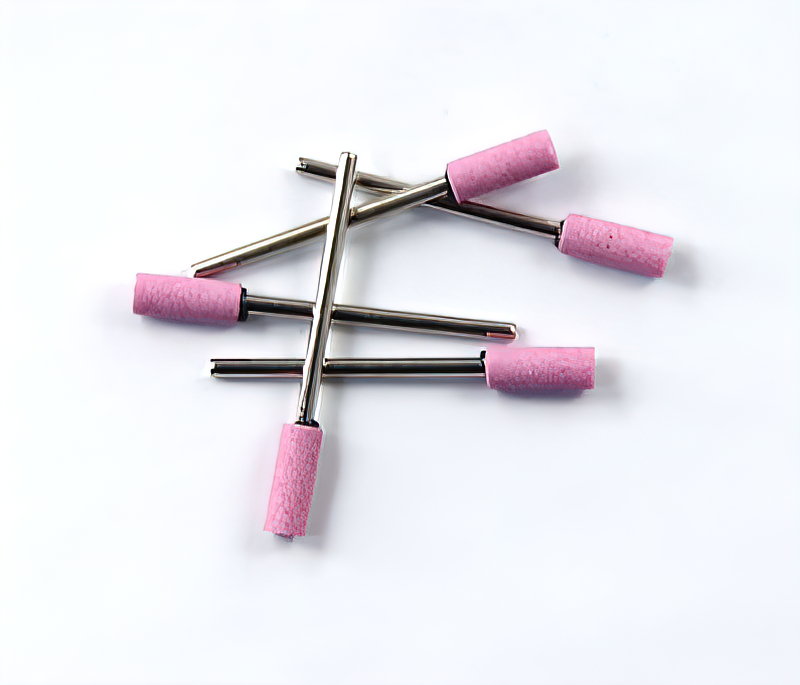
HP Pink Mounted Stones are the workhorse of most dental laboratories. Made from aluminum oxide with a medium grit, they offer a good balance between cutting speed and surface quality.
Primary applications:
- Light grinding and polishing of alloys and porcelain
- Adjusting precious and semi-precious metal frameworks
- Contouring ceramic alloy restorations
- General-purpose shaping on a variety of steels and alloys
Pink stones are valued for their sharp cutting action combined with excellent form retention. They stay true to their original shape longer than many alternatives, which reduces the need for frequent replacement and delivers consistent results across multiple uses. They also run cool, minimizing heat buildup during extended grinding sessions.
White Mounted Stones (Aluminum Oxide, Fine Grit)
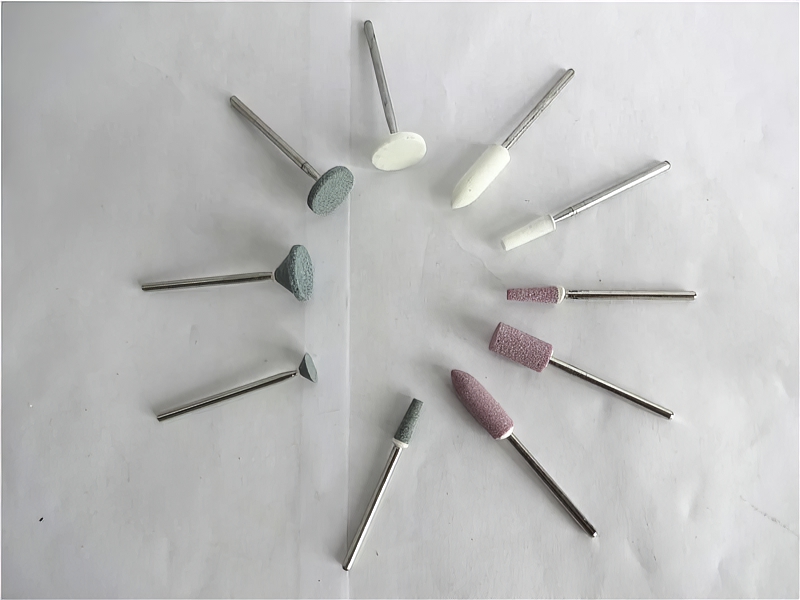
HP White Mounted Stones are composed of fine-grit aluminum oxide. Their finer abrasive particle size makes them the preferred choice when a smoother finish matters more than cutting speed.
Primary applications:
- Grinding and polishing composites and filler materials
- Metal removal on base metal alloys without contamination of non-precious surfaces
- Carving in woodwork (jewelry and craft applications)
- Glass engraving and stone or ceramic carving
White stones are particularly useful when working with non-precious metals, because they do not leave residue that could contaminate the restoration surface. They are also the preferred choice for pre-polishing steps, where a smooth baseline surface is needed before moving on to rubber wheels or polishing pastes.
Green Mounted Stones (Silicon Carbide)
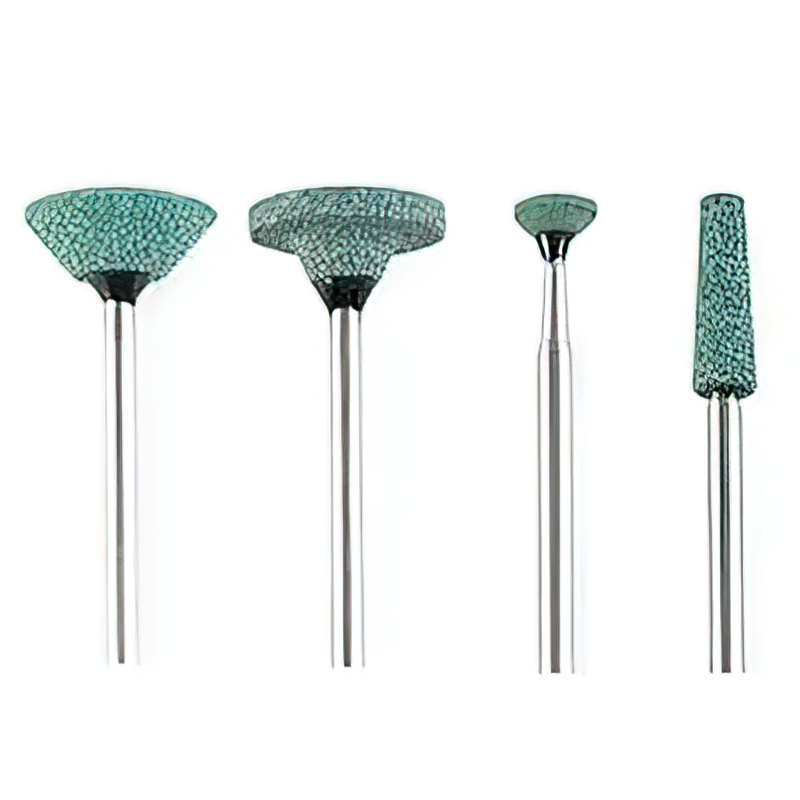
HP Green Mounted Stones are manufactured from high-quality silicon carbide grit. They are the hardest of the three common types and are known for fast, cool-cutting performance.
Primary applications:
- Smoothing and finishing ceramic surfaces
- Grinding glass, porcelain, and non-metallic restorations
- Working with zirconia and lithium disilicate materials
- Rapid material removal where heat control is a priority
The recommended operating speed for green mounted stones is 20,000 to 28,000 RPM. At this range, the silicon carbide grains cut efficiently without excessive heat generation. For more detail on green stone applications, see our guide on green stones in dental use.
Mounted Stones vs. Diamond Stones
Dental labs often stock both mounted stones and diamond stones. How do they compare?
| Feature | Mounted Stones | Diamond Stones |
|---|---|---|
| Abrasive | Aluminum oxide or silicon carbide | Diamond grit |
| Cutting speed | Moderate | Fast |
| Cost | Lower | Higher |
| Lifespan | Moderate (wears down with use) | Long-lasting |
| Best for | General grinding and finishing | Hard ceramics, zirconia, precise adjustments |
For most routine lab grinding, mounted stones are the practical and economical choice. Diamond stones excel when you need to work on very hard materials or require precise stock removal with minimal surface damage. Many technicians keep both types on hand and switch depending on the material. You can learn more about abrasive instrument selection in our mounted stones overview.
Best Practices for Using Mounted Stones
Getting the most out of your mounted stones requires attention to technique and maintenance:
- Match the stone to the material. Use pink for alloys and porcelain, white for composites and fine finishing, and green for ceramics and glass.
- Use appropriate speed. Follow the manufacturer's recommended RPM range. Running too fast generates excess heat; running too slow reduces cutting efficiency.
- Apply light, consistent pressure. Let the abrasive do the work. Heavy pressure causes premature wear and can overheat the workpiece.
- Keep stones clean. Periodically dress clogged stones with a dressing stick to restore cutting performance.
- Inspect before use. Discard any stone that shows cracks, chips, or excessive wear. A damaged stone can vibrate unpredictably and produce poor results.
- Store properly. Keep mounted stones in an organized kit or tray to prevent damage and make selection faster during procedures.
Summary
Choosing the right dental lab mounted stone depends on three decisions: what material you are working on, how much material you need to remove, and what surface finish you require. Pink aluminum oxide stones handle most alloy and porcelain tasks. White aluminum oxide stones provide finer finishing for composites and non-precious metals. Green silicon carbide stones deliver fast, cool cutting on ceramics and glass. By matching the stone type to the job, you will work faster, produce better restorations, and extend the useful life of your instruments.