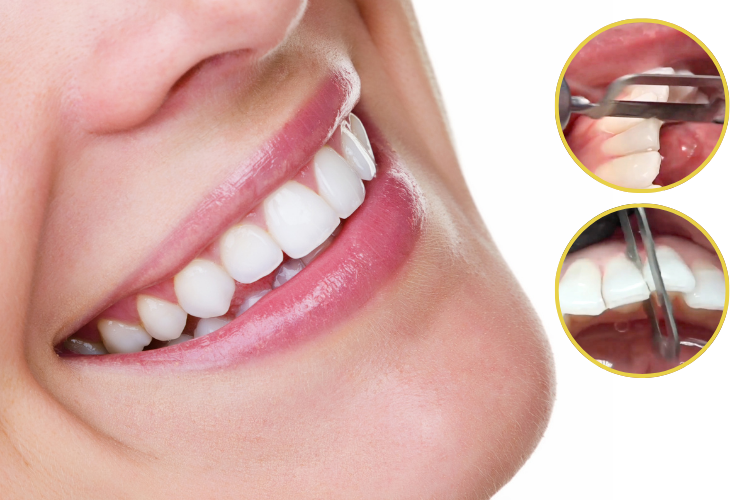
Interproximal reduction (IPR) is a routine orthodontic procedure that removes a thin layer of enamel from between teeth to create space for alignment. It is one of the most widely used methods for treating crowded dentition, particularly with clear aligner therapy. This article explains the IPR process, the instruments involved, clinical guidelines, and the benefits patients can expect.
What Is Interproximal Reduction?
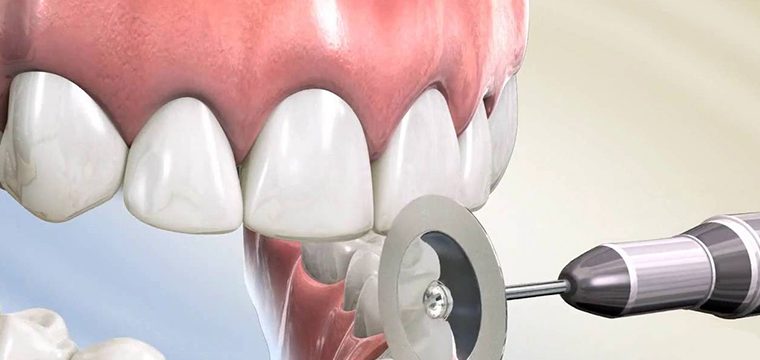
Interproximal reduction — sometimes called tooth slenderizing, enamel stripping, or reproximation — is the controlled mechanical removal of a small amount of enamel from the mesial or distal surfaces of teeth. The goal is to reduce the mesiodistal width of selected teeth by fractions of a millimeter, typically up to 0.5 mm per contact point.
By narrowing individual teeth slightly, the clinician gains the space needed to resolve mild to moderate crowding without extracting teeth. IPR is especially common in Invisalign and other clear aligner treatment plans, where precise space management is built into the digital treatment staging.
How Much Enamel Can Be Removed?
Human enamel on interproximal surfaces averages 0.75 to 1.5 mm in thickness, depending on the tooth. Most treatment plans call for removing between 0.1 and 0.5 mm per surface. This amount is well within safe limits and leaves adequate enamel protection over the dentin layer beneath.
The total space gained across an arch depends on how many teeth receive IPR. For example, performing 0.25 mm of reduction on both mesial and distal surfaces of six anterior teeth can yield up to 3 mm of additional arch space — often enough to resolve anterior crowding without extractions.
The IPR Process Step by Step
Performing interproximal reduction requires careful planning, appropriate instruments, and precise measurement. Here is how the procedure typically unfolds in a clinical setting.
Step 1: Treatment Planning
Before any enamel is removed, the orthodontist or dentist reviews the treatment plan to determine which teeth need reduction and how much enamel should be taken from each contact. Digital treatment planning software calculates these values based on 3D tooth models and the desired final alignment.
Step 2: Instrument Selection
IPR can be performed with several types of instruments, each suited to different clinical situations:
- Diamond dental burs — Thin, tapered burs mounted in a high-speed or slow-speed handpiece. These are efficient for removing larger amounts of enamel quickly. Diamond burs with fine or extra-fine grit are preferred to maintain surface smoothness.
- Abrasive discs — Flexible discs coated with diamond or aluminum oxide particles. They provide good tactile feedback and are effective for moderate reduction. See our polishing discs and brushes guide for related instrument details.
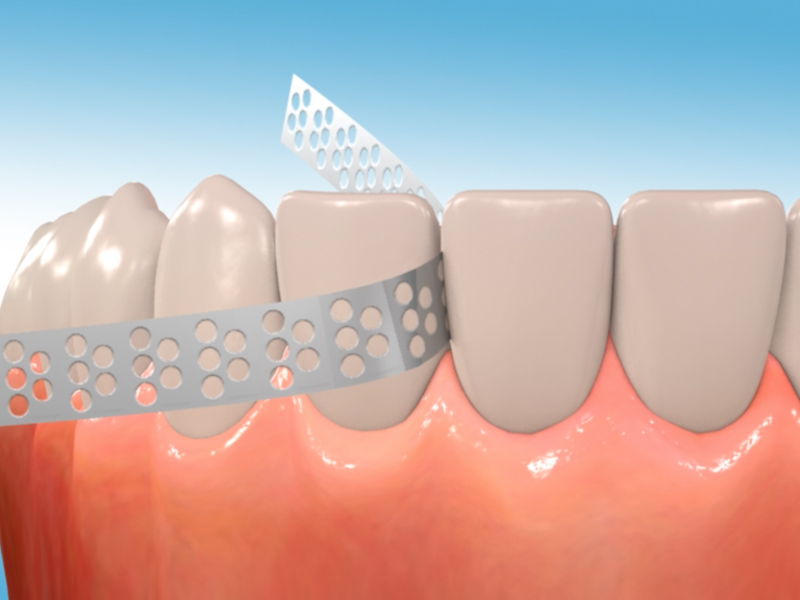
- Hand-held abrasive strips — Thin metal or plastic strips coated with diamond abrasive on one or both sides. They are inserted between teeth and drawn back and forth in a sawing motion. Strips offer the most conservative approach and are ideal for minor adjustments.
- Oscillating IPR systems — Powered reciprocating handpieces with interchangeable diamond-coated attachments. These systems provide controlled, consistent reduction with minimal operator fatigue.
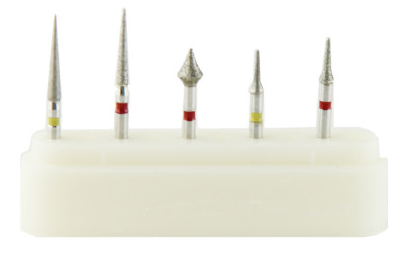
The 1806 Interproximal Enamel Reduction Kit for Ortho includes a selection of diamond burs specifically designed for IPR procedures, with graduated grits for sequential reduction and finishing.
Step 3: Performing the Reduction
With the instrument selected, the clinician positions it at the contact point between the target teeth. For rotary instruments (burs and discs), light lateral pressure guides the instrument along the interproximal surface. For strips, a gentle back-and-forth motion removes enamel gradually.
Key technique considerations include:
- Work slowly and check frequently. Over-reduction cannot be reversed. Remove small increments and measure after each pass.
- Maintain parallelism. The reduction should produce flat, parallel proximal surfaces rather than concave or angled ones.
- Protect adjacent teeth. When reducing only one surface of a contact, use a metal matrix band or strip to shield the neighboring tooth.
- Keep the area wet. Water spray or irrigation prevents heat buildup that could damage the pulp.
Step 4: Measuring the Result
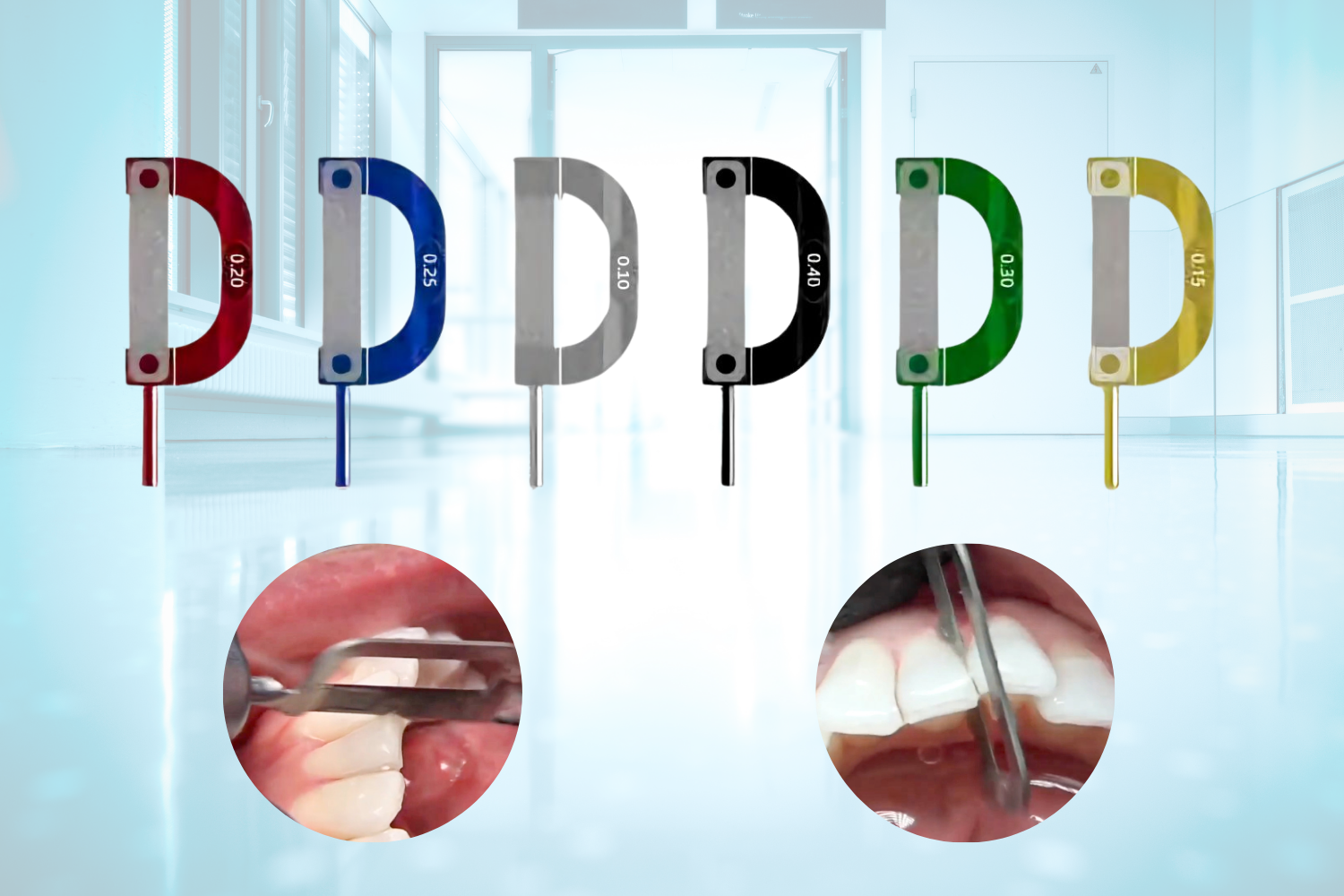
After each pass, the clinician uses an IPR gauge — a thin metal thickness gauge that slides between the teeth — to verify the amount of space created. Accurate measurement ensures the reduction matches the treatment plan precisely.
Step 5: Finishing and Polishing
Once the target reduction is achieved, the interproximal surface must be smoothed and polished. Rough enamel surfaces attract plaque and increase the risk of decay. Fine-grit diamond strips, silicone rubber polishers, or finishing discs are used to create a smooth, polished surface. Topical fluoride is then applied to the reduced surfaces to promote remineralization and strengthen the remaining enamel.
When Is IPR Recommended?
Orthodontists and general dentists use IPR in several clinical scenarios:
| Indication | How IPR Helps |
|---|---|
| Mild to moderate crowding | Creates space to align teeth without extractions |
| Bolton discrepancy | Corrects tooth-size imbalances between upper and lower arches |
| Black triangles | Allows teeth to be repositioned closer together, reducing dark gaps at the gumline |
| Post-orthodontic refinement | Fine-tunes contacts and alignment at the end of treatment |
| Arch form correction | Adjusts individual tooth widths to achieve a harmonious arch shape |
Benefits of Interproximal Reduction
IPR offers several advantages over alternative space-gaining methods such as tooth extraction or arch expansion:
- Preserves natural teeth. No teeth need to be removed to gain the space required for alignment.
- Minimally invasive. Only a thin layer of surface enamel is removed. There is no drilling into dentin or nerve tissue.
- Painless in most cases. Because IPR stays within the enamel layer, most patients do not require anesthesia. Sensitivity during the procedure is uncommon.
- Reduces black triangles. By allowing teeth to sit closer together, IPR minimizes the appearance of dark gaps between teeth at the gum line — a common concern for adult patients.
- Improves long-term stability. Proper tooth contacts after IPR help maintain alignment results, reducing the likelihood of relapse.
- Quick procedure. IPR typically adds only a few minutes to an orthodontic appointment and does not require a separate visit.
Is IPR Safe?
Research consistently shows that interproximal reduction is safe when performed within established guidelines. Studies have found no increased risk of caries, pulpal damage, or periodontal problems in teeth that undergo controlled IPR.
The key safety factors are:
- Removing no more than the planned amount of enamel per surface
- Polishing and applying fluoride after the procedure
- Avoiding IPR on teeth with existing interproximal decay or very thin enamel
IPR is generally not recommended for patients with poor oral hygiene, very thin interproximal enamel, or rectangular tooth morphology where even small reductions could compromise structural integrity.
IPR Tools and Kits
Having the right instruments is essential for controlled, efficient IPR. The most commonly used tools include:
- Fine-grit diamond burs (FG or RA shank) for powered reduction — browse our clinic kits for IPR-ready sets
- Single-sided and double-sided diamond strips for manual reduction
- IPR thickness gauges for measuring the space created
- Finishing and polishing strips for smoothing reduced surfaces
For a detailed look at how different dental bur types apply to orthodontic and restorative procedures, see our IPR kits guide.
Summary
Interproximal reduction is a safe, effective, and minimally invasive method for creating space in crowded dental arches. By removing small, controlled amounts of enamel between teeth, clinicians can achieve alignment without extractions. With proper instrument selection, careful technique, and thorough finishing, IPR delivers predictable results and high patient satisfaction across a wide range of orthodontic cases.