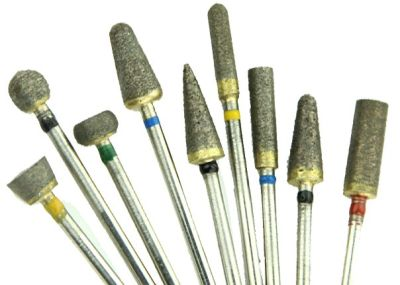
Ceramic restorations such as zirconia and lithium disilicate are among the hardest materials a dentist or lab technician will encounter. Standard carbide or electroplated diamond burs often fall short when tasked with sectioning or adjusting these restorations. Sintered diamond burs offer a practical solution: their construction embeds diamond particles throughout the bur body, providing consistent cutting performance that lasts far longer than surface-coated alternatives.
This guide explains how sintered diamond burs work, which shapes and grits to choose, and the techniques that produce clean, accurate cuts on modern ceramic materials.
What Makes Sintered Diamond Burs Different
Unlike electroplated diamond burs, which bond a single layer of diamond grit to a metal shank, sintered burs are manufactured by fusing diamond particles with a metal matrix under extreme heat and pressure. The result is a tool where fresh diamond crystals are continuously exposed as the outer layer wears, giving sintered burs a significantly longer working life.
This construction is especially relevant for ceramics. Zirconia, for example, ranks around 8.5 on the Mohs hardness scale. A single-layer electroplated bur can lose its cutting edge quickly against such materials, while a sintered bur maintains its effectiveness through many more procedures.
Key Advantages for Ceramic Work
- Extended lifespan: Multiple diamond layers mean the bur keeps cutting long after an electroplated bur would need replacement.
- Consistent performance: Cutting speed stays relatively uniform because new diamond particles are always being revealed.
- Reduced heat generation: Even diamond distribution helps manage friction, lowering the risk of thermal damage to restorations or surrounding tissue.
- Versatility: Effective on zirconia, lithium disilicate (e.g., IPS e.max), alumina, and other glass-ceramics.
Choosing the Right Bur Shape
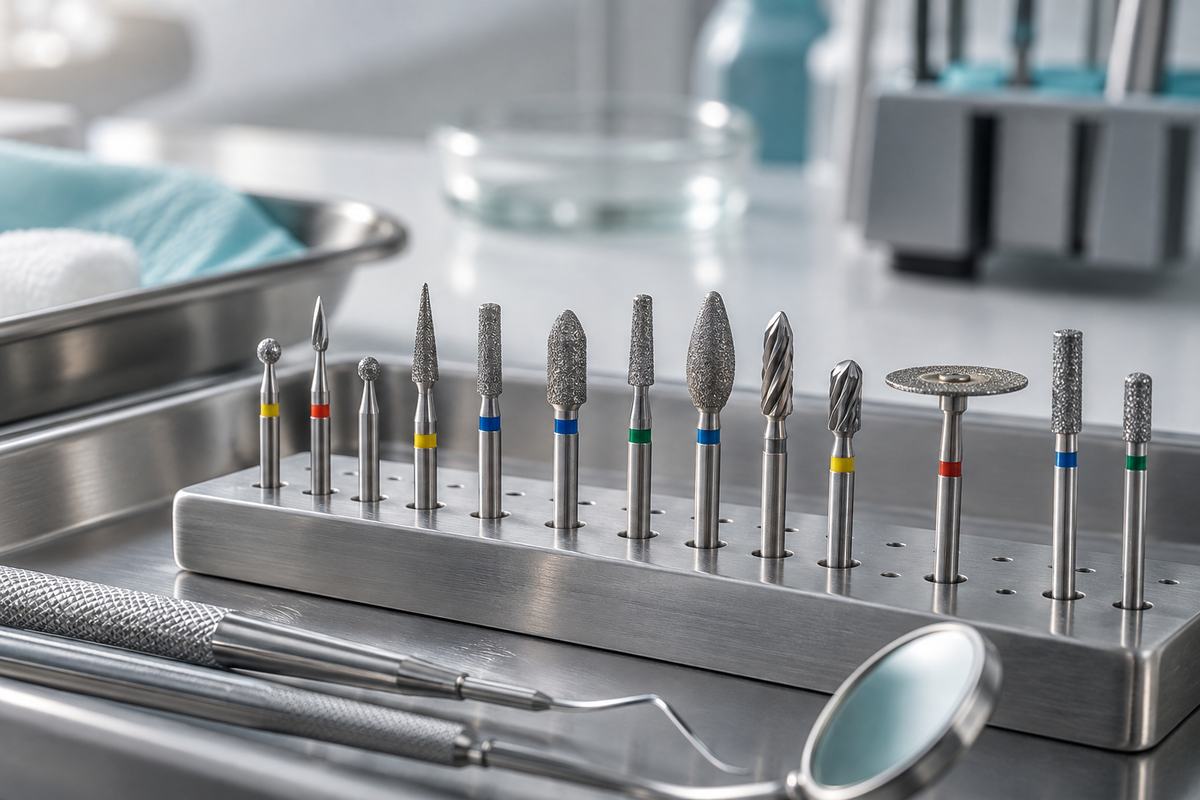
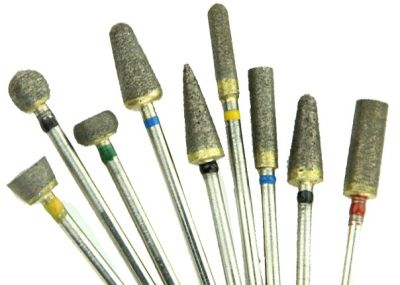
Sintered diamond burs come in a range of profiles. Selecting the correct shape depends on the specific procedure and the area being accessed.
Cylinder and Flat-End Cylinder
Best for creating flat surfaces and making straight cuts through crowns or bridges. The flat end provides a predictable, controlled cut path that follows a consistent depth as you move across the restoration. Use these when sectioning a full-contour zirconia crown for removal or when reducing the height of a ceramic abutment.
Cone and Tapered
Tapered shapes are well suited for sectioning restorations from the occlusal surface down. Their narrow profile allows access into tight interproximal areas without damaging adjacent teeth or restorations. A medium-taper cone is particularly effective when cutting through multi-unit bridge connectors where space is limited.
Flame
Flame-shaped burs are the go-to for fine margin adjustments and finishing work. Their pointed tip reaches subgingival margins, while the wider body smooths larger contoured surfaces.
Ball and Round
Round sintered burs are useful for creating access holes in ceramic crowns—for instance, when making an endodontic access opening through a zirconia restoration. They produce a clean, rounded entry point.
Grit Selection Guide
Matching the grit to the task prevents wasted time and avoids overworking the restoration.
| Grit | Particle Size | Best Use |
|---|---|---|
| Coarse | 150–180 µm | Bulk removal, crown sectioning, fast material reduction |
| Medium | 100–120 µm | General adjustments, occlusal reshaping |
| Fine | 40–60 µm | Margin refinement, smoothing cut surfaces |
| Super Fine | 20–30 µm | Pre-polish surface preparation |
For most ceramic adjustment tasks, start with a medium grit and move to fine for finishing. Reserve coarse grit for situations requiring significant material removal, such as completely sectioning a bridge.
Technique for Cutting Ceramics
Even the best sintered diamond bur will underperform if technique is poor. These guidelines help maximize results and bur life.
Pressure and Speed
Apply light, intermittent pressure. Excessive force generates heat and actually slows cutting by glazing the bur surface. Let the diamond particles do the work. For laboratory diamond burs running on a bench motor, typical speeds range from 15,000 to 25,000 RPM depending on the material.
Water Irrigation
Always use water spray when cutting ceramics intraorally. Zirconia and lithium disilicate are poor heat conductors, and localized overheating can cause microcracks that weaken the restoration. In the lab, periodic dipping in water is acceptable when a spray system is not available.
Cutting Motion
Use a sweeping or brushing motion rather than holding the bur in one spot. This distributes wear evenly across the bur head and prevents groove formation in the ceramic surface. Overlap each pass slightly for a uniform result.
Intermittent Contact
Lift the bur off the restoration every few seconds. This brief pause allows cooling and prevents the metal matrix from overheating, which can cause premature diamond loss from the bur body.
Common Applications
Crown Removal
When a cemented zirconia crown needs to come off, a coarse cylindrical sintered bur creates a controlled slot from buccal to lingual. The goal is to cut through the ceramic without contacting the tooth preparation underneath. Once the slot reaches the cement layer, a crown spreader can complete the separation without fracturing the underlying tooth structure.
Occlusal Adjustment
After cementation, high spots on ceramic crowns are identified with articulating paper and reduced with a medium-grit flame or football-shaped sintered bur. Light, short strokes prevent creating dips in the occlusal anatomy.
Implant Bridge Sectioning
Multi-unit zirconia implant bridges can be separated at pontic sites using tapered sintered burs. The extended lifespan of sintered burs is particularly valuable here, as sectioning a thick connector can take considerable time.
Endodontic Access Through Ceramic
A round sintered bur penetrates full-contour zirconia crowns more predictably than carbide alternatives. Start with a small-diameter bur to establish the access point, then widen with a larger round bur as needed. Maintain steady water irrigation throughout, as the thick ceramic layer generates substantial heat during this process.
Maintenance and Longevity
Sintered diamond burs last longer than electroplated types, but they still require proper care. Follow these practices to maximize their working life:
- Clean burs promptly after use to prevent ceramic debris from clogging the diamond surface. An ultrasonic cleaner works well for this. For more detail, see our guide on cleaning diamond burs.
- Sterilize according to manufacturer instructions—most sintered burs tolerate standard autoclave cycles without damage.
- Inspect burs before each use. Discard any bur showing visible wear-through to the metal core or wobble in the handpiece.
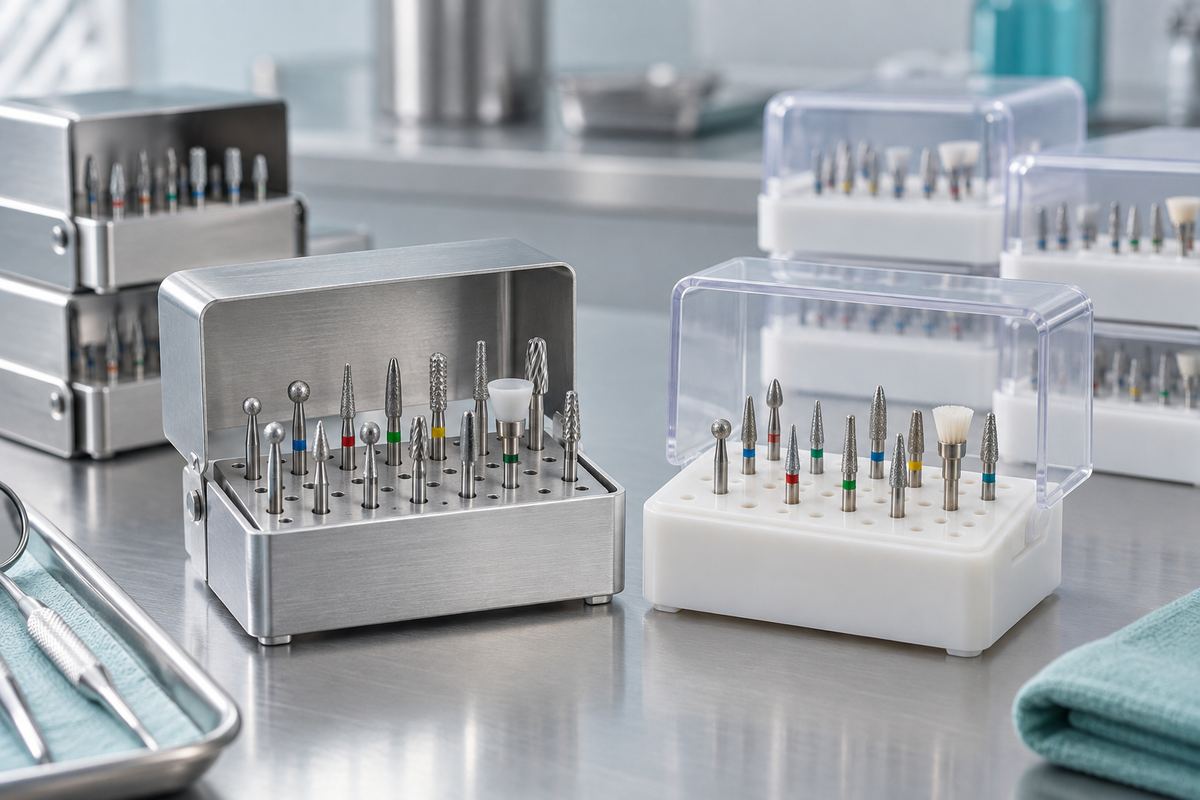
- Store burs in an organized stand or block to protect the working ends from contact damage.
Sintered Burs vs. Other Cutting Options
How do sintered diamond burs compare with other tools for ceramic work?
| Tool | Ceramic Cutting Ability | Lifespan | Cost Per Use |
|---|---|---|---|
| Sintered diamond bur | Excellent | Long | Low |
| Electroplated diamond bur | Good (initial), drops off | Short to moderate | Moderate |
| Tungsten carbide bur | Poor on zirconia | Moderate | Variable |
| Diamond disc | Good for sectioning only | Short | Moderate |
Diamond dental burs remain the primary choice for ceramic procedures. Among them, sintered variants offer the best balance of cutting power and durability for hard ceramics.
Summary
Sintered diamond burs are purpose-built for the demands of modern ceramic restorations. Their multi-layer diamond construction delivers longer life, steadier cutting performance, and better per-procedure value compared to single-layer alternatives. Whether the task involves removing a failed zirconia crown, adjusting occlusal contacts, or creating endodontic access, sintered burs provide the cutting power needed for these hard materials. By selecting the right shape and grit, applying light pressure, maintaining proper irrigation, and following a sound maintenance routine, clinicians and lab technicians can work through zirconia, lithium disilicate, and other advanced ceramics with confidence and precision.