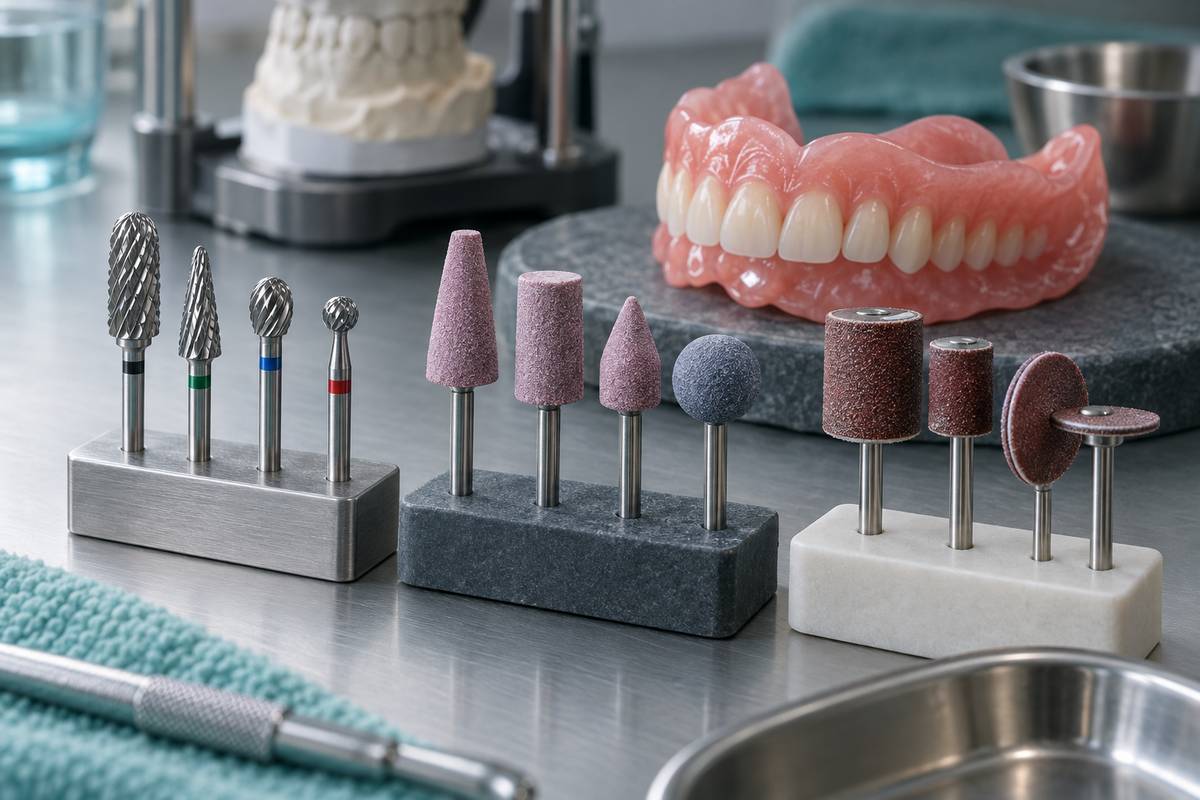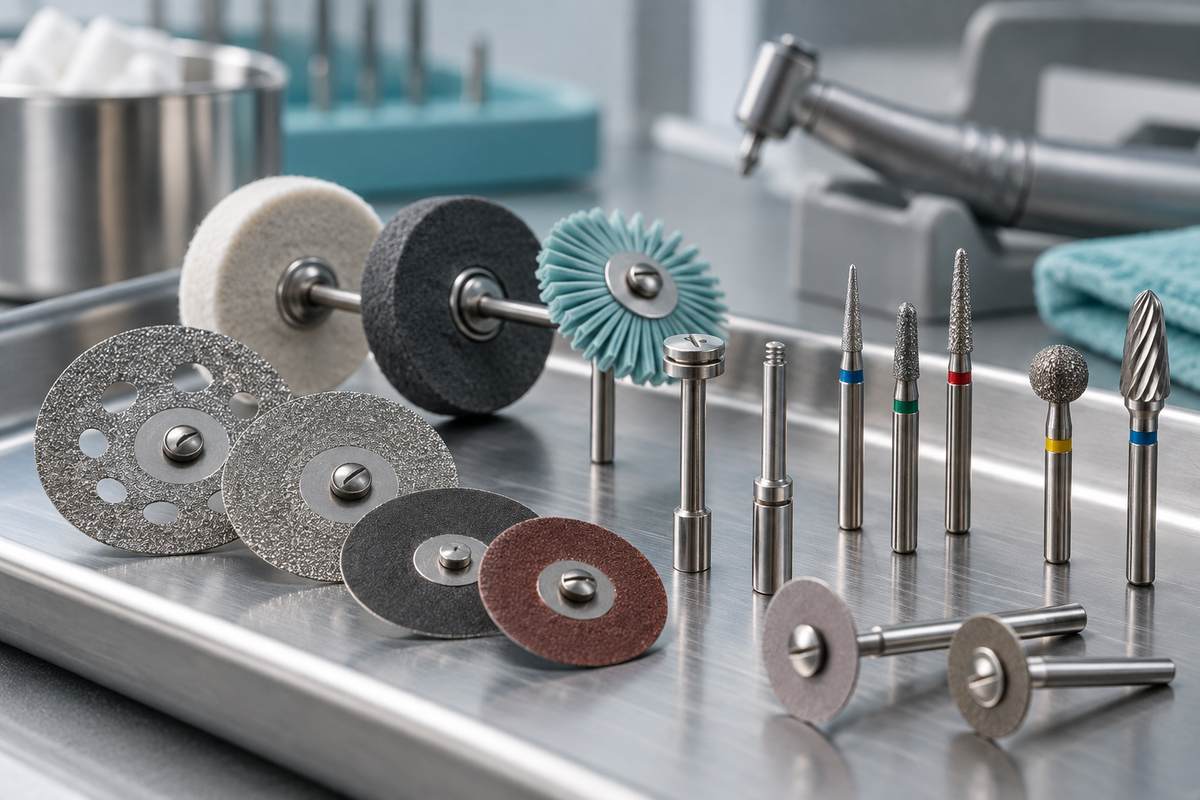

Mounted stones serve as essential tools in both clinical dentistry and laboratory work. These abrasive instruments mounted on mandrels enable precise adjusting, smoothing, contouring, and polishing of various dental materials. Understanding the different types of mounted stones, their proper applications, and effective techniques maximizes their utility in dental procedures while ensuring optimal patient outcomes.

Understanding Mounted Stone Composition and Types
Mounted stones consist of abrasive particles bonded together and attached to a metal mandrel or shank. The abrasive material, particle size, bonding agent, and stone shape determine the specific applications and performance characteristics of each mounted stone type.
Aluminum Oxide Mounted Stones
Aluminum oxide represents the most common abrasive material used in dental mounted stones. These stones exhibit excellent hardness and durability while maintaining consistent cutting characteristics throughout their service life. Aluminum oxide stones work effectively on various materials including enamel, dentin, composites, and metals.
White aluminum oxide stones provide general-purpose grinding and smoothing capabilities. They maintain sharp cutting edges as the abrasive particles fracture during use, continuously exposing fresh cutting surfaces. This self-sharpening property ensures consistent performance until the stone is completely worn.
Pink aluminum oxide stones typically feature finer grits and softer bonding compared to white stones. The pink color often indicates stones manufactured specifically for finishing procedures or working with more delicate materials. These stones remove material more slowly but produce smoother surface finishes.
Silicon Carbide Mounted Stones
Silicon carbide offers superior hardness compared to aluminum oxide, making these stones particularly effective for very hard materials. Green silicon carbide stones excel at grinding and finishing ceramics, porcelain, and precious metal alloys used in dental restorations.
The friable nature of silicon carbide means particles fracture readily under pressure, creating sharp new cutting edges. However, this characteristic also results in faster stone wear compared to aluminum oxide. Silicon carbide stones find primary applications in laboratory work where their superior cutting ability on hard materials justifies their shorter lifespan.
Arkansas Stones
Natural Arkansas stone, composed of novaculite, provides the finest abrasive option for mounted stones. These stones come in different grades based on the natural material density and particle size.
White Arkansas stones offer fine grit suitable for general sharpening and polishing applications. Black Arkansas stones provide the finest natural abrasive available, producing highly polished surfaces on metals and other materials. The consistent, uniform particle structure of Arkansas stones creates exceptionally smooth finishes.
Due to their fine abrasive nature and slower cutting rate, Arkansas mounted stones work best for final polishing and finishing rather than material removal or initial contouring.
Grit Sizes and Surface Finish
Grit size directly affects the cutting rate and surface finish achieved with mounted stones. Understanding grit classifications helps practitioners select appropriate stones for specific procedures.
| Grit Classification | Particle Size | Primary Use | Surface Finish |
|---|---|---|---|
| Coarse (60-80) | Large particles | Rapid material removal | Rough |
| Medium (100-150) | Medium particles | Contouring, shaping | Moderate |
| Fine (180-220) | Small particles | Smoothing, pre-polish | Smooth |
| Very Fine (280-400) | Very small particles | Finishing, polishing | Very smooth |
| Ultra Fine (600+) | Micro particles | High polish | Mirror-like |
Progressive sequences using multiple grit sizes produce optimal results. Begin with coarser grits for initial shaping, then proceed through finer grits for smoothing and final polishing. Skipping intermediate grits often results in surface scratches that require additional work to eliminate.
Mounted Stone Shapes and Their Applications
The variety of available shapes allows mounted stones to access different areas and accomplish specific tasks. Selecting the appropriate shape for each application improves efficiency and results.
Cylindrical Shapes
Straight cylinder mounted stones provide flat working surfaces ideal for smoothing plane surfaces or creating flat contours. The sides of cylindrical stones work well for accessing interproximal areas or refining cavity walls.
Tapered cylinder stones offer versatility with both straight and angled surfaces. The taper allows access to confined spaces while the diameter variation provides options for different contour radii.
Wheel and Disc Shapes
Wheel-shaped mounted stones, also called disk or flat stones, present large flat surfaces perpendicular to the mandrel axis. These stones excel at smoothing flat surfaces, adjusting occlusal contacts, or working on broad areas requiring material removal or refinement.
The edge of wheel stones can access narrow spaces or create specific contours. Varying the working angle allows practitioners to utilize different portions of the stone surface for optimal efficiency.
Flame and Bullet Shapes
Flame-shaped stones taper to a point while featuring rounded sides. This geometry provides excellent access to developmental grooves, line angles, and other detailed areas requiring precision. The point reaches into tight spaces while the sides smooth broader surfaces.
Bullet or egg-shaped stones offer rounded profiles suitable for creating smooth concave surfaces or polishing curved areas. These shapes work particularly well for adjusting and finishing composite restorations or contouring temporary crowns.
Inverted Cone and Cup Shapes
Inverted cone mounted stones feature angled sides that taper toward the mandrel. This configuration allows access to undercuts and provides clearance for the handpiece when working near adjacent structures.
Cup-shaped stones present concave working surfaces that conform to rounded structures. These stones effectively smooth convex surfaces on restorations or natural tooth anatomy.
Clinical Applications of Mounted Stones
Adjusting Restorations
After cementation of indirect restorations, mounted stones remove excess cement from margins and smooth the cement-tooth interface. Fine to medium grit aluminum oxide stones work well for cement removal without damaging restoration margins or adjacent tooth structure.
Occlusal adjustments of ceramic or composite restorations benefit from mounted stone use. Begin with medium grit stones to reduce high points identified through articulating paper marking. Follow with fine and very fine grits to polish adjusted areas and prevent roughness that could accelerate opposing tooth wear.
Smoothing and Contouring Composites
Direct composite restorations require finishing and polishing to achieve proper contours and surface smoothness. Mounted stones remove excess material, refine anatomy, and prepare surfaces for final polishing.
Use fine grit aluminum oxide stones to establish proper contour while minimizing surface roughness. Work systematically from broader surfaces toward detailed anatomy, changing stone shapes as needed to access different areas. Follow mounted stone finishing with silicone rubber polishers for final surface refinement.
Adjusting and Finishing Metal Restorations
Cast metal restorations often require adjustment of occlusal contacts, margins, or proximal contours. Green silicon carbide stones efficiently grind precious metal alloys while creating relatively smooth surfaces.
For base metal alloys or highly polished margins, white aluminum oxide stones provide adequate cutting with less aggressive action. Progress through finer grits before final polishing with rubber wheels or polishing paste.
Laboratory Stone Applications
Dental laboratory technicians use mounted stones extensively for trimming, contouring, and finishing various prosthetic materials. Gypsum model trimming, denture base adjustment, and framework refinement all benefit from appropriate mounted stone selection.
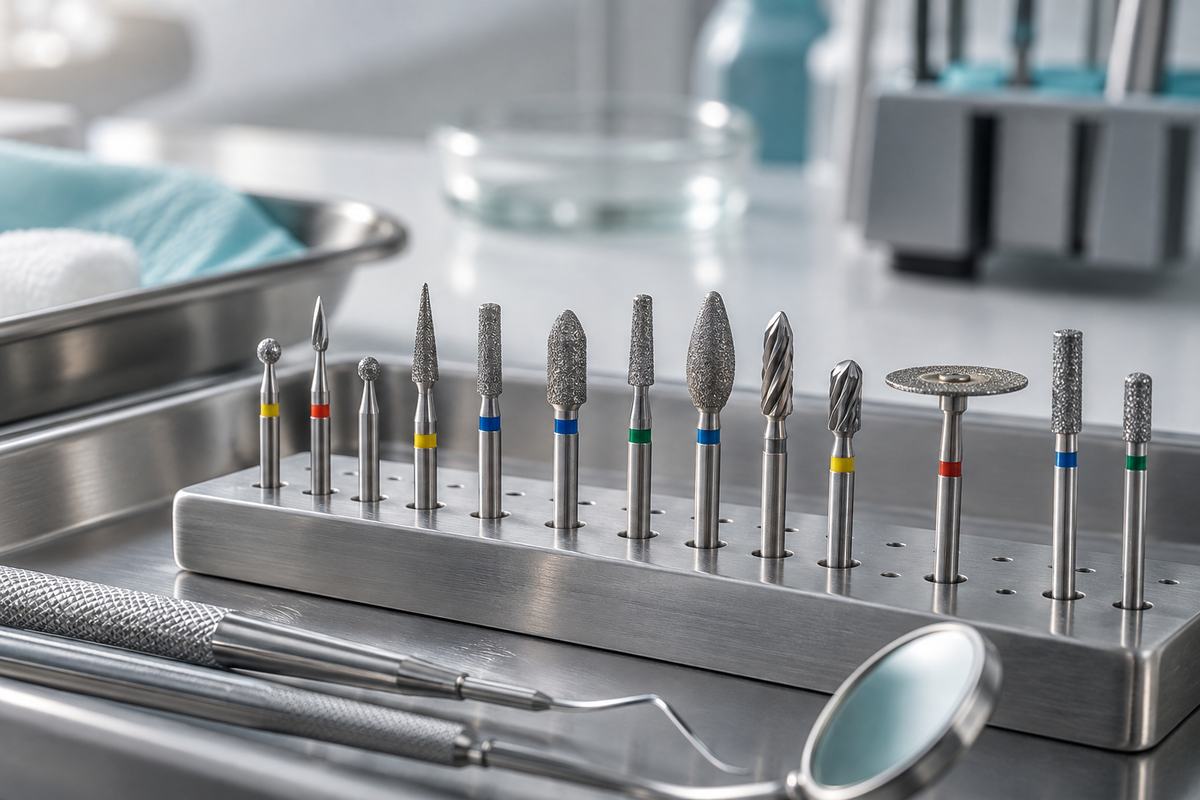
Ceramic restorations require careful grinding and finishing with mounted stones before final glazing or polishing. Green stones designed for ceramic work remove material efficiently while minimizing chipping or surface damage. Quality laboratory diamond burs and mounted stones work together to achieve precise results.
Proper Mounted Stone Technique
Speed Settings and Control
Rotational speed significantly affects mounted stone performance and safety. Excessive speeds generate heat that can damage dental materials or pulpal tissues. Insufficient speeds reduce cutting efficiency and may cause the stone to grab or chatter.
General speed guidelines for mounted stones range from 5,000 to 30,000 RPM depending on stone size, material being worked, and procedure requirements. Smaller stones and harder materials typically accommodate higher speeds. Larger stones and heat-sensitive materials require lower speeds.
| Procedure | Material | Recommended Speed Range |
|---|---|---|
| Composite contouring | Resin composite | 10,000-20,000 RPM |
| Ceramic adjustment | Porcelain/ceramic | 5,000-15,000 RPM |
| Metal finishing | Gold, base metal | 15,000-25,000 RPM |
| Acrylic trimming | Denture acrylic | 10,000-20,000 RPM |
| Enamel smoothing | Tooth enamel | 8,000-15,000 RPM |
Light, consistent pressure produces optimal results. Heavy pressure generates excessive heat, accelerates stone wear, and increases risk of material damage. Allow the stone abrasive to perform the work rather than forcing the stone against the material.
Cooling and Debris Management
Water coolant prevents heat damage to teeth and restorative materials during mounted stone use. Adequate water spray maintains comfortable temperatures and improves visibility by flushing debris from the working area.
When water cannot be used, such as with certain laboratory procedures, work in short intervals allowing the material to cool between applications. High-volume evacuation removes generated dust and debris, improving visibility and protecting the patient and operator from inhaling particulates.
Safety Considerations
Proper technique minimizes risks associated with mounted stone use. Always ensure stones are securely attached to the handpiece before beginning work. Loose stones can detach during use, potentially causing injury.
Inspect mounted stones before use for cracks, chips, or damage. Damaged stones may fracture during use, creating hazards for both patient and operator. Discard any stones showing signs of structural compromise.
Protect soft tissues from contact with rotating stones. Retraction and proper hand rests prevent inadvertent tissue contact that could cause injury. Maintain controlled, deliberate movements rather than rushing procedures.
Mounted Stone Maintenance and Longevity
Cleaning and Sterilization
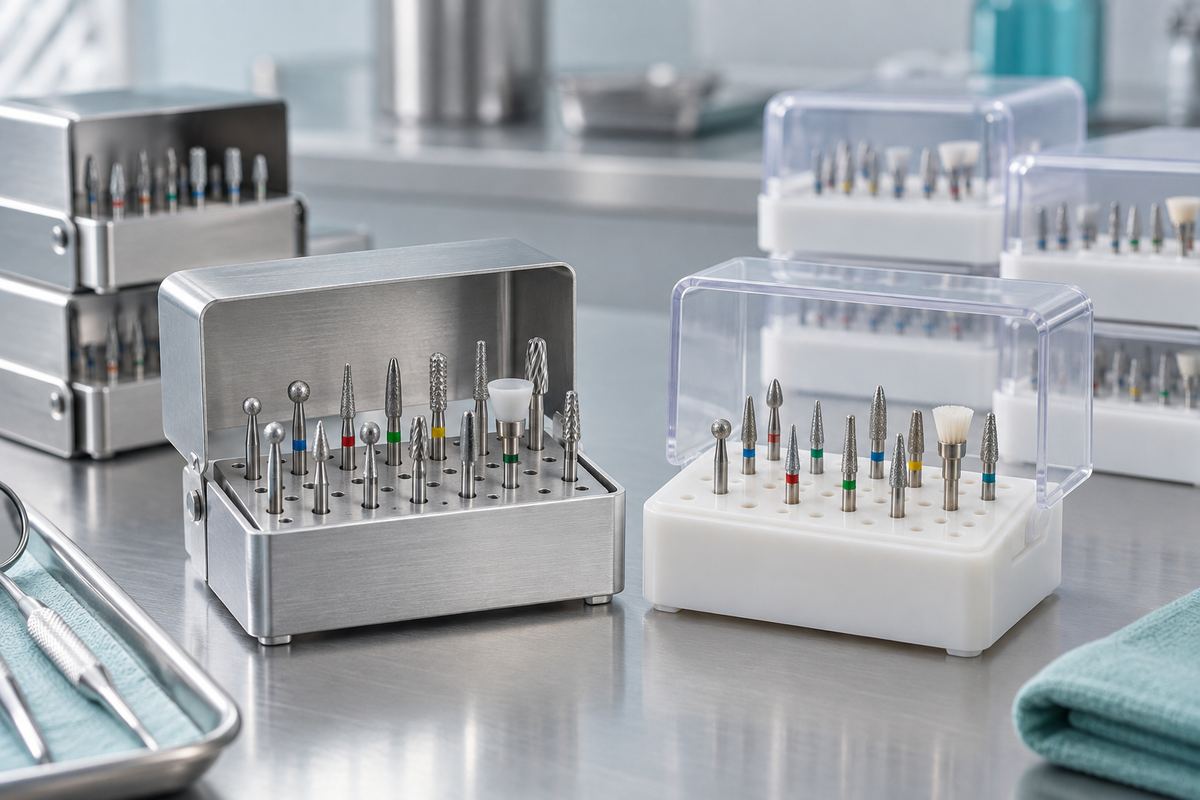
Laboratory work benefits from specialized tools including CAD CAM milling burs for fabricating restorations and mounted stones for finishing work. Complete clinic kits and technician kits provide organized sets of commonly used instruments including various mounted stones.
Selecting Mounted Stones for Your Practice
Stocking an appropriate selection of mounted stones ensures readiness for various procedures. Essential mounted stones for general practice include:
- White aluminum oxide wheels in medium and fine grits for general smoothing
- Pink aluminum oxide flame shapes in fine grit for finishing grooves and line angles
- Green silicon carbide wheels for ceramic and metal work
- Cylindrical stones in various grits for cavity and margin refinement
- Arkansas stones for final polishing of metallic surfaces
- Assorted specialty shapes for specific procedures performed in your practice
Laboratory settings require expanded selections including larger stones for model work, specialized ceramic finishing stones, and fine polishing stones for metal frameworks and partial denture components.
Related Resources
- Explore the best uses for each mounted stone color
- Learn about common mistakes to avoid when using mounted stones
Maximizing Mounted Stone Performance
Achieving optimal results with mounted stones requires understanding their capabilities and limitations. Match stone type, grit, and shape to specific procedures and materials. Use appropriate speeds and light pressure to maximize cutting efficiency while minimizing heat generation.
Maintain stones properly through effective cleaning, sterilization, and storage practices. Replace worn stones promptly to maintain clinical efficiency and quality results. Integrate mounted stones into complete finishing and polishing protocols that include complementary tools and techniques.
Mounted stones represent versatile, durable tools that handle numerous tasks in both clinical and laboratory settings. Their variety of compositions, grits, and shapes provides solutions for adjusting, smoothing, contouring, and polishing dental materials. Proper selection, technique, and maintenance of mounted stones contribute significantly to efficient workflows and high-quality patient care. Understanding these essential abrasive instruments enables dental professionals to fully utilize their capabilities and consistently achieve excellent results.