Nail Drill Bit Shapes: How to Pick the Right One
Every nail technician knows that choosing the correct drill bit shape can make or break a manicure. Whether you are shaping acrylics, smoothing gel nails, or performing routine maintenance, the geometry of your bit determines the quality of the final result. In this guide, we cover the most popular nail drill bit shapes, explain what each one does best, and help you build a well-rounded bit collection.
Why Bit Shape Matters
Nail drill bits rotate at high speed, and their shape controls how material is removed from the nail surface. A rounded bit behaves very differently from a pointed one. Using the wrong shape can cause uneven filing, heat buildup, or even damage to the nail bed. Understanding each shape lets you work faster, with better precision and less risk of injury to your client.
The grit or coarseness of a bit also plays a role, but shape is the starting point. Once you know which profile you need, you can then select the appropriate grit for the task at hand.
Cylinder and Barrel Bits
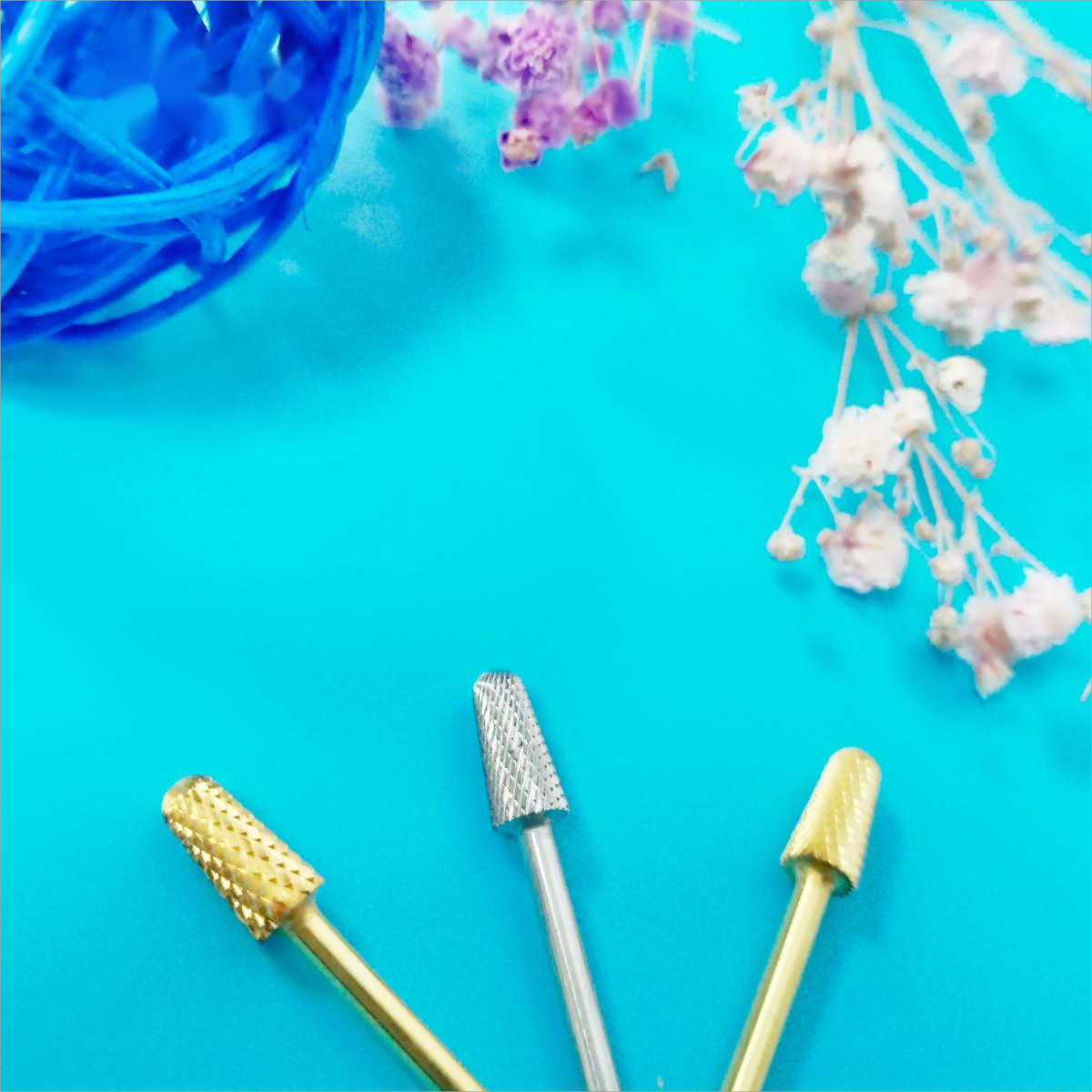
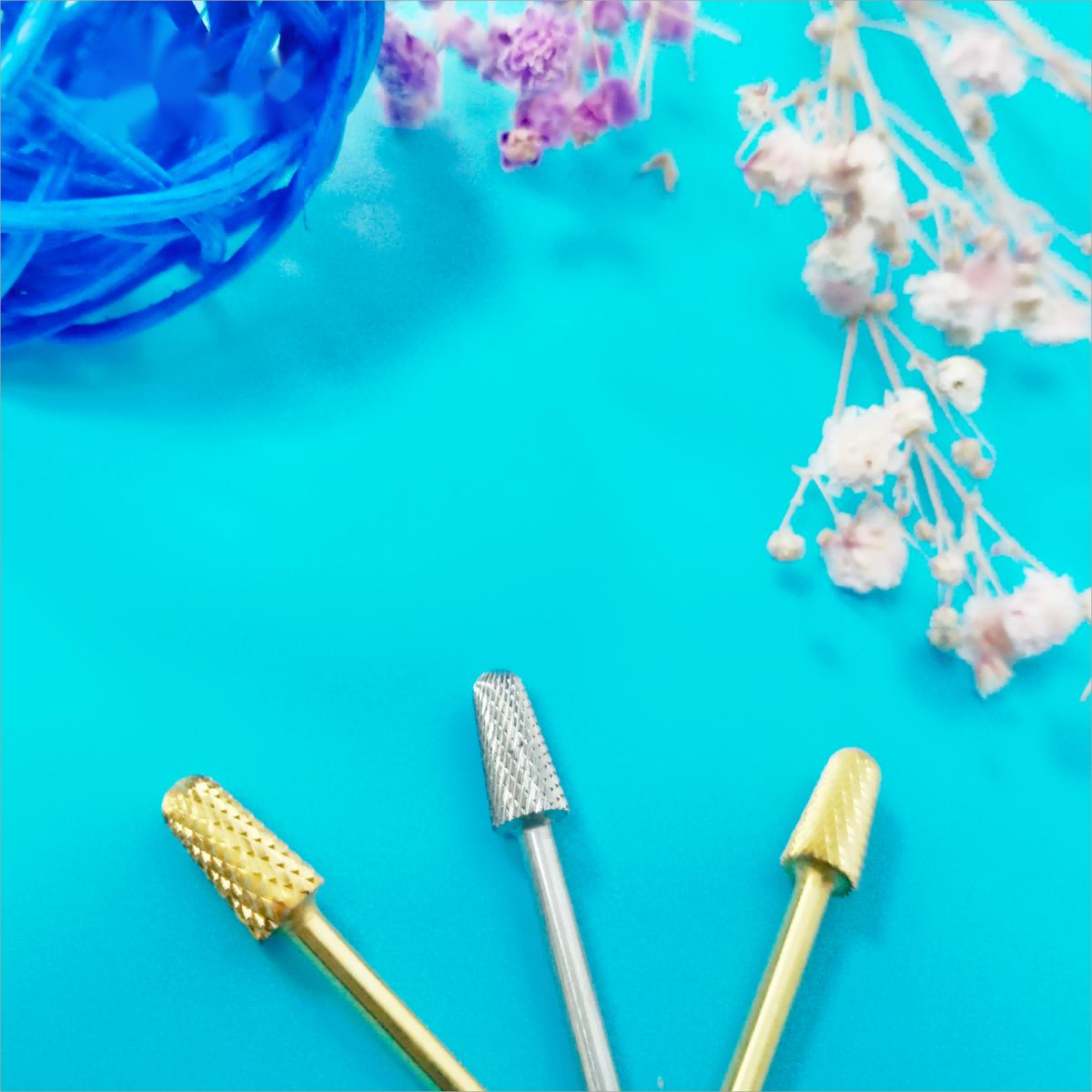
Cylinder bits have a flat top and straight sides. They are the workhorses of any nail kit. Use them for shortening nail length, shaping sidewalls, and creating clean square or squoval shapes. The flat end is ideal for surface filing because it contacts a large area at once, which speeds up bulk removal.
Barrel bits are similar but feature a slightly rounded profile. This curvature makes them more forgiving when working close to the cuticle area. Many technicians prefer barrels for acrylic nail reductions because the rounded edge is less likely to create grooves in the nail surface.
Best Uses for Cylinder and Barrel Bits
- Shortening nail extensions evenly
- Filing the top surface flat before applying new product
- Shaping square and squoval nail profiles
- Removing old acrylic or gel overlays
Flame and Tapered Bits
The flame bit is narrow at the tip and wider at the base, resembling a teardrop. This taper gives you access to tight spaces around the cuticle and sidewall areas. Flame bits are widely used for cleaning up the area under the nail and for preparing the nail plate before a new set.
Tapered bits come in several variations. Pointed tapered bits are excellent for detail work, while broader tapered profiles can handle cuticle cleanup on multiple fingers without frequent bit changes. Spear-shaped and cone-shaped tapered bits are popular choices for creating stiletto and coffin nail shapes, where precise angling is required.
Tips for Using Tapered Bits Safely
- Keep the bit moving to avoid heat concentration in one spot
- Use light pressure and let the bit do the work
- Angle the bit so only the side contacts the nail, not the pointed tip
- Start with a medium grit and switch to fine grit for finishing
Cone Bits
Cone bits are wider at the base and taper to a rounded or pointed tip. They are commonly used for shaping the underside of nail extensions and for working around the cuticle. A small cone bit is one of the most useful shapes for cleaning the sidewall groove, where product tends to accumulate.
In addition, cone bits work well for prepping natural nails before tip application. Their angled surface can remove shine from the nail plate quickly, giving adhesives a better surface to bond with.
Ball and Round Bits
Ball bits, sometimes called sphere bits, are round on all sides. They are gentle and predictable, which makes them a top choice for cuticle work. The rounded surface glides along the nail fold without catching or cutting into soft tissue.
Small ball bits are used for cleaning the cuticle area after pushing, while larger ball bits can smooth out bumps and ridges on the nail surface. Some technicians also use ball bits to remove dead skin around the nail without the need for nippers.
Recommended Ball Bit Sizes
| Size | Common Use |
|---|---|
| Small (1.5-2 mm) | Cuticle cleaning, detail work around sidewalls |
| Medium (2.5-3.5 mm) | General cuticle cleanup, smoothing ridges |
| Large (4-5 mm) | Surface smoothing, removing callused skin around nails |
Fan-Shaped Bits
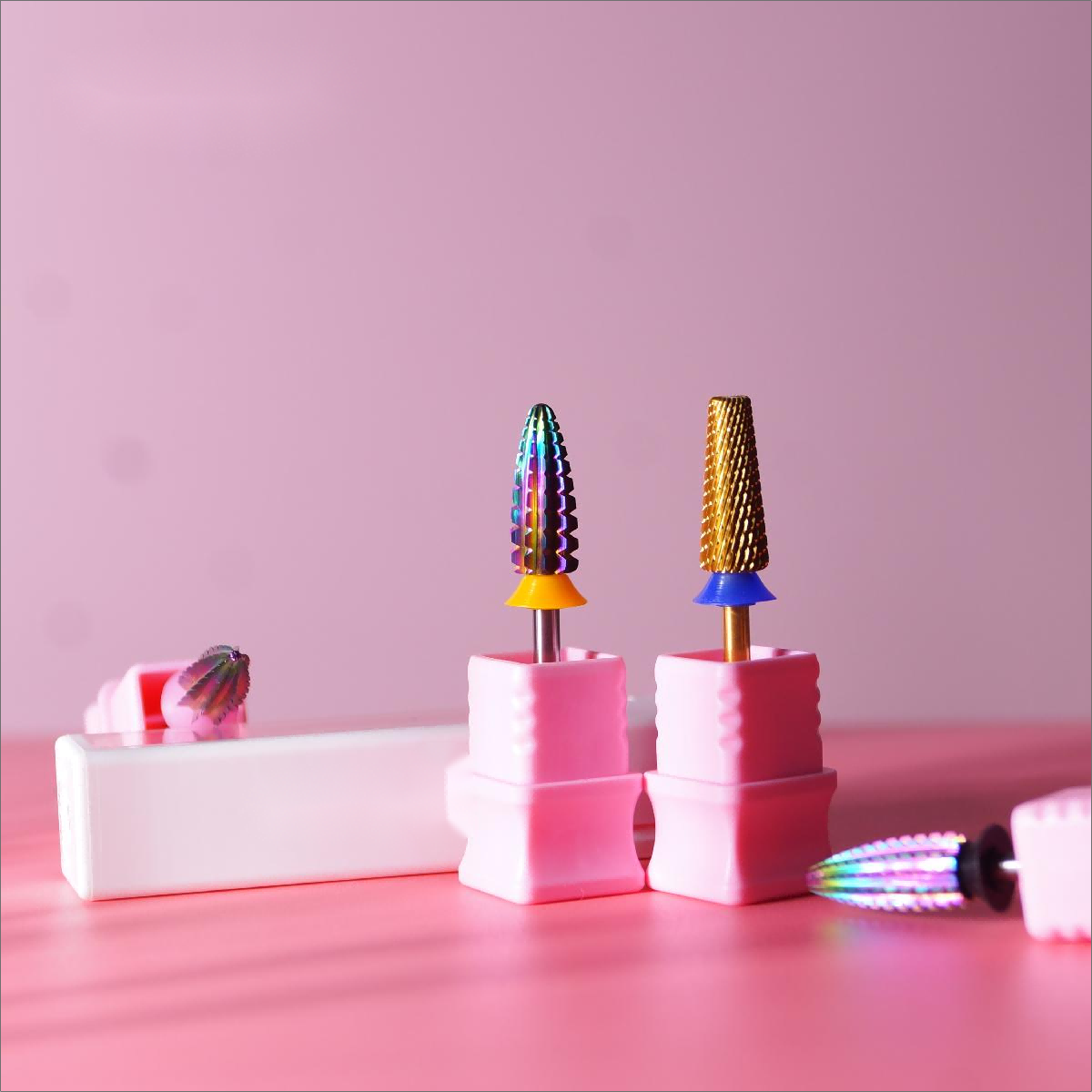
Fan-shaped bits have a wide, flat profile that fans out from the shank. They are less common than other shapes but serve a specific purpose: dusting and cleaning. After filing, nail dust collects on the surface and in grooves. A fan bit spinning at low speed sweeps away debris quickly.
Some creative technicians have found additional uses for fan bits, such as creating textured nail art effects. By lightly touching the spinning fan to a soft gel surface, you can produce unique patterns that are difficult to achieve with other tools.
Safety Pin and Needle Bits
These ultra-thin bits are designed for precision detail work. Nail artists use them to engrave fine lines, clean under tight areas, and perform detailed shaping on nail extensions. Because they are so narrow, needle bits require a steady hand and careful speed control. Running them too fast can cause vibration and imprecise cuts.
Needle bits are especially useful for removing product from hard-to-reach areas, such as the underside of a nail tip near the stress point. They are not meant for bulk removal and should be reserved for finishing and detailing tasks.
Mandrel and Sanding Band Systems
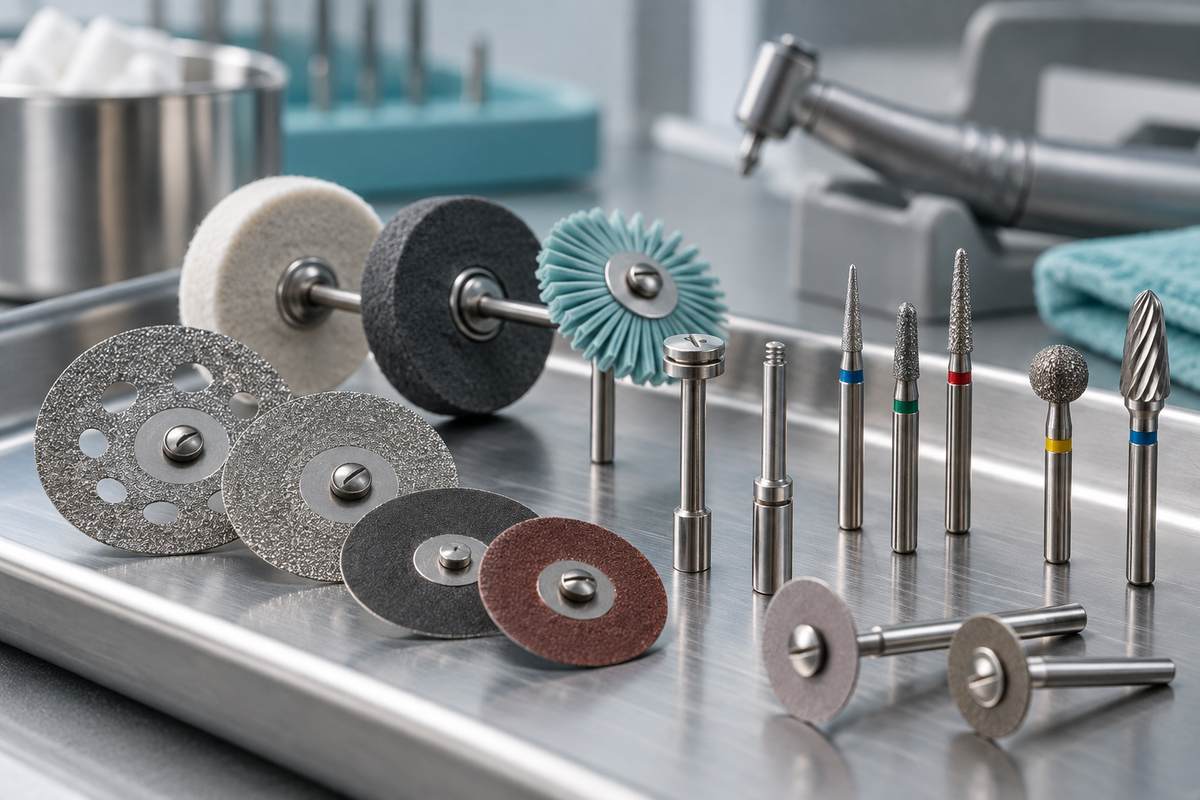
A mandrel is not a bit shape on its own but rather a base that holds interchangeable sanding bands. The sanding band wraps around the mandrel and provides an abrasive surface. This system is popular because you can swap grit levels quickly without changing the entire bit.
Mandrel systems are commonly used for pedicure work, where coarser grits are needed to address thicker toenails and calluses. For manicures, finer sanding bands on a mandrel can serve as a finishing step after shaping with a solid bit.
Building Your Bit Collection
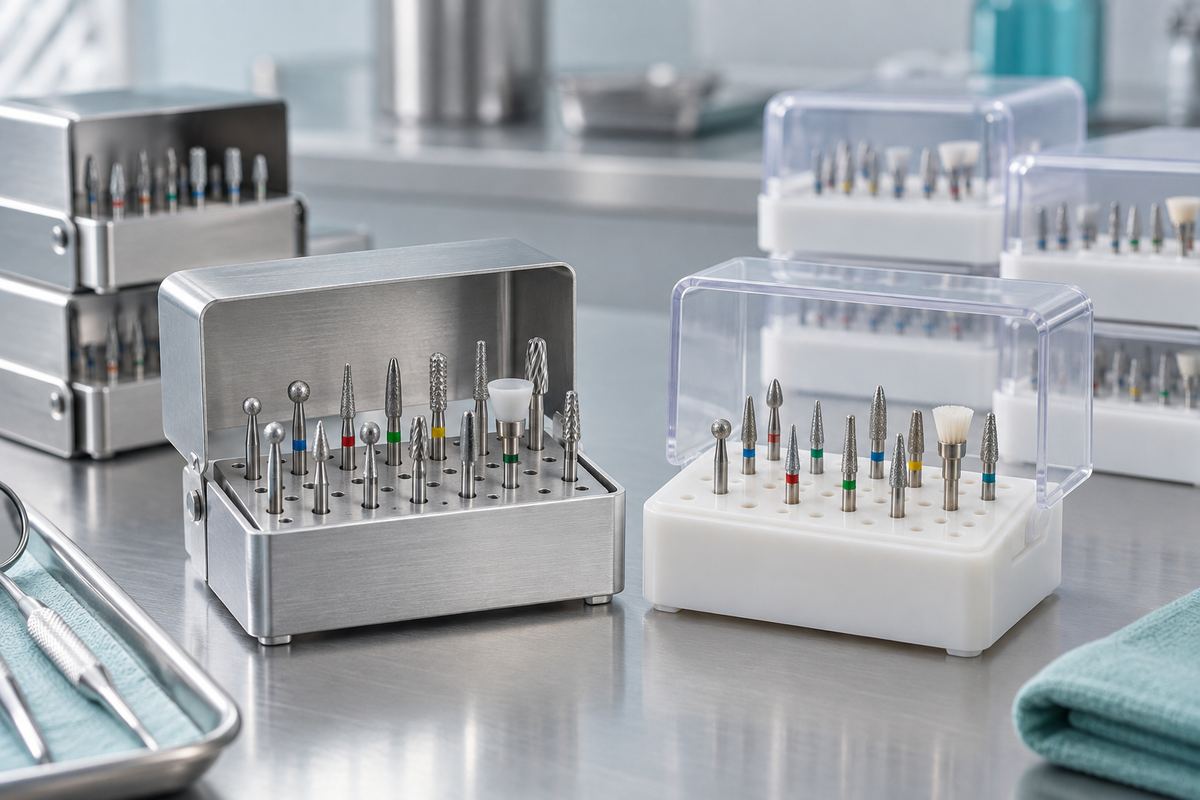
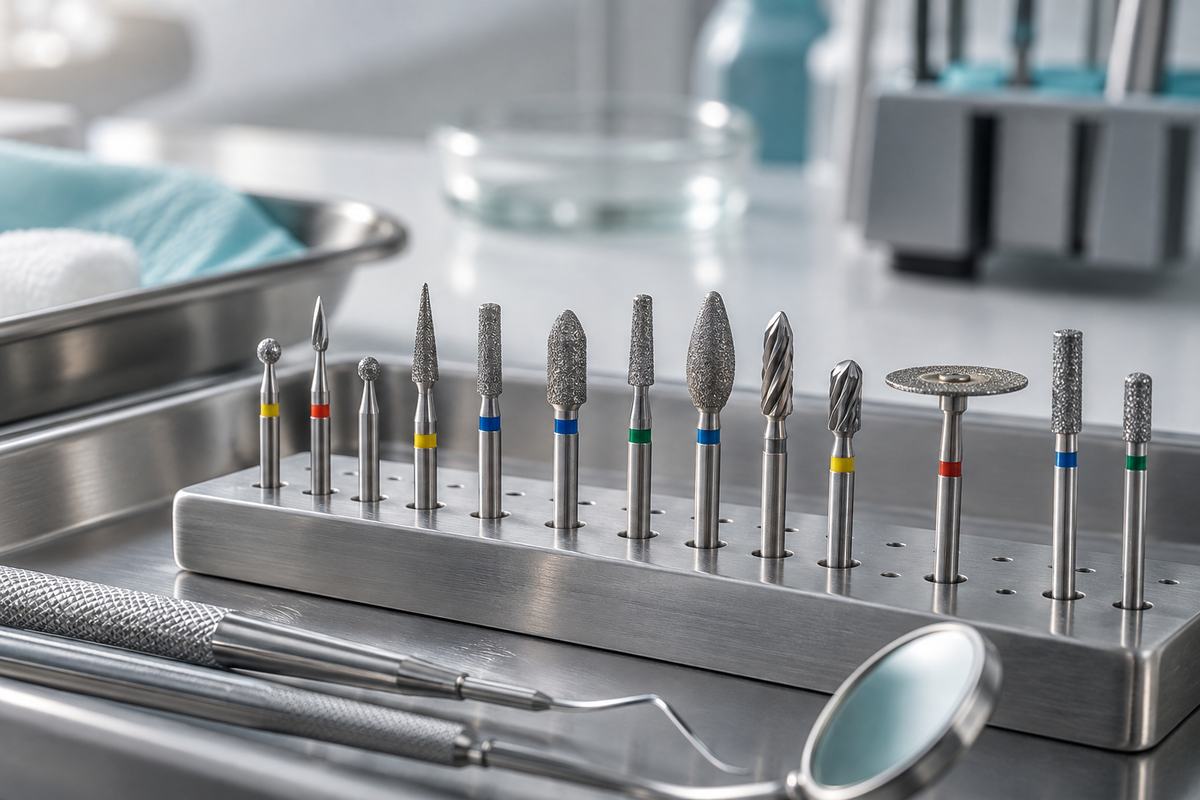
If you are starting out, a basic set should include a barrel or cylinder bit, a flame or tapered bit, a small ball bit, and a mandrel with assorted sanding bands. This covers the majority of tasks you will encounter in everyday nail services. As you take on more advanced work such as nail art or complex shapes like stiletto and coffin, add cone and needle bits to your toolkit.
For those interested in diamond-coated bits that offer extended durability and consistent cutting performance, diamond-grit options are available in nearly every shape discussed above. Diamond bits hold their abrasiveness longer than standard carbide bits, which can save time and money over the life of the tool.
Maintenance and Cleaning
Regardless of shape, all nail drill bits need regular cleaning and sterilization between clients. Soak bits in a disinfectant solution, then use a brass wire brush to remove embedded nail dust from the fluting. Bits with clogged surfaces generate excess heat and perform poorly.
Inspect your bits regularly for signs of wear. A bit that no longer cuts efficiently should be replaced, since forcing a dull bit against the nail increases heat and vibration. Most quality bits last through hundreds of services when properly maintained.
For more detailed guidance on selecting the right bit for your nail services, see our article on how to choose the right nail drill bit for your needs. You can also review our post on beginner tips for using nail drill bits if you are new to electric nail drills.
Final Thoughts
The shape of your nail drill bit is not just a cosmetic detail. It directly affects the speed, safety, and quality of your work. Take time to learn how each shape performs, practice on tip forms before working on live clients, and invest in a variety of shapes so you are prepared for any service request. With the right bits in your kit, you can deliver polished, professional results every time.