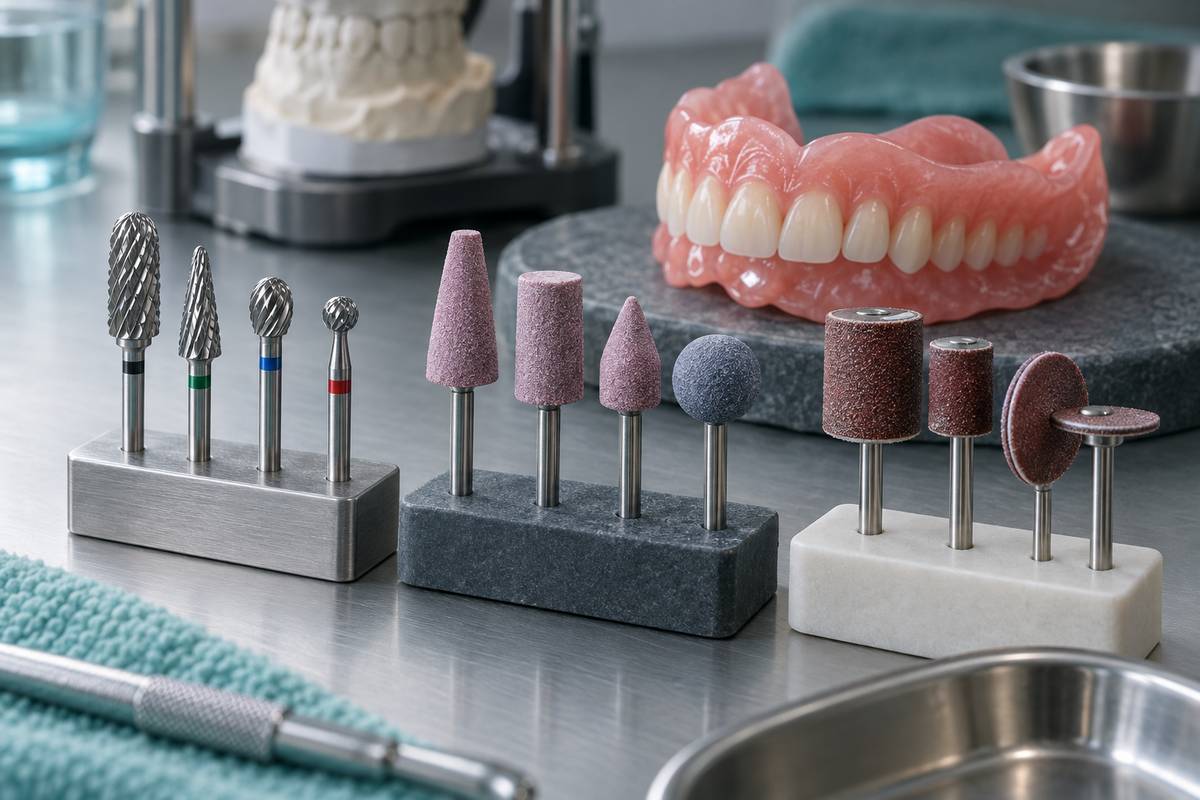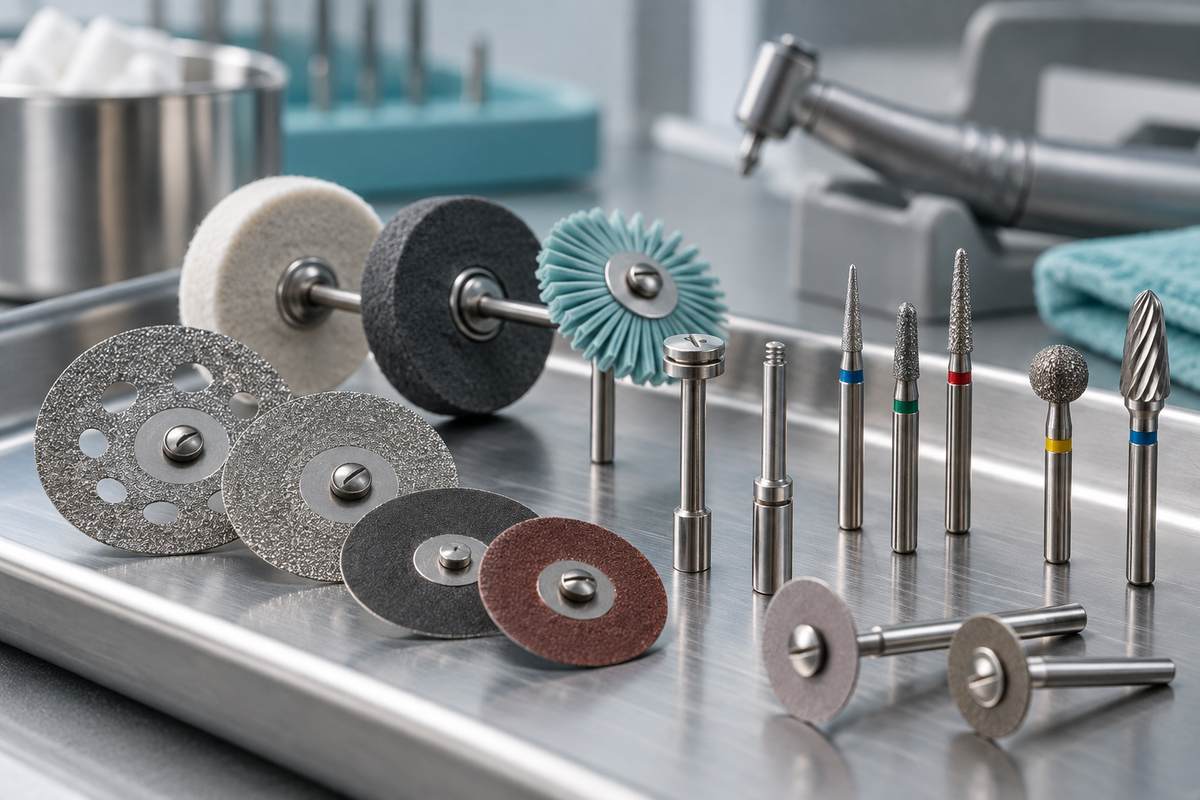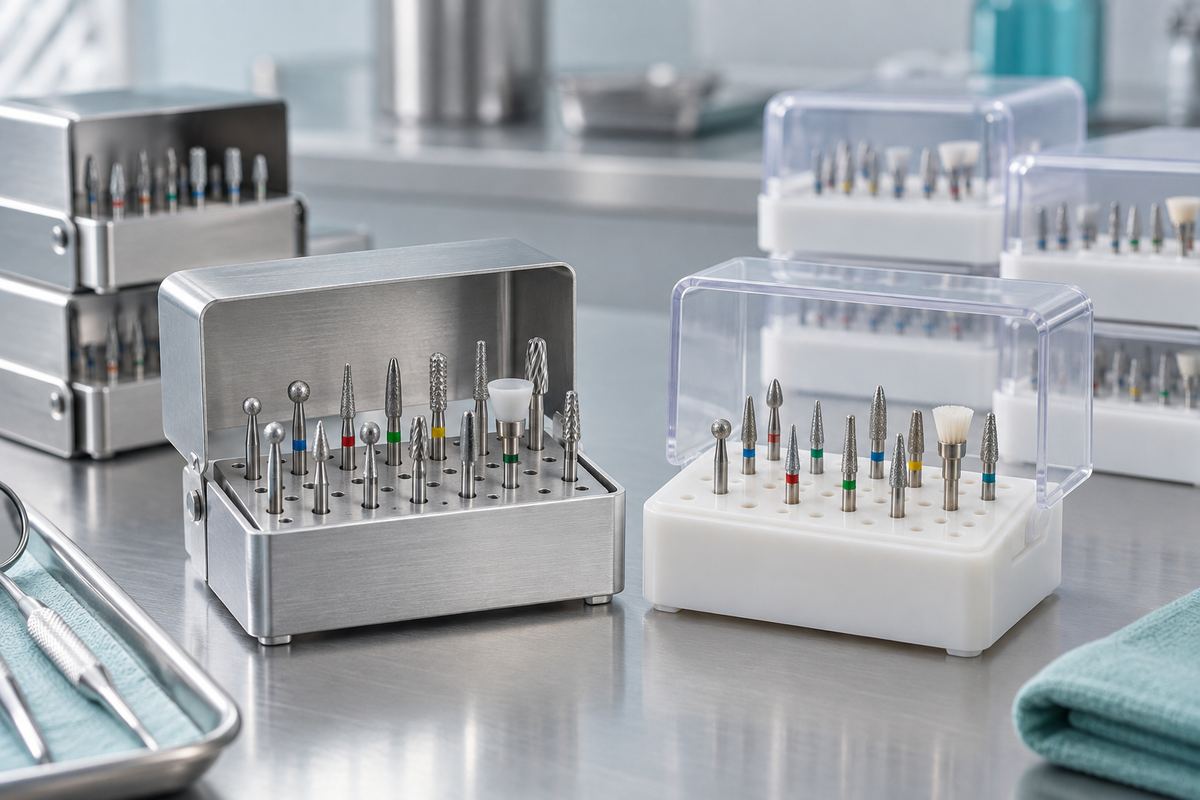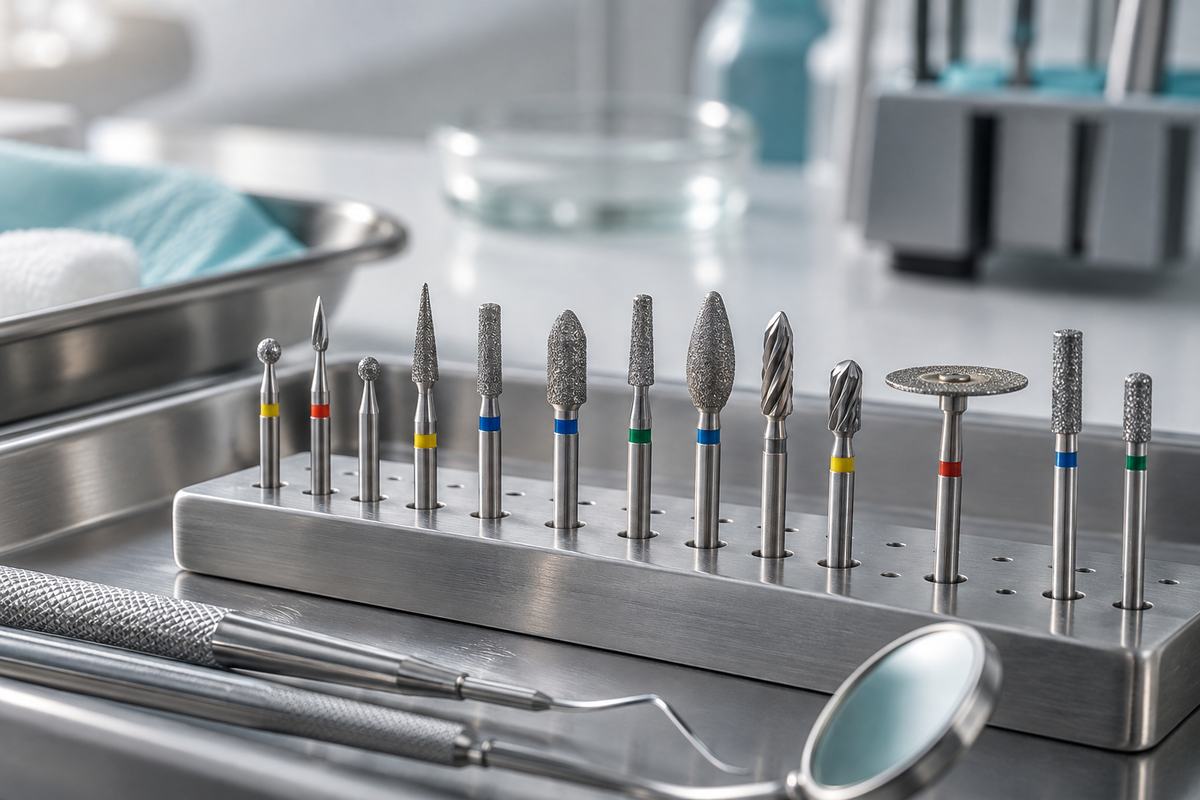
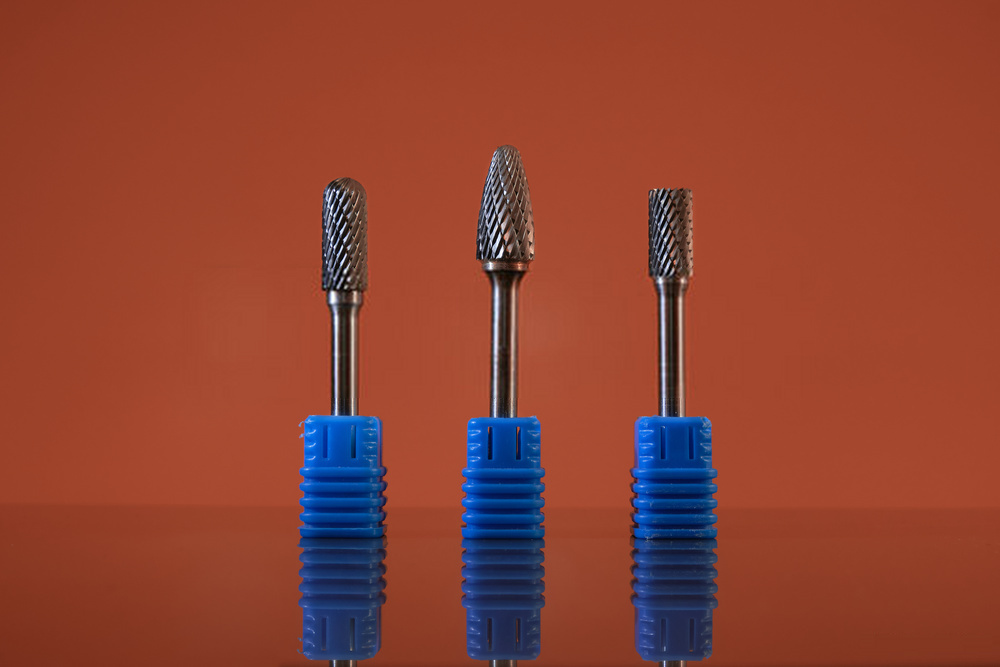
Tungsten carbide burs are among the most widely used rotary instruments in dentistry. Manufactured by sintering tungsten carbide powder with a cobalt binder, these burs produce a cutting surface that is roughly three times harder than steel. That hardness, combined with precisely machined flutes, makes carbide burs the instrument of choice for cutting, shaping, and finishing tooth structure, restorative materials, and prosthetic frameworks.
Below, we take a detailed look at how tungsten carbide burs work, where they are used, and how to choose the right bur for each clinical or laboratory task.
What Makes Tungsten Carbide Burs Different?
The defining characteristic of a carbide bur is its head material. While steel burs rely on tempered alloy for their cutting edges, carbide burs use a composite of tungsten carbide particles held together by cobalt. This microstructure delivers several practical advantages:
- Superior hardness -- carbide rates roughly 9 on the Mohs scale, allowing it to cut enamel, dentin, amalgam, and base-metal alloys with minimal dulling.
- Heat resistance -- the material retains its edge at higher temperatures than steel, reducing the risk of thermal damage to pulp tissue.
- Longevity -- a well-maintained carbide bur lasts significantly longer than its steel equivalent, lowering per-procedure instrument cost.
- Precision -- CNC-ground flutes produce clean, chatter-free cuts that require less finishing afterward.
These properties explain why carbide burs have largely replaced steel burs for most operative and prosthetic procedures in modern dental practice.
Common Dental Uses of Tungsten Carbide Burs
Carbide burs serve a broad range of clinical functions. The table below summarizes the most common dental applications and the bur shapes typically associated with each one.
| Application | Typical Bur Shapes | Notes |
|---|---|---|
| Cavity preparation | Round, pear, inverted cone | Remove caries and shape cavity walls with controlled depth |
| Crown preparation | Tapered fissure, flame | Create retention and resistance form for indirect restorations |
| Amalgam removal | Straight fissure, tapered fissure | Cross-cut designs help fragment old restorations quickly |
| Endodontic access | Round, tapered fissure | Penetrate enamel roof and locate canal orifices |
| Trimming and finishing | Egg, flame, finishing burs | Smooth composite margins and contour restorations |
| Bone surgery | Round, surgical fissure | Section teeth or trim alveolar bone during extractions |
For a deeper look at cavity preparation burs, see our dedicated guide that covers bur selection by cavity class.
Understanding Flute Designs
The number and arrangement of flutes on a carbide bur head determine how aggressively it cuts and how smooth a surface it leaves behind. There are three main categories:
Standard (Plain) Cut
Standard-cut burs have straight or spiral flutes without additional cross-hatching. They produce moderate cutting efficiency and a reasonably smooth surface. These are general-purpose instruments suited to cavity preparation and bulk material removal.
Cross-Cut
Cross-cut burs add horizontal grooves across the primary flutes, creating many small cutting edges. This design increases cutting speed and helps break material into smaller chips that are easier to evacuate. Cross-cut burs are popular for removing old amalgam restorations and for rapid crown preparation.
Finishing (Multi-Flute)
Finishing burs feature a higher number of closely spaced flutes -- typically 12 to 30. The increased flute count reduces the depth of cut per revolution, producing an exceptionally smooth surface. Clinicians use finishing burs for contouring composite restorations, refining crown margins, and adjusting occlusion. For more on this topic, read our article on finishing burs in dentistry.
Carbide Bur Shapes and Their Functions
Selecting the correct bur shape is just as important as choosing the right flute design. Here is a summary of the most common shapes:
- Round -- ideal for caries removal, creating retention points, and making initial access openings. Available in sizes from 1/4 round up to #8.
- Pear -- a tapered round shape that provides undercut preparation and smooth cavity floors.
- Inverted cone -- creates flat cavity floors and mechanical undercuts in Class I and Class II preparations.
- Straight fissure -- produces flat walls and sharp line angles, commonly used in Class II box preparations.
- Tapered fissure -- the workhorse of crown preparation, available with flat or rounded ends for creating convergence angles on prepared teeth.
- Flame -- a slender tapered shape used for subgingival margin refinement and interproximal finishing.
- Egg (football) -- a rounded shape for smoothing concave surfaces and contouring occlusal anatomy.
Understanding these shapes and pairing them with the correct flute pattern ensures efficient cutting with minimal post-operative sensitivity. Our complete guide to dental bur types covers every shape in detail.
Uses Beyond Dentistry
While this article focuses on dental applications, tungsten carbide burs are valued across many industries. Their hardness and precision make them useful for:
- Jewelry making -- shaping and engraving precious metals, wax models, and investment castings.
- Woodworking -- carving, routing, and texturing hardwoods and softwoods on rotary tools.
- Metal fabrication -- deburring welds, enlarging holes, and smoothing cast surfaces on steel and aluminum parts.
- Stone and glass carving -- detailing sculpture and etching glass panels using fine-grit carbide heads.
In each of these fields, the same principles of shape and flute selection apply. A cross-cut cylinder removes material quickly, while a fine finishing bur leaves a polished surface.
Choosing the Right Carbide Bur
When selecting a tungsten carbide bur, consider the following factors:
- Procedure type -- match the bur shape and flute design to the clinical task, as outlined in the table above.
- Handpiece compatibility -- verify the shank type. Friction-grip (FG) shanks fit high-speed handpieces, while right-angle (RA) shanks fit slow-speed contra-angle handpieces. Straight (HP) shanks are used in laboratory handpieces.
- Material being cut -- enamel and metal alloys require aggressive flute geometry, while composite and dentin benefit from finer finishing burs.
- Speed and pressure -- carbide burs perform best at recommended RPM ranges with light, intermittent pressure and adequate water spray to control heat.
Browse our full selection of tungsten carbide dental burs to find the right instrument for your practice or laboratory.
Maintenance and Sterilization
Proper care extends the service life of tungsten carbide burs and maintains cutting performance:
- Clean burs immediately after use with an ultrasonic cleaner or enzymatic solution to remove debris from flute channels.
- Inspect bur heads under magnification for chipped or worn flutes. Discard any bur that shows visible damage.
- Sterilize according to your infection-control protocol -- most carbide burs tolerate standard autoclave cycles at 134 degrees C.
- Store sterilized burs in organized racks or cassettes to protect cutting edges from contact damage.
Following these steps ensures each bur performs consistently from the first use to the last, keeping your procedures efficient and your patients comfortable.
Frequently Asked Questions
How long does a tungsten carbide bur last?
Lifespan depends on the material being cut and the operating conditions. A high-quality carbide bur used on dentin and composite with proper water cooling can last through dozens of procedures. Burs used to cut metal alloys or ceramic will dull faster and may need replacement after fewer uses. Inspect flutes regularly and replace any bur that requires excessive pressure to cut.
Can carbide burs be resharpened?
Unlike steel burs, tungsten carbide burs cannot be effectively resharpened in a clinical setting. The flute geometry is precision-machined during manufacturing, and attempting to regrind the head alters cutting characteristics and can create imbalance. Worn burs should be discarded and replaced.
What is the difference between carbide burs and diamond burs?
Carbide burs cut by shearing material with machined flutes, producing smooth surfaces and fine chips. Diamond burs abrade material with bonded diamond particles, generating a rougher surface but removing hard tissue quickly. Many clinicians use diamond burs for initial tooth reduction and follow with carbide finishing burs for margin refinement. For a full comparison, see our article on diamond burs versus carbide burs.