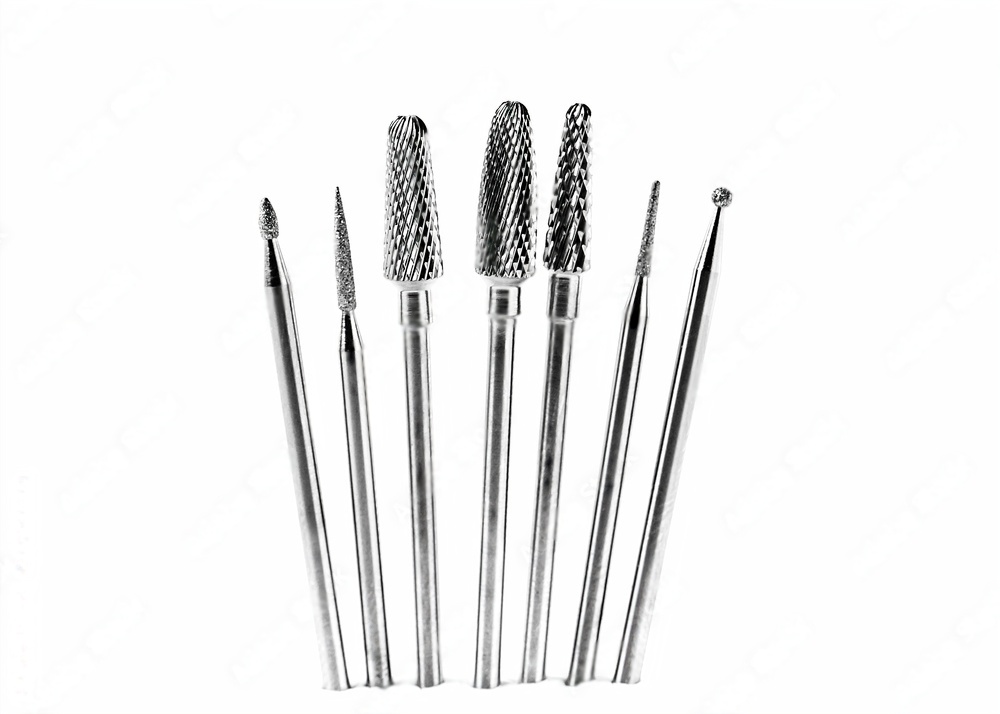
What Are Dental Burs and Why Do They Matter?
Dental burs are small rotary cutting instruments that attach to a handpiece. Dentists rely on them for nearly every restorative and surgical procedure, from removing decay to shaping crowns. Each bur has a specific head geometry and surface coating matched to a particular task, so choosing the right one directly affects treatment speed, surface finish, and patient comfort.
Below you will find a practical overview of the most widely used bur types, organized by shape and by material, along with guidance on when to reach for each one.
Dental Bur Types by Shape
Round Burs
Round burs have a spherical cutting head. They are the go-to choice for initial caries removal because their shape follows the natural contour of decay. Smaller sizes (such as ISO 012 and 014) are used to access and excavate cavities, while larger round burs help with gross reduction of tooth structure. In endodontic treatment, a round bur is often the first instrument used to open the pulp chamber. Round burs are available in both carbide and diamond versions. Carbide round burs work well for dentin removal, while diamond round burs are better suited for cutting through enamel and porcelain.
Pear-Shaped Burs
Pear-shaped burs taper slightly toward the shank, producing a wider cut at the tip than at the neck. They are preferred for cavity preparation in amalgam and composite restorations because their profile creates a flat pulpal floor with rounded internal line angles, which reduces stress concentration in the tooth.
Tapered Burs (Tapered Fissure)
Tapered fissure burs have a conical profile with either a flat end or a rounded end. Flat-end versions produce well-defined walls with sharp line angles, making them standard for crown preparation and veneer reduction. Round-end tapered burs are useful when clinicians need smooth transitions and less aggressive cutting, particularly for shoulder and chamfer margin finishing. Many practitioners keep multiple lengths on hand because longer tapered burs offer greater axial wall coverage during full-crown preps, while shorter versions provide better control in limited-access areas such as second molars.
Inverted Cone Burs
An inverted cone bur has its widest diameter at the tip and narrows toward the shank, opposite to a standard taper. This geometry is ideal for creating mechanical undercuts in cavity preparations and for removing unsupported enamel. The flat base of the cut provides excellent retention form for restorative materials. These burs are commonly used in Class I and Class II cavity preparations where mechanical retention is needed to hold amalgam in place.
Flame-Shaped Burs
Flame-shaped burs feature a pointed, elongated head that resembles a candle flame. They excel at finishing subgingival margins, adjusting interproximal surfaces, and performing fine contouring on porcelain restorations. Their slim profile allows access to tight areas without damaging adjacent teeth.
Wheel and Lentulo Burs
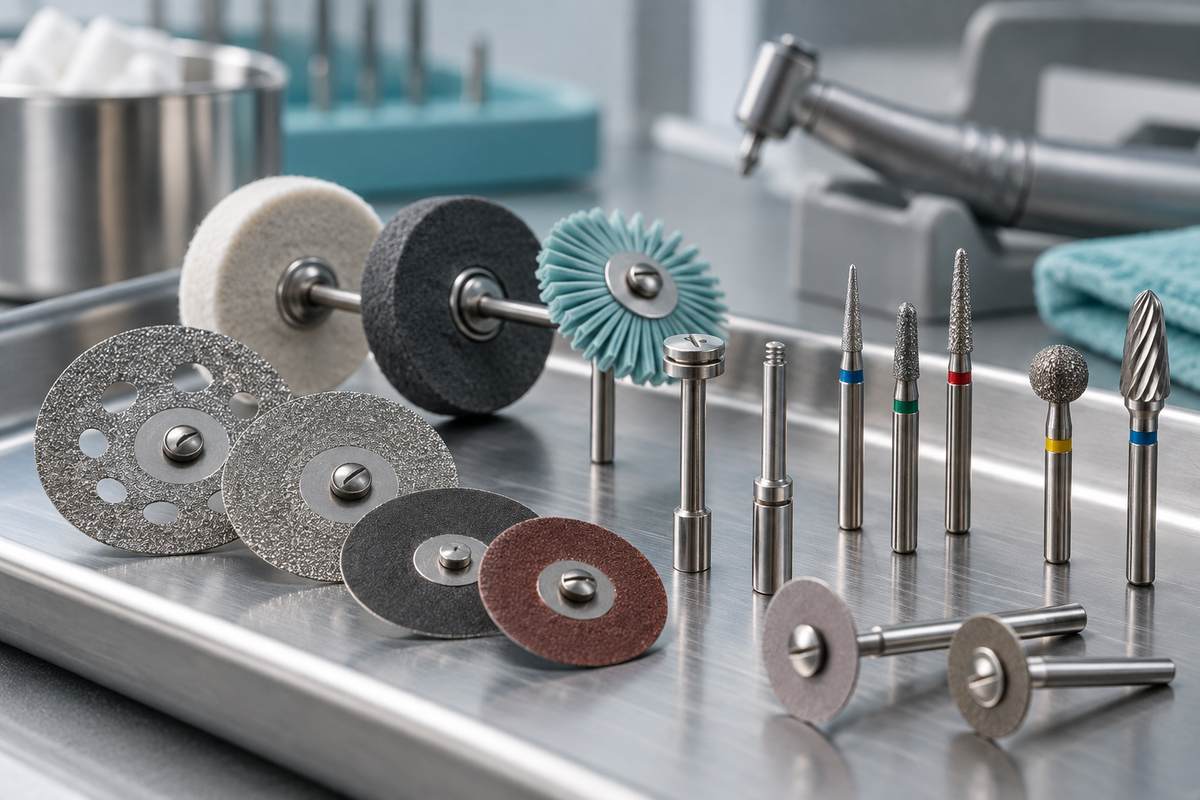
Wheel burs are thin, disc-like instruments used to slice through metal frameworks, section multi-rooted teeth for extraction, and create grooves. Because the cutting surface is concentrated on the edge, they make very narrow cuts with minimal material loss. Lentulo spirals, a related instrument, are twisted wire burs used to spin root canal sealers and calcium hydroxide paste into prepared canals.
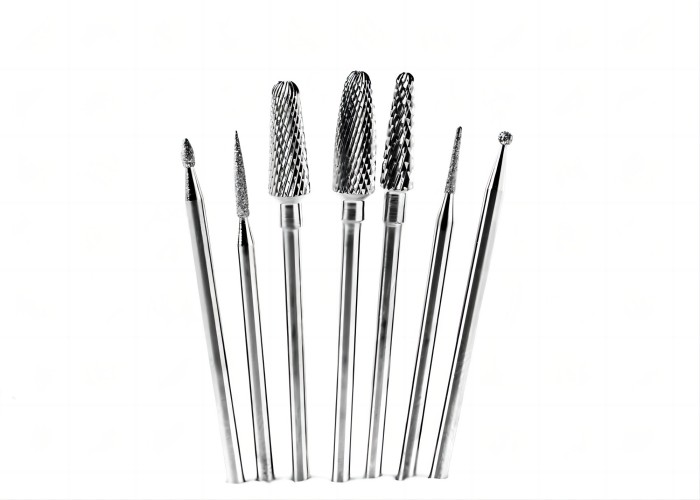
Dental Bur Types by Material
Tungsten Carbide Burs
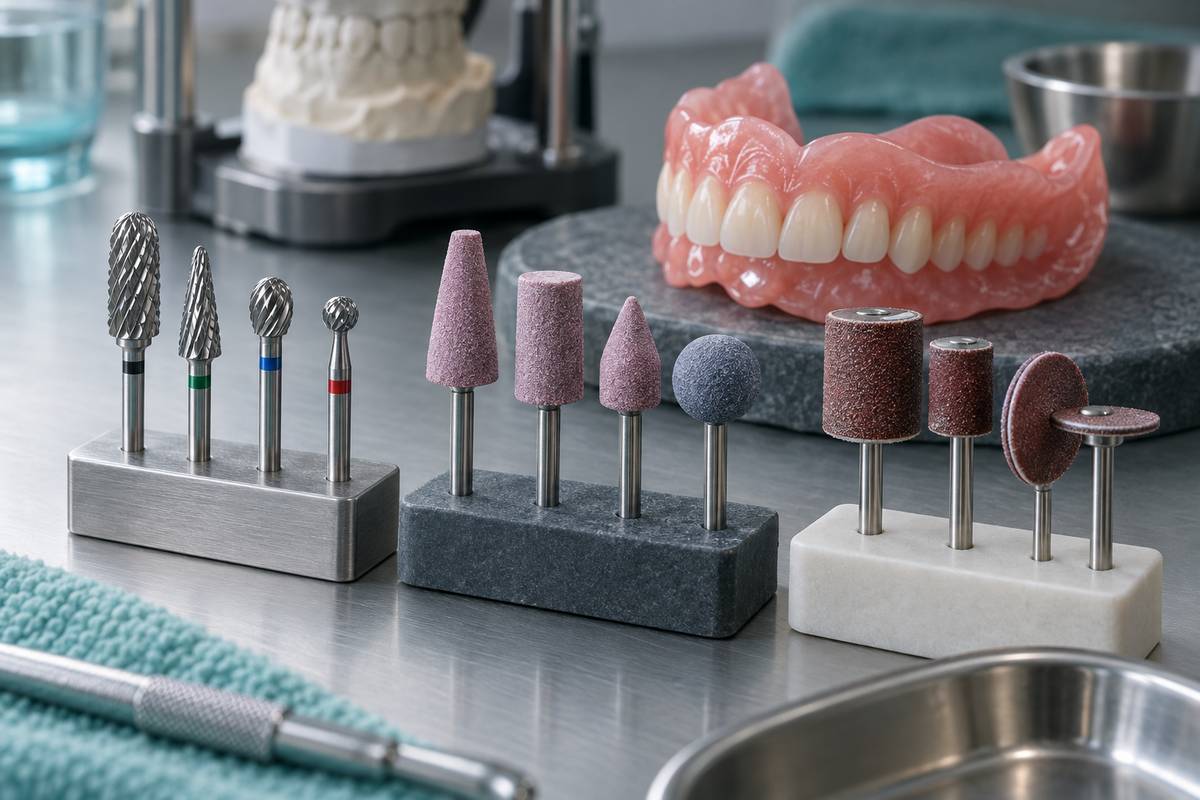
Tungsten carbide burs are made from a sintered alloy of tungsten and carbon. They cut efficiently through dentin, old restorations, and metal alloys. Carbide burs produce smoother surfaces than steel burs and are available in both standard-cut and cross-cut fluting patterns. Cross-cut designs reduce clogging when cutting softer materials such as acrylic. Multi-fluted carbide burs with 12, 20, or even 30 blades are specifically designed for finishing and produce an exceptionally smooth surface that often requires minimal polishing afterward. For laboratory applications, HP-shank carbide burs fit straight handpieces and bench motors used for trimming models and adjusting prosthetics.
Diamond Burs
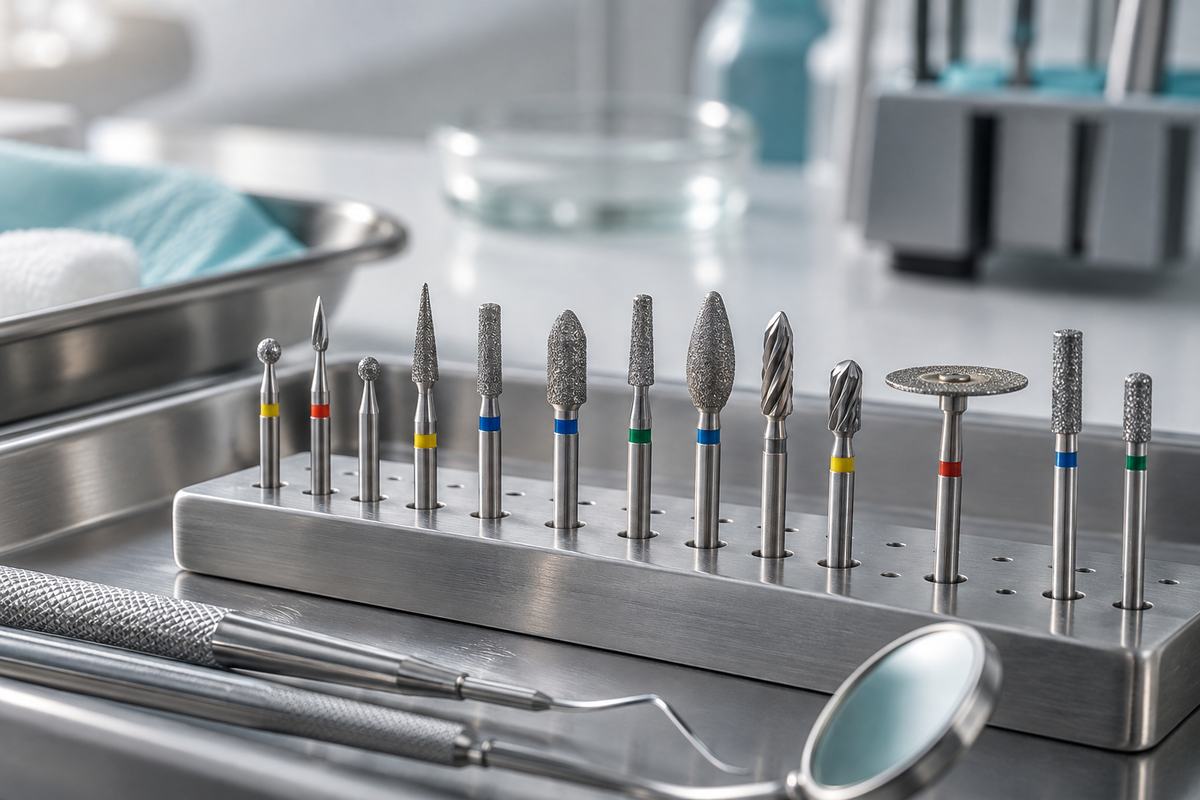
Diamond burs (FG) are coated with industrial diamond particles bonded to a metal blank. They are the preferred choice for cutting enamel, porcelain, and zirconia because diamond is harder than any other bur material. Grit sizes range from super-coarse (for rapid reduction) to ultra-fine (for polishing). Selecting the correct grit prevents excessive heat generation and surface micro-cracking. Color-coded bands on the shank indicate grit level: black for super-coarse, green for coarse, no band for standard, red for fine, and yellow for extra-fine. Using the correct sequence from coarse to fine produces the best margin integrity and surface quality.
Steel Burs
Stainless steel burs are the most economical option. They work well for removing soft carious dentin at low speeds and for trimming acrylic in the lab. However, they dull faster than carbide or diamond alternatives and are not recommended for cutting enamel or ceramic materials.
Ceramic and Zirconia Burs
Ceramic burs, sometimes called white-stone burs, are used for adjusting metal-free restorations chairside. They generate less heat than diamond burs, which helps protect the structural integrity of all-ceramic crowns during occlusal adjustments.
Quick-Reference Comparison Table
| Bur Type | Best For | Speed Range | Common Material |
|---|---|---|---|
| Round | Caries removal, access cavities | Low to high speed | Carbide or steel |
| Pear-shaped | Cavity preparation | High speed | Carbide |
| Tapered fissure | Crown and veneer preparation | High speed | Diamond or carbide |
| Inverted cone | Undercuts, retention form | Low to high speed | Carbide |
| Flame | Subgingival margins, interproximal finishing | High speed | Diamond |
| Finishing | Smoothing restorations | High speed | Carbide (multi-fluted) |
| Diamond (coarse) | Enamel and porcelain reduction | High speed | Diamond |
How to Choose the Right Dental Bur
Selecting a bur depends on three factors: the material being cut, the stage of the procedure, and the handpiece speed. A general workflow looks like this:
- Access and gross reduction -- Use a coarse diamond or carbide fissure bur at high speed with water spray to remove bulk material quickly.
- Refinement and shaping -- Switch to a fine-grit diamond or a finishing carbide bur to smooth walls and define margins.
- Final finishing and polishing -- Apply ultra-fine diamonds, multi-fluted carbide finishing burs, or silicone polishers to achieve a glossy, plaque-resistant surface.
For a deeper look at how bur shapes map to ISO numbering, see our ISO numbers guide. And if you want to understand shank types and which handpiece each bur fits, read our article on dental bur shank types.
Care and Sterilization
Proper maintenance extends bur life and protects patients. After each use, remove debris with an ultrasonic cleaner or a brass-wire brush, then sterilize the burs in an autoclave at the cycle recommended by the manufacturer. Inspect cutting surfaces under magnification before reuse; a dull or chipped bur increases heat, vibration, and patient discomfort. Diamond burs in particular lose grit particles over time and should be replaced once cutting efficiency drops noticeably. For more detail on keeping diamond instruments in top condition, see our guide on cleaning diamond burs.

Quick Reference
- Round, pear, tapered, inverted cone, and flame are the five fundamental bur head shapes every clinician should stock.
- Tungsten carbide and diamond are the two dominant bur materials, each suited to different substrates and procedure stages.
- Match grit size and flute count to the task: coarse for cutting, fine for finishing, ultra-fine for polishing.
- Replace worn burs promptly to maintain cutting performance and reduce heat-related complications.
Understanding the full range of dental bur types helps you work faster, produce smoother preparations, and reduce chair time for your patients. Explore our complete catalog of tungsten carbide and diamond dental burs to find the right instruments for your practice.
Browse our full range of dental burs — diamond burs, carbide burs, polishers, and lab tools for every procedure.