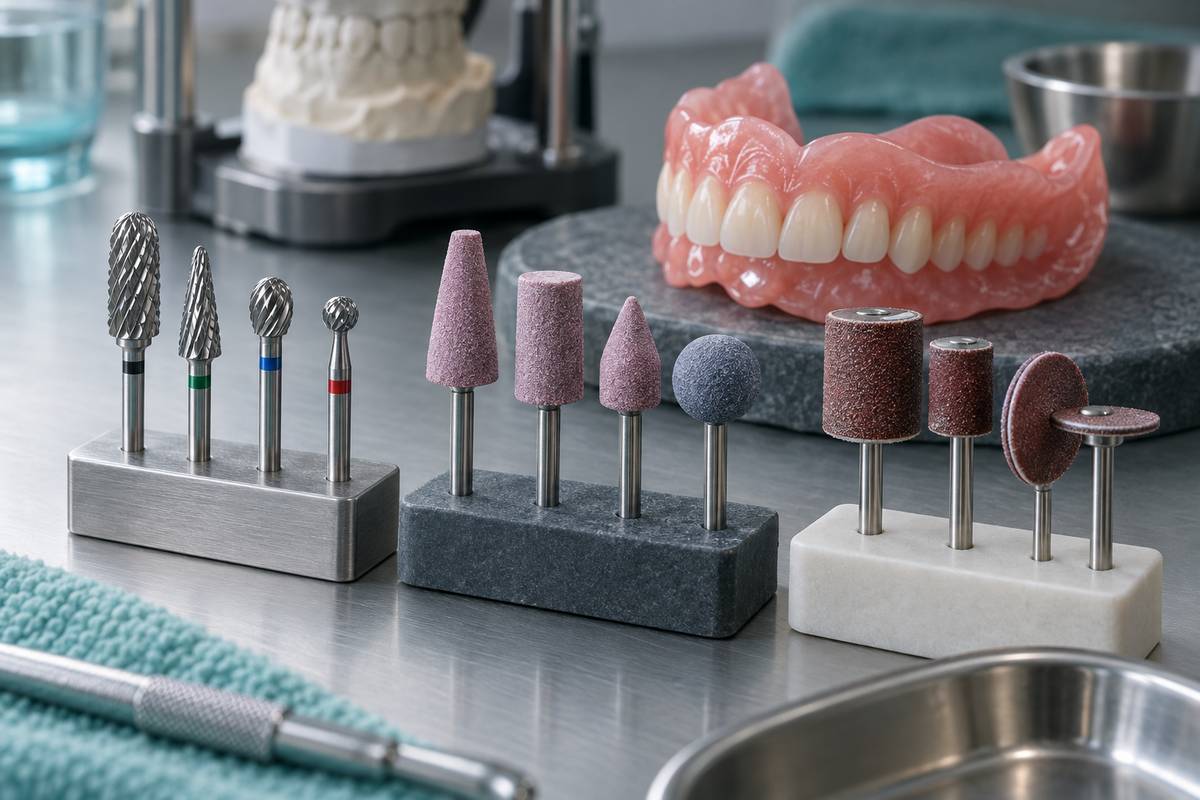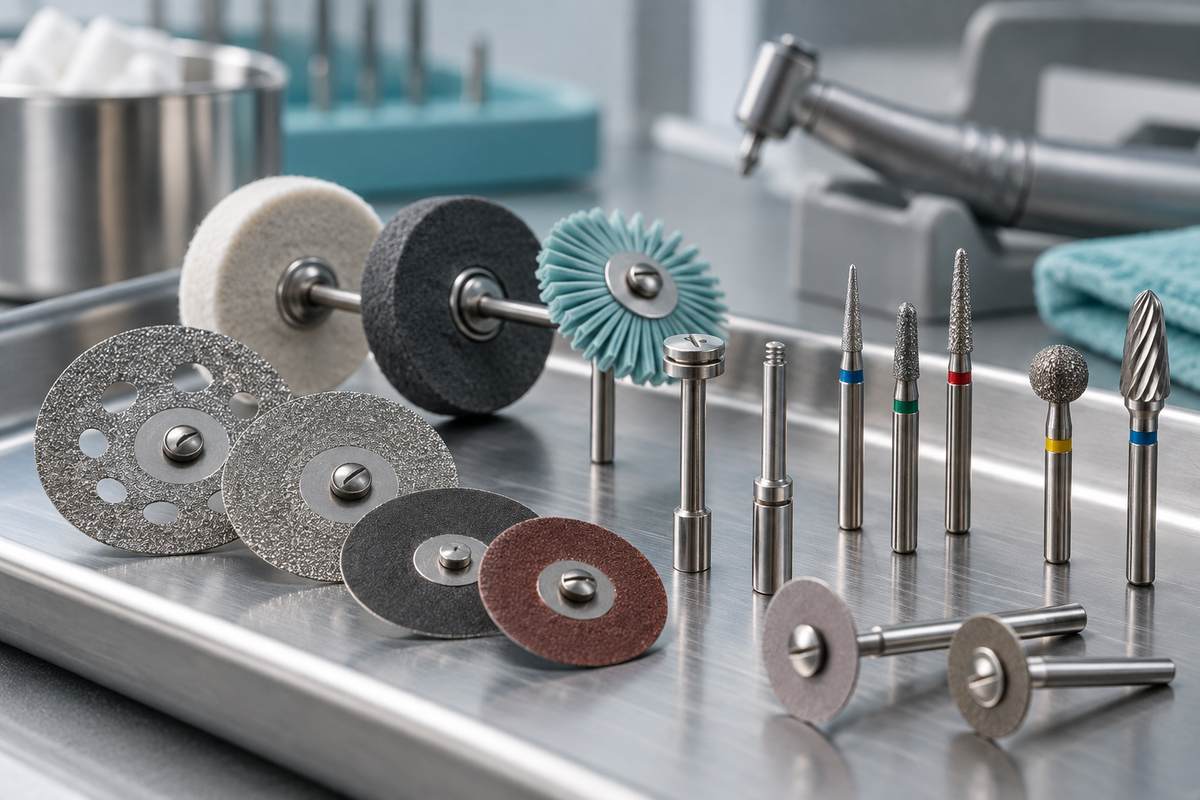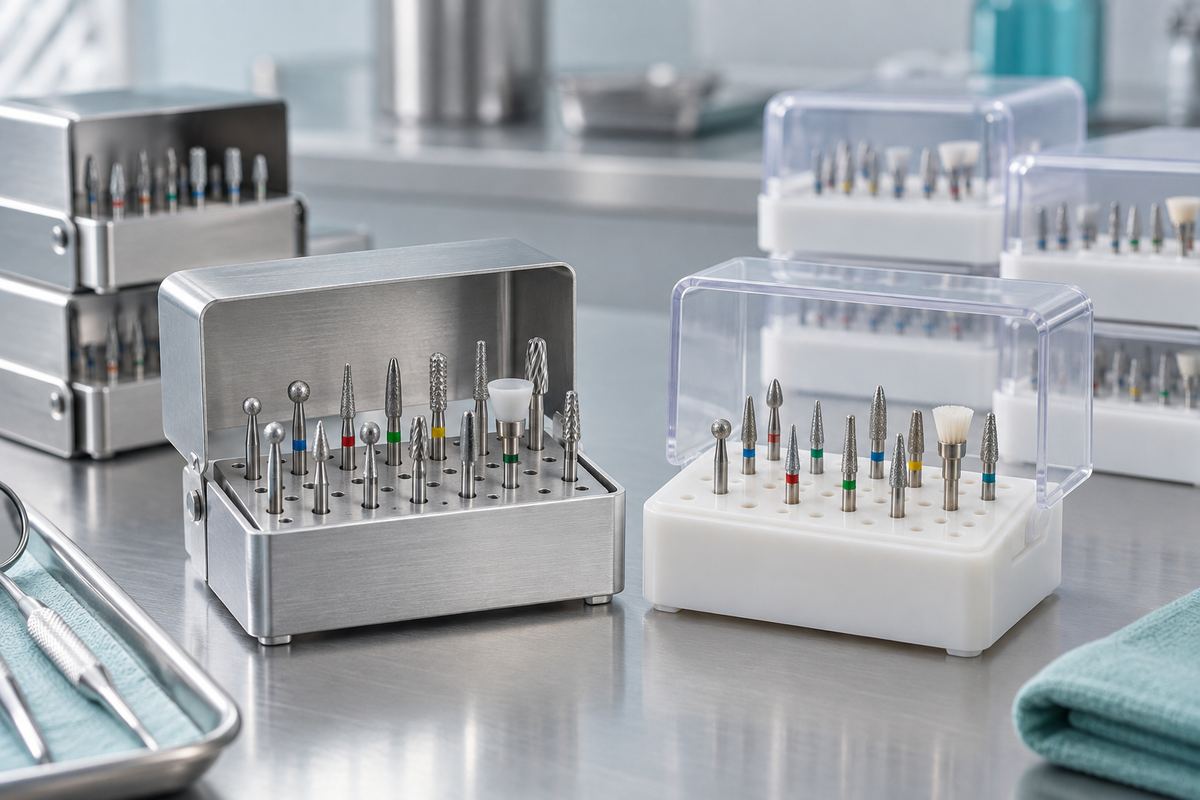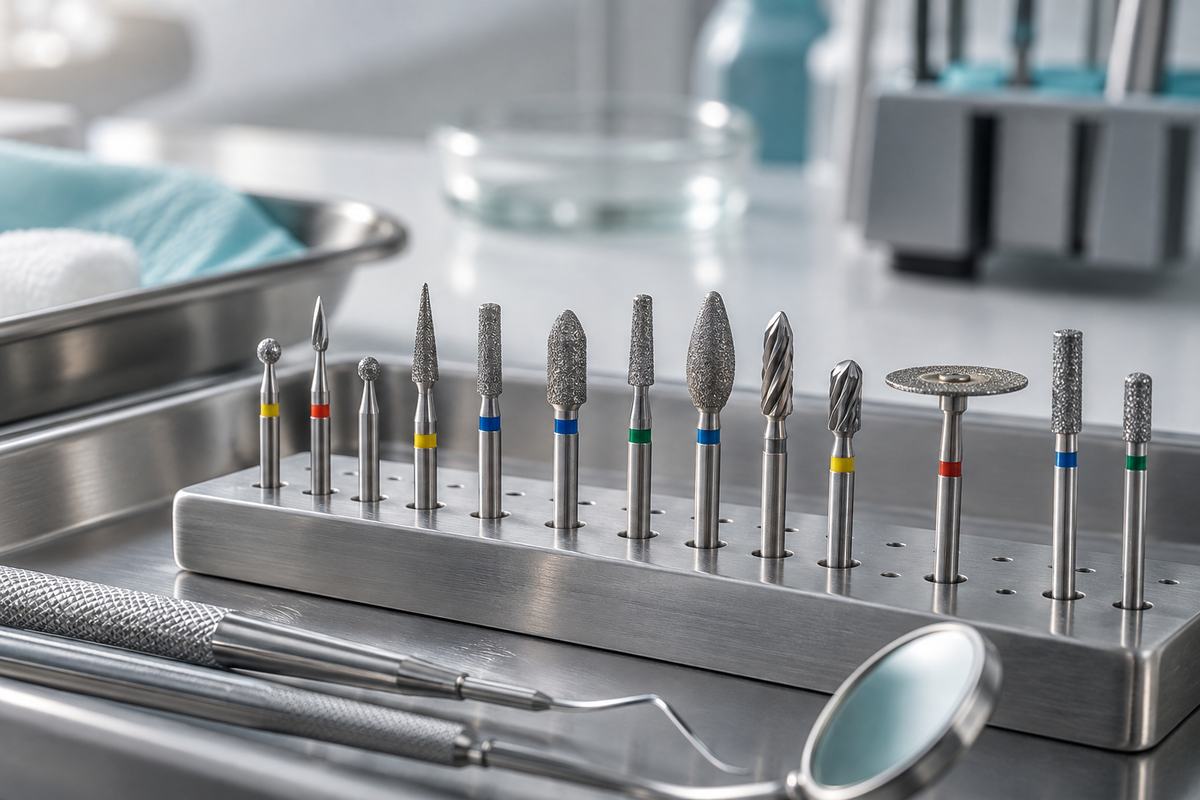
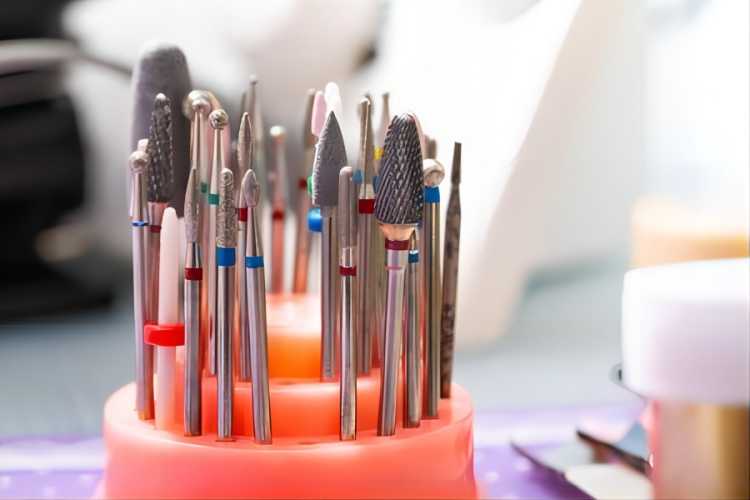
Most dental professionals are familiar with the standard round and cylindrical burs that make up the bulk of everyday rotary work. But beyond these common profiles lies a wide range of specialty dental bur shapes, each designed for a specific clinical task. Understanding these less common profiles helps practitioners choose the right instrument for the job and achieve better outcomes for patients.
Whether you work in restorative dentistry, endodontics, or cosmetic procedures, having the correct bur shape on hand can make the difference between a good result and a great one. This guide covers the most notable specialty bur shapes, their clinical applications, and tips for selecting the right profile.
Why Bur Shape Matters in Clinical Dentistry
The geometry of a dental bur determines how it removes material, the smoothness of the resulting surface, and how precisely the operator can control the cut. A bur with the wrong profile for a given task can lead to over-preparation, poor margins, or unnecessary chair time. In contrast, matching the bur shape to the procedure allows for controlled, predictable material removal.
Shape also affects heat generation. Burs with larger surface contact areas produce more friction, while tapered or pointed profiles concentrate cutting action on a smaller zone. Clinicians who understand these dynamics can reduce the risk of thermal damage to pulp tissue and adjacent structures.
Beyond the shape itself, the material of the bur head plays a role. Diamond dental burs are often preferred for crown preparation and enamel work, while tungsten carbide burs excel at removing old restorations and shaping dentin. Many of the specialty shapes described below are available in both diamond and carbide versions.
Football-Shaped Bur
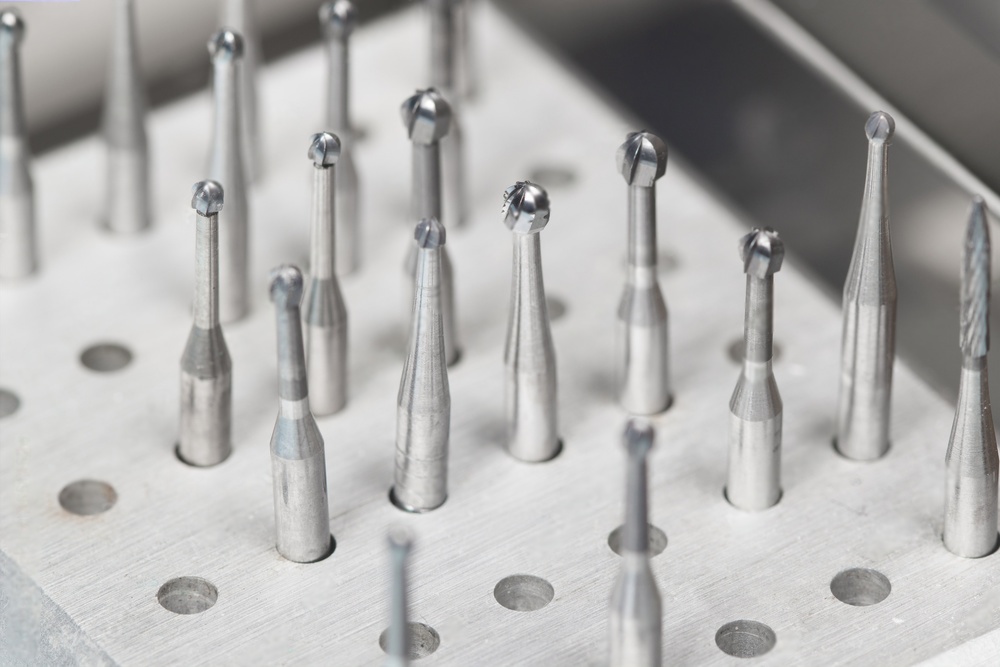
The football bur, sometimes called an egg-shaped or elliptical bur, features a wide, rounded midsection that tapers at both ends. This profile allows the clinician to create smooth, concave surfaces in a single pass, making it a popular choice for occlusal adjustments and lingual surface contouring.
Key Applications
- Contouring the incisal edges of anterior teeth for a natural appearance
- Smoothing occlusal surfaces during composite finishing
- Adjusting the lingual anatomy of crowns and veneers
- Creating concavities on restoration surfaces for better morphology
The football bur is available in both fine-grit diamond and multi-fluted carbide versions. The diamond variant is typically used for initial contouring, while the carbide version produces a smoother surface finish in a second pass.
Pear-Shaped Bur
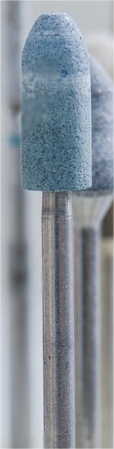
The pear-shaped bur has a rounded base that narrows toward the shank, forming a teardrop-like profile. This design gives the operator excellent control when working in confined spaces, because the widest cutting diameter sits near the tip rather than at the shoulder.
Key Applications
- Cavity preparation, especially Class I and Class V preparations
- Removing undercuts in restorative work
- Shaping and polishing composite restorations
- Accessing proximal surfaces in tight interproximal spaces
Pear burs are identified by ISO shape code 330 in carbide and various manufacturer codes in diamond. They are one of the most commonly stocked specialty shapes in clinical kits because of their versatility. For more on how the ISO numbering system works, see our guide to understanding ISO numbers for dental burs.
Flame-Shaped Bur
The flame bur features a long, slender taper that comes to a fine point. Its profile resembles a candle flame, which is how it earned its name. The gradual taper gives the clinician the ability to feather margins and blend restoration edges into natural tooth structure with a high degree of precision.
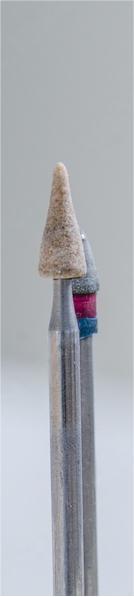
Key Applications
- Finishing and refining porcelain and composite margins
- Reshaping uneven or misaligned enamel surfaces
- Interproximal finishing of anterior restorations
- Creating chamfer margins for veneer preparations
Flame burs are especially popular in cosmetic dentistry, where subtle enamel recontouring can improve the overall symmetry of a smile without requiring full restorations. They are often used in fine or extra-fine grit diamond to minimize surface scratching.
Needle-Shaped Bur
The needle bur is the thinnest and most elongated specialty profile. Its long, cylindrical body and fine diameter allow it to reach into narrow slots, grooves, and access openings where other burs simply will not fit.

Key Applications
- Endodontic access cavity refinement
- Cutting narrow grooves for retention in indirect restorations
- Separating crowns and bridges during removal
- Accessing tight interproximal areas between posterior teeth
Because of their slender profile, needle burs are more prone to fracture under lateral force. Clinicians should use light pressure and let the bur do the cutting. A steady handpiece with minimal vibration also helps. To learn more about selecting the right tool for cavity work, read our article on dental burs for cavity preparation.
Tapered Diamond Bur
The tapered diamond bur combines a wide base with a fine pointed tip, coated in diamond grit along its full working length. This shape provides aggressive material removal at the base while allowing delicate finishing work at the tip, all in a single instrument.
Key Applications
- Crown preparation with shoulder or chamfer margins
- Veneer preparation for anterior teeth
- Reducing tooth structure for full-coverage restorations
- Creating smooth axial walls and defined finish lines
Tapered diamond burs are among the most frequently used shapes in fixed prosthodontics. They are typically available in coarse, medium, and fine grits, allowing the clinician to progress from bulk reduction to margin refinement without changing shape profiles.
Selecting the Right Specialty Bur Shape
Choosing the correct bur shape starts with the clinical objective. The table below offers a quick reference for matching common procedures to the appropriate profile.
| Procedure | Recommended Shape | Preferred Material |
|---|---|---|
| Occlusal contouring | Football | Diamond (fine grit) |
| Cavity preparation | Pear | Carbide |
| Margin finishing | Flame | Diamond (extra-fine) |
| Endodontic access | Needle | Diamond or carbide |
| Crown preparation | Tapered diamond | Diamond (coarse to fine) |
Tips for Working With Specialty Profiles
- Match the grit to the stage. Use coarser grits for bulk removal and finer grits for finishing. Switching grit within the same shape profile saves time and produces better surfaces.
- Control your speed and pressure. Specialty burs, especially needle and flame shapes, perform best at moderate speed with light, consistent pressure. Forcing the bur increases the risk of breakage and produces rougher surfaces.
- Keep burs sharp. Diamond burs lose cutting efficiency as the grit wears. Replace them regularly, and consider using a bur cleaning protocol to extend their working life.
- Stock a variety of grits. Having the same shape in two or three grit levels lets you complete preparation and finishing without switching between different bur profiles.
Building a Well-Rounded Bur Inventory
A well-equipped operatory does not need dozens of exotic shapes. In most cases, five to eight specialty profiles, combined with the standard round and cylinder burs, will cover the vast majority of clinical scenarios. The five shapes covered in this article, football, pear, flame, needle, and tapered diamond, form a strong foundation for any practice.
When adding specialty burs to your inventory, consider purchasing them in clinic kits that bundle commonly used shapes and grits together. This approach reduces per-unit cost and ensures you always have the right profile available when you need it.
Understanding the purpose behind each bur shape allows clinicians to work more efficiently, reduce patient chair time, and produce restorations with superior fit and finish. The right shape, used at the right moment, is one of the simplest ways to improve the quality of everyday dental work.