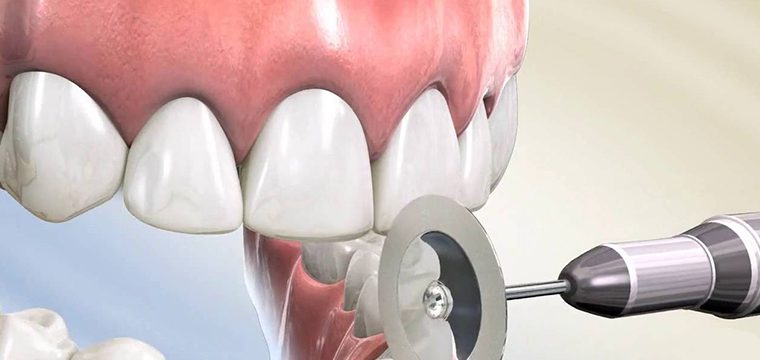
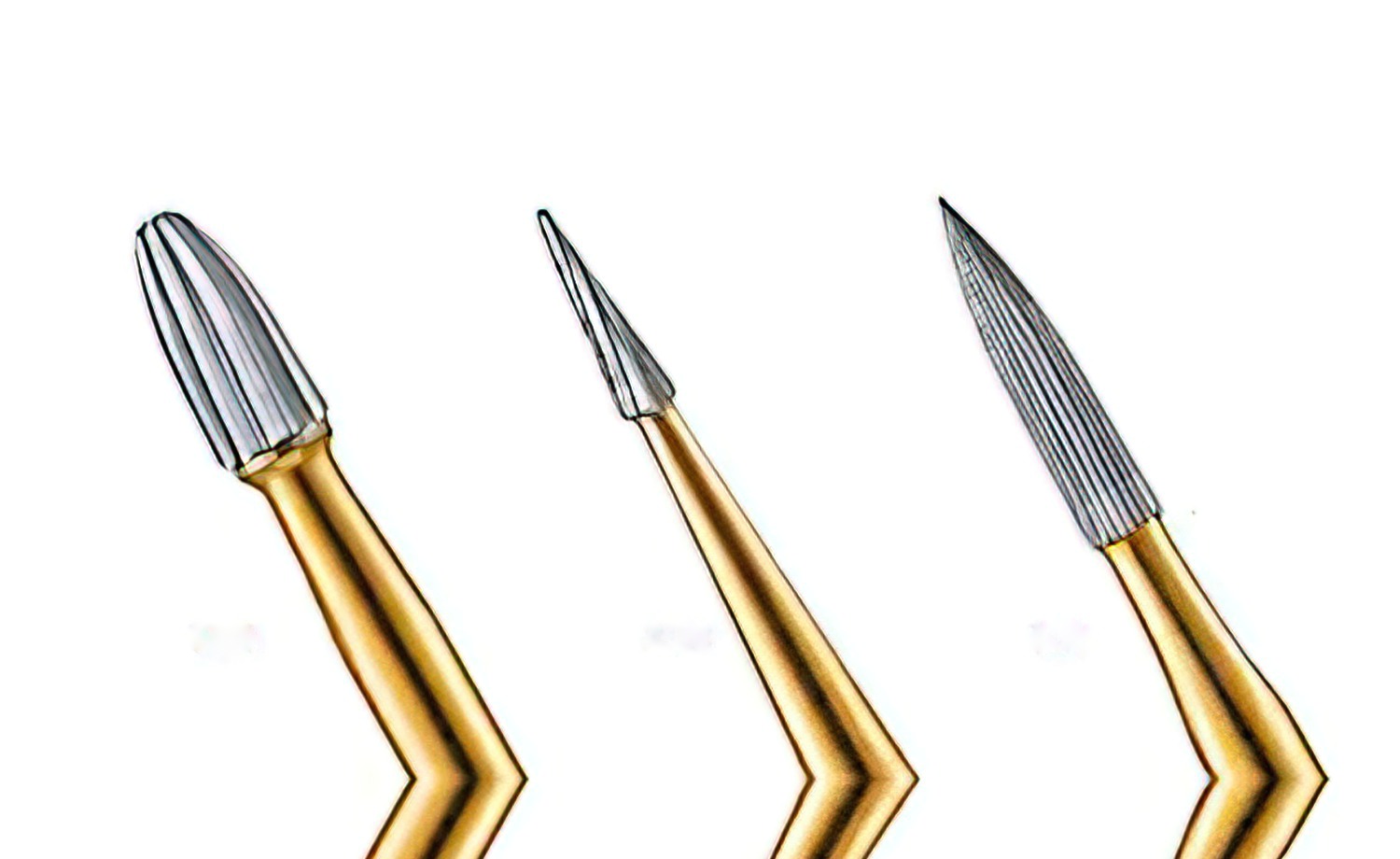
Every dental restoration demands a polished, natural-looking surface before the patient leaves the chair. Finishing burs are the instruments that make this possible. Whether you are smoothing composite, adjusting enamel contours, or refining porcelain margins, the right finishing bur determines how professional the final result looks and feels.
This guide covers the definition, clinical uses, and main categories of finishing burs so you can pick the correct instrument for each procedure.
What Is a Finishing Bur?
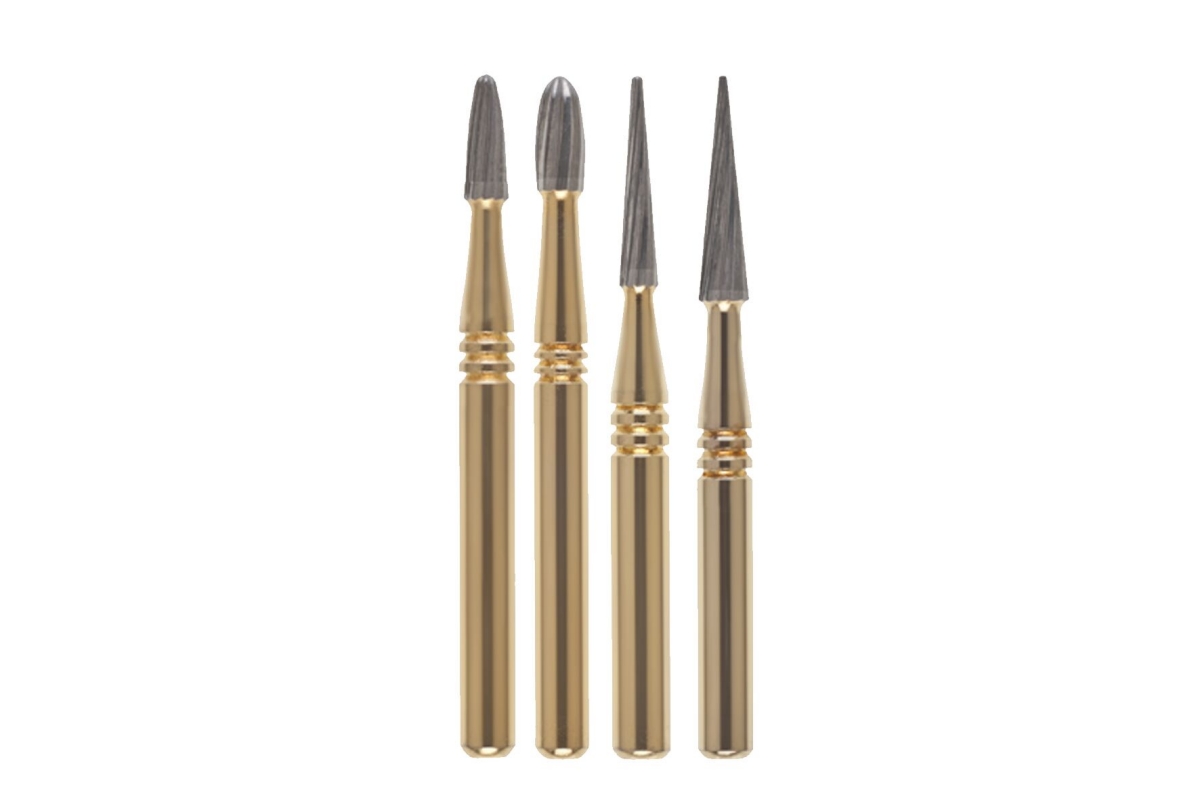
A finishing bur is a rotary instrument designed to refine and smooth the surface of a dental restoration after initial shaping is complete. Unlike cutting burs that remove bulk material quickly, finishing burs have finer cutting surfaces that produce a polished result without gouging or scratching.
Finishing burs are available with either 12 or 30 blades, carbide or diamond heads, and come in a wide range of shapes. The higher the blade count, the finer the finish. A 30-blade carbide finishing bur, for example, leaves a near-mirror surface on composite resin.
How Finishing Burs Differ from Cutting Burs
The main difference between a finishing bur and a standard cutting bur lies in the blade geometry. Cutting burs, such as crosscut fissure burs or round burs used for cavity preparation, have deep, widely spaced flutes designed to remove large volumes of tooth structure quickly. Finishing burs, by contrast, have shallow, closely spaced blades that shave off only a thin layer of material per rotation. This design produces a much smoother surface with minimal chatter or vibration.
Another key distinction is speed range. Cutting burs often run at maximum handpiece speed for efficient material removal. Finishing burs perform best at moderate speeds, typically between 10,000 and 30,000 RPM for carbide instruments, which gives the operator greater tactile control and reduces the risk of removing too much material in a single pass.
Clinical Uses of Finishing Burs
Finishing burs serve several distinct functions in daily practice:
- Restoration finishing - Smoothing composite, amalgam, or ceramic restorations to anatomically correct contours
- Enameloplasty - Reshaping enamel surfaces to improve occlusion or aesthetics
- Odontoplasty - Recontouring tooth structure for orthodontic or prosthetic purposes
- Soft tissue recontouring - Trimming gingival tissue during crown preparation or implant procedures
- Margin refinement - Creating precise margins on indirect restorations before cementation
The primary material worked on with finishing burs is aesthetic restorative material, especially composite resin. However, finishing burs also perform well on porcelain, compomer, glass ionomer, and precious metal restorations.
Carbide vs. Diamond Finishing Burs
Two main head materials dominate the finishing bur market: tungsten carbide and diamond. Each has distinct advantages.
| Feature | Carbide Finishing Burs | Diamond Finishing Burs |
|---|---|---|
| Cutting action | Blade-based, shearing cut | Abrasive grinding |
| Surface quality | Very smooth, minimal scratching | Slightly rougher, needs follow-up polishing |
| Best for | Composite, amalgam | Porcelain, ceramic, enamel |
| Blade count | 12-blade (contouring) or 30-blade (fine finishing) | Fine or superfine grit |
| Durability | Long-lasting with proper care | Grit wears over repeated use |
| Heat generation | Lower | Higher, requires water spray |
Many practitioners keep both types in their operatory. Carbide finishing burs handle the bulk of composite work, while fine-grit diamond burs are reserved for porcelain adjustments and enamel recontouring. For a deeper comparison, see our guide on diamond burs vs. carbide burs.
Categories of Finishing Burs by Material
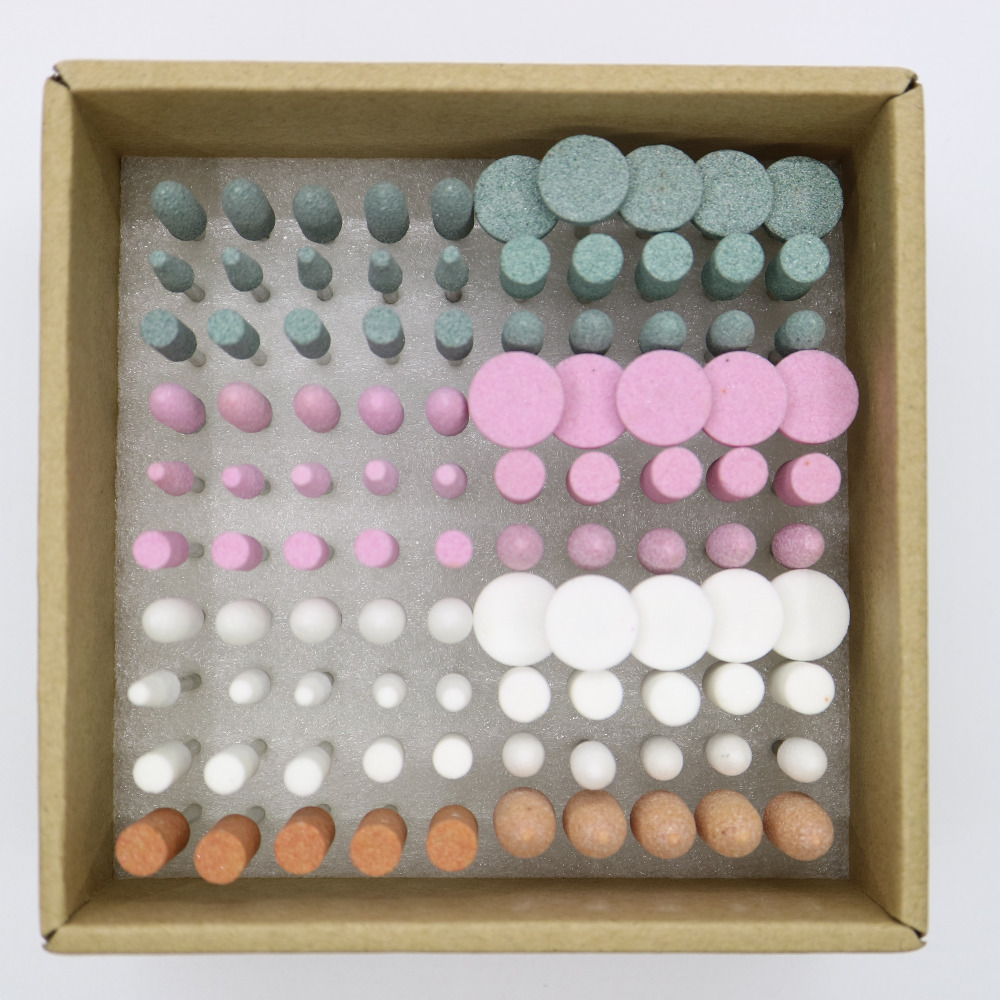
Beyond carbide and diamond heads, finishing burs also include abrasive stone instruments. The two most common stone types are white stones and green stones, each matched to specific restorative materials.
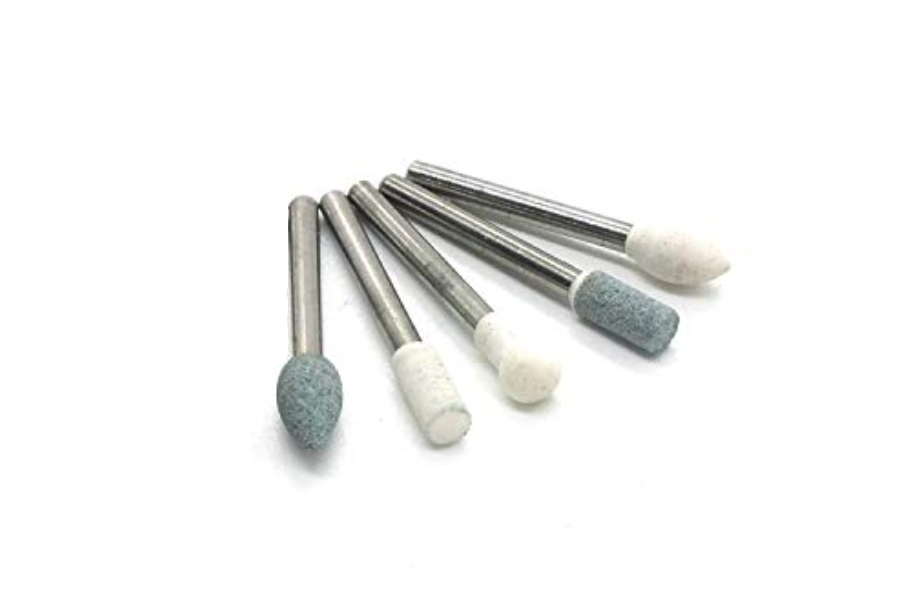
White Stone Finishing Burs (for Composite)
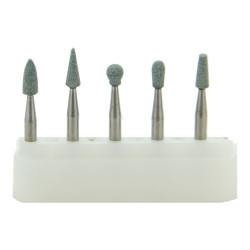
White stones, often called Dura-White stones, are made from micrograined aluminum oxide. They are the standard choice for finishing composite restorations, compomers, glass ionomer materials, and porcelain surfaces. Key characteristics include:
- Vibration-free performance for patient comfort
- Long service life before replacement is needed
- Micrograined aluminum oxide grit that cuts without chipping
- Excellent for delicate contouring on enamel and composite
.jpg)
White stone kits such as the White Stone Burs Kit provide a selection of shapes for different restoration geometries, letting you handle anterior and posterior composites with one organized set.
Green Stone Finishing Burs (for Amalgam and Ceramics)
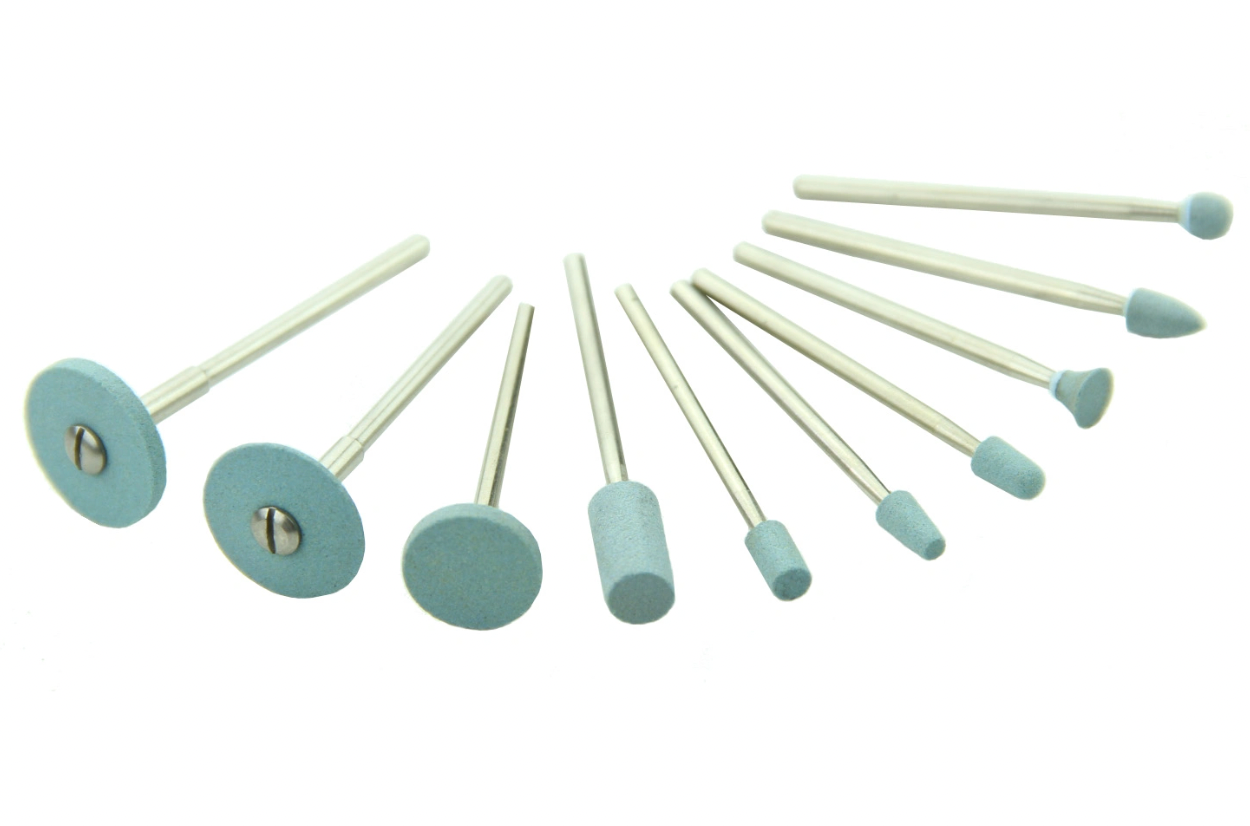
Green stones, or Dura-Green stones, are constructed from high-quality silicon carbide. They are the preferred instrument for contouring and finishing amalgam, porcelain, precious metals, and composite. Their advantages include:
- Shatter-resistant construction for safe intraoral use
- Fast, accurate cutting with consistent results
- Long-lasting silicon carbide abrasive
- Concentric rotation that minimizes vibration
For quick contouring and bulk finishing, standard green stones work best. For surface characterization and fine detail work, Dura-Green Fine stones provide a gentler cut. Green stones are a staple in most dental operatories because of their versatility across multiple material types.
Tungsten Carbide Trimming and Finishing Kits
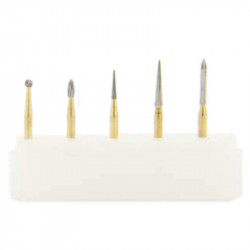
For practitioners who want an all-in-one solution, gold-plated TC finishing bur kits combine multiple shapes in a single organizer. These kits typically include egg, flame, needle, round, and taper shapes, covering virtually every restoration type. The gold-plated shank resists corrosion through repeated sterilization cycles.
Common Finishing Bur Shapes and Their Applications
Finishing burs come in a variety of head shapes, and each shape serves a specific clinical purpose:
- Round - Ideal for concave surfaces, occlusal anatomy, and fossa refinement
- Pear-shaped - Works well on proximal surfaces and line angles
- Flame - Suited for interproximal areas and thin margin finishing
- Cylinder - Best for flat surfaces and long straight margins
- Inverted cone - Used for occlusal surface detailing and undercut areas
- Needle - Reaches tight interproximal spaces and fine grooves
- Egg (football) - Versatile shape for occlusal surfaces and concavities
Selecting the correct shape is just as important as choosing the right material. A flame-shaped finishing bur, for instance, reaches interproximal margins that a round bur cannot access. Matching the shape to the clinical situation saves time and produces better surface quality on the finished restoration.
Tips for Getting the Best Results with Finishing Burs
Follow these practical guidelines to maximize the performance and lifespan of your finishing burs:
- Use light pressure. Let the bur do the work. Excessive force generates heat and can damage the restoration surface.
- Work in sequence. Start with a 12-blade bur for initial contouring, then switch to a 30-blade or fine stone for the final polish.
- Keep the bur moving. Holding a spinning bur in one spot creates flat spots and heat buildup.
- Use water spray with diamond burs. Diamond generates more friction than carbide, so coolant prevents thermal damage to pulp tissue.
- Inspect under magnification. A loupe or microscope reveals surface scratches invisible to the naked eye.
- Replace worn burs promptly. A dull finishing bur creates more heat and a rougher surface than a sharp one.
Maintenance and Sterilization of Finishing Burs
Like all intraoral rotary instruments, finishing burs must be cleaned and sterilized between patients. Carbide finishing burs should be scrubbed under running water to remove debris, then placed in an ultrasonic cleaner before autoclaving. Inspect the blades under magnification after each cleaning cycle. Bent or chipped blades create an uneven cutting pattern that leaves scratches rather than a smooth finish.
Stone finishing burs such as white and green stones are more fragile. Avoid dropping them on hard surfaces, and replace any stone that shows cracks or chips. A cracked stone can fragment under rotational stress, posing a risk to both the patient and the operator.
Choosing the Right Finishing Bur for Your Practice
The ideal finishing bur depends on three factors: the restorative material, the location in the mouth, and the level of surface refinement required. For most general practices that work primarily with composite resin, a 30-blade carbide set and a white stone kit will cover the majority of cases. Practices that frequently place ceramic restorations should add fine-grit diamond finishing burs and green stones to their inventory.
Whatever combination you choose, matching the instrument to the material is the single most important decision. Using a green stone on composite or a white stone on amalgam produces suboptimal results and wastes clinical time.
For additional guidance on selecting rotary instruments, browse our dental bur types guide for a complete overview of what is available.