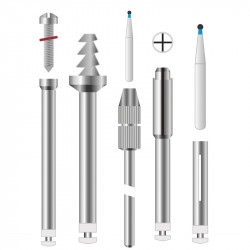
In dental treatment, procedures like cutting, grinding, polishing, and finishing require a reliable connection between the handpiece and the rotary accessory doing the actual work. That connection is the mandrel. Despite being one of the smallest instruments on the tray, mandrels play a major role in the quality and safety of every procedure that involves a rotating disc, stone, or polishing cup.
This article explains what mandrels are, how they are classified, what materials they are made from, and how to select the right mandrel for clinical and laboratory applications.
What Is a Dental Mandrel?
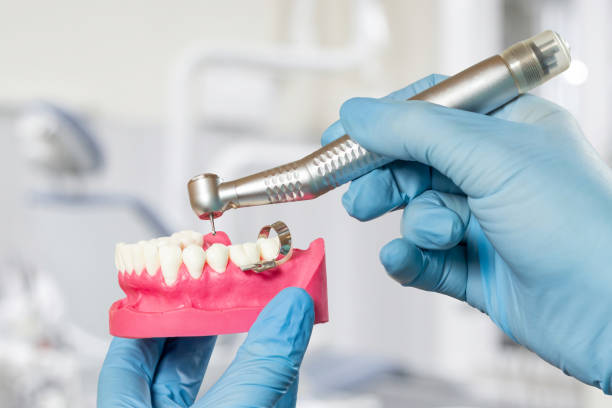
A dental mandrel is a cylindrical instrument designed to fit into a handpiece and hold a disc, stone, cup, or other rotary accessory used for grinding, smoothing, or finishing. The mandrel acts as a coupling device: one end connects to the handpiece collet, and the other end grips the accessory securely so it can rotate at controlled speeds.
Think of the mandrel as an adapter between your handpiece motor and the tool that contacts the tooth, restoration, or prosthetic material. Without a mandrel, loose accessories like polishing discs and separating wheels would have no way to attach to the handpiece.
Just as different burs require specific shank types, mandrels come in various configurations to match different handpiece systems and accessory designs.
Mandrel Materials and Construction
Mandrels are manufactured from several materials, each offering distinct advantages:
| Material | Properties | Common Use |
|---|---|---|
| Stainless Steel | Corrosion-resistant, autoclavable, strong | Clinical and laboratory use |
| Carbon Steel | High hardness, cost-effective | Laboratory and industrial mandrels |
| Aluminum | Lightweight, soft | General metalworking, jewelry |
| Wood | Inexpensive, disposable | Wire bending, shaping templates |
In dental applications, stainless steel is the standard material because it withstands repeated autoclave cycles and resists corrosion from saliva, disinfectants, and cleaning solutions. Laboratory mandrels may also feature reinforced construction at the head junction to handle the higher lateral forces encountered during bench work.
Reinforced vs. Standard Construction
Mandrels for laboratory use often come in two construction grades:
- Reinforced (stainless steel) — Thicker shaft at the head-to-shank junction. Handles heavy grinding and polishing loads without bending or breaking.
- Standard (plain steel) — Thinner construction suitable for lighter tasks. More affordable and available in a wider range of head lengths.
Both grades are available in multiple head lengths, so you can select the one that best matches the width of your accessory.
Classification by Shank Type
Like all rotary dental instruments, mandrels are classified by their shank dimensions. The shank is the portion that inserts into the handpiece collet. Three shank types dominate the dental market:
FG (Friction Grip) Mandrels
FG mandrels have a 1.6 mm diameter shank and are designed for high-speed handpieces. They are held in place by friction within the handpiece chuck rather than by a latch or screw mechanism. FG mandrels are commonly used chairside for procedures like finishing composite restorations with polishing discs.
RA (Right Angle) Mandrels
RA mandrels feature a 2.35 mm diameter shank with a notch that engages the latch mechanism in a contra-angle (right angle) slow-speed handpiece. They are widely used for both clinical and laboratory procedures, especially when controlled low-speed polishing or finishing is required.
HP (Handpiece) Mandrels
HP mandrels also have a 2.35 mm shank diameter but are longer than RA mandrels and lack the latch notch. They fit directly into straight (nose cone) handpieces used primarily in the dental laboratory. HP mandrels are the preferred choice for bench-mounted work involving larger accessories.
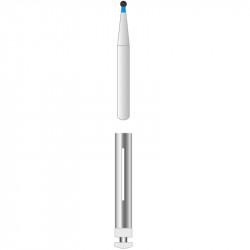
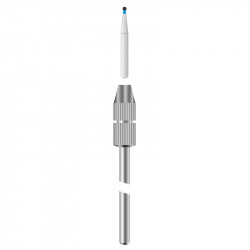
Types of Dental Mandrels by Function
Beyond shank classification, mandrels are grouped by how they hold the accessory. The main functional types include:
Screw Mandrels
The most common type in clinical dentistry. A threaded screw at the tip passes through the centre hole of a disc or wheel and tightens to hold it securely. Screw mandrels are used with polishing discs, separating discs, silicone polishing wheels, and other accessories with arbor holes.
Snap-On Mandrels
These mandrels feature a small button or raised nub at the tip. The accessory snaps onto this button and is held in place by a friction fit. Snap-on systems allow fast accessory changes, which is useful during multi-step polishing sequences where you move through progressively finer grits.
Adapter Mandrels
Adapter mandrels convert one shank type to another. The two most common configurations are FG-to-RA and FG-to-HP. These adapters let you use an accessory designed for one handpiece system in a different handpiece without changing the collet. For a deeper look at each type, see our guide on different types of mandrels.
Split Mandrels
Split mandrels have a narrow slot cut into the shaft. Sandpaper, polishing cloth, or abrasive strips thread through this slot and wrap around the mandrel body. They are used for fine finishing in tight areas and are available in both straight and tapered profiles.
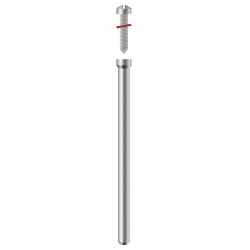
What Are Mandrels Used for in Dentistry?
Mandrels serve several distinct functions in clinical and laboratory settings:
- Holding polishing discs — Screw mandrels secure aluminum oxide discs and similar polishing media for finishing composite, ceramic, and acrylic restorations.
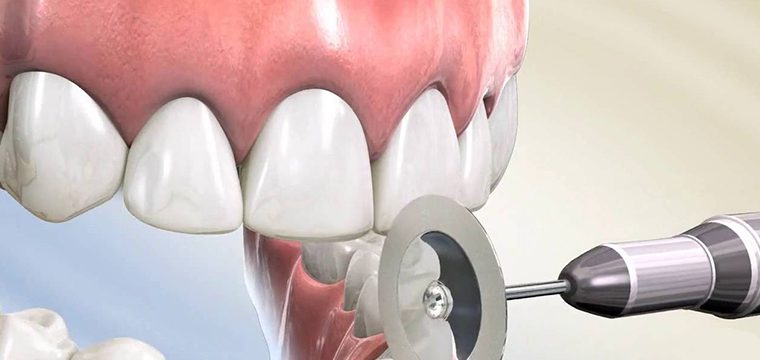
- Mounting separating discs — Thin diamond or carborundum separating discs attach to mandrels for cutting through metal frameworks, sprues, and other materials.
- Connecting grinding stones — Some mounted stones and points require mandrels for attachment, particularly those used in laboratory finishing work.
- Enabling sandpaper finishing — Split mandrels allow operators to use custom-cut abrasive strips for fine detail work on restorations and appliances.
- Converting shank sizes — Adapter mandrels provide flexibility by allowing accessories designed for one handpiece type to work with another.
How to Select the Right Mandrel
Choosing the correct mandrel requires matching three variables:
| Variable | What to Check | Why It Matters |
|---|---|---|
| Shank type | FG (1.6 mm), RA (2.35 mm), or HP (2.35 mm long) | Must fit your handpiece collet |
| Head style | Screw, snap-on, split, or adapter | Must match your accessory mounting method |
| Head length | Measured in mm (varies by model) | Must accommodate the width of your accessory |
Additionally, confirm the mandrel speed rating against the maximum RPM of your handpiece. Running a mandrel beyond its rated speed can cause the accessory to detach, creating a safety hazard.
Storage and Organization
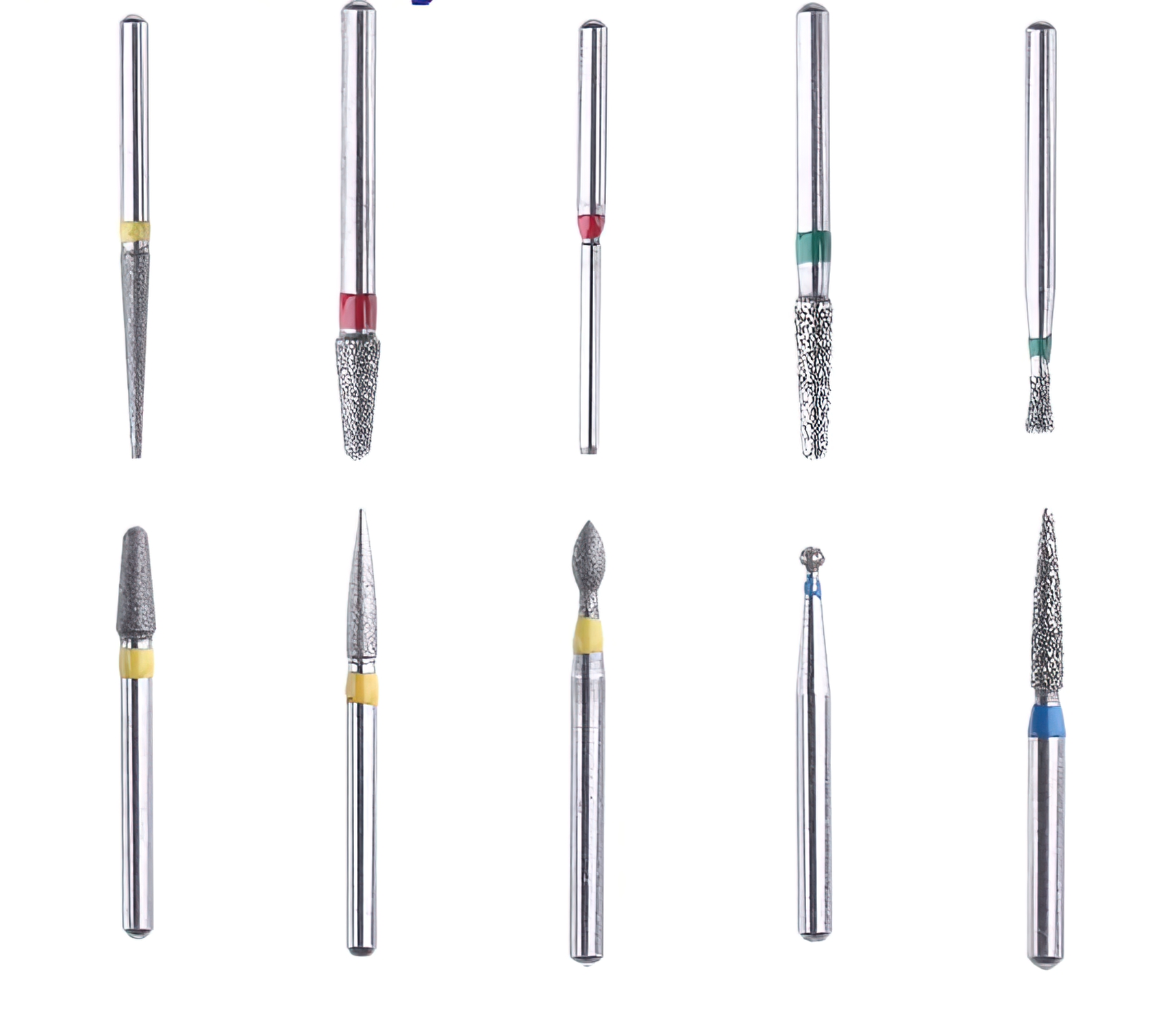
Keeping mandrels organized prevents damage and saves time during procedures. Sample books and bur block systems are designed to hold mandrels alongside other rotary instruments, making it easy to identify and retrieve the correct size at a glance.

These storage systems also serve as display tools for dental sales representatives, allowing them to present mandrel and polishing accessory collections to dental offices in an organized format.
Common Mandrel Brands in Dentistry
Several manufacturers produce mandrels for the dental market. Commonly referenced brands include Dedeco, Miltex, Moore, NTI, Premier, and 3M (Sof-Lex system). Each brand offers mandrels in the standard shank types described above, though the head designs and threading may vary between manufacturers. When replacing a worn mandrel, it is best to use the same brand and model to ensure compatibility with your existing accessories.
Mandrel Care and Sterilization
Stainless steel mandrels can be cleaned and sterilized using standard dental instrument protocols:
- Remove all debris and residual adhesive from the screw threads after each use
- Place in an ultrasonic cleaner for initial decontamination
- Package and autoclave according to your facility sterilization guidelines
- Inspect for bending, corrosion, or thread wear before reuse
- Discard any mandrel that shows signs of metal fatigue or cannot hold accessories securely
For detailed sterilization protocols, consult your facility guidelines and the mandrel manufacturer instructions.
Summary
Dental mandrels are the link between your handpiece and the rotary accessories that perform grinding, polishing, and finishing tasks. They are classified by shank type (FG, RA, HP), by function (screw, snap-on, split, adapter), and by material (stainless steel, carbon steel, aluminum). Selecting the correct mandrel requires matching the shank to your handpiece, the head style to your accessory, and the speed rating to your procedure. With proper selection, care, and storage, mandrels provide reliable performance across thousands of procedures.