


Cavity Preparation in Dentistry: Steps, Classes & Burs
Cavity preparation is one of the most common procedures in restorative dentistry. It involves the controlled removal of decayed tooth structure and the shaping of the remaining tooth to receive a filling material that restores form, function, and strength. Whether you are a dental student learning operative techniques or a practicing clinician refreshing your knowledge, understanding the principles, steps, and instrumentation behind cavity preparation is essential for predictable outcomes.
What Is Cavity Preparation?
Cavity preparation — also called tooth preparation — is the process of removing carious (decayed) tooth structure and shaping the resulting void so it can hold a restorative material securely. The goal is straightforward: eliminate the disease, preserve as much healthy tooth as possible, protect the pulp, and create a preparation geometry that resists displacement under chewing forces.
Teeth require cavity preparation when they develop carious lesions, fracture from trauma, or lose substance through abrasion or erosion. Without treatment, these conditions progress and can lead to infection, pain, and eventually tooth loss.
Core Principles of Cavity Preparation
The classical principles, originally described by G.V. Black and refined over decades of clinical research, guide every preparation:
- Outline form — Define the external boundaries of the preparation, placing margins on sound tooth structure.
- Resistance form — Shape the preparation so the tooth and restoration can withstand occlusal forces without fracturing.
- Retention form — Create mechanical features (undercuts, grooves, or bonded surfaces) that prevent the restoration from dislodging.
- Convenience form — Provide adequate access and visibility for placing the restorative material.
- Removal of remaining caries — Excavate all remaining decay after establishing the preparation outline.
- Finishing of enamel walls and margins — Smooth and refine the preparation edges for a tight seal between tooth and restoration.
Modern minimally invasive techniques have shifted the emphasis toward preserving as much healthy enamel and dentin as possible, but these six principles remain the foundation of every successful preparation.
G.V. Black Classification of Cavities
Before beginning any preparation, the clinician identifies the lesion location and classifies it according to G.V. Black's system. This classification determines the preparation design, instrument selection, and material choice.
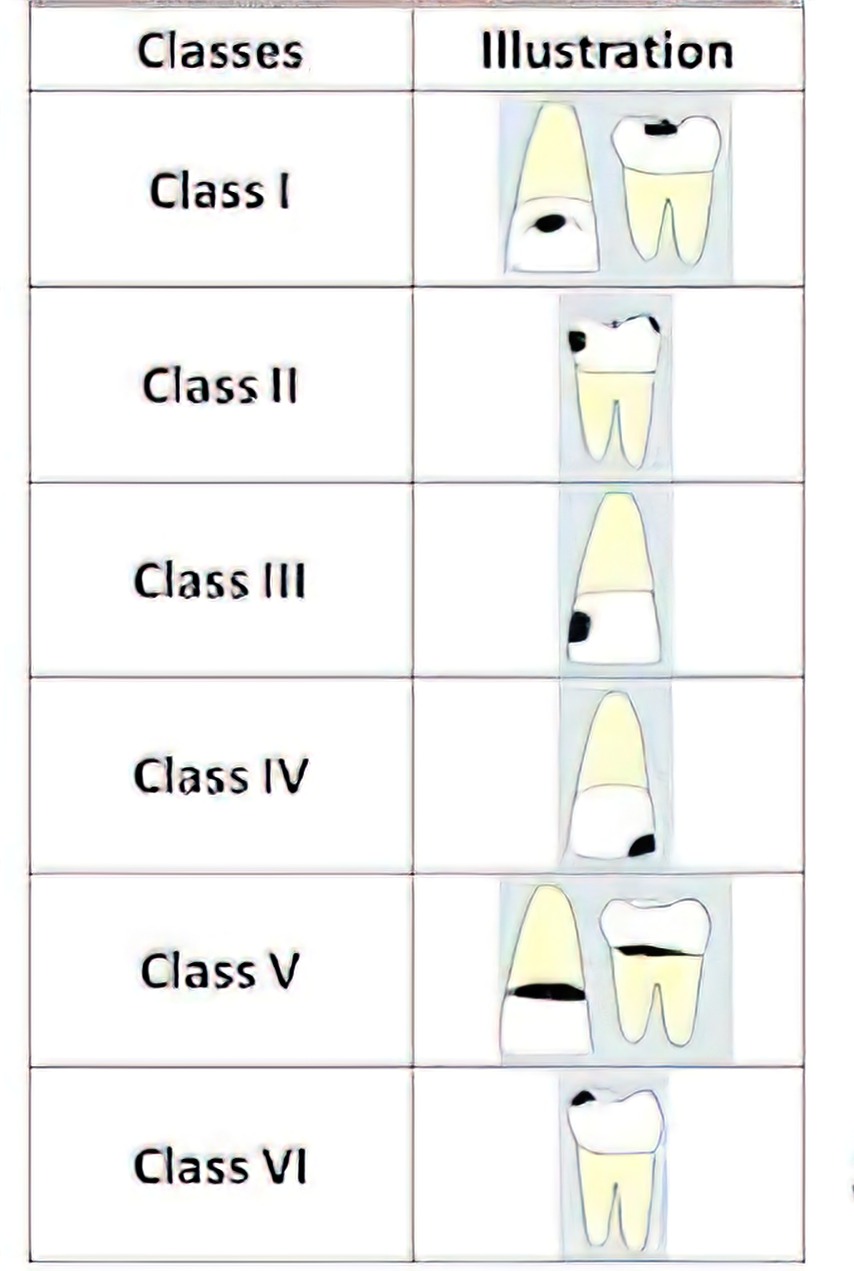
| Class | Location | Typical Teeth |
|---|---|---|
| Class I | Pits and fissures on occlusal, buccal, or lingual surfaces | Molars, premolars, lingual of upper incisors |
| Class II | Proximal surfaces of posterior teeth | Premolars and molars |
| Class III | Proximal surfaces not involving the incisal angle | Incisors and canines |
| Class IV | Proximal surfaces involving the incisal angle | Incisors and canines |
| Class V | Cervical third of facial or lingual surfaces | Any tooth (gingival margin area) |
| Class VI | Incisal edges or cusp tips | Anterior incisors, posterior cusp tips |
Each class calls for a different preparation outline, depth, and retention strategy. A Class I occlusal preparation in a molar, for example, is relatively simple compared to a Class IV preparation in an incisor that must restore both structure and aesthetics.
Step-by-Step Cavity Preparation Process
While individual techniques vary by material and lesion class, the general workflow follows these stages:
Step 1: Initial Tooth Preparation
The clinician gains access to the carious lesion using a high-speed handpiece with a suitable bur. For most preparations, a small round tungsten carbide bur (such as a #330 or #245) is used to penetrate enamel and establish the preparation outline. A diamond bur may be used instead when working through porcelain or when a broader reduction is needed.
Step 2: Caries Removal
Once the outline is established, the clinician switches to a slow-speed handpiece with a round carbide bur or spoon excavator to remove decayed dentin. The objective is to remove all soft, infected dentin while preserving the harder, remineralizable affected dentin layer. Caries-detecting dye can help distinguish between the two.
Step 3: Matrix Placement
For Class II, III, and IV preparations that extend to a proximal surface, a matrix band and retainer system is placed around the tooth. The matrix provides a temporary wall that confines the restorative material and helps recreate the natural tooth contour and contact point.
Step 4: Material Placement and Carving
The chosen restorative material — amalgam or composite resin — is placed into the preparation in increments, condensed or light-cured as appropriate, and carved or shaped to reproduce the tooth's original anatomy. Composite is placed in small layers and cured with a light to prevent shrinkage stress.
Step 5: Finishing and Polishing
After the material has set, excess material is trimmed and the restoration is polished to achieve a smooth surface. Finishing burs, abrasive discs, and silicone polishers are used to refine margins and surface texture. Proper finishing reduces plaque accumulation and improves the restoration's longevity.
Burs Used in Cavity Preparation
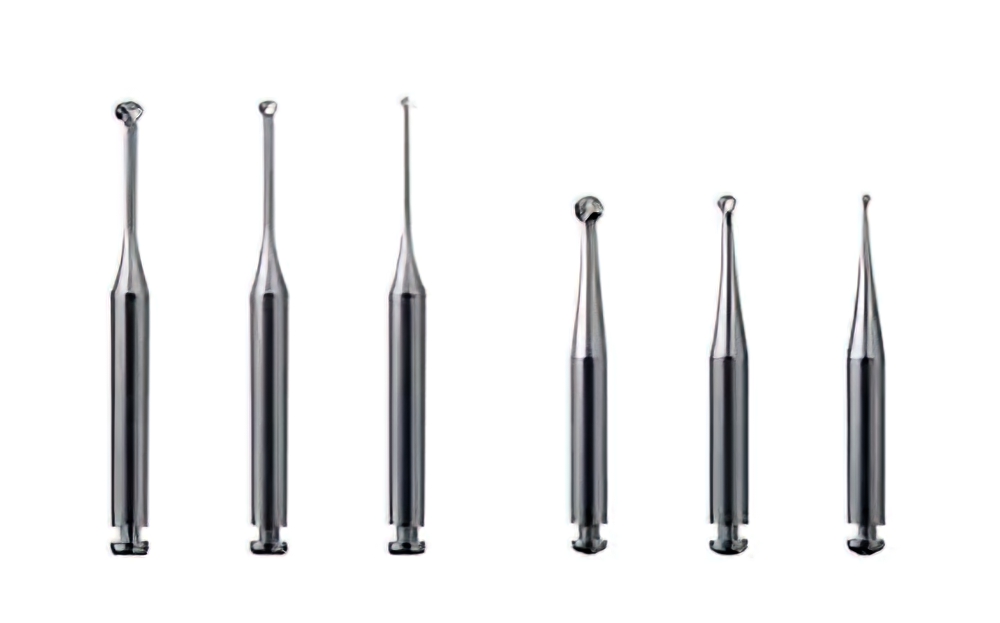
Selecting the right rotary instrument for each stage of preparation directly affects the quality of the result. Here are the most commonly used bur types and their roles:
| Bur Type | Use in Cavity Prep |
|---|---|
| Round carbide (#1/4, #1/2, #2, #4) | Caries excavation, initial access, pulp exposure check |
| Pear-shaped carbide (#330, #331) | Outline form for Class I and Class II preps |
| Inverted cone (#33-1/2, #34) | Creating mechanical undercuts for retention |
| Straight fissure (#56, #57) | Flat pulpal floors, parallel cavity walls |
| Tapered fissure (#169, #170) | Divergent walls for composite preps, crown reduction |
| Finishing burs (12–30 blade) | Smoothing walls, refining margins |
For a detailed breakdown of bur numbering and shapes, see our guide on ISO numbers for dental burs.
Amalgam vs. Composite: How Preparation Design Differs
The choice of restorative material affects preparation geometry significantly:
Amalgam Preparations
Amalgam does not bond to tooth structure. It relies on mechanical retention — undercuts, dovetails, and converging walls — to stay in place. Preparations for amalgam are typically wider with a minimum depth of 1.5 mm to prevent fracture under occlusal load. The classic "extension for prevention" philosophy, where margins were extended to self-cleansing areas, was developed with amalgam in mind.
Composite Preparations
Composite resin bonds directly to etched enamel and conditioned dentin through adhesive systems. Because retention comes from the bond rather than mechanical undercuts, composite preparations can be more conservative. Walls can diverge slightly (no undercuts needed), and the overall preparation can be smaller — removing only the decayed tissue and enough sound structure for access.
This bonding advantage is one reason composite restorations have largely replaced amalgam in modern practice, particularly for smaller lesions where tooth preservation is a priority.
Hand Instruments in Cavity Preparation
While rotary burs handle the bulk of material removal, hand instruments still play a role in refining the preparation:
- Spoon excavator — Used to scoop out softened carious dentin carefully, especially near the pulp where a bur might cause accidental exposure.
- Dental hatchet — Cleaves enamel along the preparation margin to create sharp, clean edges.
- Gingival margin trimmer — Refines the gingival floor of Class II preparations, producing a bevel that improves marginal adaptation.
- Chisel — Trims unsupported enamel from preparation walls, particularly on the facial and lingual aspects of proximal boxes.
Combining rotary and hand instrumentation gives the clinician precise control at every stage, from gross caries removal down to final margin refinement.
Preventing Cavities: Patient Education
While restorative techniques continue to advance, prevention remains the most effective strategy against dental caries. Dental professionals should reinforce these habits with patients at every visit:
- Brush twice daily with fluoride toothpaste, using proper technique to reach all surfaces.
- Floss daily to clean proximal surfaces where most Class II and III lesions develop.
- Limit sugary and acidic foods — frequent sugar exposure feeds the bacteria that produce cavity-causing acid.
- Stay hydrated — adequate saliva flow neutralizes acids and remineralizes early lesions.
- Visit the dentist regularly — early detection through clinical exams and radiographs catches lesions before they require large restorations.
Understanding both the restorative process and preventive strategies gives dental teams the tools to deliver better patient outcomes. For more on the rotary instruments used throughout these procedures, read our article on dental bur types, uses, and techniques.
