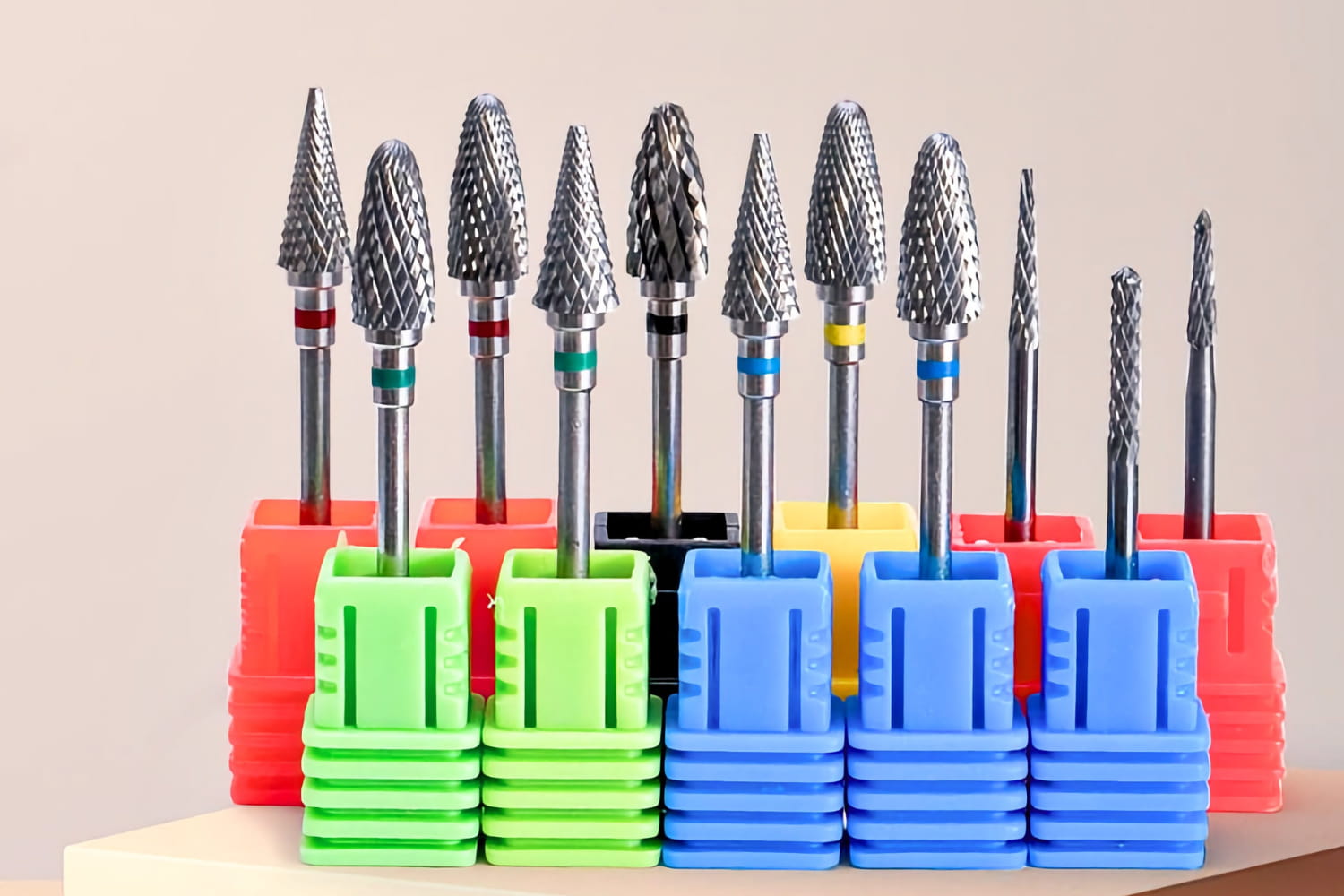
A die grinder is only as good as the bur spinning in its collet. Pick the wrong bit and you'll burn through burs, gouge your workpiece, or spend twice as long finishing what should have been a quick job. Carbide burs are the default choice for serious grinding work, but not all carbide burs are created equal. Flute count, shank diameter, head shape, and carbide grade all affect how a bur cuts, how long it lasts, and what kind of finish it leaves behind. This guide breaks down the specs that actually matter so you can match the right bur to your die grinder and your material.
Why Carbide Outperforms Steel
High-speed steel (HSS) burs have been around forever, and they still work fine for occasional soft-metal cleanup. But tungsten carbide is in a different league. Carbide sits at HRA 89–92 on the Rockwell hardness scale, compared to HRA 60–65 for HSS. That hardness translates directly into edge retention: a quality tungsten carbide bur holds its cutting edges 10 to 20 times longer than a comparable steel bur under the same conditions.
Heat resistance matters too. Carbide handles temperatures above 800°C before it starts softening, while HSS begins losing hardness around 600°C. For die grinder work at 20,000+ RPM, that thermal stability keeps the cutting edge intact through sustained use. Carbide also resists loading—that annoying buildup of material in the flute valleys—especially when cutting aluminum or other soft alloys. The upfront cost runs 3–5x more than HSS, but for anyone running a die grinder regularly, the per-hour cost of carbide is actually lower.
Understanding Shank Sizes
Shank diameter determines which grinder or handpiece accepts which bur. Get this wrong and you're stuck with a bur you can't use. Here are the three sizes you'll encounter, along with a lesser-known option that opens up a much wider selection of shapes.
Shank Size | Diameter | Fits | Typical Use |
|---|---|---|---|
1/4" standard | 6.35 mm | Full-size die grinders, bench grinders | Heavy stock removal, weld grinding, deburring castings |
1/8" mini | 3.175 mm (3.18 mm) | Micro die grinders, Dremel-type rotary tools | Detail work, engraving, small-part finishing |
HP dental | 2.35 mm | Dental handpieces, fits 1/8" collet with adapter | Dental lab trimming, precision detail work |
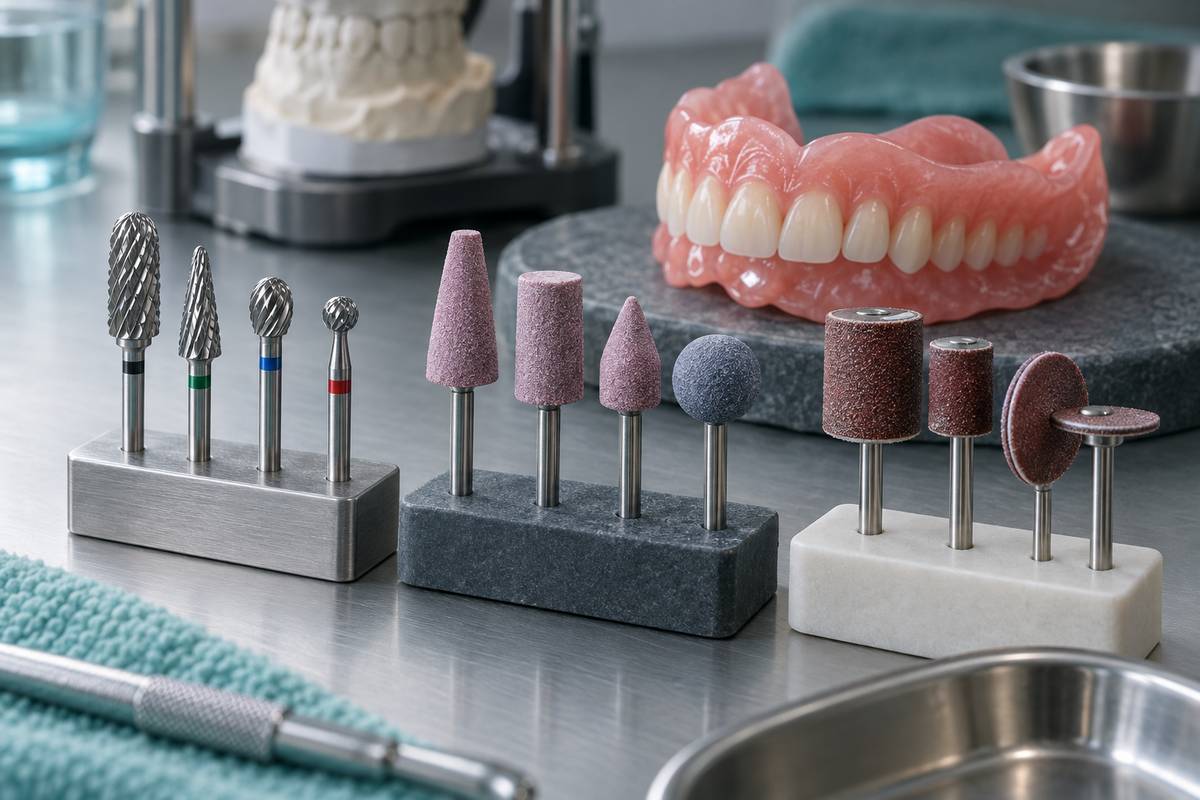
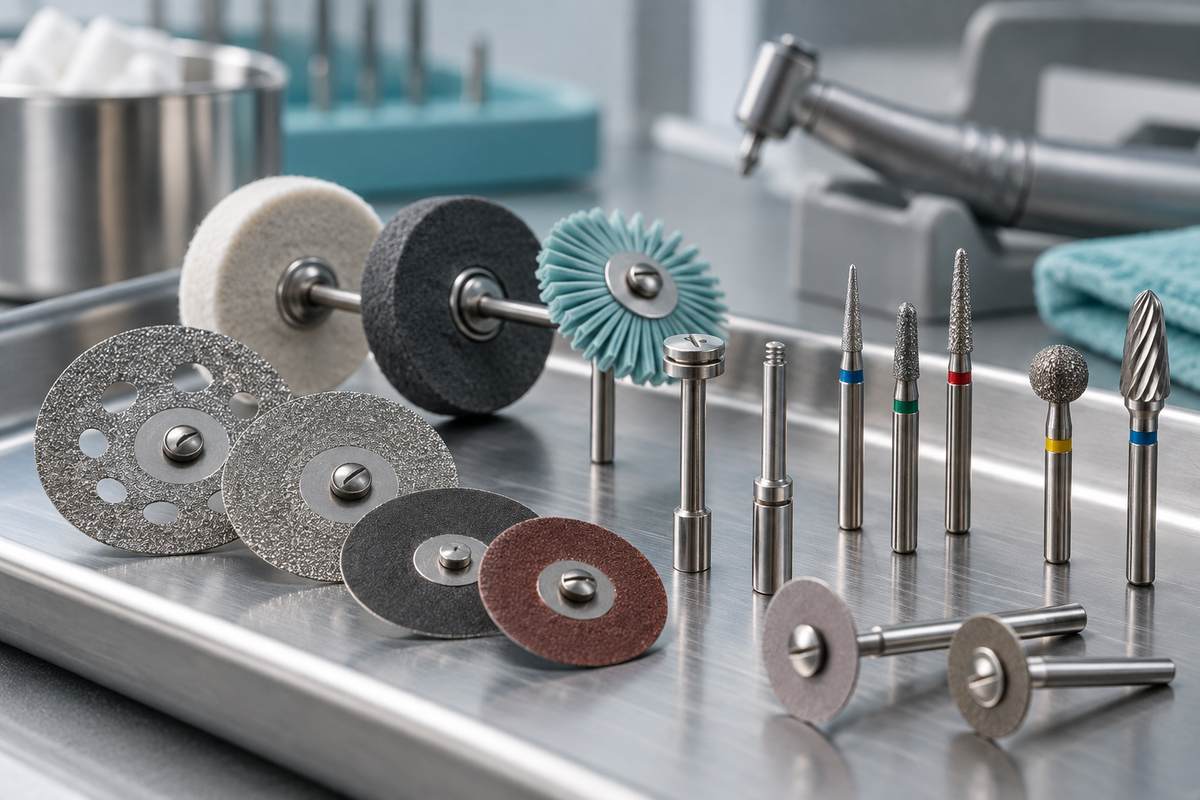
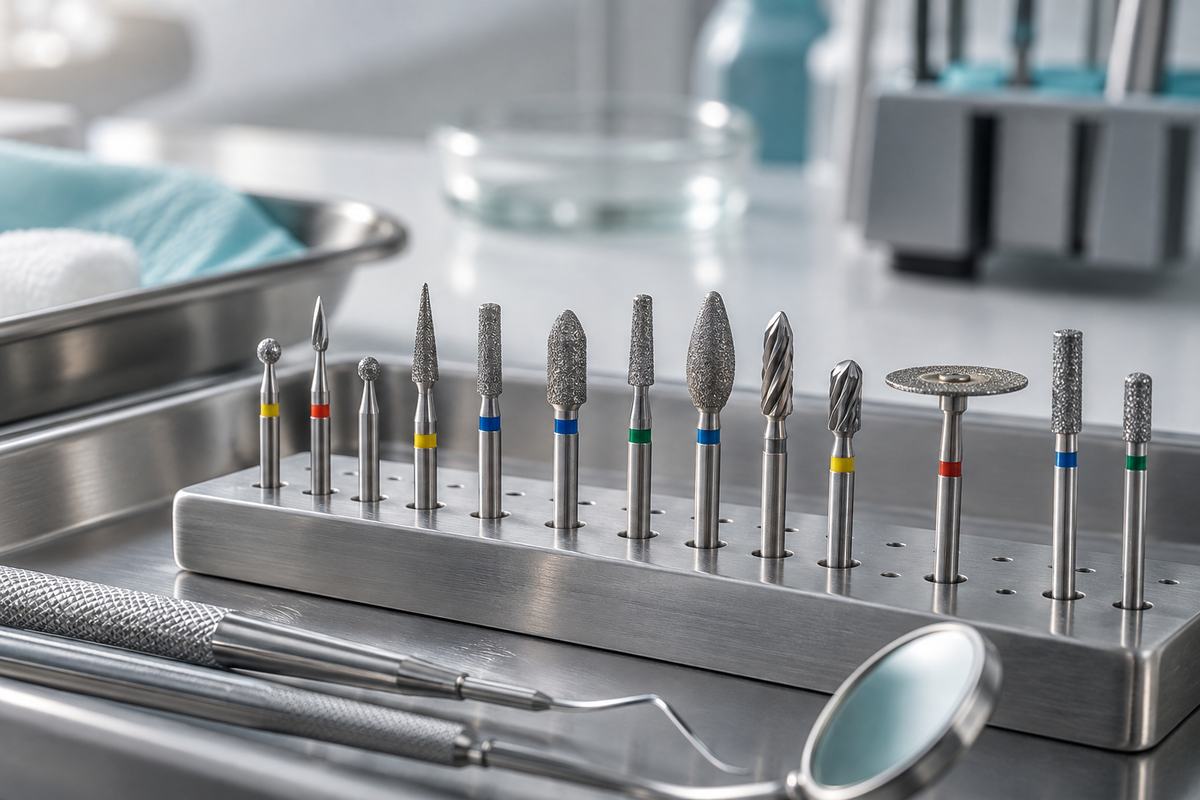
The HP (handpiece) shank at 2.35 mm deserves special attention. Originally designed for dental low-speed handpieces, HP carbide burs are precision-ground to tighter tolerances than most industrial burs. They're available in dozens of head shapes—flame, pear, inverted cone, football, tapered fissure—many of which simply don't exist in industrial catalogs. An HP bur will fit a 1/8" collet with a simple sleeve adapter, or it can run directly in micro die grinders that accept 2.35 mm shanks. For fine detail work on small parts, this is a genuine advantage. Read more about shank types explained in our detailed guide.
Flute Count and Cut Aggressiveness
The number of flutes (cutting edges) on a carbide bur controls how aggressively it removes material and what kind of surface finish it leaves. Most manufacturers group flute patterns into three categories.
Flute Type | Flute Count | Cut Character | Best For | Surface Finish |
|---|---|---|---|---|
Single-cut | 6–8 | Aggressive, fast removal | Steel, stainless, hard alloys | Coarse (visible tool marks) |
Double-cut | 12–16 | Moderate, balanced | General purpose, mild steel, cast iron | Medium (light tool marks) |
Fine / finishing | 28–32 | Light, controlled | Final passes, aluminum, soft metals | Smooth (near-polished) |
Single-cut burs have fewer, deeper flutes that produce larger chips. They cut fast and clear material efficiently, but they vibrate more and leave a rougher surface. Use them when you need to remove a lot of metal quickly—grinding down a weld bead, opening up a hole, reshaping a casting.
Double-cut burs are the all-rounders. Two sets of flutes cross each other at an angle, breaking chips into smaller pieces. Less vibration, less chatter, and a noticeably smoother finish than single-cut. If you're buying one set of burs for general shop work, double-cut is the safe bet.
Fine-cut burs barely remove material at all. Their job is finishing: smoothing tool marks from previous passes, blending surfaces, or shaping soft metals like aluminum and brass without digging in. Dental lab technicians use fine-cut burs constantly for model and framework trimming. For a deeper look at carbide bur types and their applications, see our carbide burs guide.
Best Burs by Application
Matching bur shape to the job saves time and produces better results. Here's a quick reference for common die grinder tasks.
Application | Recommended Shape | Flute Type | Notes |
|---|---|---|---|
Deburring edges | Cylindrical (SA/SB) or ball (SD) | Double-cut | Cylinder for straight edges, ball for inside corners and holes |
Weld cleanup | Tree radius (SF) or cylindrical (SA) | Single-cut | Aggressive removal first, then switch to double-cut for blending |
Port polishing | Flame (SH) or oval (SE) | Fine-cut | Work at lower RPM, let the bur do the cutting. Light pressure only. |
Automotive detailing | Cone (SM) or tapered (SL) | Double-cut | Good for tight spaces around brackets and panel seams |
Dental lab model trimming | Pear, flame, or inverted cone | Fine or double-cut | HP shank burs give the widest shape selection for precision work |
Slot cutting | Cylindrical flat-end (SA) | Single-cut | Keep feed rate consistent to avoid wandering. Plunge cuts are hard on burs. |
One pattern worth noting: many jobs benefit from a two-pass approach. Run a single-cut or double-cut bur first for bulk removal, then follow up with a fine-cut bur of the same shape for the finish pass. Dental lab professionals have used this method for decades with lab carbide burs, and it works just as well on automotive and metalworking projects.
Where to Buy Quality Carbide Burs
Cheap imported burs are everywhere, and some of them are genuinely terrible—soft carbide, eccentric shanks, flutes that dull in minutes. The difference between a good bur and a bad one shows up in the first thirty seconds of cutting.
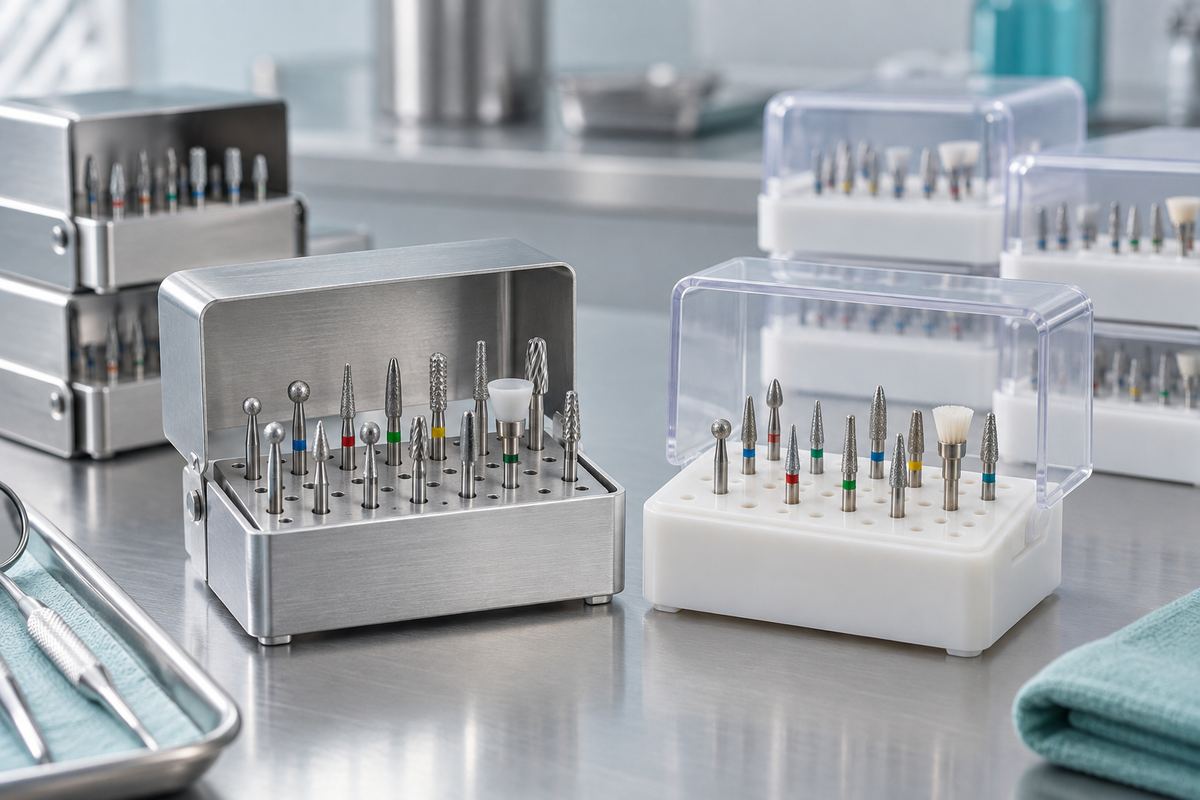
Burdental carries tungsten carbide cutters and burs in HP, FG, and RA shank sizes. The HP line is particularly useful for die grinder users who want access to precision-ground dental bur shapes that industrial suppliers don't stock. Pricing is competitive with industrial bur suppliers, and you get the tighter manufacturing tolerances that dental tooling demands.
If you're new to running carbide burs in a die grinder, check out our step-by-step companion article on how to use a die grinder for setup tips, speed recommendations, and safety basics.
FAQ
Can I use dental burs in a die grinder?
Yes. HP shank dental burs have a 2.35 mm diameter and will fit a 1/8" (3.175 mm) collet with an inexpensive sleeve adapter. Many micro die grinders accept 2.35 mm shanks directly. Dental burs are precision-ground and come in head shapes—like inverted cones, pear, and flame tips—that are hard to find from industrial bur manufacturers. They run best at 15,000–35,000 RPM depending on head diameter.
What RPM should I run carbide burs at?
Most carbide burs perform well between 20,000 and 30,000 RPM, but head diameter matters. Larger heads (12 mm+) should run at the lower end of that range to keep peripheral speed in check. Small heads (3–6 mm) can handle higher speeds. Never exceed the manufacturer's rated RPM—an oversped bur can shed carbide chips or shatter entirely. When in doubt, start at 20,000 RPM and increase until the cut feels smooth and chips form cleanly.
How long do carbide burs last?
Expect 10 to 50 hours of cutting life depending on the material you're working, the pressure you apply, and your operating RPM. Hardened steel and stainless eat through burs faster than mild steel or aluminum. Excessive pressure generates heat that accelerates wear. You'll know a bur is done when cutting speed drops noticeably even at the same RPM and pressure—the edges have rounded off and it's time for a replacement.
Single-cut or double-cut: which should I buy first?
If you're buying your first set, go double-cut. They handle the widest range of materials and jobs with acceptable performance across the board. Add single-cut burs later for heavy stock removal on hard metals, and fine-cut for finishing work. A set of three cylindrical burs—one of each flute type—covers about 80% of typical die grinder tasks.
Die grinder work comes down to picking the right bur for the material and the finish you need. Get the shank size right, match the flute count to the job, and let the bur do the cutting instead of forcing it. For detailed setup instructions and technique tips, head over to our guide on how to use a die grinder.