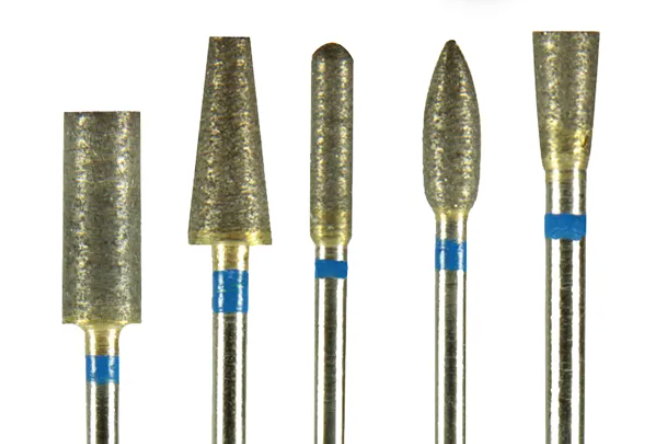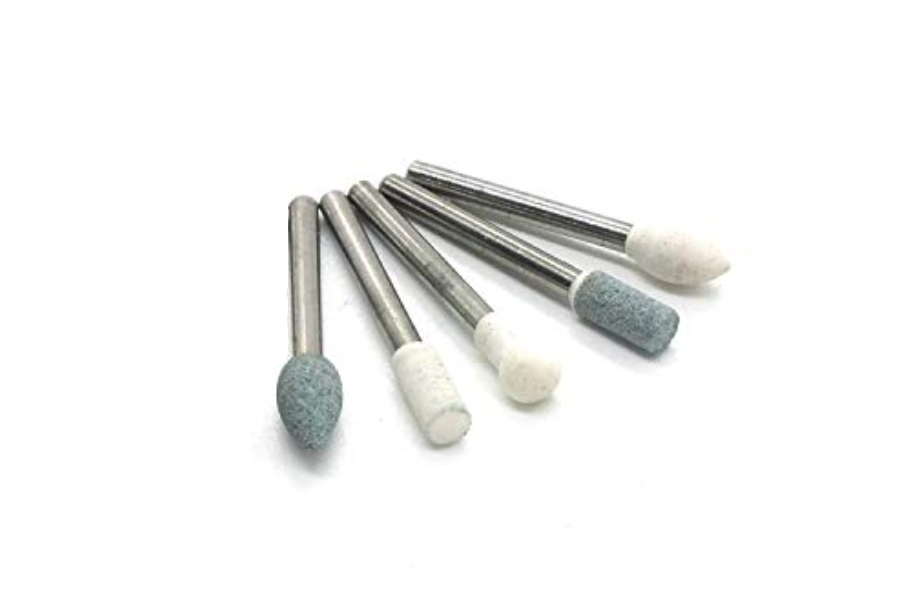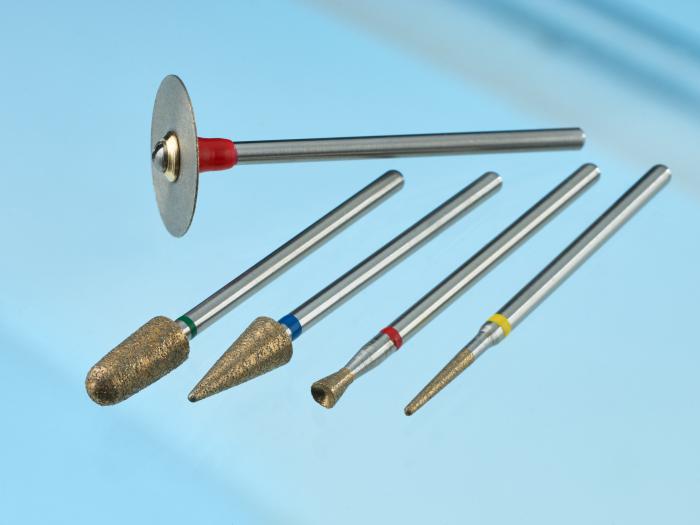
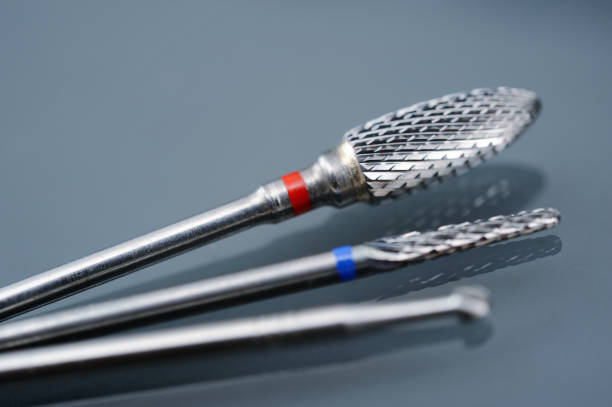
Tungsten carbide burs are among the most versatile instruments in a dental practice. Made from a sintered blend of tungsten carbide and cobalt, these rotary cutting tools deliver the hardness and durability required for procedures ranging from cavity preparation to crown finishing. Choosing the correct carbide bur for each clinical scenario directly affects cutting efficiency, patient comfort, and restoration longevity.
This guide walks through the key factors every clinician should evaluate before reaching for a carbide bur, including procedure type, bur shape, tooth size and location, substrate material, and manufacturer quality.
Select a Carbide Bur Shape That Matches the Procedure
Carbide burs are manufactured in a range of standardized shapes, each engineered for specific cutting tasks. Understanding the strengths of each shape is the first step toward consistent clinical outcomes.

Round Carbide Burs
Round burs are the workhorse of restorative dentistry. Their spherical head allows controlled removal of carious dentin, initial cavity outline preparation, and minor adjustments to existing restorations. Available in sizes from 1/4 round up to #8, they are suitable for both anterior and posterior teeth. Small round burs also excel at creating retention points and starter holes inside cavity preparations, giving clinicians predictable depth control from the very first contact with tooth structure.
Tapered Carbide Burs
Tapered burs feature a cone-shaped head that narrows to a fine tip, providing excellent access to tight interproximal spaces and subgingival margins. Clinicians frequently use tapered burs for refining cavity preparation walls, adjusting crown margins, and creating divergent walls for indirect restorations. The gradual taper offers predictable depth control, reducing the risk of over-preparation. Tapered fissure variants with crosscut fluting increase cutting efficiency when working through dense enamel, making them a go-to choice for initial outline form in Class II preparations.

Flame-Shaped Carbide Burs
The elongated, pointed profile of a flame-shaped bur makes it particularly effective for occlusal reduction on premolars and molars. It removes enamel and dentin rapidly while maintaining access in concave surface anatomy. Flame burs are also a popular choice for gross reduction during full-coverage crown preparation, and their narrow tip works well for refining gingival margins and creating smooth transition lines between prepared and unprepared surfaces.
Inverted Cone Carbide Burs
An inverted cone bur has its widest diameter at the tip and tapers toward the shank. This geometry is purpose-built for creating mechanical undercuts in cavity preparations, removing unsupported enamel, and establishing flat pulpal floors. It is one of the most commonly specified bur shapes in operative dentistry textbooks. The flat-cutting end face produces a clean, perpendicular seat at the base of the preparation, which is especially important when placing amalgam restorations that rely on mechanical retention.

Pear-Shaped Carbide Burs
Pear burs combine the benefits of a round tip with a slight taper, making them well-suited for opening access cavities, refining preparation outlines, and finishing composite restorations. Many clinicians prefer pear-shaped burs for Class I and Class II preparations because they naturally create rounded internal line angles that reduce stress concentration in the final restoration.
Football-Shaped Carbide Burs
Football burs feature an elliptical head that removes material quickly across broad convex surfaces. They are commonly used during occlusal adjustment, gross reduction of cusps, and contouring of provisional restorations. Their shape is also useful for saucerizing occlusal surfaces when placing sealants in deep fissures and for recontouring marginal ridges after direct composite placement.
Factor in Tooth Size and Restoration Dimensions
Matching the bur head diameter to the clinical situation prevents unnecessary removal of sound tooth structure. Oversized burs in small preparations lead to loss of healthy dentin, while undersized burs in large cases waste valuable chair time. General guidelines include:
- Large molars and full-coverage crowns - Use burs with head diameters of 1.4 mm or larger for efficient bulk reduction. These larger instruments minimize the number of passes required to achieve the desired preparation depth.
- Premolars and small restorations - Mid-range head sizes (0.8 to 1.2 mm) balance cutting speed with control, allowing the clinician to stay within planned preparation boundaries.
- Anterior teeth and minimal preparations - Opt for smaller heads (0.6 mm or less) for precision and conservation of enamel. These fine burs are also valuable for veneer preparations where uniform reduction thickness is critical.
Consult an in-depth carbide bur guide for a complete breakdown of ISO-standardized sizes and their recommended applications.
Evaluate Tooth Location and Access Requirements
The position of the tooth in the arch determines the shank length and head angulation that will deliver the best visibility and control. Posterior teeth require longer shanks for adequate reach, while anterior teeth benefit from shorter instruments that maximize tactile sensitivity.
| Tooth Location | Recommended Shank | Reason |
|---|---|---|
| Anterior teeth | Standard-length FG shank | Short working distance allows fine motor control |
| Premolars | Standard or surgical-length FG shank | Moderate access needs; standard length usually sufficient |
| Second and third molars | Surgical-length FG shank | Extra reach compensates for limited mouth opening |
| Lingual surfaces, posterior | Surgical-length with offset head | Angled access required for indirect vision work |
Selecting the wrong shank length is one of the most common causes of poor preparation geometry. When in doubt, a surgical-length bur provides the extra clearance needed without sacrificing tactile feedback. Clinicians working regularly with third molars should keep a dedicated set of long-shank burs to avoid compromising access during challenging extractions and restorations.
Match Flute Design to the Material Being Cut
The number of flutes (cutting blades) on a tungsten carbide bur dictates its cutting aggressiveness and the surface finish it leaves behind. Selecting the appropriate flute count for each substrate ensures efficient material removal without unnecessary surface roughness.
- 6-blade burs - Aggressive cutting action; ideal for bulk dentin and enamel removal during crown preparation. The wide chip space between flutes prevents clogging when working through thick enamel.
- 12-blade burs - Moderate cut; good balance between speed and smoothness for amalgam or composite adjustments. These burs produce less vibration than coarser alternatives, improving patient comfort.
- 20- to 30-blade finishing burs - Produce a polished surface on composites, ceramics, and provisional materials. These are the instruments of choice for finishing and trimming procedures where surface quality directly impacts restoration aesthetics and plaque resistance.
Harder substrates such as lithium disilicate or zirconia restorations demand fewer flutes and higher torque settings so the bur does not stall. Softer substrates like acrylic provisionals respond better to higher blade counts that minimize chipping and produce a smoother margin.

Prioritize Manufacturer Quality and Consistency
Not all carbide burs perform equally. Variations in carbide grain size, cobalt binder percentage, and flute geometry can lead to significant differences in cutting life and surface finish. When evaluating a supplier, look for the following:
- Consistent head concentricity across the product line to prevent vibration and chatter during high-speed operation.
- A full range of ISO-standard shapes and sizes so you can standardize your inventory and reduce ordering complexity.
- Clear batch traceability and quality-control documentation that supports infection-control protocols.
- Compatibility with all major high-speed and slow-speed handpiece systems.
Burdental manufactures tungsten carbide burs backed by over a decade of research in abrasive and cutting-tool technology. Each bur undergoes dimensional inspection and cutting-performance testing before shipment. The product line covers every standard shape and size discussed in this guide, giving clinicians a single reliable source for their rotary instrument needs.
Quick Selection Checklist
- Identify the procedure: preparation, adjustment, finishing, or contouring.
- Choose the bur shape that best fits the required cutting action.
- Select a head size proportional to the tooth or restoration being treated.
- Determine the shank length based on tooth position and patient access.
- Pick the flute count appropriate for the substrate material and desired surface finish.
- Verify the bur is from a manufacturer with documented quality standards and full ISO compliance.
Following these steps consistently reduces preparation time, improves margin quality, and extends bur life. A well-chosen carbide bur is not just a cutting tool; it is a direct contributor to predictable, high-quality restorative outcomes that benefit both the clinician and the patient.