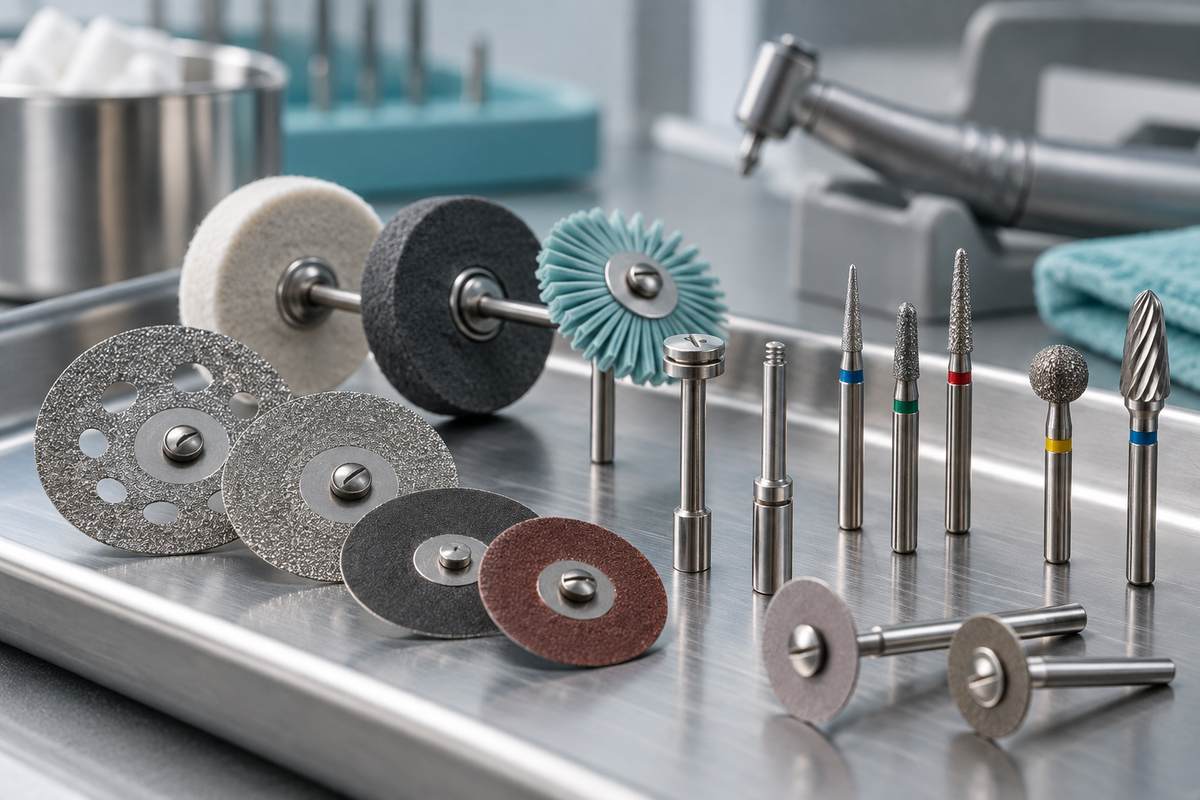
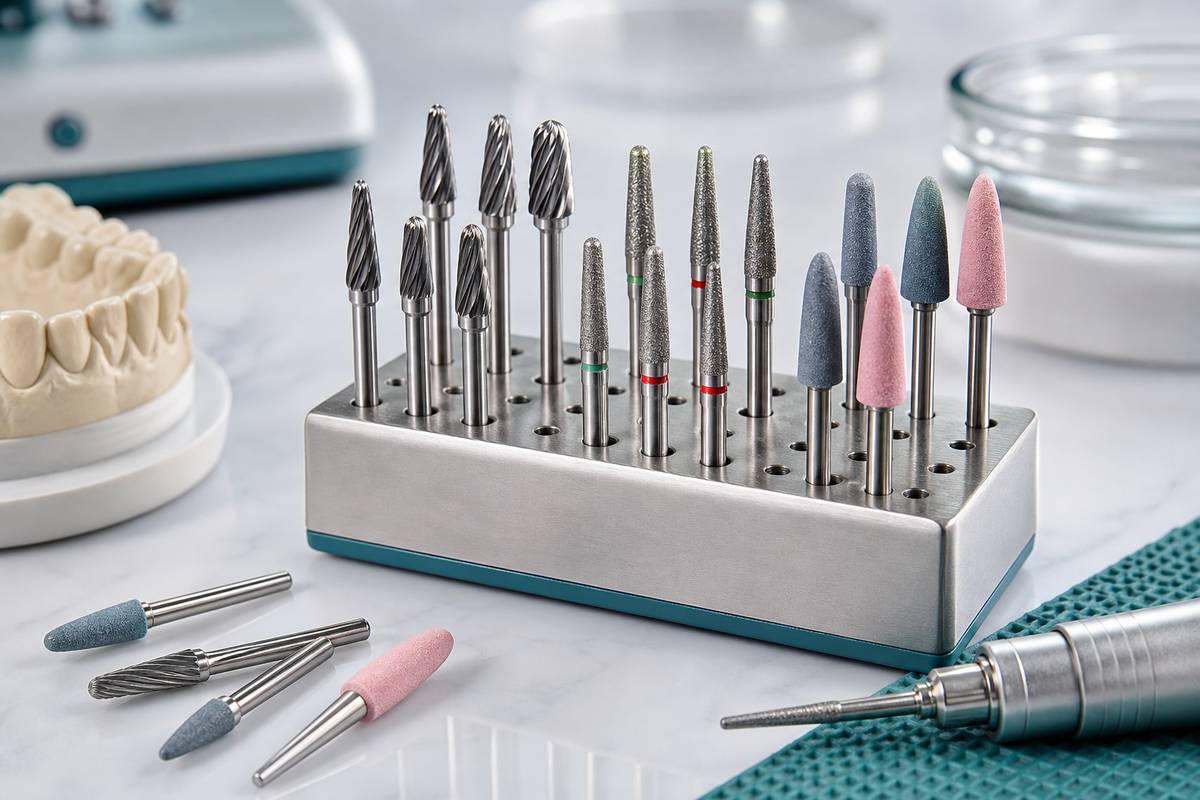
Dental laboratories run a different set of rotary instruments than the clinical side. Where chairside dentists rely on FG-shank diamond burs spinning at 300,000+ RPM, lab technicians work with HP-shank (handpiece) burs on bench motors and straight handpieces at far lower speeds. The materials are different too — lab work means trimming plaster models, adjusting metal frameworks, shaping acrylic, and finishing ceramics before the restoration ships to the clinic.
Three families of HP burs handle the bulk of lab bench work: tungsten carbide cutters, sintered diamond burs, and mounted stones. Each family is built for a different range of materials and tasks. Choosing the right one saves time, produces better margins, and extends tool life. This guide breaks down all three so you can stock your bench with confidence.
What makes lab burs different from clinical burs
Clinical burs use FG (friction grip) or RA (right angle) shanks and are designed for intraoral use at high speeds with water spray. Lab burs use the HP shank — a straight, 44.5 mm shaft with a 2.35 mm diameter that fits bench motors and lab handpieces. The longer shank gives better reach into model bases and framework interiors.
Lab burs also operate at lower RPM, typically between 10,000 and 35,000. This slower speed suits the heavier cutting loads and larger workpieces common in lab work. Because the burs are not used inside a patient's mouth, sterilization requirements differ from chairside instruments, but cleaning debris from flutes and diamond surfaces still extends their working life.
The three tool families below overlap in some applications, but each has a clear strength. Knowing which one to reach for first eliminates trial and error.
Tungsten carbide cutters
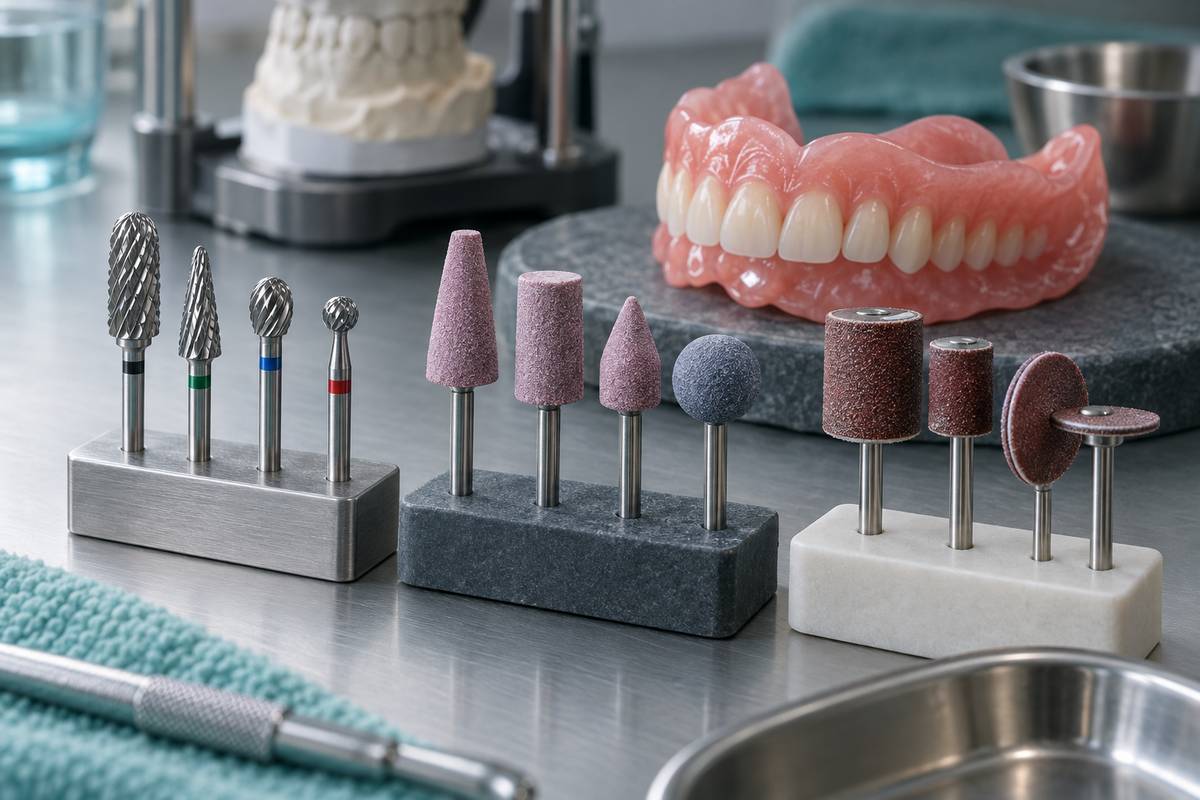
Tungsten carbide cutters are fluted rotary instruments made from cemented carbide — tungsten carbide particles bound with cobalt. The fluted design produces true cutting action rather than grinding, which means efficient material removal with less heat buildup.
Lab-grade carbide cutters come in cross-cut and single-cut flute patterns. Cross-cut (also called double-cut) patterns have intersecting flute lines that break chips into smaller pieces, reducing clogging when cutting softer materials like acrylic and plaster. Single-cut patterns produce a smoother surface finish and work better on metals.
Best applications:
- Trimming and contouring acrylic denture bases
- Cutting plaster and stone models
- Adjusting metal frameworks (chrome-cobalt, titanium)
- Removing excess investment material after casting
- Shaping wax patterns when a smooth finish matters
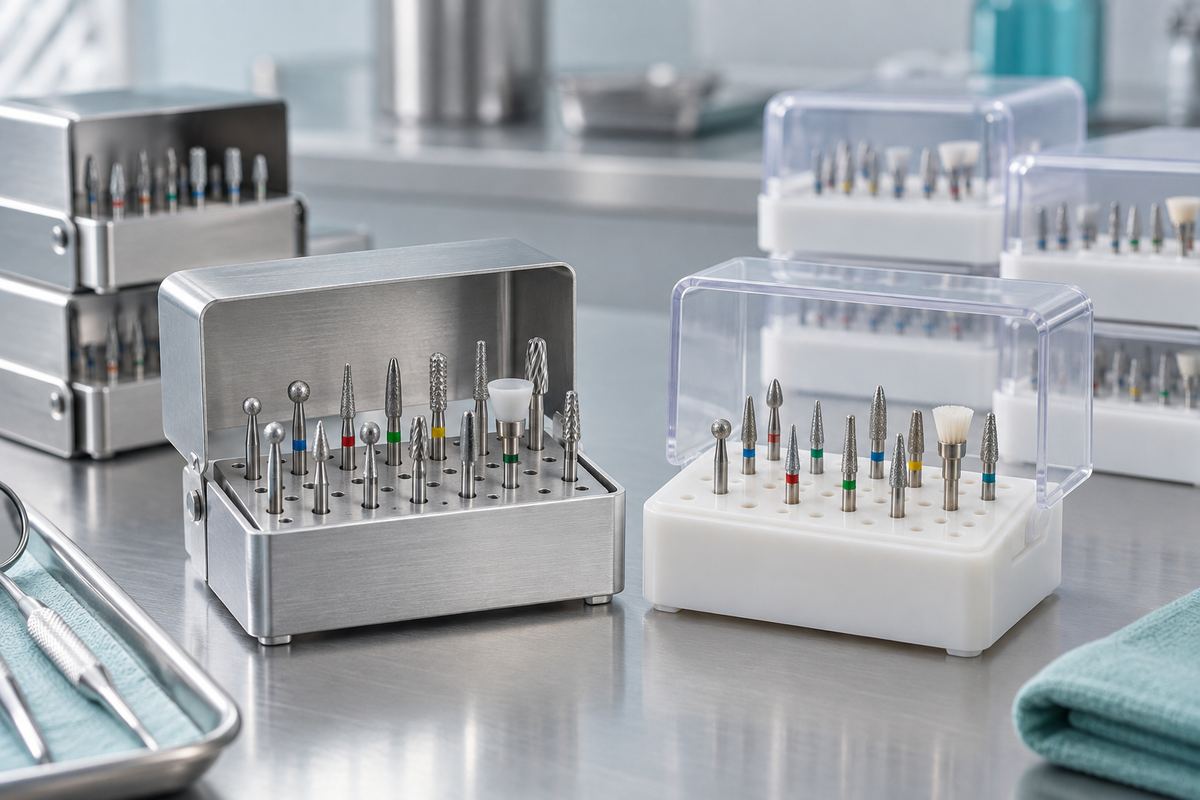
Carbide cutters last longer than steel burs and hold their edge well, but they are brittle. Dropping a carbide cutter on a hard floor often chips or breaks the head. Store them in a bur block to prevent damage.
Sintered diamond burs
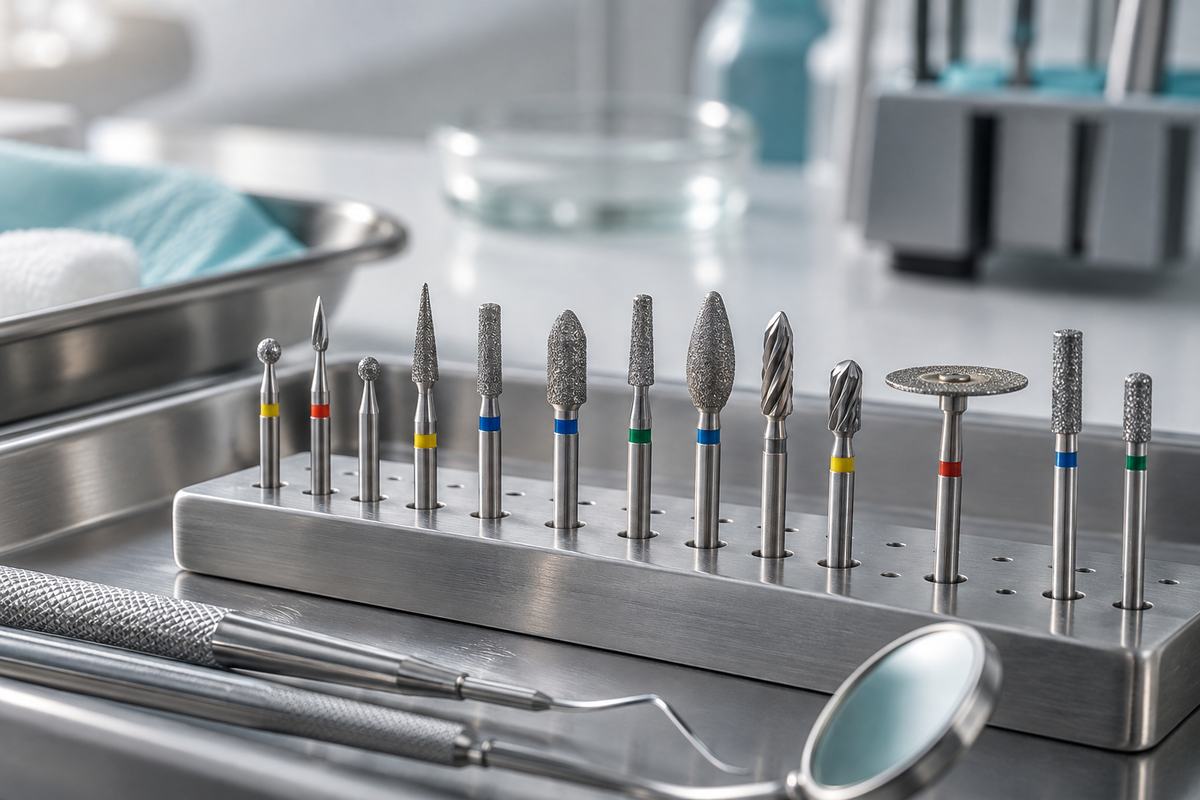
Where carbide cutters work by cutting with flutes, sintered diamond burs work by grinding with embedded diamond particles. The sintering process fuses diamond grit throughout the entire head — not just on the surface. As the outer layer wears, fresh diamond is exposed, giving consistent performance across the full life of the bur.
This self-renewing characteristic is the main advantage over electroplated diamond burs, which have a single layer of diamond bonded to the surface. Once that layer wears through, a plated bur is finished. A sintered bur keeps working.
Sintered diamond burs can also be dressed with an aluminum oxide stick to clear debris and re-expose diamond particles. This simple maintenance step restores cutting efficiency and is something plated burs cannot benefit from.
Best applications:
- Grinding and adjusting zirconia restorations
- Shaping lithium disilicate and glass ceramic
- Trimming porcelain-fused-to-metal margins
- Cutting into hard stone models
- Fine contouring of pressed ceramic
The trade-off is speed. Sintered burs remove material more slowly than carbide cutters on soft substrates. They are purpose-built for hard, abrasive materials where fluted cutters would dull in minutes.
Mounted stones and grinding points
Mounted stones are abrasive points made from bonded aluminum oxide, silicon carbide, or other ceramic particles pressed into shape and mounted on an HP shank. They come in dozens of shapes — cylinders, cones, wheels, flame tips, inverted cones — and in color-coded grit ranges.
The two most common types in dental labs:
- White stones (aluminum oxide) — general-purpose grinding on porcelain, metal alloys, and acrylic. Medium hardness, good for contouring and pre-polishing.
- Green stones (silicon carbide) — harder and more aggressive. Best for grinding chrome-cobalt, base metal alloys, and rough porcelain adjustment. They cut faster than white stones but leave a coarser surface.
Mounted stones wear down during use and change shape, which can actually help when working into tight spaces — the stone conforms slightly as it wears. This also means they need regular replacement, and keeping a stock of common shapes on hand avoids delays mid-case.
Best applications:
- Adjusting porcelain and ceramic restorations before glazing
- Smoothing metal casting surfaces
- Contouring acrylic and composite
- Reaching into areas too tight for disc or wheel instruments
- Rough shaping before switching to rubber or silicone polishers
Comparing the three tool families
| Feature | Tungsten carbide cutter | Sintered diamond bur | Mounted stone |
|---|---|---|---|
| Cutting action | Fluted (true cut) | Grinding (embedded diamond) | Grinding (bonded abrasive) |
| Best material | Acrylic, plaster, metal frameworks | Zirconia, ceramics, hard stone | Porcelain, metal alloys, acrylic |
| Durability | High — holds edge, brittle if dropped | Very high — self-renewing surface | Low — wears with use, disposable |
| Surface finish | Smooth (especially single-cut) | Medium — needs follow-up polishing | Varies by grit |
| Heat generation | Low | Moderate | Moderate to high under pressure |
| Maintenance | Replace when dull | Dress with aluminum oxide stick | Replace when worn |
| Shank | HP 2.35 mm | HP 2.35 mm | HP 2.35 mm |
Building a practical lab bur inventory
A technician starting a new bench position or restocking a lab can cover most daily tasks with a focused selection from each family:
- Carbide cutters — one cross-cut cylinder and one cross-cut taper for acrylic and plaster trimming, plus one single-cut flame shape for metal finishing
- Sintered diamond burs — one medium-grit cylinder and one flame shape for ceramic and zirconia adjustment
- Mounted stones — two or three white stones in cylinder, cone, and wheel shapes for general contouring, plus one green stone cylinder for aggressive metal work
From there, add specialty shapes as your case mix demands. Labs doing heavy zirconia work will go through more sintered diamond burs. Labs focused on removable prosthetics will lean harder on carbide cutters and mounted stones.
Buying from a factory-direct supplier like BurDental keeps per-unit costs low enough to replace tools before they compromise your work. Dull or worn instruments slow production and risk damaging restorations that took hours to build.
Frequently asked questions
Can I use the same bur for zirconia and acrylic?
You can physically do it, but you should not. Zirconia is far harder than acrylic and requires sintered diamond burs or specific green stones. Using a carbide cutter on zirconia dulls it fast. Using a diamond bur on acrylic wastes an expensive tool on a job a cheaper mounted stone handles better. Match the bur to the material for best results and longest tool life.
How do I know when a sintered diamond bur needs dressing?
When cutting slows noticeably and you find yourself pressing harder, the diamond surface is probably glazed with debris. Run an aluminum oxide dressing stick across the head at operating speed for a few seconds. If cutting efficiency returns, the bur still has life. If it does not improve, the diamond is fully consumed and the bur needs replacing.
What RPM should I run HP lab burs at?
Most HP carbide cutters and sintered diamond burs perform well between 15,000 and 25,000 RPM on a bench motor. Mounted stones typically run in the same range. Avoid exceeding the manufacturer's recommended maximum — higher speeds generate more heat and can cause premature wear or material damage. On softer materials like wax, lower speeds around 10,000 RPM give better control.
Are HP burs interchangeable between different bench motors?
All HP-shank burs share the same 2.35 mm diameter and 44.5 mm length, so they fit any standard bench motor or straight handpiece with an HP chuck. There is no brand-specific compatibility issue with the shank itself. The only variable is collet condition — a worn collet causes runout and vibration regardless of the bur brand. Clean and inspect the collet regularly.