How to Extend the Lifespan of Sintered Diamond Burs
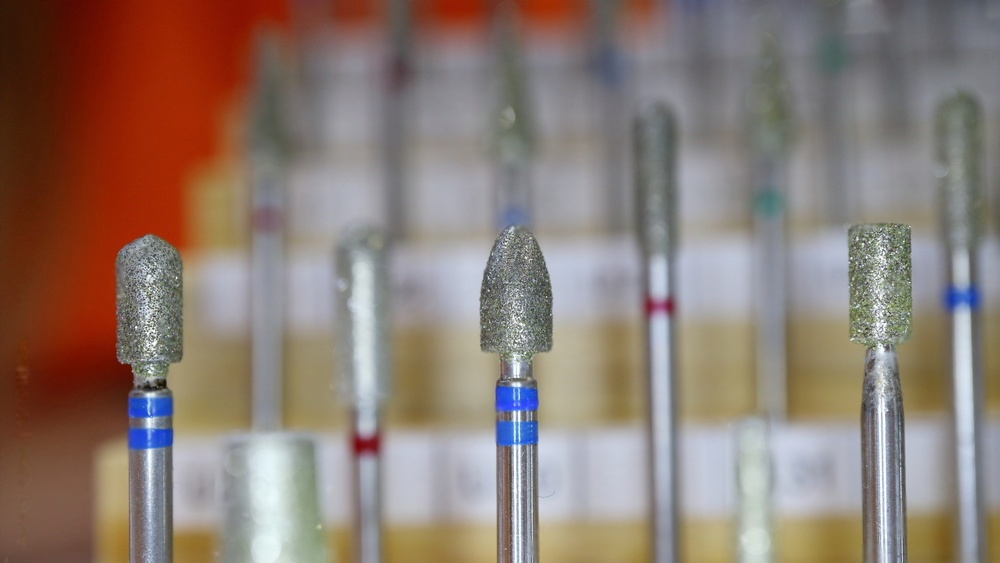
Sintered diamond burs represent a significant investment for any dental practice or laboratory. Unlike electroplated burs, sintered versions embed diamond particles throughout the entire matrix, providing a self-renewing cutting surface that lasts considerably longer under the right conditions. However, even the most durable sintered burs will degrade prematurely without proper handling, cleaning, and storage protocols.
This guide covers six practical strategies that dental professionals can implement immediately to get the maximum return from every sintered diamond bur in their inventory.
1. Apply Controlled Pressure During Use
The single most common cause of premature sintered bur failure is excessive lateral or downward pressure during cutting. While sintered diamond burs are engineered for demanding materials like zirconia, lithium disilicate, and pressed ceramics, their cutting efficiency depends on allowing the diamond grit to do the work rather than forcing the instrument through the substrate.
Guidelines for pressure control include:
- Use a light, brushing motion rather than sustained heavy contact
- Allow the bur to reach full operating speed before engaging the workpiece
- Avoid rocking or tilting the handpiece, which concentrates force on one side of the bur head
- Reduce pressure further when working on thin or unsupported sections of a restoration
Excessive force generates heat at the cutting interface, which weakens the metal matrix binding the diamond particles. Over time, this leads to accelerated grit loss and a noticeable decline in cutting performance.
A useful benchmark: if you can feel the bur vibrating or chattering against the workpiece, you are applying too much pressure. The ideal contact produces a smooth, consistent sound without sudden changes in pitch. Developing this tactile and auditory awareness takes practice, but it is one of the most effective ways to prevent premature bur failure across every procedure type.
2. Maintain Proper Irrigation and Cooling
Heat management is critical for sintered diamond burs. Without adequate cooling, temperatures at the cutting surface can exceed 300 degrees Celsius, causing thermal damage to both the bur and the material being shaped.
Effective cooling practices include:
- Use water spray irrigation whenever the handpiece setup allows it
- For dry-cutting applications, work in short intervals of two to three seconds followed by brief pauses
- Direct the coolant stream at the contact point between the bur and the workpiece, not just the surrounding area
- Check water lines regularly to ensure consistent flow and prevent clogging
Proper irrigation also helps flush away debris from the cutting zone, preventing material buildup that can clog the diamond surface and reduce cutting efficiency.
Laboratories that work primarily with bench motors and straight handpieces may not have built-in water spray systems. In these situations, periodic dipping of the bur tip in water between passes or using a handheld irrigation syringe can provide sufficient cooling to prevent thermal damage. The goal is to keep the bur temperature below the threshold where the metal binder begins to soften, which varies by manufacturer but generally falls between 250 and 350 degrees Celsius.
3. Clean Burs Thoroughly After Every Use
Residual material left on a sintered diamond bur after a procedure does more than create a hygiene concern. Embedded debris fills the spaces between exposed diamond particles, effectively blinding the cutting surface. A bur that appears dull may simply need proper cleaning rather than replacement.
Recommended Cleaning Methods
| Method | Best For | Notes |
|---|---|---|
| Ultrasonic cleaning | Removing embedded ceramic and composite debris | Use enzymatic solution for 5-10 minutes |
| Brass wire brushing | Dislodging visible material buildup | Brush along the length of the bur, not against the grit |
| Chemical soak | Dissolving organic residue and bonding agents | Follow manufacturer concentration guidelines |
After cleaning, inspect the bur under magnification. If diamond particles are still obscured by debris, repeat the cleaning cycle before sterilization. A clean bur cuts faster and generates less friction, which in turn reduces heat and extends the working life of the instrument.
4. Follow Proper Sterilization Protocols
Sterilization is non-negotiable for infection control, but the method and parameters matter for bur longevity. Autoclave sterilization at standard settings of 134 degrees Celsius for 18 minutes is safe for sintered diamond burs and does not damage the diamond matrix when performed correctly.
Key sterilization considerations:
- Always clean burs before autoclaving to prevent baked-on debris
- Avoid chemical sterilants containing strong acids or alkalis that may attack the metal binder
- Do not exceed recommended autoclave temperatures or cycle times
- Allow burs to dry completely before packaging or storage
For a detailed comparison of sintered and electroplated bur durability under repeated sterilization cycles, see our guide on advantages of sintered diamond burs over electroplated burs.
5. Store Burs in Protective, Organized Systems
Improper storage is an overlooked factor in bur degradation. When sintered diamond burs are tossed loosely into a drawer or container, the diamond-coated heads contact each other and other metal instruments. This physical abrasion chips away diamond particles even when the burs are not in use.
Effective storage solutions include:
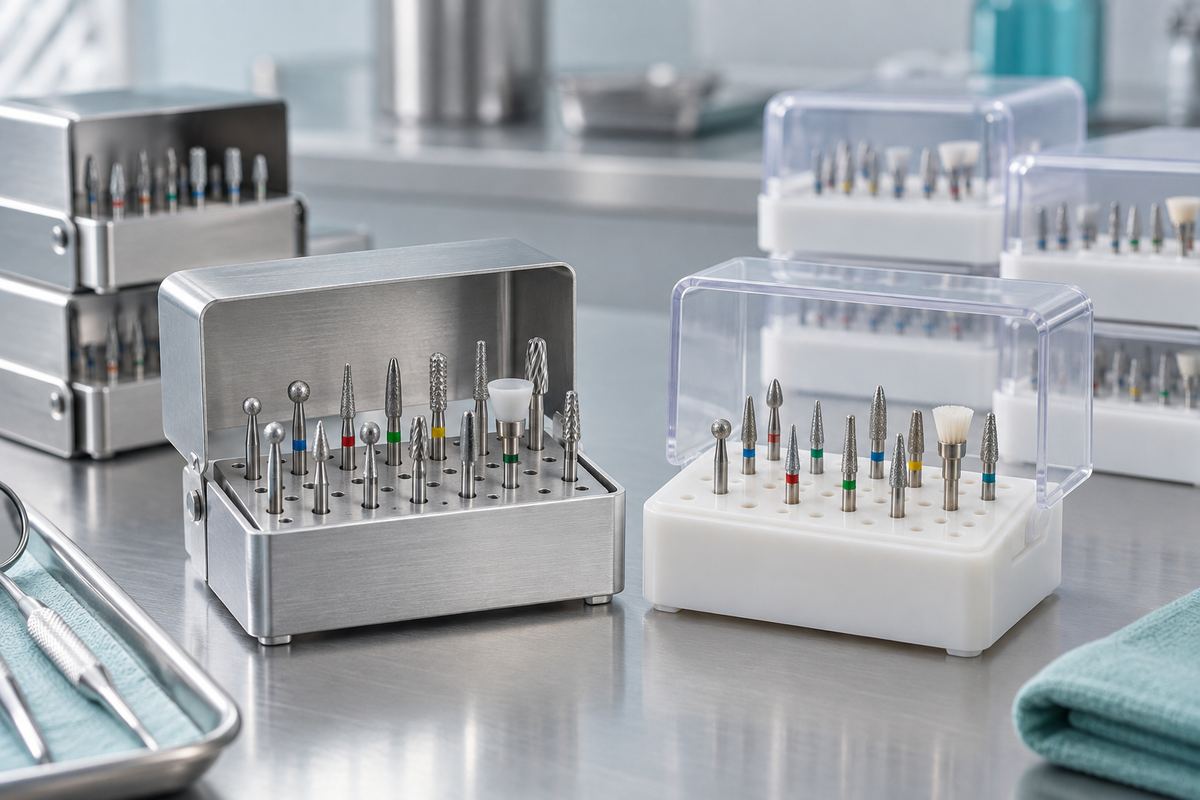
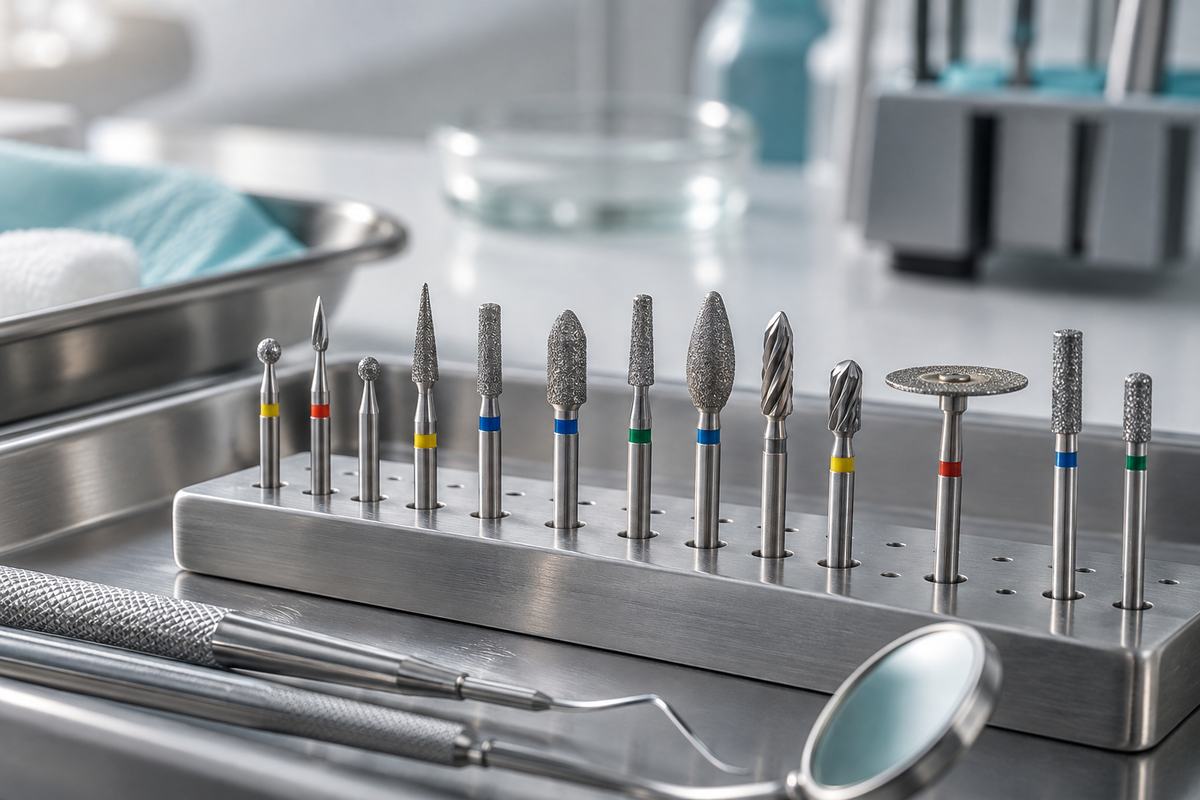
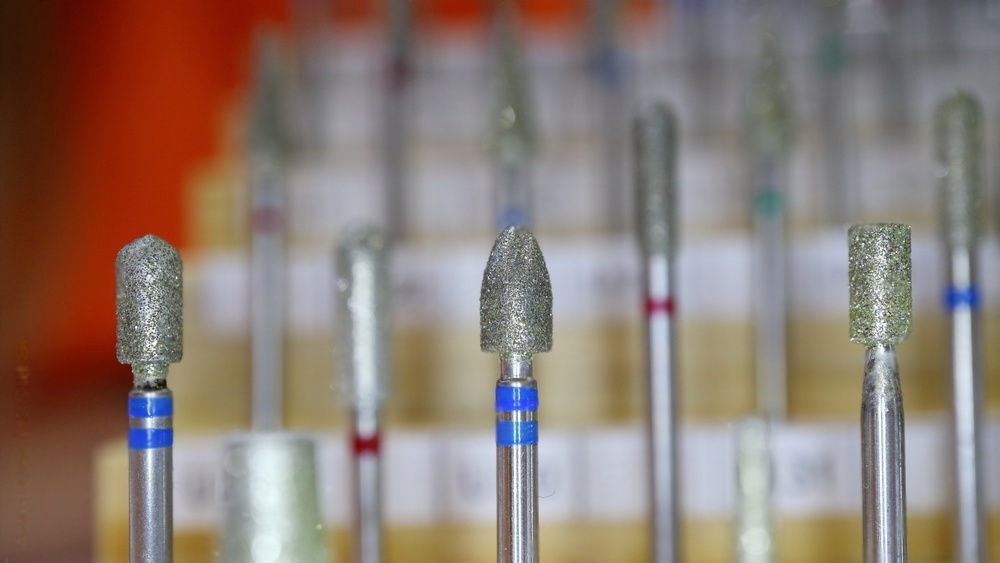
- Bur blocks with individual slots that prevent contact between instruments
- Autoclavable cassettes that keep burs separated during sterilization and storage
- Silicone or foam-lined organizers for travel or mobile setups
- Sealed containers that protect against humidity and chemical exposure
Organizing burs by type, grit size, and shape also reduces the time spent searching for the right instrument, which minimizes unnecessary handling and the risk of accidental damage. Labeling each slot with the bur specification or color-coding by grit size adds another layer of organization that benefits practices with multiple clinicians sharing the same instrument inventory.
6. Inspect and Retire Burs at the Right Time
No sintered diamond bur lasts forever. Regular inspection helps identify burs that have reached the end of their useful life before they compromise clinical outcomes. Signs that a sintered bur needs replacement include:
- Visible loss of diamond grit with exposed metal matrix
- Increased cutting time or the need to apply more pressure for the same result
- Vibration or chatter during use that was not present when the bur was new
- Visible deformation of the bur head shape
Establishing a tracking system, such as marking burs with a dot after each use cycle, helps practices monitor usage and plan replacements before performance drops below acceptable levels.
Expected Lifespan by Application
| Application | Typical Lifespan | Key Factor |
|---|---|---|
| Zirconia crown adjustment | 15-25 uses | Cooling and pressure control |
| Ceramic veneer finishing | 20-30 uses | Cleaning between uses |
| Laboratory model trimming | 30-50 uses | Material hardness variation |
Choosing the Right Sintered Diamond Bur
Bur longevity starts with selecting the right instrument for the task. Using a coarse-grit bur for fine finishing work or a fine-grit bur for bulk removal forces the instrument to operate outside its designed parameters, accelerating wear.
When selecting sintered diamond burs, match the grit size to the procedure stage: coarse for initial shaping and material removal, medium for contouring, and fine for finishing and surface refinement. Using the correct grit for each stage not only produces better clinical results but also prevents the bur from being subjected to workloads that exceed its design intent.
The shape of the bur head matters as well. Flame and needle shapes concentrate cutting force on a small area, which is ideal for accessing tight interproximal spaces but can cause rapid localized wear if used for bulk material removal. Cylinder and barrel shapes distribute the cutting load across a larger surface, making them better suited for extended cutting tasks on flat or convex surfaces.
Browse our full selection of diamond dental burs to find the right specifications for your clinical or laboratory workflow.
Summary
Extending sintered diamond bur lifespan comes down to six consistent practices: controlling pressure, maintaining cooling, cleaning after every use, following sterilization protocols, storing burs properly, and inspecting them regularly. Each of these steps is straightforward to implement and collectively can double or triple the working life of a sintered bur compared to careless handling.
For practices and laboratories looking to reduce consumable costs without sacrificing clinical quality, disciplined bur maintenance is one of the highest-return investments available. The time spent on proper care is always less than the cost of premature replacement.