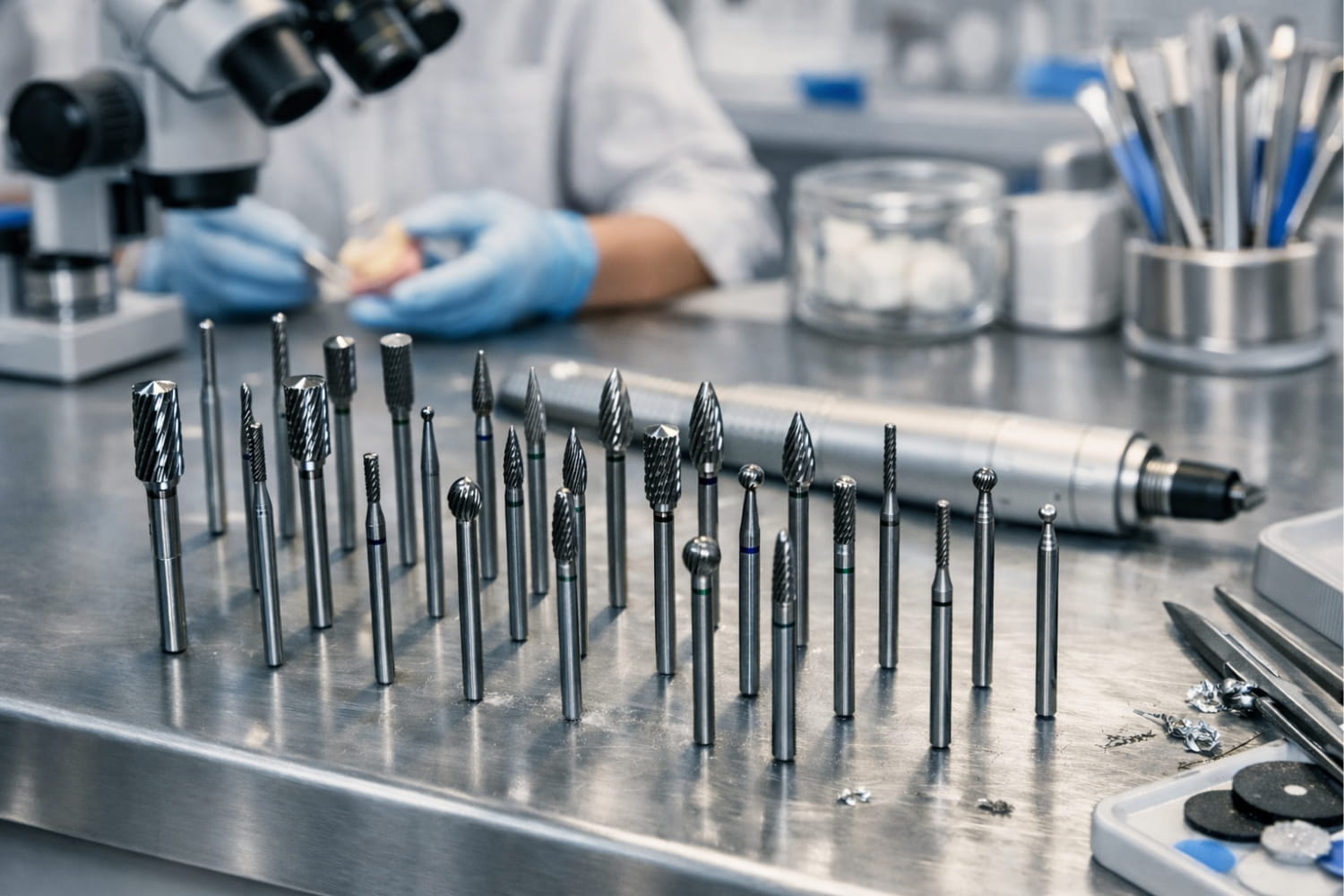
Why Tungsten Carbide Cutters Are a Lab Staple
Walk into any dental laboratory and you will find a drawer full of tungsten carbide (TC) cutters. They sit alongside wax knives and articulators as one of the most-used tools on the bench. The reason is simple: tungsten carbide is one of the hardest materials available for rotary instruments, ranking close to 9 on the Mohs hardness scale. That hardness translates directly into cutting efficiency and tool life.
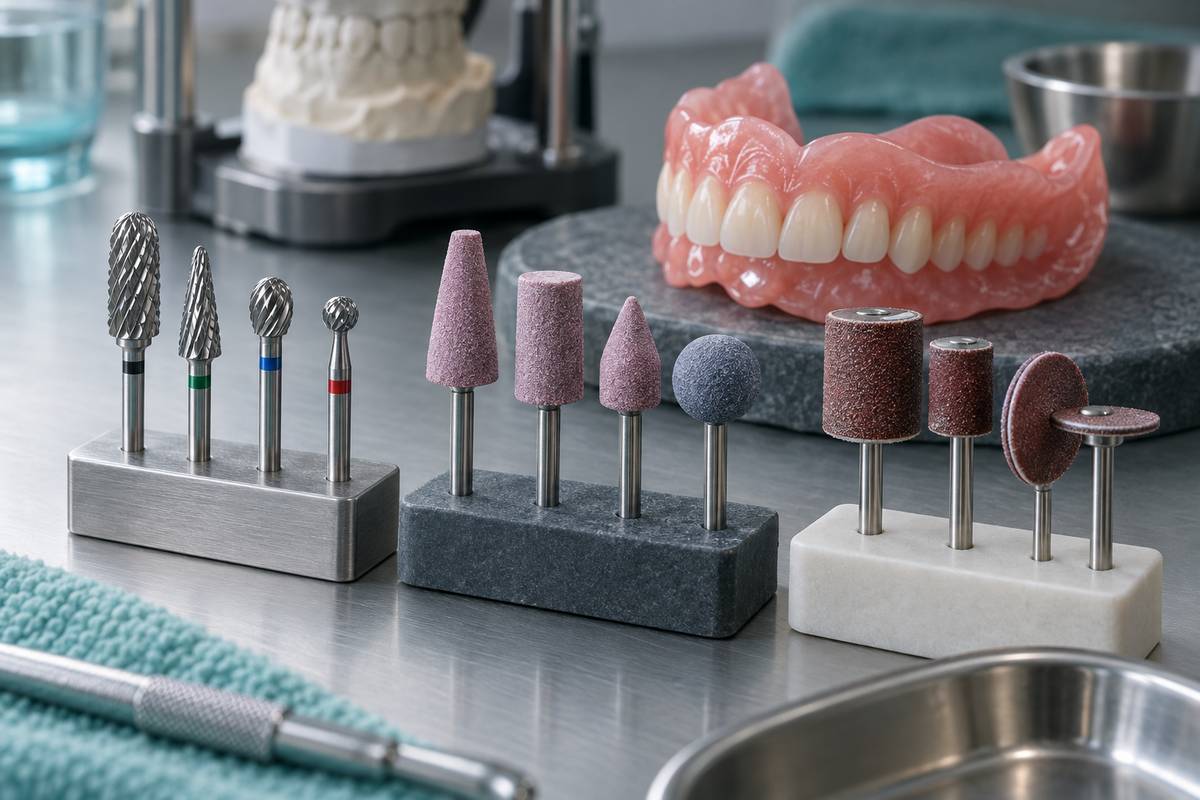
TC cutters handle the bulk of subtractive work in a dental lab. From trimming a cobalt-chrome framework fresh off the casting ring to smoothing an acrylic denture flange, these burs do the heavy lifting that diamond burs and rubber wheels cannot match for speed and stock removal. A good set of tungsten carbide cutters with HP shanks will last a bench technician months of daily use before needing replacement.
Three qualities make TC cutters indispensable in the lab:
Durability – The carbide head resists wear far longer than steel burs, maintaining sharp flutes through hundreds of uses on hard alloys.
Precision – Well-defined flute geometry produces predictable cuts with minimal chatter, giving the technician control over material removal.
Versatility – The same bur shapes come in multiple cut patterns, so one set of head geometries can cover rough trimming through pre-polish finishing.
Types of Tungsten Carbide Cutters by Cut Pattern
Not all TC cutters are created equal. The flute pattern ground into the carbide head determines how aggressively the bur cuts, what kind of surface finish it leaves, and which materials it handles best. Understanding these patterns is the first step toward choosing the right tool for each task.
Single Cut (Straight Flute)
Single-cut burs have one set of flutes spiraling in a single direction. They produce a smooth, controlled cut with less vibration than cross-cut designs. Lab technicians reach for single-cut burs on softer materials like acrylic, wax, and plaster, where aggressive cutting would gouge the surface.
Double Cut (Cross-Cut)
Cross-cut burs feature two sets of flutes crossing at opposing angles, creating a grid of small cutting teeth. The result is faster stock removal and excellent chip clearance—exactly what you need when hogging off sprues and investment from a freshly cast framework. Cross-cut burs are the workhorse of any lab bench. Browse the full range of tungsten carbide laboratory burs to see cross-cut options across every head shape.
Fine Cross-Cut
Fine cross-cut burs use the same dual-flute geometry but with more flutes packed closer together. The smaller teeth leave a smoother surface than a standard cross-cut. On metal frameworks, a fine cross-cut pass after the initial trim can eliminate one round of rubber wheel finishing.
Super Fine
Super-fine TC cutters have the highest flute density. They remove very little material per revolution and leave a near-polished surface, making them ideal for final contouring of metal margins and occlusal contact adjustment. They are not meant for bulk removal and will clog quickly if used that way.
Cut Type | Flute Pattern | Removal Rate | Surface Finish | Best For |
|---|---|---|---|---|
Single Cut | One spiral direction | Moderate | Smooth | Acrylic, wax, finishing metal |
Cross-Cut (Double) | Two opposing spirals | High | Rough | Metal frameworks, sprues |
Fine Cross-Cut | Dense dual spirals | Medium | Semi-smooth | Secondary metal trimming |
Super Fine | Very dense flutes | Low | Near-polished | Final contouring, margins |
HP Shank vs FG Shank: Know the Difference
TC cutters come in two primary shank types, and mixing them up can damage your handpiece or the bur.
HP (Handpiece) shank burs have a 2.35 mm diameter straight shank designed for low-speed lab handpieces and straight nosecones. The larger shank provides stability during heavy cutting, and low-speed handpieces deliver the torque needed to cut through metal alloys without stalling. Nearly every TC cutter discussed in this article uses an HP shank.
FG (Friction Grip) shank burs have a 1.6 mm shank made for high-speed clinical handpieces. Dentists use these chairside for cavity preparation and crown adjustment. The smaller shank cannot handle the lateral forces involved in framework trimming, so they are not suited to bench-level lab tasks.
When ordering, always confirm the shank type. Forcing an FG bur into an HP chuck risks damaging both the bur and the handpiece collet.
Common Lab Applications for TC Cutters
Trimming Metal Frameworks
This is where TC cutters earn their keep. After casting a cobalt-chrome partial denture framework or a precious-metal crown coping, the technician needs to remove sprues, smooth the casting skin, and refine margins. A cross-cut cylinder or flame bur at moderate speed handles sprue removal. Following up with a fine cross-cut bur in the same shape smooths tool marks before the rubber wheel stage.
For precious alloys (gold, palladium-based), reduce your handpiece speed slightly. Precious metals are softer and tend to load up the flutes of aggressive cross-cut burs. A single-cut or fine cross-cut pattern works better on these materials.
Adjusting Acrylic Dentures and Partials
Acrylic adjustment calls for different burs than metal work. Large barrel-shaped or cylinder TC cutters with a single-cut or fine cross-cut pattern trim denture flanges and relieve pressure spots efficiently. The key is speed control—too fast and the acrylic melts and clogs the flutes, too slow and the bur chatters. A medium speed with light, sweeping passes gives the cleanest results. Technicians building out their toolset can find purpose-built selections in our technician kits section.
Wax Carving and Finishing
Small round and flame-shaped TC cutters work well for refining wax patterns before investing. They carve occlusal anatomy, define embrasures, and smooth wax margins against the die. Because wax is soft, even a super-fine bur removes material quickly. Run the handpiece at low speed and let the flute geometry do the work rather than pressing hard, which distorts the wax.
Trimming Plaster and Stone Models
Plaster and die stone are abrasive and will wear through steel burs in a single session. TC cutters hold up far better. A large cross-cut cylinder trims model bases on a lathe or bench motor, while smaller round or inverted cone shapes hollow out areas for removable dies. Expect more wear on burs used for stone trimming than metal trimming—the calcium sulfate particles are surprisingly abrasive. For a broader look at the full range of lab instruments, we carry options suited to every bench task.
Choosing the Right Head Shape
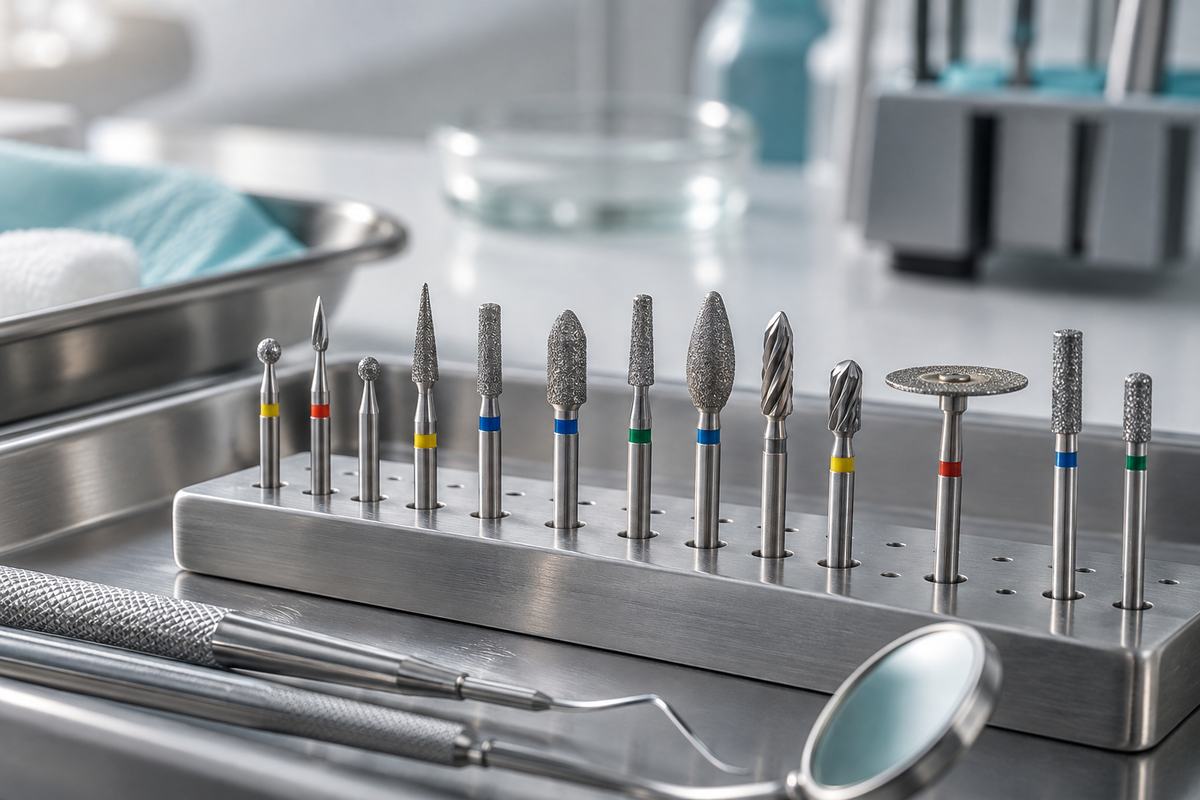
Head shape determines where and how the bur contacts the workpiece. Picking the right shape prevents accidental over-cutting and makes each task faster.
Cylinder (Flat End and Round End)
Cylinders are the most versatile shape. The flat-end version creates sharp internal angles and flat surfaces. The round-end (ball nose) cylinder transitions smoothly around curves without leaving sharp ledges. Use cylinders for trimming flat surfaces on frameworks, reducing denture flanges, and leveling model bases.
Cone and Tapered
Cone-shaped burs taper to a point, making them ideal for reaching into tight areas like interproximal spaces on bridge frameworks or the tissue side of partial denture clasps. The taper also helps when creating gradual transitions in contour rather than abrupt steps.
Inverted Cone
The inverted cone cuts a flat-bottomed recess with undercut walls. Lab technicians use this shape to create mechanical retention in acrylic repair areas, hollow out model bases for removable sections, and undercut pontic sites on bridge frameworks.
Flame
Flame burs combine a tapered tip with a rounded midsection. They follow convex anatomical contours naturally, making them the go-to for refining occlusal surfaces, lingual contours on crowns, and gingival embrasure areas on bridge pontics.
Round (Ball)
Round burs create concave surfaces and smooth rounded recesses. They work for hollowing out lingual surfaces of shell crowns, creating dimple retention for acrylic teeth, and general concavity work on models and frameworks.
TC Cutters vs Diamond Burs in the Lab
Both TC cutters and diamond burs sit in every lab technician’s bur block, but they serve different purposes. Knowing when to reach for each one prevents wasted time and damaged work. For a detailed side-by-side breakdown, read our comparison of diamond and tungsten carbide burs.
Factor | Tungsten Carbide Cutters | Diamond Burs |
|---|---|---|
Cutting action | Bladed flutes slice material | Abrasive grit grinds material |
Best materials | Metals, acrylic, wax, plaster | Ceramics, zirconia, lithium disilicate |
Surface finish | Smooth with fine-cut patterns | Varies by grit; coarse leaves rough surface |
Heat generation | Lower; flutes clear chips | Higher; abrasive friction |
Tool life on metal | Long; flutes stay sharp | Short; diamond grit strips off |
Tool life on ceramic | Very short; flutes chip | Long; diamond is harder than ceramic |
Cost per bur | Moderate | Lower for single-use, higher for sintered |
The rule of thumb: use TC cutters on anything softer than ceramic, and diamond burs on ceramic, porcelain, and zirconia. A carbide bur on a zirconia coping destroys the flutes instantly. Conversely, a diamond bur on cobalt-chrome wastes time because abrasive grit cannot bite into hard metal the way carbide flutes can.
Maintenance and Replacement
TC cutters last a long time, but they do not last forever. A few habits extend their useful life and keep cuts consistent.
Cleaning
After each use, brush the flutes with a brass wire brush to clear embedded material. Acrylic and wax residue pack between flutes and reduce cutting efficiency. For stubborn buildup, soak in a bur cleaning solution for fifteen minutes, then brush again. Ultrasonic cleaners work well for batch cleaning at the end of the day.
Inspection
Check under magnification for chipped flutes, a bent shank, or visible wear on cutting edges. A bur with chipped flutes vibrates excessively and leaves an uneven surface. A bent shank causes wobble that gouges the workpiece or damages handpiece bearings. Discard any bur that fails inspection.
Replacement Cycle
A practical test: if the bur requires noticeably more pressure to cut the same material it handled easily when new, the flutes are dull. Continuing to use a dull bur generates excess heat and wears out your handpiece faster. As a guideline, cross-cut burs used daily on metal frameworks last three to six months. Single-cut burs on acrylic may last six to twelve months. Super-fine burs wear out faster—expect two to four months under regular use.
Storage
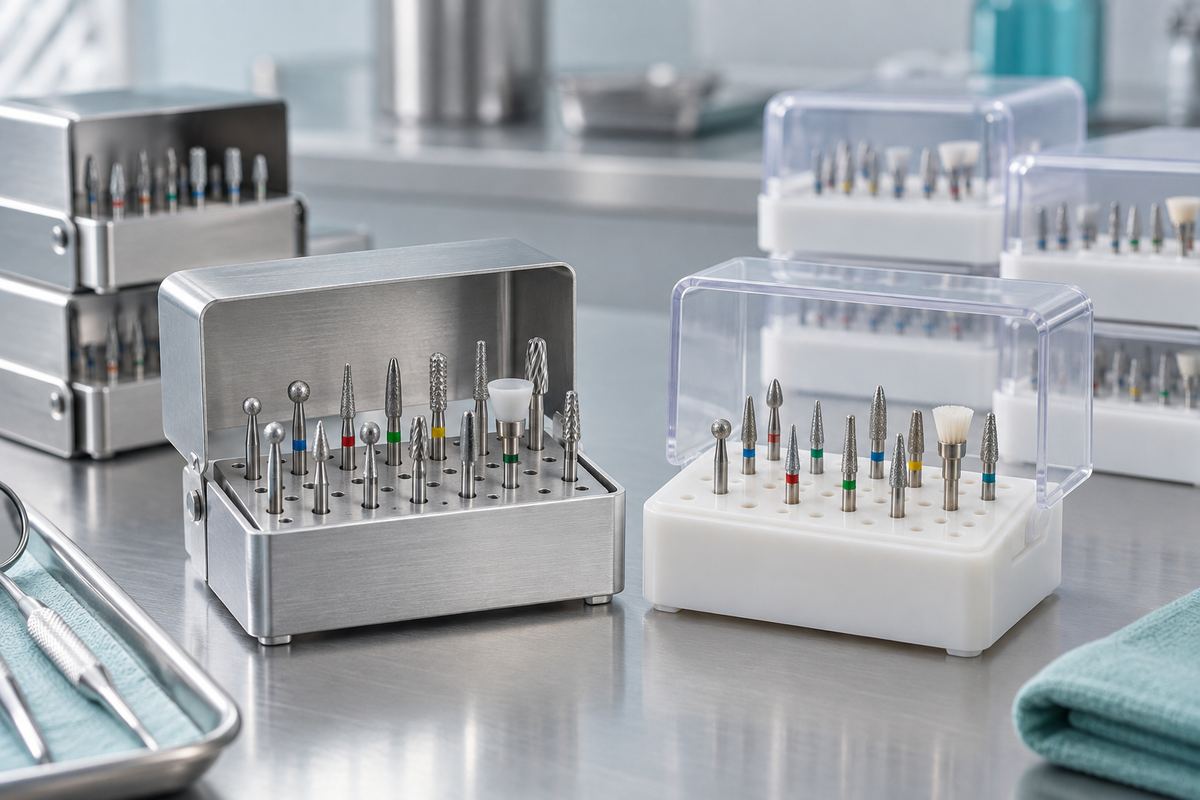
Keep TC cutters in a bur block or organized stand rather than loose in a drawer. Burs banging against each other chip the flute edges. Magnetic bur blocks hold HP-shank burs securely and make it easy to grab the right shape without searching.
Putting It All Together
Tungsten carbide cutters are the backbone of production work in any dental laboratory. Matching the right cut pattern to the material, choosing the correct head shape, and maintaining the burs properly makes the difference between efficient bench work and frustrating sessions. Stock your bur block with a cross-cut cylinder, a fine cross-cut flame, a single-cut barrel for acrylic, and a few round and inverted cone burs for detail work. That core set handles ninety percent of daily lab tasks.