Every dental professional reaches for rotary burs dozens of times a day. But choosing between diamond burs and tungsten carbide burs is not always straightforward. Each type excels in specific situations, and understanding those differences directly affects the quality of your preparations, the longevity of your instruments, and your patients' comfort.
This article walks through the structural differences, clinical performance, cost considerations, and best-use scenarios for both bur types so you can make a confident choice for every procedure.
How Diamond Burs Work
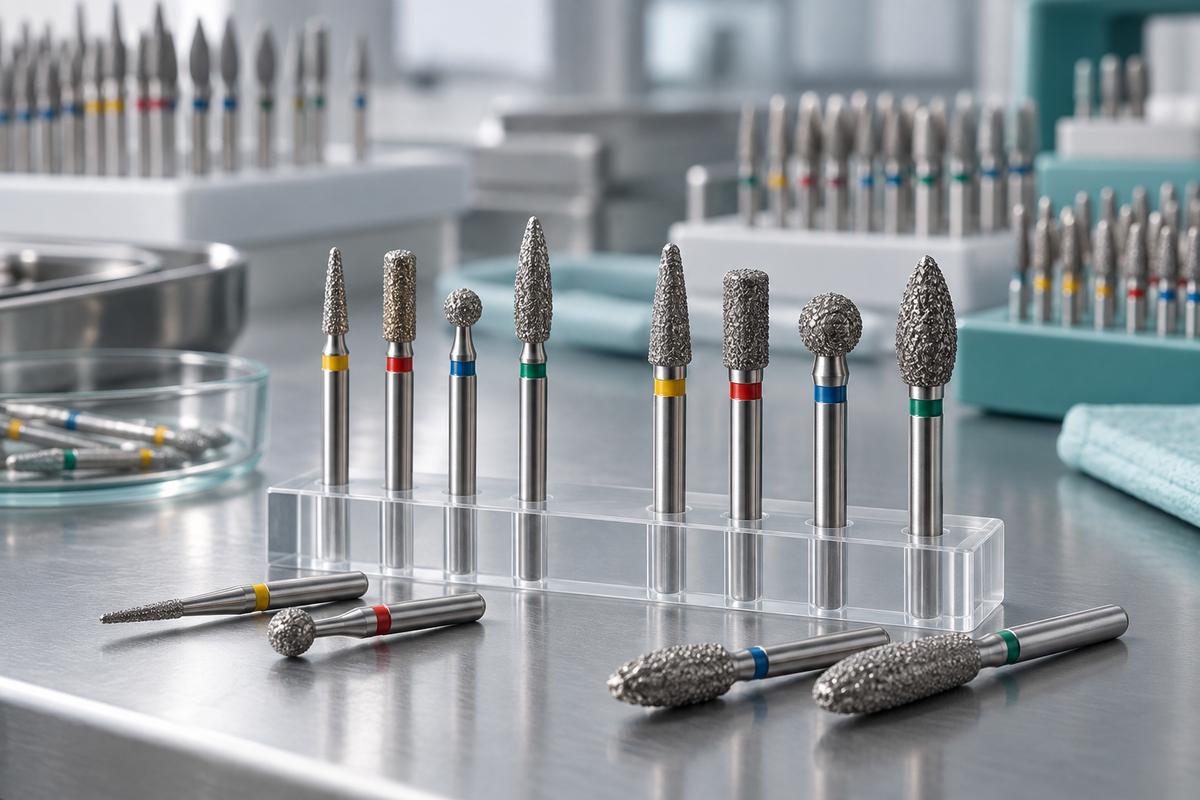
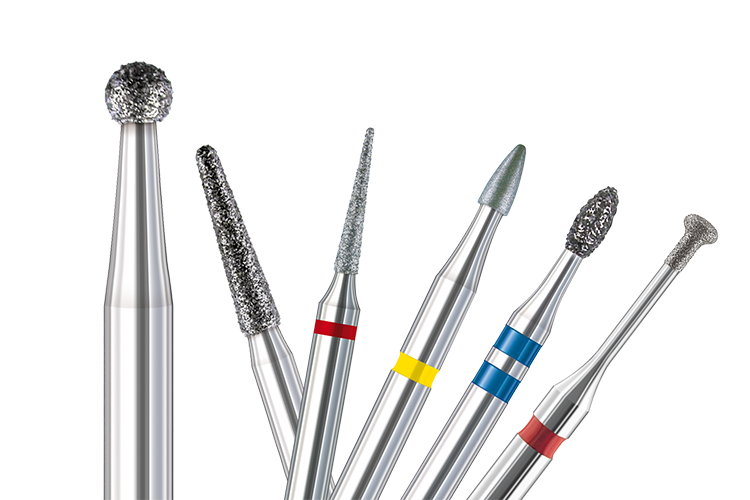
Diamond burs use industrial diamond particles bonded to a metal shank through electroplating or sintering. Rather than cutting in the traditional sense, they grind material away through abrasion. The diamond grit acts like thousands of tiny cutting points, removing tooth structure as the bur rotates at high speed in a friction grip handpiece. Because diamond is the hardest known natural material, these burs handle enamel and ceramic restorations with ease. They are the standard choice for crown and veneer preparations, porcelain adjustments, and any procedure that demands precise material removal from hard surfaces. Diamond burs are available in dozens of head shapes — flame, round, tapered, cylinder, football, and needle — each designed for a specific preparation geometry or access requirement. Diamond burs come in several grit classifications:
Super coarse / coarse — rapid bulk reduction of enamel and ceramic
Medium — general-purpose crown and bridge preparation
Fine / super fine — finishing and margin refinement
Another advantage is chemical inertness. Diamond burs do not react with dental materials, bonding agents, or disinfectants, which simplifies infection control protocols.
How Tungsten Carbide Burs Work
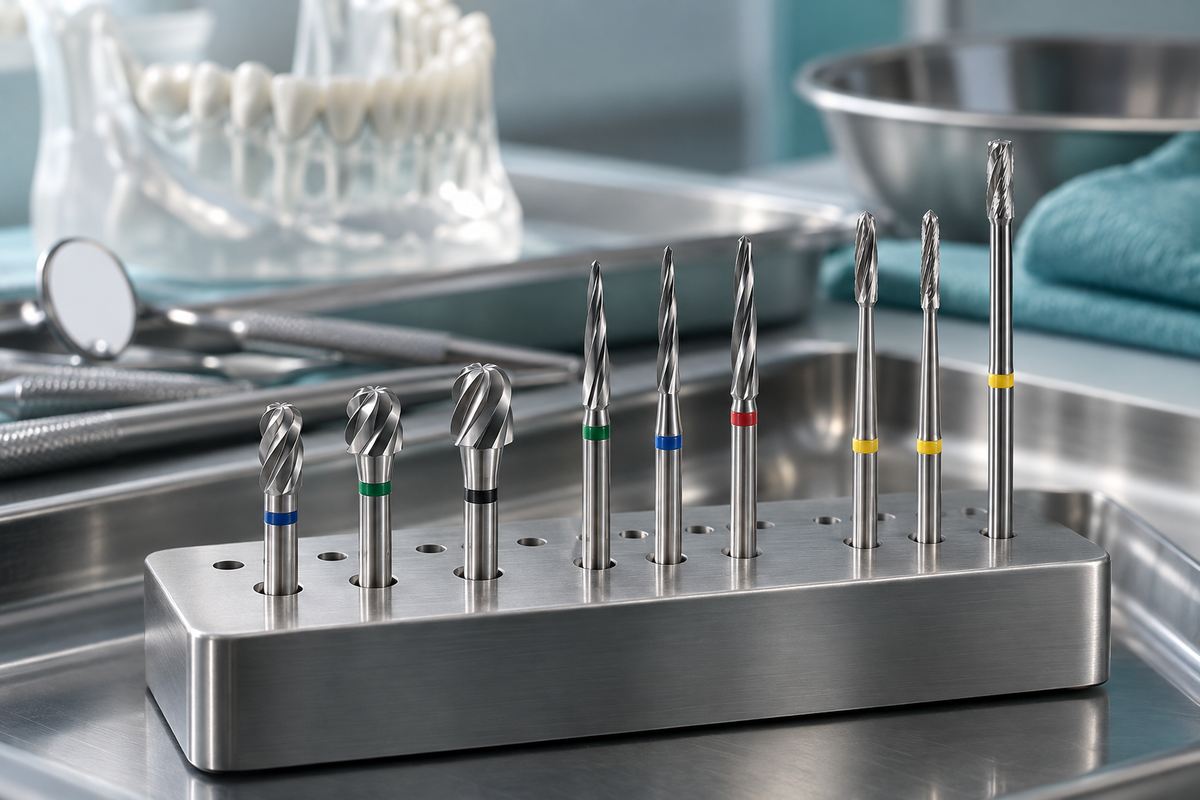
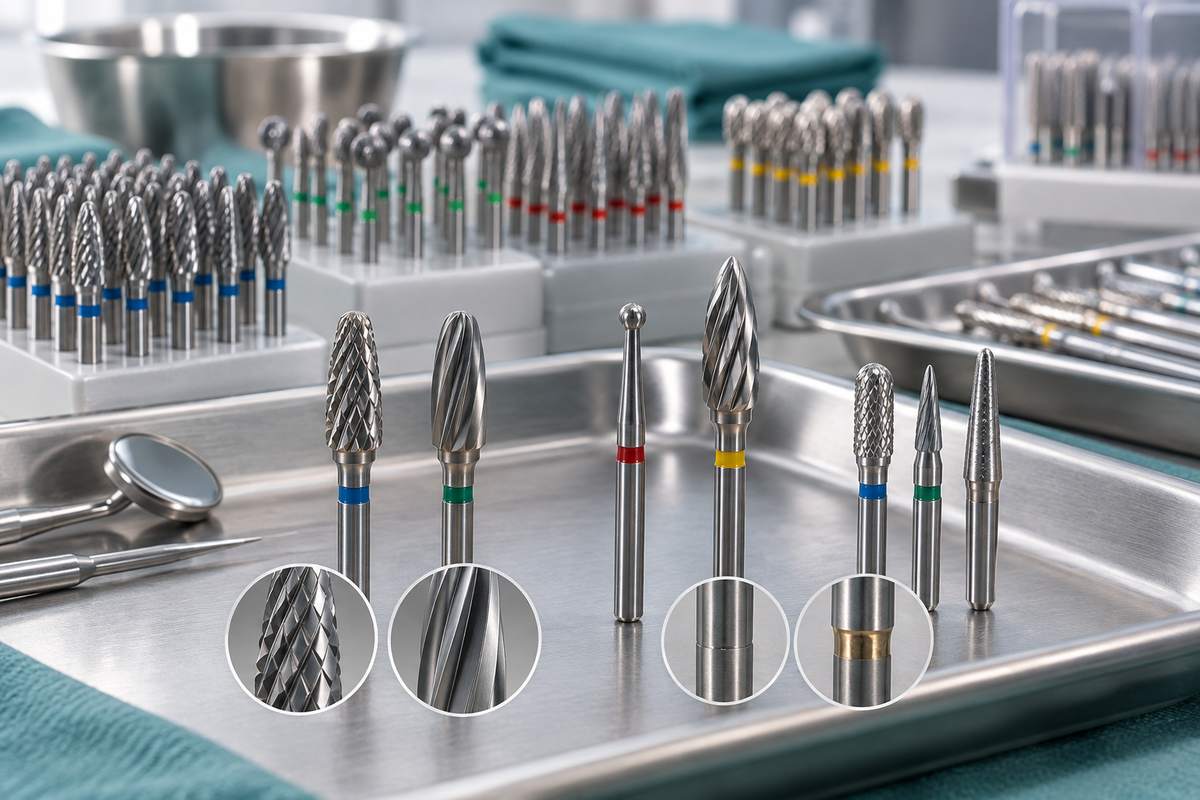
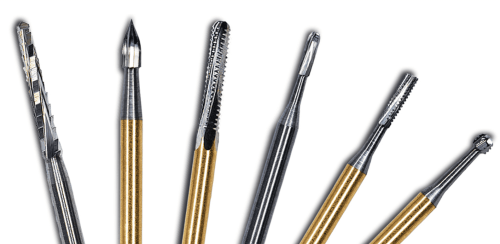
Tungsten carbide burs take a fundamentally different approach. Instead of abrasive particles, they feature precision-machined fluted blades that slice through material. The cutting action is mechanical — each blade engages the surface and shears away a thin chip of tooth or restorative material with every rotation. Tungsten carbide (WC) is a compound roughly three times harder than steel, and its blade geometry allows it to cut metals, amalgam, and composite resin efficiently. This makes carbide burs indispensable for removing old restorations, accessing root canals, and performing cavity preparations where clean, defined walls are needed. Carbide burs are classified by the number of flutes:
6-blade (cross-cut) — aggressive cutting for bulk removal
12-blade — general-purpose cutting with a smoother finish
30-blade (finishing) — ultra-smooth surface for final contouring
Diamond Burs vs Carbide Burs: Side-by-Side Comparison
The following table summarizes the main performance differences between these two bur families.| ------- | ------------ | --------------------- |
Feature | Diamond Burs | Tungsten Carbide Burs |
|---|---|---|
Cutting mechanism | Abrasive grinding | Blade-flute cutting |
Best substrates | Enamel, porcelain, zirconia | Dentin, composite, amalgam, metal |
Surface finish | Rougher (coarse grits); smooth (fine grits) | Consistently smooth, chip-free cuts |
Heat generation | Higher — friction from abrasive action | Lower — efficient blade geometry |
Heat resistance | Moderate — bond can weaken | Superior — WC tolerates high temps |
Typical lifespan | 3–5 preparations before dulling | Much longer with proper care |
Metal cutting | Not recommended | Excellent |
Chemical inertness | High | Moderate |
Unit cost | Lower per bur | Higher per bur |
Clinical Scenarios: When to Reach for Diamond
Diamond burs are the preferred instrument in several common clinical situations:
Crown and veneer preparation — Coarse diamond burs remove enamel quickly during initial reduction, while fine-grit diamonds refine the finish line.
Porcelain and zirconia adjustment — After seating a ceramic restoration, a fine diamond bur trims high spots without fracturing the material.
Enamel contouring near soft tissue — The abrasive action is less likely to catch and tear gingival tissue compared to bladed instruments.
Inlay and onlay seat preparation — Diamond burs produce the controlled taper needed for indirect restorations.
Keep in mind that diamond burs generate more friction heat, so consistent water spray is important to avoid pulpal irritation. For guidance on maintaining your diamond instruments, see our article on how to clean diamond burs.
Clinical Scenarios: When to Reach for Carbide
Tungsten carbide burs are the better choice in these situations:
Caries removal and cavity preparation — Carbide burs produce clean, defined cavity walls in dentin without the micro-roughness that abrasive burs leave behind.
Amalgam and metal restoration removal — Only carbide burs can efficiently section and remove metal-based restorations.
Endodontic access — A carbide round bur or specialized Endo Z bur cuts through existing restorations and dentin to reach the pulp chamber reliably.
Final finishing and polishing — High-flute-count carbide finishing burs, such as gold TC finishing burs, leave surfaces smooth enough for direct bonding.
Bone cutting in surgical procedures — Surgical carbide burs handle osseous tissue safely and predictably.
Cost Analysis: Price Per Bur vs. Price Per Procedure
On a per-unit basis, diamond burs cost less than carbide burs. However, the true cost calculation should factor in how many procedures each bur can handle before replacement. A single-patient-use diamond bur might cost a few cents but needs replacing after three to five preparations. A quality carbide bur costs more upfront but lasts through many more procedures when properly maintained and sterilized. For high-volume practices, carbide burs often deliver a lower cost per procedure despite the higher initial price. The economic equation also depends on the procedure mix. Practices that perform mostly crown preps will use more diamond burs. Practices focused on operative dentistry and restorative work will consume more carbide burs. Most offices need a well-stocked inventory of both.
Practical Tips for Getting the Most From Both Types
Regardless of which bur you select, a few habits will extend instrument life and improve clinical outcomes:
Use adequate water irrigation — Both bur types perform better and last longer with proper coolant flow. This also protects the pulp from thermal injury.
Match the grit or flute count to the task — Using a coarse diamond for finishing wastes time and produces a poor surface. Using a finishing carbide for bulk removal wears the bur prematurely.
Inspect burs before each use — Look for missing diamond particles, bent shanks, or chipped flutes. A damaged bur cuts poorly and can injure tissue.
Follow sterilization protocols — Autoclave both bur types according to the manufacturer's instructions. Learn about proper dental bur sterilization to maintain cutting efficiency.
Store burs properly — Use a bur block or organizer that prevents instruments from contacting each other. Metal-on-metal contact dulls cutting edges.
Can You Use Both in the Same Procedure?
Absolutely — and many clinicians do exactly that. A typical crown preparation workflow might look like this:
Coarse diamond bur for initial enamel reduction and taper creation
Fine diamond bur for finish line refinement
Carbide finishing bur for smoothing the preparation walls
Fine diamond bur for final margin adjustment
Similarly, a Class II amalgam replacement might use a carbide cross-cut bur to section and remove the old restoration, followed by a round carbide bur for caries excavation, and finishing with a fine diamond to adjust the new composite restoration.
Understanding the strengths of each bur type and switching between them during a procedure is what separates efficient clinical work from time-consuming guesswork. For a broader look at rotary instrument selection, read our guide on dental bur types, uses, and techniques.
Common Mistakes When Choosing Between Diamond and Carbide
Even experienced clinicians occasionally reach for the wrong bur. Here are the most common errors and how to avoid them:
Using diamond burs on amalgam — Diamond particles clog with metal debris, reducing cutting efficiency and shortening bur life. Always use carbide for metal-based restorations.
Using coarse carbide burs on porcelain — The blade action can chip or fracture ceramic materials. Switch to a fine-grit diamond for porcelain adjustments.
Skipping the finishing step — After rough preparation with either bur type, failing to finish with a fine instrument leaves surface irregularities that compromise bonding and marginal adaptation.
Ignoring speed recommendations — Diamond burs are designed for high-speed handpieces (300,000+ RPM with water spray), while certain carbide burs perform best at lower speeds during finishing. Running a bur outside its intended speed range reduces performance and increases heat.
Choosing the Right Bur for Your Practice
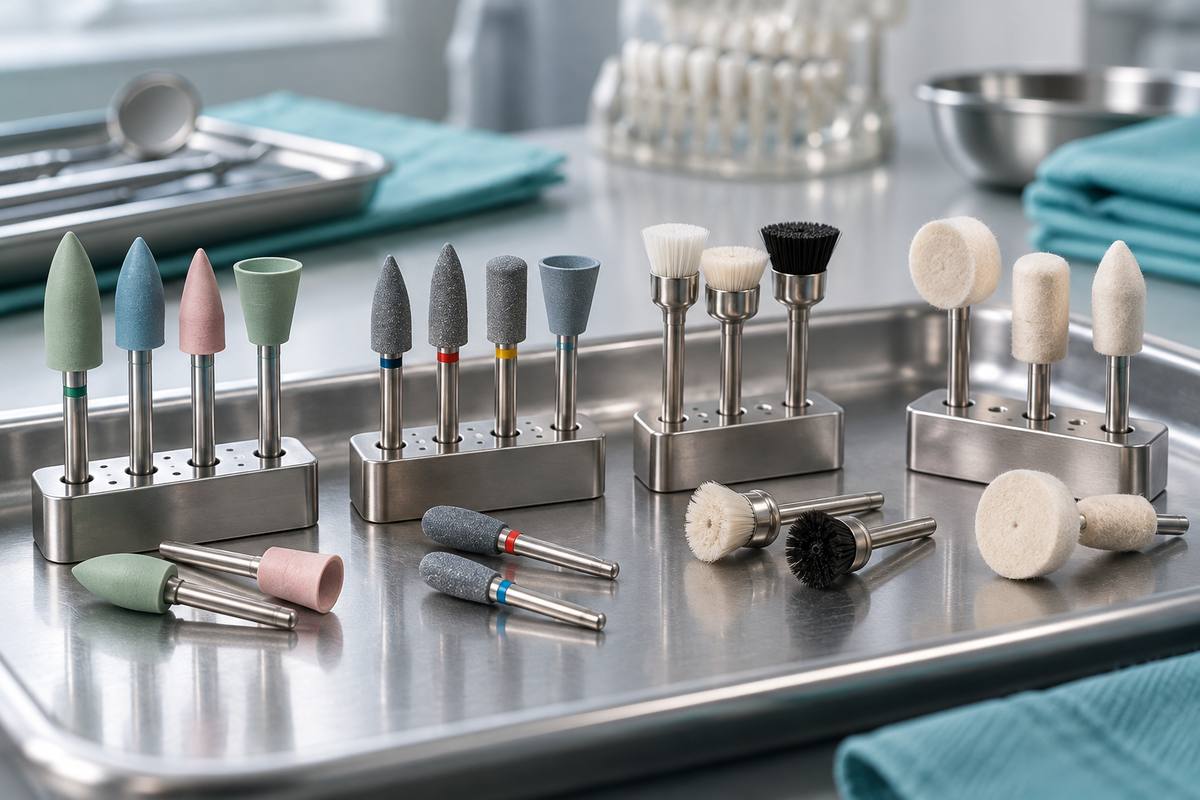
There is no single "best" bur — only the best bur for a given task. Diamond burs dominate when working on hard, brittle materials like enamel and ceramics. Carbide burs are superior for dentin, metals, and composite removal. Most well-equipped practices stock both types in multiple shapes and sizes to handle the full range of clinical and laboratory demands. If you need help selecting the right burs for your procedure mix, contact our team for personalized recommendations based on your clinical needs and case volume. Browse our full range of dental burs — diamond burs, carbide burs, polishers, and lab tools for every procedure.