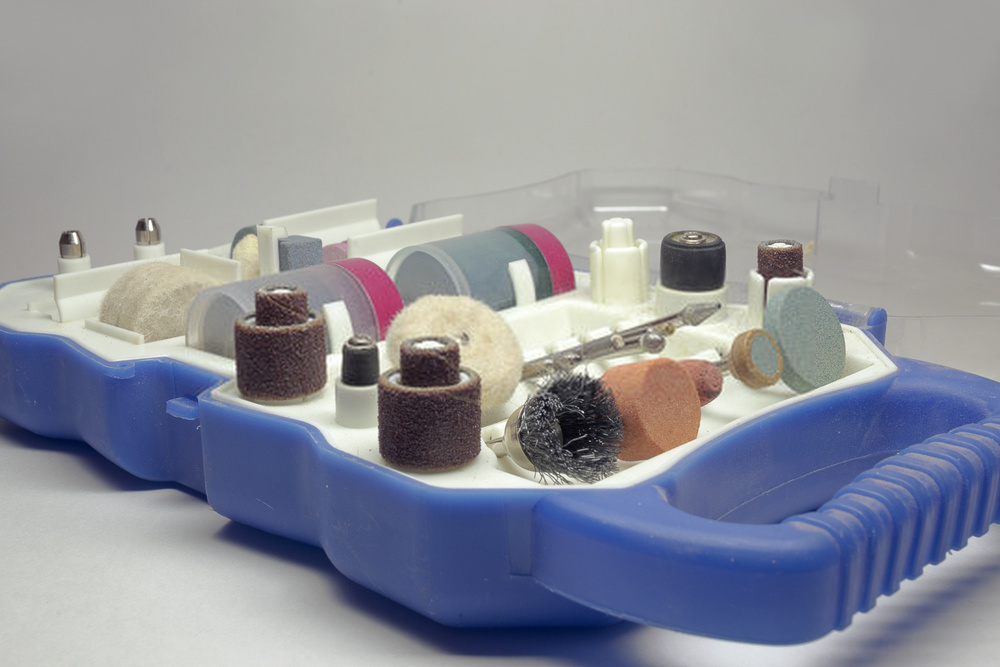
Best Rotary Tool Kits for Jewelry, Dental, and Crafts
Rotary tools are among the most versatile instruments available to dental professionals, jewelers, and hobbyists alike. Whether you need to polish a crown in the lab, shape a gemstone, or carve intricate patterns in wood, the right rotary kit saves time and delivers consistent results. But with so many options on the market, choosing the best kit for your specific needs can feel overwhelming.
This guide breaks down the top rotary tool kits by category, so you can pick the one that matches your workflow, budget, and materials.
What Makes a Good Rotary Tool Kit?
Before diving into specific recommendations, it helps to understand what separates a quality kit from a mediocre one. The best rotary tool kits share several characteristics:
- Purpose-matched accessories: A dental kit should include burs and polishers suited to restorative materials, while a jewelry kit needs diamond-coated bits and felt bobs for finishing metals.
- Organized storage: Bur blocks, compartmented cases, or labeled trays keep small components accessible and protected.
- Consistent quality across pieces: Every item in the kit should perform well, not just the headline tools.
- Clear documentation: Grit ratings, shank sizes, and recommended RPM ranges should be easy to find.
With those criteria in mind, here are five standout rotary kits organized by their primary use.
1. Dental Clinic Finishing and Polishing Kit
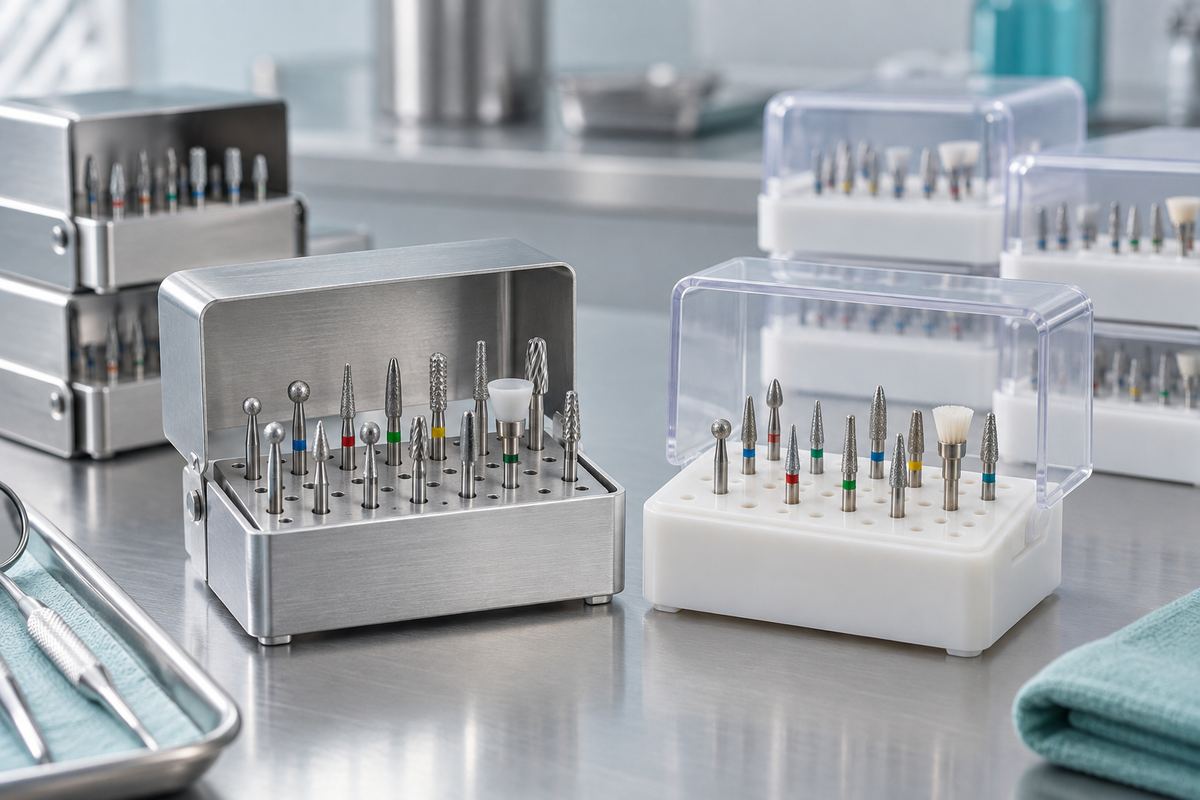
For chairside dentists, a finishing and polishing kit is a daily workhorse. The best clinic kits bundle composite finishing burs, silicone rubber polishers in multiple grits, and diamond finishing points into a single autoclavable bur block.
Look for kits that include coarse, medium, and fine polishers so you can move through the finishing sequence without swapping between separate products. A well-designed clinic kit typically contains 12 to 24 pieces arranged by procedural step, making it easy to grab the next instrument without searching.
Key Features to Prioritize
- Silicone polishers rated for composite, porcelain, and metal alloys
- FG shank compatibility for high-speed handpieces
- Autoclavable bur block included
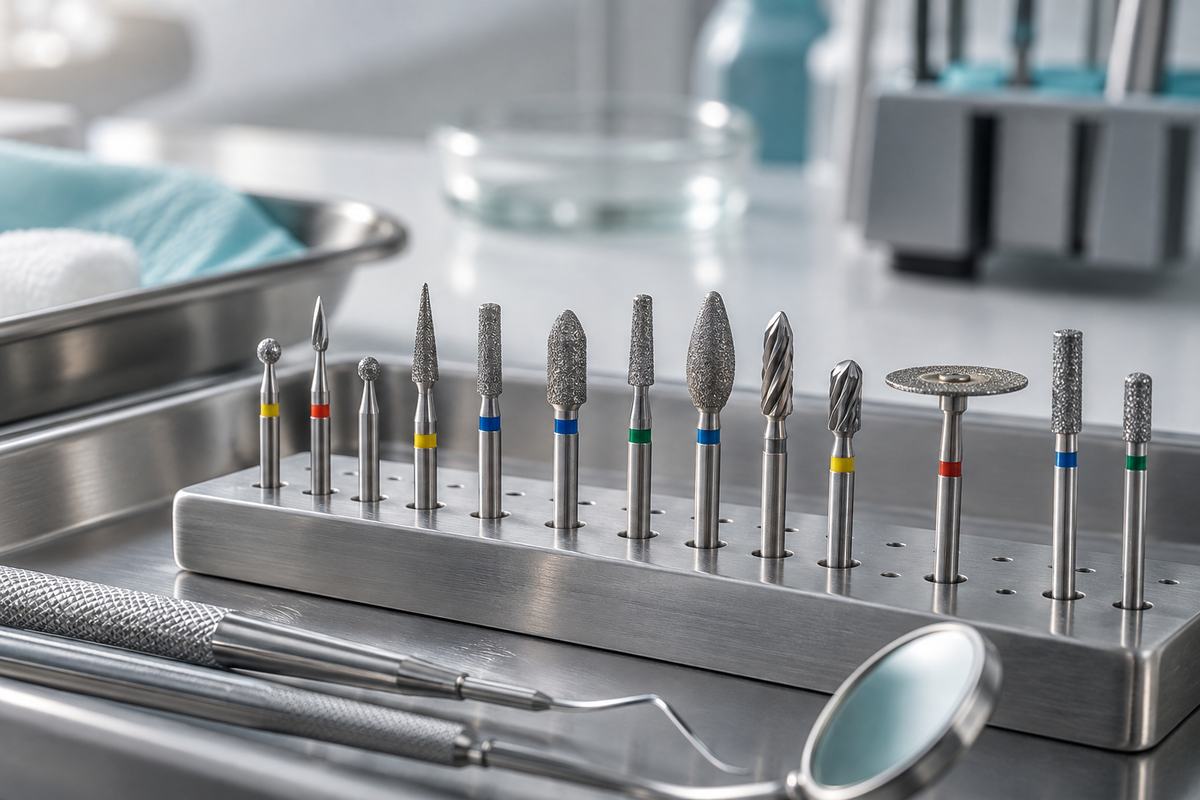
- Color-coded grits for quick identification
Clinic finishing kits are ideal for general practitioners who perform direct restorations daily and want a streamlined polishing workflow.
2. Dental Lab Technician Kit
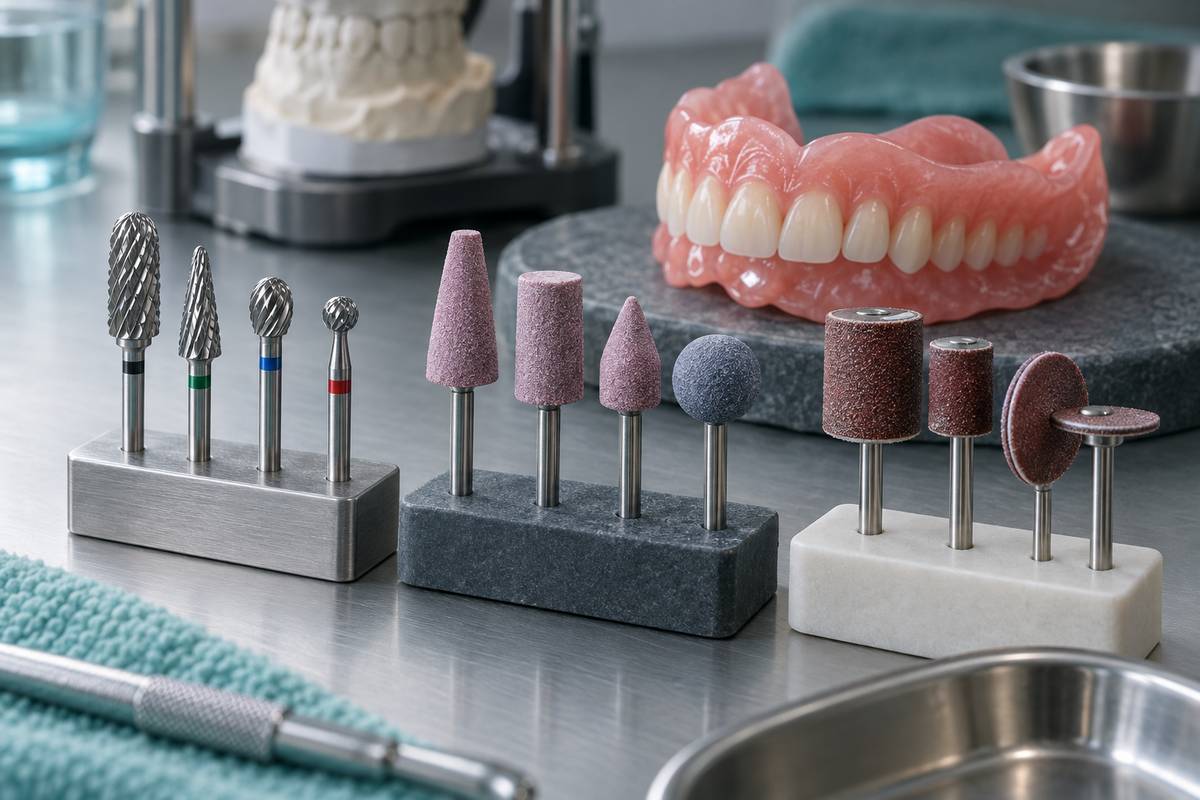
Lab technicians work with a wider range of materials than chairside clinicians, from acrylic and wax to zirconia and pressed ceramics. A good technician kit reflects that diversity by including tungsten carbide cutters for trimming, diamond burs for shaping porcelain, and mounted stones for contouring metal frameworks.
The best technician kits use HP (handpiece) shanks compatible with straight-nose lab handpieces and bench motors. They also tend to include more pieces than clinic kits, often 30 or more, because lab workflows involve more material-specific steps.
What to Look For
- HP shank (2.35 mm) for lab handpiece compatibility
- Tungsten carbide cutters in cross-cut and straight-cut patterns
- Green and white mounted stones for metal and ceramic adjustment
- Diamond burs in medium and fine grits for porcelain finishing
If you process multiple case types in your lab, a well-stocked technician kit reduces the need to order individual burs and polishers separately.
3. Jewelry Making and Polishing Kit
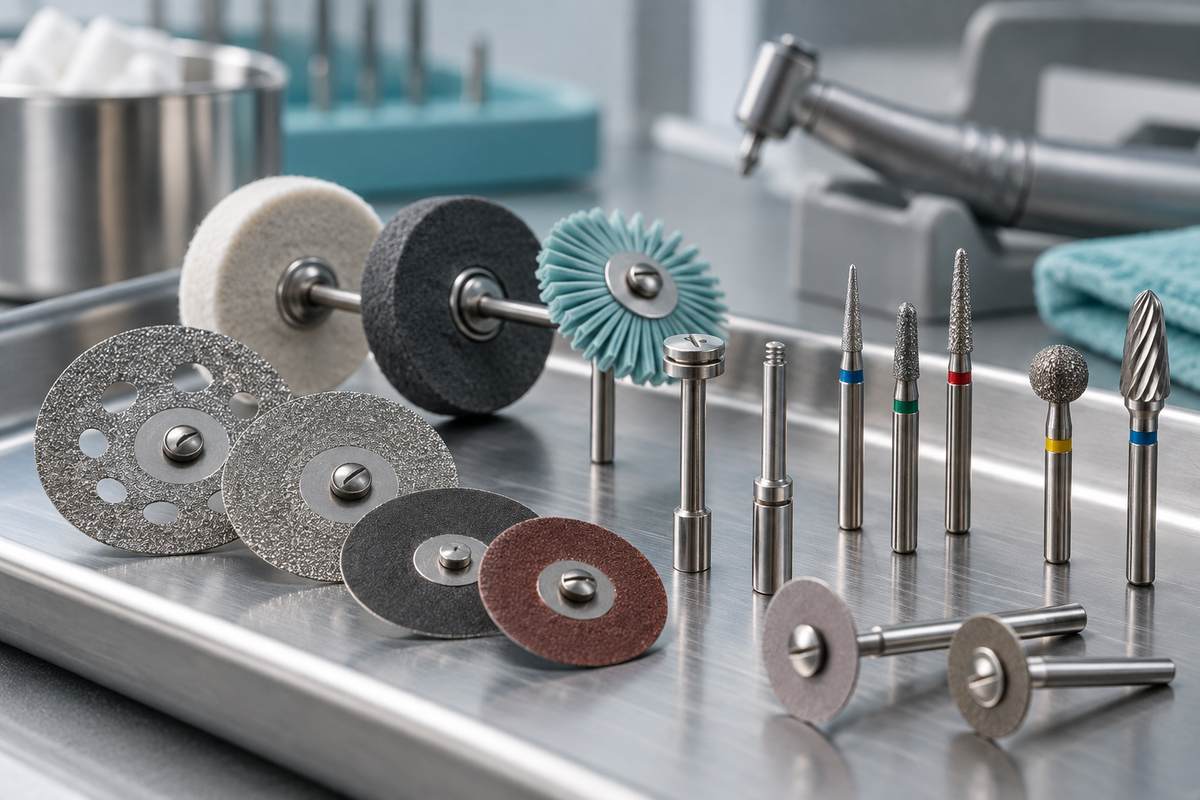
Jewelers need precision at small scales. A rotary kit for jewelry work should include diamond-coated bits for stone setting and engraving, felt bobs and cotton buffs for final polishing, and abrasive rubber wheels for removing tool marks from precious metals.
Most jewelry rotary kits are designed for flex-shaft machines or Dremel-style rotary tools with 2.35 mm or 3.175 mm collets. The best kits group accessories by task: cutting, grinding, sanding, and polishing. This makes it simple to progress through the stages of finishing a ring, pendant, or bracelet without hunting for the right attachment.
Essential Accessories in a Jewelry Kit
- Diamond-coated cylinder and ball bits for detail work
- Silicon carbide or aluminum oxide sanding drums
- Felt bobs in cone and cylinder shapes for compound polishing
- Mandrels compatible with your rotary tool collet size
For more detail on selecting individual bits, see our guide on how to select the perfect rotary tool for jewelry making.
4. Wood Carving and Engraving Kit
Wood carving with a rotary tool requires aggressive material removal at low speeds followed by smooth finishing passes. The best wood carving kits include structured-tooth tungsten carbide burs for rapid stock removal, high-speed steel cutters for detail shaping, and sanding drums or flap wheels for smoothing grain.
When evaluating a wood carving kit, pay attention to shank size compatibility with your rotary tool. Dremel-brand tools typically accept 3.175 mm shanks, while many imported kits ship with 2.35 mm shanks that require a collet adapter.
Recommended Kit Contents
| Accessory Type | Purpose | Typical Quantity |
|---|---|---|
| Structured-tooth carbide burs | Rough shaping, stock removal | 4-6 shapes |
| High-speed steel cutters | Detail carving, fine lines | 4-8 shapes |
| Sanding drums (various grits) | Surface smoothing | 6-12 pieces |
| Flap wheels | Contour sanding | 2-4 pieces |
| Polishing buffs | Final finish with wax or compound | 2-3 pieces |
You can also read our tips on the bits and burs you need for Dremel wood carving for a deeper look at individual tool selection.
5. Metal Grinding and Surface Prep Kit
Metal workers, model builders, and DIY fabricators often need rotary kits that handle deburring, edge breaking, and surface preparation on steel, aluminum, and brass. These kits prioritize aggressive cutting tools like aluminum oxide mounted points, fiber-reinforced cut-off wheels, and coarse silicon carbide stones.
Unlike dental or jewelry kits, metal grinding kits tend to include more disposable consumables. Cut-off wheels and sanding bands wear quickly on hard metals, so look for kits that provide replacement quantities rather than just one of each.
Selecting a Metal-Working Kit
- Reinforced cut-off wheels (at least 10 per kit) for cutting thin stock
- Aluminum oxide mounted points in multiple shapes for deburring
- Wire brushes (steel and brass) for surface cleaning
- Rubber bonded abrasive points for blending and smoothing
If you work with stainless steel or hardened alloys, consider upgrading individual bits to diamond-coated laboratory burs for longer tool life and cooler cutting temperatures.
How to Get the Most From Your Rotary Kit
Owning a quality kit is only half the equation. Getting the best performance from your rotary tools requires attention to a few practical details:
Match Speed to Material
Running a diamond bit too fast on soft metal generates heat and clogs the grit surface. Running a carbide cutter too slowly on hardwood causes chatter and rough cuts. Check the manufacturer's recommended RPM range for each accessory and adjust your tool accordingly.
Replace Worn Accessories Promptly
Dull burs and worn polishers produce poor results and force you to apply more pressure, which increases the risk of damage to your workpiece and fatigue in your hands. Replace consumable accessories as soon as performance drops.
Clean and Store Properly
After each use, brush debris from burs and polishers. For dental instruments, follow your facility's sterilization protocol. For craft tools, wipe down with a dry cloth and store in a closed case to prevent rust and contamination.
Organize by Workflow Step
Arrange your kit so that tools progress logically from cutting to shaping to finishing to polishing. This small organizational step saves significant time during repetitive tasks.
Comparing Kit Value: What to Spend
Rotary kits range from under twenty dollars for basic hobby sets to several hundred dollars for professional dental kits. Price alone does not determine quality, but extremely cheap kits often include poorly bonded abrasives and inconsistent shank tolerances that cause wobble and vibration.
For professional dental or jewelry work, invest in kits from manufacturers who specialize in rotary instruments. The consistency and performance you gain will pay for itself in time saved and better outcomes. For hobby use, mid-range kits strike a reasonable balance between cost and durability.
Final Thoughts
The best rotary tool kit is the one that matches your specific work. Dental professionals benefit from kits organized around clinical or lab workflows. Jewelers need precision diamond bits and polishing accessories. Wood carvers and metal workers require aggressive cutting tools paired with effective finishing options.
Take stock of the materials you work with most often, the shank size your tool accepts, and the tasks you repeat daily. Then choose a kit that addresses those needs without unnecessary extras. A focused, well-made kit will always outperform a generic collection of random accessories.