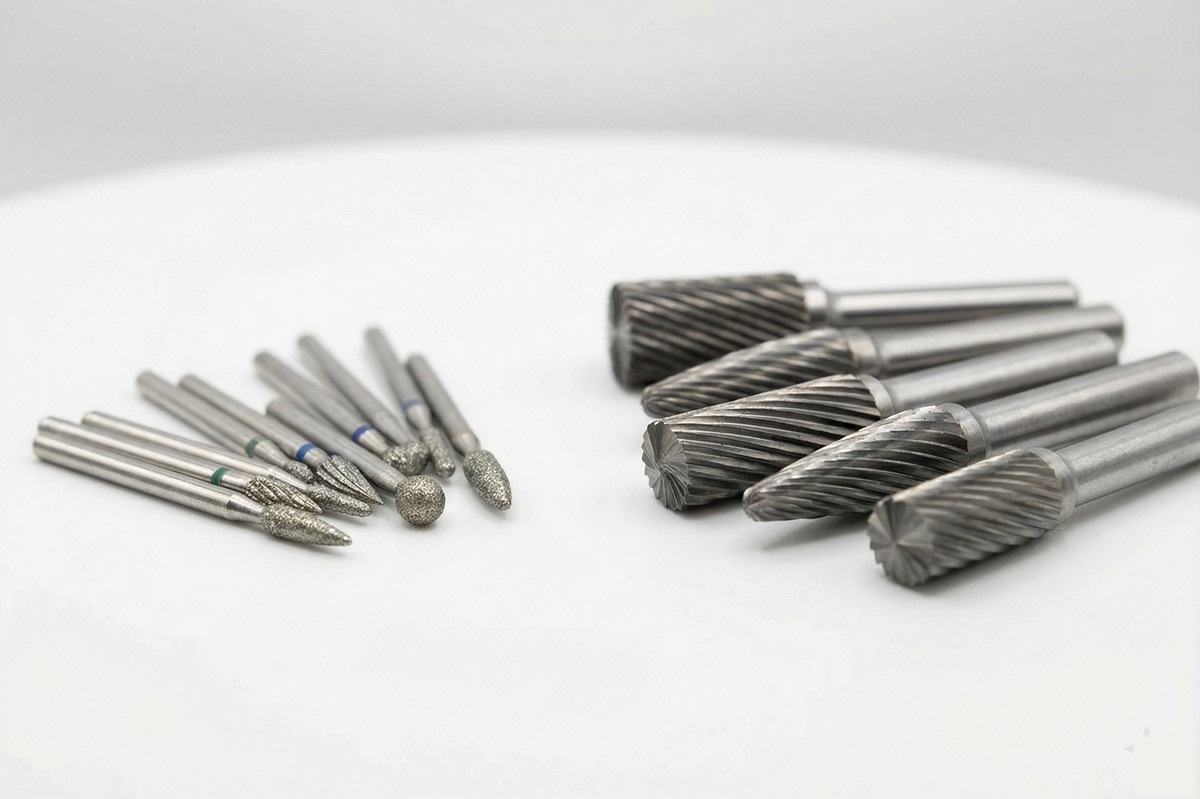
If you've searched for rotary cutting tools online, you've probably seen both spellings: bur and burr. Some catalogs use one, some use the other, and a few use both on the same page. So which is correct?
Short answer: both refer to the same tool — a small rotary cutting instrument used in a handpiece or die grinder. The spelling difference comes down to industry convention, and getting it wrong won't change how the tool cuts. But if you're ordering supplies or reading clinical literature, knowing the convention saves confusion.
The Spelling Split: How It Happened
In dentistry and precision manufacturing, the standard spelling is bur — one "r." The ISO standards (specifically ISO 6360 for dental rotary instruments) use "bur" exclusively. The FDI World Dental Federation, the ADA, and every major dental manufacturer catalog you'll find — all use "bur."
The double-r spelling, burr, shows up more in general metalworking, woodworking, and machining contexts. It's also the older English spelling. In these trades, a "burr" can mean two things: the rotary cutting tool itself, or the rough edge left on metal after cutting or drilling. That dual meaning is probably why dentistry dropped the second "r" — to avoid ambiguity.
Does the Spelling Affect What You're Buying?
No. A "carbide bur" and a "carbide burr" are the same tool. The cutting flutes, the shank diameter, the material — none of that changes with spelling. What does change is the context:
| Feature | "Bur" (Dental/Precision) | "Burr" (Metalworking/General) |
|---|---|---|
| Industry | Dentistry, dental labs, jewelry | Machining, metalwork, woodwork |
| Standards Body | ISO 6360, ADA, FDI | No single standard |
| Shank Types | FG (1.6mm), RA (2.35mm), HP (2.35mm) | 1/4" (6.35mm), 1/8" (3.175mm) |
| Typical Speed | 200,000–400,000 RPM (high-speed) | 10,000–35,000 RPM (die grinder) |
| Size Range | 0.5mm–5mm head diameter | 3mm–25mm+ head diameter |
The real differences aren't in the name — they're in the shank diameter, head size, and operating speed. Dental burs are precision instruments made for small, controlled cuts in tooth structure and restorative materials. Industrial burrs tend to be larger, designed for deburring castings, shaping metal, or carving wood.
Dental Rotary Tool Terminology
If you're new to dental instruments or crossing over from another trade, the vocabulary can trip you up. Here's a quick-reference glossary of key terms you'll encounter when shopping for or discussing rotary cutting tools.
| Term | Definition |
|---|---|
| Bur / Burr | A small rotary cutting or grinding instrument. "Bur" (single R) is standard in dentistry; "burr" (double R) is common in metalworking and general machining. |
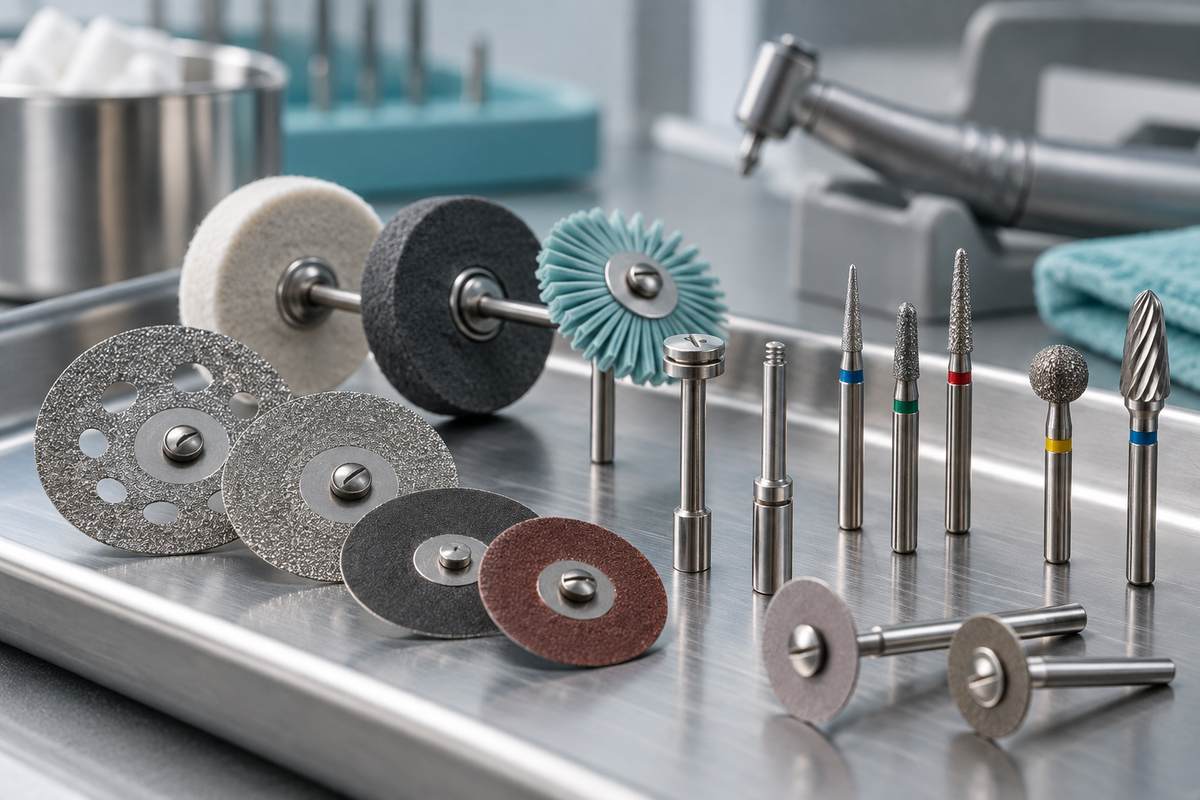
| Mandrel | A shaft or spindle that holds accessories like discs, wheels, or rubber cups in a handpiece. The mandrel provides the connection between the rotating instrument and the handpiece itself. |
| Handpiece | The motor-driven or air-driven holder that spins a bur at controlled speeds. Dental handpieces include high-speed (up to 400,000 RPM) and slow-speed (low-speed, typically 5,000-40,000 RPM) types. |
| Collet | The clamping mechanism inside a handpiece chuck that grips the bur shank. A push-button handpiece uses a spring-loaded collet for quick bur changes. |
| Shank | The smooth, cylindrical portion of the bur that inserts into the handpiece. Common dental shank types include FG (friction grip, 1.6mm), RA (right angle, 2.35mm), and HP (handpiece, 2.35mm). |
| Flute | The helical or straight cutting groove machined into a carbide bur's head. More flutes (12-30) produce finer finishes, while fewer flutes (6-8) cut more aggressively. |
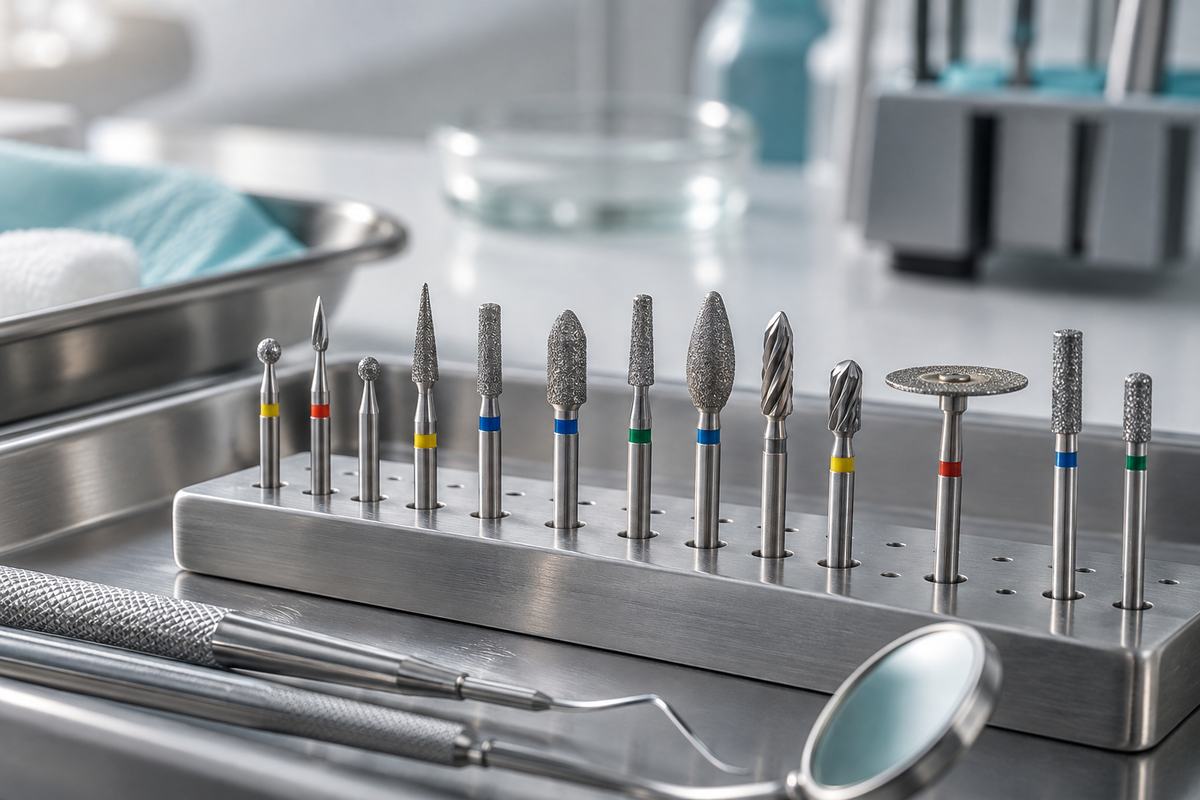
| Grit | The diamond particle size rating on a diamond bur, usually indicated by a color band on the shank. Coarse (green band) removes material fast; extra-fine (yellow band) polishes and finishes margins. |
Understanding these terms helps when reading product descriptions, clinical studies, or the ISO numbering system that classifies every dental rotary instrument.
Dental Bur Types: A Quick Overview
Since you're here, you probably want to know what's available beyond the spelling question. Dental burs fall into a few major categories based on their cutting surface:
Diamond Burs
Diamond grit bonded to a metal blank. These cut by abrasion rather than blade action, which makes them the go-to choice for hard materials like enamel, ceramic, and zirconia. They come in coarse, medium, fine, and extra-fine grits — coarse for bulk reduction, fine for finishing margins. Most clinics stock a basic set of diamond dental burs in common shapes: round, tapered, flame, and football.
Carbide Burs
Tungsten carbide with machined flutes — usually 6, 8, 12, or 30 blades. Fewer blades cut more aggressively (good for caries removal), while more blades give a smoother finish. Tungsten carbide burs excel at cutting dentin, removing old restorations, and finishing composite. The classic 330 carbide bur — a pear shape — has been a cavity prep staple for decades.
Specialty Burs
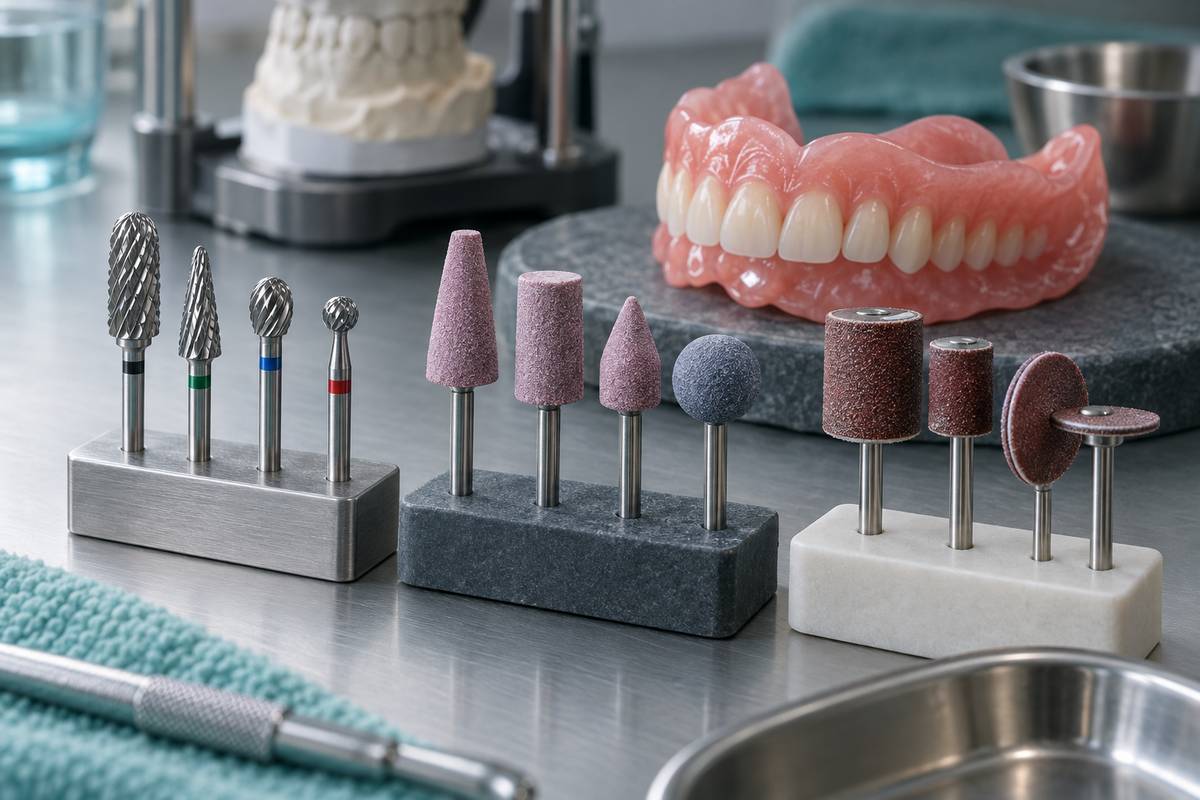
Beyond the two main categories, there are surgical burs for bone cutting, finishing burs with fine cross-cuts for smoothing restorations, and Endo Z burs designed specifically for endodontic access without perforating the pulp floor. Lab technicians also use larger HP-shank burs and tungsten carbide cutters for trimming models and adjusting prosthetics.
Common Bur Shapes and What They Do
Regardless of whether you spell it "bur" or "burr," the shapes are standardized. Here are the ones you'll use most often in clinical and lab work:
| Shape | ISO Code | Primary Uses |
|---|---|---|
| Round (001) | 801 | Caries removal, access openings, pin holes |
| Pear (237) | 330 | Cavity prep (Class I and II) |
| Tapered Flat-End (172) | 847 | Crown preparation, shoulder margins |
| Tapered Round-End (199) | 856 | Crown prep, chamfer margins |
| Flame (249) | 862 | Subgingival margin refinement, interproximal |
| Football (379) | 368 | Occlusal surface contouring, lingual shaping |
Each shape serves a specific clinical purpose. You wouldn't use a flame bur for bulk reduction any more than you'd use a round bur for finishing a crown margin. Matching the shape to the procedure is half the battle — and that's true whether you call them burs or burrs.
Caring for Your Burs
Diamond burs lose their cutting efficiency as grit wears down. After 3-5 uses on hard materials like zirconia, you'll notice the bur starts to skip rather than cut. Carbide burs last longer per use but dull more suddenly — when a blade chips, the bur is done.
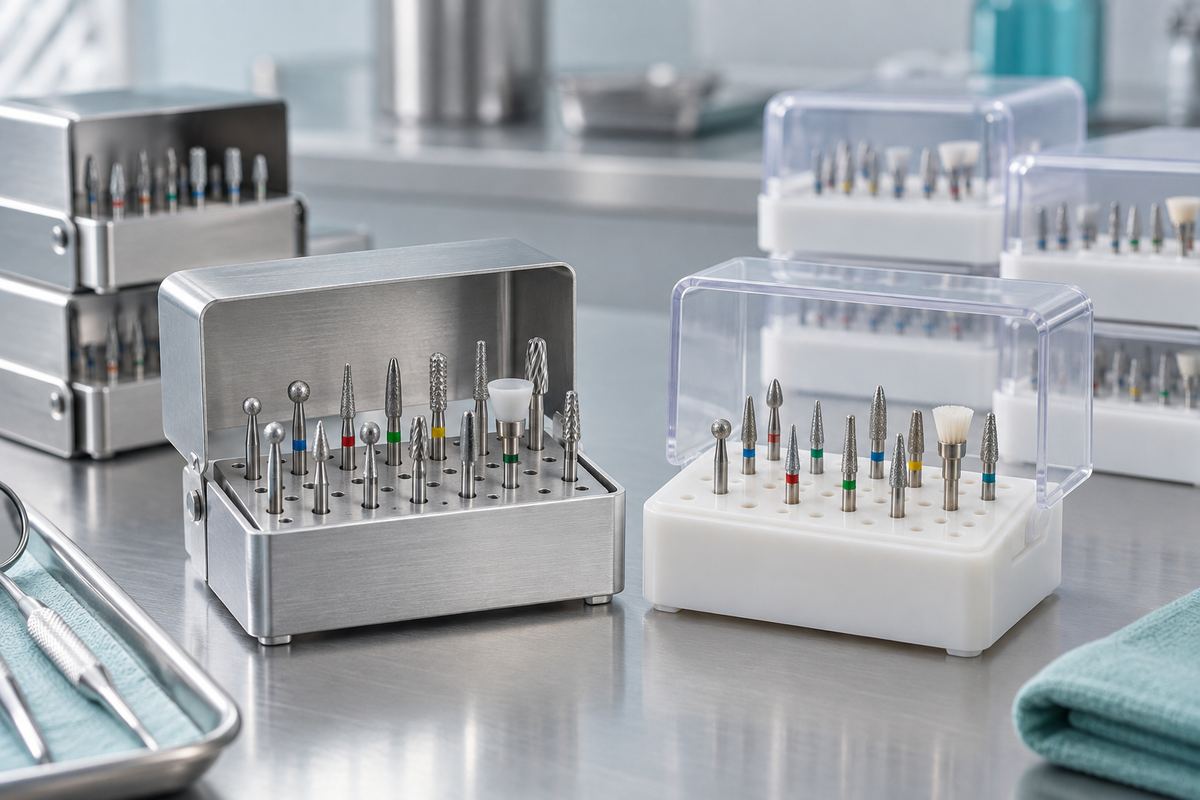
Between patients, burs need proper sterilization. The standard protocol: ultrasonic cleaning first, then autoclave at 134°C for 18 minutes. Chemical disinfection alone doesn't cut it for instruments that contact bone and tooth structure. Store clean burs in a bur block, tips up, to protect the cutting surfaces from banging into each other in a drawer.
The ISO Numbering System
Every dental bur carries an ISO number — a 15-digit code that tells you the shank type, material, shape, grit or flute count, and head diameter. The system follows ISO 6360, and once you can read it, you can identify any bur from any manufacturer without looking at a catalog. We've written a detailed breakdown in our ISO number decoding guide if you want the full picture.
The point here: the ISO system uses "bur" — not "burr" — throughout. If you're writing clinical notes, ordering from a dental supplier, or referencing standards, stick with the single-r spelling.
Which Spelling Should You Use?
Depends on your audience:
- Dental professionals, dental labs, dental suppliers: "Bur" — always. It's the ISO/ADA standard.
- Machinists, metalworkers, DIY makers: "Burr" is more common and perfectly acceptable.
- General writing or e-commerce: Use whichever your audience expects. Better yet, mention both so searchers find you either way.
Frequently Asked Questions
Is it "bur" or "burr" in dentistry?
In dentistry, the correct spelling is "bur" with a single R. This is the standard established by ISO 6360 and used throughout dental literature, catalogs, and regulatory documents. The double-R "burr" is reserved for metalworking and industrial machining tools.
Are dental burs and burrs the same thing?
Dental burs and industrial burrs are both small rotary cutting tools, but they are not interchangeable. Dental burs are manufactured to precise tolerances for use in high-speed handpieces on tooth structure, while metalworking burrs are designed for heavier stock removal on metals and are used in die grinders or rotary tools.
What are the main types of dental burs?
The three main types are diamond burs, carbide burs, and specialty burs. Diamond burs use bonded diamond particles for grinding enamel and ceramics. Carbide burs have machined fluted blades for cutting tooth structure and removing old restorations. Specialty burs include surgical burs, finishing burs, and multi-fluted polishing burs.
What does the ISO number on a dental bur mean?
The ISO number follows the ISO 6360 coding system, which identifies a bur by its material, shank type, shape, and head diameter. For example, a code beginning with 806 indicates a diamond instrument with a friction-grip shank. This standardized numbering lets clinicians and suppliers identify the exact bur specification regardless of manufacturer.
Can I use dental burs in a die grinder?
No, dental burs are not designed for die grinders or industrial rotary tools. Dental burs have friction-grip (FG) or latch-type (RA) shanks built for dental handpieces spinning at 200,000–400,000 RPM under light pressure. Using them in a die grinder risks shank incompatibility, improper speed, and breakage.
Why do some dental catalogs spell it both ways?
Inconsistent style guides and legacy content are the usual culprits. Older catalogs may have used "burr" before the single-R convention became firmly established by ISO and the ADA. Some suppliers also intentionally include both spellings for search engine visibility, since buyers search for both "dental bur" and "dental burr." If you see both on the same site, it doesn't mean they're selling two different products.
What is the plural of bur?
In dental usage, the plural is "burs" — not "burrs." You'll see "burs" in clinical literature, supply orders, and sterilization logs. The double-R plural "burrs" belongs to the metalworking spelling. So a tray holds ten burs, a kit contains five burs, and a dentist orders a box of burs.
At the end of the day, nobody will refuse to sell you a carbide bur because you typed two r's. But in dentistry, precision matters — in your cuts and in your terminology. One "r" is the professional standard. Now you know why.