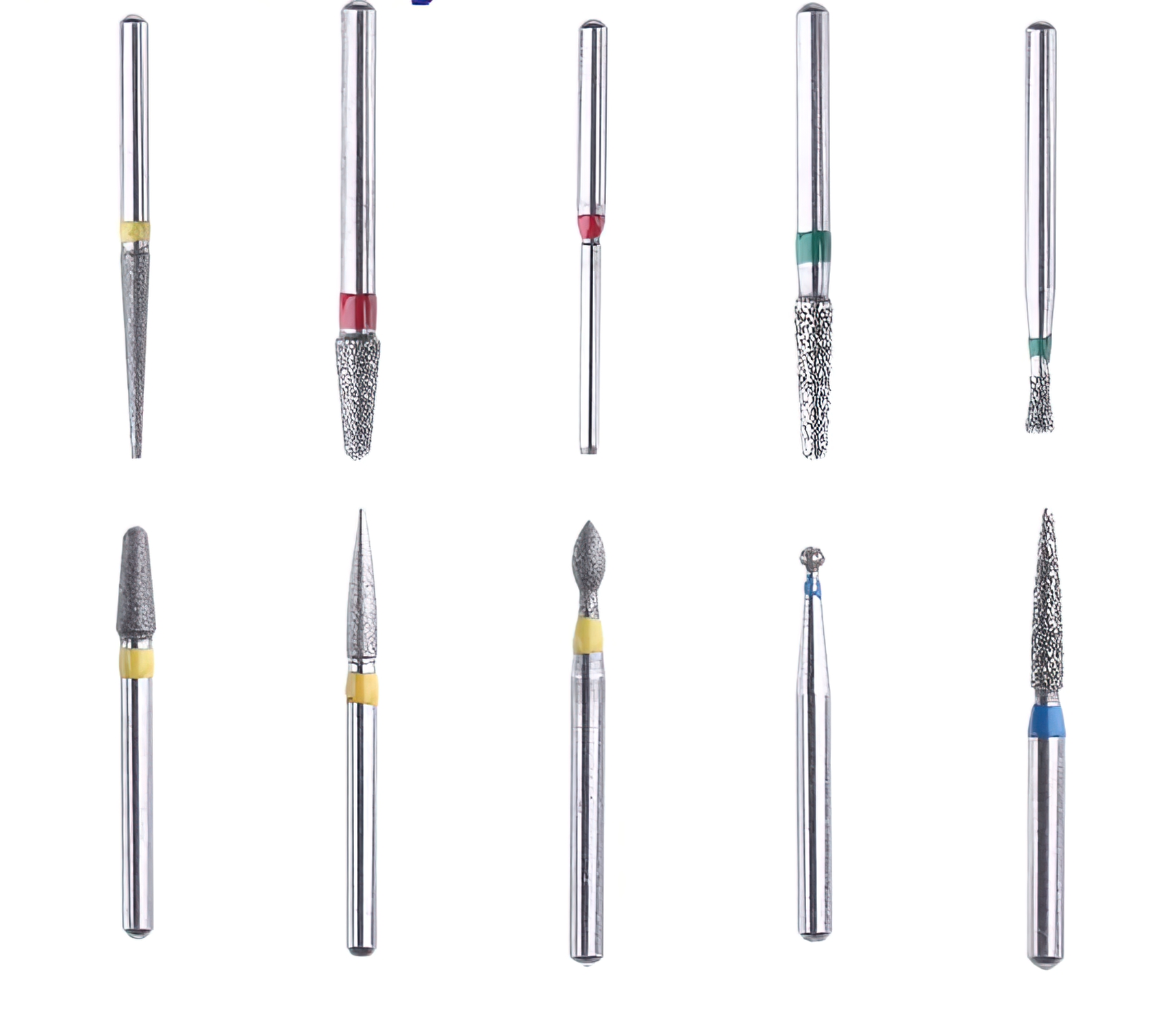
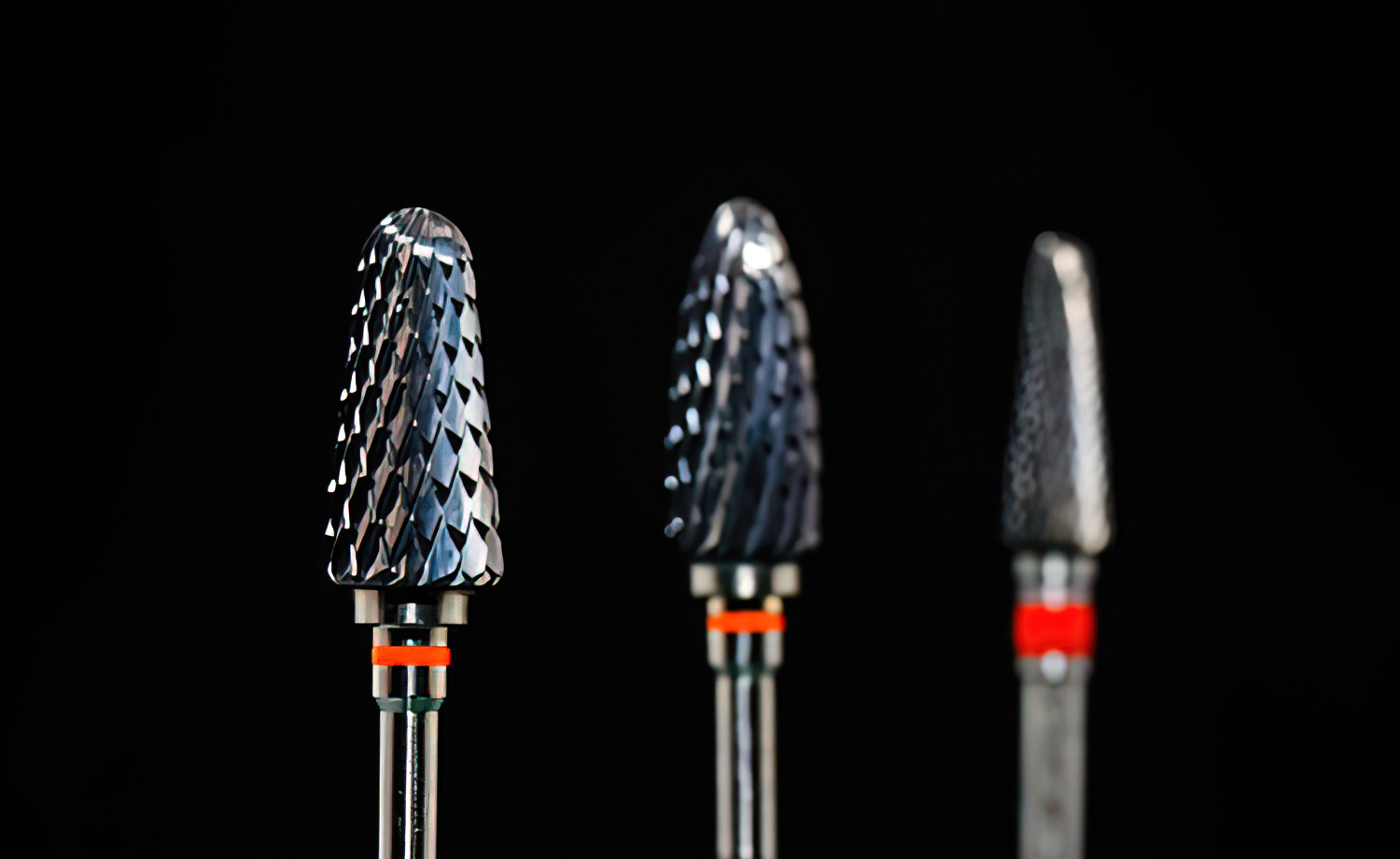
The 330 carbide bur is one of the most widely used instruments in restorative dentistry. Nearly every clinician encounters it during training, and it stays in daily rotation throughout a career. Below we cover what the 330 bur is, its numbering, clinical applications, real case examples, and technique guidance.
What Is the 330 Carbide Bur?
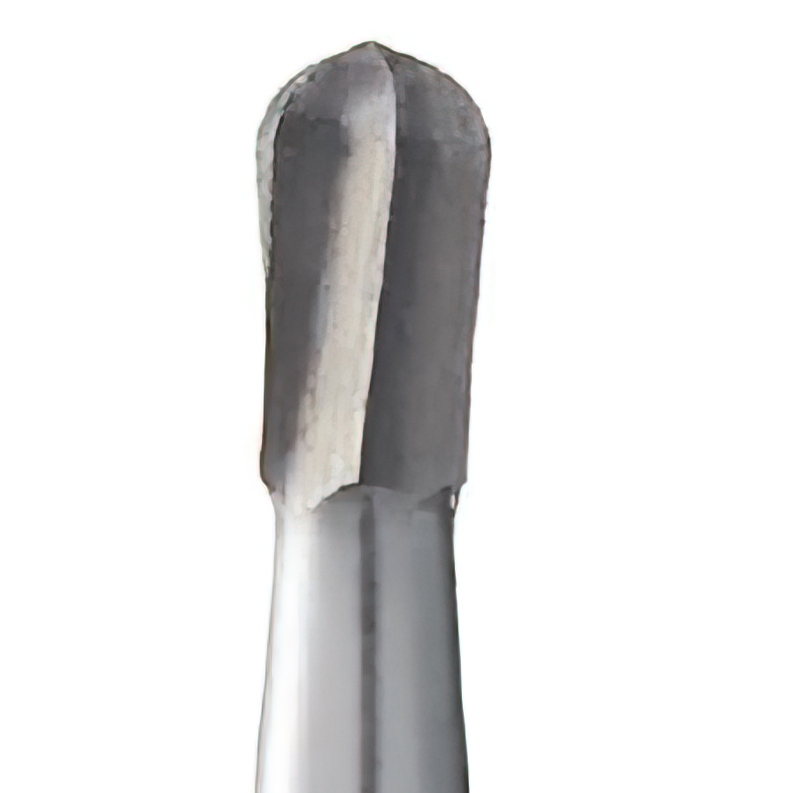
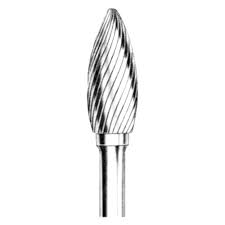
The 330 bur is a short pear-shaped tungsten carbide bur designed primarily for cavity preparation. Its pear profile — wider at the tip than at the neck, with a smoothly rounded end — makes it well suited for creating undercuts, shaping cavity walls, and establishing retention form in direct restorations.
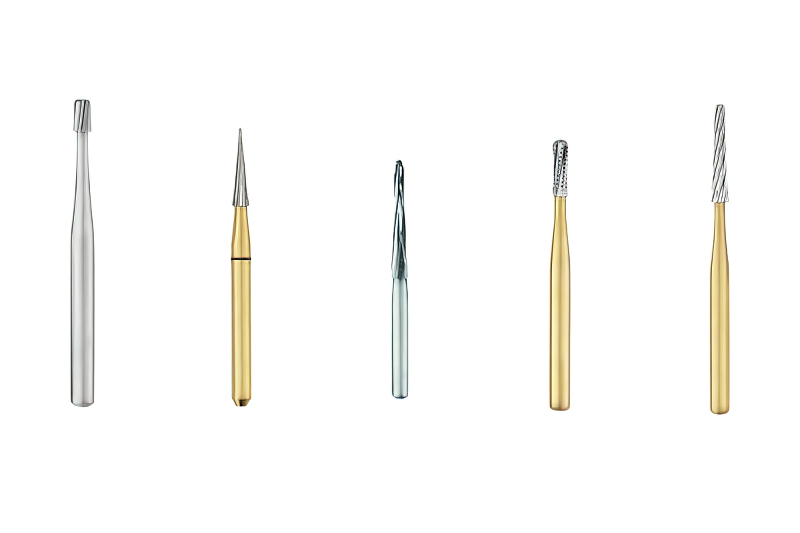
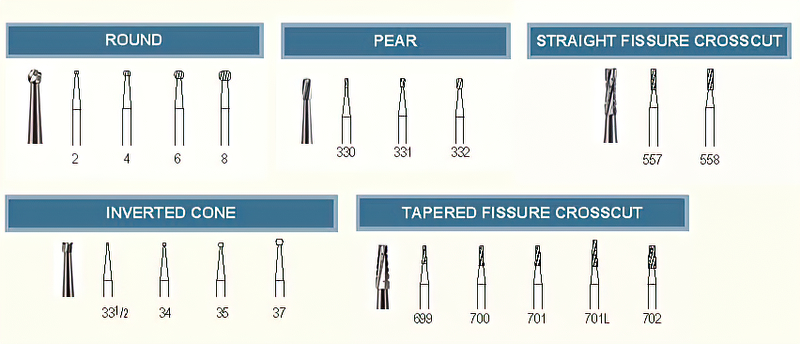
The "330" designation refers specifically to the bur's shape and size within the traditional US numbering system (sometimes called the ADA numbering system). Related burs in the same pear-shape family include the 331 (medium pear) and 332 (long pear), which share the same cross-sectional profile but differ in head length.
Understanding Dental Bur Numbering
Dental bur numbers can seem arbitrary if you do not know the system behind them. Two classification systems are commonly used:
US (ADA) Numbering
The traditional US system assigns numbers based on shape and size. The 330, 331, and 332 pear burs are part of this system, as are familiar numbers like the 1/4 round bur, the 56 and 57 straight fissure burs, and the 34 and 35 inverted cone burs.
ISO Classification
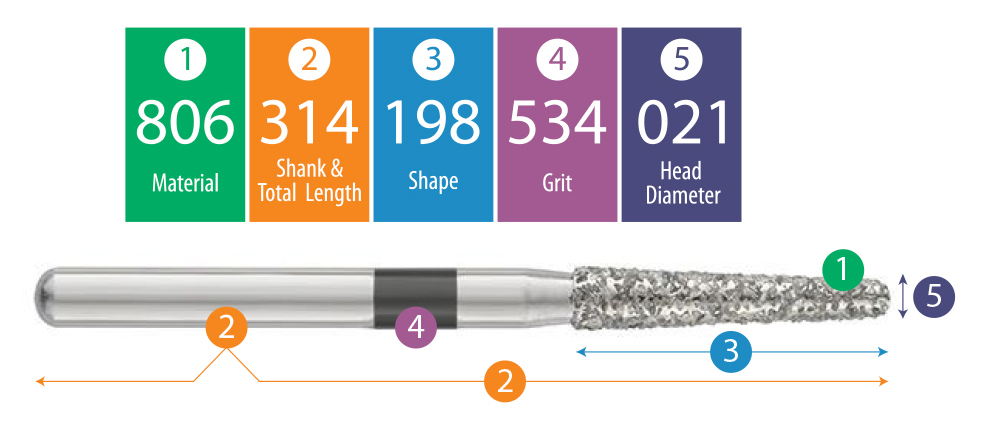
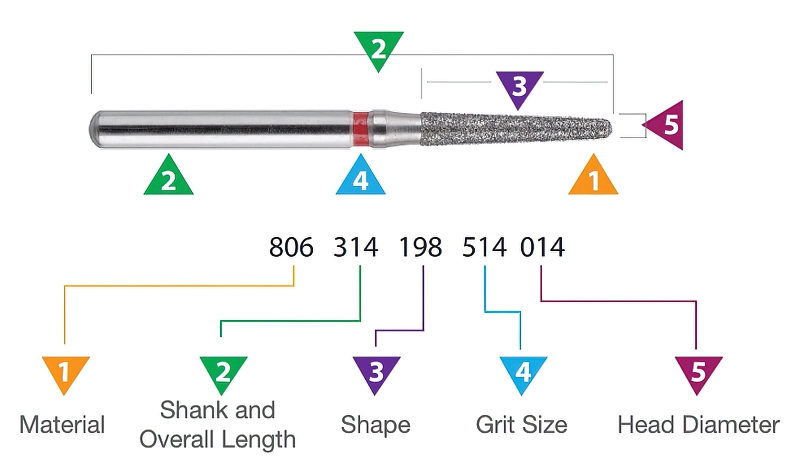
The ISO system uses a 15-digit code divided into five 3-digit segments. These segments identify the material, shank type, shape, grit or flute design, and head diameter. This system provides more precise identification across international manufacturers. For a detailed breakdown, see our guide on how to read the ISO number of a dental bur.
330 Carbide Bur Specifications
| Specification | Detail |
|---|---|
| Shape | Short pear (pear-shaped, rounded end) |
| Material | Tungsten carbide |
| Head Diameter | 0.8 mm |
| Head Length | 1.8 mm |
| Shank Type | FG (Friction Grip) — fits high-speed handpieces |
| Overall Length | ~19 mm (standard FG length) |
| Flutes | Crosscut or plain cut depending on manufacturer |
The compact head dimensions make the 330 bur easy to maneuver in tight interproximal areas and small Class I preparations. For more on how shank types affect handpiece compatibility, read our article on the three main types of bur shanks.
Common Dental Bur Shapes Compared
To understand where the 330 pear bur fits in the broader landscape, here is a comparison with other commonly used shapes:
| Shape | Common Numbers | Primary Uses |
|---|---|---|
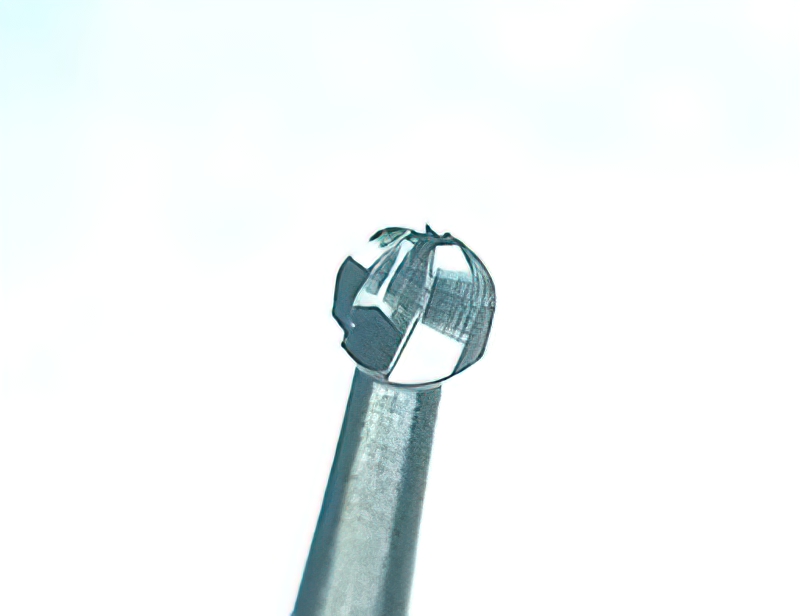
| Round | 1/4, 1/2, 1, 2, 4, 6, 8 | Caries removal, initial entry, pulp chamber access |
| Pear | 330, 331, 332 | Cavity preparation, retention undercuts, wall shaping |
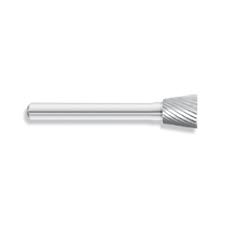
| Inverted Cone | 33-1/2, 34, 35, 36, 37 | Undercuts, mechanical retention, locking steps |
| Straight Fissure | 56, 57, 58 | Cavity wall smoothing, box preparation, crown reduction |
| Tapered Fissure | 169, 170, 171 | Crown preparation, convergent cavity walls |
| Flame | 7104, 863 | Contouring, subgingival margin refinement |
Clinical Uses of the 330 Carbide Bur
The 330 bur is used across several restorative procedures:
Class I Cavity Preparation
The 330 is the standard bur for Class I cavities in posterior teeth. Its pear shape creates a slightly wider floor than the entry point, providing mechanical retention for amalgam. The rounded end avoids stress-concentrating sharp line angles at the pulpal floor. Position the bur perpendicular to the occlusal surface, enter through enamel at high speed with water coolant, then sweep along pit and fissure anatomy to outline the cavity.
Class II Cavity Preparation
For Class II preps, the 330 extends the preparation into the proximal box. The pear shape establishes the gingival seat and axial wall in a single motion, and the small head allows controlled interproximal access without excessive tooth removal. When breaking through the marginal ridge, the 330's tapered geometry provides good visibility and minimizes the risk of damaging the adjacent tooth.
Class V Preparations
Cervical (Class V) preparations benefit from the 330 bur's rounded geometry, which creates smooth cavity floors that follow the contour of the tooth surface near the gingival margin. These preparations are typically shallower, so the short head length of the 330 prevents over-preparation toward the pulp.
Restoration Removal and Repair
The 330 cuts efficiently through both amalgam and composite, making it useful for accessing old restorations while preserving surrounding tooth structure. It can re-establish cavity margins and clean up recurrent caries before a new restoration goes in.
Crown Removal
While not its primary role, the 330 bur can be used to cut through the wall of a metal or porcelain-fused-to-metal (PFM) crown when sectioning is needed for removal. The clinician makes a vertical cut through the buccal surface of the crown, then uses a crown spreader to separate the sections. For heavier crown work, a surgical carbide bur with a longer head may be more efficient.
Clinical Case Examples
Here are three scenarios that show how the 330 bur fits into common procedural sequences.
Case 1: Class II MOD on a Mandibular First Molar
Bitewing radiographs reveal recurrent caries mesial and distal on tooth #30. After anesthesia and rubber dam isolation, a 1/4 round bur gains initial access through the occlusal enamel. The 330 takes over from there — outlining the isthmus and extending through both marginal ridges into the proximal boxes. Its pear shape sets the gingival seat width and axial wall depth conservatively. A slow-speed round bur excavates remaining carious dentin, and a finishing bur refines enamel margins before matrix placement. For more on this workflow, see our cavity preparation guide.
Case 2: Amalgam Removal and Composite Replacement
An old amalgam on tooth #19 shows a fractured margin with secondary caries. The 330 bur sections through the center of the amalgam at high speed, splitting it for removal with a spoon excavator. A slow-speed round bur then cleans carious dentin along the DEJ. Finally, the 330 reshapes cavity walls and refines cavosurface margins for bonded composite. This three-bur sequence — 330 for access, round for caries, 330 for refinement — is one of the most common workflows in restorative practice.
Case 3: Emergency PFM Crown Removal
A loose PFM crown on tooth #14 keeps catching on food. Rather than re-cement over questionable margins, the crown needs to come off. The 330 bur cuts a vertical slot through the buccal surface from occlusal to gingival. Its small head allows a precise cut without gouging the prep underneath. A crown spreader placed in the slot levers the sections apart, and the preparation is evaluated for re-impression.
Technique Tips for Using the 330 Bur
Getting the best performance from a 330 carbide bur depends on proper technique:
- Use light, intermittent pressure. Let the bur do the cutting. Excessive pressure generates heat, reduces cutting efficiency, and accelerates bur wear.
- Maintain adequate water spray. The high-speed handpiece should deliver a consistent water stream to cool the bur and flush debris from the preparation. Inadequate cooling risks thermal damage to the pulp.
- Replace burs regularly. A dull bur requires more pressure, generates more heat, and produces rougher walls. Most manufacturers recommend single-use, though multi-use is common.
- Check for wobble before use. Spin the bur briefly after inserting it. If it wobbles, the shank may be bent or the chuck worn. A wobbling bur creates oversized preps and poor margins.
- Use a round bur first for initial entry. A small round bur (such as a 1/4 or 1/2 round) is often used for the initial caries entry point before switching to the 330 for cavity outline and shaping.
330 Bur vs. Diamond Burs
Both carbide and diamond burs are used in restorative dentistry, but they serve different roles in the preparation workflow:
| Factor | 330 Carbide Bur | Diamond Bur |
|---|---|---|
| Cutting Action | Bladed — shears material in chips | Abrasive — grinds material as particles |
| Surface Finish | Smoother cavity walls | Rougher surface (better for bonding) |
| Best For | Cavity preparation (amalgam) | Crown preparation, enamel reduction |
| Tooth Structure | More conservative removal | Faster bulk reduction |
| Longevity | Dulls with use; replace frequently | Longer-lasting abrasive surface |
For a deeper comparison, see our article on the differences between diamond burs and carbide burs.
Crosscut vs. Plain Cut 330 Burs
The 330 comes in plain cut and crosscut configurations. Plain cut burs have straight flutes, producing a smoother cut with less vibration. Crosscut burs add horizontal cuts across the flutes for more aggressive material removal but a rougher finish. Use crosscut for initial outline and bulk removal, plain cut for final wall smoothing and margin refinement. Many clinicians keep both in their bur block.
Frequently Asked Questions
What size is a 330 carbide bur?
The 330 has a head diameter of 0.8 mm and a head length of 1.8 mm. In FG shank configuration, overall length is approximately 19 mm. It is the smallest in the pear family — the 331 and 332 share the same diameter but have longer heads (2.5 mm and 3.5 mm).
What is the difference between 330 and 245 burs?
The 330 has a rounded end while the 245 has a flat end. That flat end on the 245 creates a more defined pulpal floor, which some clinicians prefer for amalgam preps. The 330's rounded end is gentler and more forgiving in shallow preparations. Preference often comes down to dental school training — both get the job done.
How many times can you use a 330 carbide bur?
Manufacturers recommend single-use, but most dentists reuse them several times. Cutting efficiency drops noticeably after 3-5 uses — you will feel the bur grabbing rather than slicing. At that point, replace it. If you are building clinic kits, stock several 330s per kit so a sharp one is always ready.
Can you use a 330 bur for crown prep?
Not practically. Crown prep requires bulk reduction around the full circumference, and the 330's 0.8 mm head makes that painfully slow. Tapered diamond burs in the 1.2-1.6 mm range (171 or 856 shapes) are standard for crown reduction. The 330 can play a supporting role, though — placing depth-orientation grooves before bulk reduction or sectioning an old crown for removal.
The Bottom Line
After years of using just about every bur on the market, the 330 remains the one I would not want to practice without. It handles 80% of a typical restorative day — Class I and II preps, amalgam removals, the occasional crown sectioning. Not the fastest or most specialized, but its versatility is hard to match. Stock plenty of them. They go dull, they get used constantly, and when you reach for one and the block is empty, you feel it.