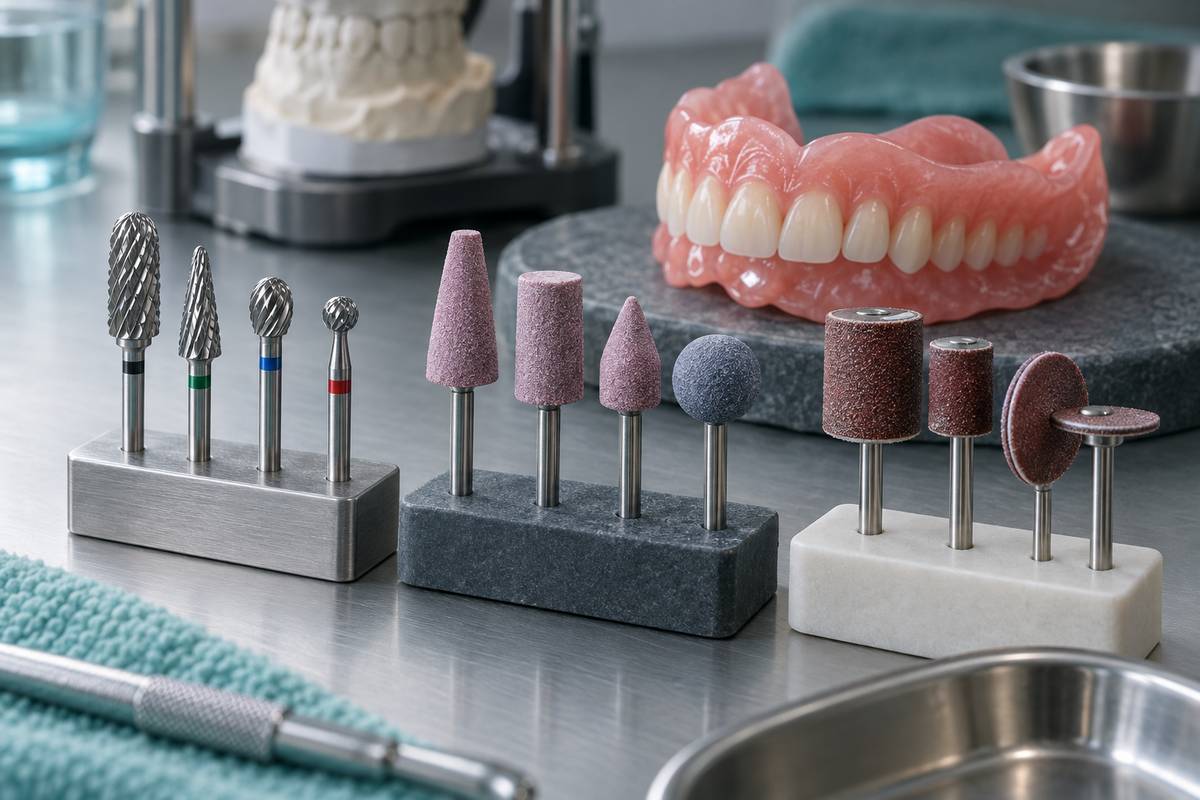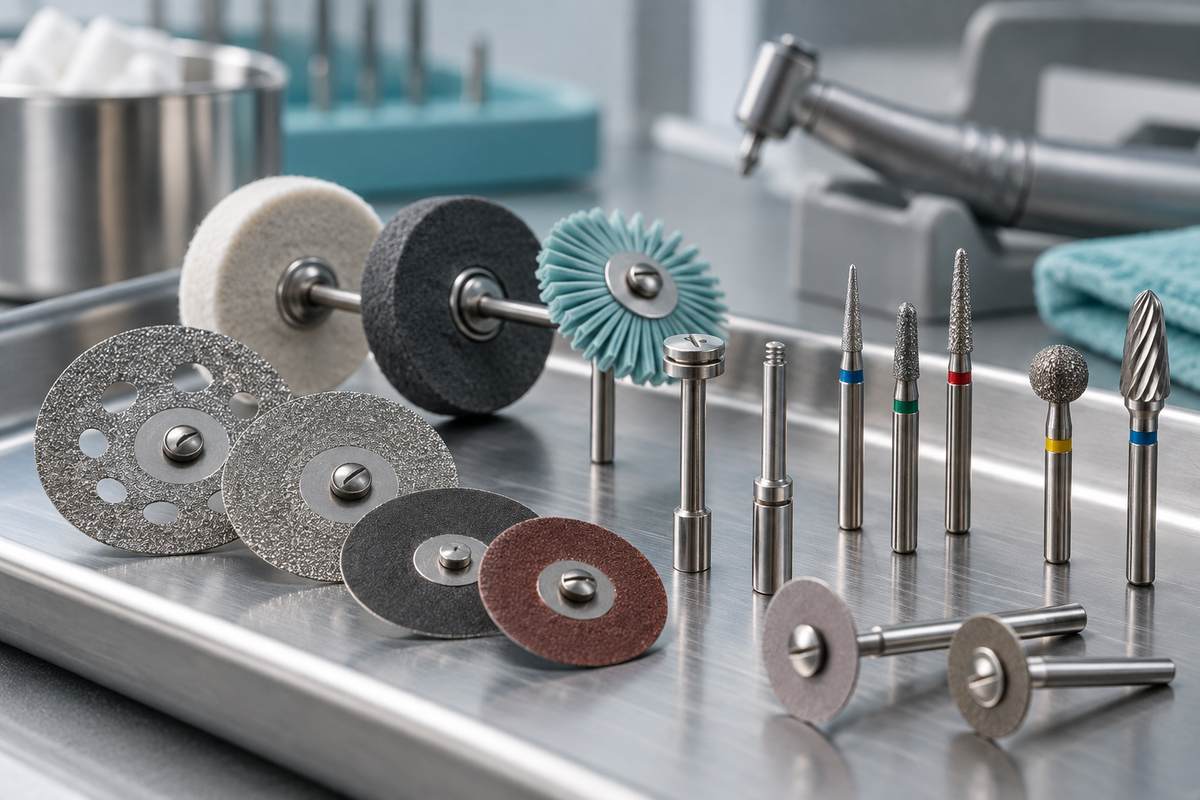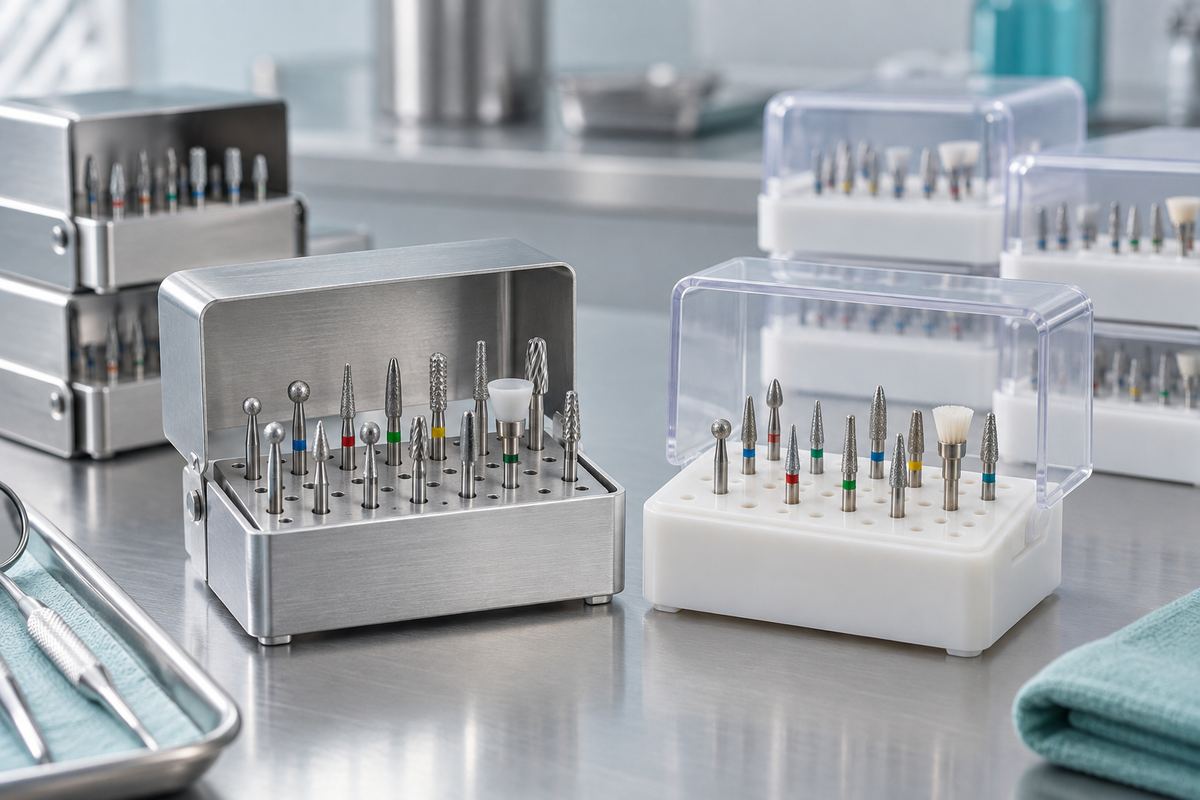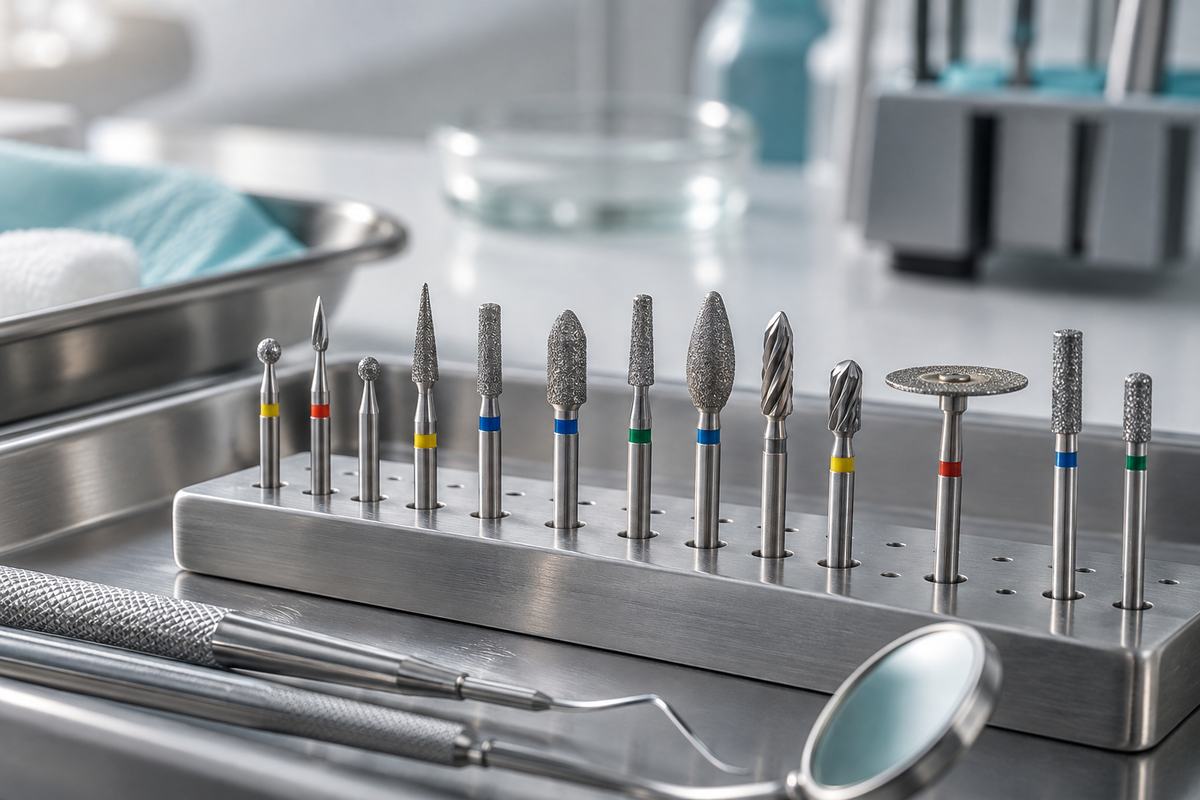
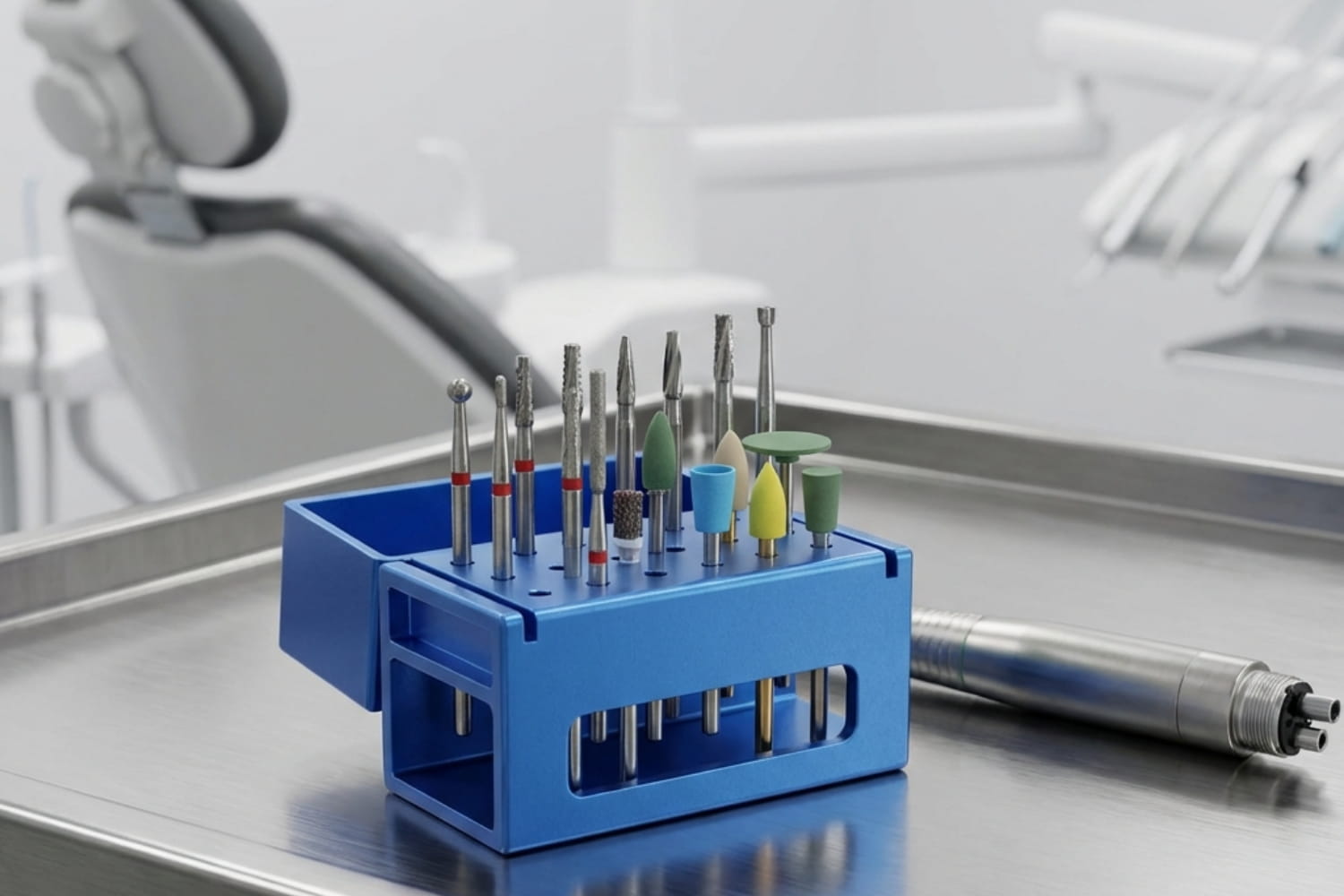
Opening a new dental practice means making hundreds of purchasing decisions in a short window. One area where new dentists often stumble is bur selection. Buy too few shapes and you’re constantly improvising. Buy too many and half of them sit untouched in a drawer, dulling before they ever touch enamel.
This guide lays out which burs belong in a new clinic’s starter kit, how many to keep on hand, and where to spend wisely.
Why a Well-Curated Bur Kit Matters
A disorganized or incomplete bur inventory creates real problems during procedures. You reach for a tapered fissure and find the block empty, then substitute a shape that sort of works. Multiply that across a full day and the inefficiency adds up.
A properly planned bur kit does three things:
Reduces chair time — the right shape is always within reach, so you cut accurately the first time.
Lowers long-term costs — buying the shapes you actually use, in appropriate quantities, avoids waste on burs that expire unused.
Improves clinical outcomes — each bur shape exists for a reason. Using the correct geometry for the task produces cleaner margins, better retention, and less pulpal trauma.
Starting with a focused collection and expanding based on your actual case mix is far smarter than ordering one of everything from a catalog.
Essential Diamond Burs
Diamond burs handle the bulk of crown preparation, veneer work, and enamel shaping. These five shapes cover the vast majority of restorative and prosthodontic procedures you’ll perform in general practice.
Round (ISO 801)
The 801 round diamond creates depth cuts during crown preparation. Place parallel grooves on the facial and occlusal surfaces, then connect them for uniform reduction. Stock sizes 012, 014, and 016.
Pear (ISO 830)
The 830 pear-shaped diamond excels at creating smooth, rounded internal line angles in preparations. It’s also useful for initial occlusal reduction on posterior crowns where you want controlled depth without sharp transitions. Keep a medium grit (blue band) in size 016 as your standard.
Tapered with Rounded End (ISO 856)
If you could only own one diamond bur shape, the 856 would be a strong candidate. This tapered barrel with a rounded tip handles axial wall reduction for crowns, creates proper taper for retention, and shapes emergence profiles. The rounded end prevents gouging into the floor of the preparation. Sizes 016 and 018 in both coarse (green band) and medium (blue band) grit should be in every operatory. Use the coarse for initial reduction, then follow with medium to refine surfaces. Understanding how ISO numbers identify each bur’s shape and dimensions helps when reordering replacements.
Flame (ISO 862)
The 862 flame diamond tapers to a fine point, making it ideal for subgingival margin refinement and interproximal slice cuts during crown prep. It reaches into tight contacts where bulkier shapes cannot. Stock size 012 in medium grit.
Football (ISO 379)
The egg-shaped 379 diamond is purpose-built for occlusal reduction. Its convex profile follows the natural anatomy of cusps and fossae, allowing you to reduce the occlusal table while preserving functional morphology. Size 023 in medium grit handles most molar preparations. Use light pressure and let the diamond do the work — heavy force just generates unnecessary heat.
Essential Carbide Burs
Tungsten carbide burs remain the standard for caries excavation, cavity preparation, and old restoration removal. They cut differently than diamonds — producing chips rather than grinding — and leave smoother surfaces on dentin.
Pear (330)
The 330 pear carbide is the workhorse of operative dentistry. It creates the initial outline form for Class I and Class II preparations. The narrow neck allows access into pits and fissures while the wider body establishes the preparation walls. This bur goes through high turnover, so keep at least six in rotation per operatory.
Flat-End Tapered Fissure (245)
The 245 creates flat pulpal floors with slightly divergent walls — the textbook geometry for amalgam and composite preparations. It’s longer than the 330, providing the depth needed for Class II box preparations. The flat end produces a clean, definite pulpal wall. Stock at least four per operatory.
Straight Fissure (557)
The 557 straight fissure carbide produces parallel walls and flat floors. It’s the bur of choice for creating slots, grooves, and mechanical retention in larger preparations. Also useful for sectioning old metal restorations for removal. The crosscut version (557L) cuts more aggressively and clears debris faster, though either variant works. Keep three to four in stock.
Round (1/4 through 8)
Round carbide burs handle caries excavation at different depths. A 1/4 round reaches into the smallest fissures, size 2 or 4 is standard for moderate lesions, and sizes 6 and 8 handle larger carious areas. The round shape follows the saucer-shaped profile of advancing decay, reducing the risk of pulp exposure. Stock sizes 1/4, 2, 4, 6, and 8. Slow-speed latch-type for excavation, friction-grip for access.
Finishing and Polishing Burs
Preparation is only half the work. Finishing burs smooth margins, refine anatomy, and prepare surfaces for bonding or cementation. Skipping this step shows up in marginal adaptation and esthetics.
Bur Type | Primary Use | Recommended Grits |
|---|---|---|
Finishing diamond (fine, 856 shape) | Smoothing crown prep margins | Fine (red band), Extra-fine (yellow band) |
Carbide finishing bur (12-blade, egg shape) | Composite contouring | 12-blade or 16-blade |
White stone (Arkansas) | Final metal and composite polish | Single grit |
Rubber polishing points | High-shine composite finish | Coarse, medium, fine sequence |
Interproximal finishing strips | Contact area refinement | Medium then fine |
Multi-fluted carbide finishing burs (12 or 16 blades) deserve special mention. They remove flash and smooth composite without generating the heat that can damage bonded interfaces. A 12-blade football and a 12-blade flame will handle most anterior and posterior finishing tasks.
Specialty Burs Worth Adding Early
Endo Access Burs
Root canal treatment is a core service in general practice. A dedicated endo access bur makes the difference between a clean, centered access cavity and a compromised one. The Endo Z bur is specifically designed for this purpose. Its non-cutting tip prevents perforation of the pulpal floor while the tapered sides efficiently remove the roof of the pulp chamber. Even if you refer complex endo cases, you’ll still open teeth for emergency pulpotomies and start access on straightforward molars. Have at least two Endo Z burs available.
Surgical Burs
If you plan to perform extractions beyond simple forceps deliveries, surgical burs for bone removal become necessary. A surgical-length 702 fissure carbide and a round surgical bur (size 6 or 8) handle sectioning of multi-rooted teeth and removal of buccal bone for surgical extractions. These are longer-shanked than standard friction-grip burs and designed for use in surgical handpieces. Stock two of each.
Crown Cutting Burs
Removing old PFM and all-ceramic crowns requires transmetal burs or dedicated crown cutters. A coarse-grit transmetal diamond in a tapered shape saves significant time versus cutting metal substructure with a standard diamond. Keep two on hand.
Organizing and Storing Your Bur Inventory
Organization systems fall into two categories: chairside and storage.
Chairside bur blocks hold the burs you need for a specific procedure. Set up dedicated blocks for your most common workflows:
Crown prep block: 801-016 round diamond, 856-018 coarse tapered, 856-016 medium tapered, 379-023 football, 862-012 flame, fine finishing diamonds
Operative block: 330 pear, 245 flat-end taper, 1/4 and 4 round carbide, 12-blade finishing burs
Endo access block: 330 pear, Endo Z, round carbide sizes 2 and 4
Sterilization cassettes keep bur blocks organized through the autoclave cycle. Proper sterilization protocol matters both for patient safety and bur longevity. Following a consistent bur cleaning and sterilization process extends the usable life of every bur in your inventory and ensures compliance with infection control standards.
Label your bur blocks clearly. Color-coded systems work well: blue blocks for diamond burs, green for carbide, red for finishing. When your assistant sets up a tray, one glance tells them which block to pull.
How Many Burs to Keep in Rotation
Using dull burs means more pressure, more heat, longer procedures, and rougher surfaces. Here are replacement guidelines for a moderately busy general practice:
Bur Type | Replace After | Minimum Stock Per Operatory |
|---|---|---|
Coarse diamond (crown prep) | 5–8 preparations | 4–6 of each primary shape |
Fine/extra-fine diamond | 8–10 uses | 3–4 of each shape |
Carbide (330, 245, 557) | 8–12 preparations | 6–8 of primary shapes |
Round carbide (caries excavation) | 10–15 uses | 4–6 per size |
Finishing carbide (multi-blade) | 15–20 uses | 3–4 of each shape |
Endo Z | 8–10 access cavities | 2–3 |
Track usage with a simple tally system. Mark the bur block each time a set gets autoclaved. When a bur hits its cycle count, replace it regardless of how it looks — micro-fractures and diamond loss are often invisible to the naked eye.
Budget Tips: Quality vs. Quantity
New clinic budgets are tight. Here is where to allocate your bur spending wisely.
Spend more on burs you use constantly. Your 856 tapered diamonds and 330 pear carbides see daily heavy use. Higher-quality versions of these shapes cut faster, stay sharp longer, and produce smoother preparations. The per-unit cost difference is small, but the clinical difference is real.
Save on burs you use occasionally. Specialty shapes like transmetal cutters and surgical burs see lower volume. Mid-range quality is perfectly adequate for items used a few times per month.
Buy in bulk where it makes sense. Shapes with high turnover — 330s, 245s, and 856 coarse diamonds — cost less per unit in packs of 25 or 50. You will use them. Avoid bulk purchases of shapes you use rarely.
Consider pre-assembled clinic kits. Curated kits bundle the most-used shapes at a lower total cost than buying individually, and they take the guesswork out of initial ordering. Start with a kit, then supplement based on your case mix over the first few months.
Do not skimp on sterilization accessories. A good bur block with secure grip holes prevents burs from falling out, getting lost, or being damaged. Autoclavable blocks last years. Cheap ones crack, lose their grip, and cost more in replaced burs than they saved upfront.
Putting Your Starter Kit Together
For a new general practice with two operatories, here is a practical initial order:
Diamond burs: 6 each of 801-014, 856-018 coarse, 856-016 medium, 379-023, 862-012, 830-016. Fine finishing versions of 856 and 862.
Carbide burs: 8 each of 330 and 245. 4 each of 557, round 1/4, 2, 4, 6.
Finishing: 4 each of 12-blade football and flame. Rubber polishing point kit.
Specialty: 3 Endo Z, 2 surgical 702, 2 surgical round, 2 transmetal.
Organization: 3 labeled bur blocks per operatory (diamond, carbide, finishing). Sterilization cassettes sized for your blocks.
This covers roughly 90 percent of procedures you’ll encounter in the first year. As your case mix develops, add specialized shapes accordingly. Let actual clinical needs drive inventory expansion, not catalog browsing.