Why Aluminum Bur Blocks Are a Smart Choice for Dental Labs
A dental lab technician may reach for a bur dozens of times in a single work session. If burs are scattered in drawers or stored in flimsy holders, time is wasted searching, and cross-contamination risks increase. Aluminum bur blocks solve both problems by keeping every bur upright, visible, and ready for use in a format that withstands repeated sterilization.
This article examines the practical advantages of aluminum bur blocks, compares them to plastic alternatives, and offers guidance on selecting the right block configuration for your workflow.
What Is an Aluminum Bur Block?
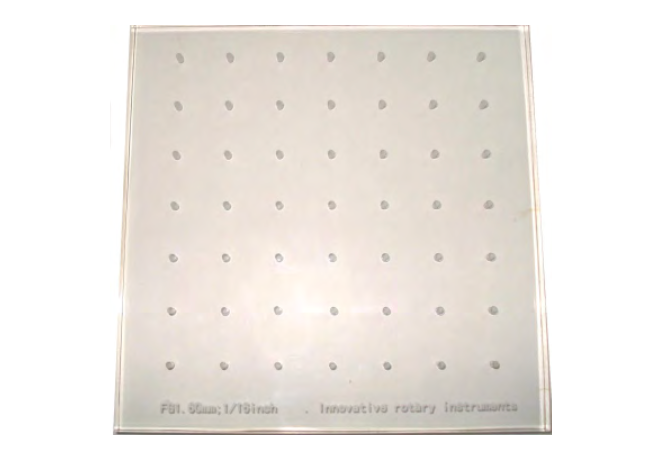
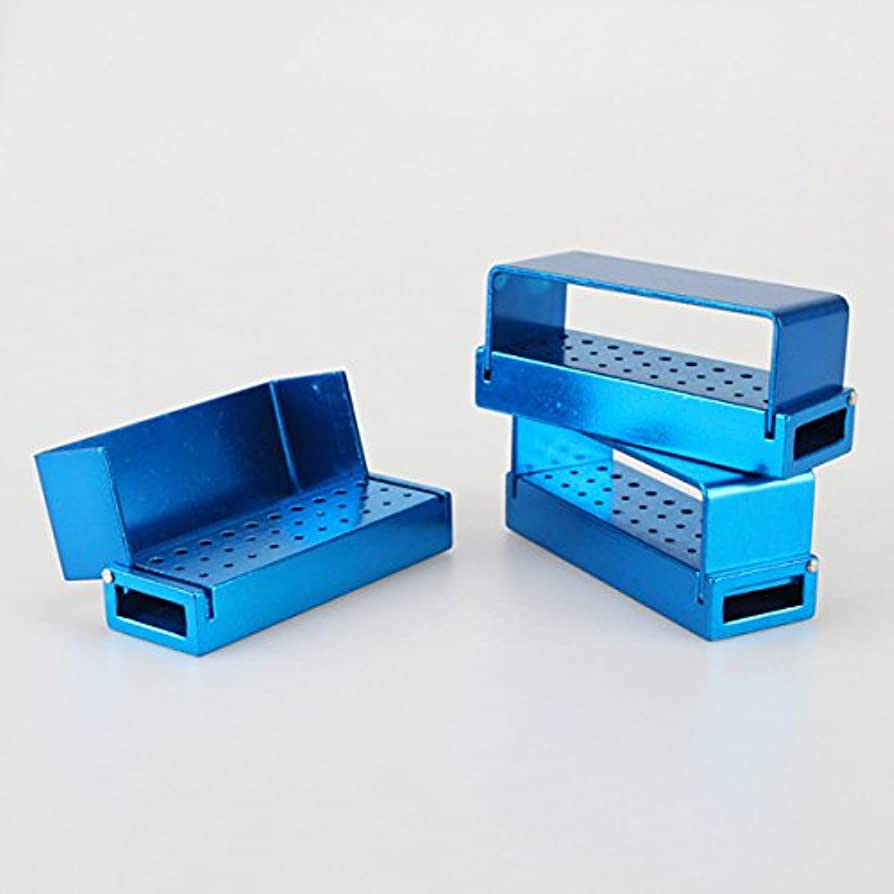
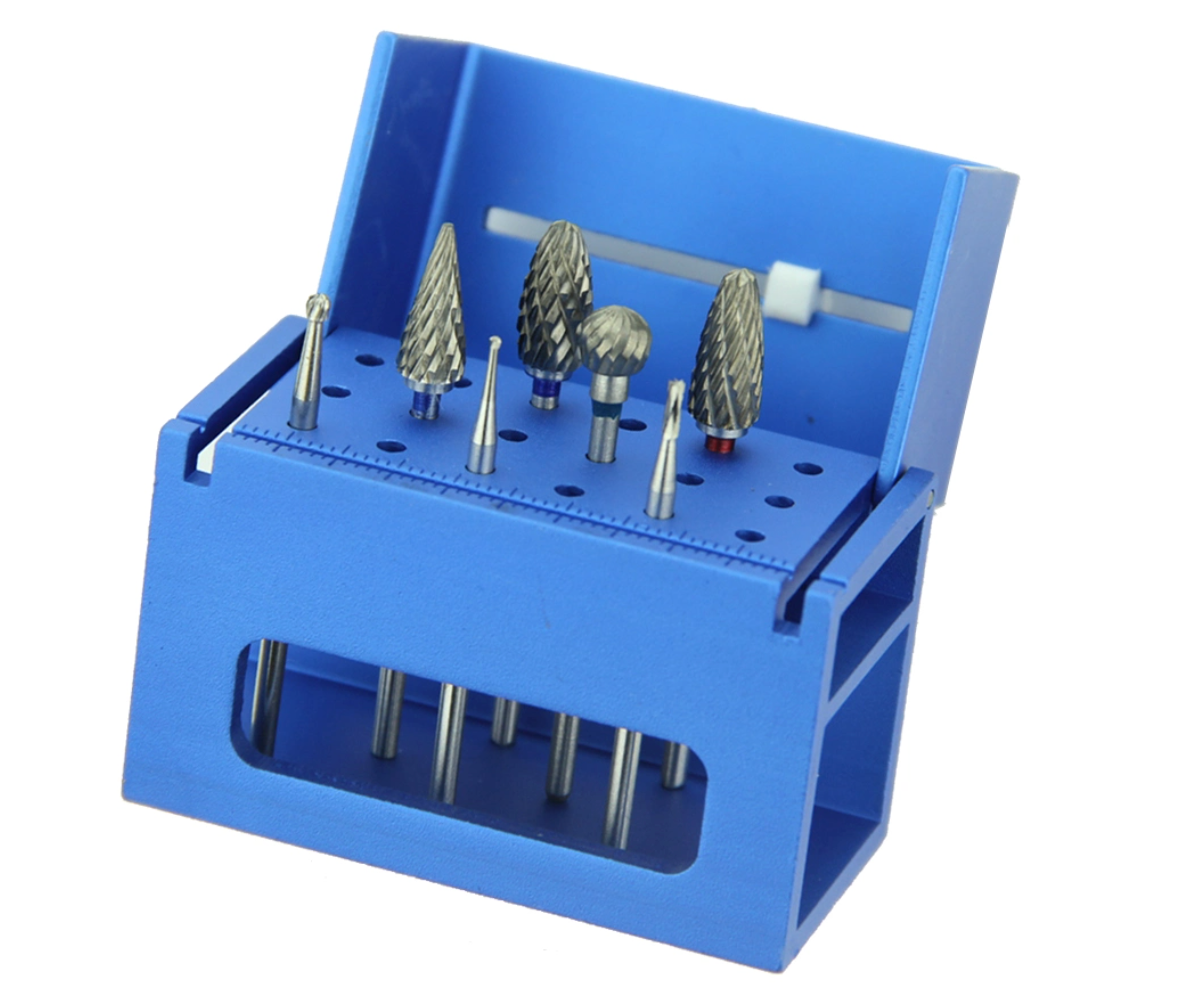
An aluminum bur block is a machined metal holder with rows of precision-drilled holes sized to accept FG, RA, or HP shank burs. The block sits flat on the bench or inside an autoclave tray. Most models hold between 10 and 30 burs, though larger configurations exist for high-volume labs.
Aluminum is the preferred base material because it combines light weight with high thermal tolerance. Unlike organic materials, it does not warp, melt, or absorb contaminants during heat sterilization.
Key Advantages of Aluminum Over Plastic
Plastic bur holders are cheaper upfront, but they fall short in several areas that matter over the life of the product.
Durability
Aluminum blocks resist cracking, chipping, and deformation even after years of daily use. Plastic blocks, by contrast, become brittle with repeated autoclave cycles. A plastic block that costs half the price but needs replacement every six months is not a bargain.
Heat and Sterilization Tolerance
Aluminum withstands autoclave temperatures up to 135 degrees Celsius (275 degrees Fahrenheit) without any structural change. It is also compatible with dry-heat sterilization, chemical immersion, and cold sterilization solutions. Plastic blocks may warp or discolor at the upper end of autoclave temperature ranges, which loosens the bur holes and reduces grip.
Dimensional Stability
The holes in an aluminum block maintain their diameter over thousands of insertion-and-removal cycles. This means burs sit snugly and do not wobble or fall out when the block is tilted. Plastic holes gradually enlarge with use, especially near the surface where burs are inserted.
Corrosion Resistance
Anodized aluminum resists the chemicals found in common dental disinfectants. Some labs use ultrasonic baths with enzymatic solutions to clean instruments; aluminum blocks tolerate this process without pitting or surface degradation.
Comparison Table: Aluminum vs. Plastic Bur Blocks
| Feature | Aluminum | Plastic |
|---|---|---|
| Autoclave safe | Yes, all standard cycles | Limited; may warp at high temp |
| Lifespan | 5–10+ years | 6–18 months |
| Weight | Light (approx. 80–150 g) | Very light (approx. 30–60 g) |
| Hole retention | Stable over time | Loosens with repeated use |
| Chemical resistance | High (anodized surface) | Moderate; some solvents cause crazing |
| Initial cost | Higher | Lower |
| Long-term cost | Lower (fewer replacements) | Higher (frequent replacement) |
Types of Aluminum Bur Blocks
Manufacturers offer several configurations to match different lab setups. Choosing the right one depends on how many burs you use daily and how you organize your workstation.
Standard Bench Blocks
These are flat-bottomed blocks with a single row or grid of holes. They sit directly on the countertop and work well for technicians who use a small, consistent set of burs for each case. Common sizes hold 10, 16, or 24 burs.
Magnetic-Base Blocks
Some aluminum blocks include a magnetic insert in the base or in each hole. The magnet holds ferrous-shank burs securely, preventing them from falling out during transport or accidental bumps. This is especially useful in labs where blocks are moved between workstations or carried to the autoclave room.
Rotating Carousel Blocks
Carousel-style holders mount multiple aluminum block panels on a central spindle. Spinning the carousel gives the technician quick access to 40 or more burs without cluttering the bench. These are popular in larger labs where several technicians share a workstation.
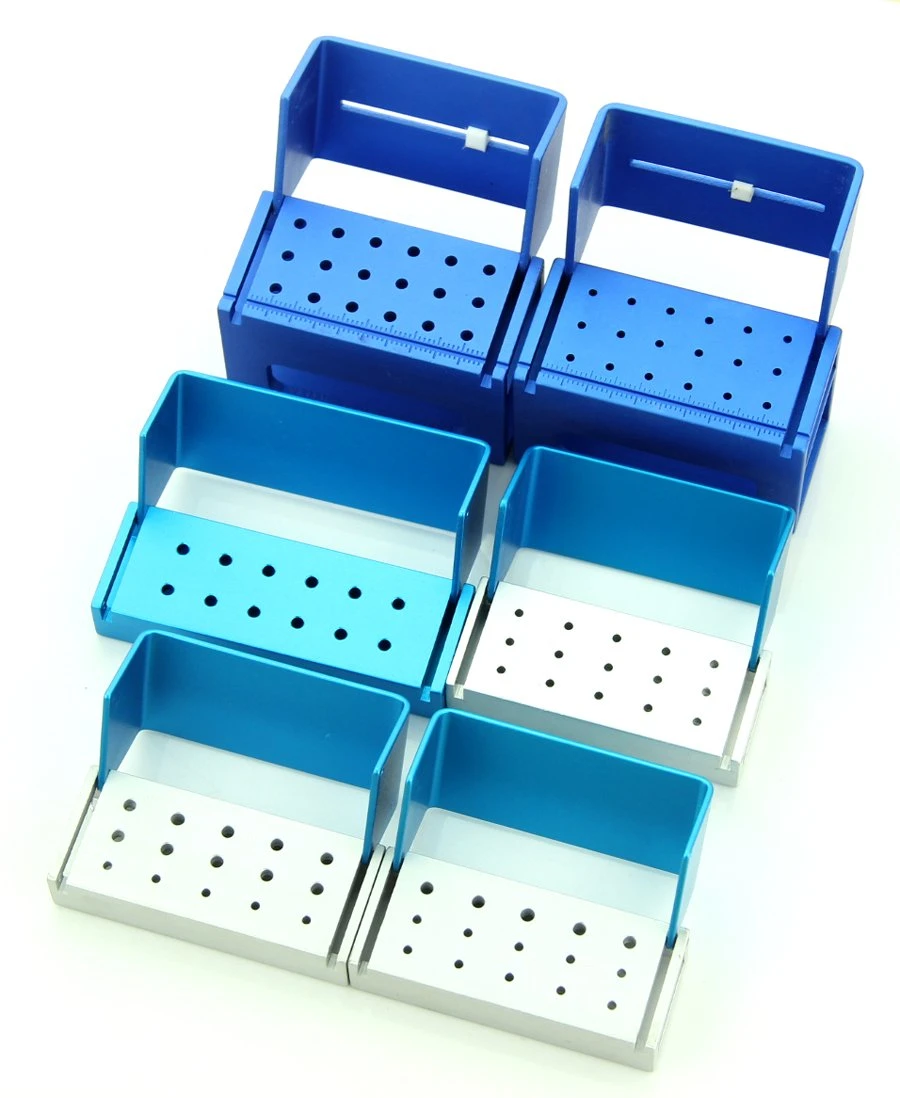
Color-Coded Blocks
Anodized aluminum can be produced in multiple colors. Some labs assign a color to each bur type or shank size, for example, blue for FG diamond burs and red for HP carbide burs. Color coding speeds up selection and reduces the chance of grabbing the wrong bur mid-procedure.
Infection Control and Sterilization Protocol
Proper sterilization of bur blocks is just as important as sterilizing the burs themselves. Follow these steps to maintain a safe working environment:
- Pre-clean: Remove all burs from the block. Brush debris from the holes with a nylon bristle brush. Rinse under running water.
- Ultrasonic bath (optional): Place the empty block in an ultrasonic cleaner with enzymatic solution for 5–10 minutes to remove residual contaminants.
- Rinse and dry: Rinse thoroughly with distilled water and shake out excess moisture. Allow to air-dry or use compressed air to blow out the holes.
- Autoclave: Wrap the block in sterilization pouches or place it in a cassette. Run a standard 134-degree Celsius gravity cycle.
- Store: Keep the sterilized block sealed in its pouch until needed.
For a detailed guide on sterilizing the burs themselves, see our article on sterilizing dental burs: cleaning, sterilizing, and handling.
Organizing Your Burs for Efficiency
An aluminum block is only as useful as the system behind it. Consider these organization strategies:
- Group by procedure. Dedicate one block to crown-and-bridge burs, another to removable prosthetics, and a third to finishing and polishing. This lets you pull a single block for each case type.
- Group by shank. Keep FG, RA, and HP burs in separate blocks to prevent mix-ups when switching handpieces.
- Label each hole. Use a fine-tip permanent marker or engraving tool to note the ISO number or grit next to each hole. This helps new technicians and temporary staff find the right bur quickly.
- Retire worn burs promptly. A dull or chipped bur sitting in the block slows work and risks damaging the restoration. Inspect burs under magnification weekly and discard any that show wear.
Pairing well-organized bur blocks with high-quality rotary instruments makes a noticeable difference in daily throughput. Browse our selection of tungsten carbide burs designed for lab work to keep your block stocked with reliable tools.
Cost Considerations
An aluminum bur block typically costs between two and four times more than a comparable plastic block. However, when you factor in the replacement cycle, the math changes. A plastic block replaced every year over a five-year span costs more in total than a single aluminum block that lasts the entire period. The time spent reordering and swapping out degraded plastic holders adds indirect cost as well.
For labs running tight budgets, starting with one or two aluminum blocks for the most-used bur sets and keeping plastic blocks for less frequently used instruments is a practical middle ground.
Selecting the Right Block for Your Lab
Use the checklist below to narrow your options:
- Shank compatibility: Confirm the hole diameter matches your bur shanks (FG 1.6 mm, RA 2.35 mm, HP 2.35 mm).
- Capacity: Count the burs you use in a typical case and add 20 percent for flexibility.
- Footprint: Measure your available bench space. A compact 10-hole block may suit a tight station; a 30-hole block works if you have room.
- Sterilization method: If your lab relies solely on chemical cold sterilization, confirm the anodized finish is rated for your specific solution.
- Magnetic vs. non-magnetic: If your blocks travel between rooms or are used near vibrating equipment, magnetic retention adds safety.
Final Thoughts
Aluminum bur blocks are a low-profile piece of equipment that has an outsized effect on lab efficiency and infection control. They outlast plastic alternatives by years, tolerate every common sterilization method, and keep your burs organized and accessible. Investing in a few quality blocks and pairing them with a consistent organization system will save time on every case that passes through your lab.