

Dental Polishing Brushes: Types, Uses & Selection
Dental polishing brushes are among the most frequently used finishing instruments in restorative and prophylactic dentistry. Whether you are smoothing a composite restoration or performing a routine prophy, the brush you select directly affects surface quality, patient comfort, and procedural efficiency. This guide covers every practical detail — brush shapes, materials, speed settings, and replacement intervals — so you can make confident purchasing and clinical decisions.
Brush Shapes: Cup, Pointed, and Flat Wheel
Cup Brushes (Prophy Cups)
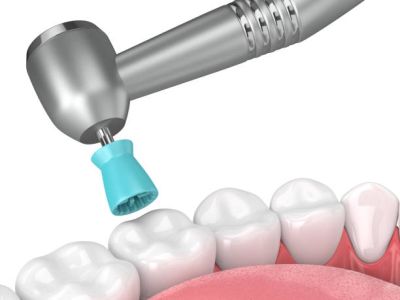
Cup-shaped prophy brushes are the workhorse of prophylaxis appointments. The concave form adapts well to the convex buccal and lingual surfaces of teeth, holding polishing paste inside the cup during rotation. They are available in screw-type and snap-on configurations for both contra-angle and prophy-angle handpieces.
- Best for: Routine prophylaxis, stain removal on facial and lingual surfaces
- Typical diameter: 10–14 mm
- Recommended speed: 2,000–5,000 RPM with light, intermittent pressure
Pointed (Pen / Tapered) Brushes
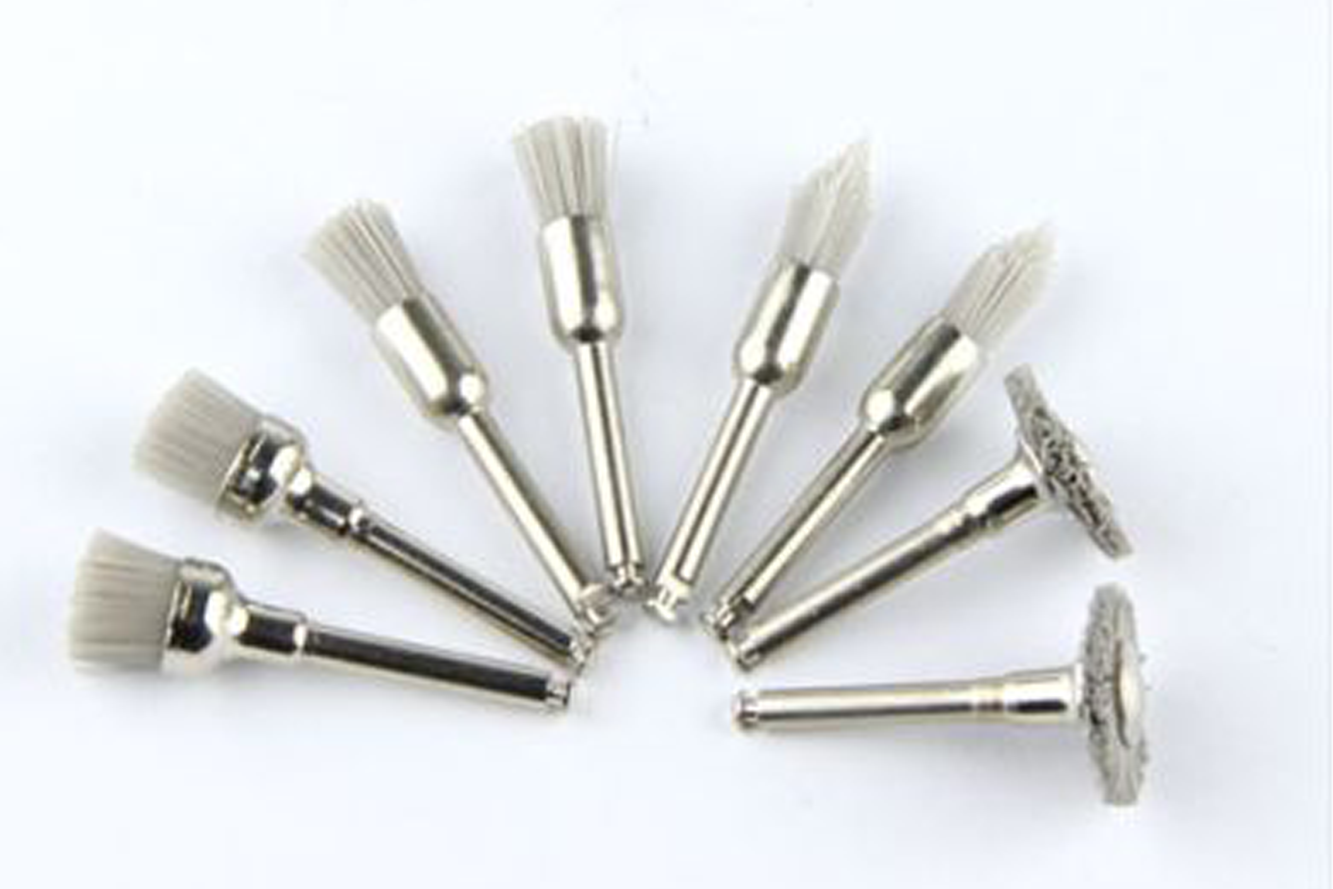
Pointed or pen-shaped brushes taper to a narrow tip, making them ideal for interproximal areas, occlusal fissures, and lingual surfaces of anterior teeth. Because the contact area is small, heat generation is lower, but operators should still use short strokes to avoid localized overheating.
- Best for: Occlusal grooves, interproximal finishing, lingual concavities
- Typical tip width: 2–4 mm
- Recommended speed: 3,000–8,000 RPM depending on material hardness
Flat Wheel Brushes
Flat wheel brushes (also called disc brushes) present a broad, even surface that works well for smoothing flat or gently curved areas. They are commonly used on the labial surfaces of anterior restorations and for pre-polishing larger composite or ceramic surfaces before moving to silicone polishers or diamond rubber polishers.
- Best for: Flat labial surfaces, veneer finishing, broad composite areas
- Typical diameter: 14–22 mm
- Recommended speed: 5,000–10,000 RPM with minimal lateral pressure
Brush Materials and Their Applications
The filament or bristle material determines how aggressively the brush cuts and how fine a finish it leaves. Matching the material to the substrate is essential.
Natural Bristle (Boar Hair)
Stiff natural bristles carry polishing paste effectively and remove moderate stain quickly. They are less forgiving on soft composites but work well on enamel and porcelain surfaces during prophylaxis.
Nylon
Nylon filaments are softer than natural bristle, producing a gentler action suited for composite finishing and pediatric prophylaxis. They resist moisture absorption and maintain consistent stiffness throughout the procedure.
Wool (Felt / Cotton)
Wool or felt brushes deliver the finest finish. They are used as the last step in a multi-stage polishing sequence, typically with a fine diamond or aluminum oxide paste. Wool brushes should only be used at low speeds (under 5,000 RPM) to prevent fiber shedding.
Synthetic Composite Fibers
Some manufacturers blend synthetic polymers with abrasive particles embedded directly in the filament. These "impregnated" brushes do not require separate polishing paste and provide consistent abrasion until the filaments wear down. They are especially practical for chairside efficiency.
Comparison Table: Dental Polishing Brush Types
| Brush Type | Material Options | Best For | Recommended Use |
|---|---|---|---|
| Cup (Prophy Cup) | Bristle, Nylon, Rubber | Prophylaxis, stain removal | Buccal/lingual surfaces at 2,000–5,000 RPM with paste |
| Pointed / Pen | Nylon, Bristle | Interproximal areas, occlusal grooves | Fissures and tight anatomy at 3,000–8,000 RPM |
| Flat Wheel | Bristle, Nylon, Wool | Flat surfaces, veneers, broad restorations | Labial/facial surfaces at 5,000–10,000 RPM, light pressure |
| Wool / Felt Wheel | Wool, Cotton | Final high-gloss finishing | Last polishing step at under 5,000 RPM with fine paste |
| Impregnated Fiber | Abrasive-loaded synthetic | Composite and ceramic pre-polish | No paste needed; 5,000–8,000 RPM, replace when fibers flatten |
How to Choose the Right Polishing Brush
Selecting the correct dental polishing brush depends on four factors:
- Procedure type. Routine prophylaxis calls for cup brushes with nylon or bristle filaments. Restoration finishing requires shape-matched brushes (pointed for grooves, flat wheel for broad surfaces).
- Substrate. Enamel and porcelain tolerate stiffer bristles. Composite resin and glass ionomer benefit from softer nylon or wool to avoid surface scratching.
- Access. Posterior interproximal areas demand a pointed brush. Anterior labial surfaces are efficiently covered by a flat wheel.
- Polishing stage. Coarser bristle brushes handle initial stain and flash removal. Fine wool or felt brushes produce the final luster. For a detailed look at multi-step polishing sequences, see our guide on polishing discs and brushes tips.
Proper Usage Technique
Even the right brush will underperform if technique is poor. Follow these guidelines for consistent results:
- Speed control: Start at the low end of the recommended RPM range and increase only if needed. Excessive speed generates heat, which can damage pulp or degrade composite resin.
- Pressure: Use the weight of the handpiece as your guide — typically 1–2 N of force. Pressing harder does not polish faster; it increases heat and accelerates brush wear.
- Motion: Keep the brush moving in sweeping or circular motions. Dwelling in one spot for more than 2–3 seconds risks thermal injury to the tooth.
- Paste application: Load paste into the cup or onto the brush before activating the handpiece. Reapply paste frequently — a dry brush generates friction without polishing.
- Wet polishing: Whenever possible, use water spray. Wet polishing reduces heat, improves surface finish quality, and extends brush life.
For clinicians interested in how polishing relates to whitening outcomes, our article on prophy polishing and teeth whitening covers the connection between surface preparation and shade improvement.
Maintenance and Replacement
Polishing brushes are consumable instruments, but proper handling extends their useful life and ensures consistent performance.
- Single-use vs. multi-use: Prophy cups used for prophylaxis are typically single-patient items. Brushes used for lab or chairside restoration polishing can often be sterilized and reused — check the manufacturer's instructions.
- When to replace: Discard any brush when filaments splay outward beyond the original diameter, when bristles feel noticeably softer, or when the brush no longer produces a visible improvement in surface gloss.
- Sterilization: Autoclavable brushes should be cleaned of debris under running water, placed in a sterilization pouch, and autoclaved at 134 °C (273 °F) for the manufacturer's recommended cycle time. Non-autoclavable brushes must be discarded after each patient.
- Storage: Store brushes in a dry, enclosed container to prevent contamination and bristle deformation.
Selecting a Supplier
When stocking polishing brushes for clinic use, look for manufacturers that publish clear material specifications, RPM ratings, and sterilization compatibility. Consistent filament quality between batches matters — an unreliable brush forces clinicians to adjust technique with every new box.
B&D Technologies manufactures dental polishing brushes alongside a full line of rotary instruments, including diamond burs, carbide burs, and rubber polishers. Each product ships with documented specifications so your purchasing and clinical teams know exactly what to expect.
