
Every dentist reaches for a bur multiple times a day, yet selecting the right one still trips up many practitioners. Tungsten carbide burs and diamond burs are the two main categories found in virtually every operatory, and each behaves differently when it contacts tooth structure, metal, or ceramic. This guide walks through the materials science, clinical performance, and practical selection criteria so you can match the right bur to every procedure.
What Is a Tungsten Carbide Bur?
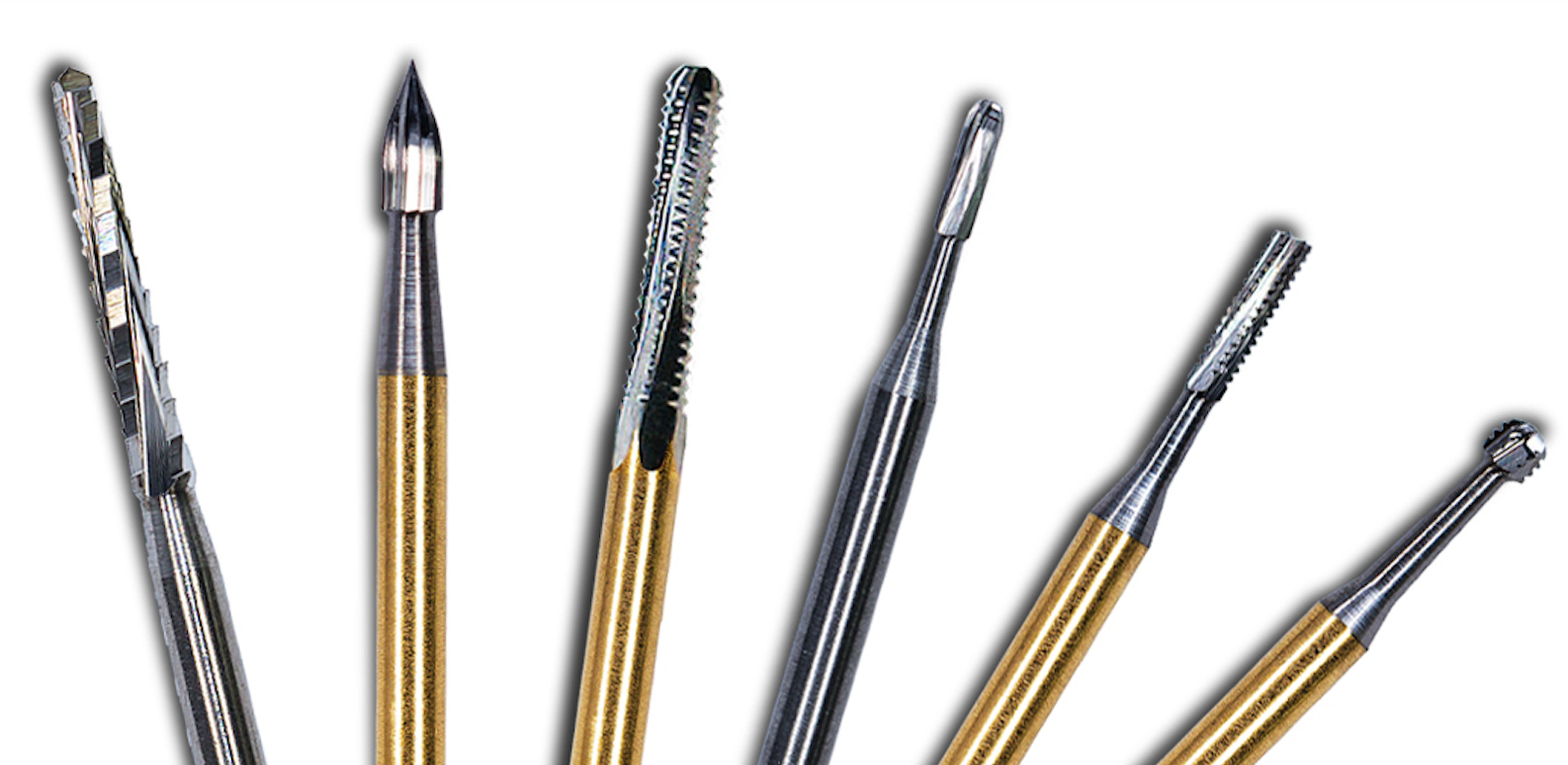
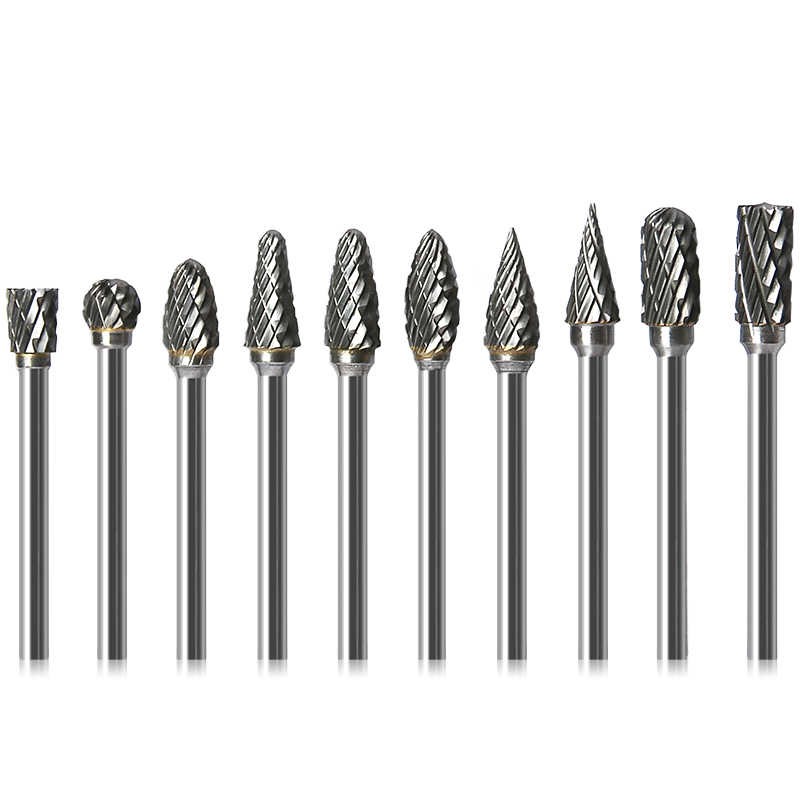
A tungsten carbide bur is machined from a single piece of cemented carbide, a composite of tungsten carbide particles bound in a cobalt matrix. Because the entire working head is one solid unit, there is no risk of a bonded layer separating from the shank during high-speed rotation.
How Tungsten Carbide Burs Cut
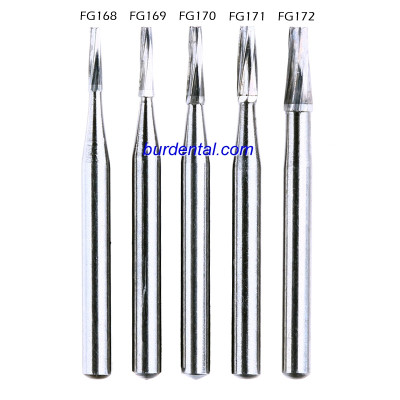
Carbide burs cut with precisely ground flutes, typically ranging from 6 to 30 blades. Fewer blades produce a coarser cut suited to bulk removal, while higher blade counts yield a smoother finish. The fluted design means the bur shaves material in ribbons rather than grinding it, resulting in a cleaner margin and less surface micro-damage to the remaining tooth.
Advantages of Tungsten Carbide Burs
- Longevity: A single carbide bur can section 10 or more PFM crowns before performance drops noticeably.
- Smooth finish: Fluted cutting leaves behind a surface that often needs minimal additional polishing.
- Consistent concentricity: Quality carbide burs maintain balance at speeds up to 200,000 RPM, reducing vibration felt by the patient.
- Corrosion resistance: Tungsten carbide does not rust, even after repeated autoclave cycles.
- Versatility: Available in friction-grip (FG), right-angle (RA), and handpiece (HP) shanks to fit every handpiece type. Learn more about shank types for dental burs.
Common Clinical Uses
- Crown and bridge removal
- Cavity preparation and caries excavation
- Metal and amalgam sectioning
- Finishing and contouring composite restorations
- Bone cutting during surgical procedures (surgical-length carbide burs)
Browse the full range of tungsten carbide burs available from Burdental.
What Is a Diamond Bur?
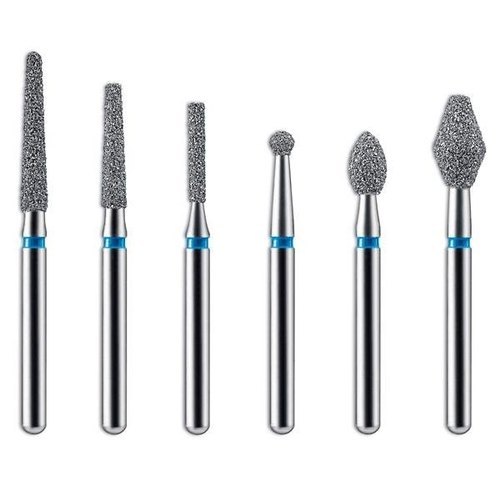
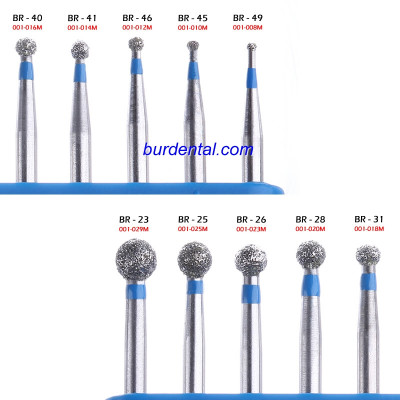
A diamond bur consists of a metal blank onto which industrial-grade diamond particles are bonded, either through electroplating or a sintered (brazed) process. The grit size of the diamond particles determines whether the bur is suited for aggressive cutting or fine finishing.
How Diamond Burs Cut
Instead of shaving material with blades, diamond burs abrade the surface. Each diamond crystal acts as a tiny cutting point, removing material in a grinding action. This makes diamond burs particularly effective on hard, brittle structures like enamel, porcelain, and zirconia, where a fluted bur may skip or chatter.
Advantages of Diamond Burs
- Efficient enamel cutting: Diamond particles score through enamel faster than carbide flutes.
- Wide grit range: From super-coarse (150 micron) to ultra-fine (10 micron), allowing one bur system to handle preparation through finishing.
- Shape variety: Available in round, pear, flame, torpedo, wheel, and many specialty profiles for tasks like shoulder margin preparation.
- Ceramic compatibility: Ideal for adjusting all-ceramic and zirconia restorations chairside.
Common Clinical Uses
- Enamel reduction and veneer preparation
- Crown preparation with shoulder or chamfer margins
- Porcelain and zirconia adjustment
- Gross reduction of tooth structure
- Interproximal reduction for orthodontic cases
See available grit options in our FG diamond bur catalog.
Side-by-Side Comparison
| Factor | Tungsten Carbide Bur | Diamond Bur |
|---|---|---|
| Cutting action | Fluted blades shave material | Diamond grit abrades material |
| Best on | Metal, amalgam, dentin, composite | Enamel, porcelain, zirconia, glass ceramic |
| Surface finish | Smooth with fewer steps | Rougher initially; needs fine-grit follow-up |
| Lifespan | Longer; tolerates heavy lateral pressure | Shorter; diamond particles shed with use |
| Heat generation | Moderate; efficient chip clearance helps | Higher; requires steady water spray |
| Crown removal speed | Fast; one bur can remove 10+ PFM crowns | Slower; may need 2-3 burs per crown |
| Cost per use | Lower due to longer service life | Higher due to faster wear |
When to Choose Carbide Over Diamond
Carbide burs outperform diamond in procedures that involve metal contact or where a smooth finished surface matters most. If you are removing old PFM crowns, sectioning amalgam, or finishing a Class II composite, a carbide bur will save time and deliver a better result. For surgical bone cutting, specialized surgical-length carbide burs offer the controlled cutting action that diamond cannot match in soft or semi-hard tissue. Carbide finishing burs with 12 to 30 flutes are also the go-to option for refining composite margins, where the blade action produces a glassy surface without pulling or gouging the resin.
When to Choose Diamond Over Carbide
Diamond burs are the stronger choice when working on highly mineralized or ceramic surfaces. Preparing a tooth for a full-coverage crown, adjusting a zirconia bridge at try-in, or performing enamel reduction for veneers all call for diamond abrasion. The available grit spectrum also makes diamond burs the standard for multi-step preparation-to-polish workflows on all-ceramic restorations. When working on porcelain-fused-to-zirconia or lithium disilicate crowns, a fine-grit diamond bur gives you controlled material removal without micro-fracturing the ceramic layer underneath.
Can You Use Both in the Same Procedure?
Absolutely. Many clinicians start with a coarse diamond bur for initial tooth reduction, then switch to a fine-fluted carbide finishing bur to refine margins and smooth the preparation. This two-step method combines the aggressive stock removal of diamond with the precise finishing ability of carbide, producing a preparation that seats restorations accurately.
A common workflow for a full-coverage crown preparation looks like this:
- Use a coarse diamond (usually a tapered flat-end shape) to establish depth cuts and reduce the occlusal surface.
- Switch to a fine diamond to refine the shoulder or chamfer margin.
- Finish with a 12-flute or 30-flute carbide bur to smooth the axial walls and eliminate diamond scratches.
This sequence minimizes the number of instruments while maximizing the quality of the final preparation. For a deeper look at the full range of shapes and naming conventions, read our dental bur types guide.
Grit Size and Flute Count: A Quick Reference
Diamond Grit Sizes
- Super-coarse (150+ microns): Aggressive bulk removal on enamel and old ceramic.
- Coarse (125 microns): Standard preparation grit for crown preps.
- Medium (107 microns): Refinement after initial reduction.
- Fine (50 microns): Margin finishing and surface smoothing.
- Ultra-fine (10-25 microns): Pre-polish step on ceramic restorations.
Carbide Flute Counts
- 6 flutes: Coarse cut for rapid caries or metal removal.
- 8-12 flutes: General-purpose preparation and shaping.
- 16-20 flutes: Finishing and margin refinement.
- 30 flutes: Ultra-smooth finishing on composite and dentin.
Maintenance and Sterilization
Carbide Burs
Clean debris from flutes with a brass wire brush or ultrasonic cleaner. Inspect under magnification for chipped or dulled blades. Autoclave at standard 134 degrees Celsius. Carbide tolerates many autoclave cycles without degradation. Store burs in a dedicated bur block or organizer to prevent flute damage from contact with other metal instruments.
Diamond Burs
Soak in an enzymatic solution to dissolve organic material trapped between diamond particles. Ultrasonic cleaning is recommended because manual scrubbing alone cannot reach the spaces between grit crystals. After autoclaving, check for bare spots where grit has shed. Replace any bur that has lost more than 30-40 percent of its diamond coating, as cutting efficiency drops sharply past that point. Avoid using chemical cold sterilants that may weaken the bonding layer holding the diamond particles to the shank.
Making the Right Choice for Your Practice
Neither bur type is universally superior. The best approach is to stock both and select based on the material you are cutting and the finish you need. Tungsten carbide burs excel at metal removal, composite finishing, and surgical bone work. Diamond burs dominate enamel preparation, ceramic adjustment, and multi-grit polishing sequences. Understanding the strengths of each will reduce chair time, improve patient comfort, and extend the working life of every bur in your inventory.