
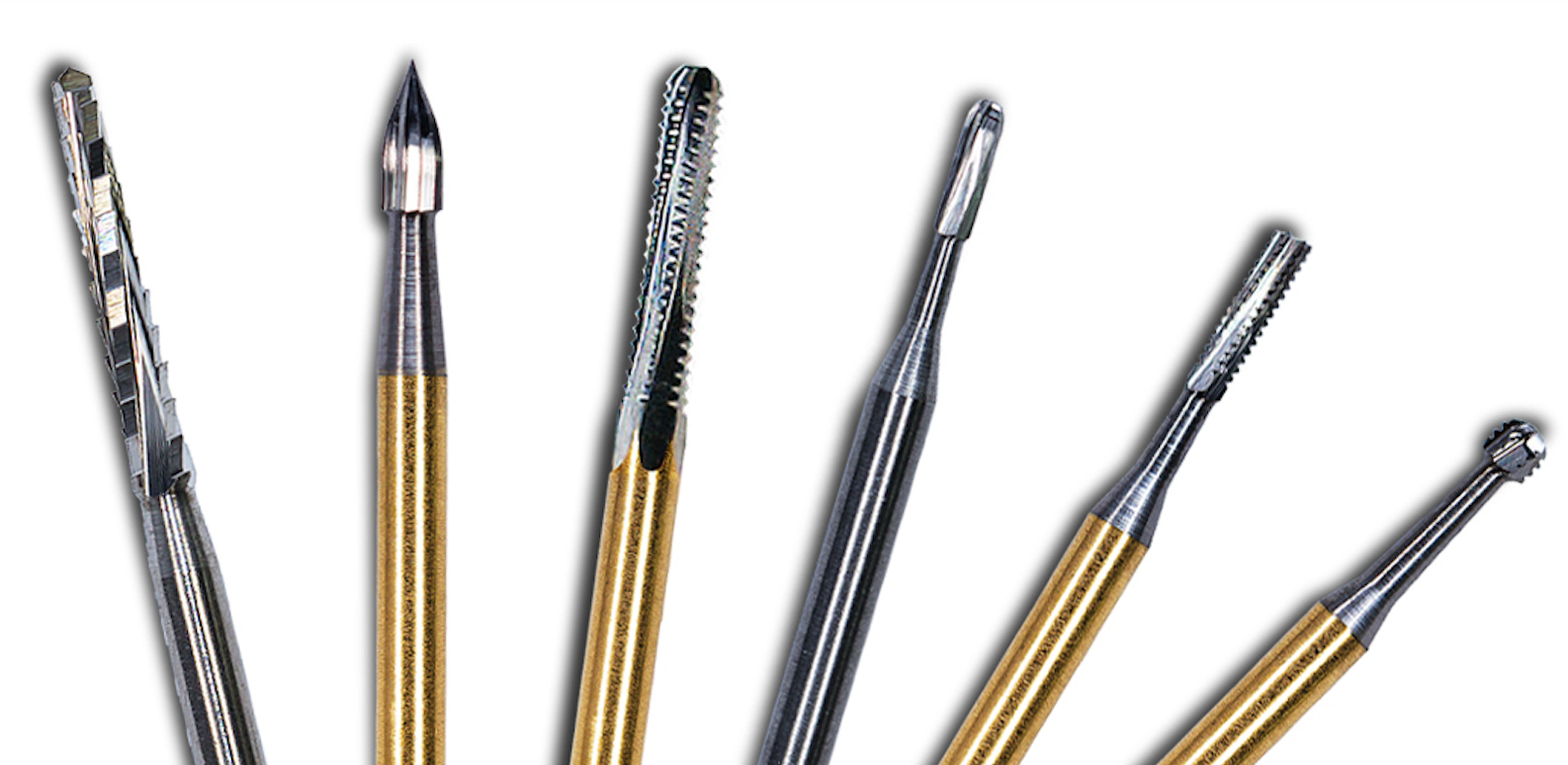
Finishing carbide burs serve a specific purpose that standard tungsten carbide burs cannot match: they produce smooth, polished surfaces in a single pass. While standard carbide burs excel at bulk material removal, finishing burs are engineered with finer flute patterns and tighter tolerances to refine surfaces without leaving deep tool marks.
This article explains the differences between finishing and standard carbide burs, outlines the practical benefits of finishing burs, and provides guidance on selecting and maintaining them for best results.
How Finishing Carbide Burs Differ from Standard Carbide Burs
The distinction between these two bur types comes down to flute design, cutting behavior, and intended application.
Flute Count and Geometry
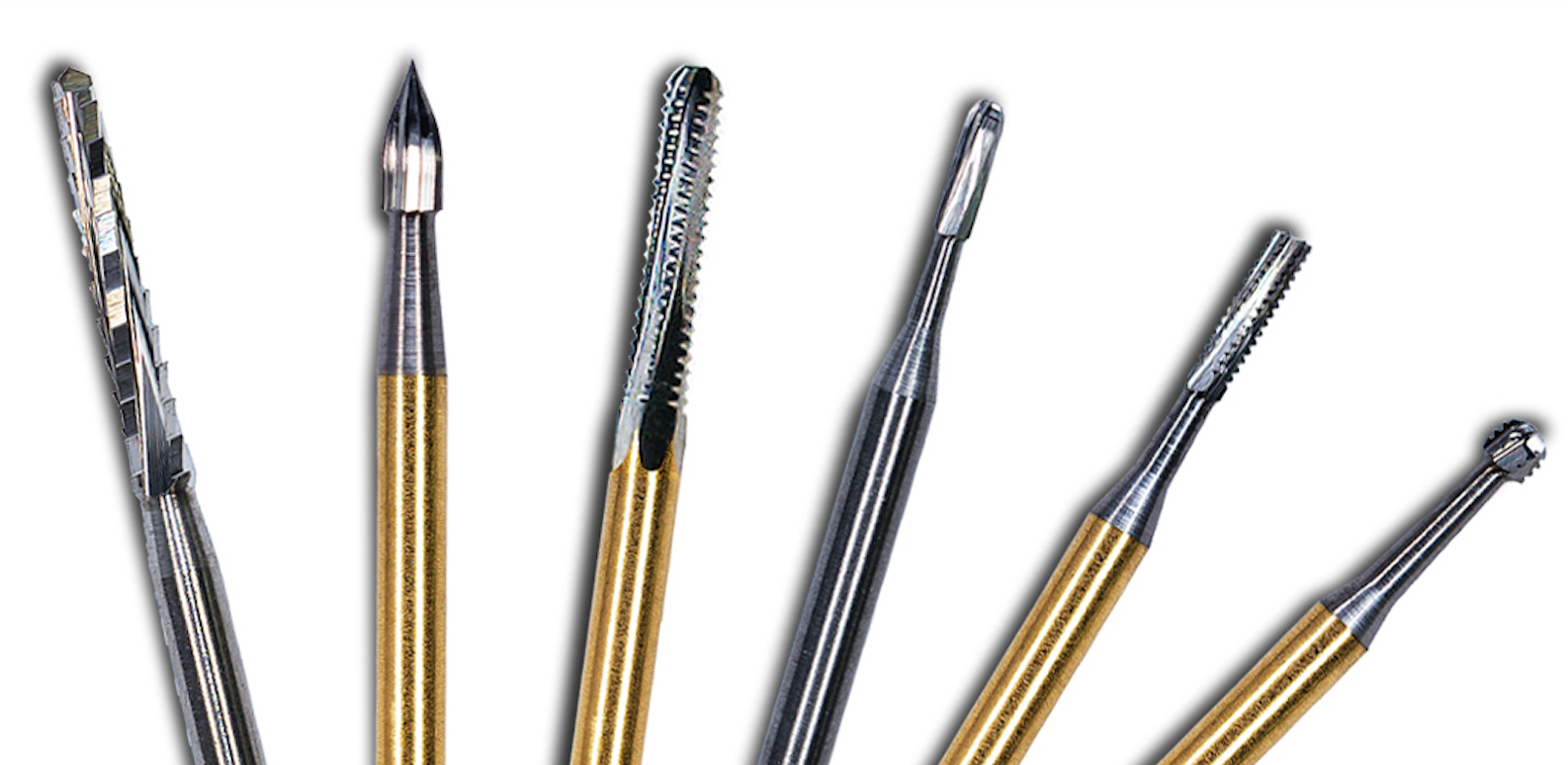
Standard tungsten carbide burs typically have 6 to 8 flutes (cutting blades). Finishing carbide burs have 12 to 30 or more flutes. The higher flute count means each blade takes a smaller bite of material per revolution, producing a finer surface texture. Some finishing burs use a crosscut pattern where flutes intersect at angles, further reducing chip size.
Material Removal Rate
Standard burs are designed for aggressive cutting. They remove material quickly but leave a rough surface that needs additional work. Finishing burs remove material slowly and deliberately, trading speed for surface quality. In many workflows, using a finishing bur after a standard bur eliminates the need for a separate polishing step.
Surface Finish Quality
A standard carbide bur leaves visible tool marks and surface irregularities. A finishing bur produces a surface smooth enough for direct polishing or, in dental applications, smooth enough for the patient to tolerate without further adjustment. The difference is immediately visible and tactilely noticeable.
Benefits of Using Finishing Carbide Burs
Finishing burs offer measurable advantages in clinical and industrial settings. Here are the most significant benefits.
Precision and Control
The fine flute pattern gives operators more control over material removal. Small adjustments are easier because each pass removes less material. This precision is especially valuable in dental restorative work where removing even 0.1mm too much can compromise a restoration's fit or a tooth's structural integrity. In laboratory settings, finishing burs allow technicians to bring cast frameworks to exact specification without overshooting tolerances, which reduces remakes and saves material costs.
Reduced Chair Time
In dental practice, using a finishing bur after initial preparation can cut total procedure time. Instead of cycling through multiple polishing steps with discs and rubber points, a single finishing bur pass often produces an acceptable surface. For more on streamlining your polishing workflow, see our guide on dental polishers.
Versatility Across Materials
Finishing carbide burs work on a wide range of materials:
- Dental composites: Smooth and shape direct restorations without pulling or chipping the composite.
- Amalgam: Refine margins and contour surfaces to reduce plaque accumulation.
- Metals: Finish cast metal frameworks, crowns, and bridges in the dental lab.
- Acrylics: Shape and smooth denture bases, provisional restorations, and orthodontic appliances.
- Ceramics: Make minor adjustments to porcelain restorations chairside (use with water cooling).
Less Heat Generation
Because finishing burs remove smaller chips, they generate less friction and heat than standard burs at the same RPM. Lower heat reduces the risk of thermal damage to tooth pulp in dental applications and prevents heat-related distortion in industrial materials. In clinical terms, reduced heat means less post-operative sensitivity for patients and a lower chance of irreversible pulpitis during deep preparations near the pulp chamber.
Longer Bur Life
The fine flutes of a finishing bur experience less stress per blade than the coarse flutes of a standard bur. With proper maintenance, finishing burs often outlast standard burs in terms of total service hours. That said, they should still be inspected regularly under magnification and replaced promptly when flutes show visible wear, rounding, or chipping that would compromise surface quality.
Choosing the Right Finishing Carbide Bur
Selecting the correct finishing bur depends on four factors: material, shape, size, and shank type.
Material Compatibility
Not all finishing burs perform equally on all materials. Burs designed for composite may not produce optimal results on metal, and vice versa. Check the manufacturer's recommendations for material compatibility. Browse our full range of trimming and finishing carbide burs to find options rated for your target material.
Shape Selection
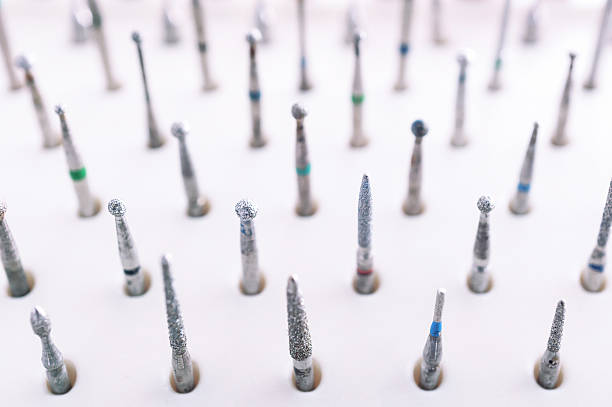
Finishing burs come in dozens of shapes. The most common and their typical uses are listed below.
| Bur Shape | Best Used For |
|---|---|
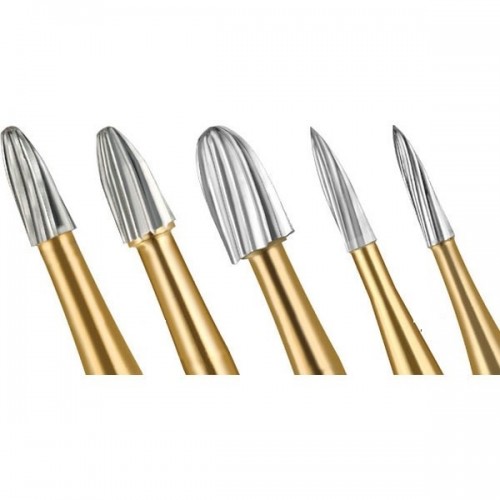
| Egg / Football | Occlusal surface contouring, concave areas |
| Flame | Interproximal finishing, margin refinement |
| Needle | Tight interproximal spaces, fine detail work |
| Round | Concavity refinement, small preparations |
| Taper | Smooth walls, flat surface finishing |
| Cylinder | Flat surfaces, shoulder margins |
For a broader look at how bur shapes map to clinical tasks, see our dental bur types guide.
Size Considerations
Larger finishing burs cover more surface area per pass but offer less precision in tight spaces. Smaller burs reach into grooves, embrasures, and margins but require more passes to finish a broad surface. Most practitioners keep a range of sizes on hand and select based on the specific task.
Shank Type
Finishing burs are available with FG (friction grip) shanks for high-speed handpieces and RA (right angle) shanks for slow-speed handpieces. FG shanks are standard for chairside dental work, while RA shanks suit lab applications and certain intraoral finishing tasks at lower RPM. Always confirm that the shank type matches your handpiece before purchasing.
Maintenance and Cleaning Best Practices
Proper care extends the working life of finishing burs and maintains their performance.
Cleaning After Each Use
Remove debris from flutes immediately after use. A brass wire brush works well for this because brass is softer than tungsten carbide and will not damage the flutes. Ultrasonic cleaning is another effective method, especially for burs used on composites that tend to pack into fine flutes.
Sterilization
Autoclave finishing burs according to your facility's infection control protocol. Tungsten carbide withstands standard autoclave temperatures (134 degrees C / 273 degrees F) without losing hardness. Dry burs thoroughly after autoclaving to prevent corrosion.
Inspection and Replacement
Inspect finishing burs under magnification before each use. Look for:
- Chipped or broken flutes
- Visible rounding of cutting edges
- Wobble when spinning (indicates a bent shank)
- Discoloration from overheating
Replace any bur that shows these signs. A dull finishing bur requires more pressure, generates more heat, and produces a worse surface finish than a sharp one.
Storage
Store finishing burs in a bur block or organizer that keeps them separated. Burs stored loosely in a drawer bang against each other, which chips flutes and dulls cutting edges. Keep storage areas dry and away from corrosive chemicals. Autoclavable bur blocks that travel from the sterilizer directly to the operatory reduce handling steps and keep burs organized by shape and size. Label or color-code blocks so staff can quickly locate the correct finishing bur during a procedure without searching through mixed inventory.
Summary
Finishing carbide burs fill the gap between aggressive material removal and final polishing. Their high flute count and fine cutting geometry deliver smooth surfaces with minimal heat, reducing the number of steps needed to reach a polished result. By selecting the right shape, size, and shank type for your application, and by following basic cleaning, sterilization, and inspection practices, you can get consistent, high-quality finishes from every finishing bur in your inventory. Whether you work chairside in a dental operatory or at a laboratory bench, finishing burs are a practical tool that saves time and improves outcomes.

![How to Use a Die Grinder: Bit Guide, Setup & Pro Tips [2026]](https://www.burdental.com/image/catalog/Blog/20220606/Equipment-DieGrinder-Norton-Kit-lines-width-1500px-gigapixel-studio-studio.jpg)