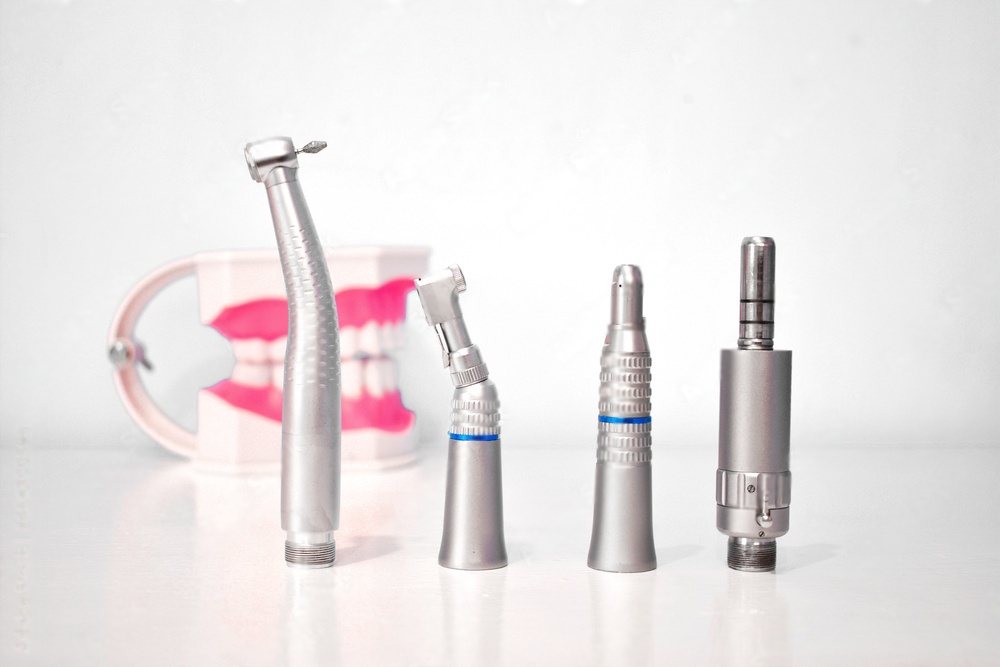
Customizing Your Endodontic Handpiece for Better Performance
Endodontic handpieces are among the most frequently used instruments in any root canal practice. Yet many clinicians use them straight out of the box without considering how simple modifications and accessories can improve comfort, visibility, and clinical outcomes.
This guide covers practical ways to customize your endodontic handpiece, from ergonomic grip upgrades to LED lighting and surface coatings. Each modification is evaluated for its real-world impact on daily practice.
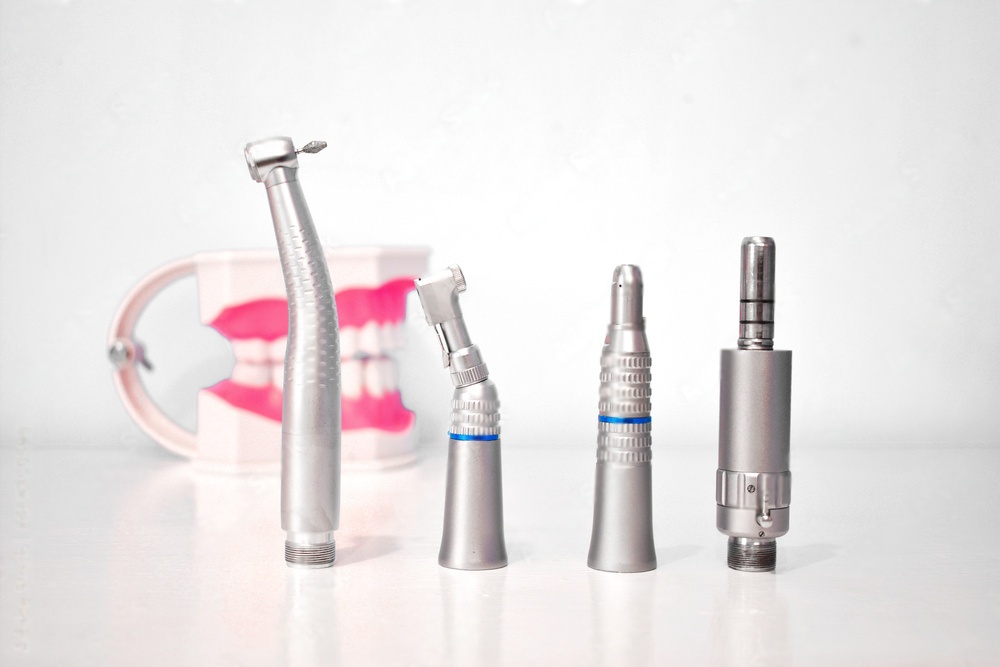
Why Handpiece Customization Matters
Endodontists perform repetitive, high-precision work in a confined space. The average root canal procedure involves 30-60 minutes of continuous handpiece use, and a busy practitioner may complete 8-12 procedures per day. Under these conditions, small improvements in tool ergonomics and function add up to meaningful differences in clinician comfort, treatment speed, and patient outcomes.
Handpiece customization is not about aesthetics alone. The right modifications address specific clinical challenges:
- Reduced hand fatigue during long procedures
- Better illumination of the working area deep inside the canal
- Improved tactile feedback for navigating curved or calcified canals
- Easier instrument identification in a multi-handpiece setup
- Extended handpiece lifespan through protective coatings
Ergonomic Grip Modifications
Hand and wrist fatigue is one of the most common complaints among endodontists. The standard smooth metal body of most handpieces requires a firm grip to maintain control, which increases muscle tension over the course of a procedure.
Silicone Grip Sleeves
Aftermarket silicone grip sleeves slip over the handpiece body and provide a cushioned, non-slip surface. Quality sleeves are made from medical-grade silicone that can be autoclaved without degrading. They typically add 1-2 mm to the handpiece diameter, which many clinicians find more comfortable than the bare metal body.
When selecting a grip sleeve, look for these features:
- Textured surface pattern for secure hold even with wet gloves
- Autoclavable up to 135 degrees C for standard sterilization cycles
- Proper fit that does not interfere with the handpiece head rotation or chuck mechanism
- Thin enough to maintain tactile sensitivity
Custom Contoured Grips
Some manufacturers now offer handpieces with factory-customized grip zones. These feature contoured indentations shaped to match a natural finger position, reducing the force needed to maintain a stable hold. For clinicians who experience carpal tunnel symptoms or chronic hand strain, switching to a contoured grip model can make a significant difference in daily comfort.
Weight and Balance Considerations
A well-balanced handpiece feels lighter than its actual weight because the center of gravity sits near the grip point rather than at the head or tail. When evaluating handpieces, hold them in a working position and note whether the head droops or the body feels tail-heavy. A balanced instrument requires less compensating effort from the fingers and wrist.
LED Lighting Upgrades
Visibility inside root canals is always a challenge. The working area is small, deep, and surrounded by tooth structure that absorbs light. While operating microscopes and loupes with headlights help enormously, having a light source at the handpiece head provides direct illumination of the canal orifice and the file engagement point.
Built-In vs. Add-On LED Systems
Many modern endodontic handpieces come with integrated LED lighting. These systems use fiber optic bundles routed through the handpiece body to deliver light from an LED source in the motor or coupling. The light output typically ranges from 15,000 to 35,000 lux at the working point.
For handpieces without built-in lighting, add-on LED modules are available that attach to the handpiece head or coupling. These aftermarket solutions vary in quality, so consider these factors:
| Feature | Built-In LED | Add-On LED Module |
|---|---|---|
| Light Output | 25,000-35,000 lux | 10,000-20,000 lux |
| Color Temperature | 5,000-6,500K (daylight) | Varies by manufacturer |
| Weight Added | None (integrated) | 5-15 grams |
| Sterilization | Full autoclave compatible | Check manufacturer specs |
| Cost | Included in handpiece price | $50-200 per module |
A color temperature in the 5,000-6,500K range provides accurate color rendering that helps distinguish between dentin, pulp tissue, and calcification. Warmer light temperatures can make it harder to identify subtle color differences in the canal.
Protective Coatings and Surface Treatments
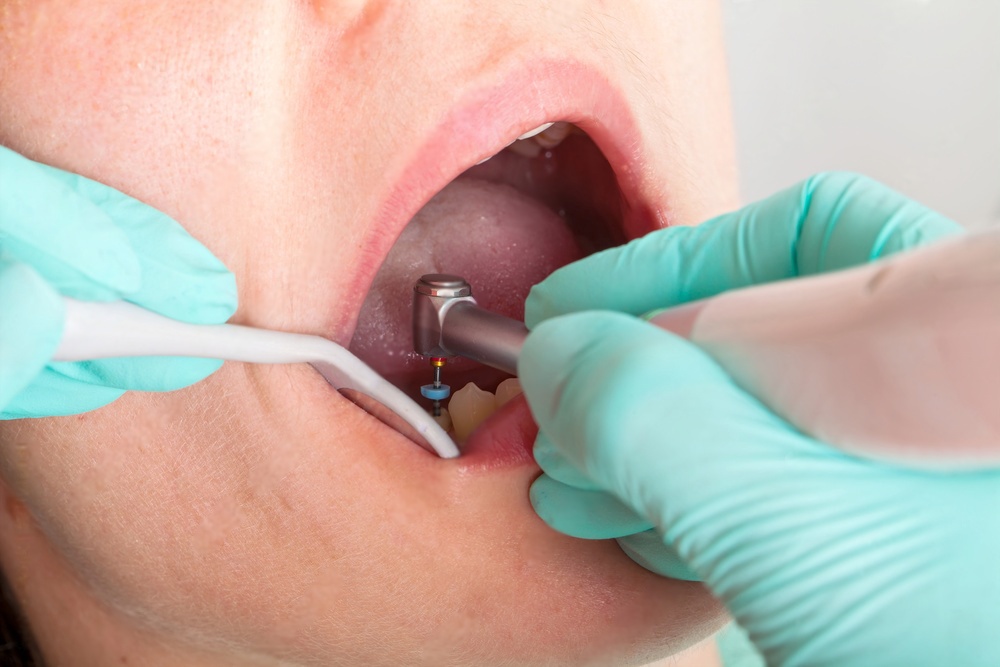
The exterior surface of a dental handpiece takes a beating over its lifetime. Repeated sterilization cycles, contact with cleaning chemicals, and the occasional drop all contribute to surface degradation. Protective coatings extend handpiece life and can improve the user experience.
Titanium Nitride (TiN) Coating
Titanium nitride is a ceramic coating applied through physical vapor deposition (PVD). It produces a distinctive gold-colored finish and provides excellent scratch and corrosion resistance. TiN-coated handpieces maintain their appearance and surface integrity through thousands of sterilization cycles, compared to standard stainless steel which may show pitting or discoloration over time.
Diamond-Like Carbon (DLC) Coating
DLC coatings produce a dark grey or black finish and offer the highest hardness of any common handpiece coating (1500-3000 HV). Besides protecting against scratches and corrosion, DLC coatings reduce the surface friction coefficient, which can make the handpiece easier to grip and less prone to slipping. Some clinicians find that the darker color also reduces glare under the operating light.
Anti-Microbial Surface Treatments
Several handpiece manufacturers now offer silver-ion or copper-infused surface treatments that provide continuous antimicrobial activity between sterilization cycles. While these treatments do not replace proper sterilization protocols, they add an extra layer of protection by inhibiting bacterial colonization on the handpiece surface during storage and between patients.
Color Coding and Identification Systems
In a busy endodontic practice, quick instrument identification saves time and reduces errors. When multiple handpieces are set up on the bracket table, it should be immediately obvious which one is configured for which function.
Colored Rings and Bands
Most handpiece manufacturers offer colored identification rings that snap onto the handpiece body. A common color coding system assigns specific colors to specific speed or torque settings:
- Blue: Low torque for initial glide path and scouting
- Green: Standard torque for routine shaping
- Red: High torque for removing gutta percha or posts
- Yellow: Reciprocating motion for single-file systems
Consistent color coding across all operatories helps team members set up and maintain handpieces correctly, even when a substitute clinician is working.
Custom Engraving
Laser engraving services can add your name, practice logo, or a serial number directly to the handpiece body. This serves a practical purpose in multi-doctor practices where instruments might otherwise get mixed up. Engraving also helps with asset tracking and insurance documentation.
Choosing the Right Burs and Accessories
Customization extends beyond the handpiece body itself. The files, burs, and accessories you pair with your handpiece affect overall performance just as much as the handpiece features.
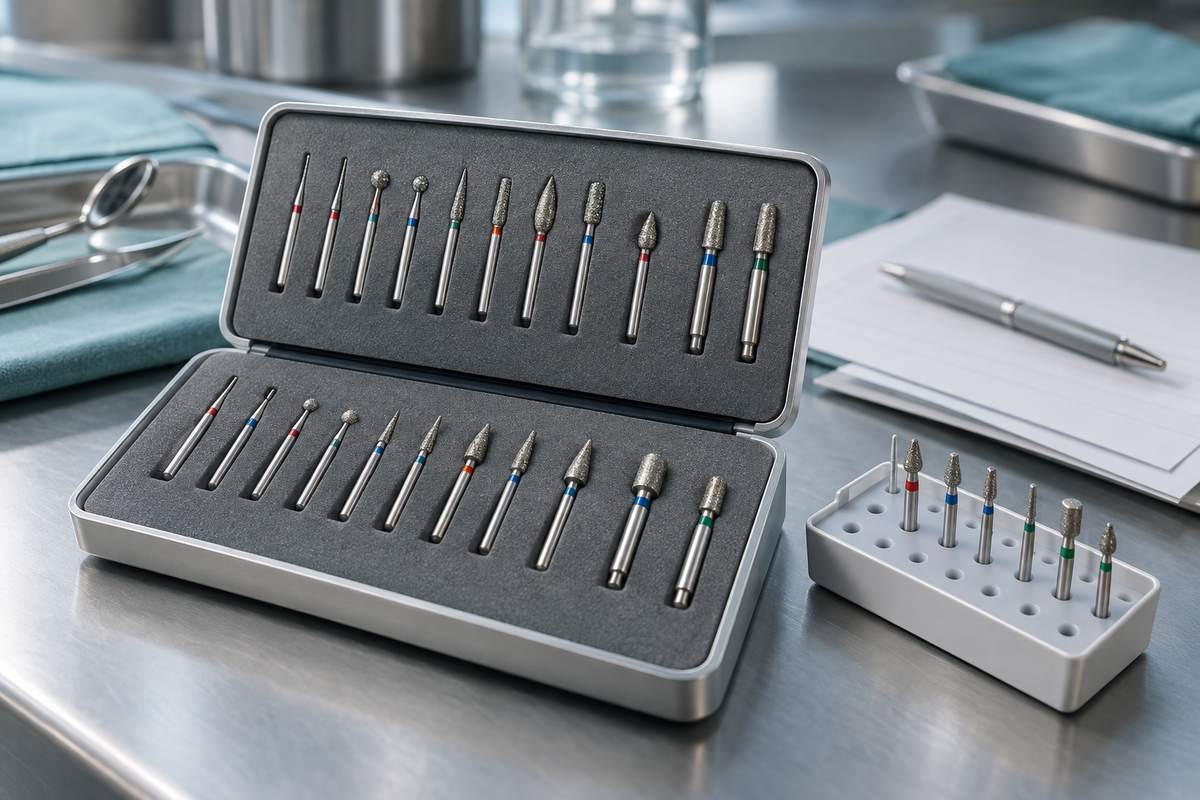
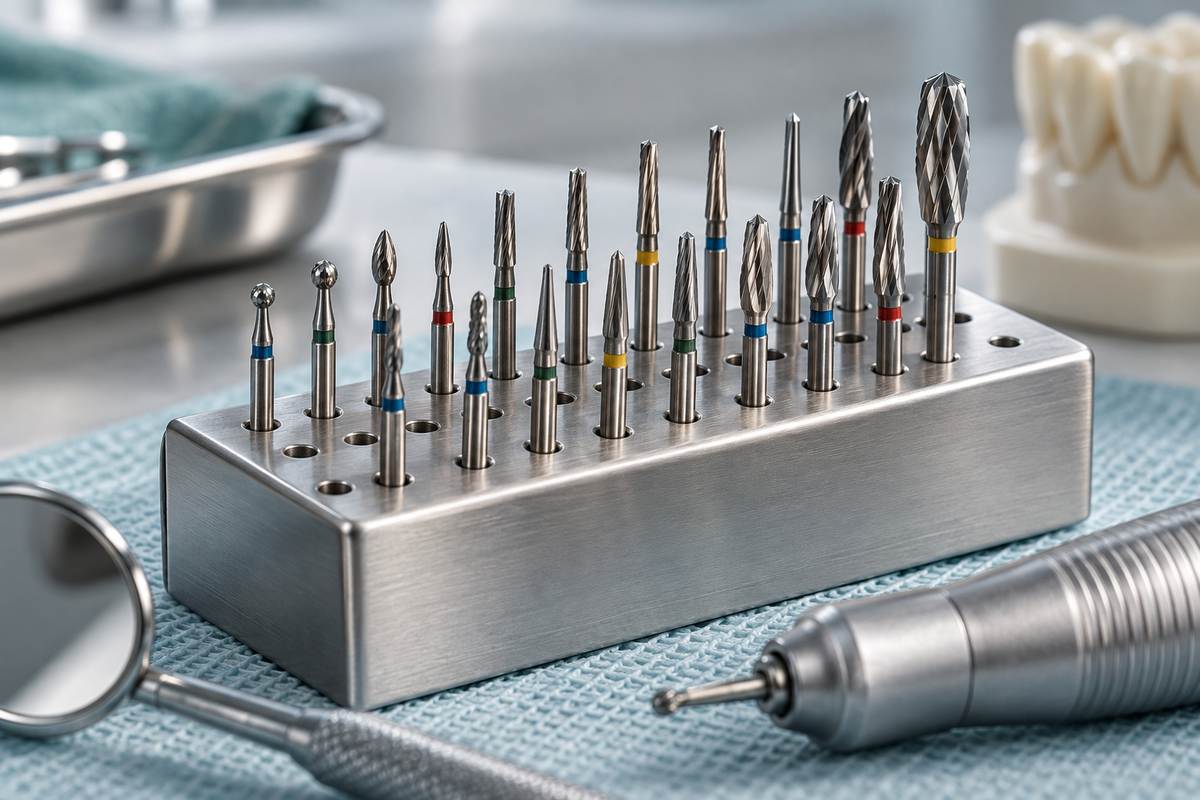
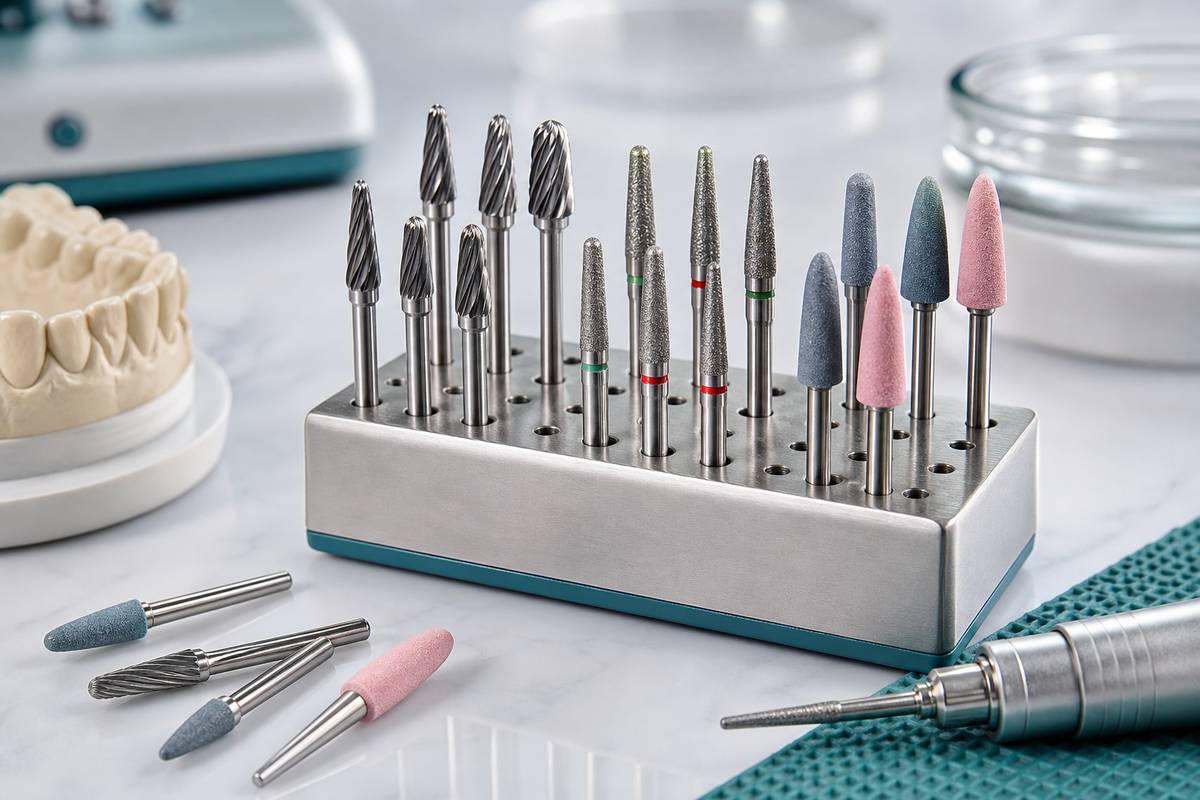
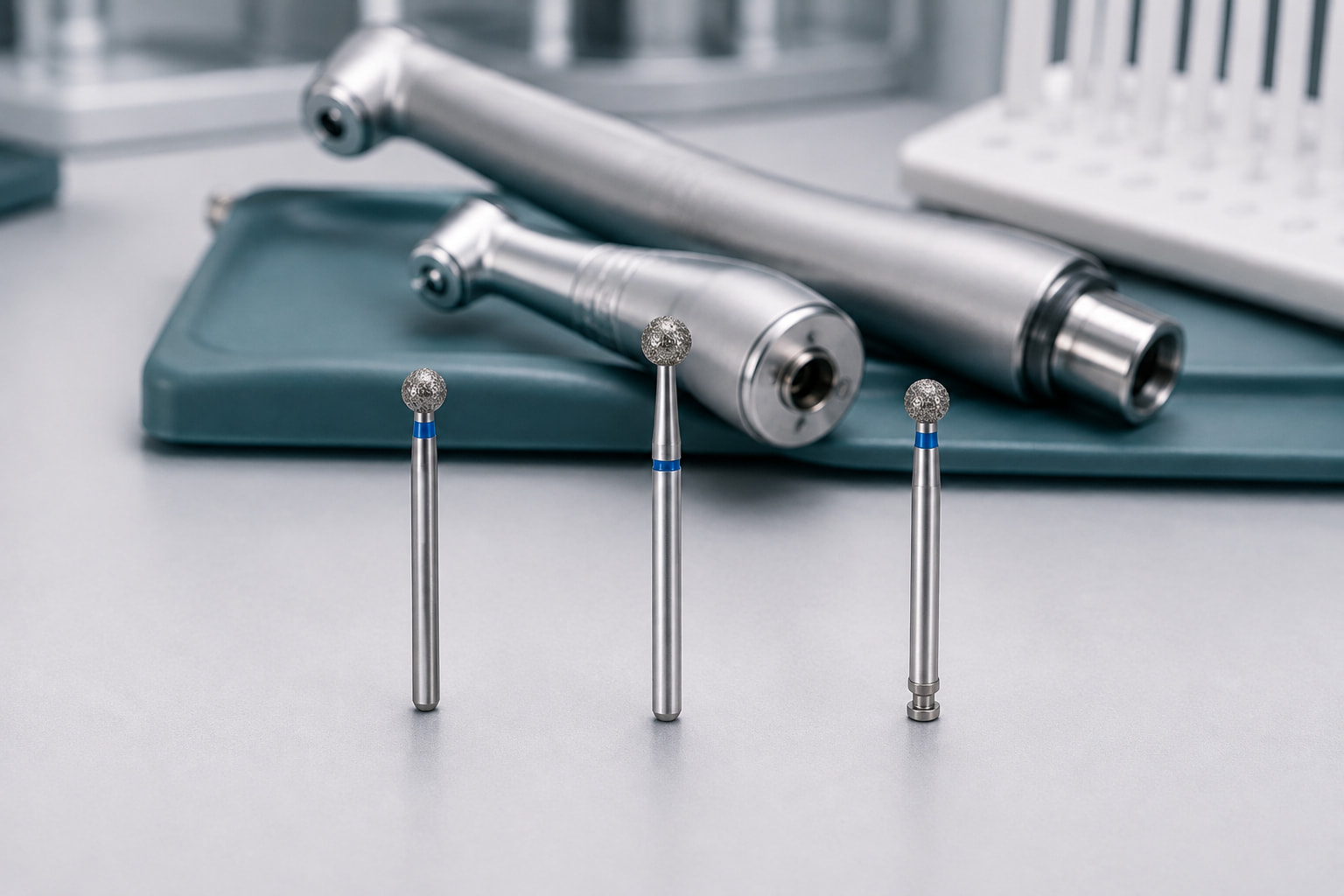
For endodontic access preparation, select burs that match your handpiece specifications. Using tungsten carbide burs designed for your specific handpiece type ensures proper fit, balanced rotation, and clean cutting without chatter or vibration. Poorly matched burs can damage both the instrument and the handpiece chuck over time.
Beyond burs, consider these accessories:
- Torque-calibrated motors: Pair your handpiece with a motor that provides accurate, adjustable torque control for different file systems.
- Apex locators with integrated motors: These combination units reduce the number of instruments on the bracket table and provide real-time working length confirmation during instrumentation.
- Handpiece stands and holders: A dedicated holder keeps handpieces organized, prevents accidental drops, and makes it easier to switch between instruments during treatment.
Maintenance Tips for Customized Handpieces
Any modification to your handpiece should be evaluated for its impact on maintenance and sterilization. Follow these guidelines to keep customized handpieces in top condition:
- Remove silicone grips before autoclaving if the manufacturer recommends separate sterilization.
- Clean LED fiber optic ports with a soft cloth and isopropyl alcohol to prevent light output degradation.
- Inspect coated surfaces periodically for chips or wear that could harbor bacteria.
- Follow the manufacturer's lubrication schedule exactly. Adding grip sleeves or accessories should not block lubrication ports.
- Document all modifications in your equipment maintenance log for warranty and service purposes.
Making the Investment Worthwhile
Handpiece customization does not need to be expensive or complex. Start with the modification that addresses your most pressing daily frustration, whether that is hand fatigue, poor visibility, or difficulty identifying instruments. Even a single well-chosen upgrade can noticeably improve your working comfort and efficiency.
For clinicians interested in broader equipment optimization, our article on ergonomics for endodontists covers workstation setup and positioning techniques that complement handpiece customization. And to explore the latest handpiece accessories, visit our accessories catalog for options that fit your practice needs.